They Took Us Away

They Took Us Away
click image to see more and read more

it's free

click

How to Use this Blog

BOOZHOO! We've amassed tons of information and important history on this blog since 2010. If you have a keyword, use the search box below. Also check out the reference section above. If you have a question or need help searching, use the contact form at the bottom of the blog.


We want you to use BOOKSHOP to buy books! (the editor will earn a small amount of money or commission. (we thank you) (that is our disclaimer statement)

This is a blog. It is not a peer-reviewed journal, not a sponsored publication... WE DO NOT HAVE ADS or earn MONEY from this website. The ideas, news and thoughts posted are sourced… or written by the editor or contributors.

EMAIL ME: tracelara@pm.me (outlook email is gone) THANK YOU CHI MEGWETCH!

SEARCH

Sunday, August 10, 2014

Splitfeathers and Indian Child Welfare Act on Univision


Thank you to UNIVISION for partnering with Leland Morrill (Dine adoptee) and amazing researcher Karen Vigneault for this news broadcast about Lost Birds/Split Feathers, the Indian Child Welfare Act and current immigration issues which aired in late July. Also in the interview is Patrick Yeakey, (Sugpiak), an adoptee/Lost Bird who wrote in the new anthology CALLED HOME: Book 2: Lost Children of the Indian Adoption Projects. The two videos are in Spanish...


Pasados Perdidos Parte 1: https://vimeo.com/102005237

Parte 2: https://vimeo.com/102188730

Leland said they will be adding English subtitles soon....


Pasados Perdidos Parte 1 from Andres Pruna on Vimeo.

Saturday, August 9, 2014

Judge rules against destruction of residential school records

Judge rules against destruction of residential school records  By Kathleen Martens
 APTN Investigates

WINNIPEG – A Toronto judge has agreed to lock up sensitive residential school student testimony for 15 years.
Justice Paul Perell of the Ontario Superior Court ruled in a decision released yesterday (Aug. 6) that the records will be destroyed after that time period unless survivors individually decide they want theirs saved.
What is not up to survivors, however, is whether the names of alleged abusers are blacked out. The judge ruled those names will be redacted whether survivors want them identified or not.
Those alleged abusers are people who worked at the schools or other students.
Survivors’ records would be kept at the National Research Centre on Residential Schools at the University of Manitoba in Winnipeg.
Perell’s decision comes after two parties in the Indian Residential Schools Settlement Agreement (IRSAS) asked him for direction last month. They were: the Truth and Reconciliation Commission (TRC), which wants all the information saved for a complete record on the legacy of residential schools; and the Indian Residential Schools Adjudication Secretariat (IRSAS), which wants the testimony destroyed.
The judge said survivors can opt in or opt out of the record keeping. He then charged the TRC with collecting survivors’ responses.
The TRC had asked the judge for a 30-year waiting period, while IRSAS wanted survivor testimony destroyed immediately. Its senior adjudicator Dan Shapiro said survivors were guaranteed confidentiality so they would reveal as much information as possible to prove their financial claims for abuse.
Both parties have different mandates under IRSAS: the TRC’s is to gather survivors’ stories publicly and use them for educational and historical purposes, while IRSAS is to process abuse claims under the Independent Assessment Process (IAP).
IRSAS says it has accumulated about 800,000 pieces of information from nearly 38,000 IAP claims. These include IAP forms, transcripts and audio recordings of hearings, decisions, and tens of thousands of supporting medical, education, employment, corrections and other personal records.
Justice Perell is one of the nine supervising judges of the IRSSA.

As APTN Investigates has reported in this story, some survivors favour saving their stories so their suffering is not forgotten. The entire 68-page decision can be read on the website of Ontario lawyer, Julian Falconer.
Shapiro responded to the decision in a written statement, saying he was pleased with Justice Perell’s decision.

| by

Friday, August 8, 2014

LOST BIRDS: Four adopted women seek out their Native American roots

For more than one hundred years, U.S. policies and practices separated Native American children from their families. Prior to 1978, when the Indian Child Welfare Act went into effect, Native American children were regularly plucked from their homes and sent to live with non-Natives. Some children grew up surrounded by love; others suffered enormous hardships. Many had a powerful desire to reconnect with the culture that they had lost.
In "Lost Birds," we profile four adopted women who sought out their Native American roots. Click below to read the stories of how each woman came to discover and connect with her true heritage.
Please Share This: http://alj.am/1lE3sZT

My friends Suzie Fedorko, Julie Missing and Diane Tells His Name are in this story with me!   It's pure awesome.... Click on the arrows to hear us talk about our lives!  Trace

Suzie's memoir
My memoir

Thursday, August 7, 2014

How much I changed (Part 6) #Starved into submission


By Trace Hentz

My entire childhood I had plenty of food.

This is not true for all humans, I know. Look at the news across the world, like in Gaza.

When it comes to this blog or writing about adoption or world events, I know I’m doing something right if I am afraid.

I spent most of my life afraid of upsetting people, avoiding that. Some might say that is low self-esteem but I think being afraid, fear itself, is a call to action. If you are afraid, then you know you are doing something right.  You are challenging yourself and breaking down your thoughts into something you can fix or not.

I could not change what happened in my childhood but I could change how I looked at being adopted. I could drop judgment. I could stop blaming my adoptive parents and my natural parents. I could turn “being adopted” into something good - or try to make my life and other lives better.

I heard Noam Chomsky on Democracy Now today describe how the occupiers of Palestine are using food insecurity to keep Palestine children alive but not enough to thrive! Too little food and starvation can be used as a weapon of war - with long-term consequences. Brains and bodies are affected long-term.

That is exactly what has happened here on American soil. YES! The American government only feeds American Indians junk with commodities (boxed or canned food and very little vegetables). The diabetes epidemic is living proof it’s working. Plus there are not enough jobs to feed ourselves. That way we Indians will be too weak to protest reservation living conditions. That way we’ll stay depressed or immobile. That way we’ll self-medicate with alcohol or drugs. That way many of our men will be imprisoned. That way we won’t be in the way when the government and industry wants to take more resources like copper, coal, uranium and shale gas.  Reservations were purposefully isolated so American (and Canadian) governments could totally control what we received - especially food, blankets, housing, medical care, etc.

Governments still keep Indians poor. The occupiers claimed they wanted Indians to be farmers, settle in one place, but not exactly on “farm-able land.” Think of the Badlands, a dry arid remote place, not exactly farmland.

Most of us Lost Birds who were adopted out didn’t have food insecurity or starvation growing up. It was not something we had to worry about.  SplitFeathers/Adoptees need to realize the WAR is still being waged on Indians in many subtle ways.  And if we use our minds in a good way, and come together, maybe WE can tackle food insecurity on reservations that still exists!

Maybe just maybe being adopted out was destined to give us the mind and ideas and courage necessary to feed our tribal families who have been occupied and starved into submission.


Also published on LAST REAL INDIANS: http://lastrealindians.com/starved-into-submission-food-insecurity-occupied-tribes-by-trace-a-demeyer/

Wednesday, August 6, 2014

How much I changed (Part 5) #adoptionsurvivors

I gave this interview some time ago but my thoughts still stand...Trace
Take a read:

Excerpt:


Interview with Australian blogger ONCE WAS VON in 2011
old link: http://eag-oncewasvon.blogspot.com/search?q=One+Small+Sacrifice

Trace DeMeyer published her first book ONE SMALL SACRIFICE on the Split Feathers, the children taken from the First People of Turtle Island or the United States of America as it was renamed by those who claimed it. The Split Feathers (adoptees) were taken for education and for adoption in planned destruction of their Peoples. Many have not been found or found their way home. Trace includes the story of her own journey and tackles the difficult areas of adoption and the adoptee experience.

Von: In your life was there a pivotal event that changed you from being a victim of adoption to a survivor?

Trace: That is a great question because lots of people won’t recognize there is a definite shift from victim to survivor.
When laws restrict opening adoption records, these policymakers make us victims. There are many adoptees ready to know their family name, meet relatives and have reunions, but cannot because of adoption laws. Other adoptees, lulled by gratitude, may fear upsetting their adoptive family, and may not see themselves as victims of a corrupt unjust system.
The adoptee moves from victim to survivor when they decide to break the law, when they decide to regain and restore their own identity, and get their name. That’s a giant leap forward.
My becoming a survivor happened in stages, in a sequence of events. As a child I grieved. I promised myself as a teenager that I would find answers but it looked impossible with sealed records in Wisconsin. I felt overcoming my low self-esteem was first. In my 20s, I realized there would be “emotional processing” I’d need to do, slowly, over time. Opening my adoption records was very important in 1978 but troubling since I had no help to locate my parents. This was before the internet. I also had to face reality that I might not find them or my parents might not be willing to meet me. I never met my mother Helen which felt like a second rejection in the 1990s. I was almost 40 when I met my father Earl in 1994. Reunions (or not having a reunion) take time to process. Over the years, other adoptees were great teachers for me since there are no guidebooks for dealing with adoption trauma. There is so much to understand, obviously.
Writing my memoir, remembering everything again and adoption research changed me most – like a light bulb went on. I started to see adoption as an industry and a measure of control over a mother’s maternity and placed orphans in a state of emotional disgrace. Recognizing adoption as an institution, one that has outgrown its purpose, one that is damaging for mother and child, was perhaps my biggest transforming moment.

Von: You say in your book, that adoption involves many traumas, not just the one of the loss of a mother. Many of the things that happen to us, the damaging relationships, breakdowns and illness result from those traumas. How do we move from being vulnerable, to strength and survival?

Trace: In my book, I mention four distinct traumas for adoptees and I know there are more. Adoptee and natural parents are vulnerable to the billion dollar adoption machine that still manipulates us. I felt manipulated. Restricting us from meeting, laws which prevent our meeting, then add a dose of shame, judgement and misunderstanding, all deeply affects and even harms adoptees. I do write about this in depth in “One Small Sacrifice.”
Adoption is very isolating. Many adoptees like me suffered in silence. I see many adoptees create stories for their missing parents. If they do not know the truth, and never meet them, adoptees can stagnate emotionally and get trapped in illusions, lies and excuses. That is a very hard way to live. It’s very difficult to tell an adoptee what to do, or how to heal and overcome this vulnerability. I took small steps on my own and finally realized that there was only one solution – find the truth.
A closed adoption is the ultimate act of disruption. Because of my disgrace and orphan-status, I was not living emotionally well. I was not empowered as a human since the very act of adoption removed my identity. I made a decision to not live this way or accept the fantasy-land my adoptive parents and adoption industry created for me. I had to open my adoption, period. I would not give up.
It took me a long time to see how I failed myself with very troubling decisions and blamed Helen my birthmother for misery I had as a child. I fought the idea of being a disgrace. I fought feeling rejected by Helen when I finally found her. I fought very hard to heal myself, know myself and release judgment. Even as a teenager, I thought it was ridiculous to be expected to live a fantasy and project gratitude.
Finding the truth and meeting relatives moves you from feeling vulnerable to empowered, from victim to survivor.

(to be continued) How much I changed (Part 6) #Starved into submission #Food Insecurity #Occupied Tribes

Tuesday, August 5, 2014

How much I have changed since the #CAICW story (Part 4)


protesting over the Baby Veronica case

By Trace A. DeMeyer

The story Christian Evangelical Groups involved in Federal IndianAdoption Policies was published in 2013, and blog readers are aware that Elizabeth Morris and her group CAICW were (and are) still lobbying to end the Indian Child Welfare Act of 1978 (ICWA), which is still disturbing to me and the thousands of Lost Birds who were adopted out in the last 100 years. We are called the Stolen Generations for a reason. Our Indian parents were harshly judged by non-Indians, then children were taken away to boarding schools and for adoptions.

What would happen if this was reversed and America suddenly decided that evangelicals are too radical so their children are taken? Wouldn’t that throw a twist in this debate and debacle? What if religious fervor, a savior complex and Christianity was judged in courtrooms and they were judged for not being good enough people to raise their own kids? Evangelical parents too fanatical about religion to raise their own child? What if anyone who is too religious was judged to be inadequate to raise a child?

This thinking throws a monkey wrench into the argument. I can imagine how easy it is for a non-Indian to say we don’t need ICWA protections. Many didn’t live through having their child taken. But Morris and others sure can believe and espouse they would be better parents than Indian parents.

Where did she get this notion? Morris was on the reservation and married to an Indian. Is she basing her belief that Christians are better than heathens? Is that what she thinks? Or is that Indians are too poor, too oppressed or depressed, or just plain savages?

Here was a comment from that article: cyanmanta
Allow me to explain what these people are really thinking: "We need to keep these children out of the hands of their heathen-devil redskin parents and save them through the grace of Jesus! We must steal their children from them in order to save their souls from eternal damnation for believing the false religion of the heathen devil red savage!" There, that's the only reason these people care about the children; not because they care about their actual welfare or living conditions, but because they want to wipe out the beliefs of the native people's of the US and turn them all into little obedient christians so they can use them to seize control of our government. Dominionism is hard at work trying to undermine secular democracy, make no mistake. 13 Sep 2013 4:31 PM

We need to get Christian Dominionism out of our legal and political systems. It's been permeating it for so long that we've become desensitized to it.

The example case is a simple one. If the father is deemed unfit, then turn the children over to tribal authorities and let them determine the child's future.

This is a clear extension of the genocide of 30 million Indigenous Americans at the hands of Christians who wanted first their gold, then their land and then their heathen souls. Now that Indigenous Americans have no gold and have no land and Christians have converted as many adult heathens as they can, now they're after the adult heathens' children's souls. 13 Sep 2013 1:26 PM

I sure wouldn't want my daughter raised in an Evangelical home learning how to hate her Native American heritage along with other minority groups. 13 Sep 2013 12:46 PM

(to be continued) 

Happy Visitors!

WRITTEN BY HUMANS!

WRITTEN BY HUMANS!

Blog Archive

Featured Post

Your History Class Was a F*cking Lie | #NOMOAR

  Your History Class Was a F*cking Lie by Sean Sherman (Or: How the American Educational System Has Always Been a Racist Propaganda Program...


Native Circles

Native Circles
click logo for podcasts!

Most READ Posts

Bookshop

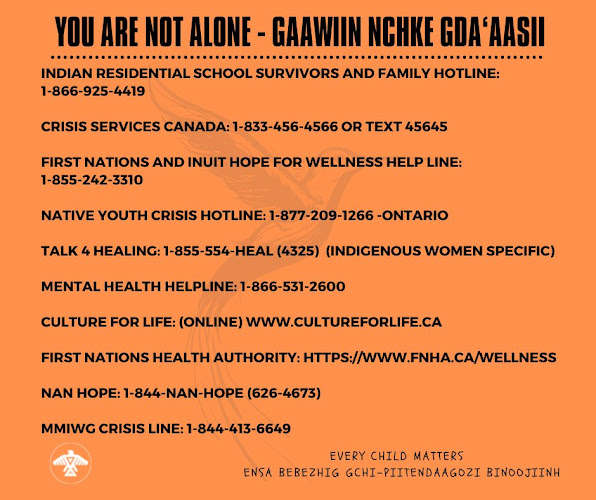
You are not alone

You are not alone

To Veronica Brown

Veronica, we adult adoptees are thinking of you today and every day. We will be here when you need us. Your journey in the adopted life has begun, nothing can revoke that now, the damage cannot be undone. Be courageous, you have what no adoptee before you has had; a strong group of adult adoptees who know your story, who are behind you and will always be so.

Diane Tells His Name


click photo

Lost Birds on Al Jazeera Fault Lines

Lost Birds on Al Jazeera Fault Lines
click to read and listen about Trace, Diane, Julie and Suzie

NO MORE STOLEN SISTERS

NO MORE STOLEN SISTERS
click image

ADOPTION TRUTH

As the single largest unregulated industry in the United States, adoption is viewed as a benevolent action that results in the formation of “forever families.”
The truth is that it is a very lucrative business with a known sales pitch. With profits last estimated at over $1.44 billion dollars a year, mothers who consider adoption for their babies need to be very aware that all of this promotion clouds the facts and only though independent research can they get an accurate account of what life might be like for both them and their child after signing the adoption paperwork.

Original Birth Certificate Map in the USA

Google Followers