They Took Us Away

They Took Us Away
click image to see more and read more

it's free

click

How to Use this Blog

BOOZHOO! We've amassed tons of information and important history on this blog since 2010. If you have a keyword, use the search box below. Also check out the reference section above. If you have a question or need help searching, use the contact form at the bottom of the blog.


We want you to use BOOKSHOP to buy books! (the editor will earn a small amount of money or commission. (we thank you) (that is our disclaimer statement)

This is a blog. It is not a peer-reviewed journal, not a sponsored publication... WE DO NOT HAVE ADS or earn MONEY from this website. The ideas, news and thoughts posted are sourced… or written by the editor or contributors.

EMAIL ME: tracelara@pm.me (outlook email is gone) THANK YOU CHI MEGWETCH!

SEARCH

Monday, September 4, 2023

Mystery: Where is Alex James Sutherland

Alex

Survivors of Sixties scoop want to know why province is sending long-lost brother’s mail to childhood home  | IG News

EARLIER STORY

The siblings of a Métis man who has been missing for decades – ever since he was captured as a child during a sixties scoop – want to know why the Manitoba government keeps sending him requests for address verification.  The mail is mailed to the same house that the province seized the kids more than 45 years ago.

“Even after all these years, when my parents are dead, the cards are still coming in the mail,” Sandra Myers said. “Somebody know something.”

Their brother, Alex James Sutherland, was only five years old when child welfare officials apprehended him, along with his six siblings, from their Camperville, Manitoba, home in 1976.

It was part of the notoriously disastrous sixties scoop – in which thousands of Indigenous children were forcibly removed from their homes and placed with non-Indigenous families as far away as the US and Europe during the period from 1951 to 1991.

They say that Alex and his siblings, including Sandra Myers, were captured under false pretenses.  Child welfare officials claimed that his father drank heavily and abused the children.

Myers said, “I’m kind of surprised. I don’t remember there being any abuse.”

A woman with short black hair, brown eyes and brown glasses is looking directly into the camera.
Sandra Myers is shown in a photo from her Facebook page. She hopes that her brother will reach out to his family. ‘If you can hear it, look me up on Facebook,’ she says. ‘And know that I will not give up until I find you.’ (Sandra Myers/Facebook)

Meanwhile, his mother thought the fears were temporary and agreed to sign a document allowing child welfare officials to vaccinate the children.

Instead, she signed away rights as a parent.

Sutherland’s sister Marge McGillivray said, “My mother couldn’t read or write and they gave her a piece of paper and pen.  She didn’t even know she was signing us away.”

A curious clue

Three siblings, including Myers, were adopted in Louisiana.  McGillivray remained in Manitoba, moving between foster homes until reuniting with her parents as a teenager.

However, Alex Sutherland was never heard from again.

“I’ve heard from other people, but this one’s just gone,” McGillivray says.

In 2016, the siblings went public with their discovery, sharing their story with the CBC.

Through the years, as the story aired, so did the tips.  Some childhood friends arrive with memories of going to school with Alex in Mafeking, Maine.

The siblings later heard rumors that Alex was in Thompson, Manitoba.  Or Maine.  Another time, he heard he might be in Alberta.  Second time, Ontario.

Then, a few years ago, a curious clue turned up in his parents’ post office box.

The province began sending health card registration verifications addressed to Alex James Sutherland – sent to his childhood home in Camperville.

An ID card that reads 'Alex J Sutherland.  Camperville MB'
A few years ago, the province began sending health card registration verifications to Alex James Sutherland at his childhood home in Camperville. (Submitted by Sandra Myers)

As of 2023, they’re still coming.

McGillivray said, “That’s why my mom and dad thought he was still alive and in Manitoba.”

Now, the family wants to know why a provincial department is sending mail to Sutherland’s childhood home – and, as far as the province is concerned, it was his last known address.

‘I’m not giving up hope’

In a written statement, a provincial spokesperson said that if a person has not used their Manitoba health card in the past 12 months, the province sends a verification notice to the last address on file, “to ensure that his address is still current and there is no new change in his health card,” the spokesperson said.

According to the spokesperson, if the notice is returned marked “return to sender”, the health card is suspended.

They would not elaborate on whether they would send verification for a health card that was inactive for more than 12 months.

“We are engaging in speculation here that we cannot comment on,” the emailed statement said.

Meanwhile, the Manitoba Métis Federation also has questions about Sutherland, and has offered to help the family find answers.

“The federation is pleased to be working with the family to get to the bottom of this,” Francis Chartrand, vice-president of the Northwest region, said in a written statement.

“It always saddens us when we learn of survivors of sixties scoops in our area who still haven’t gotten to their homes.”

The Metis Federation, through its Sixties Scoop department, can provide the family with “wraparound programs and services tailored to the needs of individual survivors,” Chartrand said.

Myers said she would be grateful for the federation’s support.

“If anything can help find him, I’d be glad,” she said.

“I never stop searching for him. I’m not giving up hope. I know he’s out there.”

She also had a message for her brother.

Myers says, “I’m reaching out to you and if you can hear it, check me out on Facebook. And know that I will not give up until I find you or know where you are.”

MORE


Saturday, September 2, 2023

Reclaiming Dene name a long journey for N.W.T. man

NORTHWEST TERRITORIES (NWT)

N.W.T. gov't permanently waived name-change fee for Indigenous residents earlier this year

portrait of a man
Over the years, J.C. Catholique says he's had many names. The Łutsel K'e resident is working through what he hopes will be his last name change to reclaim his traditional name: Gahdële. (Natalie Pressman/CBC)

J.C. Catholique says his current name is meaningless. 

The Łutsel K'e, N.W.T., resident is in the process of reclaiming his traditional name: Gahdële. 

"Catholique, you know, has no reference to being Dene or Dënësųłinë́ person," he said. "But when you say Gahdële, yeah, that means 'rabbit blood' … That's a Dënësųłinë́ name." 

Gahdële says the Catholique name came when missionaries were registering community members. 

"To them, [Gahdële] sounds like Catholique, so that's where we ended up with our name like that." 

Earlier this year, the N.W.T. permanently waived the name-change fee for Indigenous residents. It first decided to do so in 2018 for five years. 

"In the past, individuals who helped new parents complete birth registrations in the N.W.T. may have been unfamiliar with Indigenous names so they were spelled incorrectly. Because children had to be registered with the same name as their parents, this spelling mistake may have continued for generations," explained the territorial government. 

The decision came as a direct result of the Truth and Reconciliation Commission's Call to Action 17

"Making this process permanent respects the intergenerational impacts of residential schools by allowing Indigenous people to reclaim their names at any point in their lives, and also protecting that ability for future generations," reads a June news release from the N.W.T. government, about the decision. 

Name change 'journey'

This isn't Gahdële's first name change. 

His birth name is John Morris Catholique, but he became known as Gabriel Paul Catholique while in residential school in Fort Resolution, N.W.T. 

"We were doing a roll call and this name came up … Nobody said anything 'til one of the older guys from Łutsel K'e said, 'That's you.'"

He says his grandmother later told him that wasn't his name. 

He obtained his baptism papers and saw John Morris Catholique; he also learned his birthday was June 14, not 15, as he had been celebrating for years. 

"It's quite a process to end up with all these names," he said. "Kind of an interesting journey." 

Spelling still an issue

Despite the territory's decision to waive the name-change fee, residents still can't get legal documents with the traditional spelling of their names. 

"Work is continuing to develop a transliteration guide for converting standardized Indigenous characters into letters that all computer systems, affected employees, interjurisdictional partners, contracted vendors, and Indigenous northerners will be able to understand," reads the territory's name change webpage.

To be eligible to have the fee waived, residents must have been born in the N.W.T. and still live in the territory. Residents can also only apply to waive the fee once. 

Gahdële says a name carries great significance. 

"That's our roots, that's our identity, that's who we are," he said. 

He hopes that other residents also go through the process to reclaim their traditional names. 

"For the young people growing up, knowing who they are, where they come from, [they] should be proud of who you are, proud of your name," he said. 

According to the N.W.T. government, 113 Indigenous residents have changed their names since October 2018.

Friday, September 1, 2023

Charla Huber: It’s taken 41 years to learn where I am from

In the last two weeks, I have become very close to finally learning who my birth father was. Like my biological mother, he was 50 per cent Indigenous

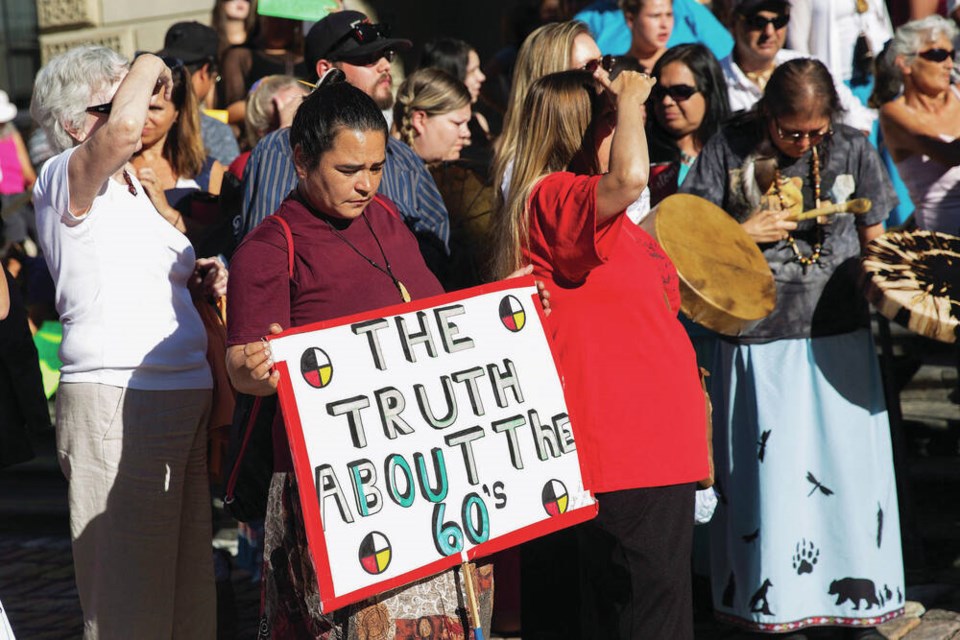
web1_16185084_web1_160824-rda-canada-60s-scoop-lawsuit-pic
Sixties Scoop survivors and supporters gather for a demonstration at a Toronto courthouse in August 2016. Charla Huber was one of ­thousands of ­Indigenous ­children from the 1960s to the 1980s who were either adopted or fostered by ­non-Indigenous families. MICHELLE SIU, THE CANADIAN PRESS

The term “Pretendian” is becoming a regular word in our society.

It’s a term used to describe someone who is claiming Indigenous ancestry, rights and recognition, and who is being called out for false claims or unprovable claims.

I know there have been many people “outed” as ­“pretendians” and it has caused outrage in Indigenous communities, both on- and off-reserve.

I’ve written about this before and the impact the issue has on me. I am fully aware that people are falsely claiming Indigenous identity for professional, academic or personal benefit, which is appalling, unjust and ignorant.

It also affects the dignity and credibility of ­Indigenous people who have lost their identity through colonial impacts.

It’s common knowledge among readers of my ­column that I was adopted as part of the Sixties Scoop, where thousands of Indigenous children from the 1960s to the 1980s were either adopted or fostered by ­non-­Indigenous families.

In my case, my adoptive family was asked if they would take in an “Indian baby.” They were called on my birthday and picked me up four days later.

My adoptive family was never told what Indigenous community I was from. I grew up not knowing, a ­struggle I have lived with my entire life.

Even in years when I would not publicly share I was Indigenous, in my heart it was something that I always felt deeply about. It was the only thing I ever really knew about myself and my lineage.

I took a DNA test a few years ago. Weeks later, when I received an email notifying me of the results, I was terrified of the thought that the only truth I’ve ever ­carried might not actually be true.

I opened the email and learned I was 50 per cent Indigenous. I shared this in a column about a year ago and a couple of readers wrote me saying that if I was “only 50 per cent,” I shouldn’t be identifying as ­Indigenous and I was deceiving the public. These ­letters were not sent by Indigenous people.

In the years since the DNA test, I have learned more about where I am from. My birth mother was also part of the Sixties Scoop, born in Fort Chipewyan in ­northern Alberta and about 50 per cent Indigenous, according to the maternal DNA info I received.

In the past two weeks, I have become very close to finally learning who my birth father was.

I am fairly certain he was never even told of my existence. According to paternal DNA info, he is also 50 per cent Indigenous.

I have spent the past couple of weeks immersed in learning about his community and lineage, language, history and family tree. I don’t have full confirmation, but it’s been narrowed down to a set of brothers.

This has been a momentous moment in my life.

Even if I am never able to meet either of my birth parents, I have been able to answer the question: “Where do I come from?”

In my heart, my Indigeneity is the one thing that has always been there for me and something I am immensely proud of.

I firmly believe my ancestors are walking with me.

I have been able to take that pride in my ­heritage and incorporate the experience of being raised in a ­non-Indigenous home and create a career in ­communications building bridges.

In this column, I often share Indigenous experiences and values for a non-Indigenous audience. It’s something that has helped me find healing and meaning.

I have never been called a “pretendian” and I know I am not one.

Each time a story comes to light of someone falsifying their ancestry, it makes me worry that one day, people will try to discredit me because finding “pretendians” has become a trendy mission.

Again, there are people who falsely claim Indigenous identify, there is no denying that.

I share this deeply personal story to highlight that there are also many Indigenous people who, like me, because of colonization and assimilation, were never provided information about where they are from and where they belong.

Thursday, August 31, 2023

ALBERTA: Province announces additional support MMIWG


Officials with the Alberta government say grant applications are now open for communities and organizations working to address the violence, safety and economic security of Indigenous women, girls and 2S+ people.

Alberta’s government say it is committed to ensuring Indigenous women, girls and two spirit plus (2S+) people have a future that is safe, secure and respected.  Officials say the Community Support Fund provides grants for community-based, Indigenous-led initiatives that address violence and increase safety and economic security for these groups.

According to the government, the fund will support $4 million in grants each year. Recipients can receive a maximum of $200,000 towards their initiatives. The fund is expected to provide immediate support for healing, preventing violence and addressing the crisis of missing and murdered Indigenous women, girls and 2S+ people, complementing the long-term work of the Premier’s Council on Missing and Murdered Indigenous Women and Girls.

“As the Premier’s Council advances collaborative work with the Government of Alberta, this dedicated ongoing funding is important for Indigenous-led projects to support Indigenous women, girls and 2S+peoples. I commend the province for taking the initiative on this grant program,” adds Rachelle Venne, chair, Premier’s Council on Missing and Murdered Indigenous Women. 

“The Community Support Fund is creating projects and initiatives for Indigenous and non-Indigenous community organizations to create a safer, more supportive community for Indigenous women, girls and two spirit people. This funding will foster healing, awareness and hope among this vibrant and key demographic.,” notes LeeAnne Ireland, executive director, Urban Society for Aboriginal Youth.

 The call for applications will close on Oct. 6. 

Alberta government quick facts 

First Nations, Métis and Inuit women face significantly higher rates of violence throughout their lifetimes than all other women in Canada. 

In Alberta, Indigenous women are seven times more likely to be murdered, three times more likely to experience sexual assault, and twice as likely to be assaulted compared with non-Indigenous women. 

 In 2021, Alberta had the second-highest reports of homicide for Indigenous people behind Saskatchewan. 


SOURCE

American Indian Law Alliance partners with National Institute for Law and Justice to address MMIR crisis


SYRACUSE, N.Y. — In a groundbreaking move, the American Indian Law Alliance (AILA) on AUGUST 22 2023, announced its partnership with the National Institute for Law and Justice (NILJ) to intensify efforts in solving cases involving missing and murdered Indigenous Relatives (MMIR).

Since its inception in 1989, AILA has championed the causes of Indigenous nations, communities, and organizations, tirelessly advocating for sovereignty, human rights, and social justice. Their profound expertise in these realms will synergize with the capabilities of NILJ, which was established in 2021.

NILJ’s primary mission is to provide investigative support—at no cost—for victims and their families, enabling them to present their individual cases for expert review by decorated retired NYPD homicide detectives and a network of forensic and investigation specialists.  This includes current and cold MMIR cases, ensuring justice and closure are achievable for all, irrespective of financial barriers.

“What sets NILJ apart from other organizations is that they are committed and are passionate about doing the work of bringing our relatives home and investigating these cases,” said Gaeñ hia uh, Betty Lyons (Onondaga Nation, Snipe Clan), Executive Director of American Indian Law Alliance. “In their retirement, these dedicated men are choosing to bring some sense of closure to these mourning families.”

Detective Mark Pucci, Founder and CEO of NILJ added, “This partnership with AILA is pivotal in our dedication to reach and help Indigenous families who otherwise might not know about our organization.”

Together, NILJ and AILA will address the MMIR crisis and bring resolution to families whose loved ones are missing and/or murdered. Their efforts will spotlight the struggles of Indigenous communities and advocate for legislative and policy changes at the national level.

The organizations invite public engagement, urging policymakers, stakeholders, and the community at large to rally behind this crucial mission.

To submit a case for review, family members whose loved ones are missing or have been murdered are encouraged to visit https://nilj.org/contact-us or call 1-833-FIND-ME.

AILA and NILJ are passionate about working together to help support the families of Missing and Murdered Indigenous Women, Girls, 2Spirit folks, and all Indigenous Relations coming home. 

“The Two Row Wampum belt treaty reminds us that we are traveling down this river of life side-by-side with one another,” added Betty Lyons. “Let’s work together to reunite families.”


About AILA
: The American Indian Law Alliance (AILA), established in 1989, as an Indigenous, non-profit, non-partisan organization. AILA collaborates with Indigenous nations, communities, and organizations to advocate for sovereignty, human rights, and social justice, steadfastly championing the rights and needs of Indigenous peoples throughout Turtle Island. For more information, visit https://aila.ngo/.

About NILJ: Founded in 2022, the National Institute for Law and Justice (NILJ) offers victims, their families, and loved ones the opportunity to present their missing persons and homicide cases—at no cost—for expert review, bridging financial gaps and ensuring professional investigations. The nonprofit organization is committed to unveiling the truth, serving justice, and providing closure to all affected parties. For more information, visit https://nilj.org.

Wednesday, August 30, 2023

U.S. team to digitize Quaker boarding school records, drawing inspiration from Canada

The Canadian Press  August 26, 2023

Quaker boarding schools

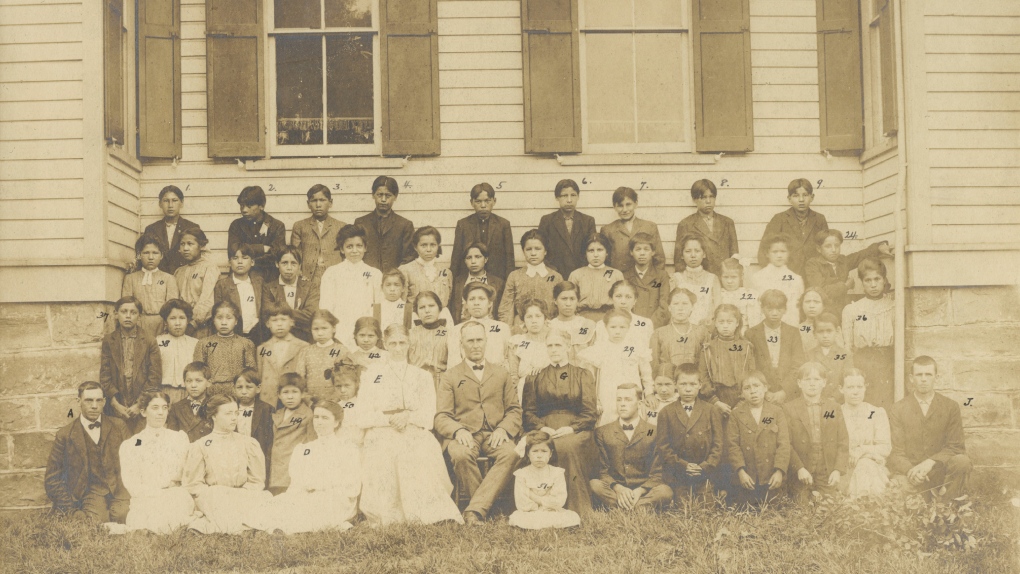
In this photo taken in 1906, provided by the Quaker and Special Collections at Haverford College, teachers and students gather for a portrait at Tunesassa School in Tunesassa, New York. THE CANADIAN PRESS/AP, Quaker and Special Collections, Haverford College

OTTAWA -- A coalition advocating for Indigenous Peoples forced to attend boarding schools in the United States is planning to digitize 20,000 archival pages related to schools that were operated by the Quakers.

Outside of Native Nations, most people aren't even aware these schools were an integral part of history and U.S. federal Indian policy, said Samuel Torres, the deputy CEO of the Native American Boarding School Healing Coalition.

He and his team are trying to change that, drawing inspiration -- and lessons learned -- from Canada's Truth and Reconciliation Commission and the National Centre for Truth and Reconciliation.

READ MORE


mawi'omi : gathering


As a target in the Sixties Scoop, dancing has a special significance for Bert Mitchell. (Stacy Janzer/CBC)

The Lennox Island First Nation on P.E.I. celebrated a mawi'omi on the weekend, with some participants drawing a direct line from tragedies in the past to Indigenous pride in the present.

Mawi'omi means "gathering" in the Mi'kmaw language. This year's festivities included dancing, singing and drumming in Mi'kmaw regalia, as well as art displays.

Wet weather forced celebrations under a tent Saturday, but the sun came out for Sunday.

"To me, being outside, seeing the people going around the sacred arbour, it just warms my heart as a Mi'kmaw person," said Lennox Island Chief Darlene Bernard.

"I love this. It's just wonderful."

The mawi'omi is an important opportunity to pass on traditions and culture on to the community's young people, Bernard said.

"We're seeing all the kids out in their full regalia. They're so proud, and they're dancing. They're out there and they're dancing. They're not shy at all," she said.

"At the end of the day, it's all about the children and how we help them to understand their culture and traditions. And that they can be proud of who they are."

It's something male head dancer Bert Mitchell of Manitouwaba is particularly proud to be part of. 

'I would never give it up again'

This is Mitchell's 13th Lennox Island Mawi'omi. He began dancing when he was a little boy.

"We were a remote community. We didn't have regalia or fancy stuff like that, but the drum would move us," he said.

Darlene Bernard, outside in head dress.
It was wonderful to see the sun come out on the second day of the mawi'omi, said Chief Darlene Bernard. (Stacey Janzer/CBC)

But that ended for him in the Sixties Scoop. Mitchell said he was 11 years old when he was apprehended and "taken out of the culture."

Now that's he had the opportunity to get it back, he said he doesn't plan to stop dancing again.

KEEP READING

Tuesday, August 29, 2023

Sask. First Nation says it's found 93 potential unmarked child, infant graves

A cemetery located near the former site of the Beauval Indian Residential School. (English River First Nation)

A cemetery located near the former site of the Beauval Indian Residential School. (English River First Nation)

SOURCE

A Saskatchewan First Nation now says it has found 79 suspected child grave sites and 14 potential infant grave sites.

"This is not a final number. It breaks my heart that they are likely more," English River First Nation chief Jenny Wolverine said during a news conference in Saskatoon on Tuesday.

English River started searching the site of the former Beauval Indian Residential School in August 2021, using ground penetrating radar.

"We were not sure what to expect and what we would find. But we did know the stories that were shared over generations about the treatment of the students and those students who never returned home," Wolverine said.

The revised total comes after English River First Nation disclosed the discovery of 83 suspected unmarked graves earlier this month.

The First Nation asked for privacy following its initial revelation and had said more details would be revealed during Tuesday's news conference.

Speaking in Saskatoon on Tuesday, Wolverine said disclosing the findings marked the start of a "long and difficult journey."

"As a community and a nation we came together and put our elders and survivors first," Wolverine said.

"We did ceremony to help them come to terms, to heal their spirit."

The English River chief called upon the federal and provincial governments to provide resources for the First Nation's search effort.

"It doesn't all come down to dollars and cents," Wolverine said, visibly choking up for a few moments.

"We have heard 'I am sorry.' Now we need to see action, and that means continuing to bring home the children we lost at the hands of residential schools."

Beauval Indian Residential School was first founded in 1860 and operated for more than 100 years, according to the University of Regina. It was operated by a Roman Catholic mission until 1969.

In 2013, a former dormitory supervisor at the school was convicted of indecent assault and gross indecency for assaults on young boys between 1959 and 1967.

This is a developing story. More details to come.


August 28, 2023 – Wildfires continue to ravage across Canada

The latest news as fires continue to ravage parts of British Columbia and the Northwest Territories and more headlines...

MMIWG BILLBOARDS


‘Hope & Strength’ – New billboards along Hwy. 16 to honour missing and murdered Indigenous women and girls (MMIWG)

August 15, 2023

Carrier Sekani Family Services (CSFS), in partnership with the Highway of Tears Governing Body, is excited to unveil the creation of four new billboards along Highway 16’s notorious ‘Highway of Tears’. This partnership aims to address Recommendation 9 of the 2006 Highway of Tears Recommendation Report, which includes creating a number of billboards to bring further awareness on the issue of missing and murdered Indigenous women and girls (2006:21).

Located between Prince George and Smithers, the billboards feature images and messaging of hope and strength to highlight the value of people in the north and that we are all, as communities, stronger together. As you travel on this stretch of Highway 16 we hope that these billboards will create a moment for pause to remember, honour and to reflect on what we all can do to make this Highway and the communities surrounding it a safer place.

“We hope these billboards act as a visual reminder to travelers to be part of keeping Highway 16 safe for everyone,” said Mary Teegee, CSFS Executive Director of Child and Family Services. “It is time to move forward with Hope and Strength and to honour our loved ones by making Highway 16 safe again.”

The billboards are part of a larger commemorative series project that will eventually include commemorative pillars at each end of the ‘Highway of Tears’, rest-stop signage and more to honour and remember Missing and Murdered Indigenous Women and Girls in addition to providing more education and awareness of safety along Highway 16.

“While these billboards serve a reminder of our loved ones who went missing – we must do more to stop these violent acts committed against our people and people from all backgrounds,” said CSFS Board President and Cheslatta Carrier Nation Chief Corrina Leween. “We must collectively take part in ensuring a commitment to building a safer space for all of humanity. Please ensure that your MLA and MP’s help us achieve safe places and spaces for all.”

The billboards will be erected this week and are booked until 2025.

Contact Person: CSFS Communications: 778-349-1676
Email: communications@csfs.org

**

NEW LICENSE PLATES


60s Scoop film: Birth of a Family


United Way film screening focuses on tragic stories of Sixties Scoop

The film, called Birth of a Family, is screening is Sept. 26

NEWS RELEASE
UNITED WAY SIMCOE-MUSKOKA
**********************

United Way Simcoe Muskoka will be screening the award-winning film Birth of a Family at the Midland Cultural Centre on September 26, 2023, as part of the 2023 Real2Reel Film Festival.  The local charity is partnering with the Barrie Area Native Advisory Circle and Mamaway Wiidokdaadwin to host the evening in recognition of Truth and Reconciliation Week.  

“They say that there can be no reconciliation without truth,” said Brian Shelley, United Way Chief Executive and Philanthropy Officer. “It is important to create space for those with lived experiences to share their stories so that we can begin to move forward with reconciliation in a good way.” 

In this deeply moving feature-length documentary, three sisters and a brother meet for the first time.  Removed from their young Dene mother during the infamous Sixties Scoop, they were separated as infants and adopted into families across North America. Betty Ann, Esther, Rosalie, and Ben were only four of the 20,000+ Indigenous Canadian children taken from their families between 1955 and 1985, to be either adopted into white families or live in foster care.  As the four siblings piece together their shared history, their connection deepens, and their family begins to take shape.


Following the film, Barrie Area Native Advisory Circle’s Heather McIntyre will moderate a panel discussion to further explore the impact of the Sixties Scoop.  

United Way Simcoe Muskoka’s Real2Reel Film Festival is sponsored by the RBC Foundation and aims to reduce stigma and raise awareness of complex community issues. Net proceeds raised through this event will support the United Way’s funding of the Wiijinokiiwag project delivered in partnership between CMHA and the Barrie Area Native Advisory Circle. 

When: September 26, 2023 – 6:30 to 9:30 p.m.

Where: The Midland Cultural Centre, 333 King St, Midland, ONTARIO L4R 3M7

Who: This event is open to the public. Tickets are $7.53

Tickets: https://www.eventbrite.ca/e/truth-reconciliation-film-screening-birth-of-a-family-tickets-700351930477

More Information: https://uwsimcoemuskoka.ca/birth-of-a-family-2023/

This film contains material of a sensitive nature, including the Sixties Scoop, that may be triggering for some individuals. Please take part as you feel comfortable.

Sandy WhiteHawk


Dear Tribal Leaders: Create a STATE ICWA law


Dear Tribal Leader Letter Regarding Uniform State ICWA Law

The Uniform Law Commission is seeking to consult with tribes regarding the need and/or benefit of a uniform ICWA law for those states that either need to update their current state laws or do not have one yet. Consultation will be held via zoom on September 6, with written comments accepted through September 30.  Please see the letter for additional details on the project. Please distribute widely.

ULC ICWA Committee Report to Scope Committee

Dear Tribal Leader Letter

**

State ICWA Law Chart

Over the last week, I've put together a (large, clunky) Google sheets of all the state ICWA laws. It isn't perfect and subject to change as I see problems or people tell me there are problems. Sheets can be difficult, but it is nice to use to keep it updated. Someday I'll learn how to make a proper database, but I know there is a need for this now rather than later.

I've linked to it on the state law page here and the link directly to the sheet is here.


Virginia man reunites with mom 42 years after he was stolen from Chile

 USA TODAY

It has been 42 years since María Angélica González saw her son.

He was a newborn. A nurse told González he needed to be put in an incubator because he was premature. Not long after, she returned with devastating news: The baby was dead.

For 42 years, that's what González believed. For 42 years, it has been a lie.

Gonzalez's son, Jimmy Lippert Thyden, was stolen from González, adopted out to unwitting parents in the United States and raised in Arlington, Virginia. For 42 years, Thyden believed he had no living relatives in Chile, where he was born.

Then one day in April, Thyden read a USA TODAY story about a California man who had learned he was stolen from his mother in Chile and illegally adopted out to an American couple. It got Thyden thinking: Could the same thing have happened to him?

Within weeks, Thyden learned the truth. And last week, González finally got to hug her son.

Jimmy Lippert Thyden's birth mother, María Angélica González, holds him tight on the day they were reunited in Valdivia, Chile on Aug. 17, 2023.
videos and photos at USA TODAY

Chile's stolen children

USA TODAY has been writing about Chile's stolen children since April.

From the 1960s to the 1990s, human rights groups believe that more than 20,000 babies were taken from mostly low-income mothers in Chile and adopted out to unsuspecting parents in foreign countries.

CSU Questioned for Failure to Return Native American Artifacts and Remains


Tribal leaders and California state lawmakers pressed top California State University officials Tuesday about returning nearly 700,000 Native American human remains and items to tribes. They held a press conference at the state capitol, followed by a committee hearing on findings from a state auditor’s report released in June. Tribal leaders and lawmakers say the university is failing to return the remains, which they say is violating federal and state law. The university’s interim president and four other campus representatives are scheduled to testify.

Thursday, August 3, 2023

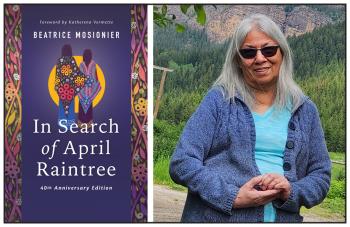
Author’s seminal novel remains relevant even after 40 years


“We knew people don't like us, but we don't know why it could be. You know, because we're brownish and because we're foster kids.” — Beatrice Mosionier, author of In Search of April Raintree
 
By Shari Narine
Local Journalism Initiative Reporter
Windspeaker.com


Little did Beatrice Mosionier expect that her first novel, In Search of April Raintree, would have such a profound impact on Indigenous readership.

But perhaps she should have.

When she was seven or eight years old, she was working in the basement of her second foster home in St. Norbert, a suburb of Winnipeg.

“I got this really powerful knowledge, and it was that I would have these three animals that would guide me: The wolf, the bear and the cougar,” said Mosionier, a Plains Métis woman.

“Later when I finally started talking about it with other people, I was told about guide animals, spirit animals, that give you strength… And it was like I was going to do something special in my life.”

She forgot about the spirit animals until she hit her thirties. In 1980, when Mosionier was 31, her oldest sister Katherine committed suicide. Sixteen years before, her other sister Vivian had taken her own life.

“It was just like things were shifting inside of me. I think that's probably how I came to decide I was going to write a book, and I think that was what led up to this,” said Mosionier.

But when she wrote In Search of April Raintree in 1983, Mosionier never believed it would be published.

Forty years later, Highwater Press is releasing a special 40th anniversary edition of the novel.

Mosionier and her siblings were apprehended in the earliest years of the Sixties Scoop, which saw an estimated 20,000 or more Indigenous children removed from their homes between 1951 and 1984.

Mosionier was taken at the age of three by the Children’s Aid Society of Winnipeg. The loss that resulted from that action was the story she told in the lives of April Raintree and the fictional younger sister Cheryl.

It was a story that resonated mightily with Métis and First Nations readers, as noted in words of praise that accompany the anniversary edition.

In Search of April Raintree was the first book I read that spoke to the Indigenous experience, and it changed me for the better,” wrote Governor General Award winner David A. Robertson.

“I could feel it in my blood memory. Because it was tender and brutal, authentic and unapologetic, heartbreaking and hopeful,” wrote Rosanna Deerchild, host of CBC Radio One’s Unreserved.

“Reading Beatrice Mosionier’s seminal novel was lifechanging. As a young Indigenous woman, it was the first time I felt seen,” wrote Manitoba NDP MLA Nahanni Fontaine.

Those words make Mosionier feel “really humbled.”

She wrote the book “to find answers,” spurred on by the deaths of her sisters.

“I think that’s really hard on a parent…When you lose a child to suicide and then you lose a second child to suicide, there's something majorly wrong,” said Mosionier.

In writing the novel, Mosionier gained personal insight into her own family and into the larger picture of being Métis.

“I was raised in white foster homes since I was three years old. I wasn't connected to—back then we used to call it the Native—Native people,” she said.

“I did get more understandings about the why and everything. Because when I grew up, we didn't know words like ‘oppression’ and ‘racism’ and all the things like that when we're in school…We knew people don't like us, but we don't know why it could be. You know, because we're brownish and because we're foster kids.”

Along with telling the personal stories of April and Cheryl, heartbreaking and uplifting, in turn, Mosionier used Cheryl’s essay writing talent in the book to tell the wider proud Métis history.

Mosionier had to research for Cheryl’s essays. She started watching a Winnipeg television series that had interviews with Indigenous people. Her next-door neighbour, who wasn’t Indigenous, gave her a book by Heather Robertson titled Reservations are for Indians.

“I read that book and then I had a fairly good sense, because back then we didn't have computers and Google and all of that,” she said.

After her book was published, she discovered that St. Norbert had a rich Métis history. She also learned that her father used to play the fiddle.

“I didn't know anything about that. I didn't know. I just didn't know anything positive,” said Mosionier.

While there are brutal scenes in the novel, perhaps the most haunting scene comes in April’s realization near the end, which echoes the words of her broken father: “Baby Anna. Such a small part of our lives. Yet she had changed our lives the most.”

It is when Baby Anna is sick and goes to the hospital that April and Cheryl are wrongfully apprehended, and that single action sets in motion everything that follows.

Forty years later, Indigenous children are still being apprehended at a disproportionate rate.

In Search of April Raintree is one of the all-time great works of Indigenous literature, and it is still as vital and relevant today as it was forty years ago,” wrote Dr. Warren Cariou, a professor at the University of Manitoba.

Mosionier agrees with Cariou’s observation about the relevance of her novel.

But, “I kind of feel sometimes that (the novel) didn't do its job because a lot has changed but a lot has not changed, and sometimes you think it's getting worse,” she said.

If her novel opened the gates for other Indigenous authors, Mosionier says, “I feel good about that.”

And she encourages Indigenous authors to keep doing their strong work, many of whom are now being recognized with awards.

As for her spirit animals who told her she would do something special in her life, Mosionier firmly believes writing In Search of April Raintree was that act.

The special 40th anniversary edition of the novel will be released by Highwater Press in September.

Local Journalism Initiative Reporters are supported by a financial contribution made by the Government of Canada. SOURCE


Wednesday, August 2, 2023

Indigenous Mom Whose Daughter Was Murdered Granted Custody of 4-Year-Old Granddaughter for Second Time

Arlene Ballot and granddaughter Chanel. Photo:

www.CommunityX.com


Despite being granted custody again, Arlene Ballot was ordered to wait until July 31 to begin a three-week transition of custody

As Arlene Ballot prepares to finally pick up her murdered daughter’s child from the couple who have had her for most of her 4 years of life, she can be forgiven for being cautiously optimistic about actually bringing Chanel home.

The July 17 decision to award Ballot custody is the second time the Selawik Tribal Court in Alaska has ordered Chanel, an indigenous child, to be returned to her grandmother.  Nikki Richman, who is not related to Chanel, gained temporary custody through the child’s father, Eric Rustad, who murdered Chanel’s mother Kristen Huntington in January 2020.

"This is three years too long. They shouldn't be allowed to keep dragging it on, abusing the court system to keep this child from her grandmother," Antonia Commack, Huntington’s friend since childhood who is also involved in the legal battle, tells PEOPLE. "I knew in my heart that being quiet was wrong and it was time to speak up."

And a recent Supreme Court decision might add some extra weight going forward.

The week before the latest Selawik Tribal Court ruling, The Supreme Court upheld the 1978 Indian Child Welfare Act, which says the first priority is to put the child in the care of a member of their extended family. If that is not possible, the child should be placed with a member of their tribe. The third option is to look for "other Indian families." Only after those three options have been exhausted will they be eligible to be placed with a non-Native family. 

In their December ruling, the Selawik Tribal Court found tribal elder Ballot able to meet the child’s needs and, in addition, "can better connect her to her Native culture." 

KEEP READING

Tuesday, August 1, 2023

#MMWIP Allies from Saskatchewan voice support for landfill search | APTN News


The Federation of Sovereign Indigenous Nations is voicing their support for a search of Winnipeg-area landfills for the remains of Indigenous women. A delegation from Saskatchewan that included a motorcycle group made the trek to support in person.

 #aptnnews #aptnmanitoba #mmiwg


Happy Visitors!

WRITTEN BY HUMANS!

WRITTEN BY HUMANS!

Blog Archive

Featured Post

Your History Class Was a F*cking Lie | #NOMOAR

  Your History Class Was a F*cking Lie by Sean Sherman (Or: How the American Educational System Has Always Been a Racist Propaganda Program...


Native Circles

Native Circles
click logo for podcasts!

Most READ Posts

Bookshop

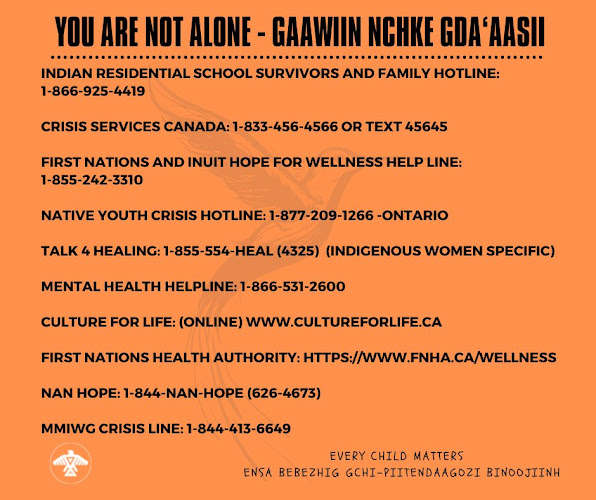
You are not alone

You are not alone

To Veronica Brown

Veronica, we adult adoptees are thinking of you today and every day. We will be here when you need us. Your journey in the adopted life has begun, nothing can revoke that now, the damage cannot be undone. Be courageous, you have what no adoptee before you has had; a strong group of adult adoptees who know your story, who are behind you and will always be so.

Diane Tells His Name


click photo

Lost Birds on Al Jazeera Fault Lines

Lost Birds on Al Jazeera Fault Lines
click to read and listen about Trace, Diane, Julie and Suzie

NO MORE STOLEN SISTERS

NO MORE STOLEN SISTERS
click image

ADOPTION TRUTH

As the single largest unregulated industry in the United States, adoption is viewed as a benevolent action that results in the formation of “forever families.”
The truth is that it is a very lucrative business with a known sales pitch. With profits last estimated at over $1.44 billion dollars a year, mothers who consider adoption for their babies need to be very aware that all of this promotion clouds the facts and only though independent research can they get an accurate account of what life might be like for both them and their child after signing the adoption paperwork.

Original Birth Certificate Map in the USA

Google Followers