They Took Us Away

They Took Us Away
click image to see more and read more

it's free

click

How to Use this Blog

BOOZHOO! We've amassed tons of information and important history on this blog since 2010. If you have a keyword, use the search box below. Also check out the reference section above. If you have a question or need help searching, use the contact form at the bottom of the blog.


We want you to use BOOKSHOP to buy books! (the editor will earn a small amount of money or commission. (we thank you) (that is our disclaimer statement)

This is a blog. It is not a peer-reviewed journal, not a sponsored publication... WE DO NOT HAVE ADS or earn MONEY from this website. The ideas, news and thoughts posted are sourced… or written by the editor or contributors.

EMAIL ME: tracelara@pm.me (outlook email is gone) THANK YOU CHI MEGWETCH!

SEARCH

Sunday, August 21, 2022

GOOD NEWS: 21 pro-ICWA Amicus Briefs


Amicus Briefs in Haaland v. Brackeen

We have a total of 21 pro-ICWA Amicus Briefs. Here they are in some rough categories and some VERY rough summaries. In writing this post, I became overwhelmed at this stunning array of briefs and support for ICWA.

Government Briefs

NARF's Tribal Government and Organizations Brief : this brief has the sign on of nearly 500 tribes and over 60 tribal organizations. It discusses ICWA as an exercise of the trust responsibility, and the political relationship of tribes.

Congressional Brief : 87 Members of Congress signed this brief defending ICWA in the four principle arguments in the case

State AG Brief : 23 states and the District of Columbia signed on to this brief, which highlights how ICWA allows and encourages tribal-state relations in the area of child welfare.

LA County Brief : from the county counsel at the largest child welfare system in the country, it discusses the importance of ICWA to LA County practice with a focus on relocation in particular

Semi-Party Brief

Bradshaw Brief : This brief is unique in that it primarily tells the story of Robyn Bradshaw, the grandmother who adopted her granddaughter who was the subject of the claims of the Cliffords, one of the three foster family plaintiffs in the case. Because the procedural posture of the case below, the Cliffords' narrative of facts was allowed to go unchecked throughout the life of the case until now.

How Child Welfare Works Briefs

Family Defenders : a brief from parent attorneys/family defenders in more than 8 states, this brief discusses the constitutional rights afforded to parents and families, how those intersect with the child welfare system, and the importance of ICWA in that structure. It directly addresses the arguments made by the other side regarding the child welfare system.

American Bar Association : This brief directly takes on the contention that child welfare is the sole province of the states as well as discussing the legal complexity of the child welfare system.

Casey Family Programs and 26 Other Child Welfare and Adoption Organizations : A continuation of the original, wildly successful, "gold standard" brief from Baby Girl, this brief focuses on child welfare best practices and how ICWA creates, promotes, and supports them.

National Association of Counsel for Children and 30 Other Children's Rights Organizations : In addition to discussion the Constitutional rights of families, this brief directly addresses how ICWA supports the best interests of children in state proceedings.

Former Foster Children : One of the briefs with a particular place in my heart, this brief allowed Native youth to tell their lived experience to the Court.

How Adoption Works Brief

Non-Native Adoptive Parents : while the plaintiffs in this case were not adoptive parents, this brief directly addresses how ICWA actually works in voluntary adoptions.

Law Professor Briefs

Ablavsky Brief : The originalism brief

Administrative and Constitutional Law Professors : this brief addresses three main issues--federal power, anti-commandeering, and delegation

Indian Law Professors : this brief focuses on the exclusive power of Congress to legislate on behalf of Indians as a political class

American Historical Association : this brief provides historical context, especially around the early efforts (or lack thereof) of state child welfare systems and Native children

Medical Organizations

American Academy of Pediatrics and the American Medical Association : ICWA works directly to address the attendant physical and emotional trauma of federal and state policies designed to destroy tribal families and extended tribal networks

American Psychological Association (specifically including the associations of Texas, Louisiana, and Indianan) and the Society of Indian Psychologists : The benefits for children of being parented by Indian adults

Interest Groups

ACLU : ICWA is not a race based law

Constitutional Accountability Center : Originalism and anti-commandeering

National Indigenous Women's Resource Center : The ramifications, specifically to VAWA, if "Indian" is a racial classification

Sen. Abourezk/Lakota People's Law Project : Passage of ICWA and issues in South Dakota

Face the Truth


Wednesday, August 17, 2022

Prey | Official Trailer | Hulu

⭐⭐⭐⭐⭐⭐⭐⭐⭐⭐So many stars of praise for this movie!

Monday, August 15, 2022

What the hell is a Papal Bull?


What you should know: Doctrine of Discovery

Nederlands: Paus Nicolas V oil on panel 1612-1616
Nederlands: Paus Nicolas V oil on panel 1612-1616 (Photo credit: Wikipedia)

Volume 2, Issue #11, American Logo newsletter by Bill Annett

We are not descended from men who kept silent.  -Edward R. Murrow


Ask an average American (or Canadian): “What is the Doctrine of Discovery?” You’re likely to get a blank stare, an uncomfortable pause, the changing of the conversation to politics or rock stars, or perhaps the stuttered response: “You mean like Dr. Oz?”

And yet the DoD, as it is referred to by academics, unsuccessful politicians, native people and others on the receiving end, is a basic legal assumption, born of Holy Writ and therefore both sanctified and legal, 500 years ago, when the sun rotated around the European world and the earth was flat. Was it just a naïve part of that past, that ignorant and illiterate peasant flotsam of Western Europe, and now long forgotten?

Hell, no. That incredible, inhuman law, mindset and modus operandiis still alive and well, solidly embedded in the ubiquitous practice of governing law.  And where? Today, it dominates, subtly but pervasively as a daily fact of life, over 1.5 million people in Canada, three million in the U.S., six million in Mexico and a massive population in the rest of the Hemisphere, as well as in Australia, New Zealand and large swatches of Southeast Asia and Oceania.  Perhaps 400 million people in total, more than the entire U.S. population.

What is it and how did it get its start?

Pope Nicholas V, on the 18th of June, 1452, stamped his bulla, or papal seal, on the bottom of a document, a papal bull known as Dum Diversas. Dumb indeed, but with enormous ramifications.

Actually, Pope Nicholas V was a builder, and like Hitler’s autobahns in  the Thirties, he repaired infrastructure such as aqueducts destroyed during the collapse of the Roman Empire. That construction, as a matter of  fact, was analogous to the Roman Church’s succeeding the Roman Empire as the confluence and tributary conveying the brutality of empire masquerading as civility and Christian humanism.

But Nicholas is best remembered for his political balancing act between the Portuguese king and the threat of the Ottoman Empire.  One element was the papal bull Dum Diversas, which granted Portugal  “full and free power”:

 to invade, search out, capture, and subjugate the Saracens and pagans and any other unbelievers and enemies of Christ wherever they may be… and to reduce their persons into perpetual slavery.

A follow-up document, Romanus Pontifex, allowed that same empire to seize for itself the lands of any non-Christians they encountered. The Doctrine of Discovery was established.

After Columbus’s “discovered”  the New World, (although indigenous people had practised Occupy Turtle Island for some 10,000 years) Pope Alexander VI in 1493 issued another bit of papal bull known as Inter Caetera, commanding Spain

to instruct the aforesaid inhabitants and residents and dwellers therein in the Catholic faith, and train them in good morals…”

opening the way for Catholic missions to conquer everything and anybody in the new world, except for the newly arrived Portuguese.

England quickly got into the act four years later, when King Henry VII granted John Cabot rights to possess all lands in the New World not already claimed by Portugal and Spain. In return, John Cabot, like an obedient Mafia soldier, wet the beak of his king with 20% of the total take.  All of which not only legitimized but commanded the enslavement, pillaging and killing of millions of indigenous peoples all over the world. The toll (as we palefaces like to journalize) so far for the Western Hemisphere alone totals around 100 million people.  According to one academic, (Anthony Hall of the University of Lethbridge) “the greatest re-engineering of a civilization in history.”

Does the DoD still live?  One early Supreme Court case, Johnson v. M’Intosh in 1823, according to Robert Miller,* resolved a tribal land dispute, ruling that Native American land is inalienable. They cited the Doctrine of Discovery, which stated that Christian Europeans owned all land explored and claimed, and in any event, only the federal government could buy land occupied by Native Americans, meaning that the federal government could therefore pretty much name its own price.

Supreme Court cases as recent as 1973 and 1990 have used the Doctrine of Discovery to delimit native rights to prosecute any individuals on their lands for crimes. In 2005, certain tribes were denied sovereignty and the ability to repurchase traditional land previously held.

Apparently, Euro-Americans possessed the only valid religions, civilizations, governments, laws, and cultures, and Providence intended these people and their institutions to dominate the North American continent. The human, governmental, and property rights of Native Americans were almost totally disregarded as Discovery and then Manifest Destiny directed the United States’ expansion. Under Manifest Destiny it was ‘clear’ that God wanted Indians to get out of the way of American progress.”

In other words, a significant part of  American political practice blindly follows the Doctrine of Discovery, that ancient tossing off of political intervention by the Roman church we all accept whether we want to or not. (It’s part of of the Holy Church’s Concordat with all civilized nations.) American acceptance of this Doctrine is a modern world atrocity that parallels a universe of conflicting opinion, often denied, pernicious in its global fact.  

Slavery, war, genocide are all facts that flow from this medieval nonsense.  It defined the treatment of the world’s indigenous people that remains today in all but the most enlightened societies.  It has even – in a minor key – warped our confusion about immigration, notably the migration of indigenous peoples in the Americas, many of whom are in constant flux (perennially fluxed) and on the move because U.S. policy vis-a-vis Latin America has delimited economic opportunity.

Professor Miller has delineated and compared the Doctrine’s effects as well as practice in Australia, Brazil, Canada, Chile, England, New Zealand, Portugal, Spain and (of course) the United States.

*The International Law of Colonialism: A Comparative Analysis, Robett J. Miller, Lewis & Clark Law Review

This was published with permission back in 2012

Native Lawyering

Fletcher and Singel on Lawyering and the Indian Child Welfare Act

Fletcher and Singel’s paper, “Lawyering the Indian Child Welfare Act,” has been published in the Michigan Law Review. We’re honored to be part of a symposium on civil rights lawyering!

Our abstract:

This Article describes how the statutory structure of child welfare laws enables lawyers and courts to exploit deep-seated stereotypes about American Indian people rooted in systemic racism to undermine the enforcement of the rights of Indian families and tribes. Even when Indian custodians and tribes are able to protect their rights in court, their adversaries use those same advantages on appeal to attack the constitutional validity of the law. The primary goal of this Article is to help expose those structural issues and the ethically troublesome practices of adoption attorneys as the most important Indian Child Welfare Act (ICWA) case in history, Brackeen v. Haaland, reaches the Supreme Court.


Wednesday, August 10, 2022

Trauma resilience key to advocacy


Provided by StrongHearts Native Helpline 

How Advocates Help 

In the field of domestic and sexual violence, an advocate’s work bridges the gap between a victim-survivor and service providers. They help their contacts recognize abuse, assess the risk of danger and to plan for safety. They offer peer support, crisis intervention and assistance locating resources. Ultimately, the work of an advocate can be lifesaving. 

The Impact and Vicarious Trauma 

Advocacy may sound like a rewarding job because saving lives is undeniably an honorable profession. That may be true, but the fact of the matter is the work of an advocate is steeped in trauma. Those who work in the field may even be victim-survivors and their work can be triggering. Nonetheless, advocates are committed to their work. Despite the risk of having to relive their own trauma — the desire to help others — is as important to them as it is to their contacts. 

Vicarious Trauma is work-related trauma exposure. It includes secondary stress, compassion fatigue and all the negative impacts of work-related trauma exposure. It is often experienced by people in the fields of child welfare and protection or domestic and sexual violence. It can leave advocates feeling overwhelmed with worry but hopeful they did enough to help. 

Resources, Support and Safety 

When it comes to Native Americans and Alaska Natives impacted by domestic and sexual violence, advocates are faced with resource disparities beyond compare. In StrongHearts’ database, there are 272 Native-centered service providers compared to more than 3,500 non-Native service providers. The picture is even bleaker when looking at shelters, where there are only 59 tribal shelters compared to more than 1,500 non-tribal shelters. 

When advocates realize that they are limited by available resources, they develop an even stronger desire to provide emotional support and lifesaving safety planning. In many cases, it’s all they can do. It’s what our relatives have done for centuries. 

Resilience, Transformation, Satisfaction 

By observing resilience in their clients and helping them to overcome challenges, advocates themselves can gain vicarious resilience, vicarious transformation and compassion satisfaction. 

Vicarious Resilience: Survivors are hearty and their ability to move forward and beyond their experience can encourage resilience in the work of advocacy.

Vicarious Transformation is about the engagement with survivors, what we learn and what we get out of it, and how it can transform us.

Compassion Satisfaction is about feeling good in the work of advocacy. It happens when advocates are able to help people efficiently and effectively. It may involve a policy change in the work environment that came as a result of an advocate's suggestion. 

The benefits of vicarious trauma are a sense of strength and resilience gained only through contact with survivors, what we learn through them, and the difference made not to one, but everyone impacted by domestic and sexual violence. 

Culture Is Key 

“Trauma resilience is a common bond between Native peoples,” said StrongHearts Chief Executive Officer Lori Jump (Sault Ste. Marie Tribe of Chippewa Indians). “Our advocates have the shared goal to eradicate violence and to help our people find a path toward healing. Our people have come this far because it is our way not to leave anyone behind. Culture is key to ensuring a better future for the next generation.” 


About StrongHearts Native Helpline

StrongHearts Native Helpline is a 24/7/365 culturally-appropriate domestic, dating and sexual violence helpline for Native Americans, available by calling or texting 1-844-762-8483 or clicking on the chat icon at strongheartshelpline.org.

Source: “What Is Vicarious Trauma,” Michigan Victim Advocacy Network. https://mivan.org/paper-to-practice/#vicarious

Monday, August 8, 2022

My family was torn apart before the Indian Child Welfare Act passed. Will SCOTUS upend it?


Terria Smith is editor of News from Native California magazine and a member of the Torres Martinez Desert Cahuilla Indians. She is also a member of The Desert Sun Editorial Board. Email her at 
terria@heydaybooks.com

(EXCERPT) I support ICWA too. But to me a ruling upholding ICWA in the Brackeen v. Haaland case is not just about doing the right thing for tribal children. For me, it is very personal.

Around 1949, when my mother was an infant and her older brother was about 5 years old, they were taken from their home on the Torres Martinez Desert Cahuilla Indian Reservation. At the time, my uncle only spoke Cahuilla. They went to live in a foster home with a non-Native family in Riverside. The parents of this family did not treat my mother and uncle like their own. They did not love them. They took them in for the foster care money. They were especially mean to my mother.

The foster parents made it very clear that my mother and her brother were not part of their family. The resounding message that came from the community that my mother and uncle grew up in was that they were different.

My mother grew up wondering where she belonged and who her real family was. What she didn’t know was that just on the other side of the county, her real family never forgot about her and her brother. And when she was a teenager, her only sister — my aunt — found her and eventually brought her back to our people. But irreparable damage was already done. My mother and uncle lost their tribal language. They lost years with some of their closest family members (many even passed away before they had the chance to meet them). They had to relearn our customs and traditions. There is a deep emotional wound of just being wronged.

There are thousands of cases out there like my mother’s.

PLEASE READ

Podcast: Behind the Bastards (The Woman who invented adoption)

 Editor Note: Georgia Tann was well-connected, rich child trafficker. TLH


"Do the Best You Can" John Trudell on Guilt, Blame & Intelligence

Sunday, August 7, 2022

Australia: Second birth certificate created a legal fiction

Across the globe, adoptees are speaking up... and that is good... TL Hentz (blog editor)

My birth mother was not allowed to name her baby. But the name she gave me in her heart is real

Legislation once erased the original names and connections of forcibly adopted children. But even with this now addressed, family remains complicated

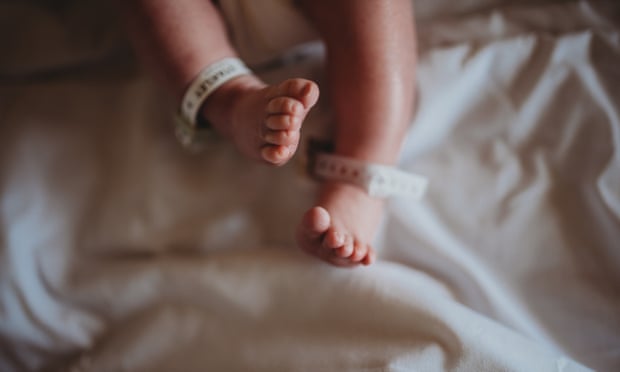
baby toes
The records of somewhere between 140,000 and 250,000 forcibly adopted babies were sealed by law, with all connection to their original family labelled top secret. Photograph: Cavan Images/Getty Images/Cavan Images RF
Anonymous
Sat 6 Aug 2022
It wasn’t until 2020, at the age of 52, that I was given the right to use my name. But as with all things adoption, nothing is quite as simple as it seems. Like other babies given to infertile couples under Australia’s “forced adoption” policies, my birth certificate was cancelled soon after I was born; a second birth certificate created a legal fiction to make it look like I was born to the infertile couple.

With a stroke of a pen I was denied connection with all of my family – my cousins, aunts, uncles, grandmothers – and my first given name. After a few months I was handed over to the couple who took me home. I had no social history, no medical, racial or genetic history. It was all top secret.

The records of somewhere between 140,00 and 250,000 Australian babies were sealed by law, with a promise that the truth would never be revealed.

Things on that front have gradually changed, and adopted people are now allowed to use the names on either of our birth certificates. When I first read about these changes I cried – it was the first time I had seen the dual identity and divided loyalty that shadows adopted people fully acknowledged.

But on my first birth certificate, the name my mother chose for me is missing, and I am identified by the word “Unnamed” with my mother’s surname. According to that certificate, my name is Unnamed Champion. My second birth certificate states the name given to me by my adopted family.

The Integrated Birth Certificate allows me to choose either of these two names, but it seems unhelpful for adopted people to be known as “Unnamed” when the intention of Integrated Birth Certificates is to help adopted people connect with their full identities.

It has taken me many months to realise that this profound breakthrough does not achieve what it set out to do: it does not allow me to see the name my mother wanted for me.

The only place my mother was ever allowed to use my name was inside her mind. While she was being told to stop crying by the “real” mothers breastfeeding their babies in the beds beside her, while she was given milk-suppression drugs without her knowledge, while she signed all the papers because she did everything she was told, the name was in her head and heart: Jona.

Like the perpetual state of longing, the name haunted her for years, though even now Jona still doesn’t exist. The state of New South Wales sent me to live with people who called me something else.  They called me Eudora*, the name I’ve been called for over 50 years.

The simple facts are this: I was born and hidden where my mother couldn’t find me. She had no advocate, and she was a minor, with no legal capacity to sign me away. A girl like her was not allowed to name her baby.

That was part of the punishment of being shamed and blamed in the birthing ward as a girl gone bad. Above the bed was a three letter sign, “BFA”, to identify that here was a Baby For Adoption.

“Unnamed Champion”. Born in a small regional town on the outskirts of Sydney, on a midwinter morning in the late 1960s, and no mention anywhere of “Jona”. For me, the confusion and cognitive dissonance seems impossible to resolve.

I recently explained to a psychologist that I have two families with two divergent histories. I look like these people. I sound like these people, I think and behave like these people, the people I was born to.

My brother, on the other hand, he is one of those people, from the other side of my life, the people I was sent to. My mum is one of those people. And my dad, well, he is one of those people too.

For an adopted person, the idea of dad is complicated. The idea of mum is complicated. The idea of brother and sister, home and belonging – it’s all complicated. Even your name, and the names we use to identify family – none of it is easy to understand.

Think of the words – mum, dad – how can anyone experience them without a visceral response in the belly, in the heart, in the throat? When I hear those words, there is a glitch, a realigning moment, while I track who holds those roles in my life. None of it gets easier over time.

In 2021 I applied to the Department of Community and Justice for my birth records. It is now July, 2022. A few months ago, I was asked to place an extra signature on the form, and told to wait another nine months for my Integrated Birth Certificate to arrive. This document gives me the choice of using either the name from my first birth certificate, or the second one – whichever I prefer.

After a whole lifetime, I finally get to choose. But first I must wait a whole new gestation period for the documents to arrive. And then, I will not be given the choice between identifying as Jona or Eudora. I will be offered the choice between Eudora or Unnamed.

The legislation governing my separation from my birth mother erased the history written into my body as though my DNA never existed. But it does exist, it’s real. And the name she calls me in her heart is real too.

* Name has been changed

#TakeItAllBack #AdopteeVoices


Saturday, August 6, 2022

Unrestricted Access for Massachusetts ADOPTEES

 GOOD NEWS!

Beginning November 3, 2022, Massachusetts will restore the unrestricted right of all adult adopted people to request and obtain their own original birth certificates.

Baby blue background with donut on the left hand side with a a bite out of it. As the image pans right, additional bites remove parts of the donut until crumbs are left at the right side of the image. Above the donut bite images are the words "Say goodbye to the donut hole," which points to the crumbs. Under the crumbs is the date 11/03/2022

Prior to November 3, 2022, adult adopted people born between July 17, 1974, and January 1, 2008, will be unable to obtain their own OBCs, except by court order (what’s been known as the Massachusetts “donut hole”). The new law eliminates the donut hole.

* (g) If a person shall have been adopted by judicial decree, the clerk of the town where such person was born or the state registrar shall receive the certificate of such adoption issued under the authority of section 6A of chapter 210 or a certified copy of the decree for such adoption, whether issued by a probate court for the commonwealth or by the appropriate court of any other state or country. Except as hereinafter provided, said clerk or state registrar, after receiving such certificate of adoption or any such certified copy, shall forthwith correct the record of birth of the person so adopted. If such certificate or certified copy does not contain the facts relative to the adopting parents hereinafter required for correcting such record, the clerk or state registrar shall not correct such record until he has received an affidavit, signed and sworn to by the adopting parents, or by the person adopted, furnishing such facts.  If a person who was in the custody of the department of children and families is adopted and the adopting parents surrender the person back to the department, that person shall have the right to change the birth certificate back to that person’s biological name.

MORE DETAILS HERE  

You are able to apply for a copy of a birth record established prior to an adoption (without first obtaining a court order) if you are:

An adoptee who was born in Massachusetts on or before July 17, 1974.

https://www.mass.gov/how-to/apply-for-a-pre-adoption-birth-record


more news


DEADLINE: Tribes urged to sign amicus brief to protect Indian Child Welfare Act


SCOTUS will soon hear a case that could strike down adoption protections for Native children.


WASHINGTON — Tribal advocates are becoming increasingly worried that the U.S. Supreme Court could strike down all or parts of the Indian Child Welfare Act (ICWA) after it hears Haaland v. Brackeen this fall. 

In short, Brackeen is a lawsuit brought by Texas and several individual plaintiffs, who all allege that ICWA, passed by the U.S. Congress in 1978, is unconstitutional for several reasons, including alleged equal protection violations.

If the law, which calls for Native kids in the adoption and foster care systems to be placed with Native families and tribes, is struck down, tribal advocates argue that irreparable harm will be caused to such children, families, and tribes — for cultural, social, political, jurisdictional, and sovereignty-based reasons.

The Native American Rights Fund (NARF) details the case from its perspective here.

Texas and individuals who oppose ICWA argue in part that it may not always be in the best interests for Native children to be placed with Native families and tribes, and that it violates the U.S. Constitution through its pro-tribal requirements.

Elizabeth Brando, development director with the National Indian Child Welfare Association, says that as of last Friday 43 tribes and 7 organizations have signed on to a tribal amicus brief that makes the tribal case that ICWA is constitutional.

“We are trying to get to 500+ tribes signed on by next Tuesday’s August 9th deadline,” Brando tells Indigenous Wire via email.

In order to ensure that the Tribal Amicus Brief is finalized and printed in time for delivery to the Supreme Court, the deadline for signing on to the brief will be Tuesday, August 9,” Dougherty Lynch added. “As with past briefs in this case, there will be no cost to sign on to the brief.” 

Dougherty Lynch said tribes or tribal organizations interested in signing on should send NARF an email from an individual (chairperson, executive director, general counsel, outside counsel, etc.) or body (tribal council, board of directors, etc.) authorized to speak on behalf of the tribe, asking to be added as a signatory on the brief, and the tribe’s name as it should be listed on the brief. 

Her email address is dougherty@narf.org.

KEEP READING

Thursday, August 4, 2022

Our Sacred Sovereignty, Bad History


I have some theories myself: Modern to Ancient History is fake. Why? It's sorcery. It's to hide their theft.  They = Invisibles.

My latest book:  Finding the Invisibles: A True Story (free read) website

(Blog Editor) Trace (Type O bloodtype) Hentz 

 I AM NO LONGER ON tWITTER/X 


This makes me happy:


FREE READ: https://www.findingtheinvisibles.com

👇👇👇

CHAPTER THREE (MY FAVORITE)

https://www.findingtheinvisibles.com/2023/08/chapter-three-way.html

Wednesday, August 3, 2022

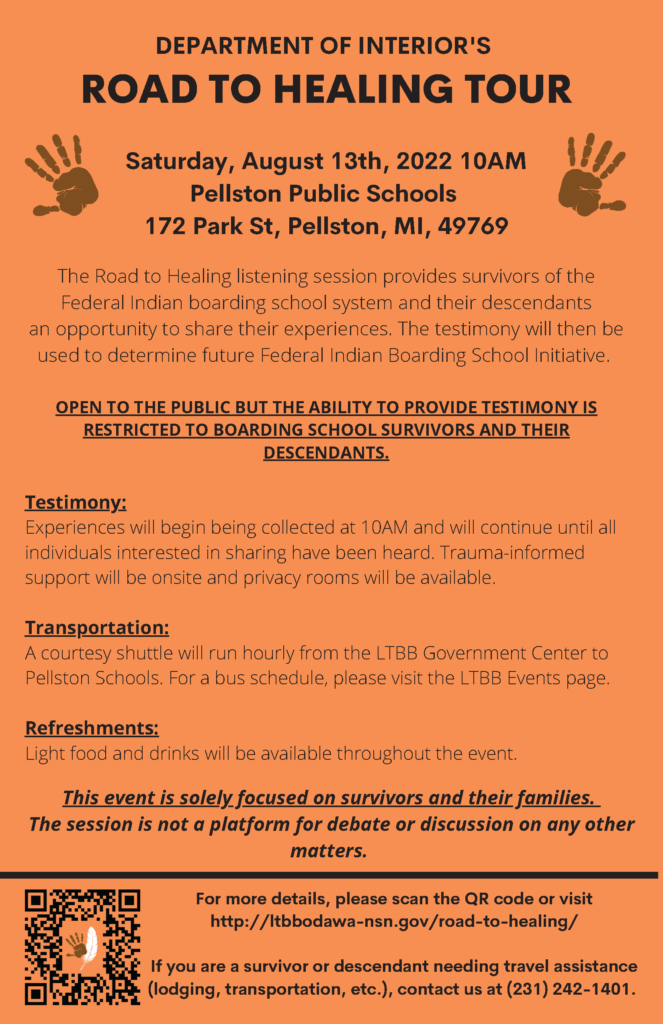
Road to Healing Tour goes to Michigan


Equal Right for Adoptees: OBC Access


OBC ACCESS: Original Birth Certificate has all the names and information on your birth record that adoptees need to have


Happy Visitors!

WRITTEN BY HUMANS!

WRITTEN BY HUMANS!

Blog Archive

Featured Post

Your History Class Was a F*cking Lie | #NOMOAR

  Your History Class Was a F*cking Lie by Sean Sherman (Or: How the American Educational System Has Always Been a Racist Propaganda Program...


Native Circles

Native Circles
click logo for podcasts!

Most READ Posts

Bookshop

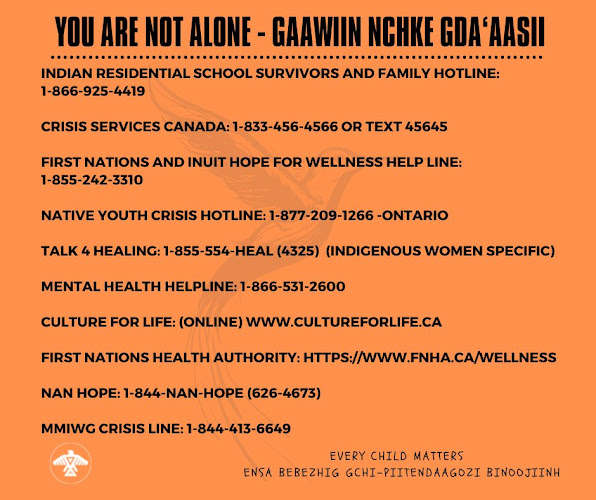
You are not alone

You are not alone

To Veronica Brown

Veronica, we adult adoptees are thinking of you today and every day. We will be here when you need us. Your journey in the adopted life has begun, nothing can revoke that now, the damage cannot be undone. Be courageous, you have what no adoptee before you has had; a strong group of adult adoptees who know your story, who are behind you and will always be so.

Diane Tells His Name


click photo

Lost Birds on Al Jazeera Fault Lines

Lost Birds on Al Jazeera Fault Lines
click to read and listen about Trace, Diane, Julie and Suzie

NO MORE STOLEN SISTERS

NO MORE STOLEN SISTERS
click image

ADOPTION TRUTH

As the single largest unregulated industry in the United States, adoption is viewed as a benevolent action that results in the formation of “forever families.”
The truth is that it is a very lucrative business with a known sales pitch. With profits last estimated at over $1.44 billion dollars a year, mothers who consider adoption for their babies need to be very aware that all of this promotion clouds the facts and only though independent research can they get an accurate account of what life might be like for both them and their child after signing the adoption paperwork.

Original Birth Certificate Map in the USA

Google Followers