They Took Us Away

They Took Us Away
click image to see more and read more

it's free

click

How to Use this Blog

BOOZHOO! We've amassed tons of information and important history on this blog since 2010. If you have a keyword, use the search box below. Also check out the reference section above. If you have a question or need help searching, use the contact form at the bottom of the blog.


We want you to use BOOKSHOP to buy books! (the editor will earn a small amount of money or commission. (we thank you) (that is our disclaimer statement)

This is a blog. It is not a peer-reviewed journal, not a sponsored publication... WE DO NOT HAVE ADS or earn MONEY from this website. The ideas, news and thoughts posted are sourced… or written by the editor or contributors.

EMAIL ME: tracelara@pm.me (outlook email is gone) THANK YOU CHI MEGWETCH!

SEARCH

Thursday, September 19, 2019

How differently the Canadian government engages with Tribal Nations

Somehow the final passage ("royal assent") of this bill in Canada slipped our attention back in June. Initially, we saw it referred to as a "Canadian ICWA", but it seems fair to say that it doesn't quite achieve that level of protection for Native children and families. If nothing else, it illustrates just how differently the Canadian government engages with the tribal nations within its borders compared to the U.S.. We want to add a large caveat, which is that none of us are experts on Canadian law or child welfare.
However, those that are put together a really helpful publication which is available here, and is well worth your read (it made us think about if ICWA would get passing grades):
From the Jurisdiction section of the report:
Why We Give the Bill a ‘D’ on this:
IN A HISTORIC FIRST FOR CANADA, the Bill purports to recognize Indigenous peoples’ inherent jurisdiction. For example, section 8(a) of the Bill affirms “the rights and jurisdiction of Indigenous peoples in relation to child and family services”. This positively worded language is also noted in the Bill’s introduction and summary. Similarly, section 18(1) states that the “inherent right of self-government recognized and affirmed by section 35 of the Constitution Act, 1982 includes jurisdiction in relation to child and family services, including legislative authority in relation to those services and authority to administer and enforce laws made under that legislative authority.” Section 18(2) affirms that this right includes the right to “provide for dispute resolution mechanisms.”
As there are no section 35 cases that recognize an inherent right of self-government for Indigenous Peoples or that have recognized an Aboriginal or Treaty right over child and family services law-making, this is a significant step forward.
This is not, however, a recognition of jurisdiction that removes all federal or provincial oversight, power or intervention. By recognizing jurisdiction over child and family services as a section 35 right, the federal government immediately re-asserts its power to unilaterally infringe or limit that right, a power upheld by court cases such as Sparrow. The legislation sets legal limits in terms of Indigenous laws being subject to Charter and Canadian Human Rights Act and the BIOC. It also sets practical limits in terms of the virtual necessity of negotiating coordination agreements with the federal and provincial governments, and in the glaring absence of any provisions for funding. At best, this could be interpreted as an acknowledgment of concurrent (or shared) jurisdiction, a matter on which Bill C-92 should be more clear.
***
Further, section 23 states Indigenous laws only authoritative if they can be applied in a way that “is not contrary to the best interests of the child.” As previously stated, Indigenous laws have upheld the best interests of Indigenous children for thousands of years. The concern about this limit is how the BIOC doctrine has been interpreted and applied by courts, non-Indigenous governments and decisions makers to apprehend Indigenous children and separate them from their families, communities and territories for the past 50 plus years.

Bill C-92, An Act Respecting First Nations, Inuit and Métis Children, Youth and Families

by Kate Fort

Wednesday, September 11, 2019

The New Normal: DNA & Adoptee Search

I feel like I'm a victim of a witness protection program called closed adoption , though I didn't ask to be... Trace
Reblog from 2014


By Trace L Hentz, Blog Editor

Whenever I have a birthday I think of all the years I searched for my parents. It's true that laws prevented me from ever finding them. Laws didn't stop me. I met my dad in 1995. We did a DNA test to prove paternity. It was 99.9% that Earl was my dad.


(2014) Patricia and I are still finishing up the new anthology CALLED HOME, very important history as a collection of adoptee narratives and the historical truths about adoption in Indian Country.  These voices of adoptees are at the heart of what I do. They are the reason there is a blog AMERICAN INDIAN ADOPTEES.

Right now Karen Vigneault and I are working with about 20 adoptees who are trying to find their families. Because of the adoption laws in the USA, we are seeing the “New Normal” for adoptees is having a DNA test.  They have no choice with the laws not allowing adoptees to have access to our own names, our parent’s names and our tribal nations, and we are still denied our basic rights as human beings and citizens of sovereign nations.

Our adoptive parents who raised us may or may not realize that we NEED information and our ancestry and medical background.  (An adoptee can love more than one set of parents and there is no need to panic!) Adoptees tell me they are afraid to search because of their adoptive parents! That fear has to stop because if you wait, you may never get to meet your mother or father!

One of the adoptees in the new anthology talks about finding new cousins who are trying to figure out who her mother is.

This is the new normal. This is not right but because of the adoption industry and their billion dollar earnings, we adoptees are still at the bottom of the totem pole as far as our rights.

I don’t know how many times I have said to an adoptee do not delay your search. If you do get a name or phone number, make the call. Have a friend with you to keep you calm. Write a set of questions. Just make contact then offer to send a letter explaining what you know about your first family. Send them your phone number so they can call you back.

Give people time to adjust to the truth that you are definitely one of their family members.

If you get your DNA results,  which is the new normal, make contact with cousins who share your DNA! Give them your birth date and let them help you try and figure out how you are all related.

The new normal isn’t fair but we’ll use this until the laws change.

Update: One of the adoptees in the book Stolen Generations is moving to Michigan to start a new life with his parents. He found them using a DNA test. Both his parents were looking for him but didn't know how. Drew found them. He's finally in reunion after 40+ years.

The 2nd Edition of Called Home: The Roadmap has a chapter about using your DNA results to do a court order to open your records.  ICWA has a provision for this. Please read this book.

Ottawa ordered to compensate First Nations children impacted by on-reserve child welfare system

Assembly of First Nations National Chief Perry Bellegarde, left, and Cindy Blackstock, head of the First Nation Child and Family Caring Society. The groups filed the original human rights complaint that led to Friday's ruling. (Canadian Press)

Ottawa must pay potentially billions of dollars in compensation to First Nations children harmed by the on-reserve child welfare system, following a ruling Friday by the Canadian Human Rights Tribunal that also called for payments to some of their parents and grandparents.
The tribunal ordered the federal government to pay $40,000 to each child — the maximum allowed under the Canadian Human Rights Act —  who was apprehended or taken from their homes on reserve, no matter what the reason.

The ruling covers all children in the care of the on-reserve child welfare system at any point from Jan.1, 2006, to a date to be determined by the tribunal.

'Racism, colonial practices and discrimination'

Cindy Blackstock, who heads the First Nations Child and Family Caring Society, said this latest ruling shows Ottawa learned little from what happened in residential schools and during the Sixties Scoop era.


"They knew better and did not do better resulting in tragedy for First Nations children, families and [First] Nations," said Blackstock in a statement.


"We must demand Canada stop its piecemeal approach to remedying cross cutting inequalities in First Nations public services by fully implementing the Spirit Bear plan to end all of the inequalities once and for all."

READ

++
National Native News Listen

Friday, September 6, 2019

The Billion Dollar Adoption Industry

US Gov’t Spends 10 Times More on Foster Care and Adoption Than Reuniting Families

The name “child protective services” would lead one to believe that these agencies exist to protect children.

By Emma Fiala, The Mind Unleashed
(TMU) — Whether experienced in the foster care system or not, most Americans have at least some idea that the system is flawed and, at times, more harmful than helpful. But just how bad is it, really? As it turns out, according to talkpoverty.org, it’s worse than we thought.
The situation is so bad that some find it simply unbelievable and chalk the idea that government provides an incentive for foster care placements and forced adoption over reunification up to a mere conspiracy theory when in truth, the federal government spends nearly 10 times more on foster care and adoption than it does on reunification.
Some people do phrase it as a conspiracy theory,” said Richard Wexler, executive director of the National Coalition for Child Protection Reform. “When they say the government makes money on foster care, that’s not true … on foster care they still lose money, but they lose less money.” Adding that “private agencies do make money on foster care in many cases.”
The common agency name “child protective services” would lead one to believe that these agencies exist to protect the children of the United States. Unfortunately, as they are funded by a host of sources from the federal, state, and local levels, a lot gets lost in translation. These various agencies that exist across the country are not in fact a cohesive national system. Instead, they are simply linked by a set of federal guidelines and loose definitions of child maltreatment.
Thanks to the Adoption and Safe Families Act (ASFA), financial reimbursements exist for foster care programs, including “adoption bounties”—thousands of dollars that paid to states for successfully adopting out a child. And thanks to the Federal Foster Care Program (Title IV-E of the Social Security Act), states receive a reimbursement ranging from 50 to 76 cents for every dollar spent on “daily child care and supervision, administrative costs, training, recruitment, and data collection,” according to talkpoverty.org.
Government funds foster care and adopts, that much is clear. But what about family reunification?

While the foster care and adoption funding noted above isn’t capped, under Title IV-B of the Social Security Act, family reunification funding is. And Title IV-B isn’t even solely for reunification services as provisions allow for funding of foster care programs as well as the promotion of adoption.
Another misappropriation of funds away from services that would assist families exists within the Temporary Assistance for Needy Families (TANF) program, a source of federal funding for child welfare programs. While the program is supposed to be a form of cash assistance for low-income families with children, the funds can also be used to support programs and services designed to help children in need, including “child protection” agencies providing foster care and adoption services.
According to Richard Wexler, at least eight states use TANF funds to pay for adoption subsidies, 23 states use funds to cover CPS investigations, 27 states use funds for foster care, and three use TANF funds to pay for residential treatment facilities for children.
In effect, funds designated to help impoverished families with children are instead being used to finance the separation of impoverished children from their families.
Regardless of situation, under the ASFA, states are required to terminate parental rights after a child has been in foster care for 15 of the last 22 months. This sometimes led to children bouncing from foster home to foster home, so the government created an adoption incentive—or adoption bounty—of $4,000 to $12,000 per child. But before a state can collect, they must first exceed the number of children adopted the previous year resulting in an incentive for states to adopt out an increasing number of children every year rather than reunifying them.
Unsurprisingly, the number of adoptions increased and the number of reunifications declined following the implementation of ASFA. And thanks to the Bush administration’s Adoption and Promotion Act of 2003, states that increase the number of adoptions from foster care year to year receive even more money.
According to Wexler, private agencies dealing with foster care placements are probably “paid for each day that child remains in foster care … So the private agency has an incentive to convince itself that the child really, really can’t go home and has to stay with them for a long, long time.”

Thursday, September 5, 2019

Tribal voices matter : Native adoptee Hilary C. Tompkins

The Native American Presidential Forum: Tribal voices matter


(Photo: Hilary C. Tompkins)


A new president could bring about positive change by understanding that they may be the commander-in-chief of the United States, but not for tribes says Hilary C. Tompkins
As an enrolled member of an Indian nation in America, you often get a feeling that you are a foreigner in your land. I am one of those Indians who were separated from their tribe and adopted by a non-Native family before the passage of the Indian Child Welfare Act in 1978, uprooted from my Native culture and language and forced into a new identity. The great truth was that I could never let go of my Native roots, even if I tried to blend into mainstream America. My Native roots were strong, deep, and unyielding. I’m American, but I am a dual citizen with membership in my tribe, the Navajo Nation. I bounce between two worlds, like many of my Native sisters and brothers.
Native Americans are treated as mythological creatures in America, and our modern-day voices are often not heard in today’s world, let alone in the political arena. An excellent example of how Native Americans can feel left out of the conversation is the current criticism of tribalism in our politics. From the Native perspective, tribalism is a source of pride and foundation in one’s identity that doesn’t create harmful divisions. Attend a Pueblo feast day where neighboring members of other tribes partake in a bowl of stew, and you’ll see firsthand how tribalism can be a good thing.
I can count on one hand the times I felt American politicians understood me as a Native American voter. One was when I served under former President Obama with countless other Native American appointees, working together as public servants to restore and rebuild the broken trust relationship between over 500 Indian nations and the United States. More recently, I felt that our voices mattered at the Frank LaMere Native American Presidential Forum in Iowa a few weeks ago. To hear multiple presidential candidates, speak about treaty rights, the fulfillment of trust responsibilities, and the moral duty to address our plight felt like a new chapter in the fabric of American politics.

The key will be to not become a short soundbite in a campaign cycle. My sense is the candidates at the Forum are committed in heart and mind to the mission of addressing our issues (and by the way, Joe Biden’s absence was unfortunate as I have seen him in action on Native American issues and we have side-barred on the topic, and he says all the right things). The candidates hit all the top issues: public safety, healthcare, education, and economic development, to name a few. Many of these changes and reforms will require significant funding and legislating specialized treatment of Native Americans, which likely means that the Senate will need to flip to make them a viable reality. But it’s a good start with candidates speaking our language for once.

The challenge will be finding the political will to implement these reforms. We had that political will under the Obama administration where we made significant gains with the annual White House summit, the historic settlement of many tribal trust lawsuits including Cobell, and the recognition of tribal inherent authority to prosecute non-Native domestic violence offenders, among many others. A new president will provide an opportunity to build upon the Obama platform. I recommend that any new administration not only address the social ills and injustices that we face but also focus on reforms that will strengthen and protect tribal self-governance. It is easy to get caught up in the parade of horribles inflicted upon Native Americans in campaign rhetoric, but tribal nations are also emblematic of high strength and resilience that should be celebrated by the candidates.

One area the candidates should add to their list is that a president should walk the walk of being a good trustee by protecting tribal sovereignty in the courts. This commitment starts with appointing an Attorney General at the U.S. Department of Justice that will file litigation affirmatively with the Tribes in support of tribal sovereign authority, such as to protect treaties, tribal lands, and tribal jurisdictional authority. During my stint as Interior’s Solicitor, a large part of my job was educating my federal colleagues about why the official U.S. litigation position was not consistent with the federal government’s role as trustee. I had some successful outcomes, but countless other losses where I remained the minority view (literally and figuratively) that the U.S. litigation position should be on the right side of tribal sovereignty.

Another area that the incoming president should address is the appointment of Native Americans to the federal bench. He or she should be developing a list of potential candidates as we speak to align with upcoming vacancies. Given the magnitude of federal cases that impact Indian nations, we must have judges that possess a basic understanding of federal Indian law. There are over 800 seats in the federal court system with only three Native American judges appointed. The lack of Native American representation in our federal judiciary perpetuates the disenfranchisement and dispossession of tribal authority.

A final example of where a new president could bring about positive change is by understanding that he or she may be the commander-in-chief of the United States, but not for the Tribes. The future of Indian Country should be defined by tribal leaders with the federal government in an ancillary but supportive role. The candidates are rightly focused on the dire conditions in Indian Country. It is unacceptable that: some reservation communities still lack running water and electrical services; Indian Country is often hardest hit by the impacts of climate change from drought, wildfires, and sea-level rise; and energy projects shouldn’t be forced upon tribes. But in the same breath, the candidates need to acknowledge that the Tribes are the ones which are best suited to determine how to address these and many other pressing challenges.

A president has great power to make a change for the better in Indian Country, but it is ultimately the Tribes that must determine their future path. We saw that dynamic when former President Obama used his presidential power under the Antiquities Act to designate the Bears Ears National Monument based on tribes’ cultural knowledge and identification of this sacred landscape. Together, the Tribes and a new president could make more great history, if our voices are heard not as another voting constituency, but as dual citizens with a perpetual trust relationship with the United States unlike any other entity in the American body politic.

Hilary C. Tompkins, Navajo, served as the first Native American Solicitor for the U.S. Department of the Interior under the Obama administration and currently is a partner at Hogan Lovells in Washington, D.C., practicing Indian law.
Source

Monday, September 2, 2019

We are still fighting to protect Indigenous Children #ICWA

Commentary: Appeals court affirms indigenous children belong to a political class, not racial

Jodi Rave
Jodi Rave

The battle to keep indigenous children, north and south of the Mexico-U.S. border, with their families now plays out fairly regularly in the U.S. media. But, it’s not new news. Indigenous children have been stripped from their families for decades in the United States.
In 1978, the federal government recognized an alarmingly high rate of Indian children removed from their homes compared to white children resulting in the creation of the Indian Child Welfare Act.
Forty years later, a wealthy, white Evangelical Christian family threatened to uproot the law after winning a custody battle over a 3-year-old boy whose biological mother is Navajo and bio father Cherokee. A federal judge in Texas awarded Chad and Jennifer Brackeen custody of the boy. Not satisfied with the win and afraid they may possibly lose custody in the future, the Brackeen family led a charge to declare the Indian Child Welfare Act, or ICWA, unconstitutional. On Aug. 9, a federal appeals court upheld the constitutionality of the act.
The appeals court ruling affects the children of 573 tribes, including children in Texas which was historically occupied by tribes such as the Apache, Kiowa and Comanche. Alex Kim, a family court judge in Texas felt that once the boy’s mother left the Navajo Reservation she lost a connection to her people. In a New York Times article, Kim said his Korean-born grandfather and father understood they and their children would lose part of their heritage by moving to the United states: “But that’s part of the decision we make to immigrate to other cultures and countries.”
As indigenous peoples of the Americas, we didn’t move to another country. We lost our traditional territories to white immigrants, land grabs and squatters. As part of our forced assimilation, many of our children were sent off to Christian-based boarding schools or put up for adoption. As late as the 1960s, upwards of one-third our kids were being taken from Indian homes.
In the 21st century, we are still fighting to protect indigenous children whether it is north or south of the Mexican border. The 5th Circuit Court of Appeals decision to uphold the Indian Child Welfare Act was a critical step to keep our families, communities and identities intact. Now, some legal protections need to be enacted for the indigenous children being stolen at the Mexico border.

Jodi Rave is the founder of the Indigenous Media Freedom Alliance. She is a Nieman journalism fellow of Harvard University.

Sunday, August 25, 2019

The children are our future

Navajo Nation Council Delegate Charlaine Tso, left, and Division of Social Services Executive Director Deannah Neswood-Gishie, middle, gave input at the Office on Violence Against Women 2019 Government-to-Government Tribal Consultation in New Buffalo, MI on Aug. 21-22, 2019.
Published August 25, 2019
NEW BUFFALO, Mich. — Navajo Nation Council Delegate Charlaine Tso provided testimony to the United States Department of Justice Office on Violence Against Women at the Government-to-Government Tribal Consultation on Wednesday, Aug. 21, 2019. The consultation included two days of written and oral input from tribal leaders and representatives of over 100 tribal nations.
“We state unequivocally our support for HR 1585, An Act to Reauthorize the Violence Against Women Act, passed by the United States House of Representatives. We implore the United States Senate to act and reauthorize the Violence Against Women Act,” said Delegate Tso.
Joining the Department of Justice at the consultation was the U.S. Departments of Health and Human Services and the Interior. The departments hosted the consultation to receive Violence Against Women Act input and recommendations to help improve the federal response to domestic violence, dating violence, sexual assault, stalking, and sex trafficking crimes against American Indian and Alaska Native women.
Delegate Tso shared testimony about rates of violent crimes against women, children and members of the LGBTQI and Two Spirit community in and around the Navajo Nation on behalf of the Health, Education and Human Services Committee of the Navajo Nation Council.
The U.S. Department of Justice Office on Violence Against Women held the 2019 Government-to-Government Tribal Consultation in New Buffalo, MI Aug. 21-22, 2019. Council Delegate Charlaine Tso gave testimony from the Health, Education and Human Services Committee.
“The testimony that will forever stay with me is an eight-year-old boy coming to me, ‘Miss Council Delegate Tso, do you know when my mom’s going to come back?’,” said Delegate Tso.
“His mother will not be present at his college graduation. That child will not be able to introduce his children to their grandmother,” said Delegate Tso.
“The women in our tribe are held sacred. We protect them, we love them, we cherish them,” said Delegate Tso.
The Navajo Nation Council has been leading the Navajo Nation’s efforts to address the issue of violence against women and the issue of missing and murdered indigenous women and girls. Council Delegates Amber Kanazbah Crotty, Nathaniel Brown and Charlaine Tso have continuously reported that data and information on violence in Navajo and Native American communities is under-supported or nonexistent.
“This consultation is a venue for change,” said Delegate Tso.
“I have Utah relatives in Salt Lake Area that go missing and there’s no way that we can track them or help them. There’s no data available,” said Delegate Tso.
“The Navajo Nation recommends funding for data collection systems, to hire expert personnel who can collect, analyze and maintain and use data for improving and for enhancing victim services,” said Delegate Tso.
Delegate Tso’s testimony also included information on violence against LGBTQI and Two Spirit members of the Navajo Nation and statistics on federal criminal and prosecution rates.
“A 2016 Diné College study on LGBTQI found one in five experienced physical violence or sexual assault at least once in the last six months. 38 percent have experienced threats of physical violence,” said Delegate Tso.
“In 2017, the Navajo police received a total of 13,636 calls for various offenses, including domestic violence, sexual assault, rape and homicide,” said Delegate Tso.
“Statistics nationwide indicate a lack of prosecution by the FBI of domestic violence cases, including domestic violence and rape. In 2017, the U.S. Department of Justice declined to prosecute more than a third of cases referred to them from Indian Country,” said Delegate Tso.
“In 2014, it was reported that 6,630 forceful rapes occurred resulting only in 33 arrests. However, rapists were accountable at a rate of less than 0.5 percent. Those who were incarcerated were never held for more than 12 months,” said Delegate Tso.
Delegate Tso went on to recommend, on behalf of the Navajo Nation, that the U.S. DOJ increase funds for capacity building and to implement the Tribal Law and Order Act in Navajo Nation courts.
Delegate Tso’s testimony concluded with incidents of violence against Navajo LGBTQI, girls and women.
“23-year-old Ryan Shey Hoskie, 42-year-old Terri Benally, and 32-year-old Frederick Watson were three transgender Navajo Nation members who were found beaten to death in Albuquerque, New Mexico in January 2005, July 2009, and June 2009, respectively. The details of each of their deaths remain unknown and no suspects were detained in their slayings,” said Delegate Tso.
“11-year-old Ashlynn Mike was kidnapped with her nine-year-old brother in Shiprock, New Mexico in May 2016. After a couple found Ashlynn’s brother scared, walking along the side of the road, he was taken to the Navajo Nation police department. Hours later, when the Farmington police department was notified of the missing child, it was clear no information had been shared. Eight hours after Ashlynn went missing, an Amber Alert was finally issued at 2:30 AM,” said Delegate Tso.
“26-year-old Amber Webster, a married mother of three, was murdered in Florence, Kentucky in December 2018. Amber was employed as a construction worker that had traveled out of state to provide income to her family on the Navajo Nation. 32-year-old non-native Jesse James brutally stabbed her to death while staying at the same hotel as she was. The two had no prior interactions,” said Delegate Tso.
“We have to look out for each and every one of these individuals. They are our children. They are our future. They need to be protected to the fullest extent,” said Delegate Tso.

Delegate Tso thanked the tribal representatives, and federal agencies and programs in attendance at the tribal consultation hearing.
The Navajo Nation Division of Social Services Executive Director Deannah Neswood-Gishie also provided comments on behalf of the Office of President and Vice President.
“Protecting Navajo women and children is critical to the future of the Navajo Nation and to the health and wellbeing of Navajo families and communities. On behalf of the Navajo Nation …, I formally invite you to come to the Navajo Nation and conduct true government-to-government consultation with the largest land-based federally recognized tribe,” said Director Gishie.
Council Delegate Charlaine Tso is the Vice Chairperson of the Health, Education and Human Services Committee of the 24th Navajo Nation Council. Delegate Tso represents the Navajo chapters of Mexican Water, Tółikan, Teesnospos, Aneth and Red Mesa.

Navajo Nation Delegate Tso Delivers Violence Against Women Act Testimony

by Native News Online Staff

Friday, August 16, 2019

'Hits close to home': Coachella Valley area tribes applaud Indian Child Welfare Act ruling

Isaiah Vivanco, Soboba Band of Luiseño Indians tribal vice chairman (Photo: Courtesy of Soboba Band of Luiseño Indians)
Soboba Tribal Council Vice Chairman Isaiah Vivanco said the tribe got what it wanted after signing onto an amicus brief along with hundreds of other tribes supporting the Indian Child Welfare Act last year. 
“The decision is a huge one for Indian Country as a whole,” Vivanco said in a written statement. 

Morongo Band of Mission Indians Tribal Chairman Robert Martin called the ruling a "strong statement" of tribes' sovereign rights and their relationship with the federal government. Martin said the tribe joined the Cherokee, Navajo, Oneida and the Quinault Indian nations to intervene in the case. 
"We were overwhelmed by the massive outpouring of bipartisan support for ICWA, from federal lawmakers to the attorneys general of 21 states to dozens of the most well-respected child welfare organizations in the nation," he said in a written statement. 

Martin described the Indian Child Welfare Act as the "gold standard" for child welfare policy and said the tribal council will remain committed to defending its

Coachella Valley area Native Amercian tribes are applauding a 5th Circuit Court of Appeals ruling that the Indian Child Welfare Act is constitutional.

LISTEN: Coachella Valley Native American tribes applaud Indian Child Welfare Act ruling

Monday, August 12, 2019

Kintsugi: What it means to heal from childhood experiences


As I’ve written, Western culture sees healing—it literally means “to make whole”—as restoring something or someone to an undamaged state; when something of value is damaged, such as a painting or other artifact, our practice is always to repair it in such a way that it looks as though the damage never happened. That tends to be the mindset we bring to our emotional healing from childhood which is, of course, impossible. For that reason, I think it’s far more productive to think of healing using the Japanese art of Kintsugi as the guiding metaphor. When a valuable or cherished ceramic object is broken, the Japanese repair the piece with lacquer mixed with precious metals—gold, silver, or copper—so that the breaks are not only visible but form a pattern of their own, testifying to the object’s history while transforming how it looks. The repaired object remains its old self while becoming an emblem of resilience and newly envisioned beauty.

12 signs that you are beginning to heal:
You’re getting better at naming your feelings.
When things go wrong, you don’t automatically blame yourself.
You don’t automatically second-guess or ruminate.
You’re able to speak up without worrying.
You’re much less sensitive to rejection or slights.
You recognize, label, and dismantle triggers.
You respect boundaries and set your own.
You take pride in what you handled well and cope with what you botched.
You’ve begun to see yourself wholly.
You are no longer ashamed.
You are now setting personal goals.
You are beginning to manage your emotions with skill.           
 

READ: 12 Signs That You're Healing from a Toxic Childhood | Psychology Today

Mending the Hoop 

StrongHearts Native Helpline (1-844-7NATIVE) The StrongHearts Native Helpline (1-844-762-8483) is a safe, anonymous and confidential service for Native Americans affected by domestic violence and dating violence. Advocates are available at no cost 7 a.m. to 10 p.m. CST, 7 days a week when you are ready to reach out. StrongHearts offers immediate peer-to-peer support, crisis intervention, safety planning and referrals to culturally-appropriate resources. Visit strongheartshelpline.org for more information on abuse types and behaviors.

Sunday, August 11, 2019

60s Scoop adoptee: Eric Schweig


Eric Schweig
Born:  Ray Dean Thrasher


 on 19 June 1967 
OccupationActor/Artisan/Outreach Worker
Years active1989-present


Schweig was born in Inuvik, Northwest Territories. He is of mixed race (Inuvialuk, Chippewa-Dene and German).[2] He is the oldest of seven children, who were all adopted out as part of the Canadian government's failed attempt at forcing Inuit and First Nations children to assimilate into white society. Schweig's biological mother died of alcoholism in 1989. He never met her. "She didn’t drink a drop of alcohol until we were taken away," says Schweig. "We were part of the whole assimilation program—forcibly taken away, although my adoptive parents told me I wasn't."[3] Schweig was adopted at six months of age by an English speaking German-French family.[4] He spent his childhood in Inuvik until he was six, when his family moved to Bermuda. They later moved back to Canada.
"I eventually grew tired of living in a prison without walls and ran away when I was 16. What transpired between then and now has been a roller coaster of alcohol, drugs, violence, failed relationships, despair and confusion. Who am I? Where do I come from? Where is my family? Where do I belong? When life's mystery has been shattered by strangers watching over you, a lot of these questions are lost." [5]
Schweig ran away to Toronto, Ontario, where he supported himself by framing houses. In 1985, he was part of the cast of The Cradle Will Fall, an experimental adaptation of Frank Wedekind's Spring Awakening produced by Theatre of Change at the Actor's Lab; this was his first experience as an actor. In 1987, at twenty years old, he was approached by a producer who suggested he audition for a role in the movie called The Shaman's Source (1990). With little formal education or experience he won the role. The film launched his career in the film industry. (wiki)

***

the artist with one of his masks
Eric Schweig Adoption Speech

The following speech was given by Eric Schweig on February 19, 1999 at the Vancouver Inner City Foster Care Conference. Invited to the conference to share his own experiences and perspectives, Eric was pleased to have the opportunity to speak on a topic close to his heart. The ramifications and issues surrounding interracial/cultural adoption are, for him, much more than a topic. They are the legacy he has been given; they are what has made him who he is ... and who he is not. It is very much the spirit behind his art; certainly the tragic inspiration for his Adoption Masks. To fully appreciate the Inuit Masks, the Adoption Masks, and all else that Eric carves, one must first appreciate the heart & motivation that creates them.
His participation in the conference was a chance to encourage more involvement on the part of the native community, be they extended family or neighbors, in the plight and care of children who desperately need someone to intervene and protect. It was also meant as a plea to replace governmental paternalism with community assistance.

These words are, according to Eric Schweig, his "mission statement."
 
Firebar
"We can never go home because the concept of home is lost on us."
Firebar
 
Adoption of aboriginal children by Caucasian couples is to me, for lack of a better term 'State Sanctioned Kidnapping.' Too often Euro-American couples are preoccupied with the romantic notion of having a "real live Indian baby" or a "real live Inuit baby" which instantly transforms the child into an object rather than a person. For decades our communities' babies have been unceremoniously wrenched from the hands of their biological parents and subjected to a plethora of abuses. Physical abuse, mental abuse, sexual abuse and a host of others. I have first-hand knowledge of this because I was one of those children. For years my adoptive parents beat me bloody on a regular basis. I've been trapped in rooms naked and beaten with belt buckles, hockey sticks, extension cords, and once with a horsewhip.
I'm not saying this to shock you or to gain pity; I'm just stating fact. I eventually grew tired of living in a prison without walls and ran away when I was 16. What transpired between then and now has been a roller coaster of alcohol, drugs, violence, failed relationships, despair and confusion. Who am I? Where do I come from? Where is my family? Where do I belong? When life's mystery has been shattered by strangers watching over you, a lot of these questions are lost.
There has been some good times as well, regardless, but for reasons that I've just started to understand, there has always been an impending sense of doom that controlled my actions and behavior, but now that I've been clean and sober for 8 months and actually started working on myself I'm beginning to step out of my father's shadow and into the light of day where life isn't so murky or such a struggle. 
  There are many of us who have been raised in this manner and not just aboriginal people. A myriad of different ethnic groups have suffered the pain and humiliation of being brought up by certain morally bankrupt individuals who seem to get their kicks out of abusing children.
I shouldn't neglect to say that there are some, not many, but some Euro-American parents who have raised their adopted aboriginal children in a stable and loving environment. But for the majority of us, living as a young aboriginal person growing up in an environment with that much hostility and disregard is an all too early lesson in pain and loneliness.
I haven't even begun to speak about the cultural devastation that occurs when an adopted teenage aboriginal person wakes up one day and realizes just how different they are from the world around them. How differently they are regarded at school, in the mall, on the street, and at home. The racial slurs in public, the condescending looks from strangers that sometimes turns into outright violence, depending on the situation.
And what about the aboriginal mothers and fathers who will probably never forget the new baby smell that babies always seem to have, and who will never be able to see them again? Can you imagine the profound longing in their hearts that they feel every day their child is gone?
A lot of us are discarded, lost, and wander into self imposed exile only to be devoured by the system because we have no idea where it is that we belong. We end up being "nowhere people" with absolutely nothing to hang on to; nothing to keep us grounded and safe. We can never go home because the concept of home is lost on us.
So my hat goes off to those of us who have survived the ordeal with our souls intact and still above ground, and my prayers go out to those who haven't.
Many of us are dead. Many of our biological mothers and fathers are dead because the absence of their children forced them to give up, and lose themselves in alcohol or drugs and eventually die from broken hearts.
I have an urgent appeal to the Canadian government, or any government that advocates the adoption of aboriginal children to Euro-American parents. If you insist upon taking our children away from us, or if they have to be removed for their safety or well being, let aboriginal people handle it. Your paternalism is insulting, and to coin a phrase, "it's getting old." Let "us" find a safe environment for them, that is either within or in reasonable proximity of their respective communities, and assist us in doing so.
We are not all 100% healed, but healing takes time, and we've waited 500 years already, I don't see how a month or two of decision and law making by you will matter much.
In the meantime, I hope other adopted adult or teenage aboriginal children of these so called parents are listening and remember that no matter how lost you feel, how lonely it is, or how scared you feel, reach out by any means within your power, because somewhere there might be a man and a woman who look just like you and who are bound to you by blood, who never forgot about you, and are still waiting to meet you and invite you back to a place that is your RIGHT to belong in. Your community, your family, and your home.
Thank you for giving me the opportunity to speak about an issue that is scarcely recognized. It means the world to me.


Friday, August 9, 2019

OVERTURNED: Fifth Circuit: #ICWA is Constitutional on All Counts

The Fifth Circuit overturned the Northern District of Texas today with strong language supporting ICWA. The Court found that the plaintiffs did have standing, but found against them on all other counts. There is a dissent forthcoming from Judge Owens.

Equal Protection:
We begin by determining whether ICWA’s definition of “Indian child” is a race-based or political classification and, consequently, which level of scrutiny applies. The district court concluded that ICWA’s “Indian Child” definition was a race-based classification. We conclude that this was error.
We disagree with the district court’s reasoning and conclude that Mancari controls here. As to the district court’s first distinction, Mancari’s holding does not rise or fall with the geographical location of the Indians receiving “special treatment.”
Anti-Commandeering:
We examine the constitutionality of the challenged provisions of ICWA below and conclude that they preempt conflicting state law and do not violate the anticommandeering doctrine.
Non-Delegation:
We find this argument unpersuasive. It is well established that tribes have “sovereignty over both their members and their territory.” See Mazurie, 419 U.S. at 557 (emphasis added)"
For a tribe to exercise its authority to determine tribal membership and to regulate domestic relations among its members, it must necessarily be able to regulate all Indian children, irrespective of their location.
Authority to Issue Regulations
Here, section 1952’s text is substantially similar to the language in Mourning, and the Final Rule’s binding standards for Indian child custody proceedings are reasonably related to ICWA’s purpose of establishing minimum federal standards in child custody proceedings involving Indian children. See 25 U.S.C. § 1902. Thus, the Final Rule is a reasonable exercise of the broad authority granted to the BIA by Congress in ICWA section 1952.
Conclusion:
For these reasons, we conclude that Plaintiffs had standing to bring all claims and that ICWA and the Final Rule are constitutional because they are based on a political classification that is rationally related to the fulfillment of Congress’s unique obligation toward Indians; ICWA preempts conflicting state laws and does not violate the Tenth Amendment anticommandeering doctrine; and ICWA and the Final Rule do not violate the nondelegation doctrine. We also conclude that the Final Rule implementing the ICWA is valid because the ICWA is constitutional, the BIA did not exceed its authority when it issued the Final Rule, and the agency’s interpretation of ICWA section 1915 is reasonable.

Fifth Circuit: ICWA is Constitutional on All Counts

by ilpc

MORE: https://www.narf.org/cases/brackeen-v-bernhardt/ 

Happy Visitors!

WRITTEN BY HUMANS!

WRITTEN BY HUMANS!

Blog Archive

Featured Post

Your History Class Was a F*cking Lie | #NOMOAR

  Your History Class Was a F*cking Lie by Sean Sherman (Or: How the American Educational System Has Always Been a Racist Propaganda Program...


Native Circles

Native Circles
click logo for podcasts!

Most READ Posts

Bookshop

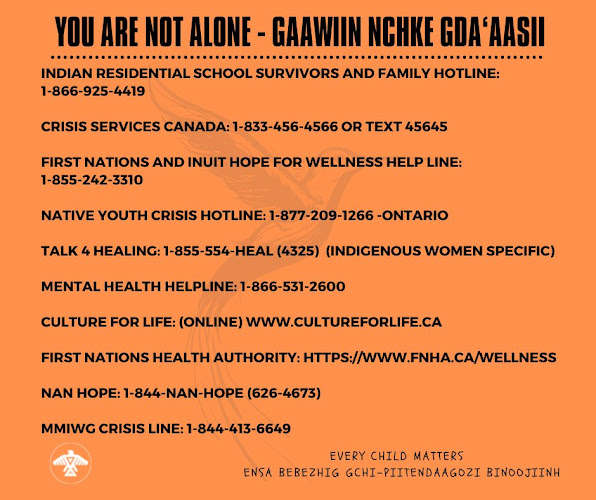
You are not alone

You are not alone

To Veronica Brown

Veronica, we adult adoptees are thinking of you today and every day. We will be here when you need us. Your journey in the adopted life has begun, nothing can revoke that now, the damage cannot be undone. Be courageous, you have what no adoptee before you has had; a strong group of adult adoptees who know your story, who are behind you and will always be so.

Diane Tells His Name


click photo

Lost Birds on Al Jazeera Fault Lines

Lost Birds on Al Jazeera Fault Lines
click to read and listen about Trace, Diane, Julie and Suzie

NO MORE STOLEN SISTERS

NO MORE STOLEN SISTERS
click image

ADOPTION TRUTH

As the single largest unregulated industry in the United States, adoption is viewed as a benevolent action that results in the formation of “forever families.”
The truth is that it is a very lucrative business with a known sales pitch. With profits last estimated at over $1.44 billion dollars a year, mothers who consider adoption for their babies need to be very aware that all of this promotion clouds the facts and only though independent research can they get an accurate account of what life might be like for both them and their child after signing the adoption paperwork.

Original Birth Certificate Map in the USA

Google Followers