BOOZHOO! We've amassed tons of information and important history on this blog since 2010. If you have a keyword, use the search box below. Also check out the reference section above. If you have a question or need help searching, use the contact form at the bottom of the blog.
We want you to use BOOKSHOP to buy books! (the editor will earn a small amount of money or commission. (we thank you) (that is our disclaimer statement)
This is a blog. It is not a peer-reviewed journal, not a sponsored publication... WE DO NOT HAVE ADS or earn MONEY from this website. The ideas, news and thoughts posted are sourced… or written by the editor or contributors.
EMAIL ME: tracelara@pm.me (outlook email is gone)
THANK YOU CHI MEGWETCH!
In 2008, this is what I wrote as an introduction to the memoir I was working on... (a draft)
… a memoir of brainwashing and life as a dead Indian…
I did have to pretend to be someone – and live a lie - because
I’m adopted. Ask any adoptee who has Native American ancestry. If you are not
told any truth, you’re just another dead Indian, at least on paper or on tribal rolls. Our papers are usually fake and we live with amended original birth certificates (OBC). Our adoptive parents are listed as our biological parents, which is another lie we live with....
America is like
that. Adoptees seem invisible yet the number of adoptees in the United States is estimated to be
between six and ten million. They’d prefer every one of us to live as an
American citizen as if none other were as good or as important. America forgets
it’s very new by all standards and just acts like its old. America has its own amnesia.
I intended to write about adoption history and what I
experienced opening my adoption many years ago. America’s adoption files of my era
(the 1950s) are still sealed by laws in most states, still shrouded in secrecy.
I expected little help or new discoveries. Never did I expect to find so many adoptees
in the same boat from 2005 onward. I didn’t know there were millions of us, some blazing new
trails on the internet global highway. I found friends.
In the last 20+
years, adoption’s gone global, widely publicized and still touted as noble,
saving and particularly saintly of those men and women who adopt, who give so generously
to orphans. That’s about all we hear: how great it is to adopt.
I asked myself,
where is the missing piece …where is the voice of the adopted… what happens to
the adoptee?I decided to write about my
experience (as an adoption survivor and journalist) and include other American
Indians who experienced being adopted. I found much more going on with the business
of adoption, so I include it. Certainly this will be the most controversial
book on adoption since I was often in a state of shock and utter disbelief during
my years of research on the adoption industry.
Indian child removals
by adoption set out to accomplish the break-up of Indian families and culture. Once
adopted, you’re erased, an outsider, a stranger to your own nation, lands and people. I prefer to think of my younger self as brainwashed. There was fear and emotional
illness, which I explain. What is known about the Indian Adoption Projects (more than one) and
the aftermath, few books actually acknowledge it happened here.
There is
persistent rampant poverty in Indian Country even now. I found Indian people
who were white-washed through strenuous puritanical forces using assimilation
via adoption and residential boarding schools.
Adoptees with
Indian blood find out soon enough their reservations are closed to strangers. Without
proof, you’re suspect. You can’t always get the proof since laws prevent it. Just one Minnesota
tribe, White Earth, decided to call out to its lost children; this made news in
the fall in 2007. Going back takes a special kind of courage.
One Native
American adoptee I know was told – be happy, be white. Ask yourself, how would
you react? Is Indian Country such a bad place to be from? How did this happen
to us?
Society
determined long ago what was best for children. Once adopted, society can let us go, write us off.
Here in America,
thousands of Indian children were taken from parents and given to non-Indian people.
Survivors are
here to tell you this was a genocidal act against our humanity. Some of us were
abducted, abused, brainwashed and all of us erased.
Adoption secrets
are protected by laws. Laws prevented me from ever knowing the truth of my true
identity. I still found a way.
This edition is on amazon and in some bookstores
p.s. Wayne Carp, an adoption advocate and author who went
“undercover” to compile his book on adoption industry history kept running into secrecy
problems. Unlike Carp, I am the story.
(EAGAN, MN. July 1, 2023) – If not for the journals of America’s first explorers, Indigenous people might not have an understanding of the overwhelming feeling of discomfort when in the presence of some non-Native people. As though, we do not matter, as though we are less than they, that they could do to us what they wanted as a person, a family, as a nation of people.
But, we do have those journals to reflect on as evidence of the day when Indigenous people became a commodity to be trafficked and enslaved for the purpose of sex and labor in both America and Europe.
October 11, 1492:
“They should be good servants and intelligent, for I observed that they quickly took in what was said to them, and I believe that they would easily be made Christians.”
October 14, 1492:
“These people are very simple [in] the use of arms …with fifty men they can all be subjugated and made to do what is required of them.”
American History vs Native History
More than five centuries later, school children learn about “Thanksgiving” and how Native and non-Natives feasted and thrived in friendship when nothing could be farther from the truth. Across the nation, elected state leaders are banning teaching the truth about our history, calling it “critical race theory.”
“Our nation was built upon the graves of Indigenous people and upon the backs of minorities,” said CEO Lori Jump, StrongHearts Native Helpline. “When state legislatures are denying and suppressing the truth about our history, we can not sufficiently address nor prevent human trafficking. In order to heal from the tragedies of our past, in order to understand the dynamics of domestic and sexual violence - we must face the truth about our nation’s history.”
Human Trafficking Worldwide
Human traffickers profit at the expense of their victims by forcing them to perform labor or to engage in commercial sex in every region of the United States and around the world. With an estimated 27.6 million victims worldwide at any given time, human traffickers prey on people of all ages, backgrounds, and nationalities, exploiting them for their own profit.
Studies on human trafficking are few and far between, especially those related to Native people. In a Minnesota based study on sex trafficking,“Garden of Truth: The Prostitution and Trafficking of Native Women in Minnesota,” 105 Native women who were trafficked participated in a survey about the tragedy of their own experiences. Native women, children and Two-spirit people were found to be victimized with more frequency - noting that most traffickers were non-Native who targeted those most vulnerable to being poverty stricken and homeless.
Normalization of Selling Sex
Jessica Smith, a victim-survivor turned advocate, knows what it means to be trafficked both as a child and as an adult. And, she knows that the only way to help these victims is to get them off the streets and into stable housing.
“As children, we see our Mothers being trafficked and we look up to them [as role models],” Smith said and explained that there is a connection between intergenerational trauma and human trafficking. “I saw generations of it and thought it was normal.”
Smith added, “It’s important for people to understand that sex trafficking is perpetrated by people outside of our [Native] communities. Whether it’s domestic violence, rape, murder, prostitution or sex trafficking, the vast majority of perpetrators against Native women and children are not Native men,” said Smith. “We found that to be true in the Garden of Truth.”
Perpetrators and Their Victims
Native victim survivors readily identified perpetrators as primarily white men followed by African American men and to a much lesser degree by Native men. Sex traffickers use common tactics that include: trickery and coercion as well as emotional, physical and sexual abuse.
Vulnerabilities to human trafficking include:
An unstable living situation
Previous experience with other forms of violence (sexual/domestic)
Identified as a runaway and/or involved in the juvenile justice or child welfare systems
Poverty and/or economic need
Addiction to drugs and/or alcohol (often introduced by traffickers)
Substance abuse by a caregiver or family member
Vulnerability among Native women surveyed:
99 percent were currently or previously homeless.
92 percent had been raped and wanted to escape prostitution
84 percent had been physically assaulted in prostitution.
79 percent had been sexually abused as children by an average of 4 perpetrators.
72 percent suffered traumatic brain injuries in prostitution.
52 percent had post traumatic stress disorder (PTSD), a rate equal to combat veterans.
As a survivor and advocate,” Smith concluded that survivor led advocacy is key to prevention. “We need [advocates] to understand that we were raped, beaten, and made to sell our bodies. [That] we did not choose this life. It was chosen for us.”
StrongHearts Understands
At StrongHearts Native Helpline, we understand. We recognize the importance of education and we strive to identify and expose the roots of human trafficking. We acknowledge that it began with colonization and continues primarily at the hands of non-Natives. Ours is the story of all Indigenous peoples - a story about survival and resilience and a story that must conclude with truth, reparation and reconciliation.
StrongHearts advocates are available 24/7 and offer:
Information and education about domestic violence and sexual violence
Personalized safety planning
Crisis intervention
Referrals to Native-centered domestic violence and sexual violence service providers
Basic information about health options
Support locating health facilities or crisis centers trained in the care of sexual assault and forensic exams
General information about jurisdiction and legal advocacy referrals
Serving all individuals who reach out for their services regardless of race, ethnicity, gender, gender identity, age, religion, national origin, sexual orientation, disability, or any other factor protected by local, state, or federal law, The National Human Trafficking Hotline can be reached at 1-888-373-7888, hearing impaired dial 711, text 233733 SMS text lines and live online chat available 24 hours a day, 7 days a week, 365 days a year.
READ: Karr, Ronald Dale. “‘Why Should You Be So Furious?’: The Violence of the Pequot War.” The Journal of American History, vol. 85, no. 3, [Oxford University Press, Organization of American Historians], 1998, pp. 876–909, https://doi.org/10.2307/2567215.
“We
recognize that the crisis of our Missing and Murdered Indigenous
Relatives (MMIR) intersects with human trafficking and that eradicating
violence against Native people hinges upon our ability to educate the
public,” said CEO Lori Jump, StrongHearts Native Helpline. “That is why
we are embracing a partnership with the Department of Homeland Security
(DHS) Blue Campaign.”
The
Blue Campaign is a public awareness campaign created to educate the
general public, law enforcement and industry partners to recognize the
indicators of human trafficking and how to appropriately respond to
possible cases. DHS Blue Campaign works closely with other DHS
components and various partners to develop general awareness training,
as well as specific educational resources to help reduce victimization
of human trafficking.
DHS Blue Campaign and StrongHearts Advertising Campaign
Blue
Campaign and StrongHearts’ are collaborating on advertising efforts
between the months of July and September 2023 to be distributed
throughout the state of Washington. More importantly, StrongHearts and
DHS staff will develop training for StrongHearts advocates on best
practices when responding to Human Trafficking.
“We
are diversifying training for StrongHearts advocates to enable them to
better serve the needs of our people,” Jump added. “Washington is a
progressive state that has implemented a Missing Indigenous Person Alert
(MIPA) as well as launched a cold case unit for missing and murdered
Indigenous people. Engaging in this partnership with the DHS will help
to eradicate violence against our relatives.”
Expanded Reach
The
DHS partnership expands the reach of StrongHearts by creating another
avenue for spreading awareness that culturally appropriate support and
advocacy is available for Native Americans experiencing human
trafficking, domestic and sexual violence. It’s a collaboration that
will open lines of communications between Native centered service
providers and our relatives who need help.
The
Blue Campaign leverages partnerships with the private sector,
Non-Governmental Organizations (NGO), law enforcement, and state/local
authorities to maximize national public engagement. Blue Campaign’s
educational awareness objectives consist of two foundational elements:
prevention of human trafficking and protection of exploited persons.
Recognizing Human Trafficking
Human
trafficking is an exploitation-based crime against a person that
involves force, fraud and/or coercion to obtain some type of labor or
commercial sex act - victims can be any age, race, gender, or
nationality. Key indicators can include:
●The person appears disconnected from family, friends, and community.
●The child stopped attending school.
●The person had a sudden or dramatic change in behavior.
●A juvenile engages in commercial sex acts.
●The person is disoriented or confused/showing signs of mental or physical abuse.
●The person may have bruises in various stages of healing.
●The person is fearful, timid, or submissive and shows signs of neglect.
●Someone else seems to be in control of where they go or who they talk to.
StrongHearts Can Help
If
you are experiencing domestic violence and/or sexual violence,
StrongHearts advocates can help by providing: peer support and advocacy,
personalized safety planning, crisis intervention, referrals to
Native-centered service providers; and support finding health facilities
and crisis centers trained in the care of survivors of sexual assault,
general information about jurisdiction, and legal advocacy referrals.
Serving
all individuals who reach out for their services regardless of race,
ethnicity, gender, gender identity, age, religion, national origin,
sexual orientation, disability, or any other factor protected by local,
state, or federal law, StrongHearts Native Helpline can be reached by
calling or texting 1-844-7NATIVE (762-8483) or by online chat at strongheartshelpline.org, 24 hours a day, 7 days a week, 365 days a year.
To
report suspected human trafficking, please call DHS tip line at
1-866-347-2423. To get help from the National Human Trafficking Hotline
call 1-888-373-7888 or text HELP or INFO to BeFree (233733).
Last week, in a surprising 7-2 decision, the U.S. Supreme Court fully
upheld the Indian Child Welfare Act in Brackeen v. Haaland. We break
down the full opinion of the court and their various reasons for siding
in support of the 1978 law that was passed at a time when nearly a third
of indigenous children were separated from their family.
We are joined for reaction to the Brackeen ruling by three women close to the case:
-Kate Fort of Michigan State University, one of the foremost
experts on ICWA in this country, who assisted with the tribes’
preparation for the Supreme Court oral arguments
-Chrissi Ross Nimmo, deputy attorney general for Cherokee Nation, one of the the tribes that officially was party to the case
-Rebecca Nagle, journalist and architect of the podcast This Land, whose second season focused on the Brackeen case.
One Manitoba woman is sharing her years-long journey to reclaiming her traditional Indigenous name.
When Sixties Scoop survivor Katherine Strongwind was born in Winnipeg,
she was taken from the hospital and placed in a non-Indigenous home.
From there, she was given the name of her adoptive family.
“My name was completely changed from my birth name in the adoption. For
years, I had that name,” she said in an interview.
In 2019, Strongwind, who is the director of the 60s Scoop Legacy of
Canada, decided to reach out to the provincial government to see if it
would pay for her to legally change her name to her traditional
Indigenous name.
Hey readers! It's Trace, your editor. I started this blog/website in 2010 to help adoptees like me navigate the waters and terrors of c...
Bookshop
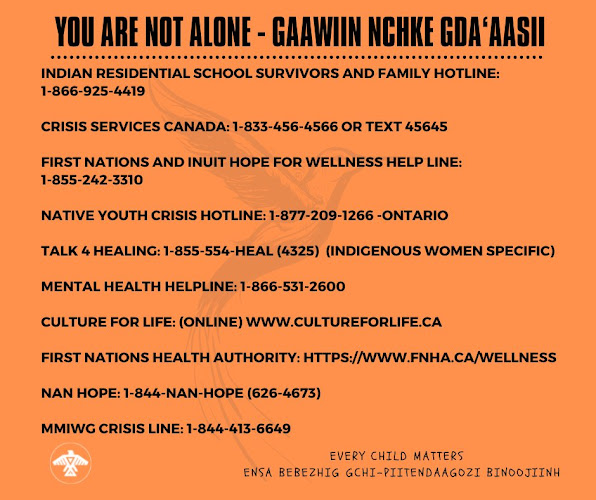
You are not alone
To Veronica Brown
Veronica, we adult adoptees are thinking of you today and every day. We will be here when you need us. Your journey in the adopted life has begun, nothing can revoke that now, the damage cannot be undone. Be courageous, you have what no adoptee before you has had; a strong group of adult adoptees who know your story, who are behind you and will always be so.
Diane Tells His Name
click photo
Lost Birds on Al Jazeera Fault Lines
click to read and listen about Trace, Diane, Julie and Suzie
NO MORE STOLEN SISTERS
click image
We conclude this series & continue the conversation by naming that adoption is genocide. This naming refers to the process of genocide that breaks kinship ties through adoption & other forms of family separation & policing 🧵#NAAM2022#AdoptionIsTraumaAND#AdopteeTwitter#FFY 1/6 pic.twitter.com/46v0mWISZ1
As the single largest unregulated industry in the United States, adoption is viewed as a benevolent action that results in the formation of “forever families.” The truth is that it is a very lucrative business with a known sales pitch. With profits last estimated at over $1.44 billion dollars a year, mothers who consider adoption for their babies need to be very aware that all of this promotion clouds the facts and only though independent research can they get an accurate account of what life might be like for both them and their child after signing the adoption paperwork.












 Posts

