



What “Stolen Land” and Land Back Actually Mean
SOURCE: https://juliefrancella.substack.com/p/we-are-not-going-to-evict-you-what?r=cbskx&utm_campaign=post-expanded-share&utm_medium=post%20viewerA caller to our radio show was furious. He said he was sick and tired of Indigenous people saying we are living on stolen land.
I understand why that phrase makes people defensive. They hear it as a personal accusation. They think: I didn’t steal anything. I bought my home. My grandparents came here after all of that happened. What exactly do you want from me?
But that reaction often misses what Indigenous people are actually saying.
When we say “you are on stolen land,” we are not saying that every person alive today personally stole a home, or that we want to knock on people’s doors and force them out. We are naming the foundation this country was built on: Indigenous lands were taken through removal, violence, broken treaties, fraud, confinement, and laws written to make theft look legal.
That is history. But it’s also the present.
“Legal” does not mean just.
A lot of people assume that because land is owned legally today, the question is settled.
But legal systems can be built to make injustice look legitimate.
The United States did not simply expand into “empty land.” It removed Native nations from territories that invaders and governments wanted. The Indian Removal Act of 1830 created the legal machinery for pushing Indigenous people west of the Mississippi. The Cherokee removal in 1838–39—the Trail of Tears—was carried out by the U.S. government, and approximately 4,000 Cherokee people died during that forced displacement.
That is a documented policy of making Indigenous land available by removing Indigenous people.
And removal was not the only strategy. The federal government also confined Native nations to reservations, violated treaties, and divided collectively held Indigenous lands through the allotment system. Under allotment, land deemed “surplus” was sold to non-Native settlers. Native landholdings dropped from 138 million acres in 1887 to 48 million acres by 1934.
So yes, someone can hold a valid deed today. That does not erase the chain of events that made the deed possible.
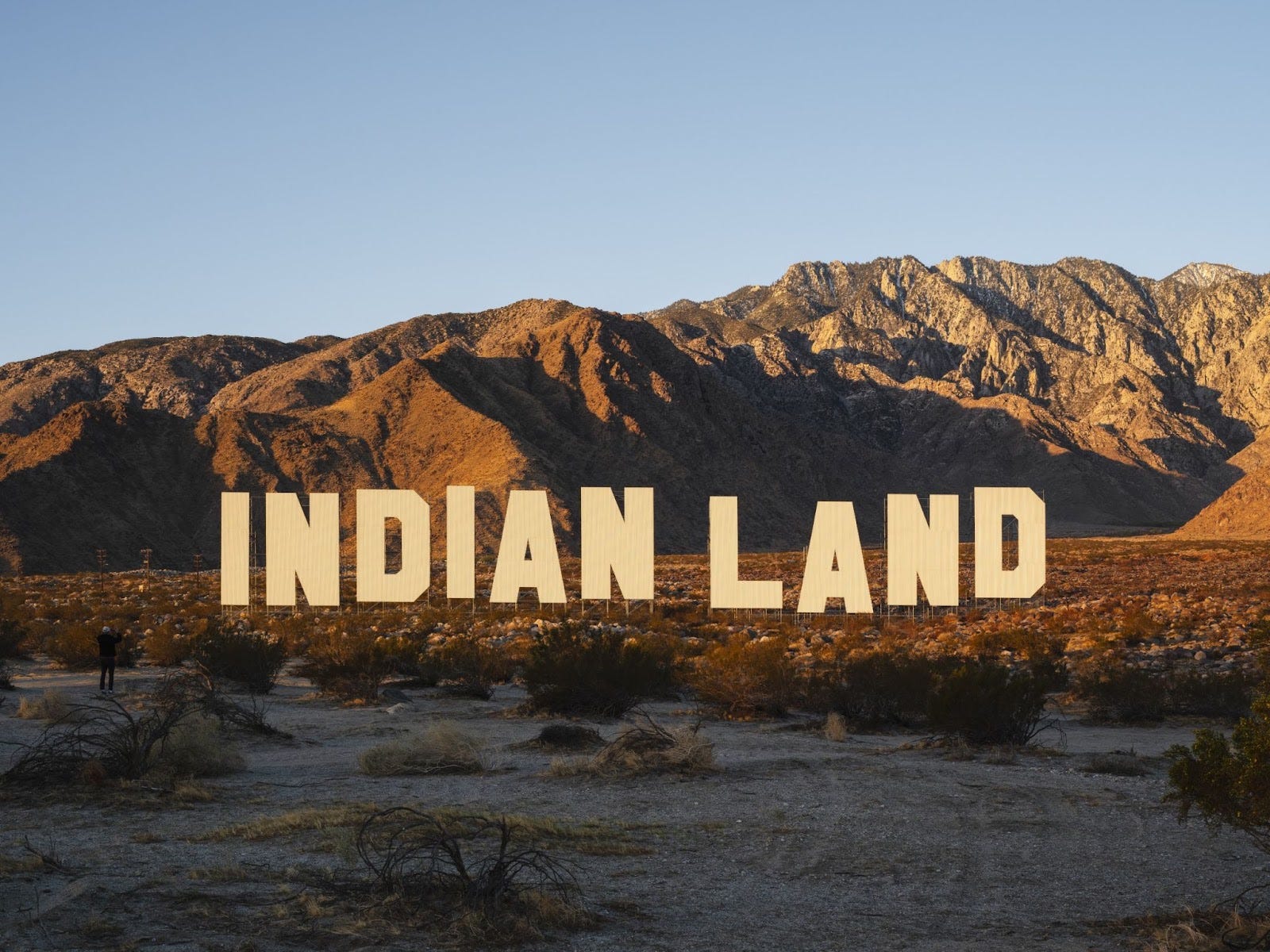
Not every Indigenous nation has the same history, and we should not flatten hundreds of nations into one story. As I always say, we are not a monolith.
But when Indigenous people call land “unceded,” they are making a specific point: the original Indigenous nation did not surrender, sell, or legally sign away that territory to the Crown (Canada) or the government (USA).
Much of British Columbia, Canada, is unceded territory. About 95 percent of the province, including Vancouver, was never covered by treaties that transferred First Nations land to the Crown. The City of Vancouver acknowledges that it is located on the unceded ancestral territories of the Musqueam, Squamish, and Tsleil-Waututh Nations.
Ottawa, Canada is located on unceded Algonquin Anishinaabe territory. Large areas of British Columbia, Quebec, eastern Ontario, and Atlantic Canada have unresolved or unceded Indigenous land questions.
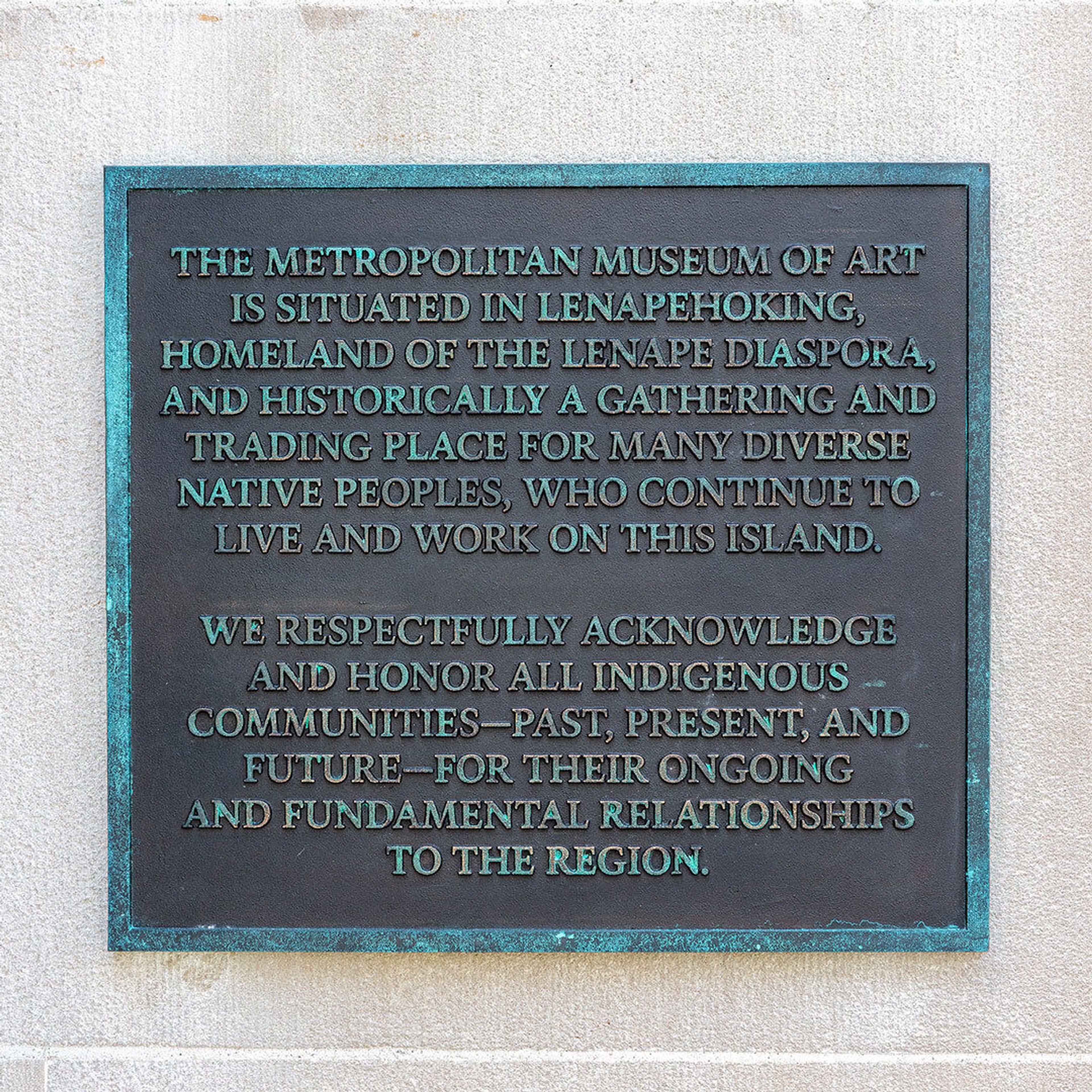
Here in New York City, we are in Lenapehoking—the homeland of the Lenape people. That does not mean we can reduce a complex history to a slogan “You are on Stolen Land”. It means we should know whose homeland this was and is, and understand that the Lenape did not disappear just because settlers drew new borders and wrote new property laws. Pratt Institute in Brooklyn identifies its location as the traditional and unceded homeland of the Lenape.
So does the Metropolitan Museum of Art.
Then there is the argument people make when they want the conversation to end quickly: But treaties were signed so the land issues were settled.
Yes, treaties were signed. But treaties were also broken, manipulated, ignored, and discarded when Indigenous land became profitable.
Look at the Black Hills.
The Fort Laramie Treaty of 1868 recognized the Black Hills as part of the Great Sioux Reservation. Then gold was found. The United States took the land anyway. In 1980, the Supreme Court ruled that the federal government’s action amounted to a taking that required compensation.
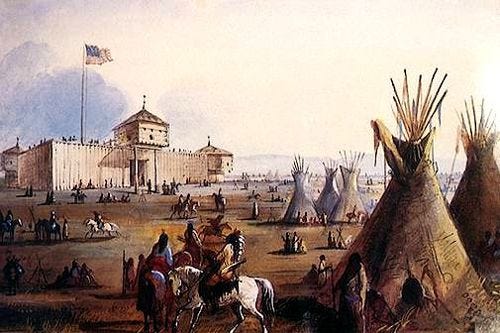
The government took land in violation of its own agreement, and more than a century later, the country’s highest court recognized that the taking was unlawful. Stolen land!
Another thing people may not understand is that many Indigenous peoples hold a different worldview about money, ownership, and wealth.👇
That does not mean Indigenous people do not need money, do not work, do not run businesses, or are somehow outside modern economies. Colonialism, forced displacement, underinvestment, and unequal access to land and capital have created real economic pressures in many Indigenous communities. Money matters. Housing matters. Jobs matter. Economic self-determination matters.
But in many Indigenous traditions, money is a tool—not the ultimate measure of whether a person, family, community, or nation is rich or has value. Money is not always justice. A check does not restore a sacred place. It does not restore sovereignty. It does not restore the relationship between a people and a homeland.
This is where people get scared. They ask: If you return stolen land, does that mean you will displace families who had nothing to do with the original theft?
No. That is not what Land Back means.
Land Back is not about reversing colonization by using the same logic colonization used. It is not about throwing people out of their homes. Our people are not asking to recreate the harm that was done to us.
Land Back is about restoring Indigenous stewardship, authority, access, responsibility, and care for the lands and waters that sustained our nations long before Canada or the United States existed.
For Indigenous people, land is not just real estate. It is not simply a financial asset or a thing to extract from until it is exhausted. Land holds ceremony, burial grounds, language, food systems, medicines, waterways, animals, kinship, and obligations to future generations. The land is our relative. She is our Mother Earth.
That’s why stewardship matters.
Across Turtle Island—from what is now Canada through the United States and into Mexico—many Indigenous nations share traditions that understand land, water, plants, animals, and human beings as bound together by relationship and responsibility. That does not mean every Indigenous nation has the same teachings or speaks with one voice. But a common thread is reciprocity: taking only what is needed, giving back, caring for the places that sustain life, and thinking about those yet to come.
In the United States, Canada, and Mexico, Indigenous knowledge and stewardship practices have been developed over generations through close, place-based relationships with particular ecosystems—deserts, forests, rivers, prairies, coasts, and mountains. The North American Commission for Environmental Cooperation recognizes Indigenous and local ecological knowledge in Mexico as an important source of environmental understanding and stewardship.
That is fundamentally different from treating land as merely a commodity: something to buy, fence, pave over, drill, extract from, and sell. Land Back is not only about a title deed. It is about restoring the authority, access, and resources Indigenous peoples need to fulfill responsibilities of care to the places that have cared for us.
Land Back is not one policy. Every Indigenous nation has its own history, territory, laws, and priorities. But it can mean:
• Returning public land, unused government property, forests, parks, or surplus land to Indigenous nations.
• Honoring treaties that governments failed to honor.
• Giving Indigenous nations real decision-making authority over sacred sites, water, wildlife, fire management, and conservation.
• Returning access for ceremony, hunting, fishing, gathering medicines, and protecting burial grounds.
• Supporting Indigenous land trusts, community land purchases, and voluntary donations of land.
• Restoring the resources Indigenous communities need to care for their homelands.
There are already practical examples of this across the country.
The National Park Service reported that 109 national parks had formal Tribal co-stewardship agreements as of 2024, with more under discussion. These agreements are not about barring people from parks or evicting nearby communities. They are about recognizing that Indigenous nations should have a real role in caring for lands that federal agencies now manage.
In northern California, the Yurok Tribe entered an agreement with conservation and park partners to regain stewardship of ‘O Rew, a culturally important 125-acre property. The plan includes public access and connection to Redwood National and State Parks.
That is what people need to understand. Land Back can mean care. It can mean restoration. It can mean healthier forests, protected waterways, cultural survival, and Indigenous nations being treated as governments with rights.
You don’t have to feel personal guilt for something you did not personally do.
But you do have to decide whether you are willing to be honest about the country you live in. We all inherited this history.
There is a difference between guilt and responsibility. Guilt says, I am personally to blame for everything that happened before I was born. Responsibility says, I live with the benefits and consequences of a history I did not create, and I have a choice about whether I will ignore it or face it honestly.
That is all this conversation asks.
The phrase “stolen land” is uncomfortable because it interrupts the story many of us were taught: that this land was discovered, settled, developed, and earned. It reminds us that Indigenous people were not simply part of the past. We are still here. Our nations still have rights.
And our responsibilities to the land matter more now than ever.
So, no, Land Back is not about taking your home.
It is about asking why Indigenous people were removed from their homelands in the first place—and what justice, stewardship, and right relationship might require when we finally stop mistaking the myth of America (and Canada) for the truth of it.
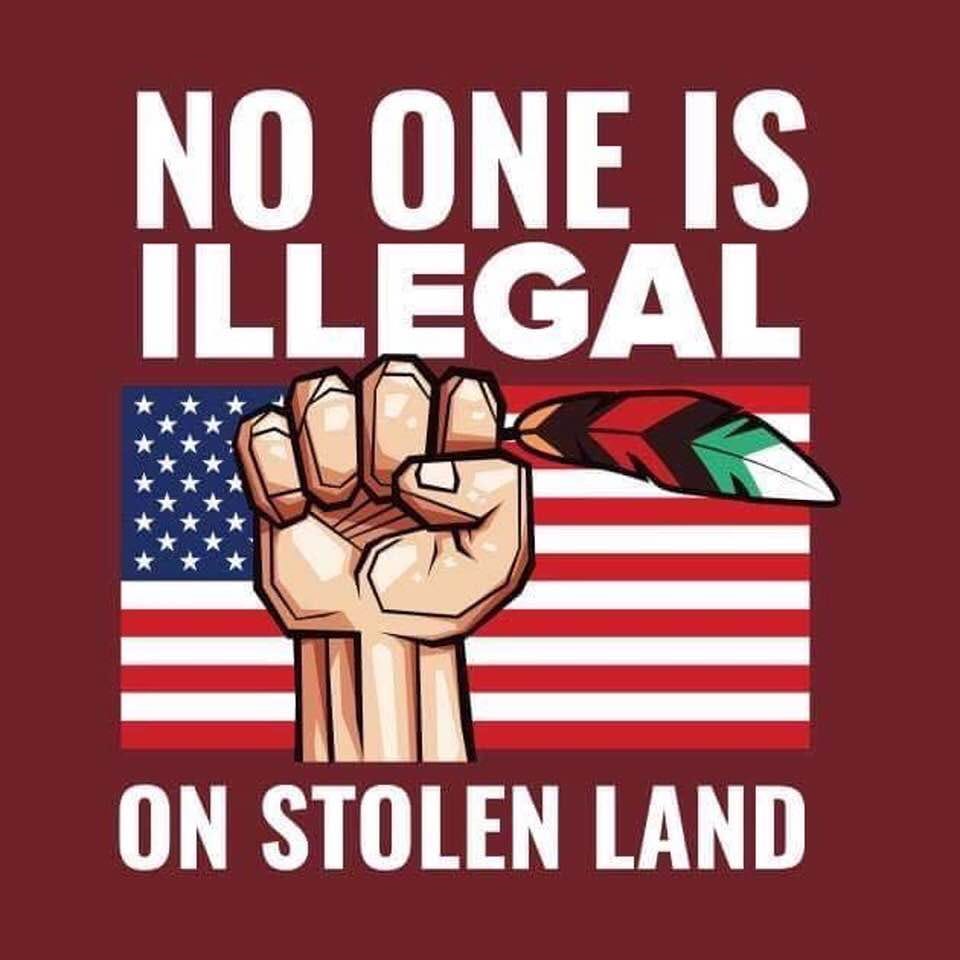
And that is why the phrase “nobody is illegal on stolen land” carries such force. It does not erase the real complexities of borders, migration, and law. It asks us to remember that the governments enforcing those borders were built through the dispossession of Indigenous nations—and that no human being becomes less human because they crossed a line drawn over someone else’s homeland.
Thanks for reading The Fire I Keep ! This post is public so feel free to share it.
*Library of Congress, “Indian Removal Act: Primary Documents in American History.”* A primary-source gateway to the 1830 law and its consequences, including the Cherokee Trail of Tears. The Library of Congress estimates that approximately 4,000 Cherokee people died during the forced removal.
*U.S. Department of State, “Indian Treaties and the Removal Act of 1830.”* A concise government history of removal policy, treaty-making, and the Cherokee Nation’s resistance to Georgia’s restrictions.
*Native Governance Center, “Legacies of Allotment and Indigenous Resistance.”* An accessible explanation of how the Dawes Act and allotment broke up collective Indigenous landholdings and opened “surplus” land to non-Native settlement.
*Library of Congress, “Indian Territory.”* Historical maps and materials documenting the reduction and reshaping of Cherokee, Creek, Choctaw, Seminole, and other Native territories.
Treaties, unceded territory, and land claims
“Acknowledging Traditional Territories.”* A useful plain-language explanation of *unceded*: land that First Nations did not cede, surrender, or legally sign away to the Crown or Canada. It also explains why much of British Columbia is described this way.
*City of Vancouver, “Land Acknowledgement.”* An example of a government naming the specific Nations whose unceded ancestral territories Vancouver occupies: Musqueam, Squamish, and Tsleil-Waututh.
*Okanagan College Library, “Indigenous Rights: Unceded Lands.”* A helpful overview of where unceded-territory questions remain especially relevant in Canada, including B.C., eastern Ontario, Quebec, and the Atlantic region.
*New York State Museum, “Dispossession of Indigenous Lands Map.”* Essential local context for New York readers. It identifies Indigenous territories and communities across the state, including Haudenosaunee nations, Shinnecock territory, and Lenape communities now located in Oklahoma and Wisconsin.
*Pratt Institute, “Land Acknowledgement.”* A Brooklyn-based acknowledgment locating the campus in Lenapehoking, the traditional and unceded homeland of the Lenape.
*U.S. Supreme Court, *United States v. Sioux Nation of Indians* (1980).* The landmark case concerning the federal government’s taking of the Black Hills after the 1868 Fort Laramie Treaty. The Court upheld compensation for an unconstitutional taking.
*University of Michigan Law Review, “Black Hills/White Justice: The Sioux Nation Versus the United States.”* A deeper legal-history examination of the case, the 1868 treaty, and the long fight over the Black Hills.
*National Library of Medicine, “Clinton Apologizes.”* A short historical entry on the 1993 federal apology for the U.S. role in the overthrow of the Hawaiian monarchy.
*U.S. Public Law 103–150, the Apology Resolution.* The text of Congress’s acknowledgment of the 1893 overthrow of the Kingdom of Hawaiʻi and its apology to Native Hawaiians.
*Indigenous New Hampshire Collaborative Collective, “Land Back.”* A clear Indigenous-led introduction: Land Back includes land return, sovereignty, honoring treaties, and returning environmental stewardship practices to Native peoples.
*David Suzuki Foundation, “What Is Land Back?”* Explains Land Back as an Indigenous-led movement focused on decision-making power, self-determination, access to territory, and control over how land and resources are cared for.
*National Park Service, “Recent National Park Service Work with Indian Country.”** Concrete examples of Tribal co-stewardship. As of late 2024, the NPS reported 109 formal Tribal co-stewardship agreements, showing that recognizing Indigenous authority does not mean evicting the public from parks.
*U.S. Department of the Interior, “Tribal Co-Management of Federal Lands.”* An overview of federal co-stewardship arrangements and examples in the national park system.
*Lewis & Clark Law School, “LandBack Movements in the West.”* Describes different practical routes for land return, including settlements, voluntary purchases, donations, and private sales—not simply government seizure or residential displacement.
*Native Land Digital.*An interactive starting point for learning about Indigenous territories, treaties, and languages.
*Whose Land.* Another educational mapping resource that can help locate the Indigenous territories connected to an address or community, particularly in Canada.
[1] Indian Removal Act: Primary Documents in American History https://guides.loc.gov/indian-removal-act
[2] Indian Treaties and the Removal Act of 1830 https://history.state.gov/milestones/1830-1860/indian-treaties
[3] Legacies of Allotment and Indigenous Resistance https://nativegov.org/resources/allotment-legacies-guide/
[4] Indian Territory - Native American Spaces: Cartographic ... https://guides.loc.gov/native-american-spaces/cartographic-resources/indian-territory
[5] Acknowledging Traditional Territories – Pulling Together https://opentextbc.ca/indigenizationfoundations/chapter/acknowledging-traditional-territories/
[6] Land acknowledgement - City of Vancouver https://vancouver.ca/people-programs/land-acknowledgement.aspx
[7] WET 219 - Applied Water Law - Indigenous Rights: Unceded Lands https://libguides.okanagan.bc.ca/c.php?g=721994&p=5175676
[8] Dispossession of Indigenous Lands Map | The New York State ... https://nysm.nysed.gov/native-american-heritage-month/indigenous-lands-dispossession-map
[9] Land Acknowledgement - Native American and Indigenous Peoples ... https://libguides.pratt.edu/c.php?g=1088684&p=9270256
[10] United States v. Sioux Nation of Indians | 448 U.S. 371 (1980) https://supreme.justia.com/cases/federal/us/448/371/
[11] [PDF] Black Hills/White Justice: The Sioux Nation Versus the United States https://repository.law.umich.edu/cgi/viewcontent.cgi?article=2308&context=mlr
[12] Clinton apologizes - Tribes - Native Voices - NIH https://www.nlm.nih.gov/nativevoices/timeline/578.html
[13] UNITED STATES PUBLIC LAW 103-150 https://www.denix.osd.mil/na/denix-files/sites/42/2020/04/The-Apology_P.L.103-150.pdf
[14] LandBack - Indigenous New Hampshire Collaborative Collective https://indigenousnh.com/landback/
[15] What is Land Back? - David Suzuki Foundation https://davidsuzuki.org/what-you-can-do/what-is-land-back/
[16] Fact Sheet: Recent National Park Service Work with Indian Country https://www.nps.gov/articles/nov2024-indiancountryfactsheet.htm
[17] Tribal Co-Management of Federal Lands - DOI.gov https://www.doi.gov/ocl/tribal-co-management-federal-lands
[18] LandBack Movements in the West - Lewis & Clark Law School https://law.lclark.edu/live/blogs/248-landback-movements-in-the-west-in-the-best
[19] Which Indigenous lands are you on? This map will show you https://www.npr.org/2022/10/10/1127837659/native-land-map-ancestral-tribal-lands-worldwide
[20] Whose Land https://www.whose.land/en/
[21] Exploring the why, what and hope in LandBack | Green Blog https://ucanr.edu/blog/green-blog/article/exploring-why-what-and-hope-landback
[22] Map of USA with native American territory if they didn’t break the treaty. https://www.reddit.com/r/NativeAmerican/comments/sa5a6c/map_of_usa_with_native_american_territory_if_they/







 Posts
Posts


No comments:
Post a Comment
Please: Share your reaction, your thoughts, and your opinions. Be passionate, be unapologetic. Offensive remarks will not be published. We are getting more and more spam. Comments will be monitored.
Use the comment form at the bottom of this website which is private and sent direct to Trace.