They Took Us Away

They Took Us Away
click image to see more and read more

it's free

click

How to Use this Blog

BOOZHOO! We've amassed tons of information and important history on this blog since 2010. If you have a keyword, use the search box below. Also check out the reference section above. If you have a question or need help searching, use the contact form at the bottom of the blog.


We want you to use BOOKSHOP to buy books! (the editor will earn a small amount of money or commission. (we thank you) (that is our disclaimer statement)

This is a blog. It is not a peer-reviewed journal, not a sponsored publication... WE DO NOT HAVE ADS or earn MONEY from this website. The ideas, news and thoughts posted are sourced… or written by the editor or contributors.

EMAIL ME: tracelara@pm.me (outlook email is gone) THANK YOU CHI MEGWETCH!

SEARCH

Friday, May 8, 2026

Black-Inuk woman traces history of Black settlers in the North in pursuit of answers to racial divisions today

Jaelyn Jarrett believes Black and white settlers had very different experiences in the North

older woman uses her hands to hold younger woman's face
Jaelyn Jarrett and her aunt Leah Ford. Jarrett, a woman originally from Nain, N.L., has Inuit and Guyanese roots. She's embarking on a journey to trace the history of Black settlers in the North. (Submitted by Jaelyn Jarrett)

Jaelyn Jarrett remembers moving from Nain, N.L., to Ontario as an eight-year-old when she started being called a ‘Puatugi’.

“I didn't really understand what that term meant at the time, but I knew people would reference my hair, and so I figured that it meant black,” she said.

After conversations with her grandmother, Jarrett discovered that word meant Portuguese. She wondered why she — a Black-Inuk woman with Guyanese roots — was being referred to as Portuguese.

That memory led the Carleton University master’s student on a journey to trace the origin of the word, where she came across Canadian historian Kenn Harper’s Names We Call Each Other. 

The book explains many of the whalers in the Arctic were Black men from Cape Verde — islands located off the west coast of Africa once colonized by Portugal. 

Many Cape Verdeans emigrated to the United States starting in the 1800s, particularly to coastal towns with thriving whaling ports like New Bedford, Massachusetts. From there, some Cape Verdean men joined whaling ships travelling to the Hudson’s Bay and Cumberland Sound. 

black and white photo of men on a ship
A photo by Captain George Comer, estimated between 1897 and 1899, showing the crew on deck of a whaling schooner. Brass Lopes is believed to be in the far right of this photograph. (Mystic Seaport Museum)

Those Black whalers were then referred to by Inuit as ‘Puatugi’, which was adapted from the word Portuguese to flow better in Inuktitut. 

While Black whalers did head North for economic pursuits, Jarrett believes those men had very different experiences than their white counterparts. 

"They were able to get opportunities to come to the North and make money, but they were still under the confines of racism and colonialism," she said. 

She thinks many people don't realize that part of Nunavut’s history, which she believes could offer answers to the racial divide that exists to this day.

Thursday, May 7, 2026

My friend John

John and I worked together at the Pequot Times. His health is not good right now. Please help if you can:


Narragansett author John Christian Hopkins is in need of financial help!

Check out:  


https://gofund.me/3f67a8d6ahttps://gofund.me/a776cb85fhttps://gofund.me/a776cb85f

https://gofund.me/a776cb85f 

School is not for everybody (especially us)

 Eastman's grandkids...

State Recognition for Herring Pond Wampanoag


Plymouth Select Board Chair David Golden, Jr. presented Herring Pond Wampanoag Chairwoman Melissa Ferretti (R) with the key to the town of Plymouth during the Herring Pond Wampanoag Tribe's state recognition ceremony on Thursday.
Plymouth Select Board Chair David Golden, Jr. presented Herring Pond Wampanoag Chairwoman Melissa Ferretti (R) with the key to the town of Plymouth during the Herring Pond Wampanoag Tribe's state recognition ceremony on Thursday. Rachael Devaney/Cape Cod Times
Mashpee Wampanoag Tribe members attended the Herring Pond Wampanoag Tribe's state recognition ceremony at Plymouth Town Hall, including the tribe's Chairman Brian Weeden, left.
Mashpee Wampanoag Tribe members attended the Herring Pond Wampanoag Tribe's state recognition ceremony at Plymouth Town Hall, including the tribe's Chairman Brian Weeden, left. Rachael Devaney/Cape Cod Times
Herring Pond Wampanoag Tribe Vice Chair and tribal elder Hazel Currence comforts Assonet Band of the Wampanoag Nation Chief Ken Perry Alves as he spoke at Plymouth Town Hall about Wampanoag ancestors during the Herring Pond state recognition ceremony on Thursday.
Herring Pond Wampanoag Tribe Vice Chair and tribal elder Hazel Currence comforts Assonet Band of the Wampanoag Nation Chief Ken Perry Alves as he spoke at Plymouth Town Hall about Wampanoag ancestors during the Herring Pond state recognition ceremony on Thursday. Rachael Devaney/Cape Cod Times
Herring Pond Wampanoag Tribe elder Hazel Currence speaks with her son and Herring Pond Tribe Medicine man Troy Currence during the Herring Pond Wampanoag Tribe state recognition ceremony on Thursday.
Herring Pond Wampanoag Tribe elder Hazel Currence speaks with her son and Herring Pond Tribe Medicine man Troy Currence during the Herring Pond Wampanoag Tribe state recognition ceremony on Thursday. Rachael Devaney/Cape Cod Times
The Herring Pond Wampanoag Tribe was given the key to the town of Plymouth during the Herring Pond Wampanoag Tribe's state recognition ceremony on Thursday, April 30.
The Herring Pond Wampanoag Tribe was given the key to the town of Plymouth during the Herring Pond Wampanoag Tribe's state recognition ceremony on Thursday, April 30. Rachael Devaney/Cape Cod Times
Narragansett Indian Tribe of Rhode Island Elder Hiawatha Brown presented an eagle feather to Herring Pond Wampanoag Chairwoman Melissa Ferretti, left, and tribe Vice Chair Hazel Currence, right, during the tribe's state recognition ceremony which was held at Plymouth Town Hall on Thursday.
Rachael Devaney
Herring Pond Wampanoag Tribe Medicine Man Troy “Neesweekokotywak” Currence became emotional as he led an opening prayer during the Herring Pond Wampanoag Tribe's state recognition ceremony at Plymouth Town Hall on Thursday.
Herring Pond Wampanoag Tribe Medicine Man Troy “Neesweekokotywak” Currence became emotional as he led an opening prayer during the Herring Pond Wampanoag Tribe's state recognition ceremony at Plymouth Town Hall on Thursday. Rachael Devaney/Cape Cod Times
Plymouth Select Board member Deb Iaquinto shakes the hand of Herring Pond Wampanoag Tribe Elder Ronald Caleb "Salt" Harding, Sr. at the conclusion of the tribe's state recognition ceremony at Plymouth Town Hall on Thursday.
Plymouth Select Board member Deb Iaquinto shakes the hand of Herring Pond Wampanoag Tribe Elder Ronald Caleb "Salt" Harding, Sr. at the conclusion of the tribe's state recognition ceremony at Plymouth Town Hall on Thursday. Rachael Devaney/Cape Cod Times

ICT NEWS May 1, 2026

#NoDAPL Movement 10 Years Later, Medicine Wheel Riders and More

7th Fire: Walking Together

The Seventh Fire: The Anishinaabe in the Upper Great Lakes

Narrated by Leora Tadgerson, this gives a brief history of the Anishinaabe people before European contact and their migration to the Upper Great Lakes. It features the seven fires prophecy, which foretold of their migration, colonization and rebirth.

Readers are encouraged to view the entire “The Seventh Fire” timeline at https://nmu.edu/walking-together/7th-fire.

READ:

https://www.ironmountaindailynews.com/news/local-news/2026/04/project-tells-the-story-of-regions-indigenous-people/ 

Spanberger signs bill giving Virginia adoptees access to birth certificates


READ MORE: 'It means everything': Adoption bill spurred by Mark Spain passes state legislature

This is a bittersweet moment,” Walker said. “Mark’s passion helped start this journey, and I only wish he were here to see it signed into law.”

APRIL 13, 2026

With the governor’s signature, adult adoptees in Virginia now have a legal path to obtain their original birth certificates. Virginia was one of 15 states considered a closed or sealed adoption state, meaning adoption files are sealed by court order and are not public record.

READ:

https://wset.com/newsletter-daily/governor-abigail-spanberger-signs-bill-giving-virginia-adoptees-access-to-birth-certificates-house-bill-301-delegate-wendell-walker-mark-spain-april-2026 


Katherine Strongwind appointed executive director at the Wachiay Friendship Centre

April 14, 2026 | By Lisa Hamilton

Katherine Strongwind brings many years of personal, educational, and career experiences to her executive director role at Wachiay (Supplied)

Katherine Strongwind brings many years of personal, educational, and career experiences to her executive director role at Wachiay (Supplied)

The Wachiay Friendship Centre welcomed Katherine Strongwind as their new executive director in March.

“After an extensive search, we are thrilled that Katherine has joined our organization, and we look forward to working together with her to strengthen community relationships, develop a strategic plan, and continue to build the capacity of this amazing centre,” said board chair Sheila Wasacase.

“Not only is she a mother and grandmother, but she is also an accomplished spokesperson, entrepreneur, and advocate for Indigenous Peoples.  We are excited to explore new possibilities with Katherine at the helm, and we are so grateful for our current team for their work in keeping the centre running smoothly,” Wasacase said.

Strongwind has an extensive resume that combines direct experience in child welfare and social services with an administrative and economic development background. Strongwind brings her own experience as a child of the Sixties Scoop.

The Sixties Scoop was a federal practice that removed an estimated 20,000 Indigenous children from their homes, families, and cultures, placing them in predominantly non-Indigenous households across Canada and the U.S.A. This policy began in the 1950s and lasted until the 1980s.

Strongwind headed out west for the first time in 2012, with her daughters joining her on the coast soon after. With a desire to return to school, she earned a bachelor’s degree in business administration, marketing and management from Vancouver Island University.

After receiving her degree, Strongwind returned to Manitoba where she worked with several organizations, including the Southern Chiefs Organization, the Assembly of Manitoba Chiefs, and the Manitoba NDP.

“I kind of made my rounds there, and then I was offered an opportunity with the Treaty One Nations building their secretariat, which was a huge initiative,” Strongwind.

Strongwind had the chance to return to B.C. as the Songhees Nation’s executive director.

“I jumped at the opportunity, because I really wanted to come back to the Island and be with my daughters here,” she said. “And then I ended up working with the government of B.C. and the minister’s office, first forestry, then jobs, economic development, and innovation.”  Strongwind also made time to squeeze in her own consulting business while taking up residence in Sooke.

It’s Strongwind’s personal, educational, and career experiences that make her well positioned as Wachiay’s executive director, as well as “having a really good understanding of socio-economic conditions that many of our folks still struggle with, and sometimes at no fault of their own,” she explained.

“I think that having some lived experience as well, then working in child welfare and social services, and then laddering into the administrative piece has been this organic transition. So, I’m really glad to be able to use some of those skills and my background here at Wachiay. I think we’ll do some great things,” Strongwind said.

As a Sixties Scoop survivor, Strongwind understands how important it is to keep children connected to their community of origin and culture, which fits well with Wachiay’s Roots program, a joint initiative with the Ministry of Childhood and Family Development to help children in care identify their ancestry, family, and community as early in their lives as possible.

In fact, Strongwind founded her own national not-for-profit organization, the 60s Scoop Legacy of Canada.

“We know there are record numbers of Indigenous children in care right now that are going to be looking for that type of support, to reunify, keeping them connected to their siblings and their extended families and communities,” she said.

Strongwind is looking forward to contributing to the many programs Wachiay offers, such as law and government benefits advocacy, as well as getting the centre’s new commercial kitchen up and running for community rentals.

Between working in the Comox Valley and returning to Sooke most weekends, Strongwind is somehow managing to squeeze in a master’s degree from Royal Roads University that focuses on Indigenous economic development and innovation.

As Wachiay’s executive director, Strongwind is excitied for Wachiay to collaborate with other organizations in the Comox Valley. “We have an all-woman team of senior managers and board members, and it’s been just a pleasure to get to know everybody and the general community. Everybody has been so welcoming and helpful,” she said.

SOURCE: https://comoxvalleyrecord.com/2026/04/14/katherine-strongwind-appointed-executive-director-at-the-wachiay-friendship-centre/ 

Monday, May 4, 2026

Demands for action grow as details of Indigenous surveillance program surface


Nearly 6,000 pages of documents reveal the Security Service was casually monitoring Indigenous political activity as early as 1968, amid concerns about outside influences from radicals and communists. Its posture changed in 1973, after 200 non-violent youth activists occupied the Department of Indian Affairs in Ottawa for 24 hours and made off with duffel bags full of documents. 

A pile of scattered documents, some with blacked out redactions.
CBC Indigenous obtained nearly 6,000 pages of RCMP Security Service documents through access to information requests. They include intelligence dossiers compiled between the late 1960s and early 1980s. (Alex Lupul/CBC)

READ: https://www.cbc.ca/news/indigenous/rcmp-spies-1970s-indigenous-rights-9.7134112

NATIVE AMERICA CALLING:

First Nations, Inuit, and Métis leaders across Canada are calling for an investigation into the Royal Canadian Mounted Police (RCMP). That’s following a report by CBC Indigenous that uncovered evidence of a secret surveillance program targeting Indigenous organizations and individuals using wiretaps, informants, and counter subversion tactics from the late 1960s to the early 1980s. The report confirms what many Indigenous communities long suspected.

We’ll also reflect on 150 years of the Indian Act, the Canadian federal statute that defines First Nations membership or “Indian Status”. A new bill in Canada’s parliament could significantly expand status eligibility for thousands of individuals and their descendants.

GUESTS

Russ Diabo (Kahnawake Mohawk), First Nations policy analyst

Daniel Sims (Tsay Keh Dene First Nation), associate professor of First Nations Studies at the University of Northern British Columbia

Friday, May 1, 2026

UPDATE TO BLOGGER

Our being here on this website, has changed.

👎👎👎

Google Partners with Pentagon to Sell Your Data

40+ Google Logos & Product Icons For Free Download - 365 Web Resources

Martin Armstrong

Apr 29, 2026

There has always been this convenient belief that Big Tech operates independently from government, as if the data you store, search, and upload exists in some neutral corporate space, but that illusion is breaking down rapidly as the lines between Silicon Valley and Washington disappear in real time.

Google has now entered into a classified agreement with the Pentagon allowing its artificial intelligence systems to be used for “any lawful government purpose,” which is a phrase that sounds benign until you understand what it actually means in practice.

This is not a narrow contract tied to a single project. It opens the door for integration into mission planning, intelligence analysis, and even weapons targeting systems operating on classified networks, and once those systems are embedded, the distinction between commercial technology and state infrastructure effectively disappears.

At the same time, Google does not retain control over how that technology is ultimately used, because under the terms being reported, the company has no ability to veto lawful government operations, meaning once access is granted, the downstream application is no longer in their hands.  Please be reminded that Google has been collecting data on everyone and everything for decades: Google Maps, Google Search, Google Photos, Google Drive, Gmail, etc.

This is where the narrative people have been told begins to collapse, because for years the assumption was that your data sat within a corporate ecosystem governed by terms of service and internal policies, yet what is now being constructed is something entirely different, a shared infrastructure where private data, artificial intelligence, and state power intersect.

Even inside Google, there is significant resistance to this shift, with more than 600 employees signing letters to CEO Sundar Pichai warning that these systems could be used for “lethal autonomous weapons and mass surveillance,” and expressing concern that once deployed in classified environments, there is no meaningful oversight or transparency. “We want to see AI benefit humanity; not to see it being used in inhumane or extremely harmful ways. This includes lethal autonomous weapons and mass surveillance but extends beyond,” the letter reads.

READ:  https://www.armstrongeconomics.com/government-surveillance/google-partners-with-the-pentagon-to-sell-your-data/ 


We will be looking at a way to move this website soon, if possible...  Suggestions, anyone? Trace 


Happy Visitors!

WRITTEN BY HUMANS!

WRITTEN BY HUMANS!

Blog Archive

Featured Post

Your History Class Was a F*cking Lie | #NOMOAR

  Your History Class Was a F*cking Lie by Sean Sherman (Or: How the American Educational System Has Always Been a Racist Propaganda Program...


Native Circles

Native Circles
click logo for podcasts!

Most READ Posts

Bookshop

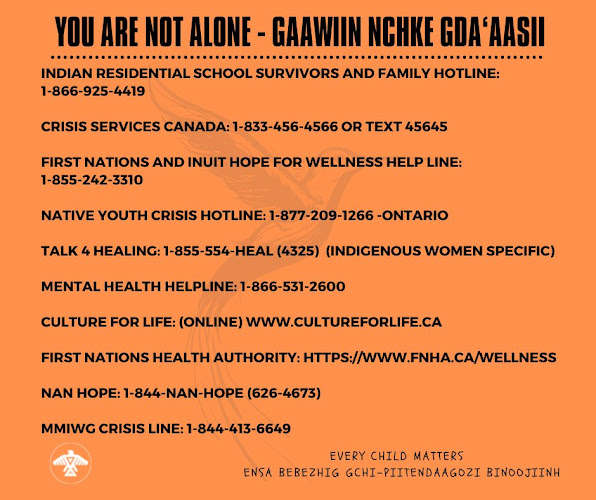
You are not alone

You are not alone

To Veronica Brown

Veronica, we adult adoptees are thinking of you today and every day. We will be here when you need us. Your journey in the adopted life has begun, nothing can revoke that now, the damage cannot be undone. Be courageous, you have what no adoptee before you has had; a strong group of adult adoptees who know your story, who are behind you and will always be so.

Diane Tells His Name


click photo

Lost Birds on Al Jazeera Fault Lines

Lost Birds on Al Jazeera Fault Lines
click to read and listen about Trace, Diane, Julie and Suzie

NO MORE STOLEN SISTERS

NO MORE STOLEN SISTERS
click image

ADOPTION TRUTH

As the single largest unregulated industry in the United States, adoption is viewed as a benevolent action that results in the formation of “forever families.”
The truth is that it is a very lucrative business with a known sales pitch. With profits last estimated at over $1.44 billion dollars a year, mothers who consider adoption for their babies need to be very aware that all of this promotion clouds the facts and only though independent research can they get an accurate account of what life might be like for both them and their child after signing the adoption paperwork.

Original Birth Certificate Map in the USA

Google Followers