They Took Us Away

They Took Us Away
click image to see more and read more

it's free

click

How to Use this Blog

BOOZHOO! We've amassed tons of information and important history on this blog since 2010. If you have a keyword, use the search box below. Also check out the reference section above. If you have a question or need help searching, use the contact form at the bottom of the blog.


We want you to use BOOKSHOP to buy books! (the editor will earn a small amount of money or commission. (we thank you) (that is our disclaimer statement)

This is a blog. It is not a peer-reviewed journal, not a sponsored publication... WE DO NOT HAVE ADS or earn MONEY from this website. The ideas, news and thoughts posted are sourced… or written by the editor or contributors.

EMAIL ME: tracelara@pm.me (outlook email is gone) THANK YOU CHI MEGWETCH!

SEARCH

Wednesday, June 7, 2023

Oregon's new law signed | Minnesota opens records to ADOPTEES in 2024


👇👇👇IMPORTANT UPDATES:

https://adopteesunited.org/legislation/state/

Minnesota

SF1279/SF2995/HF1778.[ENACTED!] Unrestricted equal rights bill that dismantles Minnesota’s forty-five year history of inequality. These bills are unrestricted equal rights bill that are generally identical to bills filed in the prior two legislative sessions. Sen. Erin Maye Quade, a DFL (Democratic) legislator, is the chief author of the Senate bill, and Rep. Steve Elkins is the chief author of the House bill. The bills constitute a necessary simplification of the law by eliminating Minnesota’s incomprehensibly complicated and discriminatory intermediary system, the first such system in the United States and one that has been in place since 1977. Minnesota Coalition for Adoption Reform and Minnesota-based Adoptee Rights Law Center are working collaboratively on the bill. The House bill has been assigned to the Health Finance and Policy Committee. The Senate bill was reported out of the Judiciary and Public Safety Committee and heard in the Health and Human Services Committee. It is now part of the Senate HHS omnibus appropriations bill (SF2995), which passed the full Senate on April 18. After negotiations, the adoptee birth record provisions in the Senate version of SF2995 were included and approved as part of the the overall HHS omnibus bill. The legislature passed the omnibus bill on May 22, the last day of the regular session, and Governor Tim Walz signed the bill into law on May 24. Minnesota will now become the 15th state in the country to restore equal rights to all adopted people born in the state. The law is fully effective on July 1, 2024.

Oregon

SB573 [ENACTED!] Allows a biological parent who was omitted or listed incorrectly to be added to an original (pre-adoptive) birth certificate.  This bill has been in the Oregon legislature for about three sessions now, doggedly pursued by an adult adoptee who wants the correct factual information listed on her own original birth certificate. The bill, carried by Senator Sara Gelser Blouin, would allow addition or correction of a birthparent on the OBC if approved through an administrative determination of paternity or parentage.  DNA evidence is required, along with a $100 filing fee.  The first hearing on the bill was January 23, 2023, before the Senate Committee on Human Services, chaired by Senator Gelser Blouin.  The bill was then delayed for consideration to work out issues arising out of the process to approve corrections to the birth record.  It was reported out favorably on March 6 after the bill was simplified to avoid a court process.  It passed the Senate on March 13, on a 28-1 vote and is now in the House, where it was heard on April 24 in the Early Childhood and Human Services Committee and subsequently recommended for passage by the House.  The House passed the bill on May 23, 2023, and Governor Tina Kotek signed it into law on June 6, 2023. It is effective on January 1, 2024.


#ICWA verdict looms

When it comes to championing the health of Indigenous children in the United States, few pieces of legislation possess the profound significance of the Indian Child Welfare Act (ICWA). It is not merely a dry legal document, but a lifeline of cultural health for Indigenous nations and countless children in the foster care system.

In the coming weeks, the Supreme Court of the United States (SCOTUS) is expected to release its decision on Haaland vs Brackeen, a case that challenges the constitutionality of the ICWA.  The plaintiffs, a non-Indigenous Texan couple named Chad and Jennifer Brackeen, claim that the ICWA's preference for placing Indigenous children with foster parents from their tribal nations discriminates against non-Indigenous individuals who wish to adopt Indigenous children.

Proponents of the ICWA, which include 486 tribal nations, assert the law’s preference for Indigenous families promotes cultural well-being and is based on the political status of tribes, rather than the social construct of race. According to the Native American Rights Fund (NARF), “The ICWA does this by upholding family integrity and stability and by keeping Indian children connected to their community and culture. The ICWA also reaffirms the inherent rights of tribal nations to be involved in child welfare matters involving their citizens.”

Samantha Maltais, a member of the Aquinnah Wampanoag tribe, ICWA advocate and a third-year student at Harvard Law School, shares this perspective. 

“Tribes have been and always will be sovereign nations. Their status as such pre-dates America’s founding and its earliest formulations of what race is. To misunderstand this truth not only threatens the welfare of Native children today, but could also undermine the ways we write federal Indian laws and policies for future generations to come,” she said.

READ HERE
 

Tuesday, June 6, 2023

What we’ve known a long time

 
REBLOG from January 2013
 
By Trace L Hentz, Blog Editor
 
First, do no harm. That is the doctor’s creed. Doctors are part of a larger group I call The Adoption Industry. Their group includes clergy, politicians, academics, psychology-types, social workers, lawyers and adoption agencies made up of similar people.  Apparently this group lacks historians.  If they had historians, they’d know adoption hurts the adoptee. Statistics don’t lie. Adoptees are among the highest population in psychiatric care. If it hurts, it harms.
The mental health of Native babies and children who go through adoption with non-Indian parents has been documented in studies for decades. Suicides, arrests and addictions are common and adoptees have known this a long time. The Indian Child Welfare Act of 1978 was supposed to end the harm to Indian children by placing them with other family members. Sadly, that still isn’t happening.
 
My friend Stephanie Woodard wrote in Indian Country Today, here (Dec. 1, 2012) about South Dakota’s ICWA violations:
“The ICWA directors found that the latest information shows South Dakota is not only taking a disproportionate number of children into custody, it is also failing to ensure that they stay with their tribes, despite ICWA provisions requiring that tribes have a say in their children’s placement. As of July 2011, they said, Native American foster homes sat empty while nearly 9 out of 10 Indian children in state foster care were in non-Native homes.
“The ICWA directors also noted the state’s tendency to equate “poverty” with “neglect,” which in turn results in more seizures of Native American children: “South Dakota’s rate of identifying ‘neglect’ is 20 percent higher than the national average,” they wrote.
“The group also found disturbing information on the fate of children once they left the (social care) system. Some youngsters are reunited with their families or adopted; or they may turn 18 and “age out.” But from 1999 to 2009, the “other” category—children who died, ran away or were transferred to correctional or mental-health facilities—grew from 6.9 percent to 32.8 percent….”
In two conversations, two different birthmothers in Minnesota confirmed what I was thinking about harm to the adoptee.  One mother found her son was harmed emotionally by his adoption and is in treatment for addictions.  Then an adoptee friend shared her brother, also an adoptee, is homeless and drug addicted.  Her family doesn’t know what to do, other than hope and pray he finally gets mental health counseling for adoption issues and not get prison-time.
 
This mental health crisis has been building for decades! I sought counseling twice in my life, and even though it wasn’t focused on adoption, it helped me recover my self-esteem. Doing research for my book One Small Sacrifice changed me the most and healed what I call “the wound.”
The truth that adoption harms and hurts Native children is something we’ve known a long time. But this truth never seems to reach our adoptive parents ears.  They were not told by Adoption Professionals they’d need to prepare for our adoptee issues and get us help early.  
 
Propaganda by the Adoption Industry would prefer we don’t speak the truth. Adoptees have known that a long time, too.
 
2023: I will be able to request my Original Birth Certificate (OBC) from Minnesota in July 2024. I have waited over 65 years for that piece of paper. - Trace

And if you adoptees need support, advice and an ear, I’m here: tracelara@pm.me (2023)

Our Stories Heal – Ginoojimomin Apii Dibaajimoyang [Recording]


Our Stories Heal – Ginoojimomin Apii Dibaajimoyang [Recording]

The full recording can be found here.


In 2021, Secretary of the Interior Deb Haaland announced the Federal Indian Boarding School Initiative. This initiative, which includes gathering records from the boarding school era, and compiling an official list of boarding school sites, makes visible on a national scale the intergenerational impact federal Indian board schools have had on tribal communities. Currently, there are five schools in the state of Michigan that were identified from the federal investigation process (Holy Childhood Boarding School, Baraga Chippewa Boarding and Day School (Holy Name), Mount Pleasant Indian Industrial Boarding School, Mackinac Mission School, and Catholic Otchippewa Boarding School). This is not an extensive list of all the other entities, schools, and programs that operated in Michigan through the Indian Civilization Act of 1819.

The Native Justice Coalition’s Truth and Reconciliation Commission (TRC) was launched in July 2022. It seeks to expand its reach to strengthen relationships between Indigenous and non-Indigenous people in an effort to seek the truth behind the Indian boarding school policies and corresponding actions taken by the government and church. Through this work, the NJC provides safe, supportive, and culturally competent spaces that offer opportunities for healing and uniting our Native communities on this journey. Our goals are to create an Indigenous-led process that is grounded in mutual respect, culturally sensitive, and focused on meeting clearly defined, jointly agreed upon metrics. Our key four priorities are truth and reconciliation, healing our people and our communities, strengthening ICWA and ensuring a cultural identity for our children, and building a strong ecosystem through investment in the Native Justice Coalition.

Without support from community partners such as the Indigenous Law & Policy Center, Native American Institute, and American Indian and Indigenous Studies at Michigan State University, this work would not be possible. This one-day symposium honors that work on a local scale, providing Michigan State University, and the greater Lansing community an opportunity to learn about the intergenerational trauma caused by federal Indian boarding school policies. Attendees will hear first-hand accounts from boarding school survivors and others who can provide the legal, social, and historical context of the Indian boarding schools. By joining together in community to share stories and voices, the symposium provides a space for knowledge and healing.

Thursday, June 1, 2023

StrongHearts Raises Elder Abuse Awareness #WEAAD


(EAGAN, MN. June 1, 2023)
  Despite the horror of being physically hurt, and having their money or medication stolen, elders who are abused or neglected often endure the abuse without calling for help. As lifelong caregivers and protectors, many elders suffer in silence to maintain the well-being of their family and that may include their abuser.

June 15 is World Elder Abuse Awareness Day (WEAAD) - a day to raise awareness and prevent elder abuse. It’s a day to reflect on what it’s like to become an Elder and the many challenges they are facing such as: losing strength, muscle, and bone mass. Mental clarity can deteriorate and lead to memory loss. These inevitable vulnerabilities leave our elders at risk of being abused.

According to the National Council on Aging, most abuse occurs in the home and at the hands of family members.

“It’s unacceptable when elders silently suffer abuse and neglect at the hands of those who should be protecting them,” said CEO Lori Jump, StrongHearts Native Helpline. “Many elders refuse to report their abusers because they are closely related and want to protect their family, but there are so many more reasons that most people can’t imagine.”


     Love: Despite the abuse or neglect, victims continue to love their abusive partner or relative.

     Fear: Elders may fear retaliation if they report the abuse.  

     Embarrassment: Worrying about what others might think or do to make matters worse. 

     Lack of Resources: Many elders live on fixed incomes and may depend on their abuser for shelter.

     Accessibility: Elders may not be able to report if they do not have access to cell phones, internet and/or transportation.

     Polyvictimization and Normalization: For generations, Native people have endured multiple types of abuse at the hands of non-Natives - so much so that abuse seems normal - an everyday part of life. 

Types of Abuse

Elder abuse is an intentional act or failure to act that causes or creates a risk of harm to an older adult. The abuser can be a family member, caretaker or another person that the elder trusts. Types of abuse can include:

     Emotional abuse - causes mental pain, fear and/or distress

     Physical abuse - the use of force to cause pain, injury, etc

     Financial abuse - improper use of an elders money, property or assets

     Caregiver neglect - a failure to meet basic needs (food, water, medical care)

     Sexual abuse - forced or unwanted sexual interactions of any kind

     Cultural and spiritual abuse

Learn The Signs Of Abuse

The signs of elder abuse may be difficult to spot as they could sometimes be the result of disease, side effects from medications or similar reasons. However, if you suspect that an Elder is being abused, be patient, talk and listen to them. Be aware that they may say that they are being “disrespected” rather than abused. Other signs of abuse may include:

     Unexplained bruising or injury

     Changes in behavior

     Lack of interest in family or social events

     Loss of weight

     Not having necessary medical aids ( glasses, walkers, teeth, etc) or adequate food, water, shelter

How can you help?

Education is always the first step. Understand the warning signs of elder abuse and pay attention to the elders in your life. Ensuring that our elders are properly cared for can include:

     Offering to help those in your family that might be feeling burdened with the care of a loved one.

     Spending time with an elder and planning a rotating schedule if you have multiple caregivers.

     Bringing them nutritional foods like baked goods or even better fry bread.

     Talking and listening to their stories because elders have a lot of wisdom to share and appreciate.

     Every state has an Adult Protective Services division for those wishing to report abuse at www.napsa-now.org/help-in-your-area.


StrongHearts can help. Advocates are available 24/7 to provide support and advocacy, make referrals to Native centered service providers and connect our relatives to regionally available resources. We are here 24/7/365.

SOURCE

National Center for Injury Prevention and Control, Division of Violence Prevention  https://www.cdc.gov/violenceprevention/elderabuse/fastfact.html

National Adult Protective Services Association https://www.napsa-now.org/help-in-your-area/

Wednesday, May 31, 2023

My Two Aunties

From left, Jeremy Braithwaite, Lizzie Lycett, Cori Biggs, Art Martinez, Karan Thorne and Judge Bill Thorne during a training session with Indian Health Council staff. Provided photo.
 Protecting Children and Healing Families, One Native Auntie at a Time


Twenty years ago, a group of Indigenous tribes in Southern California had nearly 500 of their children in local foster care systems. Today, according to Indian Health Council data, the number is closer to 30. 

A main driver in recent years is My Two Aunties, a program that draws on family legacies and kinship traditions to wrap support and guidance around vulnerable parents and children living in a consortium of nine tribes.

Key to the approach is a pair of home-visiting workers, known as aunties, who are as steeped in tribal customs as they are in mandated reporting and making active efforts to reunify families after a foster care separation. 

“Instead of ‘What’s wrong with you?’, they ask ‘What’s strong with you?’”  said Karan Thorne, a member of the Rincon Band of Luiseño Indians who developed the program. 

KEEP READING

Saturday, May 20, 2023

Unspoken: America's Native American Boarding Schools (2023)


KUED (now PBS Utah) takes a moving and insightful look into the dark chapter of American history, the federal Indian boarding school system. The goal was total assimilation into Anglo civilization at the cost of Native American culture, tradition, and language. The film story starts with pre-history and comes full circle to modern day. Much of the film is told in first person Native American voice by the people who continue to live it. 

Read More: www.pbsutah.org/unspoken

Osage Murders | Killers of the Flower Moon movie trailer

👇Based on David Grann’s broadly lauded best-selling book, Killers of the Flower Moon is set in 1920s Oklahoma and depicts the serial murder of members of the oil-wealthy Osage Nation, a string of brutal crimes that came to be known as the Reign of Terror. Directed by Martin Scorsese and Screenplay by Eric Roth and Scorsese, the film stars Leonardo DiCaprio, Robert De Niro, Lily Gladstone, Jesse Plemons, Tantoo Cardinal, Cara Jade Myers, JaNae Collins, and Jillian Dion. Hailing from Apple Studios, Killers of the Flower Moon was produced alongside Imperative Entertainment, Sikelia Productions and Appian Way. Producers are Scorsese, Dan Friedkin, Bradley Thomas and Daniel Lupi, with DiCaprio, Rick Yorn, Adam Somner, Marianne Bower, Lisa Frechette, John Atwood, Shea Kammer and Niels Juul serving as executive producers.

Friday, May 19, 2023

Estranged? | Adoption Illusions and Stockholm Syndrome


👇AN OLD POST from 2014/2021

Adoption Illusions and Stockholm Syndrome

By Trace - BLOG EDITOR
 
"...I’ve been thinking about this concept for a long time. Adopters, when it comes right down to it, count on Stockholm Syndrome. Children who don’t succumb are labelled RAD.
Whenever I encounter an infertile woman so desperate to be a mother that she’ll bring home a stranger’s baby and force it to live in her fantasy, I always secretly wonder what she would do if she were single and desperate to be married.
Would she drag some strange man home and force him to watch the Notebook and cuddle? And if she did, would society think it was beautiful and precious?  Or would they think she was delusional and dangerous?  Rhetorical question, of course.  But why? Why is what is clearly a crime between adults viewed in such an overwhelmingly positive way when one of the parties is a child?..."  - Renee Musgrove 
 
This comment by Renee has been in my head for over a year and I finally did research on Stockholm Syndrome! KEEP READING

Catholic-Operated Native Boarding Schools in the United States pre-1970


NEW Website :  https://ctah.archivistsacwr.org/


Compiled by a group of archivists, historians, and concerned Catholics, the List of Catholic-operated Native Boarding Schools in the United States, pre-1978, represents the first and most comprehensive source for information on Native boarding schools that were overseen or staffed by the Catholic Church before 1978. Our motivation for assembling this data was to provide a resource to help boarding school survivors, their descendants, Tribal Nations, and the Church itself navigate the history of Catholic involvement with Native boarding schools.

The list has two primary objectives: first, to identify all Catholic-operated boarding schools designated specifically to educate Native American and Alaska Native children in the United States, and second, to identify all Catholic entities that were involved in the operation of each school. We are under no pretense that our list is complete. We have done our best to offer the most accurate information possible, but we also anticipate future revisions as additional information is obtained.


By bringing together basic information about Catholic-run Native boarding schools and the various Catholic institutions involved in their operation, the list responds to the clear request from Tribal Nations for access to archival records in Catholic repositories. Families and communities of boarding school survivors and their descendants deserve prioritized access to information regarding their own histories. The Catholic Church also has an obligation to understand the scope of its own role in this history. Making basic facts about the history of Catholic institutional involvement in the boarding schools more transparent aids in that understanding and facilitates identification of possible sources of archival records as one preliminary step to support information access.

Our goal is for Tribal Nations, families, and individuals to be able to use the list to locate records for schools that members of their communities attended. Our hope is that Catholic institutional archives and Tribal Nations will build relationships to increase understanding about records for Catholic-operated Native boarding schools and further develop the historical record. 


Email Contact: https://ctah.archivistsacwr.org/contact/


Thursday, May 18, 2023

BRUTAL PAST| Mental Impact of Cross-Cultural Adoptions

👉 The Brutal Past and Uncertain Future of Native Adoptions. “It is our right as Indian nations to raise our children,” said Sandy White Hawk, founder of the Minnesota-based First Nations Repatriation Institute, which serves Native people affected by adoption and foster care. 

In 1958, the Indian Adoption Project(s) were created “to stimulate adoption of American Indian children by Caucasian families on a nationwide basis.” 

See a 1967 portrait of a Long Island family, the Zuckermans, who took part in the project.  The program was immensely popular in New York, which was already the center of a robust and lucrative adoption marketplace.  

Such treatment of Native parents and caretakers by white social workers was not uncommon, but the Devils Lake Sioux were among the first to fight back publicly.  Members of the tribe, which is now called the Spirit Lake Tribe, traveled to New York for a news conference at the Indian Affairs office arranged that summer.  CLICK: [https://turtletalk.files.wordpress.com/2018/11/proquestdocuments-2018-11-09.pdf.]


COMMENT:
kkseattle
Seattle May 17

The entire argument for eradicating the Indian Child Welfare Act was expressed in a white supremacist poem by Robert Louis Stevenson that I expect Samuel Alito to quote in the opinion, with zero sense of irony: 

Little Indian, Sioux, or Crow, 

Little frosty Eskimo, Little Turk or Japanee, 

Oh! don't you wish that you were me? 

You have seen the scarlet trees 

And the lions over seas; 

You have eaten ostrich eggs, 

And turned the turtle off their legs. 

 Such a life is very fine, 

But it's not so nice as mine: 

You must often as you trod, 

Have wearied NOT to be abroad. 

You have curious things to eat, 

I am fed on proper meat; 

You must dwell upon the foam,

 But I am safe and live at home. 

 Little Indian, Sioux or Crow, Little frosty Eskimo, Little Turk or Japanee, 

Oh! don't you wish that you were me? VIA

 (New York Times)

++

👇

Not Feeling “American Enough”: The Mental Impact of Cross-Cultural Adoption. “For adoptees in the adoptee community, to move forward is to have allies,” she explains. “The narrative [around cross-cultural adoption tends to] lie with adoptive parents, and so we need them to elevate our stories, to elevate us in order for people to know that there is another narrative out there. It's not this fairy tale.”


👀Let's celebrate - over TWO MILLION VIEWS on our little website! THANK YOU! -TLH

Wednesday, May 10, 2023

Northern California County’s Child Welfare System Again Called out by Civil Grand Jury

  A report released Monday by a northern California civil grand jury finds that the local child welfare system routinely misses court deadlines, creating “an unnecessary amount of stress” for children and families — particularly members of tribal communities who are overrepresented in the foster care system.

In its report, Humboldt County Child Welfare Services and the Courts: Late Reports, Dysfunctional Systems, and Traumatized Children, the local watchdog group describes inefficiency and staff shortages as delaying family reunification for California families.


READ

Tuesday, May 9, 2023

The Morrill Family on National Television Summer 1981, 7 Ojibwe Adoptees placed in Mormon family...

By Leland P Morrill  (Navajo adoptee and contributor to the book series Lost Children of the Indian Adoption Projects) posted in 2013

"Today's Child" started in June 1964 when Helen Allen - a veteran reporter for the Toronto Telegram - was questioned at the time by a skeptical Children's Aid Societies, but supported by Ontario's provincial government. 

During its first few years, about 80% of the children featured in the column were adopted. Helen Allen in this National Television show states that she personally adopted 10,000 to 11,000 children.  Who knows how many native and aboriginal children were adopted through her in Ontario, Canada?

Featured on this video are seven Ojibwe children, my adopted brothers and sisters, to a Mormon family who adopted 10 children. 

I was a Navajo "undocumented adoptee" before we moved to Ontario, Canada. 

Note on the video how many of my brothers and sisters are not white like our adopted parents. 

What is Genocide?  What constitutes Human Trafficking? 

Native Children who are deemed adoptable because of the 3rd world conditions forced on them through the Reservation system (Concentration Camps) may be labelled under "neglect", by Departments of Social Services that blur the lines between neglect and impoverishment; thus creating the definition of "abused or neglected" to encompass those "whose environment is injurious to the child's welfare." 

Genocide is the worst crime possible, undoubtedly the most serious crime that can be committed under international law. 

The 1998 Rome Statute of the International Criminal Court (hereinafter the Statute) testifies to the fact that this is the most serious of the crimes within its jurisdiction. It places Genocide first, followed by Crimes against Humanity, War Crimes and the Crime of Aggression. 

The crime of genocide is defined in Article 6 of the Statute in the following terms: [A]ny of the following acts committed with intent to destroy, in whole or in part, a national, ethnic, racial or religious group, as such: (a) Killing members of the group; (b) Causing serious bodily or mental harm to members of the group; (c) Deliberately inflicting on the group conditions of life calculated to bring about its physical destruction in whole or in part; (d) Imposing measures intended to prevent births within the group; (e) Forcibly transferring children of the group to another group

United Nations defined genocide as the intentional "destruction of racial, national, linguistic, religious or political groups," "with the purpose of destroying it in whole or in part or of preventing its preservation or development,"either "causing the death of members of a group or injuring their health or physical integrity" or interfering with their biological reproduction or also "destroying the specific characteristics of the group" through the "transfer of children." 

This video is evidence.  This is why ICWA and history matters. - Trace


Virtual Roundtable on the Indian Child Welfare Act (11am EASTERN)


WASHINGTON — In preparation for a fast-approaching U.S. Supreme Court decision on the fate of the Indian Child Welfare Act (ICWA), the U.S. House Natural Resources Committee Democratic minority members are holding a roundtable discussion this morning regarding the longstanding law that affirms tribal sovereignty in Indian child adoption cases. 

House Natural Resources Committee Ranking Member Raúl M. Grijalva (D-Ariz.) will host a virtual roundtable to discuss the history and significance of the Indian Child Welfare Act (ICWA),” according to a statement from his office.

“ICWA is a more than 40-year-old law that protects the well-being and best interests of Native children and families in state child welfare systems. In the past several years, ICWA has faced a series of legal challenges, the most prominent being the Brackeen v. Haaland Supreme Court case.

“The virtual roundtable will feature expert panelists to discuss the history of ICWA and the role Congress can play to strengthen ICWA and protect Native children and families.”

Of note, according to Grijalva: “This is the first congressional convening to examine ICWA since the onset of recent litigation efforts.”

 RELATED: “Indian Child Welfare Act again reaches U.S. Supreme Court. The basics of ICWA and why the high court is reviewing it now.”

Thanks to Indigenous Wire for this update

Thursday, May 4, 2023

ONEIDA OP-ED: Protecting ICWA


It not only upholds Oneida’s vision of protecting families and preserving our core values and traditional beliefs – it has promoted the best interest of Oneida children for more than 40 years. 

READ

States Seek to Protect Tribes’ Rights in Child Custody Cases

Followers of the case say it’s unclear how the court will rule, or on which grounds the court might decide to overturn the law. Some states are making backup plans.

 https://stateline.org/2023/04/14/states-seek-to-protect-tribes-rights-in-child-custody-cases/

Wednesday, May 3, 2023


Happy Visitors!

WRITTEN BY HUMANS!

WRITTEN BY HUMANS!

Blog Archive

Featured Post

Your History Class Was a F*cking Lie | #NOMOAR

  Your History Class Was a F*cking Lie by Sean Sherman (Or: How the American Educational System Has Always Been a Racist Propaganda Program...


Native Circles

Native Circles
click logo for podcasts!

Most READ Posts

Bookshop

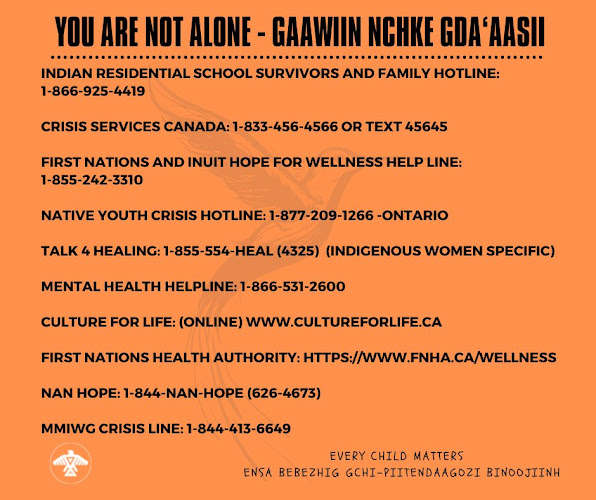
You are not alone

You are not alone

To Veronica Brown

Veronica, we adult adoptees are thinking of you today and every day. We will be here when you need us. Your journey in the adopted life has begun, nothing can revoke that now, the damage cannot be undone. Be courageous, you have what no adoptee before you has had; a strong group of adult adoptees who know your story, who are behind you and will always be so.

Diane Tells His Name


click photo

Lost Birds on Al Jazeera Fault Lines

Lost Birds on Al Jazeera Fault Lines
click to read and listen about Trace, Diane, Julie and Suzie

NO MORE STOLEN SISTERS

NO MORE STOLEN SISTERS
click image

ADOPTION TRUTH

As the single largest unregulated industry in the United States, adoption is viewed as a benevolent action that results in the formation of “forever families.”
The truth is that it is a very lucrative business with a known sales pitch. With profits last estimated at over $1.44 billion dollars a year, mothers who consider adoption for their babies need to be very aware that all of this promotion clouds the facts and only though independent research can they get an accurate account of what life might be like for both them and their child after signing the adoption paperwork.

Original Birth Certificate Map in the USA

Google Followers