They Took Us Away

They Took Us Away
click image to see more and read more

it's free

click

How to Use this Blog

BOOZHOO! We've amassed tons of information and important history on this blog since 2010. If you have a keyword, use the search box below. Also check out the reference section above. If you have a question or need help searching, use the contact form at the bottom of the blog.


We want you to use BOOKSHOP to buy books! (the editor will earn a small amount of money or commission. (we thank you) (that is our disclaimer statement)

This is a blog. It is not a peer-reviewed journal, not a sponsored publication... WE DO NOT HAVE ADS or earn MONEY from this website. The ideas, news and thoughts posted are sourced… or written by the editor or contributors.

EMAIL ME: tracelara@pm.me (outlook email is gone) THANK YOU CHI MEGWETCH!

SEARCH

Monday, February 24, 2014

The Great Divider: How the Baby Veronica case is the sign


By Trace A. DeMeyer

OK, as promised, I have more thoughts after I went to the hallowed halls of Yale Law School last Friday to hear a review of the Baby Veronica Case - and to hear what NCAI, NARF and the Tribal Supreme Court Law Project at Yale were doing while this major case was going on... and I reported to you yesterday what they said essentially…

There weren't any surprises for me unless you count how these panelists didn't use the time to discuss the genocide that actually occurred prior the passing of the Indian Child Welfare Act of 1978 and the child abductions by social workers and missionaries - nor did they mention human trafficking and the Nightlight Adoption Agency dealings with Maldonado, the birthmother.  They did mention boarding schools.

So, I was truly upset. From what I heard, it appears American Indians are eons behind in civil rights and we can't seem to win a case in the Supreme Court.  I’d heard that warning years prior but this time at Yale was a bit more in my face. This case was about adoption by non-Indians, something I lived myself.

We had Justice Alito writing an opinion that Veronica is 1.2% Indian.  NARF attorney Joel West Williams asked the Yale audience, "Who in America is 1/16 or 3/256th anything?"  Yet we have a judge issuing his opinion by measuring an Indian for their Indian-ness which equates to measuring a child’s blood? This is still happening?

·        JUSTICE ALITO delivered the opinion of the Court:
This case is about a little girl (Baby Girl) who is classified as an Indian because she is 1.2% (3/256) Cherokee. Because Baby Girl is classified in this way, the South Carolina Supreme Court held that certain provisions of the federal Indian Child Welfare Act of 1978 required her to be taken, at the age of 27 months, from the only parents she had ever known and handed over to her biological father, who had attempted to relinquish his [**736] parental rights and who had no prior contact with the child. The provisions of the federal statute [*2557] at issue here do not demand this result.
·        Jun 25 2013: Judgment REVERSED and case REMANDED. Alito, J., delivered the opinion of the Court, in which Roberts, C. J., and Kennedy, Thomas, and Breyer, JJ., joined. Thomas, J., and Breyer, J., filed concurring opinions. Scalia, J., filed a dissenting opinion. Sotomayor, J., filed a dissenting opinion, in which Ginsburg and Kagan, JJ., joined, and in which Scalia, J., joined in part. Read more here
·         

I couldn’t sleep ... Dusten Brown never had a chance. He went to Iraq knowing the Capobiancos had his daughter but he had to serve a year and a JAG lawyer took his case.  The puzzle remains why Maldonado mysteriously breaks up with him and severs all communication. Was she punishing her high school sweetheart Dusten by selling his baby or was she manipulated by the adoption agency to take their money?

Then it hit me - keeping America ignorant of Indians, culture, actual history - this all works to take Indian children.  Judgment is easy.  Third World poverty (which we didn’t create) somehow equates to abuse of children.  Add their general ignorance of sovereignty and culture, what it means to be Cherokee or Lakota or Navajo or any tribe - and it means you can't win public opinion polls or cases before the Supreme Court? 

Ignorance about Indians? Exactly!

It's been going on since colonial contact. Please, let's not call them settlers anymore but invaders. America has always been the Great Divider, building its fences, writing its laws, counting on classism and racism to divide us. 

America wins every time when it perpetuates this ignorance of Indians.  Do Indians do a good job of educating others about culture, or what's important to us?  Not really. We're way behind in any civil rights movement.  We've had movies romanticizing us over 100 years and it's hard to kill those "savage" “redskin” stereotypes drilled into all our heads!  

What do Americans know about Indians? Nothing.  Practically zilch.

America's "taking care" of Indians only works to create HATE among Americans who view us as privileged in some way that they are not.  Like why do we even have a law that keeps nice white people from adopting Indian babies? Trust me, ICWA is under attack.

I do know that Indians are way ahead in surviving every broken treaty and then fighting each other over small scraps of power. Some tribes even subscribe to "blood quantum" as if they need to purge their citizen rolls of those who may be too white or too black.

We have Supreme Court Justices using the blood quantum argument and you see that is not entirely their fault (they all went to law school but didn’t even have a course on Indian Law at those Ivy League schools) but it tells me - do not go anywhere near them. They are not even aware of their ignorance.  Dusten Brown didn't have a chance, not in that court.

We Indians shouldn't go anywhere near that court or any court with that level of stupidity. No, you can't tell America they are stupid.

What the panel did say was each and every tribe needs to create and have their own child protection network. I agree since it's pretty evident that you can't trust any non-Indian social worker to go to the reservation and use their mother- father “family unit” example.  Only Indians can decide who the right people are to care for its children.  That person might be an auntie, grandmother or another relative, depending on who in the tribal family is willing and able.

And the panel said we need more American Indian lawyers who become judges - because the way it is now - Indians can’t win.

For many years Vine Deloria and others did try very hard to educate others (with their brilliant books) on the white man’s level, even earning degrees in white man’s colleges like Yale and Harvard, but it all comes down to this:  whites don’t really care.

And if we really think about it, this is a very dangerous situation to be in.


Footnote:  I attended white schools like most everyone else - Really nothing I learned was true or real about Indian culture or history. I learned more sitting at the kitchen table of my friend Ellowyn who is Oglala Lakota, who gave me an education about Indians not written about anywhere.  Then there was my one adoptive aunt (a first-born American) who calls me a liar when I told her there were Indian Boarding Schools, and this was right after I visited Haskell in Kansas. No, Americans are not learning about Indians or the truth of our history. 
The Baby Veronica case is the sign, whether we wish to see it that way or not - but we can no longer ignore the ignorance or the danger surrounding this case.

Swept Away: South Dakota's Native Children Denied Due Process in Custody Cases

Stephen L. Pevar, center, speaks to the crowd gathered for a press conference on March 21, 2013 at the Adobe Eco Hotel in Rapid City, South Dakota. Pevar, a staff attorney with the American Civil Liberties Union's Racial Justice Program, spoke about the unjust practices executed by the state of South Dakota in handling child custody cases involving Native American families. Pevar represents the Rosebud and Oglala Sioux tribes in the lawsuit filed against the state.

2/20/14

This is Part I in a series about Oglala Sioux Tribe v. Van Hunnik, which charges South Dakota State and local Pennington County officials with violating the rights of Indian parents and tribes in state child custody proceedings.
The class-action lawsuit challenges the alleged systematic removal of Indian children in South Dakota from their families and tribal communities without proper hearings, violating the constitutional right to due process and the Indian Child Welfare Act (ICWA).
The American Civil Liberties Union (ACLU), the ACLU of South Dakota, and Dana Hanna of the Hanna Law Office in Rapid City, South Dakota, filed the lawsuit in March 2013 on behalf of two tribes—the Oglala Sioux Tribe and the Rosebud Sioux Tribe—and three Indian parents who allegedly suffered the loss of their children without regard for state law and without receiving timely and adequate hearings as mandated by the Fourteenth Amendment's due process clause and ICWA.
On January 28, 2014, a federal court denied a motion by South Dakota officials to dismiss the case.

On October 25, 2011, Stephen Pevar was driving home from work in Hartford, Connecticut, doing what he always does: unwinding by listening to NPR. But on this chilly, overcast evening, there was one story that grabbed his attention, made it hard for him to relax. It was a report out of South Dakota, where he had worked in the early 1970s as an attorney with the South Dakota Legal Services on the Rosebud Sioux Indian Reservation.
As details of the story unfolded, Pevar's mood darkened. He turned up the radio and listened intently to accounts of Indian children allegedly being taken from their homes by South Dakota social workers, often disappearing into state custody that apparently operated with virtually no accountability or oversight. According to the report, state workers were placing Indian children with white foster families even though Indian foster homes were available. Moreover, social workers were said to be severely restricting, and sometimes denying, Indian parents from having contact with their children during their time in foster care.
Pevar knew that if even half of these accounts were true, the State of South Dakota Department of Social Services, in collusion with court personnel and even judges, might be engaged in systemic violations of federal law under the Indian Child Welfare Act and the Due Process Clause of the Constitution.
Stunned by what he had heard, Pevar glanced at the clock on his dashboard, steered his car into a parking lot and pulled out his cell phone. As National Staff Counsel for the American Civil Liberties Union and a noted expert on federal Indian law, Pevar speed-dialed the ACLU's executive director in South Dakota and left a voicemail.
“Robert, it's Stephen. Listen, I'm in Connecticut, but there's a story on NPR that's going to be on the air there in about an hour. I need you to listen to the story and call me first thing in the morning. We need to talk.”
From his home office that evening, Pevar immediately swung into action, doing research and sending emails to colleagues in South Dakota and beyond to express interest in filing suit if the accounts in the story could be proven. For Pevar, who has authored one of the seminal volumes on Indian law, The Rights of Indians and Tribes, the story was going to stay fresh for more than a passing news cycle. It potentially represented a wholesale state-level defiance of federal law designed specifically to prevent the destruction of tribal life in America by way of procedural and calculated separation of children from their families and tribes.
“As I listened to the [NPR] story, my concern was whether all the hard work that Congress had devoted to investigating the plight of Indian children and in passing the Indian Child Welfare Act was going to waste,” says Pevar. “Were South Dakota officials following the procedures required by ICWA and the Due Process Clause [in the Constitution]? According to this news report, they were not. And if that were the case, something needed to be done about it. I felt a personal responsibility to get involved.”

Another Broken Circle
That same month, Dana Hanna was sitting in court, waiting to present a case he was working on that was unrelated to ICWA. Hanna is a veteran litigator and trial lawyer who specializes in federal Indian law with his own private practice in Rapid City.
Hanna, whose case was next on the docket, was going over briefs when he became aware of the case being presented to the judge, involving two Indian parents. He glanced up,  and says he saw something extraordinary happen.
“I couldn’t believe what I saw: The parents were not advised of any rights—no rights—the prosecutor read a brief statement, the judge turned to the parents and said, 'Do you have anything to say?'” Hanna recalls. “They said they wanted their children back. But the court granted DSS’s petition for custody and foster care placement of their children for the next 60 days, and then scheduled the case for an advice of rights hearing two months down the road.
“They were advised that they had some legal rights two months after the state took custody of their children and placed them in foster care!”
Hanna had already been retained by the Oglala and Cheyenne River Sioux tribes to represent them in Pennington County, which has had a notorious reputation for decades for its violation of the rights of Indian parents and children. But on that day, Hanna sat in disbelief at the proceeding taking place right before his eyes in which parents were stripped of their children with less concern or effort than the handling of a traffic ticket.
Because the couple were not his clients, he could not intervene. But soon after, Hanna began researching these emergency “48-hour temporary custody hearings” required by law two days after a child has been removed from its parents' custody. What he learned was shocking.
“Once I got involved, I realized that nobody in the tribes was getting any semblance of a fair hearing,” says Hanna with incredulity. “And it's in these temporary custody hearings where critical decisions are being made about the fate of their children. These hearings are closed, they are not transparent, no lawyers were ever present on behalf of the parents, [the parents] were never advised of their rights. And that's the way these cases have been handled for years.”
Hanna began gathering transcripts and court records and contacted the ACLU South Dakota office to inquire about potential litigation.
Although the State of South Dakota appeared to be flagrantly operating outside the scope of the Indian Child Welfare Act, Hanna says, “This case is not just about ICWA. It’s about the systematic denial of due process and fundamental fairness: Indian parents and children have a constitutional right to have a meaningful hearing, one in which they can present evidence and be heard, before the state can take their children for two months and place them in foster care. Since 2010, they have been denied that right in the Seventh Judicial Circuit Court.”

Read more at http://indiancountrytodaymedianetwork.com/2014/02/20/swept-away-south-dakotas-native-children-denied-due-process-custody-cases-153659

Sunday, February 23, 2014

#BabyVeronica case discussed at Yale, missing aspects of #HumanTrafficking


From left: Claire Chung, 3L, Supreme Court Advocacy Clinic, Yale Law School;  Joel West Williams, Staff Attorney, Native American Rights Fund; Jacqueline Pata, Executive Director, National Congress of American Indians. Introducing them is Sparky Abraham, 3L, Yale Law School (moderator). The lecture hall was filled to capacity with law students. (Photo by Trace A DeMeyer)

By Trace A. DeMeyer

I plan to write a longer piece on this discussion but essentially the panel said that the Capobiancos won this case in the media first which paved the way to their winning permanent custody of Veronica Brown in rulings handed down by the Supreme Court and the South Carolina Supreme Court.  Despite 17 total amicus briefs, written support by 393 tribes, 600 groups interested in this case including some adoption agencies, and 19 State's Attorney Generals in support of Dusten Brown keeping his own daughter, the Supreme Court did not and does not rule in favor of Indians.  American Indians don't win in public opinion polls either.  Tribes are actually discouraged from taking cases to the Supreme Court.  Out of nine Indian Law cases, only one won in the Roberts/Alito-controlled Supreme Court.

Asked if the Indian Child Welfare Act should be amended or made stronger - Jackie Pata said no.  Pata admitted that NCAI and NARF waited too long to respond in the media to the Baby Veronica media circus, though they tried to rally support for Dusten and met in weekly committees to discuss the case and did try their own media coverage. (Too little, too late.)  Pata said by the time the Dr. Phil show happened with the Capobiancos, Dusten Brown had a gag order placed on him and he was not able to respond or play the same media game as the Capobiancos did.  

In the Q&A, a man in the audience asked Cherokee citizen and attorney Joel West Williams of NARF, "If the Capobiancos could sue the Cherokee Nation for one million dollars, then why can't the Cherokee Nation sue the Nightlight Adoption Agency for their errors in notifying the Cherokee Nation (with Dusten's name misspelled and the wrong birthdate)? These details were not insignificant and actually started the nightmare for Dusten Brown and the Cherokee Nation along with the adoption agency's failure to abide by ICWA which is federal law.  Williams said he could not comment on any pending lawsuits. 

As I have written before on this blog, the Department of Justice needs to interview Christy Maldonado and investigate the Nightlight Adoption Agency for moving and selling children like Veronica across state lines which is in violation of the Interstate Compact. (Not once did this panel use the words HUMAN TRAFFICKING.)

The way the Capobianco's PR campaign was run by Jessica Munday and Trio Solutions who played this case in the media, capitalizing on Social Media with the Save Veronica Facebook page, filling mainstream newspaper opinion pieces with sympathy for the infertile Capobiancos in their late 30s, to demonizing Dusten Brown for text messages to his ex-fiance, then confusing the public and essentially attacking anyone who supported Dusten Brown retaining custody of his own daughter, this case was doomed from the beginning.


In June 2013, the Supreme Court decided Adoptive Couple v. Baby Girl, a widely publicized case involving the adoption of a Cherokee child by non-Natives over the objections of her Cherokee father. At the heart of the controversy was the Indian Child Welfare Act, a federal law designed to protect the best interests of Native children and promote the stability and security of Indian tribes and families. This panel will explore the history behind this landmark law, the current landscape of Indian child welfare, and the implications of the "Baby Veronica" decision for the future placement of Native children. Additionally, panelists will discuss how their organizations collaborated with both tribal and non-tribal stakeholders to develop legal, media, and other advocacy strategies for the case as part of the Tribal Supreme Court Project.


Radio Lab coverage was also mentioned by the panel: CLICK: Adoptive Couple v. Baby Girl May 30, 2013


Source materials on this case:

Adoptive Couple v. Baby Girl on the SCOTUS (Supreme Court of the United States) Blog

Official website for ICWA (the federal Indian Child Welfare Act)

FOOTNOTE: There is a clear and present danger that this will happen again - I say this because the American public (and Supreme Court) is clearly anti-Indian until a white couple wishes to purchase a newborn baby and the only ones available are from Indian reservations.  To be safe, NCAI, NICWA and NARF are obviously trying to educate on the Indian Child Welfare Act since the Baby Veronica case created such a nationwide stir.
Veronica will eventually know that her biological father loved her and fought for her even with the prevailing prejudice of our times. The bright spot for me is the fact that despite this adoption and litigation, Veronica is and will always be a citizen of the Cherokee Nation - no one can ever ever take that away from her. 
More on this discussion soon... Trace


Tuesday, February 18, 2014

Five Categories of Adoptees Missing from the "Vocal Minority"

I want you all to read this post by Rebecca Hawkes and let me know where you land on this list and how you feel about it.


Sea Glass & Other Fragments: Five Categories of Adoptees Missing from the "Vocal Minority...: That phrase, "they don't talk about being adopted so they don't care about it." Don't use silence to dismiss thoughts...


My thoughts: Without the internet, I wouldn't even have this blog AMERICAN INDIAN ADOPTEES or even know about the above post. I wouldn't be able to read the voices, views and written words of the adopted. In a real sense, I would not have moved from the thick dark fog to the "knowing" place where I am today.   By the way, I am still changing - every - single - day.  I cannot believe how different I am since I started ONE SMALL SACRIFICE to the next book TWO WORLDS.  I have not been threatened by anyone to shut up about my views on adoption -- well,  not yet anyway.  I am not a silenced adoptee though I am sure there are people who wish I would just stop reporting on issues like the Baby Veronica case.  I can see clearly that denying this horrific history only dooms us to repeat it. I can see that the Indian Adoption Projects was ANCESTRICIDE - a way to extract Indians from tribal rolls and make us American-protypes. These projects and programs erased our ancestry and identity in sealed closed adoptions.  This was genocide for many tribes.  I do not judge those who adopted us. I do not expect an apology from the American government or even an acknowledgment of what they did.  I judge the governments and individuals who created adoption programs to remove Indian children from their families....That was an atrocity and evil... Trace

Friday, February 14, 2014

Adoption From a Native American Perspective

Leland Morrill, adopted from the Navajo Nation
Leland Morrill was estranged from his Navajo lineage for twenty years. Today, as an author, advocate, and speaker, Morrill shares the unique perspective of how adoption is viewed by Native American family and culture, through the eyes of an adult adoptee.

Leland Morrill was born in 1966, on sovereign land, in the Navajo Nation, within the state of Arizona. He was not issued a birth certificate, and does not know the exact date of his birth. His young, unwed mother was his sole caretaker for the first few years of his life, and according to Leland, this wasn’t unusual in Native American culture.
“Marriage is a Christian concept, not Native,” said Morrill. “Many people from my parent’s generation weren’t married. It’s a very matriarchal society. When you’re born, you take on your mother’s last name, you go to your mother’s family, and the women decide whether the men stay around after the children are born. That’s the way it was. ”
When Leland was two years old, his mother suffered a fatal head injury after flipping her car on a bridge in Albuquerque New Mexico. It was September 1968; Leland was two years old.
“My brother and I went to St. Anthony’s orphanage, where they figured out that we were Navajo, and took us back to the reservation to stay with my grandmother. In our culture, once your mother dies, your next caretakers are your aunts and grandmothers. They are considered your mothers,” said Morrill.
Less than a year after being placed in the care of his grandmother, Leland was taken to the Indian Health Services Hospital for a minor burn on his foot. After Leland was treated, he was taken to another hospital in Gallup, New Mexico, where the Bureau of Indian Affairs decided to investigate.
“They saw poor people, Indians. My grandmother was a sheepherder, living on an Indian reservation without electricity,” Morrill said. “My relatives couldn’t speak English, so they said— ‘we don’t know if these people are your relatives or not, so we are going to take you.’”
Leland was immediately removed from his home and placed with an adoptive couple looking for Native American children to foster and adopt. The day after he was adopted, the family moved to Ontario, Canada, severing all ties Leland had to his biological, Native American family.
Not uncommon for the times, before 1978, when Congress passed the Indian Child Welfare Act, a very high number of Indian children were removed from their homes by public and private agencies and placed in non-Indian foster and adoptive homes or institutions. Leland, who was part of the Amicus Group that went to DC to attend the argument on behalf of Dusten Brown and the Cherokee Nation in the “Baby Veronica” adoption case, explained that there are new laws and bills being passed currently to help further protect biological families. One bill in particular, the Oklahoma Truth In Adoption Act (HB 1118), urges judges to consider the biological family members first before allowing a child to be placed with non-related adoptive parents by an adoption agency.  
“From a human trafficking point of view, I was trafficked,” said Morrill. “Every time they adopted a child, they went to another country. They adopted seven more children when we got to Canada, and then we moved right after that. They separated us from our cultures.”

“They trained us within the Mormon ideology; they thought they were saving us. They thought they were doing the right thing, and from that perspective they were good people. But from a Native American perspective—they were not.”
Leland Morrill returned to his mother’s clan, the Many Goats Clan, for the first time in 1989, to be greeted with open arms by his grandmother and his cousins. “I was a little freaked out, like—wow! this is what I would have been raised like.”
“I tell Native American adoptees like myself—yes, this is what happened to you. You were trafficked. But you have to get past that. Consider yourselves different, because you were forced to assimilate into a different culture. But use that assimilation in your favor—whatever education or opportunities were presented to you that others on the reservation didn’t have, you can come back and use them to help your people.”

For more about Leland’s story, read: Two Worlds: Lost Children of the Indian Adoption Projects

Tuesday, February 11, 2014

Operation Papoose 1964

The inventor of the INDIAN ADOPTION PROJECT, Arnold Lyslo, went to Florida to set-up a new Adoption Agency for Indians, calling it OPERATION PAPOOOSE - this article was published in the Miami News on July 25, 1964 - saying that "...INDIAN children will be much easier to adopt than white children..."... the devastation Lyslo created is still being felt across Indian Country.

Research for the new anthology CALLED HOME


CLICK TO READ: http://news.google.com/newspapers?id=HLEzAAAAIBAJ&sjid=N-oFAAAAIBAJ&pg=2578%2C3164057

Maine Wabanaki-State Child Welfare Truth & Reconciliation Commission (TRC) is celebrating its one year anniversary


Post by Maine Wabanaki-State Child Welfare Truth and Reconciliation Commission.


Today marks the One Year Anniversary of the Commissioners being seated. Happy Day to the TRC!
The Maine Wabanaki-State Child Welfare Truth & Reconciliation Commission (TRC) is celebrating its one year anniversary! Created to uncover, document and explore the experiences of Wabanaki individuals with the state child welfare system, the TRC has spent this past year actively engaging with Wabanaki communities, DHHS workers and non-native community members from across the state.
Formally seated last February, the five Commissioners: Carol Wishcamper, gkisedtanamoogk, Sandy White Hawk, Matt Dunlap and Gail Werrbach, have been busy setting the Mandate into action. In addition to meeting the logistical needs of establishing a functioning TRC, the Commission has been visiting regularly with native communities to create working relationships and foster meaningful conversations. The TRC held its first official community listening session at Sipayik in November of 2013, and is scheduled to attend events at each of the remaining tribal communities and Wabanaki Health and Wellness before this year is out. Commissioners will also be attending private statement gathering sessions within communities and the TRC will be hosting several public events across the state.
In addition to facilitating structured truth commission listening sessions, the Commission has been actively working to promote understanding of the TRC and its process through events such as recent engagements with Justice Albie Sachs of South Africa and Commissioner gkisedtanamoogk's recent TEDx talk.
While it has been only one year since the five Commissioners were seated, there is an undeniable sense of urgency within the TRC. Under the formal Mandate signed in 2012 by all five tribal chiefs and the governor of the State of Maine, the Commission has just eighteen months remaining in which to complete its task. At the close of this time, a final report will be issued and disseminated across the state, summarizing the findings of the Commission as well as making formal recommendations. Despite the tight time frame, expectations are high. "It is a remarkable group," observed Commissioner Dunlap, "We have a lot to do, but certainly the right people to do it."
In carrying the work forward, the Commission continues to work closely with Maine Wabanaki REACH, a cross-cultural organization working to ensure that the voices of Wabanaki people are heard and their experiences respected.

For More Information, visit the website, www.MaineWabanakiTRC.org or their FaceBook page - or phone the office at 207. 664.0280.
Maine Wabanaki-State Child Welfare TRC is the nation's first TRC to address child welfare and native people - formerly Maine Tribal-State Child Welfare TRC
RELATED STORY (please click and watch the videos)


Monday, February 3, 2014

Letter From National Native Groups to DOJ to Investigate Child Welfare Issues

... we all prayed for this a very long time...Trace

READ Here, from NICWA, NCAI, NARF, and AAIA:
The undersigned American Indian and Alaska Native (AI/AN) organizations request that the Civil Rights Division of the Department of Justice commences a prompt  investigation into the unlawful treatment of AI/AN children in the private adoption and public child welfare systems throughout the United States.
 ***
Yet, despite all the protections provided by ICWA, each year thousands of parents, grandparents, aunties, uncles, and child advocates reach out to the National Indian Child Welfare Association (NICWA) desperate for help. Their rights under ICWA and the Constitution continue to be violated by state child welfare and private adoption systems. NICWA frequently hears stories of adoption agencies ignoring the tribal membership of
children, of state attorneys failing to provide notice to a tribe when a child is taken into custody, of child welfare workers sometimes knowingly placing children outside ICWA’s placement preferences, and of judges denying tribal representatives a presence in the court room. NICWA also often hears stories of Guardians ad Litem scoffing at the importance of Native culture, state workers demeaning AI/AN parents and traditional
ways of parenting, and attorneys using professional networks to encourage other attorneys to purposefully circumvent the “ridiculous” or “unnecessary” adoption requirements of ICWA.
ICWA SUMMIT 2013

Happy Visitors!

WRITTEN BY HUMANS!

WRITTEN BY HUMANS!

Blog Archive

Featured Post

Your History Class Was a F*cking Lie | #NOMOAR

  Your History Class Was a F*cking Lie by Sean Sherman (Or: How the American Educational System Has Always Been a Racist Propaganda Program...


Native Circles

Native Circles
click logo for podcasts!

Most READ Posts

Bookshop

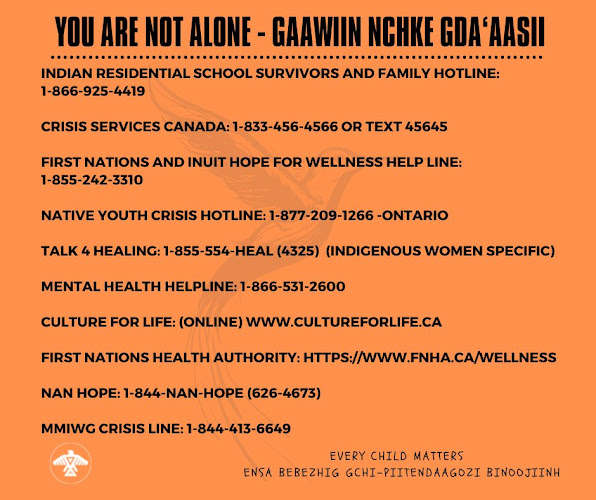
You are not alone

You are not alone

To Veronica Brown

Veronica, we adult adoptees are thinking of you today and every day. We will be here when you need us. Your journey in the adopted life has begun, nothing can revoke that now, the damage cannot be undone. Be courageous, you have what no adoptee before you has had; a strong group of adult adoptees who know your story, who are behind you and will always be so.

Diane Tells His Name


click photo

Lost Birds on Al Jazeera Fault Lines

Lost Birds on Al Jazeera Fault Lines
click to read and listen about Trace, Diane, Julie and Suzie

NO MORE STOLEN SISTERS

NO MORE STOLEN SISTERS
click image

ADOPTION TRUTH

As the single largest unregulated industry in the United States, adoption is viewed as a benevolent action that results in the formation of “forever families.”
The truth is that it is a very lucrative business with a known sales pitch. With profits last estimated at over $1.44 billion dollars a year, mothers who consider adoption for their babies need to be very aware that all of this promotion clouds the facts and only though independent research can they get an accurate account of what life might be like for both them and their child after signing the adoption paperwork.

Original Birth Certificate Map in the USA

Google Followers