They Took Us Away

They Took Us Away
click image to see more and read more

it's free

click

How to Use this Blog

BOOZHOO! We've amassed tons of information and important history on this blog since 2010. If you have a keyword, use the search box below. Also check out the reference section above. If you have a question or need help searching, use the contact form at the bottom of the blog.


We want you to use BOOKSHOP to buy books! (the editor will earn a small amount of money or commission. (we thank you) (that is our disclaimer statement)

This is a blog. It is not a peer-reviewed journal, not a sponsored publication... WE DO NOT HAVE ADS or earn MONEY from this website. The ideas, news and thoughts posted are sourced… or written by the editor or contributors.

EMAIL ME: tracelara@pm.me (outlook email is gone) THANK YOU CHI MEGWETCH!

SEARCH

Wednesday, April 19, 2023

Part Five: What if We Lost ICWA | Our Sovereignty


The plaintiffs, Brackeens, assert ICWA is an unconstitutional law

PART 5: 
Haaland v. Brackeen
By Trace L Hentz, blog editor and adoptee

Am I worried about the ICWA case? Yes. Very.

I am worried that the "Supreme" Court has shown no respect for our inherent sovereign rights.  Just look at history.  This case could rescind the Indian Child Welfare Act of 1978.  I worry the impact on adoptees now and future Native adoptees.  (ICWA allows adoptees to open their adoption records.)  We are called The Stolen Generation and Sixties Scoop for good reason.

We lost our sovereignty when we were adopted out to white families.  We lost everything - language, culture, land, family, ceremonies and our tribal stories.  (Some of us lost our sanity too!)  Swimming pools, college degrees, and white families in fancy houses, cannot replace this.

Sadly, I do not think these Justices actually know what our loss means!

Many years ago in Wisconsin, two tribal chiefs gave talks to new congresspeople on Sovereignty 101- I interviewed them about it and then wrote an article in News from Indian Country.  They explained it used to be feds (the federal government) that dealt with tribes and the feds were keenly aware of sovereign tribal rights and history.  Both chiefs said state lawmakers were not as understanding.  There was also high turn-over in states and many new congressmen don't know state or federal history, even how tribes signed numerous treaties.

The Department of WAR (who authorized killing Indians) morphed eventually into the Department of the Interior.


I looked back at my blog posts: Sovereignty and how it applies to Haaland vs. Brackeen.

As Rebecca Nagle explained: "A host of federal statutes—including on land rights, water rights, health care, gaming, criminal and civil jurisdiction, and tribal self-governance—treat Native Americans differently based on this political classification.  In this light, I fear that the Brackeen lawsuit is the first in a row of dominoes—if the Court strikes down ICWA, everything else could soon go with it."

"Under federal law, tribes and tribal citizens are not a racial group, but a political one.  Accordingly, ICWA applies only to Native children who either are enrolled in a federally recognized tribe or are eligible based on a given tribe’s citizenship requirements," Nagle said. 

And this:

This cultural difference — that a family’s fitness is determined by its wealth, and that those concerns should outweigh a child’s connection to their family and heritage — is essentially why the Indian Child Welfare Act was created in 1978.  The law recognizes the history of federal policy aimed at breaking up Native families and mandates that, whenever possible, Native families should remain together.

Sarah Kastelic, the executive director of the National Indian Child Welfare Association, said that ICWA acknowledges important familial and tribal bonds that have long been disregarded, and that Native ways — such as extended families living under the same roof — have often been used to show unfitness in child welfare proceedings. “No matter the picket fences and swimming pools and things, most of the time, kids want to be with their families,” she said.

READ: The Native adoption case that could dismantle the Indian Child Welfare Act, explained - Vox


THE INTERIOR AND INDIAN AFFAIRS:


👇This is a bit technical but it is the argument the Justices are deliberating:

"What's Missing in the Brackeen Argument: An Indian Affairs Clause"

|

I was chatting with Prof. Lorianne Updike Toler (Northern Illinois), and she mentioned some thoughts of hers on this subject, based on her recent University of Chicago Law Review article, The Missing Indian Affairs Clause. I encouraged her to write up a blog post, and she kindly passed along the following:

In the November 9th oral argument for Haaland v. Brackeen, which challenges the constitutionality of the Indian Child Welfare Act, Justice Amy Coney Barret's question about the impact of overruling Congress' plenary power over tribes underscores a centuries-old confusion about federal Indian Affairs.

It's not just the Court that is confused.  Former Volokh Conspiracy posts on point reveal the deep academic fissures over the historical context of the Indian Commerce Clause.  Unknown to the Court and most of academe is the root cause of all the confusion: that the Constitutional Convention initially forgot (and then later intentionally excluded) the Articles of Confederation's Indian Affairs Clause in the Constitution.

As I detail in this University of Chicago Law Review article, Pennsylvanian comparative constitutionalist James Wilson, tasked by the five-member Committee of Detail to draft the Constitution, initially checked off "Indian Affairs" to include as a Congressional power, but then failed to get the power into his final draft.  He was not the only one to forget.  Although the Convention had commissioned the Committee to include all the Congressional powers in the Articles of Confederation (where Indian Affairs featured), Edmund Randolph also forgot to include the power in his initial sketch of the Constitution.  Odd, considering a Cherokee chief had met with him that summer in Philadelphia and he was then directly concerned with settler-tribe disputes on Virginia's frontier as the state's governor.  It was John Rutledge, the South Carolinian chair of the committee, who remembered, scrawling the power in the margin of Randolph's sketch. Yet he later forgot this power in combing through Wilson's final draft, and it was reported out of the Committee sans (without mentioning) Indian Affairs.

But James Madison remembered.  It was he who suggested Indian Affairs be inserted back into the Constitution.  This time, the Committee of Detail intentionally excluded the Clause, instead inserting "Tribes" into the Commerce Clause.  No one objected.  This despite that at least three Convention members had just spent their ten-day break (for the Committee of Detail to meet) fulfilling their congressional duties in New York.  There, impending tribal wars in Virginia and Georgia's Creek disputes were discussed.  Presumably, the Convention thought Congress' previous powers under the Article's Indian Affairs were addressed by the Indian Commerce Clause and other provisions of the Constitution—such as the power to declare war and peace and the president's shared Treaty Power.

What does this mean for the Constitution? Put simply, Congress has no Indian Affairs power, and therefore no plenary power. Early assertion of this power was justified under the tripartite powers of Indian Commerce, War and Treaty Powers. But Congress halted tribal treaty-making long ago.  If it wants to re-assert power over tribes beyond the Commerce Clause, the President needs to begin treating with tribes again.

And what of any residual power? As I propose in my article linked above, the residue reverts to the sovereign tribes. Tribal sovereignty is to tribes what federalism is to the states. Powers not reserved by the Constitution to Congress and the President revert to the tribes.

This would mean that Congress lacked constitutional power to pass ICWA, however well-intentioned.  ICWA was adopted in an attempt to prevent Native American erasure by allowing the community to intervene in adoption and foster cases to ensure tribal children are raised in Native American families.  ICWA grants the child's tribe exclusive jurisdiction over custody proceedings and other intervention privileges.  Further, it establishes placement preferences first in favor of any family members, then the tribe, and then any Native American families regardless of tribal membership.

Unless related to its Indian Commerce power (and heaven forbid if we have arrived at treating adoption of babies and children as commerce), Congress has no power over Native American adoptions. On this basis, ICWA might be unconstitutional wholesale.  However, to the extent ICWA respects tribal sovereignty and refers cases to the child's tribe, it may be constitutional under a structural reading of the Constitution:  The combined intratextual references to tribes as the constitutional unit of recognition— "tribes" under the Commerce Clause and the presumption that Indians are not taxed under Art I. sec. 2 of the Constitution—together with the parallel analog of federalism vis-à-vis states may permit Congress to proactively proscribe federal and state deference to tribal power.  But as Congress has no plenary power over tribes and Native Americans as a people, it cannot specify adoption placement or other preferences.  The Court should so rule in Brackeen.

👇👇👇This gives me hope:


read:

Native American Law and Sovereignty Institute, “Expert Q&A: Professor EagleWoman Explains Important ICWA Case Heading to Supreme Court,” March 10, 2022, Mitchell Hamline School of Law, n.d., https://mitchellhamline.edu/native-american-law-and-sovereignty/2022/03/10/expert-qa-professor-eaglewoman-explains-important-icwa-case-heading-to-supreme-court/. 

(to be continued)


LOOTED GRAVES

ANGEL MOUNDS in INDIANA were looted and destroyed

By Trace L Hentz, blog editor

Looting - that is just one of the topics I research beyond adoption.  It's a pattern really: Looting, Mass Murder, Theft, Mining, Profits, Taking Land, Taking Kids... all of it.  It combines into colonization and all the other terms they use to describe the "making of America" and Canada.

It is very interesting that we are finding out through press releases what was actually looted.  I am still disturbed it took so long.

What did we lose? Pretty much everything: tribes were herded onto reservations, kids taken by gunpoint to residential schools, lands were seized, graves robbed, burial mounds looted and destroyed, and on and on.

What can we do about it?

WHAT IS NAGPRA? NAGPRA is the Native America Graves Protection and Repatriation Act. 

Since 1990, Federal law has provided for the repatriation and disposition of certain Native American human remains, funerary objects, sacred objects, and objects of cultural patrimony. By enacting NAGPRA, Congress recognized that human remains of any ancestry "must at all times be treated with dignity and respect." Congress also acknowledged that human remains and other cultural items removed from Federal or tribal lands belong, in the first instance, to lineal descendants, Indian Tribes, and Native Hawaiian organizations. With this law, Congress sought to encourage a continuing dialogue between museums and Indian Tribes and Native Hawaiian organizations and to promote a greater understanding between the groups while at the same time recognizing the important function museums serve in society by preserving the past. (US Senate Report 101-473).

A museum can fail to comply with the requirements of NAGPRA and may be assessed a civil penalty by the Department of the Interior.
But there are problems, of course, explained on Native American Calling, when a Lakota elder said their tribal members cannot touch the remains - and the TVA needs to rebury them.  Listen

WHAT HAPPENED:

More than three decades ago, Congress passed a law calling for museums and other groups to return the human remains of Native Americans in their possession.  For years, two major East Tennessee institutions reflected the failure of that law, according to a joint investigation published in March by ProPublica and NBC News.

The investigation found that institutions were failing on a massive scale to return remains to tribes — and that half of the still-unreturned remains are held by a small minority of these institutions. This list is populated in part by prestigious universities like Berkeley and Harvard. But Tennessee was the only state for which multiple institutions — the University of Tennessee in Knoxville and the Tennessee Valley Authority — ranked among the top 10.

(READ MORE: Muscogee Nation, Georgia officials will cooperate on restoring the sacred to tribe)

Both have, however, made recent progress, well after the law in question was passed.

After years in which it returned only a small fraction of the Native American remains in its possession, University of Tennessee (UT) has, like many other institutions, lately returned remains at a far faster pace.

TVA cultural resources

gallery photo

In 2019, for example, it made nearly 2,000 Native American remains taken from what is now South Dakota available to tribal descendants, according to data maintained by the National Park Service.

Still, these and other remains the university has made available to tribes account for just 34% of the 6,000-plus Native American human remains the university reported to be in its possession, according to the database.

The university is committed to fulfilling its obligations under the law, spokeswoman Kerry Gardner said by email, adding that it cannot file a notice with the government listing a set of remains as available to be returned until a tribe files claims for them.

Gardner said the school is working on the claims of several tribes.

The Tennessee Valley Authority, for its part, once reported having the remains of more than 12,800 Native Americans — generally found in modern day Alabama and Tennessee — in its possession.

This remained the case until recently, when TVA, like UT, made a significant portion of these available for return: 72% in its case.

The utility said it will soon relinquish these possessions entirely.  Agency spokesman Scott Fiedler said by email that TVA recently determined that all Native American remains still in its possession should be made available — and that they will be, whenever the Federal Register publishes TVA’s public notice of this.

RESEARCH AND INFRASTRUCTURE

UT’s and TVA’s holdings of unrepatriated Native American remains are uncommonly large.  But they are just two among about 600 institutions that have reported possessing what still amount to well over 100,000 unreturned Native American human remains.

(READ MORE: TVA seeks public help combating looters of cultural resources such as Native American artifacts)

In some cases, the excavated remains and other artifacts arrived via a kind of sanctioned looting by researchers probing old burial sites.  For example, around the 1900s, archaeologists excavated burial mounds on a widespread basis in the Southeast.  As the ProPublica/NBC News investigation noted, several of the institutions with the most unrepatriated Native American remains in their possession — the Universities of Alabama and Kentucky also made the top 10 list — are based in the region.

Similar research took place in other parts of the nation as well.

“We never ceded or relinquished our dead,” one Arizona State University professor, a member of the Pawnee Nation, told ProPublica/NBC News reporters. “They were stolen.”

Other Native American remains, such as those generally in the possession of TVA, were dug up amid massive infrastructure projects.

“When we constructed reservoirs in the ’30s and ’40s, a tremendous amount of human remains and funerary objects were removed,” TVA has quoted its archaeologist and tribal liaison, Marianne Shuler, as saying on its website.

More than 20 federally recognized Indian tribes attach religious and cultural significance to land TVA manages, Fiedler said.

As a result of the 19th century Indian Removal Act, many — though not all — of these tribes are now based far away.  Efforts to reach repatriation specialists at the Cherokee Nation, the Chickasaw Nation, the Muscogee Nation and the Eastern Band of Cherokee Indians by press time were unsuccessful.

CULTURAL CONNECTION

Tribal activism paved the way for the Native American Graves Protection and Repatriation Act passed by Congress in 1990. The law sought to make universities, museums and other institutions inventory their artifacts and human remains and consult with Native American groups.

The basic premise was that institutions had to publicly report their holdings and coordinate with tribes to determine to whom the remains should be returned. If a connection was established between the remains and the tribe, the institution would publish a notice on the Federal Register, making the claims available to be repatriated.

Ultimately, few of the institutions with Native American remains in their possession relinquished their holdings in the years following the law’s passage.

Some people resisted the law, sometimes arguing that the remains should stay in museums and universities or that specific modern tribes lack proof that they are the rightful stewards.  UT was among those that avoided the law in the 1990s by categorizing everything in its collection as “culturally unidentifiable,” according to the ProPublica/NBC News investigation.

Asked about this, Gardner, the university spokeswoman, focused on the more recent past, in which the school hired anthropologist Ellen Lofaro in part to spearhead its efforts, and the university’s repatriations increased from 4% to 34% of its holdings.

“Over the last six years, the university has continued to build a program that underscores our commitment,” Gardner said. “We are actively building relationships with and consulting with tribal communities. This work is important, and we are dedicated to continuing to make progress.”

The Tennessee Valley Authority, for its part, began actively consulting with tribes in the 2000s, Fiedler said.  He said tribes prioritized the repatriation of ancestral remains — and that the TVA hired its first Native American Graves Protection and Repatriation specialist in 2009 to focus on the matter.

Since then, the federally-owned utility has made remains available to 11 tribes.

There are thousands of remains left to be passed along. But everything the utility has made available thus far, tribes have taken, Fiedler said.

***

March 31, 2023


I was searching for a great great grandmother Sarah A Sparks (on the Cherokee Baker Roll) and up pops Tennessee Valley Authority – which got me very confused – why would they have her name?? – then I googled TVA. I am SO ANGRY. I cannot find where she is buried.  Maybe TVA dug her up?

She was married to CHRISTOPHER H HARLOW, a great-great granddad.  TLH

HAPPENING EVERY WHERE!👇

Sacred items in Barre library's museum to be returned to Sioux

(United States of America)

Mark Pratt (2022). Sacred items in Barre library's museum to be returned to Sioux. Telegram & Gazette. 11 October.

Mass. museum returns sacred Native American items from its collection

(United States of America)

Ryan Mancini (2022). Mass. museum returns sacred Native American items from its collection. Masslive. 11 October.

UC Berkeley to repatriate thousands of ancestral remains to Indigenous tribes: 'Restorative justice'

(United States of America)

Jisha Joseph (2022). UC Berkeley to repatriate thousands of ancestral remains to Indigenous tribes: 'Restorative justice'. Upworthy. 24 October.

University of California, Berkeley repatriates cultural artifacts to Indigenous tribe

(United States of America)

Jeffery Brown, Lena I. Jackson (2022). University of California, Berkeley repatriates cultural artifacts to Indigenous tribe. PBS. 10 October.

Why a small British museum went out of its way to repatriate Haida Nation artifacts

(Canada; United Kingdom)

Mouhamad Rachini (2022). Why a small British museum went out of its way to repatriate Haida Nation artifacts Social Sharing Facebook Twitter Pinterest Reddit LinkedIn. CBC. 30 September.

Going home: Big Medicine will be returned to CSKT tribes from historical society

(United States of America)

Darrell Ehrlick (2022). Going home: Big Medicine will be returned to CSKT tribes from historical society. Daily Montanan. 23 October.

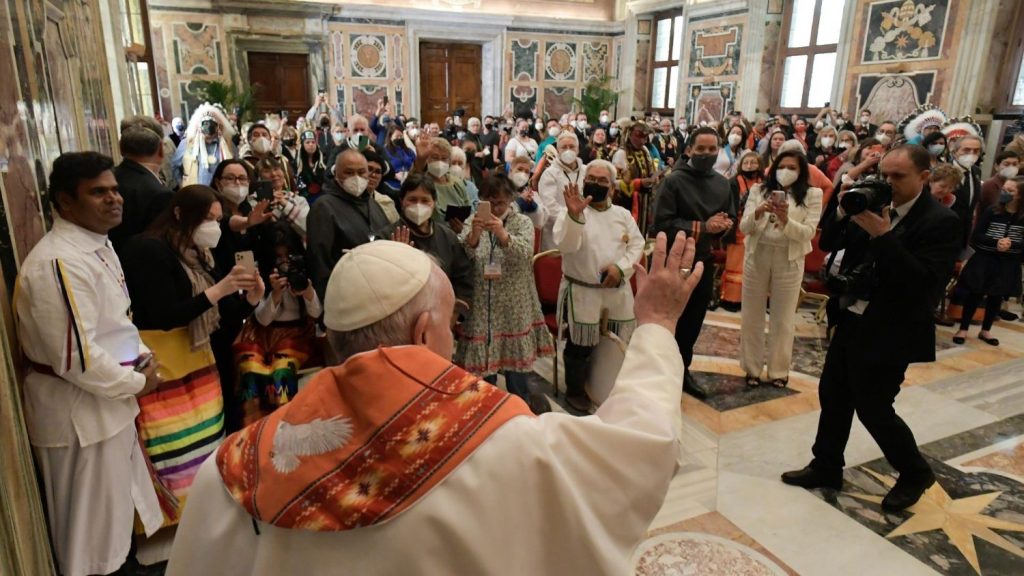
VATICAN?

LISTEN | First Nations curator wants to know what's inside the Vatican's collection of Indigenous artifacts (80,000 objects in collection)

Thursday, April 13, 2023

Saulteaux RCMP officer helps connect #60sScoop survivors with biological families

Using DNA tests, Dean Lerat has created a massive family tree for the Treaty 4 territory in Saskatchewan...

By day, Dean Lerat is an RCMP staff sergeant in Fort Qu'Appelle, Sask.  But in his free time, the member of Cowessess First Nation is a DNA detective.

Lerat, who is Saulteaux, is using DNA testing and archival records to help Indigenous people learn about their biological families and fill in gaps in their family histories.  With that data, he's creating genetic maps and extensive family trees of the Treaty 4 area in Saskatchewan.

"The Sixties Scoop adoptees [and] descendants of residential school survivors, I think I've helped over 15 of them now find their way back," he told Unreserved host Rosanna Deerchild. 

Lerat said people he doesn't know contact him through social media channels, asking him to help them find where they come from. 

"I'll spend a couple hours in the morning, Saturday morning, having a cup of coffee … trying to figure out who their aunts and uncles are. And then I'll send them back a tree if I can. Whether it's partial, whether it's full," he said. 

"I'm curious. I like to solve mysteries." 

Creating a 'genetic road map'

Along with DNA testing, Lerat also uses obituaries, band lists, censuses and old documents from the Northwest Mounted Police (the precursor to the RCMP) to inform his work.  He also uses online databases offered by companies such as Ancestry, 23 and Me, My Heritage and Family Tree DNA. 

All of this work helps Lerat piece together what he calls a "genetic road map."

READ/LISTEN

Wednesday, April 12, 2023

Twitter News? Yup


New settlement $23 billion for First Nations foster kids

$23-billion settlement for First Nations children announced by AFN and Caring Society

The new deal secured $3 billion more than what was proposed by the federal government in 2021 for First Nations children discriminated by the child welfare system.

The Assembly of First Nations and the First Nations Child and Family Caring Society  (FNCFS) said they have announced a revised final settlement agreement in a landmark child-welfare case.

The new proposal increases the federal government’s settlement spend to $23 billion — up from $20 billion — to compensate First Nations children and families who have experienced discrimination in the child welfare system.

“This compensation recognizes the serious harms First Nations, children, youth, and families suffered including unnecessary family separations and the denial of life saving and life wellness services,” said Cindy Blackstock, the executive director of FNCFS, in a release Monday.

The AFN, which represents more than 600 First Nations across Canada, has been working to negotiate a deal after the Canadian Human Rights Tribunal in 2016 found that Canada discriminated against First Nations children by paying less for child welfare services on-reserve compared to those offered off-reserve.

READ


Vermont #TRC starting from scratch

Ed. Note: Maine has its own TRC - more states to follow, we hope. Trace

Vermont now has a Truth and Reconciliation Commission. 'It’s a huge task.'

Dark curtains obscure a view out a window of a building covered in snow.
Elodie Reed /Vermont Public
 
Vermont’s Truth and Reconciliation Commission has officially started its work with the announcement of its first three staff: Mia Schultz, Melody Walker Mackin and Patrick Standen.

A state-funded effort has begun to document how Vermont state laws and policies have discriminated against marginalized communities, including people with disabilities, Black people, Indigenous people, other people of color and people of French Canadian heritage.

It came out of legislation passed last year that created a Truth and Reconciliation Commission to seek ways to repair harm caused by the state of Vermont.

In a press conference, a selection panel announced the commissioners who will lead the effort over the next three years as full-time state employees:

The new commissioners stressed their roles include making policy recommendations, as well as hearing experiences of communities who suffered injustices.

“We know this is not about what has just happened in the past,” Schultz said. “This is about how that past continues and is perpetuated in our present, and how we’ll learn from it, and eradicate it in our future.”

They’ll have an annual budget of almost $750,000, and will hire an executive director and other researchers.

“First, we're tasked with starting an office — there’s nothing like this that’s been done before,” Schultz said. “We are starting from scratch.”

"It's a huge task," Melody Walker Mackin said.

A commission with more limited scope was created in Maine to document the state's child welfare practice with Wabanaki people, and Burlington City Council created a Reparations Task Force in 2020, but the new commissioners said they're not familiar with any mandate that's so broad in scope.

"While it may look overwhelming, it's essential that all voices by heard," Standen said. "The resources that are provided by the state at this point seem to be ample and welcomed."

Tuesday, April 11, 2023

Mapping the #60sScoop


But at the age of 28, sitting in a university classroom, Colleen Cardinal learned her experience was shared by many. It even had a name — the ’60s Scoop. From about 1951 until 1984, Canadian child welfare authorities took more than 20,000 First Nations, Métis and Inuit children from their homes and placed them with white families.

“I wanted to find all these adoptees, I wanted to know where they are, I wanted to hear what they went through,” Cardinal said.  But then, Cardinal said, that information wasn’t available.

Cardinal first decided to create a map after visiting a conference for grassroots human rights organizations in 2014.   There, Cardinal said she came across a world map drawn on a large, white bedsheet on which visitors could map their stories out with colourful yarn.

In 2019, Cardinal launched the online mapping tool.  Now, it includes the stories of more than 100 survivors who were displaced from across Canada to places as far as the U.K. and Botswana.  The map illustrates where people were born and where they were moved.  It logs birthdates, when people moved and if survivors met their biological families, the date that happened.  Each entry includes space for people to share words and videos telling their own stories and contact information for survivors to connect with others.

Genetic Detective, a genetic genealogy service near Ottawa, has offered to subsidize DNA test kits for some survivors, create a database of survivors' genetic information and connect survivors to their biological families.

A small group of survivors gathered in Ottawa last week.  They filmed themselves telling their stories in their own words, to create videos that will be posted on the map’s website.  By sharing their stories, Cardinal said she hopes to normalize their experiences and create a community for survivors.

“I know as an adoptee how lonely it is and how isolating it can be.  I needed (to find others).  So if I needed it, others need it,” Cardinal said. “And if we want it done our way, we need to do it ourselves — by survivors, for survivors.”

 READ AND WATCH

Boarding School Abuse: “To Heal We Must Know the Truth”

"They always go for our babies." -Emily Edenshaw, President & CEO at Alaska Native Heritage Center

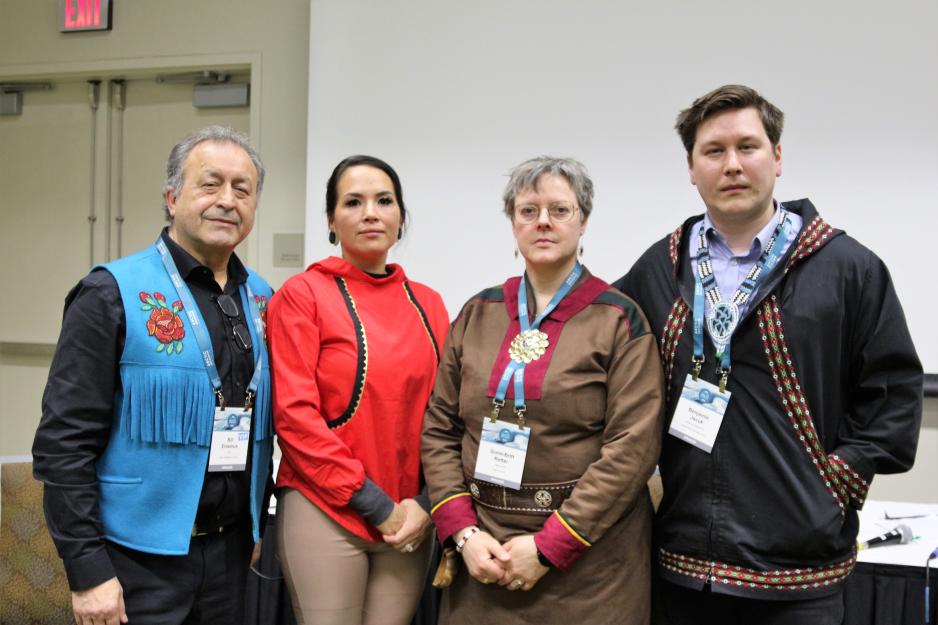
Chief Bill Erasmus, Emily Edenshaw, Gunn-Britt Retter and Benjamin Jacuk.JPG
Chief Bill Erasmus, Emily Edenshaw, at the Alaska Native Heritage Center, Gunn-Britt Retter at the Saami Council and Benjamin Jacuk at the Alaska Native Heritage Center. (Photo: Trine Jonassen)
 
Anchorage Alaska (High North News): 
He admitted that this was genocide. -Chief Bill Erasmus
 
Most Arctic nations have been affected by assimilating and oppressive boarding school policies. Now indigenous community leaders are looking for healing as they brace for the dark truth of a government-led genocide.

Ground zero

The boarding school practice started in Alaska in 1879, 12 years after the USA purchased the Arctic state from Russia without consulting the indigenous population.

Maybe that is also where the healing has to start.

"Alaska may be ground zero for all of this.  But ground zero can also be the place of healing for indigenous peoples from all over the world," Jacuk concludes.

In 2015 the Truth and Reconciliation Commission of Canada concluded what happened was "cultural genocide". It identified more than 3,000 children who died from disease due to overcrowding, malnutrition, and poor sanitation or died after being abused or trying to run away.

Most schools had their own cemeteries, and sometimes when children died, their parents were never informed.


Sixties Scoop adoptees wrap up 5-day gathering | APTN News

#60sScoop Interactive project raises awareness, creates connections and reunites long-lost relatives

From Île-à-la-Crosse to Brighton, England: '60s Scoop survivors map journey of reconnection

Daniel Frost seated in a hotel boardroom.
Daniel Frost is Métis and Cree. Born in northern Saskatchewan, he was adopted by British parents in 1968 at just two years old. (Francis Ferland/CBC)

Thinking about meeting his sister Patsy for the first time seven years ago is still tough for Sixties Scoop survivor Daniel Frost.

"All I could do was look at her hands," he recalled, still overwhelmed with emotion as he remembered how much those hands looked like his.

"I couldn't look at her eyes."

Frost is Métis and Cree, one of about 22,000 Indigenous kids who were torn from their homes and placed in foster care or adopted into non-Indigenous families between 1951 and 1991, a system known today as the Sixties Scoop.

He came to Ottawa this week to share his story with the interactive mapping project, In Our Own Words.

Coloured arrows dart all over a map of Canada shown on a projector screen.
The In Our Own Words map tracks where Indigenous kids were taken after being torn from their families. (Francis Ferland/CBC)

Born in Île-à-la-Crosse in northern Saskatchewan, two-year-old Frost was adopted by British parents in 1968, taken to White Rock, B.C., and then finally to Brighton, England. He now lives in Spain.

He spoke with CBC News at downtown Ottawa's Novotel Hotel, where Sixties Scoop survivors gathered this week from far-flung places all over the world to share stories and connect.

Frost explained how a federally funded Saskatchewan-based organization, Adopt Indian Métis (AIM) scooped seven youngsters from his 13-sibling family. The organization is known for placing ads in newspapers and aggressive public relations campaigns.

Frost began learning his history by reading legal documents, including the court files that tell how his mother ran out of the courtroom when she learned her children were being taken.

"What they were saying in the 1960s and '70s was, 'We're not going to help you. We're just going to take your children,'" Frost said.

"I don't know if I'll heal from it, but I think being able to work my way through it is something which is necessary."

He visited Île-à-la-Crosse in 2016 and met his family, which he said changed him from a scared outsider to a man deeply proud of his Indigenous identity, and this trip to Ottawa includes a hop across the river to Gatineau, Que., to pick up a copy of his first Indian status card.

KEEP READING

What Happens Now? What about the victims of the Doctrine of Discovery?

Tamara Baldhead Pearl is cautiously optimistic the Vatican's repudiation of The Doctrine of Discovery can lead to change in what she refers to as "white supremacy in Canadian case law."

"The greater the consensus that the Doctrine of Discovery is fundamentally racist and immoral, the harder it is for Canadian courts to continue to decide cases based on this fundamental doctrine," said Pearl, who is from One Arrow First Nation, in an interview with Day 6.

Woman with black hat and black shirt smiles in a headshot.
(left) Tamara Baldhead Pearl, an assistant professor of law at the University of Alberta, is cautiously optimistic after the Vatican's repudiation of The Doctrine of Discovery. (University of Alberta)

Pearl, who's also an assistant law professor at the University of Alberta, says she hopes there will be increased pressure to "try to rethink how Canadian law can be brought into conformity with the contemporary understanding of Indigenous rights and equality among peoples."

The Doctrine of Discovery is a set of colonial-era theories, backed by 15th-century papal bulls, which was used to legitimize the seizure of Indigenous lands by colonial powers. Legal decisions in both the U.S. and Canada invoked the doctrine in some form.

The Vatican says in its statement the doctrine was not a Catholic teaching and had been manipulated for political purposes by colonial powers.

"The Church's magisterium upholds the respect due to every human being," the statement reaffirmed.

There have been calls to repudiate the doctrine for decades, but they gained more visibility in Canada during Pope Francis' visit last summer. Two women held a banner reading "Rescind the Doctrine" at the altar of the National Shrine of Sainte-Anne-de-Beaupré on July 29, 2022. They were escorted from the basilica without incident, but draped the banner outside as part of a protest.

Sarain Fox, right, and Chelsea Brunelle of the Batchewana First Nation unfurled a banner reading "Rescind the Doctrine" outside the mass presided over by Pope Francis at the National Shrine of Saint Anne de Beaupre in Quebec.
Sarain Fox, right, and Chelsea Brunelle of the Batchewana First Nation demonstrate outside the mass presided over by Pope Francis at the National Shrine of Saint Anne de Beaupre, Thursday, July 28, 2022, in Saint Anne de Beaupre, Quebec. (John Locher/The Associated Press)

During the visit, Pope Francis apologized to Indigenous people for the residential school system that forcibly removed Indigenous children from their homes. However, he was criticized by some for not taking the opportunity to repudiate the doctrine.

KEEP READING 

A Case Before the U.S. Supreme Court Could Surge the Psychiatric Labelling and Drugging of Native American Foster Youth

Archive photo

I
f the Brackeen v. Halland case currently challenging the Indian Child Welfare Act (ICWA) of 1978 before the U.S. Supreme Court is successful, Native children are more likely to be placed with non-Native foster parents, and from there, face a surge in psychiatric labeling and drugging.

Tribes across the U.S. are outraged by the attempt to dismantle ICWA, and a “think tank” was recently formed in California to respond to what seems a foundational threat to community sovereignty, beginning with who controls Native child welfare decisions.  It’s the latest in a battle as old as the United States: White Christian evangelicals fighting for the right to take Native children away from family, tribe, and culture, and re-educate them, no matter the harms—and its outcome will determine whether more Native youth are exposed to psychiatric drugs.

Chad Brackeen and his wife, Jennifer, lead plaintiffs, are White, and according to a 2019 interview with The New York Times, also dedicated members of the fundamentalist Church of Christ, which they attend twice a week, and through which they first became inspired to adopt. They began as foster parents before successfully adopting a young Dine (Navajo) boy, and then mounting efforts to adopt his sister. They contend they are being racially discriminated against by ICWA’s mandates favoring a great aunt of both of these children, who has stepped forward from their tribal community seeking to adopt the sister.

...

But what about the contention that ICWA’s dismantling will also create a surge in Native foster youth being psychiatrically labeled and drugged?  It’s frankly impossible to find adequate information bearing on this topic because the U.S. Indian Health Service (IHS), primary purveyor of behavioral health services in Indian Country, has never been accountable to publicly report prescription rates and the types of psychiatric drugs it dispenses.

Yet as I detail in my new book, Coyote’s Swing, IHS has for decades been very involved in psychiatric labeling and drugging. In 2013, for example, the agency attributed 850,000 of its outpatient visits and 5,000 of its inpatient stays to a “mental disorder.” And 10 percent of the services IHS provided that same year to children and young adults aged 5 to 24 years had “mental disorder” listed as the “primary reason.”

...

The history of EuroAmerican culture in North America is rife with the theft of Native children and their childhoods and is both the root cause and effect behind today’s Native foster care system.

According to a recent joint report by Pro Publica and NBC News, 3.5 million homes are searched annually by state child welfare agencies investigating child maltreatment.  Most searches happen without a warrant because caregivers may not know their rights or are intimidated by aggressive caseworkers pounding on their doors.  Once inside, these workers may push their way into a caregiver’s kitchen, go through the refrigerator, sift through trash, and inspect bedrooms and bathrooms while trying to observe children present in the home.  Only five percent of such coercive searches result in actual findings of child maltreatment.


KEEP READING 

ABOUT HIS BOOK:

Using a traditional Yakama tale as a motif, Coyote’s Swing combines the author’s firsthand experiences as a consulting psychologist with rare history and sociocultural critique, revealing how the U.S. mental health system reframes Native American reactions to oppression and marginalization into “mental disorders” and “mental illness,” and how the Indian Health Service’s contemporary practices echo historical injustices.

“In the IHS, dissension is often suppressed as blasphemy and whistleblowers are rarely tolerated. Walker is to be commended for his thorough research and timely recommendations for reform of the agency’s delivery of mental health services in Indian County…I join him in praying that this period of tribal history comes to an end.”—Toobshudud Jack Fiander (Yakama), attorney


How early churches used schools to separate Alaska Native peoples from their land


April 11, 2023 | Podcast: Play in new window | Download | Embed 

The Alaska Native Heritage Center says its study of church records that go back to the 1800s is not research for research’s sake, reports Rhonda McBride from our flagship station KNBA.

Researcher Benjamin Jacuk-Dolchok (Kenaitze) says he hopes to reconstruct the story of how early churches used schools to separate Alaska Native peoples from their land, their culture, and their spirituality.

He says the impacts are still felt today.

“You can’t understand what you need healing from, unless you pull back the band aid and understand the wound.”

Jacuk-Dolchok says most Alaskans don’t realize how closely churches coordinated their efforts.

“While these might be different denominations, the ideology was mostly the same. And that was forced assimilation.”

Jacuk-Dolchok says some of the research looks at the role of boarding schools — and how Americanization and Christianity intersected to break the close connections Alaska Natives had with their land.

He says the forced use of English took away the “heart language” of the people, which sped up the process.

“The major takeaway from what we’re doing is understanding the truth to bring healing, so that younger generations can thrive.”

Jacuk-Dolchok has studied Native boarding schools for more than a decade and credits his grandfather, who attended boarding school, for inspiring his work.

The Princeton Seminary graduate says his theology studies has helped him with his research and given him access to important documents.

Jacuk-Dolchok will share some of his research at the Alaska Native Heritage Center in Anchorage on Friday.

Wednesday, April 5, 2023

Native America Calling: Vatican rejects Doctrine of Discovery


The Vatican’s recent repudiation of the Doctrine of Discovery has been described as a “major step” by some Indigenous leaders, but for others, the Holy See has a long way to go before it can heal the centuries of pain caused by the doctrine’s colonization and control. Today on Native America Calling, we speak with
Steve Newcomb (Shawnee and Lenape), author of Pagans in the Promised Land: Decoding the Doctrine of Christian Discovery and cofounder and director of the Indigenous Law Institute, and Bruce McIvor (Métis), lawyer and partner at First Peoples Law.

Sandy White Hawk, in Conversation with Gabrielle Glaser


We are thrilled to have Sandy White Hawk in conversation with Gabrielle Glaser next week, each discussing their work, Sandy’s new memoir (a must read), and the impact and future of the Indian Child Welfare Act. Plus, Sandy and Gabrielle will discuss their recent work together on a documentary project about the history and legacy of the federal Indian residential school system in the United States.An Evening with Sandy White Hawk, in Conversation with Gabrielle GlaserApril 11, 2023 • 3pm Pacific/5pm Central/6pm Eastern 
Registration/Info

Don't miss a great virtual event that will discuss timely and incredibly important issues around adoption, adoptee rights, and the profound impact of forced removal of Native American children from their parents and communities.I hope to see you there. Be good, and keep up the hard work.Greg

Yes, the event will be recorded and available later to those who register. :)

Happy Visitors!

WRITTEN BY HUMANS!

WRITTEN BY HUMANS!

Blog Archive

Featured Post

Your History Class Was a F*cking Lie | #NOMOAR

  Your History Class Was a F*cking Lie by Sean Sherman (Or: How the American Educational System Has Always Been a Racist Propaganda Program...


Native Circles

Native Circles
click logo for podcasts!

Most READ Posts

Bookshop

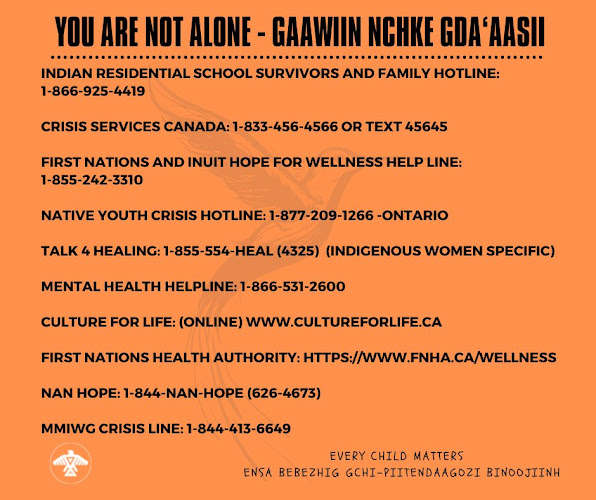
You are not alone

You are not alone

To Veronica Brown

Veronica, we adult adoptees are thinking of you today and every day. We will be here when you need us. Your journey in the adopted life has begun, nothing can revoke that now, the damage cannot be undone. Be courageous, you have what no adoptee before you has had; a strong group of adult adoptees who know your story, who are behind you and will always be so.

Diane Tells His Name


click photo

Lost Birds on Al Jazeera Fault Lines

Lost Birds on Al Jazeera Fault Lines
click to read and listen about Trace, Diane, Julie and Suzie

NO MORE STOLEN SISTERS

NO MORE STOLEN SISTERS
click image

ADOPTION TRUTH

As the single largest unregulated industry in the United States, adoption is viewed as a benevolent action that results in the formation of “forever families.”
The truth is that it is a very lucrative business with a known sales pitch. With profits last estimated at over $1.44 billion dollars a year, mothers who consider adoption for their babies need to be very aware that all of this promotion clouds the facts and only though independent research can they get an accurate account of what life might be like for both them and their child after signing the adoption paperwork.

Original Birth Certificate Map in the USA

Google Followers