BOOZHOO! We've amassed tons of information and important history on this blog since 2010. If you have a keyword, use the search box below. Also check out the reference section above. If you have a question or need help searching, use the contact form at the bottom of the blog.
We want you to use BOOKSHOP to buy books! (the editor will earn a small amount of money or commission. (we thank you) (that is our disclaimer statement)
This is a blog. It is not a peer-reviewed journal, not a sponsored publication... WE DO NOT HAVE ADS or earn MONEY from this website. The ideas, news and thoughts posted are sourced… or written by the editor or contributors.
EMAIL ME: tracelara@pm.me (outlook email is gone)
THANK YOU CHI MEGWETCH!
Anna says she feels like she was "trafficked" (ABC News: Luke Bowden)
Hundreds of thousands of babies sent abroad
For Anna, the allegations that adoption agencies paid for babies confirm her feeling that she was part of a trade.
From
her records, she estimates her Australian adoptive parents paid around
$US4,500 in adoption costs in 1987. Other agencies were charging
$US5,000 per child at the time — more than $21,000 today.
"It just felt like I was a commodity — like I was being sold," Anna says.
Australia still has an adoption arrangement with South Korea and ESWS
specifically, but ESWS has informed Australia that they are not
currently accepting new adoption applications.
For intercountry adoptees impacted by unique or difficult adoption practices, specialist support is available through the Intercountry Adoption Family Support Service (ICAFSS).
I
remember having a daydream about the opening acoustic guitar part of
“All Along The Watchtower” ending with a Native American scream and a
big native drum on the downbeat. That was the spark to assemble one of
our biggest and deepest Songs Around The World. From Beirut to New
Orleans to the Lakota Nation, musicians play and sing like a musical
army determined to stop suffering and greed all over the world. As a
society, we need to get back to our roots and connect deeper with our
ancestors and native people in general so we can find the wisdom we need
to move forward as a human race. As Jimi Hendrix once said, “If there
is something to be changed in this world, then it can only happen
through music.”
-Mark Johnson, PFC Co-Founder
The Indian Child Welfare Act is a federal policy that seeks to keep Indigenous families and communities intact by regulating the removal of Native American children from their homes and the placement of children in foster care or adoptive homes. The goal of ICWA is the preservation of Indigenous communities and the safety and health of Native children.
In 2023, the U.S. Supreme Court reviewed ICWA through the case Haaland v. Brackeen, which challenged the constitutionality of ICWA based on discrimination. The U.S. Supreme Court ruled that ICWA is constitutional.
During this time, the South Dakota Legislature considered adopting state-based protections similar to ICWA but decided to hold off until after the Supreme Court ruling. During the 2024 legislative session, the Legislature passed a bill to establish an advisory council to reflect on ICWA proceedings and begin to spark change.
This is the first step in a necessary approach to increasing protections for Indigenous communities, families and children. South Dakota is the only state in the Upper Midwest and Northern Plains that does not have state-based ICWA protections. This demonstrates a lack of attention to ICWA and the issue of the removal of Indigenous children from their homes.
In South Dakota, Native American children account for 13% of the child population but represent 74% of the foster care population. This reflects disparities faced by Indigenous children and their families and the importance of strengthening ICWA protections on a state level.
This is a systemic issue, and it is also deeply connected to the mass incarceration of Indigenous people in South Dakota.
There is a foster care-to-prison pipeline. Children placed in foster care are faced with a disproportionately higher risk of being incarcerated later in life. In South Dakota, Native Americans account for at least 35% of the prison population, but only 9% of the state’s adult population.
This shows that the disproportionate use of foster care placement for Indigenous children may be connected to the disparities in the incarceration of Indigenous individuals. There must be an effort made to conduct research on this connection and to craft policies that protect Indigenous children, families and communities.
The Lost Children
Read The Lost Children,
a series exploring the causes, effects and potential solutions to the
decades-long overrepresentation of Native American children in South
Dakota’s foster care system.
South Dakota Searchlight is part of States Newsroom, a nonprofit news network supported by grants and a coalition of donors as a 501c(3) public charity. South Dakota Searchlight maintains editorial independence. Contact Editor Seth Tupper for questions: info@southdakotasearchlight.com. Follow South Dakota Searchlight on Facebook and X.
Marilyn Ringland longs to know circumstances of her birth: 'Maybe I'm hoping that you'd found someone'
*
Dear Irene,
I must apologize for using your
name instead of calling you "mom." I didn't get the chance to know you
in the way a child knows their mother.
I do hope you
had the opportunity to hold me, and that you got to choose my name —
a name that my parents, the ones who raised me, kept as is to honour
you. I was promised to people who you knew would love me as their own.
I am slowly finding out your story through records and archives. I don't know which residential school you went to.
Marilyn
Ringland shows a photo of her birth mother, Irene Monias, who was a
patient at the sanitorium in Ninette, Man. 'I hope that I can be the
voice that you didn’t have the chance to be,' Marilyn writes in a letter
to the mother she never knew. (Trevor Brine/CBC)
I only knew that you contracted tuberculosis and were residing at the Ninette, Man., sanatorium when you got pregnant with me, and were there until your demise.
Demise. I can't even say the words "death" or "dying."
Maybe
it's because of what you went through in the short time that you were
here. Spending your adulthood in an institution should not, cannot be
the end. I can only say that you do live on through me and my children.
Did you know you have three grandchildren? I wish you had the chance to meet them.
Also,
my husband. We've been together for more than 30 years. I smile and
think that he's crazy to be stuck with me all this time.
I am doing more sleuthing to find out about your life.
- Marilyn Ringland
I
was very fortunate to be with the family you picked out for me.
You knew my mom was Anishininikwe, like you, and my dad a WASPy kind of
guy. Both of my parents came from large families. I don't know how much
stigma they went through as a mixed couple, but my grandparents were
accepting, and that was what mattered to my parents.
I
was told at a very young age that I was adopted, and I felt comfortable
enough to let people know that it wasn't such a big deal, and no one
asked me if it was. My brother was also adopted, though under different
circumstances. I also had an older sister and two other siblings, and
all three have since died.
'Finding out bits and pieces'
My
search for you in earnest happened after my mom passed away. I don't
know how she would have felt, but I do know that I would have let her
know what I was doing. I guess because I knew I was adopted and my
family life was content, until that point, there wasn't that need or
want to find out where I came from.
Finding out bits and
pieces of your life has been frustrating. The people who might have
known you and your family are gone. I know that I had an uncle, your
brother Walter, and a grandmother when you passed.
I have a picture of you at a hospital, but I'm not sure of which one — either Brandon or Ninette.
A
photo of Irene Monias, taken at a hospital. Ringland hopes her mother
found companionship with 'someone with the shared experience of being
away from home.' (Submitted by Marilyn Ringland)
I
don't have the patient records, but I am doing more sleuthing to find
out about your life. I do know where your resting place is — Glen
Eden Memorial Gardens.
I had mentioned to my daughters
that you might be buried in one of the cemeteries that line Highway 9,
north of Winnipeg. My mom had mentioned this one time and that stayed
with me. I didn't have the courage to ask which cemetery, but my
daughter was inquisitive enough to phone around and find you.
'Maybe you had a moment with each other'
Now I am looking for information on my birth father. What will I find once I have his name?
At first, through Manitoba Post-Adoption Services,
the post-adoption registry could give me his age but legally, nothing
else. At least, not until he turned 101 or had died. (Really? That was
the remarkable information that I received from the registry.)
Well,
if he is still alive, he would have turned 101 this spring. So now I
can find out his name, but that won't tell me what kind of person he
was.
Maybe
I'm hoping that you found someone who, like you, was stuck in a place
that wasn't of your choosing. You found someone with the shared
experience of being away from home, lonely and not being able to have
the life that you should have had.
And so maybe you had a moment with each other — and that was enough.
Finding
out that information is what I'm willing to risk, in order to find out
the circumstances of what you went through to have me. A lot of
questions that might not be answered.
As I close this letter to you, I hope that I can be the voice that you didn't have the chance to be.
Your loving daughter,
Marilyn
This First Person article is the experience of
Marilyn Ringland, an Anishiniew woman who has family roots in Garden
Hill First Nation and was raised in Selkirk, Man. For more information about CBC's First Person stories, please see this FAQ.
FILE - The ruins of a building that was part of a Native American
boarding school on the Rosebud Sioux Reservation in Mission, S.D., are
show here Oct. 15, 2022. Federal officials with the Interior Department
called on the U.S. government Tuesday, July 30, 2024, to apologize for a
nationwide system of boarding schools in which Native children faced
abuse and neglect. (AP Photo/Matthew Brown, File)
SEATTLE
— More than 60 children from tribes with homelands in Washington,
Oregon and Idaho are among the nearly 1,000 Native American children who
died in the U.S. government’s abusive boarding school system that tore
families apart and devastated Indigenous communities, according to the
results of a federal investigation released Tuesday.
Between
1819 and 1969, thousands of children were taken from their homes as
part of a targeted effort by federal officials and religious leaders to
eradicate Indigenous culture and identity. The report estimates the
federal government spent $23.3 billion in inflation-adjusted dollars
over the 150 years supporting the boarding school system and similar
assimilation policies.
There
were at least 17 boarding schools in Washington, up and down the
Interstate 5 corridor, on the coast, and dotted through the arid
grasslands of the eastern parts of the state, according to the Interior
Department. Many of them were on present-day tribal land.
Tribal
nations did not gain the right to run their own schools until 1975, and
parents could not prevent their children’s placement in off-reservation
schools until the Indian Child Welfare Act passed in 1978.
The
report, commissioned by Interior Secretary Deb Haaland, found marked
and unmarked graves at 65 of the more than 400 U.S. boarding schools
that were established to forcibly assimilate Native American children
into white society.
The
actual number of burial sites associated with Indian boarding schools —
and the number of Indigenous children who died there — is likely far
greater, the Interior Department acknowledged. The report also doesn’t
include details on how each child died, but officials noted the causes
of death included sickness, accidents and abuse.
The
findings come after Haaland embarked on a two-year “Road to Healing”
tour conducting listening sessions at tribes across the United States.
The
tour included a stop at the Tulalip Tribes’ gathering hall last year,
about 35 miles north of Seattle, where the secretary heard survivors
share stories of their brutal experience at Native American boarding
schools.
Deborah
Parker, a citizen of the Tulalip Tribes and chief executive of the
National Native American Boarding School Healing Coalition, welcomed the
release of the report, but said the federal government and her
organization ultimately need more time and access to records to
understand the full picture.
“The
department was able to identify, by name, 18,624 Indian children —
that’s only a beginning,” Parker said. “That’s a beginning.”
There
were an estimated 523 of these boarding schools in the U.S., according
to research by the National Native American Boarding School Healing
Coalition. The Interior Department report accounts for 417.
The
report does not include burial sites affiliated with other institutions
like day schools, orphanages or stand-alone dormitories, or boarding
schools operated by churches and groups that didn’t receive federal
funding. More than 1,000 institutions involved in the education of
Indigenous children did not meet the criteria used in the department’s
investigation.
A
number of children from Washington who died in the schools were
identified, including one child from the Confederated Tribes of the
Colville Reservation, one from the Muckleshoot Tribe, one from the
Puyallup Tribe, two from the Quinault Indian Nation, one from the
Suquamish Tribe, one from Skagit, one from Snohomish and two from
Yakama. The report also accounts for the deaths of 15 Nez Perce
children, and others across the West.
The tribal affiliations of more than 200 children who died at boarding schools were not identified in the report.
Suquamish
Tribe Chairman Leonard Forsman said his tribe is still reviewing the
report and working to uncover more information about the Suquamish
student identified to offer a “proper resolution.”
“We
hope this will contribute to the healing of our people from the trauma
resulting from the assimilation policies imposed on us by the U.S.,” he
said in a statement.
At
these boarding schools, children were forced to follow militaristic
schedules, performed agricultural and manual labor, and in some cases,
experienced physical and sexual abuse.
Survivors
have recounted stories of having their mouths washed out with soap and
their hair cut, or of school leaders whipping them with ropes and belts.
They were punished for speaking their language and practicing their
traditions.
By
1969 — when the federal support for Native American boarding schools
ended — 25% to 35% of all Native American children had been separated
from their families, according to studies conducted by the Association
on American Indian Affairs.
Growing
up, Parker said she witnessed how the schools disrupted healthy family
relationships, traditions and how people viewed the educational system.
Children
ripped away from their parents were left struggling to create stable
homes for their own children years later, said Tulalip Tribes Chair Teri
Gobin. Studies have found that the childhood experiences at boarding
schools left adults with serious physical and mental health issues, ones
that could also be seen among their children.
“This
historical trauma has moved from one generation to the next,” said
Gobin, whose father attended Cushman Indian Hospital, a boarding school
that performed medical experiments on students. “They destroyed their
lives, their children’s lives.”
The
healing coalition has been central to the Interior Department’s
research and is advocating for the creation of a federal commission
through Congress to find and analyze the records from the government and
church-run boarding schools and uncover the horrific truth publicly.
Parker said the coalition hopes the bill’s passage would coincide with
an apology from the sitting U.S. president, and a commitment to
meaningful action.
The
healing coalition and tribal nations are still looking for records of
children who never returned home and of unmarked, or poorly marked,
burial sites. These are stories and records that have largely been
withheld from Indigenous people, Parker said.
“We
deserve truth, we deserve justice and ultimately, we want to heal from
this long legacy of abuse,” said Parker, whose relatives attended
boarding schools.
In
addition to a formal apology, the report calls for the U.S. government
to invest in programs that could help tribes heal from the
intergenerational trauma caused by boarding schools, such as violence
prevention and language revitalization.
That
funding should be “commensurate with the investments made in the
Federal Indian boarding school system between 1871 and 1969,” according
to the report’s recommendations.
“We’re
bringing back our culture, we’re bringing back our canoes, we’re
bringing back our longhouse way of life, and I’m incredibly proud of
that,” Parker said. “I hope that we continue to do that, and then others
learn from Native American people, because we have a lot to give.”
If
you are a boarding school survivor or a descendant, resources are
available from the National Native American Boarding School Healing
Coalition at boardingschoolhealing.org.
Dear Relative,
The
Franciscan Friars of California, Inc. has determined that at least
seven Native American tribes in Arizona and New Mexico are eligible to
file claims against the Franciscan Province of St. Barbara for clergy
sexual abuse as part of its ongoing Chapter 11 bankruptcy case.
🗓️ Key Information:
The
Franciscan Friars of California, Inc. filed for bankruptcy on December
31, 2023, due to facing 94 new abuse claims, mostly from California.
The Bankruptcy Court has extended the deadline for filing proofs of claim to August 30, 2024.
Your Voice Matters: The strength and courage to report abuse is vital.
If you or someone you know is a survivor, please file your claim to
receive support.
To
find information about the Franciscan Friars of California's bankruptcy
case, including instructions on proofs of claim click HERE.
Vice
President Kamala Harris announced Tuesday her selection of Gov. Tim
Walz (D-MN) as her running mate in the 2024 presidential election. Their
victory in November would make Lt. Gov. Peggy Flanagan (White Earth
Nation/D-MN) the first Native female governor in the U.S. history.
by Rico Moore, High Country News February 20, 2024
This story is a collaboration betweenbioGraphic, an editorially independent magazine about nature and conservation powered by the California Academy of Sciences, and YES! Magazine, a nonprofit and independent publisher of solutions journalism. It is republished here with permission.
From our vantage point in a motorboat on the reservoir known as Franklin D. Roosevelt Lake in eastern Washington, we scan the rocky canyon walls of the Confederated Tribes of the Colville’s Hellgate game reserve for bighorn sheep (Ovis canadensis). Before it was a reservoir, manufactured by the United States government’s Grand Coulee Dam, this was once a mighty, salmon-rich stretch of the Columbia River that formed the basis of an entire ecosystem — and that supported the 12 tribes of the Colville Confederated Tribes since time immemorial.
The boat belongs to Rose Piccinini, the tribes’ Sanpoil district wildlife biologist. She is part of a team that manages the herd of bighorn sheep that the tribes’ wildlife department first reintroduced in 2009. She also leads the tribes’ efforts to restore lynx populations back into the ecosystem here.
Tribal Wildlife Biologist Rose Piccinini counting bighorn sheep from the Hellgate herd along the Columbia River on the Colville Tribes reservation. These animals were restored to the reservation by the tribes.
The animals who shared this landscape were once fully integrated into every aspect of tribal members’ lives. They harvested bighorn sheep and other game for food, tools and clothing. Intricate myths, legends, and teachings about the animals were passed down by elders to descendants and bound them to who they were — and who, as a result, their descendants came to be.
But then American settlers brought domesticated sheep and goats, and with them, diseases that bighorns weren’t able to recover from. The succession of disease exposures, against which bighorns had little defense, significantly reduced their numbers and made them more vulnerable to impacts they might have otherwise withstood. Save for a few small pockets in secluded locations, the bighorns died off, and the herds disappeared from the landscape and the lives of the tribes.
As we crane our necks and squint our eyes upward in the hot midday July sun, shadows reveal more than a dozen bighorn sheep on the north side of the canyon, less than 30 meters (100 feet) above the reservoir. Ewes and lambs weave paths through stalks of mullein (Verbascum thapsus), leaving their crescent-shaped tracks in the sand, all the while feeding on shrubs that dot the hillside and scree. Their sharp horns curl back from their heads as their amber eyes attend to their surroundings. Two of the animals walk onto a sandy section of the slope, licking at minerals. They kick up dust and cascades of sand, which form rivulets and accumulate into plumes, slowly fanning down the sandy slope to the shoreline below.
Bighorn Sheep from the Hellgate herd along the Columbia River on the Colville Tribes reservation. These animals were restored to the reservation by the tribes.
For the 12 tribes of the Confederated Tribes of the Colville, whose reservation is located in north-central Washington state, their ecosystem isn’t complete without the animals and plants who have long inhabited the land alongside them. Maintaining these relationships of reciprocity in modern times involves the protection and reintroduction of native species, as well as the restoration of their habitats, an ambitious effort that the tribes’ wildlife department has been leading since its inception in the 1970s.
As the tribes work together to restore populations of more native species like bighorn sheep and salmon to their lands and waters, they bring collective healing with them. This healing is felt by the people who have long endured cultural trauma from the forces of European and American colonization. It further strengthens their enduring resilience.
BIGHORNS WERE AMONG the tribes’ first relatives to be extirpated from the region, but the world-shattering impacts of colonization only intensified henceforth.
Salmon have always been at the center of the tribes’ culture and, until the mid-20th century, their diet and economy. The fish fed the people and the land with, among other things, the nutrients stored in their bodies. The fish consumed sea life and later carried this sustenance upstream in their migratory journey inland. Tribal representatives cite reports of 20,000 salmon per day, weighing on average 15 kilograms (35 pounds) each, swimming up the Columbia. With their death and decomposition, the nutrients brought by the salmon in their flesh and bones nourished the forests, prairies, and riparian areas, as well as the coyotes, deer, elk, bighorn sheep, lynx, pronghorn, buffalo, wolves, eagles, and innumerable other beings interconnected within these systems.
Shelly Boyd, cultural leader for the Lakes Band, also known as the Sinixt, of the Colville Confederated Tribes photographed at the location of Kettle Falls, a traditionally vital fishing location, which was drowned by the Grand Coulee Dam.
But in 1942, the U.S. government built the Grand Coulee Dam and “ended a way of life,” according to a documentary produced by the tribes. The dam blocked 2,250 kilometers (1,400 miles) of salmon spawning habitat and flooded 22,600 hectares (56,000 acres) of land, as well as the ecosystems that supported whole communities of animals and people. This included critical winter habitat for deer and elk, and areas the tribes relied on for native food and medicinal plants, all of which were drowned by the government’s dam construction.
No fish passage was built then, nor since.
“Overnight, it was shut off,” says Richard Whitney, a member of the Sinixt band of the Colville Confederated Tribes and the tribes’ wildlife department manager, who assumed leadership of the department in 2014. All at once, salmon, who were the tribes’ staple food and the foundation of their culture and economy, were gone.
The Grand Coulee Dam on the Columbia River, finished in 1942 by the US federal government destroyed all anadromous salmon runs above. The dam is a mile wide, 550 feet tall and backs up the river for over 150 miles. The river marks the boundary of the Colville Reservation (which lies to the north, lower section of photo).
To survive, the tribes turned to other species native to the ecosystem, and started a decades-long effort to restore wildlife populations in the area. By 1975, the tribes had established a wildlife management department with funding from the Bureau of Indian Affairs, in accordance with the Bureau’s trust responsibilities to the Indigenous peoples with whom it had signed treaties. Elk (Cervus canadensis nelsoni), Whitney says, have, “stepped up to offer themselves so [the tribes] could persist.”
Today, thanks to the tribes’ reintroduction efforts, their elk herds are strong, growing from 481 total elk counted in 2002, to more than double that in 2022. Whitney says elk numbers on the reservation are at a 20-year high, which gives Tribal members additional opportunities for harvest.
With elk reintroduction efforts underway, the tribes next turned their attention to sharp-tailed grouse (Tympanuchus phasianellus) in the late 1990s, then bighorn sheep in 2005 and pronghorns (Antilocapra americana) in 2014, followed by lynx (Lynx canadensis), salmon, and buffalo (Bison bison).
Although they have not reintroduced wolves (Canis lupus), the tribes have allowed the apex predators to recolonize their lands since discovering evidence in 2008 that wolves had started returning on their own. Wolf packs are now managed here at a stable level.
The Colville Confederated Tribes’ plan to re-establish bighorn sheep began with six translocations that ultimately brought 136 bighorns back to the reservation. Although the herds have continued to suffer from diseases carried by domesticated goats and sheep—exposure that is worsened by drought as it concentrates animals around smaller watering areas — Whitney says the population has since grown to more than 250.
Wildlife Manager Richard Whitney oversees all of the tribes' projects to restore wildlife to their unceded lands.
As Whitney assumed leadership of the wildlife division and took over the restoration of bighorn sheep, it was suggested to him that the tribes sell licenses for trophy bighorn hunts to non-tribal hunters to help pay for more staff. Some state fish and wildlife departments sell hunting licenses via auction or raffle for a number of species considered to be trophies to the highest bidder to generate revenue. For example, in Washington this year, one bighorn sheep hunting license generated $181,460, while a similar license was auctioned for $370,00 in Oregon.
Whitney was adamantly opposed to the idea, and his reasoning provides insight into the approach he takes to wildlife management: “That animal is worth more to me than a biologist position. That animal has value and it’s not in dollars,” he says. With so much wildlife management reliant on hunters paying license fees, which in turn fund conservation and management, Whitney says the priorities are off. “If it just comes down to money, then you guys are in the wrong business. You’ll never get it right.”
“That animal has value and it’s not in dollars.”
In addition to providing sustenance for tribal members, the restoration of native species serves to restore a community of species of which people are an integral part. “There’s a harmony there, and anything that’s missing breaks that balance,” Whitney says. “There’s still a harmony, but it’s missing a note here and there.” With each member of the ecological community Whitney’s wildlife department restores, the whole community sings fuller-voiced.
Pronghorn antelope on the Colville Tribes reservation. The tribes restored pronghorn to their reservation in the 2010s.
RICHARD WHITNEY WAS RAISED on the reservation, and was always in the woods, cutting firewood, hunting, fishing, or just being “out there, on the rez,” especially with his father and uncle. “It’s always been an important part of my life. I feel like I belong in nature,” he says. This sense of belonging, rooted in a culture with ancient ancestral connections to the land they reside on, dovetailed with the scientific management of natural resources when Whitney began a series of internships with the tribes’ forestry, fisheries and wildlife departments at the age of 14. He went on to earn his Master’s degree from Washington State University in natural resource sciences, studying sharp-tailed grouse. Nearly a decade ago, Whitney took his current position as the tribes’ wildlife program manager.
Soon after taking the position in 2014, Whitney began leading pronghorn restoration efforts for the tribes. Using knowledge gained from habitat evaluation surveys he’d worked on previously, as well as feasibility reports from the 1990s and early 2000s, he determined that the region offered plenty of suitable pronghorn habitat. In addition, he and his team looked at pronghorn reintroduction attempts by a number of other agencies to determine what had worked and what hadn’t. The Yakama Nation, for example, had successfully restored pronghorn in the past, while the state of Washington had tried, but failed.
Pronghorn antelope on the Colville Tribes reservation. The tribes restored pronghorn to their reservation in the 2010s.
In January 2016, after determining there was adequate habitat and food on the reservation, Whitney and his team reintroduced 52 pronghorn. Some of those animals died, likely due to stress and overexertion during transport. In the project’s second year, the team introduced 98 pronghorn — earlier in the year (in October rather than in mid-winter) and in smaller groups, shortly after they had been captured. Survival of reintroduced animals greatly improved in year two, providing valuable information on reintroductions for the future
Now, on a sunny July day, Sam Rushing drives us in his pickup truck through the hills outside of Bridgeport on the reservation to see the results. He is the tribes’ Omak-Nespelem district wildlife biologist and is looking for some of the pronghorn the tribes reintroduced from Nevada seven years earlier. We scan the open, grassy hillsides in the valley, near a wildfire burn scar, until we spot a herd in the flats near a creek bottom, between two tall ponderosa pines. Spooked by our presence, the group of nearly two-dozen animals — does, fawns and one large buck — trot uphill together. Rushing says the tribes’ herd now numbers 225.
For Whitney and his relatives, animals are friends and often referred to as such. “We don’t rule the kingdom, but are part of it by relating with friends,” he says. “We’re reuniting with old friends. We’re restoring a community, restoring the system.”
“We’re reuniting with old friends. We’re restoring a community, restoring the system.”
Assistant Director of Fish and wildlife Jeanette Finley releases chinook salmon into the San Poil River on the Colville Reservation.
FOLLOWING PREVIOUS CEREMONIAL releases, in late July 2023, tribal members gather at the San Poil River’s edge. As they wait, the sun illuminates the sky—blue, save a few passing clouds—and shines down through the ponderosa pines and into the river, the rays of light twirling through currents and dappling the round stones below.
Members of the tribe form a line between a fish-hauling truck and the river. They pass Chinook salmon (Oncorhynchus tshawytscha)—one after the other, from one to another—in specially designed rubber bags toward the river, returning the generous offering of life to the salmon, and in turn, the animals and land. At the end of the line, in one continuous motion, Patrick Tonasket, Keller District representative for the tribal council, gently pulls a large Chinook by the tail from a bag and orients the fish in the current’s flow. He holds his right hand on the salmon’s broad back until the fish feels the current’s rush, then flicks her tail and jets upstream.
“We’re dedicated to bringing those salmon back,” Tonasket says quietly.
Darnell Sam, Salmon chief for the Wenatchi standing in the San Poil river watching chinook being released into the river.
Tribal Wildlife Biologist Rose Piccinini releases chinook into the San Poil River.
By day’s end, the tribes will release 70 summer Chinook salmon. Prior to the operation, biologists working for the tribes had ensured that the fish were free of disease and had inserted tiny monitoring tags before trucking them upriver for the ceremonial release. These releases give tribal members the opportunity to hold ceremony with and for the salmon. With each salmon released, healing and hope surges through those gathered by the river. Later on, the proof that salmon can spawn in this river will most likely reinforce habitat and model assessments, aiding in future reintroduction efforts by proving they can succeed.
“The salmon used to run strong here,” says Darnell Sam, a descendant of the Sanpoil Band of the Colville Confederated Tribes. Sam is the Wenatchi Salmon Chief, and leads a ceremony for these fish, whom, he says, in the beginning, offered themselves to the people so they could survive. Sam is also the great nephew of Chief Jim James of the Sanpoil, who presided over the Ceremony of Tears, when his relatives’ millennia-old salmon fishery at Kettle Falls was inundated following the construction of Grand Coulee Dam. Now, Sam stands in the river, his shirt adorned with images of mountain lions and white and blue ribbons that pulse in breeze, and he releases a salmon to the river, as the sun shines down.
Sam says the salmon have always run parallel to his people, specifically regarding their resilience: “They’ve endured a lot. Our people have endured a lot. … They’ve been colonized; they’ve been oppressed. So has the salmon, but yet, they still endure, and they still survive, and they’re still here.” Recalling the Ceremony of Tears for Kettle Falls, where his ancestors mourned the loss of the salmon from Grand Coulee Dam, he says, “This is an opportunity for us to wipe them tears.”
First light on the forested Kettle Mountains where the Colville Tribes are recovering Canada Lynx.KEEP READING👇
A former U-32 student is back in Vermont to make a movie about the state’s infamous eugenics era.
Luke Becker-Lowe, fellow film students from Emerson
College in Boston and a cast of 20 were at the Center for Arts and
Learning on Barre Street Saturday and Sunday, filming scenes that staged
the sterilization of subjects.
The film is based on the Vermont Eugenics Program that
followed a 1931 law legalizing the sterilization of “idiots, imbeciles,
feeble-minded or insane persons residing in state institutions.”
Vermont’s eugenics program, headed by University of Vermont Prof. Harry
F. Perkins, led to the sterilization of 253 people, mostly women,
between 1931 and 1957, according to UVM’s website.
Becker-Lowe said growing up on dirt roads in central
Vermont gave him an appreciation of backwoods life, unique characters
and the challenges they face. He is also a fan of 20th century period
films that reflect social and cultural shifts over time. Their project,
“Dormancy,” was a response to and a reflection of a new era of political
and social intolerance in America that serves as a sobering lesson, he
said.
Lucy
Cannon Neel, Chairperson of the Vermont Commission on Native American
Affairs presented at the Benson Village School on December 21, 2016.
Lucy shared about the history and continued presence (of Indians in
Vermont)…
Vermont Eugenics: When our branding wasn’t so sweet | Rutland Reader
Excerpt: …Founded in 1925 by University of Vermont zoology
professor Henry F. Perkins, the Eugenics Survey of Vermont was built on
the “belief in the existence of racial stereotypes,” and “accepted the
myth that certain people (particularly those of
northern Europe) possess a monopoly of desired characteristics, and
thought that human differences were invariably caused by heredity.”
Armed with these beliefs, Perkins and his supporters went out into
the hills and valleys of Vermont searching for, studying and analyzing
the so-called data on the “pirate families,”
those who lived on houseboats and had French-Canadian ancestry; “gypsy
families,” those with the dark-skin of African-American, Abenaki or
French-Canadian descent; “chorea families,” those with the illness
Huntington’s Chorea; and other “defectives.” [Hunting them down? OMG]
The categorization of these “inadequates” included:
illiterate, illegitimate, insane, thief, queer, pauper, immoral,
dishonest, rapist, sex offender, syphilitic, untruthful, epileptic,
twin, stillborn, dependent, alcoholic, speech defect, “just not right,”
harelip, “a little odd,” sloppy, light-fingered, “smoked and chewed at
age 12,” wild, wanderer, cruel, deserted husband or wife, one-eyed,
tuberculosis, poor memory, breach of peace, shiftless, degenerate.
[OK OK… I am several of these, including illegitimate/adopted. How about
you?]
Footnote: Well well well… A Zoology Professor was in charge of
eugenics in Vermont – this explains so much… His worldview of Indians
was obviously “wild savages.” Again, I bet you never heard this
news/history in your textbooks and I know how this kind of BAD His-Story
shocks people in a bad way.
PS: My ancestry includes Anishiaabe and French Canadian from Quebec/Ottawa which
makes me so very happy to be alive… I'm a Pirate who is still “here…”
***
EUGENICS: ‘Reprograming the Human Genome’, The Hidden History of Bar
Harbor, MAINE…William E. Castle was an organizing member of the Second
International Congress of Eugenics (New York, 1921) which in 1922
dissolved into the American Eugenics Society (AES) which was funded by
America’s powerful industrial elite.
Lawyer In Illicit Marshallese Adoption Scheme Now Accused Of Paying Texas Inmates For Babies
Jody Hall previously arranged for
pregnant women to fly from the Marshall Islands to the U.S. through
Honolulu in violation of international law. It's unclear if this new
investigation will examine those actions as well as the jail
accusations.
A lawyer who was a subject of a Civil Beat investigation in 2019 into
an illegal adoption pipeline from the Marshall Islands through Honolulu
has been accused of paying pregnant women at a Texas jail to place
their babies for adoption.
Jody Hall was paying “multiple” inmates in Tarrant County, Texas to
give up their unborn children in adoptions through her agency, Adoptions
International, according to the Tarrant County Sheriff’s Office.
Hall was arrested on July 23 at her home in Kyle, south of Austin, on the charge of sale or purchase of a child
— a third-degree felony — according to an online booking record. She
was released the same day on a $50,000 bond. The jail where she is
accused of paying for babies is in Fort Worth, about a three-hour drive
to the north of her home.
Texas
lawyer Jody Hall was booked in Hays County Texas last week and released
on $25,000 bond. (Hays County Sheriff’s Office/2024)
Hall’s agency is still in good standing with the state of Texas,
according to an online database, and she retains her license to practice
law. Hall did not return a phone call seeking comment.
The arrest was apparently part of a broader investigation into Hall’s
adoption business. That investigation “concerning unethical adoption
practices” began on May 28 and is still underway, the Tarrant County
Sheriff’s Office said.
It’s unclear if that investigation includes her brokering of illicit
adoptions involving birth mothers living in the Marshall Islands. In
2019, Civil Beat identified Hall as one of several lawyers illegally arranging for such adoptions.
Hall said in communications with potential clients that she was
flying birth mothers from the Marshall Islands to the U.S. mainland
through Honolulu. A treaty between the two nations bars such
transactions.
In the jail inmate case in Texas, Hall discussed monetary agreements
in texts and deposited money into the inmate’s commissary accounts and
paid for time on their jail-issued tablets, according to an arrest
warrant affidavit.
“Those communications showed Hall explain that she will send adoption
packets and will continue to provide support for the inmates presuming
they do not scam her,” according to the affidavit.
These payments were illegal under Texas law, the affidavit says,
because the jail was providing everything the women needed for their
pregnancies, including health care, and so could not be justified as
necessary.
When one inmate decided to keep her baby, Hall responded in a text,
“Amber you’re in jail and a drug addict … You are a scammer and I will
be telling the prosecutor in your case all about how this family
supported you since November and you scammed them WITH THE HELP OF YOUR
BOYFRIEND.”
In another case, one inmate provided Hall with the name of another inmate who was pregnant.
Hall later texted the pregnant inmate, according to the affidavit.
“If you have family members who can take the child, that is great,”
she wrote. “Or if you will be out of jail by the time the child is born,
that is great too. But if you still won’t be in a position to raise a
child … we can help you even when your are not in jail.”
Hall offered to put $100 a week on the inmate’s “books.” At another
point she promised $2,500 “when you get out,” the affidavit says, or
would make the weekly payments to the inmate accounts.
Hall warned the woman to tell the nurses at the hospital where she
delivered that she was planning to give up the child for adoption
because otherwise child welfare workers would be called.
“I can get them to close their case if I know you have told the
social worker and nurses that you have an adoption plan,” Hall texted,
according to the affidavit.
In 2019, while arranging Marshallese adoptions, Hall told would-be
adoptive parents that the adoption fee would include payments to
“helpers in Honolulu” who would pick up the Marshallese woman and her
baby at the airport and drive them to a hotel to await the flight to the
mainland.
In one text, Hall told a client that “it’s easier to control” the
birth mothers flown from the Marshall Islands, compared to Marshallese
women already in Arkansas, “because we buy the tickets. That way they
can’t change the tickets. We placed 3 in the past 3 weeks.”
One client told Civil Beat that Hall offered to match her with a
birth mother living in the Marshall Islands, but that she would have to
cover the airfare. Another told a similar story — after an agreement
with a woman already in the U.S. fell through, Hall offered a baby born
in the Marshall Islands.
“They fly from the M.I. to Hawaii and then to Dallas,” Hall texted the client.
The
Marshall Islands has a tradition of informal adoption, but the practice
of permanently severing a parent’s rights is relatively rare. (Jessica
Terrell/Civil Beat/2018)
Hall worked with a well-known adoption fixer named Justin Aine, who
in 2019 was charged in the Marshall Islands with human trafficking. Aine
left the Marshall Islands after being charged and was seen soon after
in Arkansas, the home of a large Marshallese population, where he was
known to be an adoption facilitator.
Five days after Civil Beat reported on Hall’s activities, an accreditation agency suspended her
from continuing to do international adoptions. Two months later, that
agency — the Intercountry Adoption Accreditation and Maintenance Entity —
canceled Hall’s accreditation for
failing to comply with standards. IAAME is the only agency authorized
by the federal government to screen international agencies, as required
by law.
Adoptions of children from the Marshall Islands have long been prone
to exploitation. The practice of permanently severing a parent’s
relationship to a child, common in the U.S. and other Western countries,
is virtually unknown in the Marshall Islands.
Instead, it’s common for children to live in another household for a
while and then return to their birth parents. Marshallese birth mothers
have said they did not understand the implications of giving up their
children for adoption in the U.S. and were devastated to find that they
would never see them again.
A
few days ago I became a grandma again. I cried quietly when I got to
hold my precious new granddaughter, who has all her fingers and toes and
hardly cried a peep.
As I was holding her, I imagined how lucky
she is to have her whole family with her (both sides of her extended
family were there.)
Then I imagined how I must have felt when my
own mother Helen disappeared and was not there to hold me. Or nurse me.
Or dress me. Or sing to me.
I was placed in an orphanage. I had two living parents, a huge extended family, yet they put ME
in an orphanage. How can I ever thank you Catholic Charities for
tearing me from my own flesh and blood and for doing this heinous thing
called "stranger adoption" because my mother was unmarried, when my own
father wanted to raise me?
I cannot imagine how traumatized I was
when Helen never came to hold me. I just know it is blocked in my body
somewhere, buried so so deep I cannot reach that primal pain.
For
many infants handed to strangers, they experienced birth trauma, when
shock takes over and your baby tears are actually screams.
There
is so much joy in becoming a grandma. To imagine my grandchild being
ripped away from our family and handed to strangers, it's not possible
for me to imagine that.
It is impossible for me to imagine that happening to her.
UPDATE: Our oldest granddaughter celebrated her 20th birthday recently... our youngest granddaughter will be 10 this year. Trace
By Melanie Payne ( mpayne@news-press.com ) August 15, 2010 Alexis Stevens liked to describe herself as a model citizen. She was adopted fr...
Bookshop
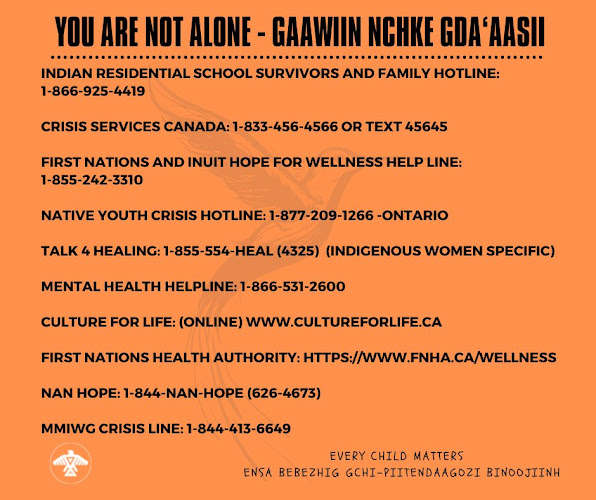
You are not alone
To Veronica Brown
Veronica, we adult adoptees are thinking of you today and every day. We will be here when you need us. Your journey in the adopted life has begun, nothing can revoke that now, the damage cannot be undone. Be courageous, you have what no adoptee before you has had; a strong group of adult adoptees who know your story, who are behind you and will always be so.
Diane Tells His Name
click photo
Lost Birds on Al Jazeera Fault Lines
click to read and listen about Trace, Diane, Julie and Suzie
NO MORE STOLEN SISTERS
click image
We conclude this series & continue the conversation by naming that adoption is genocide. This naming refers to the process of genocide that breaks kinship ties through adoption & other forms of family separation & policing 🧵#NAAM2022#AdoptionIsTraumaAND#AdopteeTwitter#FFY 1/6 pic.twitter.com/46v0mWISZ1
As the single largest unregulated industry in the United States, adoption is viewed as a benevolent action that results in the formation of “forever families.” The truth is that it is a very lucrative business with a known sales pitch. With profits last estimated at over $1.44 billion dollars a year, mothers who consider adoption for their babies need to be very aware that all of this promotion clouds the facts and only though independent research can they get an accurate account of what life might be like for both them and their child after signing the adoption paperwork.









 Posts
Posts

