BOOZHOO! We've amassed tons of information and important history on this blog since 2010. If you have a keyword, use the search box below. Also check out the reference section above. If you have a question or need help searching, use the contact form at the bottom of the blog.
We want you to use BOOKSHOP to buy books! (the editor will earn a small amount of money or commission. (we thank you) (that is our disclaimer statement)
This is a blog. It is not a peer-reviewed journal, not a sponsored publication... WE DO NOT HAVE ADS or earn MONEY from this website. The ideas, news and thoughts posted are sourced… or written by the editor or contributors.
EMAIL ME: tracelara@pm.me (outlook email is gone)
THANK YOU CHI MEGWETCH!
Officials
with the Blood Tribe say one of the biggest contributing factors in the opioid
crisis is the intergenerational trauma Indigenous people face. Herald file
photo
Editor’s note: This is the first of
a three-part series that looks at the opioid crisis in southern Alberta through
an Indigenous lens.
Alexandra Noad – LETHBRIDGE
HERALD – Local Journalism Initiative Reporter
In April 2023 the Blood Tribe
declared a State of Emergency due to opioids.
According to Alberta’s Opioid
Response Surveillance Report: First Nations People in Alberta, published in
June 2021, First Nations people represented 22 percent of all opioid poisoning
deaths in the first six months of 2020. Which was an increase from 14 per cent
in 2016.
While many may have the perception
drug abuse only happens in city limits, the Blood Tribe’s declaration of a
State of Emergency would prove otherwise.
Leslie Wells, Blood Tribe’s opioid
response coordinator, says the opioid response started back in 2014. She says
one of the biggest contributing factors to the opioid crisis is the
intergenerational trauma Indigenous people face.
“There’s just like a lot of things
that contribute to this crisis. But it is here and because even though Kainai
is considered the largest First Nations in Canada, that has historical trauma,
has really kind of wiped out and caused us to go into crisis not just with
opioids but traumas and everything like that,” said Wells.
When someone goes through trauma, it
can effect many generations because it not only affects how the person reacts
to dealing with the traumatic event but studies have been done which suggest
trauma can affect how the body reads DNA, which is then passed on through
generations.
Many Indigenous peoples’ trauma
stemmed from residential schools and the Sixties Scoop which caused many
Indigenous people to be isolated from their culture.
Charles Weaselhead, former Blood
Tribe chief and Treaty 7 grand chief, says the intergenerational trauma
caused by the residential school system has played major factors in addictions.
“The intergenerational trauma came
to the forefront and people started speaking out with regards to the mental
health and addiction and the impact that residential school had on huge number
of people over that period,” said Weaselhead.
Travis Coleman, fire chief and
director of Emergency Services for the Blood Tribe says education on
intergenerational trauma is crucial to understanding the opioid crisis.
“I don’t think most people know the
severity of the childhood trauma and residential schools on First Nations and
Aboriginal people. We see it out here because I work out here and I just don’t
think people are educated enough to understand the results of the residential
schools and childhood trauma, everything that they had experienced over the
years,” said Coleman.
SANTA FE, NM. — On her
great-grandmother’s 91st birthday celebration at Jemez Pueblo in April,
Veronica Krupnick gave her the news she would be on the ballot for the New
Mexico State Senate.
With tear-filled eyes, she looked at
Krupnick, hugged her, and then sat her down to eat.
“She went from seeing Native
Americans in New Mexico not be able to vote until 1948 to now seeing her great
granddaughter on a ballot,” Krupnick said.
Krupnick is 28; her
great-grandmother was 24 when Native Americans got the right to vote in the
state.
“If you’re bold enough to dream big
and fight for the changes you want to see, you can see that kind of radical
turnaround in one person’s lifetime,” Krupnick said. “But you have to feel the
fear and do it anyway.”
Though Krupnick lost the Democratic
primary election for District 24 in Santa Fe to Linda Trujillo in June, her
work in the New Mexico House of Representatives and as a fierce advocate for
child welfare has anything but slowed.
“(Running) taught me a lot,”
Krupnick said. “This is something that I want to do, maybe not in the near
future but down the road. It definitely takes a lot out of you.”
Krupnick said although an estimated
45% of New Mexicans are under the age of 35, they don’t really have
representation.
She also thought her expertise in
child welfare would fill a much-needed gap in the state, especially with the
upcoming retirement of two long-time legislative officials.
“One of the biggest (changes) that
could really shift things for child welfare is proactively getting people with
experience involved, whether that’s at a local or a state (level),” Krupnick
said. “Lived-experience people are going to tell you what works and what
doesn’t…I think in child welfare we get really lost in the numbers and the
statistics and we forget that there’s people behind them.”
Krupnick uses her own experience in
the foster and adoption systems to try and spark change, and she strives to
bring others that have been in the system to use their own voices.
I had no clue that Minnesota kept mother's gifts to their child lost to adoption!
What kind of system is this? REALLY?
YOU KNEW Minnesota opened all sealed adoption records July 1. Yes, I sent in a check but sent the wrong form (and it costs $40) so I am
reapplying to get my original birth certificate (OBC). I have waited
over 65 years to hold this stinking piece of paper in my hands. It will
say my mother is HELEN THRALL. I know that. But it will be nice to
have physical paper proof. Many adoptees are not given access to their
own OBC.
Here is the shocker: This story hit Minnesota newspapers this week.
If you were adopted out of that state like me, the state has been
holding mementos from mothers to give to their child given up for
adoption.
ARE YOU KIDDING ME? Where did they store all this stuff?
Thousands, maybe a million babies were adopted out of Minnesota… What about other states? OMG!
‘Minnesota could actually be the leader in figuring this out’ - OH REALLY!?!
WHO KNEW? The change in state law — which went into
effect on July 1 — has brought renewed attention to personal effects
kept in adoption files. The agency which once placed children will now
support adopted people in claiming these gifts. WHAT THE HELL?
No one, including me, knew anything about this… I
knew an adoptee who said her mother sent letters to the adoption agency
in Mississippi to give to her but the adoptee never knew, and only got
the letters years later, after she met her biological mom. Her mom told
her she sent several.
Personal histories, items can be claimed by adult
adoptees from Minnesota’s DHS files
Permanency Supports Grant Manager
Crystal Graves explains the concept of personal effects during an informational
gathering about recent adoption law changes at the Minneapolis American Indian
Center on July 11.
MINNESOTA PUBLIC RADIO
On a warm July evening, a group of
fewer than a dozen people met at the Minneapolis American Indian Center to
share information about how adopted adults can claim personal items left for
them at the time of their adoption by their birth parents.
Ann Haines Holy Eagle searched and
found her birth family many years ago and now advocates for Native American
children and families, including fellow adoptees.
Ann Haines Holy Eagle (center),
Minneapolis urban representative for the Indian Child Welfare Advisory Council,
speaks with adoptee advocate Sandy White Hawk during a gathering at the
Minneapolis American Indian Center on July 11. Ben Hovland | MPR News
“If I would have had something from
my mom ... just to know that my mom loved me, you know, or thought enough to
send something with me to fight in this world. It would have made a huge
difference,” said Haines Holy Eagle.
For the past several decades
activists have pushed for access to birth and adoption records. Last year, the
state Legislature answered those calls, making state birth records available to
adoptees for the first time.
The change in state law — which went
into effect on July 1 — has brought renewed attention to personal effects kept
in adoption files. The agency which once placed children will now support
adopted people in claiming these gifts.
Haines Holy Eagle and members of the
Indian Child Welfare Act Advisory Council, which advises DHS, first learned
about personal effects kept by agency this past spring during a routine
meeting. She says they learned about items kept in storage for decades — items
of personal value, including photos, family heirlooms and small keepsakes.
Haines Holy Eagle said she and others
were taken by surprise.
“We were just kind of shook,” said
Haines Holy Eagle.
Haines Holy Eagle and members of the
advisory group invited DHS representatives to present that same information to
members of the community.
Piikuni adoptee Kirk Crow Shoe
smudges DHS employee Crystal Graves (left) with eagles feathers and sage during
a healing ceremony at the Minneapolis American Indian Center on July 11. Ben Hovland | MPR News
At the public event in July, adult
adoptees let DHS staff know they’d like to approach the process not as a
private matter, but as a community.
Haines Holy Eagle said she’s
prepared to use the wisdom gained through her personal experience to lead the
process of claiming personal effects.
She says the work should center on
the experiences of adopted people in connection with their birth and adoptive
communities.
“It’s time for us to be at the
forefront of our healing and truth and reconciliation,” said Haines Holy
Eagle.
DHS staff member Crystal Graves
began her presentation to the community by explaining that she’s
handled these personal effects going back 20 years. Throughout the
evening, Graves told everyone she welcomes input from the adoption
community in re-thinking how DHS can help adoptees request their belongings.
She explained to the small gathering
how adopted adults can make a request to claim their belongings — what
paperwork to fill out and where to send it.
Few
adoptees know personal effects exist
Adoptees have been able to recover
personal effects for years. DHS says they have followed statutory
requirements that mandate confidentiality of adoption records, and they say
it’s likely most adoptees don’t know they might have a personal effect in their
file. DHS says only a few adoptees recover personal effects from their
adoption files every year.
DHS provided MPR News with general
information about the personal effects associated with adoption files but
declined to make a staff member available for interview.
The agency estimates approximately
7,500 adoption files contain personal effects — less than 10 percent of all the
adoption files kept by the agency.
The handwritten words
“For-Get-Me-Not” appear in an Easter greeting card addressed to “Bobby”
displayed on a table in the Minnesota Department of Human Services building in
St. Paul. Photographed on July 5. Ben Hovland | MPR News
Haines Holy Eagle says she believes
it’s possible that DHS has held onto these personal effects because they
prioritized the wishes of adoptive parents over those of adoptees.
“You want it to be respectful of the
adoptive parents, you didn’t want to disrespect them because you want them to
feel like this is my new start. This is my new family,” said Haines Holy Eagle.
DHS estimates about ninety percent
of the personal effects associated with adoption files are photos and the
remaining ten percent are family documents.
DHS did allow MPR News to document a
small number of personal effects in files over 100 years old. A black and white photo shows a baby
in a pram. Another black and white photo shows a group of three siblings
standing in front of a farm building. One of the personal items is a
handcrafted Easter card. Inside is a hand pasted image of forget-me-not
flowers, the signature page signed by the child’s birth parent.
Another item is a family document,
an ornate baptismal certificate in the adoption file dating from just before
1920.
DHS points out the agency no longer
places children up for adoption, following changes to adoption law in the
1980s. Still, as a state agency, DHS receives adoption files from placing
agencies that have closed. DHS says its staff are still cataloging
thousands of files, some of which contain still more personal effects.
DHS says it’s likely that current
adoption placing agencies have adoption files, and those may contain more
gifts.
Seventy-three-year-old Lakota
adoptee Pearl Brave Heart fills out post adoption search forms during the
adoptee law informational gathering on July 11. Ben Hovland | MPR News PHOTO: Lakota adoptee Pearl Brave Heart,
73, shares the story of her adoption into a family of German descent as DHS
employee Crystal Graves listens during a gathering at the Minneapolis American
Indian Center on July 11. Ben Hovland | MPR News
‘Minnesota
could actually be the leader in figuring this out’
One adoptee advocate says Minnesota
could be the first in the country to help people recover their
belongings.
Attorney Gregory Luce is the
executive director of the Adoptee Rights Law Center and sometimes helps
adoptees obtain court orders to open their adoption files.
“It’s taken 80 years to talk about
personal effects,” said Luce. “[Adoptees] have become inured to this idea that
you’re entitled to nothing.”
Luce, who is also an adoptee,
applauds the state for its renewed effort at helping adoptees claim their
belongings.
“It’s huge, because it didn’t take a
court order to make them do this. And so, Minnesota could actually be the
leader in figuring this out.”
The beginning of the work to recover
these personal effects was marked with a ceremony held during the July meeting
at the Minneapolis American Indian Center. An elder performed a healing
ceremony first for DHS staff member Crystal Graves and then invited members of
the adoption community to join.
DHS says it will reconvene
workgroups with members of the adoption community this fall.
Individuals interested in initiating
a search can fill out the post adoption search form at the Foster
Adopt Minnesota website.
And they took away
more than just culture, Stewart said – “They disposed of everything. Family.
Teachings. Land. Inheritance.”
GUELPH
– Family and Children’s Services of Guelph and Wellington County (FCSGW) has
recognized three Indigenous women for their work in child welfare advocacy.
Tauni
Sheldon, Donna Dubie and Wendy Stewart were presented with FCSGW’s Award of
Merit on June 20.
“The
invaluable contributions of these Indigenous leaders and unwavering dedication
to their communities serves as an inspiration to us all,” FCSGW officials
state.
“This is the first time in local
history Indigenous providers have been recognized for our child welfare
advocacy,” Stewart said.
Sheldon,
Dubie and Stewart advocate for Indigenous children involved with child welfare
societies across Ontario. They are not agents of family and children’s services
but independent providers who offer culturally appropriate support to
Indigenous families.
Inuit
advocacy
Sheldon
lives in Ospringe and is Inuk from Nunavut and Northern Quebec, a Sixties Scoop
survivor, and a cultural advisor with Kamatsiarniq.
Sixties
Scoop refers to the removal of tens of thousands of Indigenous children from
their families into the Canadian child welfare system.
Kamatsiarniq
translates to “a place where Inuit are welcome” and is a child welfare program
at Tunjasuvvingat Inuit, a non-profit service provider.
Sheldon
oversees Inuit culture with families, supports Inuit families through
navigating the child welfare system and guides children’s aid societies
regarding Inuit culture and Inuit rights.
“Its
important for Inuit to have that advocacy and support,” Sheldon said,
“especially as none of us are on our traditional lands” in southern
Ontario.
Tauni
said Inuit are often swept under a pan-Indigenous approach, or assumed to be
First Nations, instead of recognized as a distinct Indigenous group.
When
Inuit are sent to Ontario from northern Canada through the child welfare
system, she said it’s important the children “remain connected to who they are
as Inuit.”
Sheldon
said she “has that fire to try and be that voice for people who don’t have
their voice or don’t know what to do,” because she knows how it feels to be a
voiceless child.
Her
family and her adoptive family are “still trying to understand the Sixties
Scoop.”
“For
my birth mother, it was very traumatic,” she said. Sheldon’s birth mother had
arranged for a traditional Inuit adoption, but instead Sheldon was “scooped”
and taken away to Ontario.
“I
was a baby when I was apprehended” and at that time, there weren’t Indigenous
people in the system who could advocate for her, Sheldon said.
After
decades apart, Sheldon reconnected with her mother and said they now have a
loving relationship. On Sheldon’s 50th birthday, she spent the day with her
mother – the first birthday with her mother since the day she was born.
“We
cried and held each other,” Sheldon said, adding she hears many stories similar
to her own through her work.
Federal Government Releases Latest Funds for Tribal Home-visiting Programs
Landmark Minnesota Law is Signed
“This
is the way governments should work,” said Minnesota Lt. Gov. Peggy
Flanagan, a citizen of the White Earth Nation, not long after Gov. Tim
Walz signed the African American Family Preservation and Child Welfare
Disproportionately Act into law.
“It’s
not just about one leader — it takes a village,” she said,
acknowledging the Black and Latino leaders at the signing. “And if you
look around, this is the village.”
Walz’s signature formalized a novel law
that will require caseworkers in the state to better engage with
parents in planning and selecting the services they need to reunite with
their children. Social and cultural values will have to be taken into
consideration, with judges reviewing and approving the adequacy of the
steps taken.
Among
the law’s key provisions is a broader application of the “active
efforts” standard for preventing family separation and hastening
reunifications from foster care, which takes the state’s expectations a
step above what is required in federal law.
“Other
states should follow our lead,” Flanagan said. “As a Native woman, this
bill hit home. So I’m incredibly grateful for all of the folks behind
me who helped us get here today.”
Several Other States Pursue Active Efforts
Minnesota
is not the only state moving in the direction of applying active
efforts more broadly, which has long been the standard for serving
Native American families under the Indian Child Welfare Act. Imprint
reporter Nancy Marie Spears looked at three other states where the policy has been considered or approved in the past year.
New Family Support Funds Sent to Tribes
Six tribal communities have received federal funds
to expand programs that serve families with young children in their
homes — the most recent award in an ongoing expansion of such programs.
Kim
Wheeler, born Ruby Linda Bruyere, was adopted by a white family as part
of the Sixties Scoop. She was one of tens of thousands of Indigenous
children who were taken from their families and placed in the homes of
mostly white families in Canada.
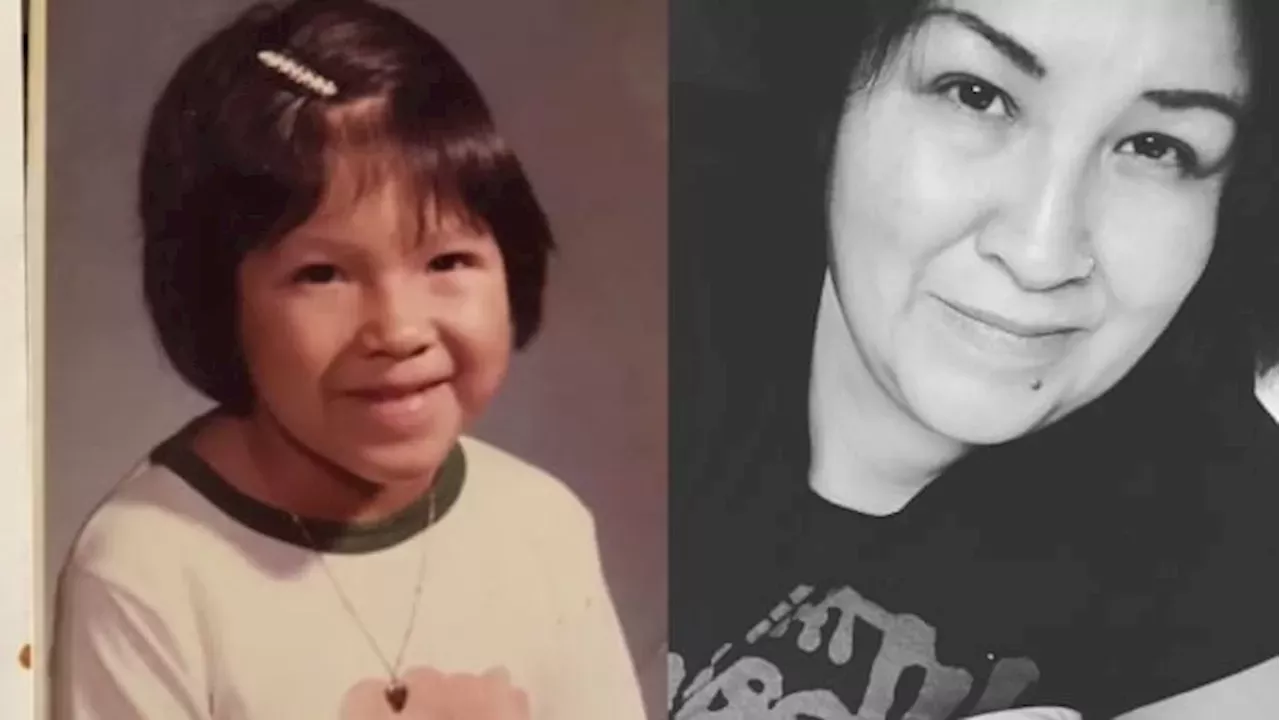
Kim
Wheeler was adopted into a white family during the Sixties Scoop. After
years of abuse, she lived to tell the tale of finding her way back to
her culture. My name is Kim Wheeler but some know me as Kim Ziervogel. Others will remember me as Kim Bell, and to a small group of people I
will always be Ruby Linda Bruyere. But the name game doesn't stop there.
Growing
up, I was always reminded I was adopted. My mother and sisters would
tell strangers, "She's adopted." It didn't really bother me, I suppose,
because I was used to hearing it. My adoptive mother was a different
case. She was psychologically abusive. She wore me down until all I
could be was a "yes" person to everyone I met. It wasn't until I was in
my 30s that I started to stand up for myself and began to say "no" to
people. To this day, I still struggle with saying no, although some
people wouldn't believe that. It's an internal process that unfolds in
milliseconds.
Of course those same people were struggling with
their own trauma of the Indian Residential School experience, but back
in the 1970s and 1980s, no one knew this. Our parents would simply tell
us if we didn't stay in school, if we didn't smarten up, if, if, if — we
would end up "just like the Indians on Main Street.
The creative team behind Indian Horse, the 2017 feature adaptation of the late Richard Wagamese's novel of the same name, are partnering for a documentary, The Storyteller, on the legendary Canadian indigenous writer.
Stephen Campanelli, Clint Eastwood's go-to cameraman, directed Indian Horse
after it was adapted by Dennis Foon. In a deal to be unveiled at the
Banff World Media Festival, Campanelli will serve as the cinematographer
and Foon as a story consultant on the feature documentary about
Wagamese and his Ojibway heritage to be directed by Jules Arita
Koostachin (WaaPaKe, Broken Angel).
The indigenous creatives behind The Storyteller
include Jim Compton as principal producer, while also serving as a
writer and executive producer alongside Koostachin. The partners behind The Storyteller are also involved in the adaptation of Wagamese's novel Ragged Company and are developing a feature film adaptation.
A TV series based on the tale about four homeless people who seek
refuge in a movie theatre when a severe arctic front falls on their city
is also in development, with Campanelli and Koostanchin on board as
co-directors of a pilot.
The Storyteller
is produced by Wabung Anung Films Ltd. and Sea to Sky Entertainment. Sea to Sky has also partnered with Grinding Halt Films on the Ragged Company adaptation.
The Storyteller will
look at the life of Wagamese, who was born in Wabasseemoong First
Nation in Ontario and became a leading Canadian writer over a 35-year
career that ended with his death in 2017 at age 61 years. The doc will
address the impact of Canada's infamous residential schools and the
Sixties Scoop atrocities on the country's indigenous people, experiences
that took their personal toll on Wagamese.
The Canadian-Indian residential schools removed aboriginal children
from their families, culture and heritage to be raised as Christians by
the Catholic Church.
Campanelli first started working with Eastwood on the 1995 romance movie Bridges Of Madison County. He also became the preferred cameraman for other Eastwood titles like Million Dollar Baby, Letters from Iwo Jima and Gran Torino.
Alex
Janvier painting in his studio located in Cold Lakes First Nation land in
eastern Alberta, Canada (all photos courtesy Canada House)
Contemporary painter and Cold Lake
First Nations resident Alex Janvier died on July 10 at age 89, as confirmed by
his family, who shared the news
on the artist’s Instagram account. Remembered for his vividly colorful
paintings melding Indigenous Denesuline artistry with modern and contemporary
styles, Janvier and his work are celebrated in museums and private collections
across North America and internationally.
Janvier was born in 1935 on Treaty 6 territory
in eastern Alberta to Mari Janvier, a Saulteaux (Ojibwa) woman, and Harry
Janvier, the last hereditary chief of the Cold Lake First Nations before the federal government imposed elected officials.
The artist, one of 10 siblings, spent much of his childhood learning the Dene
language and Denesuline customs for how to live off the land up until age
eight, when he was taken to the Roman Catholic-run Blue Quills Indian
Residential School. Janvier has recounted the trauma he endured at the school
over the years. In an interview with CBC News,
he shared his experience of being loaded onto a cold truck with other children,
forcibly stripped, and showered in a group before having their culturally
significant braids cut off.
Disconnected from his family and
culture for 10 years, Janvier
embraced the therapeutic benefits of drawing and painting at the Blue Quills
school, where he was provided with materials and art instruction. “I found a
certain time of the week, you could escape from the whole outlay of controls,”
he told Ottawa Morning‘s Hallie Cotnam in an interview. “And for about
three hours, you’re in your own world, and that’s when I began to discover my
ability to work on paper and beautiful colours — all kinds of colours.”
As a teenager at St. Thomas More
College in Saskatchewan, Janvier was under the tutelage of University of
Alberta professor Carlo Attenberg, who introduced the young artist to the work
of Wassily Kandinsky and Joan Miró. By 1960, Janvier completed his Fine Arts
education at the Alberta University of the Arts in Calgary, and taught briefly
before committing his time entirely to painting. In 1968, he married Jacqueline
Wolowski, with whom he went on to have six children. The couple remained
together until his passing.
In the early ’70s, Janvier became
part of a group called the Professional Native Indian Artists Incorporation (PNAI, but also informally called the Indigenous Group of
Seven) with artists Daphne Odjig, Jackson Beardy, Eddy
Cobiness, Norval Morrisseau, Carl Ray, and Joseph Sanchez.
The PNAI presented modern and Indigenous artwork to the mainstream Canadian art
market, extracting it from the typical narrative of First Nations handicraft
work. Not only did they exhibit and market their creative output as fine art,
but they also promoted artmaking in Indigenous communities across Canada
through educational opportunities and scholarships funded in part through their
artwork sales.
In his own work, Janvier is best
known for his colorful abstractions combining Denesuline geocultural references
with European Modernism. Ranging from bold, vivid acrylic compositions of
flowing lines, organic shapes, and dotted patterns to shifting and bleeding
sweeps of watercolor on paper, Janvier evoked the natural world, Denesuline
cosmologies, and his familial relationships through his work for the last 70
years.
Janvier has been included in various
group and solo exhibitions since 1950, with more specialized attention paid to
his unique practice starting in the early 2000s. The artist and his family
established the Janvier Gallery in 2003 and later moved it to Cold Lake First
Nations land, where he maintained his studio practice, exhibited and sold his
work, and featured the work of other Indigenous artists across Canada. In
addition to multiple solo shows at Bearclaw Gallery and Canada House, Janvier
had a retrospective at the National Gallery of Canada
in Ottawa in 2016, and many of his public commissions remain on display
throughout the country.
The artist is survived by his wife,
Jacqueline; their six children; and 22 grandchildren, as well as countless
friends and relatives.
South Carolina court drops contempt charge against Dusten Brown Dusten Brown and the Cherokee Nation rea...
Bookshop
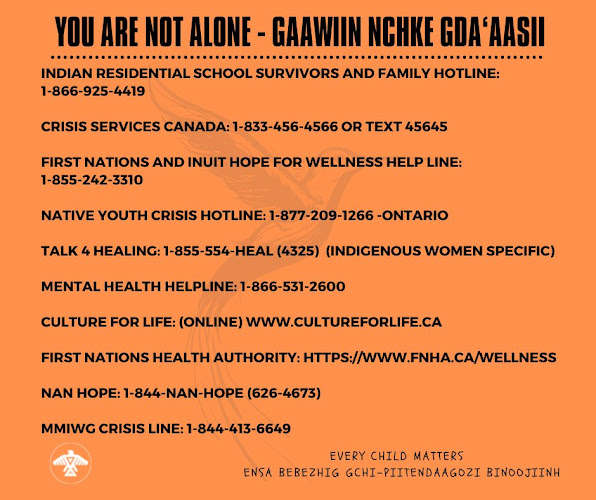
You are not alone
To Veronica Brown
Veronica, we adult adoptees are thinking of you today and every day. We will be here when you need us. Your journey in the adopted life has begun, nothing can revoke that now, the damage cannot be undone. Be courageous, you have what no adoptee before you has had; a strong group of adult adoptees who know your story, who are behind you and will always be so.
Diane Tells His Name
click photo
Lost Birds on Al Jazeera Fault Lines
click to read and listen about Trace, Diane, Julie and Suzie
NO MORE STOLEN SISTERS
click image
We conclude this series & continue the conversation by naming that adoption is genocide. This naming refers to the process of genocide that breaks kinship ties through adoption & other forms of family separation & policing 🧵#NAAM2022#AdoptionIsTraumaAND#AdopteeTwitter#FFY 1/6 pic.twitter.com/46v0mWISZ1
As the single largest unregulated industry in the United States, adoption is viewed as a benevolent action that results in the formation of “forever families.” The truth is that it is a very lucrative business with a known sales pitch. With profits last estimated at over $1.44 billion dollars a year, mothers who consider adoption for their babies need to be very aware that all of this promotion clouds the facts and only though independent research can they get an accurate account of what life might be like for both them and their child after signing the adoption paperwork.




.png)







 Posts
Posts

