They Took Us Away

They Took Us Away
click image to see more and read more

it's free

click

How to Use this Blog

BOOZHOO! We've amassed tons of information and important history on this blog since 2010. If you have a keyword, use the search box below. Also check out the reference section above. If you have a question or need help searching, use the contact form at the bottom of the blog.


We want you to use BOOKSHOP to buy books! (the editor will earn a small amount of money or commission. (we thank you) (that is our disclaimer statement)

This is a blog. It is not a peer-reviewed journal, not a sponsored publication... WE DO NOT HAVE ADS or earn MONEY from this website. The ideas, news and thoughts posted are sourced… or written by the editor or contributors.

EMAIL ME: tracelara@pm.me (outlook email is gone) THANK YOU CHI MEGWETCH!

SEARCH

Monday, September 28, 2015

Truth and Reconciliation Commission BIG STRIDES to #TEACHTRUTH

Commission chairman Justice Murray Sinclair, centre, and fellow commissioners Marie Wilson, right, and Wilton Littlechild discuss the commission's report on Canada's residential school system at the Truth and Reconciliation Commission in Ottawa on Tuesday, June 2, 2015. (Adrian Wyld/Canadian Press)

TRC findings on residential schools to be used in Yukon classrooms

'This is Canadian public history,' says TRC commissioner about making materials public domain

CBC News Posted: Sep 27, 2015 

Students in Yukon will be learning more about residential schools this year.

Yukon schools will be using material prepared by the Truth and Reconciliation Commission.

Commissioner Marie Wilson said the recordings made by the TRC  belong to all Canadians, which is why the TRC is putting its material online and in the public domain.

"This is Canadian public history and is really essential," she said.  

Anyone can reproduce the material, make physical copies of books or create publications with survivors' stories.

Different publishing houses are already adapting the TRC's material

"I think the point of it all is that there's no one publication that tells the whole story," Wilson said.

Making the material available for free also saves money, Wilson said. "In Ottawa we had 500 copies of things that we prioritized in sharing out with survivors who were there," she said.

"We can't say that we've provided enough copies for the 70,000 survivors that are alive today, not for all the schools."

In Yukon, the department of education has already worked with the Tr'ondëk Hwëch'in First Nation to produce a hard copy book called Finding Our Way Home.

MORE:

The Department of Education says it will use TRC materials in classrooms this year. The department established a Grade 10 Social Studies unit on residential schools last year.

The book Survivors Speak and other titles can be downloaded for free from the TRC website.

A sense of relief and a sense of accomplishment is how Dene National Chief Bill Erasmus described the mood in Ottawa as the Truth and Reconciliation Commission released its 94 recommendations on how the country can move forward after residential schools.
Judy Gingell
Judy Gingell, an executive elder for Kwanlin Dün First Nation and a former Commissioner of Yukon, says she agrees with the TRC panel's recommendations and says education is essential to true reconciliation. (CBC)


Now that the truth is out, it's up to Canadians to take on the role of reconciliation.
"All Canadians have a personal responsibility to learn about this time in Canadian history," she said in a statement. "Before reconciliation can truly move ahead, we all need to know the truth of what happened."

It's estimated between 3,000 and 4,000 Inuit from Nunavut attended residential schools.
Therese Ukaliannuk
Therese Ukaliannuk of Igloolik, Nunavut, says her 6-year-old daughter was taken to residential school while she was in the south with tuberculosis. She never saw her daughter again, or learned where she was buried. (CBC)

"We still have much grieving to do for this time in our lives and our families and our history, and must continue to work to find ways to heal and move on to healthier futures," Towtongie said.  

In a news release, the Makivik Corporation said it is pleased with the TRC's work and its final report and recommendations.

"Now we have been given the whole story and a blueprint to recovery. Let's do it," said Jobie Tukkiapik, Makivik Corporation president, in the release.

Therese Ukaliannuk, an elder from Igloolik, Nunavut, who now lives in Iqaluit, told her story to Igalaaq host Madeleine Allakariallak in Inuktitut.

Ukaliannuk's six-year-old daughter was sent south to residential school while she herself was in the south receiving treatment for tuberculosis. The little girl never returned.
Her mother never learned where she is buried.


Related Stories


Leland Kirk Morrill testimony at BIA hearing in Portland


Leland has provided links since we can't upload to this blog because of file size.

Here is the video of Leland's presentation at the BIA Hearing in Portland, Oregon:


NICWA's Sandy White Hawk's Adult Adoptee evening gathering: me, and my biological Aunt Olivia and my biological cousin Merle:

https://drive.google.com/file/d/0B8z6oR56NbpDamkyVk9KZDRkdGM/view?usp=sharing

UPDATE: Filmed by Drew Nicholas Blood Memory Project
http://www.bloodmemorydoc.com an upcoming project through Drew and Sandy Whitehawk

Saturday, September 26, 2015

Omaha Tribe of Nebraska plans Native foster care system to preserve culture


MACY, Neb. | The Omaha Tribe of Nebraska is in the early stages of planning a local Native American foster care system, a move its leader says will help preserve tribal culture for future generations.

Earlier this month, the U.S. Department of Health and Human Services awarded the tribe a $300,000 grant to create an independent tribal-run family services program for enrolled Omaha members.
“We know what’s best for our children and our youth,” Omaha Tribal Council Chairman Vernon Miller said Thursday. “The federal government recognizes that.”

The system would allow the Omaha Tribe to make better use of the Indian Child Welfare Act, which was passed in 1978 to focus placement of Native foster children in Native homes rather than with non-Native families. Currently, the Omaha Tribe places foster children through the Nebraska Department of Health and Human Services.

“It’s going to allow for our children to remain with our families and culture as they transition into youth and adulthood,” Miller said of the planned program.

Miller added a tribal system would strengthen ICWA applications on the Omaha Reservation, meaning the tribe would have more power to keep its children with Omaha Tribe families. He also said the system would help leaders identify children who are eligible for Omaha Tribe membership and enroll them.

Nebraska's Native foster-child population of 5 percent remained disproportionately high in 2014 when compared with the state's total Native child population of 2 percent, said Linda Cox, a research analyst with the Nebraska Foster Care Review Office.

According to the office, 155 -- or 5 percent -- of 3,029 foster children were identified as Native in 2014. The previous year, 261 of 3,892 -- or 7 percent – were Native.

ICWA was created to allow tribes to intervene with the judicial system to prevent family breakups and calls for child placement preference to be with people of their town tribe.

Denny Smith, director of Native American Studies at the University of Nebraska at Omaha, said some Native children are removed from their families because of poor living conditions. Smith is an enrolled member of the Assiniboine Tribe, with headquarters on the Fort Peck Reservation in northeastern Montana.

“There were heartbreaking cases all over the country, and I don’t think there was any way to avoid that,” he said. “I think (ICWA) worked out well that everybody has been responsible on both sides.”
Frank LaMere, executive director of Four Directions Community Center in Sioux City, applauded the Omaha Tribe’s stride toward establishing a local foster care system.

“I am very pleased and encouraged by tribal initiatives to keep Native children with Native families,” he said. “We are very gratified by the Omaha efforts and those of the other tribes.”
LaMere added some Natives in state foster care systems can grow up knowing very little about their heritage. He said some have come to him for information about their ancestry.

“Several times a year, in Sioux City, we have adults who were adopted and will come to us trying to find their way back to their culture,” he said. “If they can find their way home, I am pleased.”
Smith said loss of Native culture is a large concern for many tribes.

“The issue was that the children, with all good intentions, were taken out of Native families and generally given to non-Native families,” Smith said. “(ICWA) was a move to save the next generation of culture. If you lost one generation of culture, your hopes of surviving the culture would be very limited.”

Friday, September 25, 2015

Tribal Child Welfare Codes


Additional Findings from NNI/NICWA on Tribal Child Welfare Codes


Researchers reviewed 107 publicly available, tribal child welfare codes for U.S.-based tribes with populations ranging from 50 to 18,000 citizens. Researchers sought out the most up-to-date tribal child welfare codes available for each tribe, reporting that approximately 45% of the 107 codes were amended after 2000. The research team analyzed over 100 variables on the topics of culture, jurisdiction, tribal-state relationships, child abuse reporting, paternity, foster care, termination of parental rights, and adoption. A more detailed report on this study will be released later this fall. For more information about this project and its findings please contact the Native Nations Institute: Mary Beth Jäger (Citizen Potawatomi) jager@email.arizona.edu.
Cool poster here. First cool poster here

CHEROKEE WORD FOR WATER

It takes a warrior like Wilma to make HUGE change. I met her once...Trace

Thursday, September 17, 2015

SOLITARY: An Observation from Within by Lakota adoptee Jesse Neubert

By Trace Hentz  (Third Mom)

The following essay was written by my nephew Jesse Fasthorse Neubert. I've adopted him into my family. He first wrote to me when my article "Generation after Generation We are Coming Home" was published in 2005 about adoptees called Lost Birds.  Since then we have been in constant contact by phone and letter. Jesse calls me his "third Mom" and I am proud of that.  Jesse is incarcerated in Arizona, found guilty of armed robbery when he belonged to a gang.  He is an adoptee like me. He's Lakota (Cheyenne River) and Dakota (Rosebud). He's a good writer and contributed to the two anthologies Two Worlds and Called Home (excerpt.)

Until August Jesse was held in solitary confinement.  He ate two meals a day, not three. He was very underweight. He was not allowed outside for sunlight and fresh air. I asked him to write about it so all of us would know what it feels like...  His words: An Observation from Within was written on Feb. 24, 2015.

“The use of solitary confinement contributes to untreated serious mental illness and high rates of suicide.”

By Jessup Fasthorse Neubert

“The degree of civilization in a society can be judged by entering its prisons.” -Dostoyevsky
I know why the caged man screams.

So that you may also come to know why he screams, take a few moments and imagine a windowless concrete room about the size of an average household bathroom. Like any other bathroom, this room has a sink and a toilet. However, in place of a bathtub or shower, there is instead a small bed and perhaps a tiny desk bolted to one of the walls. All of the walls are blank and gray and there is no mirror. The only view beyond this room is through slits or perforations in a steel door that faces nothing but another gray stark wall in an empty corridor. An oppressive white light constantly emanates from a ceiling fixture that can’t be controlled. It dims only slightly for a few hours each night. Natural sunlight or fresh air will never reach into this room. For all intents and purposes this room is nothing more than a box, a human cage. Can you imagine a room like this?

Now for a few moments longer, can you imagine being indefinitely confined to this room for months or even years on end? Imagine only being allowed out of this room of yours maybe three times each week for a limited recreation period and a brief shower. Basically only 8-10 hours of the 168 hours in each week might be spent beyond your room. Even your two daily meals will always be eaten alone at your tiny desk. An abrupt search of your room, a medical appointment or an emergency, or a two-hour visit from your loved ones once a week (typically separated by plexi-glass) might be the only other reasons that you will temporarily escape your soul-stifling room for the foreseeable future. Your desire and need to attend church or school won’t even be reason enough to leave your room since such services will almost entirely be denied to you during your confinement here. Essentially the vast majority of your daily existence has been reduced to this one room - this cage - of yours - for years, possibly decades to come. Imagine that for just a moment longer.
Imagine how being caged alone like this, for any prolonged amount of time might affect you? Could this perpetual mental, physical and spiritual separation make you scream too?
If you can imagine these dehumanizing conditions, then now you have an idea of what solitary confinement in prison is like - and now you know why a caged man screams out from within in such a place. Regrettably, solitary confinement is not some imaginary place, it’s real for those who have languished there before, or currently still are. For them solitary confinement isn’t something abstract or easily ignored - it is a suffocating reality that exists, albeit hidden, deep within the walls of variously-named isolation or control units throughout this nation’s prison system.

I am one of those unfortunate enough to know the reality of solitary confinement. Since July 2009, I’ve been indefinitely locked-down under such conditions here in Arizona’s Special Management Units (S.M.U.). (First at Eyman and now at Lewis). Whether known as an S.M.U., S.H.U., Ad.Seg. or by any other Max-Custody designation - these dark prisons within a prison all share similar or parallel details as the one I described for you.

Some may find themselves trapped in these modern dungeons for clear and easily articulated reasons - such as having committed a serious disciplinary infraction; while others may find themselves in here for less valid or speculative reasons - such as being classified as “a potential threat to security” based on groundless conjecture. Either way, both rationales will often perpetuate a prolonged or indefinite term of confinement to these units. With no serious disciplinary convictions since 2009, I remain caged in here according to the latter reasoning (speculation) by the prison administration.
During my time in this place I’ve experienced how mind-numbing and soul-wrenching it can be. I’ve observed the many forms of deterioration and madness that this place can drive men into, after years without meaningful social interaction or human contact. I’ve seen men, with and without documented Mental Health issues, decline and fall into pieces. It’s often discomforting to hear an otherwise rational man begin to mutter or talk to himself - but the screams of a man who has gone completely stir-crazy or insane in the SMU are always the most jarring. Worse still is when a man can no longer cope with this harsh reality and attempts suicide - sometimes even succeeding. Maybe the sorrow of losing a loved one while in here was too much to bear, or maybe he just could no longer endure the forced solitude - and so, feeling anguished and forsaken, he sought some desperately needed attention or an immediate end to his caged misery.
Sadly I’ve observed enough tragedy in here to know that most of it must be ascribed to solitary confinement itself. These tragedies are ongoing testament to the detrimental effects that this place will have on those subjected to these conditions. Although this crushing depravation won’t necessarily break everyone who enters it - none will emerge from it completely unaffected or unscathed. A dysfunctional behavior, a personality disorder, or a mental illness may develop or become exacerbated after years of isolation and being treated like a caged animal.
If prison is a microcosm of the problems with our society - a reflection of our degree of civilization - then the institution of solitary confinement should remind us of our most poignant failures. When institutions fail us, we as a civilized society have a moral obligation to abolish or reform those institutions. Experience compels me to argue for the former in regard to solving the problem posed by solitary confinement. We must stop living in a state of denial or ignorance about its existence, widespread use and the nature of solitary confinement. We must dispel our collective apathy or complacency towards this uncomfortable reality and instead confront this dilemma in order to address it. This is because a neglected problem will never just disappear or spontaneously solve itself - in fact, it will usually only worsen when ignored. Hence, we can no longer morally or fiscally afford the high cost of ignoring the discrepancies between the ideals we espouse and the actual practices we exhibit when it comes to the conditions in our prison systems. We must recognize that no good will ever come from the inhumane treatment of any member of our society.
For although we prisoners are currently the pariahs of society - most of us, including myself in 2016, will eventually reenter society for better or for worse.
Solitary confinement ensures the likelihood that a man will exit prison worse than when he went in because being caged alone hinders rehabilitation. As a society that claims to be civilized with a high standard of moral decency, we must then be guided by the moral discipline expressed by Goethe:
“Treat a man as he is and he will remain as is. Treat a man as he can and should be and he will become as he can and should be.”
Let’s finally put an end to solitary confinement. We need to imagine a better way.
Jessup is incarcerated in the Arizona State Prison Complex-Lewis in Arizona until 2016.  Please write him: Jesse F. Neubert, #186050, ASPC LEWIS, Buckley Unit, PO Box 3400, Buckeye, AZ 85326. He is now in general population and continuing his college degree.

Jesse and his sister Tashea were adopted together
Jesse and his sister Tashea were adopted together (All six children were adopted by Mormons)


MUST READ:
AEON / Twilight in the Box by Shruti Ravindran
“In 2005, there were an estimated 81,600 prisoners in solitary in the US; this month’s Senate Subcommittee Hearing puts the numbers at about the same. That’s 3.6 per cent of the 2.2 million presently incarcerated, many of whom, like King, were put in there for random acts of non-violent rule-breaking. Some, like him, shuttle in and out of solitary; others remain locked up for decades. Prison authorities in every state are running a massive uncontrolled experiment on all of them. And every day, the products of these trials trickle out on to the streets, with their prospects of rehabilitation professionally, socially, even physiologically diminished.”

Jesse wrote in great detail about his adoption experience and being raised by Mormons in my book Two Worlds [read more https://larahentz.wordpress.com/2012/11/18/ebook-two-worlds/.] And he also contributed to the new anthology CALLED HOME (available on Amazon.)

Tuesday, September 15, 2015

The Living Doll: Dedicated to #BabyVeronica Brown

"Neither Here Nor There...": The Living Doll: Dedicated to Veronica: Reposting today in honor of Veronica Brown's birthday...

Any society that legally sanctions an unregulated profit-driven adoption industry over a child's best interest is sick and inhumane.  

Friday, September 11, 2015

Sicangu Adoptees Welcomed Home


Sicangu Adoptees Welcomed Home from PlainDEPTH Consulting on Vimeo.

The Rosebud Sioux Tribe welcomes home former adopted and foster children at its 2015 annual powwow, in partnership with Tiwahe Glu Kini Pi & First Nations Repatriation Institute.

Historic 2nd ever welcoming home gathering by the Rosebud tribe! Other ceremonies have been held but this is a tribe holding this ceremony for its lost birds. The White Earth tribe were the first....Trace

Happy Visitors!

WRITTEN BY HUMANS!

WRITTEN BY HUMANS!

Blog Archive

Featured Post

Your History Class Was a F*cking Lie | #NOMOAR

  Your History Class Was a F*cking Lie by Sean Sherman (Or: How the American Educational System Has Always Been a Racist Propaganda Program...


Native Circles

Native Circles
click logo for podcasts!

Most READ Posts

Bookshop

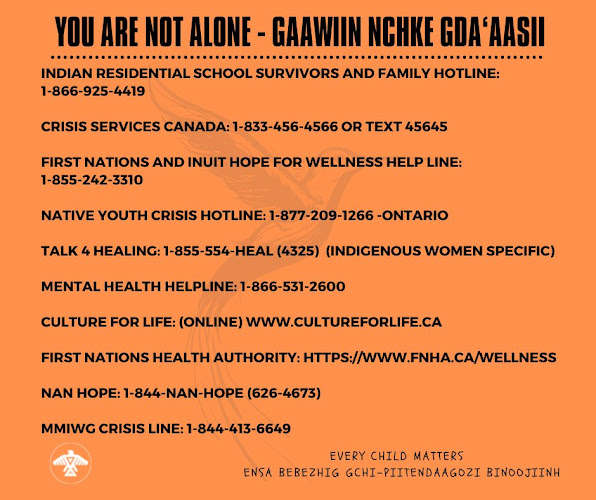
You are not alone

You are not alone

To Veronica Brown

Veronica, we adult adoptees are thinking of you today and every day. We will be here when you need us. Your journey in the adopted life has begun, nothing can revoke that now, the damage cannot be undone. Be courageous, you have what no adoptee before you has had; a strong group of adult adoptees who know your story, who are behind you and will always be so.

Diane Tells His Name


click photo

Lost Birds on Al Jazeera Fault Lines

Lost Birds on Al Jazeera Fault Lines
click to read and listen about Trace, Diane, Julie and Suzie

NO MORE STOLEN SISTERS

NO MORE STOLEN SISTERS
click image

ADOPTION TRUTH

As the single largest unregulated industry in the United States, adoption is viewed as a benevolent action that results in the formation of “forever families.”
The truth is that it is a very lucrative business with a known sales pitch. With profits last estimated at over $1.44 billion dollars a year, mothers who consider adoption for their babies need to be very aware that all of this promotion clouds the facts and only though independent research can they get an accurate account of what life might be like for both them and their child after signing the adoption paperwork.

Original Birth Certificate Map in the USA

Google Followers