They Took Us Away

They Took Us Away
click image to see more and read more

it's free

click

How to Use this Blog

BOOZHOO! We've amassed tons of information and important history on this blog since 2010. If you have a keyword, use the search box below. Also check out the reference section above. If you have a question or need help searching, use the contact form at the bottom of the blog.


We want you to use BOOKSHOP to buy books! (the editor will earn a small amount of money or commission. (we thank you) (that is our disclaimer statement)

This is a blog. It is not a peer-reviewed journal, not a sponsored publication... WE DO NOT HAVE ADS or earn MONEY from this website. The ideas, news and thoughts posted are sourced… or written by the editor or contributors.

EMAIL ME: tracelara@pm.me (outlook email is gone) THANK YOU CHI MEGWETCH!

SEARCH

Showing posts with label Complex PTSD. Show all posts

Wednesday, September 11, 2024

Adoption: 2% to 25% of adoptions FAIL

I didn't want to post this: It always hurt to think about the innocent child who suffered this... Remember, HUMAN TRAFFICKING is what we are looking at here... Trace Hentz

Woman wins six-figure payout after adoption broke down
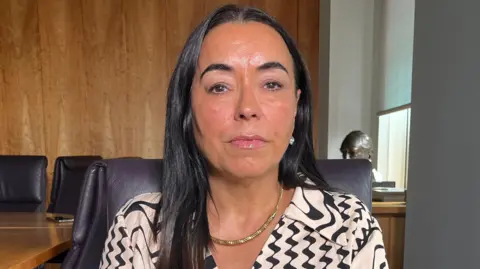
Suzanne Allan | BBC Scotland News
BBC Karen Maguire
BBC:
 Karen Maguire was paid an out-of-court settlement last year

A woman has been paid an out-of-court settlement from a council after her adoption of a two-year-old boy broke down.

Karen Maguire won the six-figure payout from South Lanarkshire Council last year after her lawyer argued it failed to provide her with enough background information on the child and did not support her during the placement.

Ms Maguire told BBC Scotland the child barely slept, hated being cuddled and self-harmed by banging his head. It later transpired he had a serious underlying medical condition which she was not told about.

South Lanarkshire Council said it aimed to provide full support to any prospective adoptive parents.

Ms Maguire said she was speaking out for the first time to raise awareness of the lack of support for adoptive families.

The adoption took place in 2013, and broke down after just four months, but Ms Maguire has been fighting for years to get the council to recognise its role in the failure.

'Eyes wide open'

Ms Maguire told the BBC she had applied to adopt a child as a lone parent and the approval process - which makes sure a prospective parent can provide a stable and loving home - took six months.

She said she went into the process with her "eyes wide open".

Ms Maguire knew that many children in local authority care had social and emotional difficulties and she told social workers she was fine with a child with mild additional support needs.

However, she said she would find it hard to cope on her own with a child with severe difficulties.

A two-year-old boy was identified as being suitable. The social worker who came to tell Ms Maguire the news stressed how lucky she was.

"At the time she said she didn't know a lot about him, but said that he was relatively uncomplicated,” she said.

"In fact she used the words ‘you've won a watch’."

Tuesday, December 6, 2022

 Indigenous transracial adoptee shares her personal struggle amid US Supreme Court case

NEWS VIDEO


If the Indian Child Welfare Act is overturned, it would make it easier for non-indigenous families to adopt indigenous children.

FORT COLLINS, Colo. — When Susan Devan Harness, an indigenous transracial adoptee, was removed from her home as a child, she was placed with a white family, and the resulting experience was a lifetime of otherness.

“You cannot take a child from a colonized race and place them in the midst of the colonizers and think everything’s going to go great,” said Harness, a Fort Collins author who said she is Salish Kootenai, of Western Montana.

The U.S. Supreme Court is considering a challenge to the Indian Child Welfare Act, also known as ICWA, enacted in 1978 to put in place adoption protections for Native American and Alaska Native children. If those protections are overturned, it would make it easier for non-native families to adopt a native child.

Before ICWA, indigenous children were removed from their homes at high rates. Studies showed 25% to 35% of indigenous children were being removed from their homes. Of that group, 85% were placed outside of their family and reservation community.

As someone who was removed from her home, Harness said she struggled to connect with American Indian peers in school and she also faced incredible difficulties trying to reconnect with her tribe.

There are complications to living in between those two worlds. The first, Harness said, is the historic violence and conflict that indigenous communities have faced at the hands of white communities.

“They’ve declared wars on us," she said. "Over a thousand wars, they’ve declared on us, the U.S. Army. They’ve objectified us and moved us when they didn’t want us. They’ve educated us in schools whose motto was ‘kill the Indian, save the man.’ ”

To understand who she was, she went to school to study anthropology. Eventually, she found others like her. They didn’t fit into white mainstream culture but didn’t necessarily have a place amongst American Indian peers, either.

“You can't be funny enough. You can't be scholarly enough. You can't be talented enough,” Harness said. “You're always going to be this person, this American Indian, living in white America.”

Harness wrote a book about her experience, aptly titled “Bitterroot,” named after a medicinal plant that grows near her tribe.

“It has the ability where if it goes through a lot of drought, it doesn’t bloom, but the first time it gets rain, it blooms in amazing ways,” she said.

Her book brought in rain. Harness reconnected with her tribe and even has an honor song. Now Harness knows her biological family, intimately, but that did not happen without a lifetime of emotional struggle.

“I don’t want to see other kids come out the same way I did, the same way a lot of people in my generation did, trying to figure out what happened to us when we’re in our 40s and 50s,” she said.

The U.S. Supreme Court has taken up challenges to ICWA three times — in 1989, 2013 and 2022. The current case is the most significant because it raises questions of equal protection under the Constitution.

The justices heard three hours of arguments Nov. 9. The high court wasn’t expected to rule in the case until next summer. Lower courts split on the case.

As the Supreme Court challenge goes on, Harness has a message: Anyone involved in a transracial adoption has an immediate responsibility to help the child find their place of belonging.

“They better be able to take that kid to the reservation every single year,” she said. “They better make friends with people in the tribe to ensure that child is given a proper education of who they are and where they came from.”

HER FANTASTIC WEBSITE: HERE 

Interview – The Archibald Project – American Indian Transracial Adoption


MORE ADOPTEE STORIES


Thursday, November 4, 2021

Complex PTSD

READ MORE: http://traumadissociation.com/complexptsd


Complex Post-traumatic Stress Disorder. (Nov 01, 2021). Traumadissociation.com. Retrieved Nov 1, 2021 from http://traumadissociation.com/complexptsd. Read more: http://traumadissociation.com/complexptsd

Thursday, October 15, 2020

Adoption and Addiction: Be someone you cannot be? VIDEO


 http://www.lifeworkscommunity.com/news/lecture/adoption-and-addiction

(repost from 1/15/2012) I do agree: an impossible job description: be someone you cannot be... adoption causes grief...hunger for attachment...trauma played out...catastrophic thinking...enormous wound at beginning of life...PTSD... Absolutely... Yes, all true... Trace

Tuesday, September 15, 2020

Transmitting PTSD

Childhood Trauma…

The role of childhood trauma was also examined in this group. The adult children of Holocaust survivors reported high levels of childhood trauma, particularly emotional abuse and neglect.17
Their cortisol levels were lower than in those without a history of emotional abuse.
It was also found that traumatized parents are more likely to express improper (abusive or neglecting) behavior toward their offspring during a critical developmental window, and that such behavior may have long-lived effects on cortisol regulation in the offspring.18
Hence, the experience of childhood trauma could be a key factor in the biological transmission of PTSD vulnerability from parent to child.19

READ: Transmitting PTSD From Generation to Generation – The Art of Healing Trauma

Friday, November 22, 2019

The Invisible Storm of Trauma #NAAM2019 #C-PTSD


trau·ma    

A serious injury or shock to the body, as from violence or an accident. An emotional wound or shock that creates substantial, lasting damage to the psychological development of a person, often leading to neurosis. An event or situation that causes great distress and disruption. 


By Trace Hentz (adoption survivor)

After many years, in many quiet moments, I recognize that being adopted has affected me very deeply.   
In my case, the day my mother left me, how she never came back, my world changed.  All I knew as this newborn baby was my own mother was not holding me, nursing me, talking to me. I was devastated by that. Broken. Part of my brain shut down. That pain was too much.

That very early experience needed to be processed as stress and trauma much later as an adult.  No one explained this to me, not even a doctor. As an adult I understand that a church/adoption agency places an infant with new parents and society says this is good and permanent. Good? Good for who?

Years pass and I accept this happened to me and my early trauma scars me.  

This monumental loss of my mother cracks me open and I am left to survive it, or not.  No one explains that I need to grieve this. I figure it out.  After years pass, I finally understand.  This experience affected me in complex ways.  This pain has layers and layers and layers.

But for others to tell me adoption was good for me? What? Or how I need to accept this is "adoption." Accept it? Are they kidding?  My scars are invisible but they are there. I know they are there.  I call this my Invisible Storm of Trauma!

How Catholic Charities took possession of me, handled me, first placing me in an orphanage then foster home, with no regard for my physical health, or my trauma-ridden emotional body, this speaks to the inhumanity of child trafficking and the traumatic consequences of adoption for the infant.  This speaks to the inhumanity of the deadly colonization of Indigenous people whose children were taken from them, calling us stolen generations. This speaks to a society that only sees what it wants to see.
Once adopted, you’re erased, an outsider, a stranger to your own nation, lands and people. I prefer to think of my younger self as brainwashed.

The bonding I had made with those mystery foster parents was also broken. How Catholic Charities and other churches and adoption agencies did this to millions of babies has consequences. This leaves millions of adoptees in the state of trauma, a stranger being raised by strangers, and a stranger to your first family.

Adoption is a cruel and inhumane way to treat an infant. A very sick society would do this.  And removing me from my own mother affected me in ways that are now measured and defined as post-traumatic stress disorder, or reactive attachment disorder, or severe narcissistic injury...and this explains how I was unable to bond with my adoptive parents.

What’s Trauma Bonding? What is Complex PTSD? (traumaanddissociation.wordpress.com) 

 Can complex PTSD be cured?

"When a mother is forced to choose between the child and the culture, there is something abhorrently cruel and unconsidered about that culture. A culture that requires harm to one's soul in order to follow the cultures prescriptions is a very sick culture indeed. This 'culture' can be the one a woman lives in, but more damning yet, it can be the one she carries around and complies with within her own mind....." -- Women Who Run With The Wolves by Clarissa Pinkola Estes 


Wednesday, November 20, 2019

PTSD | Time Machine


By Trace L Hentz (blog editor)


There is no time machine to transport you back to the moment you were abandoned. You can’t erase how you felt or how it feels now. Or how it controls your life. Or how it breaks your heart into a million pieces. You don’t know how to stop feeling this way. You pray you’ll find your family, some one like you, who gets you, who looks like you. You want to put the pieces of your life back together, but you don’t know how.


These were thoughts I had – as I was processing.

Yes, there are adoptees who also feel this but never get to say it. I see it on their face. I hear their words and their silence.

No matter how much love and care we are given, the truth is – we are (and will always be) someone else’s children. We’re just not able to say it out loud, usually.

No doctor diagnosed me with birth trauma or splitting sickness. Therapists would recommend drugs which would only deaden my senses, missing the whole point. I didn’t want to feel more dead; I was already dead, or at least part of me was. I wanted to feel alive! Instead I just shut down. Power off.
My sickness was a dead zone, a black hole. It was not visible on my skin, nor did it raise its ugly head in one outburst or one tantrum.

I heard a story about another adoptee, a doctor with an Ivy League education, who was unable to meet his birthmother before she died. His wife told me he was never able to get the information he needed to find his birthfather, or know his identity.

Regardless of this man’s expensive education and medical training, the pain wounded him so badly he just couldn’t function, feel love or have a successful relationship. The pain was so deep, he couldn’t see it.

His wife told their therapist about his adoption, how he reacted, and how he seemed cold, heartless. Even marriage counseling didn’t save their marriage. Their therapist thought his adoption trauma was too much for him to handle; trying to work on it might kill what was left of him.

I’m not sure where I got my strength.

(excerpt from One Small Sacrifice, which is out of print)

Monday, November 18, 2019

I look at it as a human rights issue #NAAM2019

This IS Adoptee Rights:
"I look at it as a human rights issue. Why should people who, to no fault of their own, happen to be adopted, have less rights to their existence?" David Weprin said. "It's really a piece of the puzzle people should be entitled to. In this day and age, there is no reason why there should be a restriction to an adoptee having access to their original birth certificate (OBC)." (via facebook)
By Trace L Hentz (repost from 2010)

This article sums it up...


No Wonder Adoption Agencies are Nervous About OBC Access!

by Jo Swanson on Monday, October 25, 2010 

I was looking for a quote in my 1989 'mini-book' The Adoption Machine and came across something I had forgotten about. It fortifies what we've known all along about why agencies fight so hard to keep adoptees and birth families from locating one another. The agency is in Michigan - it's the one my daughter was placed through. I'll quote directly from the book:

A birthmother who placed her child through our same "Christian" agency contacted me for search help. She had kept in touch with her social worker throughout the years, even after the woman retired, as a way of somehow staying connected to her child. In recent visits, the former social worker had become quite upset about the birthmother's desire to be reunited with her daughter. "Give it up," she admonished her, suggesting that she was merely having a "bad day." "Cheer up! You have another family now! Besides, I checked the phone book recently, and the family isn't living in the area anymore."
Mother and daughter did meet, however, and upon comparing information provided to each by the agency at time of placement and later with the real story, found:

Claim: Birthmother was told by her social worker at time of relinquishment that her infant was perfectly normal and healthy.
Fact: Records indicated the child was diagnosed in the hospital, right after birth, as having a severe hearing impairment (95% loss), possibly due to exposure of mother, unknowingly, to German measles during pregnancy.

Claim: One year after relinquishment, birthmother was sent a letter by the agency, informing her that her child was "in a happy home" and that the adoption was finalized.
Fact: At the time the social worker wrote that letter, this child was back in foster care after a failed adoption. "The adoptive mother was having a nervous breakdown and couldn't handle a handicapped child." A second placement had been made at thirteen months, and fortunately it was a very good placement.

Claim: The adoptive family no longer lived in the area.
Fact: Adoptive father was deceased, but the mother still lived in the same home as at the time of adoption, and was still listed in phone directory. (Adoptive mother was supportive of her daughter's desire to meet her birth family.)

Claim: The adoptive couple had been told by the agency social worker after placement that the child's birthmother had died subsequent to the birth! (Common practice, we now know, as was telling birthmothers their infants died before or after birth.)
Fact: This agency social worker had spun so many lies that she was in a virtual panic that the two parties might actually meet one day and learn the truth!

++++++++++
We're getting the truth out drop by drop. But we've been doing it for so many decades - when will legislators begin to "get it" and realize how power has been abused by adoption brokers at the expense of children and their mothers?...Trace

Sunday, November 17, 2019

Think about these quotes #NAAM2019


“My problem is secrecy. I believe that perpetually secret adoptions assure un-accountability and lack of transparency. And secret adoptions are only the tip of the iceberg. The secrecy permeates the process: secret identities, secret parents, secret records, secret foster care providers, secret social workers, secret judges and lawyers (all their identities are sealed, typically), secret physicians, secret statistics and, in the case of some adoption-oriented organizations, secret budgets and secret boards of directors. In any social practice, when people in positions of power hide behind masks, one can be pretty sure that they have something to hide.”

 -Albert S. Wei, Special Advisor to the Bastard Nation Executive Committee


“Storytelling is an important aspect of Ojibwe culture. My ability to tell a good tale can be used as a tool for teaching and connecting. Even though I grew up outside of my Native community and culture, my stories helped me to become a part of the community that I had lost. Adoption is part of the contemporary tales that Native people need to tell…”

- Tamara Buffalo, published author-poet-visual artist


“Everyone has a right to knowledge about their lineage, genealogy and identity. And if they don’t, then it will lead to cases of incest...”

-Lord David Alton quoted after married adoptee twins were granted annulment in Great Britain (January 2008)


“We, as adoptees and birth mother’s, have become so conditioned to keep quiet and take the living in shame as just a part of our life that we don’t unite. As if we are not allowed to unite. The fear and stigma is so incredibly strong, it is all controlling. I truly don’t think adoptees realize this.”

- 73Adoptee Blog: Chynna Girl, November 14, 2008 [www.blogger.com/comment]


🔺I saved these quotes I used in my memoir One Small Sacrifice - they speak volumes and as you can see they are from 2008 and earlier... Trace 

in the next few posts you will learn more about complex PTSD like this:

Tuesday, May 31, 2016

Friday, May 21, 2010

PTSD: Toxic Stress (read this!)

By Trace L Hentz

Adoptees are a unique and diverse group. Some say as babies they were traumatized and now are plagued with emotional and physical problems while others feel downright happy and show little interest in being an adoptee.

Some adoptees I know were adopted as small children so they spent time with the natural mother, and perhaps were breastfed.

I did not spend any time with my natural mother and went directly to an orphanage. By the time I was adopted, I was a wreck. How do I know this? My parent’s memories and home movies. My immune system struggled continuously, and I struggle now with adult allergies. You name it: weeds, grass, molds, dust, trees, and some foods. I'm sick of being sick.

I admit I was running on high speed as a kid and taxed my adrenals to the max. When you’re in a heightened state of fear, in my case, this is called the fight or flight response.

In an earlier blog I posted information about the ACE STUDY and how childhood stress becomes an adult health problem.

Now this:
"Could your flight-or-fight response be giving you cancer?"

That question is answered by Alice Wessendorf on the Healthier Talk website this week.

Alice: "When you find yourself in a difficult situation, hormones are released that up your heart rate, quicken your breathing, narrow your vision and, in general, prepare your body to clash or dash.

"This process, known as the fight-or-flight response, is supposed to save your life. But it turns out that it may also be giving you cancer.

"We already knew that this stress response could increase the risk for illnesses like heart disease. But now, new research out of the University of Texas points to stress hormones directly supporting tumor growth and spread.

"They do this by flipping the switch on the stress- activated protein known as focal adhesion kinase (FAK). FAK protects the detached cancer cells from dying. Allowing them to spread through your blood system finding places to re-attach and grow new tumors.

"And, as you may have already guessed, the higher your stress hormones are the higher your FAK levels become and the quicker tumors can grow and spread.

"So what can be done to stop the spread? Reducing the stress hormones circulating in your system is critical. You can't rid yourself of your natural fight-or-flight response. But what you can do is manage your stress levels."

BLOGGER NOTE: I suggest adoptees find treatment for stress as quick as you can!

Happy Visitors!

NEW WEB ADDRESS

Because we don't want to lose information on this blog, we now have a domain name: American Indian Adoptees.com - click and save this link:

2026: WE HAVE A BACK UP BLOG COMING SOON: www.americanindianadoptees.blog (on wordpress) We are no longer on Facebook. We deleted our accounts.

WRITTEN BY HUMANS!

WRITTEN BY HUMANS!

Blog Archive

Featured Post

Your History Class Was a F*cking Lie | #NOMOAR

  Your History Class Was a F*cking Lie by Sean Sherman (Or: How the American Educational System Has Always Been a Racist Propaganda Program...


Native Circles

Native Circles
click logo for podcasts!

Most READ Posts

Bookshop

You are not alone

You are not alone

To Veronica Brown

Veronica, we adult adoptees are thinking of you today and every day. We will be here when you need us. Your journey in the adopted life has begun, nothing can revoke that now, the damage cannot be undone. Be courageous, you have what no adoptee before you has had; a strong group of adult adoptees who know your story, who are behind you and will always be so.

Diane Tells His Name


click photo

Lost Birds on Al Jazeera Fault Lines

Lost Birds on Al Jazeera Fault Lines
click to read and listen about Trace, Diane, Julie and Suzie

NO MORE STOLEN SISTERS

NO MORE STOLEN SISTERS
click image

ADOPTION TRUTH

As the single largest unregulated industry in the United States, adoption is viewed as a benevolent action that results in the formation of “forever families.”
The truth is that it is a very lucrative business with a known sales pitch. With profits last estimated at over $1.44 billion dollars a year, mothers who consider adoption for their babies need to be very aware that all of this promotion clouds the facts and only though independent research can they get an accurate account of what life might be like for both them and their child after signing the adoption paperwork.

Original Birth Certificate Map in the USA

Google Followers