They Took Us Away

They Took Us Away
click image to see more and read more

it's free

click

How to Use this Blog

BOOZHOO! We've amassed tons of information and important history on this blog since 2010. If you have a keyword, use the search box below. Also check out the reference section above. If you have a question or need help searching, use the contact form at the bottom of the blog.


We want you to use BOOKSHOP to buy books! (the editor will earn a small amount of money or commission. (we thank you) (that is our disclaimer statement)

This is a blog. It is not a peer-reviewed journal, not a sponsored publication... WE DO NOT HAVE ADS or earn MONEY from this website. The ideas, news and thoughts posted are sourced… or written by the editor or contributors.

EMAIL ME: tracelara@pm.me (outlook email is gone) THANK YOU CHI MEGWETCH!

SEARCH

Showing posts with label Canada. Show all posts

Friday, July 17, 2026

Wildfire Smoke, Tribes evacuated, CBC news updates

Republicans blast Canada over wildfire smoke, air quality in northern U.S.

(July 16, 2026) Republican members of U.S. Congress are slamming Canada's federal and provincial governments over what they claim is inaction in preventing the wildfires currently spreading smoke and poor air quality across much of the northeastern U.S., in addition to Central Canada.

The criticism comes in a sharply worded letter from four Michigan members of the House of Representatives, addressed to Prime Minister Mark Carney.

It accuses Canada of failing to conduct adequate forest maintenance to reduce the risk of wildfires and warns that the U.S. "will look elsewhere, and act on our own" if more action isn't taken.

"This is the third consecutive year we have had to write to Canadian officials about a crisis that Canada has the tools to prevent and has chosen not to," write the four Michigan Republicans — John James, Jack Bergman, John Moolenaar and Lisa McClain — in a letter dated Wednesday.

"Our hospitals are once again treating children, dialysis patients and older residents for the effects of smoke that did not originate anywhere near them."

The Republican lawmakers say they are "done accepting apologies in place of action," and float the idea of taking cross-border fire prevention into U.S. hands. 

READ:  https://www.cbc.ca/news/politics/widlfires-smoke-air-quality-michigan-congress-republicans-9.7272538


More than 800 active fires

There were 858 active fires across Canada as of Thursday, according to data from the Canadian Interagency Forest Fire Centre.

Smoke from wildfires in northwestern Ontario has been causing poor air quality and reduced visibility across for much of the southern parts of the province, according to Environment Canada.

The smoke has also triggered air quality warnings for states close to the Great Lakes, stretching from Minnesota to Maryland, with the U.S. air quality index ranging from unhealthy to hazardous.

Ontario's forest fire officials say there are 136 active fires in the northwest region, with 63 classified as out of control. Another 44 fires are burning in the northeast.

The province has said there have been 483 fires in Ontario so far this year, up from 351 as of this time last year and above the province's 10-year average by mid-July of 320.

Neighbouring Manitoba's latest official figures show 137 active fires, and a total of 261 so far this year.

Air quality map
This U.S. Environmental Protection Agency air quality index map from 12 pm ET on Thursday shows unhealthy to hazardous conditions across much of the northern part of the country, from Minnesota to Maryland. (AirNow.gov)


Tuesday, June 23, 2026

Cree mom and son both graduating this year credit family in continuing their education

Charlotte Ross has earned a PhD, her son Steven an education degree


A composite image of a photo of a woman on the left and a young man on the right.
Charlotte Ross, left, and her son Steven Ross. (Submitted by Charlotte Ross)

Steven Ross and his mother Charlotte Ross have followed different educational paths, but both are celebrating graduations. 

"My mom was a major inspiration in my life to go to university," Steven said.

"She started with a rough childhood and she climbed all the way to the point where she is now and for me that's a great inspiration."

He recently graduated from the University of Saskatchewan's Indigenous Teachers Education Program (ITEP) in Saskatoon with an education degree in kinesiology and is already doing interviews for teaching positions in the province.

Both Steven and his mother are members of the Montreal Lake Cree Nation, about 220 kilometres north of Saskatoon.

His mother Charlotte graduated from the University of Victoria with a PhD in Indigenous language revitalization through the Department of Indigenous education where she focused her studies on adult Cree silent speakers.

Silent speakers are those who understand a language but they can't speak it themselves — they usually respond with one-worded answers or give an English response, according to Charlotte.

"What were the impacts, why was this the case?" she said.

"It came down to trauma and having safety in language learning."

She has helped develop a language app with Montreal Lake Cree Nation and is assisting Cree speaker Senapan Thunder and her company Wicihsok, that is also working on Cree language revitalization.

Charlotte was the first person in her family to go to university and she graduated in 1988 from the University of Saskatchewan with a bachelor of arts in Native Studies.

"I never thought I would go to university because I didn't know what it was," she said.

"There were very few role models as with most [First Nations] communities."

She later learned how to read and write in Cree under the late teacher Freda Ahenakew, who assisted with Cree language revitalization and retention in Saskatchewan.

'No excuses' growing up

Charlotte credits her parents for instilling education as an integral part of her life while growing up in the small northern Saskatchewan town of Molanosa, on the northeast corner of Montreal Lake.

She had no reason to miss school as it was right across the highway from her home.  

"We lived literally a stone's throw away," she said.

"There were no excuses that it was too far, if it was snowing or raining, even in -30 degree weather, all you had to do was open your door and roll out."

Charlotte calls her father a "self-taught independent entrepreneur" who knew how to organize and mobilize. Over the years, he helped to build the roads and highways as a construction worker and also hunted, trapped, was a competitive dog sledder and commercial fisherman. Her mother, she says, was the rock of their home who lovingly raised the children, cooked, cleaned and sewed up her children's clothes when they were damaged.

"My parents were both not able to go to school but highly valued education as they knew it would help us in the future to open doors of opportunity that were never offered to them," she said.

When Charlotte was 14, she and her younger brother were part of the Sixties Scoop, taken from their home and put into the province's foster care system for four years.

She says it was during this time she found her voice to speak up for her family.

"I was able to advocate for myself and my younger brother to not be separated and to also remain in La Ronge where some of my siblings were living," said Charlotte. 

Sports and study

While Charlotte's upbringing was disrupted by the foster care system, her son Steven's upbringing flourished. He played hockey, soccer and junior football at Rosetown Central High School in Rosetown, about 120 kilometres southwest of Saskatoon.

That continued into university, where he helped lead a number of senior male sports groups in basketball and track and field, and now into his teaching career. He shifted his studies to kinesiology with a strong focus in Indigenous land-based learning. 

"I always talked about being a teacher in Grade 3, 4 or 5," he said.

"I never really took it seriously but it did eventually come to fruition. I wanted to be in education because I wanted to make a better future for our world."

Charlotte's message to other Indigenous families who want to go to university is just go for it, but make sure to do the work and ask for help when you need it.

"You have to reach out for help. Don't be shy, don't be ashamed to ask for help," said Charlotte.

Friday, June 5, 2026

Woman who had to give up baby urges Ottawa to apologize for forced adoptions


By Sharif Hassan, The Canadian Press| Jun 1, 2026 

Christine Nayler spent only four days with her newborn daughter after giving birth at a hospital north of Newmarket, Ont., in 1982, before her baby was taken away from her.

Then a 15-year-old expectant mother living in Toronto, Nayler was sent to a relative’s home north of the city to have her baby. She was expected to return home without the child.

While she was being repeatedly told she couldn’t keep the baby, Nayler was still hopeful that her family would change their mind.

But they didn’t.

“I always say that the day that I left the hospital without her was my death day because I feel like I died that day,” said Nayler, who now lives in Barrie, Ont.

“When your child is alive and she’s just taken from you for no other reason than you’re young and you weren’t even given a chance to be a mother, like, that changes everything that you feel about the world.”

Nayler was among hundreds of thousands of unwed mothers who were coerced and forced to give up their children for adoptions in post-Second World War Canada.

Decades after giving up her child, Nayler has launched a petition, asking the federal government to acknowledge its role and apologize for being part of the unjust system.

Her petition has garnered more than 600 signatures from across Canada and was tabled in the House of Commons last week, giving the government 45 days to provide a written response.

“I want the government to acknowledge the harm that was done to us and the role that they played in it,” she said.

In response to questions about the petition on Saturday, the Office of the Minister of Jobs and Families told The Canadian Press the government is grateful to those who have shared their experiences.

“Canadians have carried this history with them and the profound and lasting impacts that forced adoption practices have had on mothers, adoptees, and families,” it said in a written statement, adding that the government is committed to addressing the legacy of this issue.

“Canada recognizes that this was a systemic issue affecting people across the country. Important legal safeguards, including Charter protections and international human rights commitments, now help ensure that such practices cannot occur today.”

Sunday, December 14, 2025

Joel Pedersen talks '60s Scoop, rising through the military ranks | Face to Face...

Joel Pedersen has spent more than half his life serving in the Canadian Armed Forces reserves. First joining when he was 17, he credits the idea to his adoptive mother saying both her and his father both served as well. Pedersen himself is a child of the Sixties Scoop and the Adopt an Indian & Metis (AIM) Program. However, he said, it was never seen as an obstacle or disadvantage.

Wednesday, November 12, 2025

Confusion at the border for Canadian snowbirds (60s Scoop Adoptees) and I-94 form


Not a good time to travel to the USA?  Canadian snowbirds (people who travel and spend winter in warmer climates like Florida) could face additional measures when entering the United States. Lola Kalder tells us about the confusion Canadians are facing with the I-94 form.  Some Canadians are now selling their US homes.

Monday, August 4, 2025

Tracking Wildfires in CANADA


                AUGUST 4, 2025


Read: https://www.cbc.ca/newsinteractives/features/wildfires-tracker-canada 

The smoke has reached us here in western MA.  Air Quality Alerts are posted HIGH until midnite tonite... Trace 

Thursday, June 12, 2025

Why some refuse to evacuate during wildfires

As out-of-control wildfires threaten communities across central and Western Canada, thousands of people have been forced out of their homes across Manitoba, Saskatchewan and Alberta — but even in the face of mandatory evacuation orders and potential danger, some people may not go willingly, or at all.

READ:  https://www.cbc.ca/news/canada/manitoba/wildfire-evacuation-refusal-1.7554821

Tuesday, February 11, 2025

‘Denying our truth’: The fight against residential school denialism in Canada


Monday, January 27, 2025

MMIWG: Cold Case Solved in Iowa

HUNTER: Iowa MMIWG cold case bust shames virtue-signalling Canada

In America, they've closed cases, made arrests and brought justice

Brad Hunter  Jan 23, 2025 TORONTO SUN NEWSPAPER

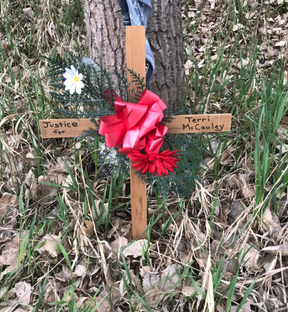
The shotgun blast took Terri McCauley’s face off, killing her instantly.

She was found murdered on Sept. 27, 1983, in Sioux City, Iowa and for more than 40 years, her case was cold as a cucumber.

A member of the Omaha Tribe, McCauley, 18, fell under the dark umbrella of murdered and missing Indigenous women and girls (MMIWG).  There have been varying estimates of the casualty figures but it’s somewhere between 4,000 and 7,000.

But while Canada has been content to virtue signal and sloganeer just enough to keep the denizens of the Annex, Westmount and the Glebe smug, America has taken action.  Adding insult to injury for the woke, the bold initiative was started by President Donald Trump during his first term in office.

Canada’s chattering classes talked, self-flagellated, scolded and offered meaningless tears.  In America, they’ve closed cases, made arrests and brought justice, relief and maybe some closure to the families of the dead.

X
MMIWG: A criminology professor has warned that the real number of murdered Indigenous women and girls could be double official estimates.

The U.S. formed half a dozen task forces in “Indian Country” to solve the murders and disappearances. Canada?  Not so much.

Toronto Police cold case boss Det. Sgt. Steve Smith told the Toronto Sun that it isn’t as if this kind of initiative hadn’t been brought to the current government.

“With TPS, we have the ideal model to serve all of Ontario,” Smith said, adding that for the past three years, the solicitor general has provided funding to tackle 30 unsolved murders, unidentified bodies and historic sex assaults.

COLD CASE WHIZ: Det. Sgt. Steve Smith of the TPS. DATELINE

“Federally, we asked numerous times for funding to set up a national task force to make the expertise accessible across Canada but there was zero traction.

“We’re hoping to take it up again with a new federal government. So many of the MMIWG cases are easily solvable.”

Smith and TPS have been at the forefront of the revolution in cold-case investigations. Using genetic genealogy, they have closed some of the city’s most vexing homicides: Christine Jessop, Susan Tice, Erin Gilmour and others.

But anyone will tell you, that land acknowledgements are cheap and easier than solving a homicide.

McCauley — a mother of two — was last seen that terrible day 41 years ago getting into a car with an unknown man. Her body was found 10 days later.

The wheels of justice grind slowly, but grind they do. Last week, cops announced that they had arrested Thomas Popp, 62, of Lakeview, Washington. He is now charged with first-degree murder.

The arrest of Popp and others by MMIWG cold-case task forces has given renewed hope to Native American communities that maybe, just maybe, justice will be done after decades of agony.


REMEMBER: A makeshift memorial to murdered mother of two Terri McCauley. Cops say theyve arrested her killer after more than 40 years. FACEBOOK
REMEMBER: A makeshift memorial to murdered mother of two Terri McCauley. Cops say they've arrested her killer after more than 40 years. FACEBOOK

“Since Monday, I think it definitely has given hope and courage for these families to continue to fight for justice for their families or their relatives who have gone missing and murdered,” Trisha Rivers, of the Great Plains Action Society, told reporters.

She added that the arrest shows what can happen when cops and the justice system work with the Native community.

Rivers said: “This case means so much to everybody in Indian Country because I feel like all of us can relate to it in some kind of way that makes sense.”

Meanwhile, in Canada, bureaucrats get fat, money is spent on fecal hygiene in Ghana, and the agony of the affected families and their communities continues apace.

bhunter@postmedia.com | @HunterTOSun


MORE:

Man charged in 1983 murder in Sioux City

Radio Iowa| 14 days ago
An arrest has been made in the cold case murder of a woman in Sioux City four decades ago. Thomas Duane Popp is charged in the shooting death of 18-year-old Terri McCauley in 1983. A grand jury convened in Woodbury County last week and indicted the 62-year-old Popp for first-degree murder and he was arrested


Thursday, January 9, 2025

Justin Trudeau’s record on Indigenous issues


Native America Calling: January 8, 2025


Canadian Prime Minister Justin Trudeau’s resignation announcement halts any progress on a $48 billion proposal to reform child welfare systems on reserves. It also stalls a First Nations clean drinking water bill. Trudeau received both praise and criticism from Indigenous leaders following his resignation announcement. We’ll look at how Trudeau delivered on Indigenous issues in Canada.

GUESTS

Russ Diabo (Kahnawake Mohawk), policy analyst

Matthew Wildcat (Cree), assistant professor of Native Studies and director of Indigenous Governance and Partnership at the University of Alberta

LINK:  https://www.nativeamericacalling.com/wednesday-january-8-2025-justin-trudeaus-record-on-indigenous-issues/


Friday, July 12, 2024

This kokum is raising 14 grandkids in midst of drug epidemic

 LINK: https://www.cbc.ca/player/play/video/9.6441534

'Our pandemic in Canada': Grandmothers step up to raise children orphaned by premature deaths

Faye Robinson stepped up to help raise 14 grandchildren in her Saskatoon home after her adult children struggled with addictions. Decades of intergenerational trauma and compounding drug use are seeing her, along with many other Indigenous grandparents, step in to care for their grandkids.

READ: https://www.cbc.ca/lite/story/1.7253164 


Joan Okemow has been raising three grandchildren and one great-grandchild, while working at a Saskatoon friendship centre. She describes the work of grandmothers in Saskatchewan as similar to that of grandmothers in South Africa, with drugs, as opposed to HIV/AIDS, orphaning children here in this province.


Sunday, January 28, 2024

‘Not just lip service’: First Nations-led private investigators help families of missing #MMIP SIGNS

In Canada, research shows that 13 per cent of missing adults are Indigenous, despite Indigenous people making up only 5 per cent of the population.

“We started MMIP [Investigations] because we thought, ‘What can we do on the ground to bring tangible results to the families that need it the most?'” said Vawn Jeddry co-founder of Alberta-based MMIP Investigations and a member of English River First Nation.

MMIP Investigations currently has private investigator licences in Alberta and British Columbia, with charitable status in Alberta, they’re working towards nation-wide charitable status as funding plays a big part in what they can offer.

LINK: https://globalnews.ca/news/10237884/first-nations-led-private-investigators-mmiwg-mmip/    


We'koqma'q First Nation raises signs as part of MMIWG campaign

"The change should be occurring on a community level,' says chief

A sign that read Mi'kma'ki remembers the Missing and Murdered. An an Indigenous woman in a red top with a red hand print.
One of two signs that have been put up at both ends of We'koqma'q, on Cape Breton Island. (submitted by Annie Bernard-Daisley )

Two new signs along TransCanada Highway 105 passing through We'koqma'q First Nation in Nova Scotia are meant to shine a light on the ongoing issue of missing and murdered Indigenous women and girls.

Chief Annie Bernard-Daisley said she wants to empower her community to tackle the underlying risk factors that make Indigenous people targets of violence.

"One part of the signage is that change is needed," said Bernard-Daisley.

"The change should be occurring on a community level, community by community."

Bernard-Daisley said the signs in the community on Cape Breton Island, about 75 kilometres southwest of Sydney, N.S., have three key goals: to shine a light on the ongoing issues, to deter human trafficking and to honour Cassidy Bernard.

Bernard, Bernard-Daisley's 22-year-old cousin, was found dead in her home in 2018. Bernard's ex-boyfriend Austin Dwight Isadore pleaded guilty to manslaughter and child abandonment in 2022, and was sentenced to 15 years in prison. 

"It was emotional for [Cassidy's mother] to see the signage in our community on many levels," said Bernard-Daisley. 

An Indigenous woman hold up a sign reading I need to be able to tell my children I did not stay silent.
Annie Bernard-Daisley at a rally in memory of her cousin Cassidy Bernard in 2019. Now chief of We'koqma'q, she says the signs are meant to keep the conversation going around murdered and missing Indigenous women and girls. (Brittany Wentzell/CBC)

She said We'koqma'q has worked to make the community safer and has applied for funding through Indigenous Service Canada's Pathways to Safe Indigenous Communities Initiative, which has committed $120 million over five years (2021-2026) to improve safety and well being in First Nation, Métis and Inuit communities.

Bernard-Daisley said through the program she hopes to add sidewalks, street lights and reliable taxi services to the First Nation. 

"Those of us that are working on the front lines know what our community needs more than the government ever will," she said.

In 2019, the national inquiry into missing and murdered Indigenous women and girls released its final report, with 231 calls for justice — recommendations on how to end violence toward Indigenous women and girls.

CBC News released a report card in 2023 tracking progress on the calls for justice, and at the time only two calls were completed, with many still in progress.

'A strong message'

Barry Bernard from Eskasoni First Nation, co-designer of the sign, was at a photo shoot working with a Mi'kmaw model when he thought about messaging around MMIWG.  

Once he saw the model with the red hand print, he said he knew it embodied strength. 

"It's a strong message to send out, but it's true there are still missing and murdered Indigenous women and children today as we talk all around North America," he said.

"I hope the message says that we need to educate everybody and it's not only just our problem, it's everybody's problem." 

An Indigenous woman in a chair in her office.
Anita Boyle, executive director of Nignen women's shelter, says she'd like to see communities return to traditional systems that valued women. (Oscar Baker III/ CBC )

Anita Boyle, executive director of Nignen, a women's shelter in Natoaganeg First Nation in New Brunswick, said addressing the issue of missing and murdered Indigenous women and girls is multifaceted.

It would require things such as ensuring law enforcement and the judicial system understand the role intergenerational trauma plays in the lives of Indigenous people, adequate housing for Indigenous women in urban centres; and for men in Canada to get more education around intimate partner violence. 

Ultimately she said she'd like to see Indigenous communities return to traditional systems that valued women.

"I think that there's a lot that we could learn from going back to those old values of respect, honesty, caring, sharing," said Boyle. 

"I think a lot of that has got displaced because of capitalism and colonization in general."


Saturday, November 11, 2023

Veterans Day Canada 11-11

Mi’kmaq Sisters: War Heroes & Trailblazers


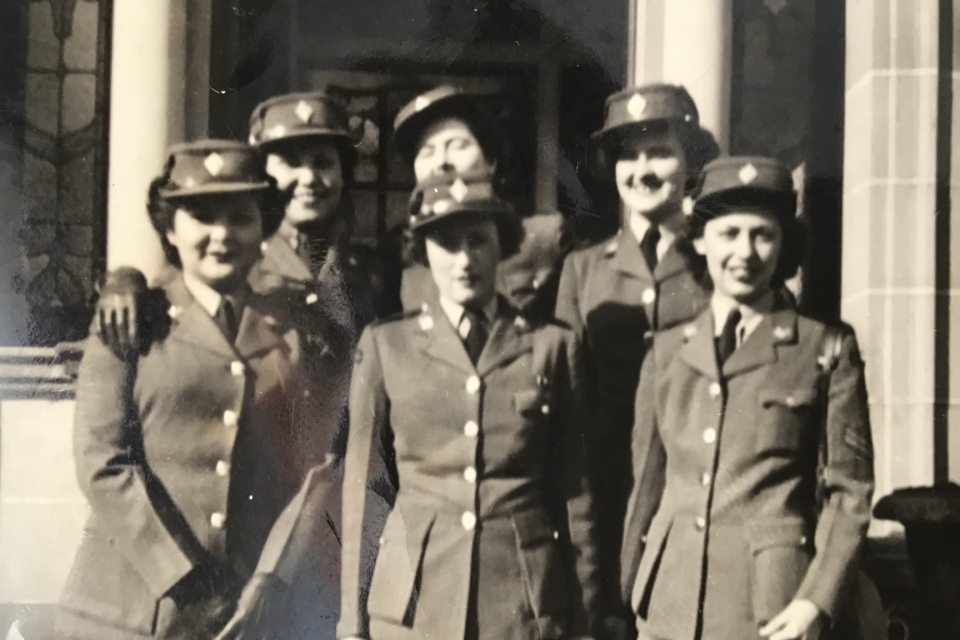
Rachael Thomas (back left) and Blanche Thomas (front left), Photo credit: Canadian Women’s Army Corps, Germany.

Among the communities on PEI, the Mi’kmaq had the highest percentage of their population who served in the First and Second World Wars Among the Mi’kmaq who served, there were but two women: sisters Rachael and Blanche Thomas.

Rachael and Blanche Thomas, daughters of Michael and Mary Ann Thomas, led parallel lives until the end of World War II. They grew up on Lennox Island, moved to Southport for better education opportunities, and attended Rochford Square School in Charlottetown. After completing their education at Union Commercial College, both sisters joined the Canadian Women’s Army Corps (CWAC).

Rachael served overseas in England, while Blanche worked on repatriating the army in northern Europe. They were discharged in July 1946 as Corporals.

During their time off, the sisters enjoyed traveling together, exploring Scotland and Paris and creating cherished memories. However, their lives were deeply affected by the tragedy of war.

While most Indigenous personnel were treated as equals while in uniform, upon discharge things were different. Despite their service, Status Indians did not receive equal access to Veterans’ benefits or the right to vote. Mi’kmaw Keptin John Joe Sark observed, “These great men and women showed exceptional loyalty to Canada…for a country and flag that did not recognize them as citizens.”

At the end of their service, both Rachael and Blanche Thomas received two military medals: the Canadian Volunteer Service Medal with the Overseas Service Bar — granted to persons who voluntarily served on Active Service; and the War Medal 1939-1945 — awarded to all full-time personnel of the Armed Forces.

Rachael Thomas dedicated her life to seeking justice for victims of the Sixties Scoop. She remained proud of her Indigenous heritage and was involved in her community until her passing in 1996.

Blanche Thomas, a proud Mi’kmaq woman, married Gerard Thomas Doucett after World War II. She worked as a beautician before becoming a homemaker and mother. Blanche later joined the workforce and was an active member of various organizations.

Amendments to the Indian Act restored her Indian status and applied it to her children. Blanche passed away in 2009. Her legacy includes her daughter’s service in the Royal Canadian Navy and her granddaughter’s service in the Royal Canadian Air Force.

Today, many Indigenous people continue to serve in the Canadian Armed Forces with pride and dedication.

Lest We Forget.


Written by Grace Biswas, Editor-in-Chief

https://thecadreupei.com/2023/11/07/9526/ 


**

READ:

https://lethbridgeherald.com/news/lethbridge-news/2023/11/04/family-preservation-centre-opens-on-kainai-nation/

Tuesday, August 29, 2023

August 28, 2023 – Wildfires continue to ravage across Canada

The latest news as fires continue to ravage parts of British Columbia and the Northwest Territories and more headlines...

Thursday, February 9, 2023

60s Scoop, #TRC, Racism Apology, Day Scholars and more (Canada)

VIDEO

Residential school, day school and Sixties Scoop survivors gather at conference

There were many emotional moments as residential school survivors gathered in Winnipeg this week.  Around 1,700 people took part in Wa-Say Healing Centre’s conference. 
**

The Physicians College of Manitoba apologizes for current and past racism against Indigenous peoples

 It also said that pledging to end racism would not be enough.

“Recognizing racism in itself will neither be spontaneous nor easy. We are committed to working with Indigenous healers, scholars, elders and knowledge bearers, as well as the legal and ethical requirements to provide respect, dignity and equitable health care for Indigenous Will ask and intend to guide you along.” 

Four months after the apology, Indigenous leaders and politicians signed a declaration calling for an end to anti-Indigenous racism in northern Manitoba’s health care system.

The College of Practitioners Regulating Manitoba begins work in 2021 to address the call to action from the Truth and Reconciliation Commission. The apology is one action the college is taking as a result of those discussions, the Assembly of Manitoba Chiefs said in a statement released late Tuesday.

**


In photos: Pow Wows across Treaty #3 and Treaty #1 territories

“The pow wow is a living cultural expression of song, dance, and art which brings people together, and through the drum, reminds us of our connection to Mother Earth. […] pow wows are a time to put differences aside and to celebrate traditions, mostly it is the time to celebrate life. A pow wow strengthens an entire race of people. To be Anishinabe is to be proud, to know who you are, and where you came from.” – Harold Flett

**

Only 13 T&R Calls to Action achieved over seven years: report - rabble.ca

2023 marks the eighth year since the Truth and Reconciliation Commission released a list of 94 Calls to Action.
 
**


Canada’s $2.8 billion settlement with Indigenous "Day Scholars" is a long time coming

  F

Eleven years.  That’s how long it took the federal government to agree with 325 First Nations over the collective loss of language and culture suffered by Day Scholars in the Residential School system in Canada that existed between the mid 1800s until 1996.

Day scholars attended a Residential School during the day but didn’t sleep there overnight.

While Day Scholars settled an individual compensation package for just $10,000 each earlier in 2022, this new agreement is specifically aimed at rectifying the systematic and forced removal of language and culture through these institutions.

Left out of original agreement

In 2012, members of the Tk'emlúps te Secwépemc and shíshálh Nation led by Shane Gottfriedson and Garry Feschuk launched a national class-action lawsuit for Day Scholars who were left out of the original Indian Residential School (IRS) Settlement Agreement (2006).

READ


Monday, October 3, 2022

BONE COLLECTORS: 6.7 million Indigenous objects and human remains held in Canada museums #TRC


Canadian Museums Association Urges Repatriation of Indigenous Objects

The report estimates that 6.7 million Indigenous objects and human remains continue to be held in Canadian institutions, most of which do not have formal repatriation policies.
A display in the First Peoples Hall of the Canadian Museum of History in 2018 (via Wikimedia Commons)

A major new report released on Tuesday, September 27 by the Canadian Museums Association (CMA) calls for greater support and funding for Indigenous organizations and museums as they pursue Indigenous “self-determination” at all levels of governance. 

The CMA estimates that 6.7 million Indigenous objects and human remains continue to be held in Canadian museums, with approximately 94% of them held in eight institutions. The report finds that few museums have formal repatriation policies and that even fewer of them are publicly accessible. Currently, only one province, Alberta, has repatriation legislation. The report also finds that although many museums showcase Indigenous-related programming and say they value Indigenous engagement, Indigenous curators and staff members are underrepresented, suggesting that Indigenous professionals are often slotted into advisory roles.

KEEP READING

The report, entitled “Moved to Action: Activating UNDRIP in Canadian Museums,” was commissioned as part of the nation’s response to Call to Action 67, one of 94 calls to action issued in 2015 by the country’s Truth and Reconciliation Commission (TRC). The TRC was established to reckon with Canada’s history of Indian residential schools, which forcibly separated Indigenous children from their communities for purposes of assimilation.

Friday, September 30, 2022

TIFF: ‘Bones of Crows’ conveys so much pain… and joy in spite of it

TIFF ’22 Review

A scene from 'Bones of Crows'
A scene from 'Bones of Crows' courtesy of TIFF

‘Bones of Crows’ is an emotional account of the intergenerational trauma caused by the Canadian residential school system.

The Canadian history taught in school is a whitewashed version of the truth, omitting much of the country’s sordid relations with its Indigenous populations, which have continued to have negative effects to this day. The last few years have brought appalling revelations that had been covered up and ignored for so long. After years of silence and denial, the government formed The Truth and Reconciliation Commission, providing an avenue for those directly and indirectly affected by the legacy of the Indian Residential Schools system to share their stories and experiences. Bones of Crows is a fictional account of one woman’s life before, during and after being forcibly placed in the system.

Born in the 1920s to a large and happy family, Aline Spears (Grace Dove) and her three siblings were taken from their parents under threat of prison and sent to residential schools. There, they were subjected to horrific physical, emotional and sexual abuse at the hands of the priests and nuns who oversaw their education. As a teen, Aline enlists in the military, where she meets her husband, Adam (Phillip Lewitski), and is eventually recruited for a special operation that uses Cree to transmit secret messages during World War II. After the war, they return to Canada to raise their children. But she is haunted by the years of cruelty she endured, only finally able to confront her abusers in her ‘80s.

There are news stories, a day of reflection and professional sensitivity training, but they don’t capture the impact and scars of this institution of abuse as well as a film is able. The narrative does an exceptional job interweaving so many experiences, traumas and repercussions into a single movie. It highlights the anguish of families forcibly separated, in many cases permanently; the degradation spewed by the clergy who view their charges as less than human; the punishment for any miniscule attempt to maintain the culture and language the schools were meant to eradicate; the widespread abuse and intentional neglect as superiors boast about keeping the children in a state of malnutrition during their own feasts; the countless deaths due to disease and mistreatment; the sexual assaults that steal their innocence and fill their nightmares; the substance abuse to hide from the pain of their memories; the suicides when the hurt becomes too much; and so much more. It also touches upon the numerous unsolved deaths and disappearances of Indigenous women and girls in Canada.

Nevertheless, it’s also a story of joy, strength and triumph, both fleeting and lifelong. As a child, Aline enjoyed sing-alongs and family meals. She and Adam shared a lot of love, which produced equally loved children who grow up to have successful careers and their own children. Aline engages her love of music by playing the piano and passes the skill on to her granddaughter. One must savour the good through the bad and the movie strives to capture both, revelling in the joys and not cowering from the sorrows. This is the story of one family, but it represents the tale of thousands of Indigenous people across the country, giving voice and audience to their lived experiences.

Bones of Crows had its world premiere in the Discovery programme at the Toronto International Film Festival.

Read other reviews from the festival.

Thursday, September 29, 2022

Data shows number of Indigenous kids in foster care is going up

 NEWS VIDEO


‘The bond is broken’: StatCan

Indigenous population is on the rise, housing still an issue.

A Winnipeg mother says she was scarred for life when her first child was taken away at birth by social workers, who told her she was unfit to parent her newborn daughter because she was just 17 at the time.

“I don’t know how one could fully heal from that trauma,” said the woman, now 41, whom The Canadian Press has agreed not to identify because of her family’s involvement in the child welfare system. “Having a baby taken away from birth the bond is broken.”

Statistics Canada says 2021 census data shows Indigenous children accounted for 53.8 per cent of all children in foster care.

This has gone up slightly from the 2016 census, which found 52.2 per cent of children in care under the age of 14 were Indigenous.

At the time, only about eight per cent of kids that age in Canada were Indigenous.

More than three per cent of Indigenous children living in private households in 2021 were in foster care compared to the 0.2 per cent of non-Indigenous children. Nationally, Indigenous children accounted for 7.7 per cent of all children 14 years of age and younger.

Statistics Canada says because of difficulties in collecting census data on First Nations and other Indigenous communities, some caution should be exercised in comparing census years.

In recent years there has been a significant push from Indigenous leaders and child welfare advocates across the country to address the myriad systemic issues contributing to the overrepresentation of Indigenous children in care.

But experts say factors like colonialism, chronic underfunding of child welfare systems, discriminatory practices and poverty remain.

READ


Happy Visitors!

NEW WEB ADDRESS

Because we don't want to lose information on this blog, we now have a domain name: American Indian Adoptees.com - click and save this link:

2026: WE HAVE A BACK UP BLOG COMING SOON: www.americanindianadoptees.blog (on wordpress) We are no longer on Facebook. We deleted our accounts.

WRITTEN BY HUMANS!

WRITTEN BY HUMANS!

Blog Archive

Featured Post

Your History Class Was a F*cking Lie | #NOMOAR

  Your History Class Was a F*cking Lie by Sean Sherman (Or: How the American Educational System Has Always Been a Racist Propaganda Program...


Native Circles

Native Circles
click logo for podcasts!

Most READ Posts

Bookshop

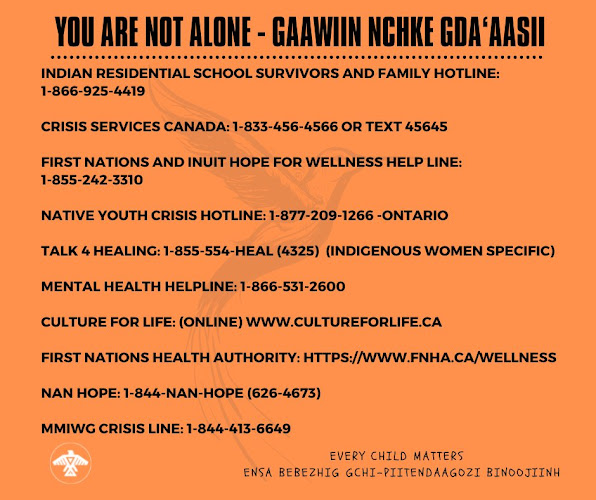
You are not alone

You are not alone

To Veronica Brown

Veronica, we adult adoptees are thinking of you today and every day. We will be here when you need us. Your journey in the adopted life has begun, nothing can revoke that now, the damage cannot be undone. Be courageous, you have what no adoptee before you has had; a strong group of adult adoptees who know your story, who are behind you and will always be so.

Diane Tells His Name


click photo

Lost Birds on Al Jazeera Fault Lines

Lost Birds on Al Jazeera Fault Lines
click to read and listen about Trace, Diane, Julie and Suzie

NO MORE STOLEN SISTERS

NO MORE STOLEN SISTERS
click image

ADOPTION TRUTH

As the single largest unregulated industry in the United States, adoption is viewed as a benevolent action that results in the formation of “forever families.”
The truth is that it is a very lucrative business with a known sales pitch. With profits last estimated at over $1.44 billion dollars a year, mothers who consider adoption for their babies need to be very aware that all of this promotion clouds the facts and only though independent research can they get an accurate account of what life might be like for both them and their child after signing the adoption paperwork.

Original Birth Certificate Map in the USA

Google Followers