They Took Us Away

They Took Us Away
click image to see more and read more

it's free

click

How to Use this Blog

BOOZHOO! We've amassed tons of information and important history on this blog since 2010. If you have a keyword, use the search box below. Also check out the reference section above. If you have a question or need help searching, use the contact form at the bottom of the blog.


We want you to use BOOKSHOP to buy books! (the editor will earn a small amount of money or commission. (we thank you) (that is our disclaimer statement)

This is a blog. It is not a peer-reviewed journal, not a sponsored publication... WE DO NOT HAVE ADS or earn MONEY from this website. The ideas, news and thoughts posted are sourced… or written by the editor or contributors.

EMAIL ME: tracelara@pm.me (outlook email is gone) THANK YOU CHI MEGWETCH!

SEARCH

Showing posts with label Intercountry adoptees. Show all posts

Monday, November 24, 2025

Bill restoring citizenship for 'Lost Canadians' becomes law

Court ruled government must pass law covering some children born abroad


People swear an oath together.
Applicants recite the oath of Citizenship in March. Some children of Canadians who were born abroad will become Canadian citizens after Parliament passed a bill to change citizenship rules that were deemed unconstitutional. (Justin Tang/The Canadian Press)

The "Lost Canadians" legislation, which aims to fix Canada's unconstitutional citizenship by descent rules, passed in the Senate Nov. 19 and received royal assent Thursday afternoon.

The term refers to people who were born outside of the country to Canadian parents who were also born in another country.

In 2009, the federal government changed the law so that Canadians born abroad could only pass down their citizenship if their child was born in Canada, but that was deemed unconstitutional by the Ontario Superior Court in December 2023.

The legislation proposed Canadian citizenship could be passed down to people born abroad, beyond the first generation, if the parents spent a cumulative three years in Canada before the child's birth or adoption.

A man in a suit, wearing glasses, speaks to someone off screen. Canadian flags are seen in the background.
Sen. David Arnot argued the bill does not apply to 'intercountry adoptees,' international children adopted by Canadian parents and raised in Canada. If those adoptees have children of their own born outside Canada, they would not be Canadian citizens.  (Spencer Colby/The Canadian Press)

Saskatchewan Sen. David Arnot argued the bill unfairly applies a "substantial connection" test to "intercountry adoptees" when it comes to passing down citizenship.  This is a legal term that applies to adopted children who were born abroad and raised in Canada by Canadian parents.

Arnot said the bill uses the general term "international adoption," which can include intercountry adoptees. He said these children go through a rigorous immigration process before their adoption in Canada is finalized.

Arnot said that includes provincial and territorial approval, anti-trafficking screens, foreign state approval, federal citizenship reviews and other measures.

"Intercountry adoptees must be treated the same as domestic adoptees. It is a requirement of the Hague Convention that intercountry adoptees have the same rights and treatment as in-country adoptees," Arnot said.

"Another way to say this is that, because domestic adoptees do not have a substantial connection test, neither should intercountry adoptees."

Arnot did not try to amend the law because the court has set a deadline for the law to be enacted by Jan. 20, but he urged the immigration minister to make the change in the future.

LINK: https://www.cbc.ca/news/politics/lost-canadians-bill-senate-9.6986432 

Saturday, December 29, 2018

Fraud and corruption in adoption #HUMAN TRAFFICKING

Over the past decades,hundreds of thousands of large-hearted Westerners—eager to fill out their families while helping a child in need–have adopted from poor and troubled countries. In many cases—especially in adoptions from China or former Soviet bloc countries—these adoptions were desperately needed, saving children from crippling lives in hard-hearted institutions.
But too few Westerners are aware that in too many countries, there’s a heartbreaking underside to international adoption.
For decades, international adoption has been a Wild West, all but free of meaningful law, regulation, or oversight. Western adoption agencies, seeking to satisfy consumer demand, have poured millions of dollars of adoption fees into underdeveloped countries.

Those dollars and Euros have, too often, induced the unscrupulous to buy, defraud, coerce, and sometimes even kidnap children away from families that loved and would have raised them to adulthood.

Since the fall of 2008, the Schuster Institute for Investigative Journalism has been releasing our reporting on aspects of this problem. Where did Westerners get the idea that the world was overflowing with healthy orphaned babies in need of new homes? How is a child with a living family transformed into a “paper orphan,” adopted for someone else’s profit? Whose lives have been scarred by corrupt adoptions? What U.S. policy changes might prevent children from being wrongfully taken from their birthfamilies, simultaneously helping to keep Americans from unwittingly creating an orphan instead of saving one?

This website offers a collection of the Schuster Institute’s releases on intercountry adoption, as well as many of the source documents, independent research, government materials, and other resources that will help interested readers pursue the topic further if they wish.


Read: Fraud and Corruption in International Adoption | Gender & Justice Project | Schuster Institute | Brandeis University

Friday, November 28, 2014

Why are adoptees doing it; scams to Adopt #NAAM2014 #flipthescript

PJ Whiskeyman of Littitz, Pa., at her computer.
PJ Whiskeyman of Littitz, Pa., sought to adopt two girls from Ukraine whose pictures she saw on an adoption service Web site.  Sasha Aslanian/American RadioWorks

Sunday, November 23, 2014

Scandals #Adoption #flipthescript

By Trace

The United States is responsible for most intercountry adoptions in the world: 20,000 out of the total 30,000 total orphans adopted annually. (Remember that these children are not actually orphans.)
In many cases, the prospective adoptive parents (PAPs) are motivated by a sense of altruism, (saving a child), coupled with their desire to overcome infertility and fulfill the Western standard of the nuclear family.

Ignorance is no longer an excuse. Google "Adoption Scandals" - and this pops up:

List of international adoption scandals

From Wikipedia, the free encyclopedia

The following is a partial list, by year, of notable incidents or reports of international adoption scandals,[1][2][3][4][5] adoption corruption, child harvesting, baby-stealing, legal violations in international adoption, or adoption agency corruption (see child laundering; child trafficking:[6][7] "In the United States international adoptions are a big business, where a large number of private international adoption agencies are paid on average $30,000 a time to find a child for hopeful parents."[8]

Contents

Child laundering

Child laundering is a scheme whereby intercountry adoptions are effected by illegal and fraudulent means. It usually involves the trafficking of children which is usually illegal and may involve the acquisition of children through monetary arrangements, deceit and/or force. The children may then be held in sham orphanages while formal international adoption processes are used to send the children to adoptive parents in another country.
Child laundering rings are often expansive with multiple hierarchies of people motivated by large profits from the black markets of intercountry adoptions. With Westerners willing to spend thousands of dollars to adopt a child, enough monetary incentives are created to extend the laundering ring from the middle classes to societies' more affluent groups. These "baby broker" families subsequently forge a new identity for the laundered child, "validating" the child's legal status as an orphan and ensuring the scheme will not be uncovered.[1]
Child laundering is highly controversial; while many argue that these children are being treated as a commodity and stripped of family contact, others argue that, ultimately, the children will live in a more affluent environment and have more opportunities as a result of this adoption.[2]

*This is available for all the potential adoptive parents (PAPs) to read. If they did do some research, we'd make some progress in ending international unregulated child trafficking.
It's about money, providing a "Product" who is a child.  Remember that.

Sunday, July 14, 2013

Adoption Trafficking Awareness Event July 20


Join Intercountry Adoptees: "What is Adoption Trafficking?"
Lacey Library,

Saturday, July 20th, 1:00 p.m. to 3:00 p.m.
500 College Street SE, Lacey, WA 98503-1240


SPEAKERS:

Vance Twins

The Vance twins have been interviewed on television, radio, in newspapers and given presentations in the U.S., Canada and in Seoul, South Korea.
Janine’s Limited Edition book:
The Search for Mother Missing: A peek inside international adoption gives an account of the twins journey to the 2004 Korean Adoptee Gathering and is exclusively available at their website. www.vancetwins.com


Peter Dodds
 
Speaker and author of Outer Search Inner Journey the first book written by a foreign born adoptee on the subject of intercountry adoption. 
An international speaker, Peter has delivered keynote addresses at New Zealand's National Adoption Conference and Toronto's Adoption Experience 2012. He has been interviewed on television, radio and the internet. www.peterfdodds.com 
 
 
Giving the families left behind a voice in the matter
 
  • Raising global consciousness on the hidden side of adoption
  • Sharing an enlightened and heartfelt perspective on adoption issues based on real experiences
  • Offering preventative and alternative solutions for an industry currently in flux
  • Protecting vulnerable families from a lucrative industry that targets the child and abandons and exploits the mothers


Thursday, February 7, 2013

Two Worlds contributor presenting at Pepperdine

Intercountry Adoption

Register Now
Dear Friends,

Our conference this year will be focused on the important and complex topic of intercountry adoption. All who address this issue have a deep concern for the plight of orphans worldwide. In the Bible, James declares, "Religion that God our Father accepts as pure and faultless is this: to look after orphans and widows in their distress." Praised by some and criticized by others, intercountry adoption remains a matter of deep contention on the global stage. Proponents see it as a way to give a purported 18.5 million adoptable orphans a family and a better life, while critics call it a door to corruption and cultural imperialism.

This conference seeks to find understanding and common ground among these voices, while exploring the complex legal, religious and ethical issues raised by intercountry adoption. Our objectives for this conference include:
  • Finding common ground among conflicting points of view regarding intercountry adoption
  • Exploring current barriers to intercountry adoption such as legal regulations in both sending and receiving countries
  • Viewing faith and social science together to form a more complete picture of intercountry adoption
  • Providing knowledge and guidance for families with adopted children and those looking to adopt
We hope you can join us as we bring together lawyers, scholars, pastors, adoptive families, and adoptees to investigate the future of intercountry adoption.


BREAKOUT SESSIONS I
Responding to Adoption Triad Members Victimized by Abusive Adoption Practices
David Smolin
How Religion Informs Adoption Law Part I: Interfaith Perspectives
Mark Goldfeder, Faisal Kutty
Forgotten, Detained, Removed: Transnational Adopted Persons and Citizenship Rights
Caitlin Kee, J. McLane Layton, Lele Morrill


Leland Morrill, a contributor in the adoptee anthology Two Worlds, and a Navajo adoptee who has been reunited with his family and relatives, will be a presenter at this conference and share his presonal experiences with the Real ID Act of 2005 and his troubles securing a drivers license without an original birth certificate and tribal census number for his Navajo Nation. (Adoptees have amended birth certificates which are falsified birth documents listing our adoptive parents as our natural parents.) Leland plans to present a copy of Two Worlds to Ambassador Jacobs on Friday. Keep good thoughts and prayers for Leland on this important day... Trace

Friday, May 25, 2012

Deportation of adoptees? Yup!

Citizen of no land: The story of Kairi Shepherd

by  May 25, 2012 First Post:India


Kairi Shepherd, a 30 year-old Indian-origin adoptee is staring at the prospect of deportation from United States to India and says being sent back to India would end her life as she knows it.
“The deportation order which may force me to part from my physicians, family, and friends here, could be a death sentence to me,” said Shepherd, who suffers from multiple sclerosis.
Hers is a strange and tragic tale that reveals how children adopted across borders often fall through the cracks of domestic law.
Utah native Erlene Shepherd adopted a three-month-old Kairi from a Kolkata orphanage. Kairi was one of the 11 children the single mother adopted from across the globe. Erlene died when Kairi was eight.
Kairi Shepherd. File image. Image courtesy Anjali Pawar/ Sakhi

When Kairi was arrested and convicted of felony check forgery – a crime she committed to feed her drug habit – a US court and Kairi discovered that she was not a US citizen. The court then upheld the right of the US government to deport Kairi to India.
How did Kairi fall through the cracks?
To claim Kairi’s citizenship, Erlene had to submit a form with the US authorities before her adopted daughter turned 21 years old. But Erlene died without doing so, making Kairi, a nobody’s child. If parents who are technically granted legal guardianship by the sending country, don’t re-adopt their children after their arrival in the US, then their children are not US citizens.
She also does not benefit from the 2000 Child Citizenship Act, which represented a significant step forward and provided automatic citizenship for adoptees, because it does not retroactively include adult adoptees.
“The Child Citizenship Act failed to include all adoptees upon its passage in 2000 and so brought into question adoption’s most fundamental claim, a forever loving home. Adoptee vulnerability to removal and undocumented status violates an adopted person’s rights as outlined in the Hague Convention on Inter-country adoption to which the U.S. is a signatory and the UNCRC, which sending countries like India have ratified,” said Jennifer Kwon Dobbs, community adviser with AdopSource, a resource group for adoptees in the US.
Dobbs has tracked 40 cases of adult adoptees who have been deported to their countries of origin.
In 2008, Jennifer Haynes was deported from the US to India in a similar manner. Adopted by an American couple, she was sexually abused by her foster father, and spent years being shipped from one foster parent to another.
Charged in a case of drug possession, she was sent back at the age of 32. Her children- eight and nine years old- are growing up in the US without mother.
“I am away from them for more than four years now and I am not sure if I will ever see them again. What kind of law is this?” said Haynes.
The Central Adoption Resource Authority (CARA), central government body which sanctions inter-country adoption says that it cannot be held responsible because it was non existent when Haynes and Shepherd were adopted. CARA was formed in 1990.
“Currently we issue conformity certificates in case of every inter-country adoption to facilitate immediate citizenship of the adopted child,” said Anu J Singh, director, CARA, adding that the Authority has written to the Indian Ministry of External Affairs (MEA) and the US Embassy for details of the Kairi Shepherd’s case.
The MEA has been maintaining that it is looking at ways to provide legal assistance to Kairi to challenge the US order.
International Mission of Hope, the Kolkata orphanage which put Kairi in adoption, shut shop ten years ago and Kairi’s last hope is a favorable order from the US Supreme Court.

The insanity of adoption continues - a child doesn't choose to be adopted, or asked to be placed in another country...and yet Americans who adopt didn't file all the proper and necessary paperwork for their acquisition, putting their "adoptee" at risk... It begs the question: why? Trace

Saturday, April 21, 2012

Abusive Adoption Practices (abstract and links)

The Aftermath of Abusive Adoption Practices in the Lives of Adoption Triad Members: Responding to Adoption Triad Members Victimized by Abusive Adoption Practices
by David Smolin and Desiree Smolin (via email)

Abstract:
The above-titled presentation was given as a plenary presentation at the Annual Symposium of the Joint Council on International Children’s Services (JCICS) on April 18, 2012. 
It is important to note that the original context for this presentation is Intercountry Adoption to the United States. However, some of you may find some of these points relevant to domestic adoption issues as well as Intercountry Adoption to other nations (Canada, Italy, Spain, etc.)

Especially at the event itself, with our own commentary added, this was a presentation not just on abusive adoption practices, but especially on how the intercountry adoption system, as shaped by the United States government and United States adoption agencies, is “designed for failure.” Abusive adoption practices thus are not merely problems in themselves, but are symptoms of a system that chronically produces abuses and breakdowns in the system: a system that fails to self-correct and thus is self-defeating.

Further, these features of the current dysfunctional system were not necessarily inevitable, but have arisen from specific choices made during the construction of the system by the U.S. government and U.S. agencies. The governing rules they advocated for, and chose, created the dysfunctions that have doomed the system to continuing cycles of abuse.

This is very much a presentation about the inestimable human costs of those failures for all those impacted by adoption: not only adoption triad members, but also siblings, extended families, communities, and even nations. It is also a presentation about a system that fails to assist or recognize its own victims.

The presentation is very much of a joint project: each of us wrote about half of the material, and each critiqued the other’s materials. The process of converting material into PowerPoint format was done initially by Desiree, although again the final product was reviewed, modified, and critiqued by both of us. Overall, the concepts and information presented represent years of working together to analyze adoption systems.
We certainly do not expect everyone to be happy with these materials and critiques may come from all sides. Please keep in mind that the PowerPoint cannot embody all that we said; also please keep in mind the original audience and occasion for the presentation. We welcome vigorous and respectful dialogue, from which we hope to learn, as so much of what we do know to this point in time is due to the many people who have shared their experiences and thoughts with us.

For discussion and further commentary, please go to the blog: http://fleasbiting.blogspot.com/

Thanks,

David and Desiree Smolin

Link: http://works.bepress.com/david_smolin/12

I do hope everyone will watch this presentation - we need to be informed about the billion dollar adoption industry and its practices... Trace

Sunday, August 14, 2011

Guatemalan Child Kidnapping for Adoption

Missouri Couple Silent on Order to Return Adopted Daughter to Guatemala


By RESHMA KIRPALANI and CHRISTINA NG, Aug. 5, 2011

A Guatemalan judge has ordered an American couple in Missouri to return their 6-year-old adopted
daughter to her birth mother in San Miguel Petapa, Guatemala.
There are major questions about whether the judge’s ruling is enforceable in the U.S. and whether the
couple who adopted the girl, Timothy James Monahan and Jennifer Lyn Vanhorn Monahan of Liberty, Mo., will comply or simply ignore it.
The Missouri couple has remained silent since the judge’s ruling.
Judge Angelica Noemi Tellez Hernandez ruled on Monday in favor of the child's birth mother, Loyda
Rodriguez, who is represented by the Guatemalan human rights group, Survivors' Foundation. The foundation claims that the child was kidnapped from her mother in 2006 and was illegally put up for
adoption by traffickers who financially benefited when the child was adopted by the Missouri couple in
2008.
The foundation does not allege that the U.S. couple knew the girl had been kidnapped, according to the
Associated Press.

Court Rules Missouri Couple Adopted Stolen Baby
Court documents released by the Survivors' Foundation lists the adoptive parents as Timothy James Monahan and Jennifer Lyn Vanhorn Monahan of Liberty, Mo., a suburb of Kansas City.  Calls to Monahan, an orthopedic surgeon, were not immediately returned to ABCNews.com.
Hernandez ordered the cancellation of the child’s passport, made out to Karen Abigail Monahan
Vanhorn when she was adopted out of the country.
The court order says that the American Embassy should coordinate efforts with local agencies in
Guatemala to help locate the child in the U.S. and return her to Rodriguez. If she is not returned within
two months, Interpol will be solicited to help locate and return her, the court stated.
Nine Guatemalans, including a judge, have been charged in the case.
Survivors' Foundation said in a statement, "The resolution is considered historical and it's a light of
hope for all the Guatemalans, because the justice in Guatemala, despite all of the obstacles, is changing
not with giant steps but hopefully case by case."
In 2008, Loyda Rodriguez told ABCNews.com, "My daughter... was kidnapped as I was entering my
home. A woman appeared in my backyard and grabbed her out of my arms. There was nothing I could do."
At the time, the child was known as Anyelí Liseth Hernández Rodríguez. Her birth mother said that
local police were indifferent to her case and offered virtually no help in finding the kidnappers.
The foundation said that Rodriguez and other mothers whose children have been victims of rampant
trafficking have endured "fear" and "desperation" in their constant search of their children for the last five years.
Source: http://abcnews.go.com/US/missouri-couple-silent-order-return-adopted-daughter-guatemala/story?id=14234379

I write about Guatemala and the crisis of child kidnapping in my book "One Small Sacrifice." If you want to read the e-book version, email me: tracedemeyer@yahoo.com. I will send it FREE!

Wednesday, June 2, 2010

Intercountry Adoptees: Heard any Arizona Travel warnings?

"Protesters held signs at a rally at the Arizona Capitol prior to Arizona Gov. Jan Brewer signing a tough immigration bill – S.B. 1070 – into law on April 23, in Phoenix. The sweeping measure would make it a crime under state law to be in the country illegally, and would require local law enforcement to question people about their immigration status if there is reason to suspect they are in the country illegally." (AP Photo/Ross D. Franklin)

My adoptive family had lots of immigrants. My one grandma actually remembered when her Belgian ship entered the New York harbor; the very young Romaine didn’t speak English so the immigration officers wrote her name down as Rose. That always bothered her.


If Arizona’s new immigration bill [H.B. 1070] plans to stop people who don’t look American, we ought to post travel warnings for intercountry adoptees headed to Arizona. These adoptees will need something more than their fake birth certificate. You read that right. Adoptees are always given falsified birth certificates. Adoptees are told they are real when really, they are not. This obviously bothers me.

Why? One in 6 adopted children is a different race than their adopters. The “Rainbow Family” from anywhere, including Massachusetts, could now get nabbed at the Grand Canyon. Arizona’s “Identity Cops” could pull over any decidedly-white couple to ask: “Where did you get those brown kids in the backseat?”

It’ll be tough for Arizona cops to determine who is really American with 200,000 adoptees foreign-born in 2002. Sure enough, Americans adopted 47,555 kids from Korea; 21,053 kids from China; 19,631 kids from Russia; 18,000 kids from Mexico; and 7,793 kids from India.

These days 95% of all intercountry adoptions are done by Americans. “Intercountry” simply means adoptees are not American-born. The 2002 adoptee list also includes: Guatemala, 2,219; Vietnam, 766; Colombia, 334; Cambodia, 254; Philippines, 221; Haiti, 197; Thailand, 67; and Peru, 65. [Even more numbers were reported in National Review Online, by William L. Pierce, Oct. 24, 2002.]

Will adoptive parents have to prove their kids are legal? Yes. If intercountry adoptees are caught without “believable” legal papers, they could be sent back to their country of origin when Arizona catches them. It’s not like these 8-year-olds had any choice where they were adopted. They didn’t even know they were immigrating to America when they were babies. New federal laws gives these kids full American citizenship but they still have fake birth certificates.

Could an adult adoptee get deported because of a fake birth certificate? Yes. It’s already happened. One adult adoptee in Illinois found out her adopters forgot to apply for her to be an American citizen. This adoptee is fighting extradition right now.

Thankfully I was born in Minnesota but my birth certificate is still an obvious fake. That alone could send up red flags.

I hear there are lots of snowbirds in Arizona. My godparents Pete and Colleen are snowbirds who winter in Scottsdale but summer at their Wisconsin cabin. Retirees who bounce state to state are obviously not the targets of this new immigration law, unless they are brown snowbirds.

So who are these brilliant lawmakers in Arizona? Was Senator John McCain born in Arizona? There’s bound to be a few intercountry adoptees in Arizona. That’s right - John McCain adopted a dark-skinned daughter from some impoverished place. So when did John’s immigrant parents settle in American or Arizona? Which tribe did his forebears displace so he could become a landowner then a politician? Do the people of Arizona even know their own history?

My friend Sara is Dine (Navajo) and she lives on her reservation (rez) with her husband John, a Narragansett from Rhode Island. They often go “off rez” for dinner in Flagstaff. Could they get stopped? Sure. Indians say it happens all the time. “DWI really means Driving While Indian.”

So who really is American?

“White settlers, from the time of their arrival, removed Indians from historic territories,” Daniel C. Maguire writes in AMERICAN INDIANS AS A DISEMPOWERED GROUP. “Indians were an obstacle to Manifest Destiny, so the official policy became removal. The Indian Removal Act of 1830 authorized the President to negotiate “treaties,” and when Indians refused to negotiate, the army effected their removal.”

“Manifest Destiny could not be stopped by a river, even lands in the West were engulfed,” Maguire writes. “By 1887, the entire Indian land base west of the Mississippi shrunk to under 140 million acres. By 1934, their land shrunk to 48 million acres, and almost half was unusable.”

Maguire contends, “The Indian problem was different from that of any other group because of the strong Indian desire to keep separate from white society, to hold onto their land base, and maintain self-rule.”

So Arizona is ready to deport Arizona immigrants? This should be called the Brown-Skin Removal Act. Weren’t the settlers who invaded Arizona and forced Indians onto reservations really the immigrants?

If Arizona Identity Cops target skin color, will Indians have to show a tribal identification card? It should be the other way around – the Navajo, Pima, Apache and Hopi in Arizona should require every non-Indian to show their family tree and know exactly when their grandparents immigrated to America – then Arizona – and be able to say when they made a land claim – then prove it wasn’t stolen land.

It’s time for the Navajo, Pima, Apache, and Hopi to decide who stays AND who leaves Arizona.


[Photo source: //newspaperrock.bluecorncomics.com/2010/05/natives-protest-arizona-immigration-law.html]

Tuesday, March 9, 2010

Think Tank on Celebrity Adoption

By Trace Hentz  (3-9-2010)

Read the news. More and more celebrities are adopting. It's a trend. Obviously adopting will not fix the dire poverty in the village, country or continent where an orphan/adoptee was born. That doesn't matter. America becomes their new home and culture - but I wonder, what is American culture?

When celebrities like Madonna and Angelina Jolie made international adoption headlines, we heard nothing about their adopted children (of different skin color and ancestry) who lose their language, identity, family connections and traditional diet.  It’s taken for granted their adopted children will survive emotionally. Tabloids may cover these families intensely but it’s doubtful Madonna or Angelina will ever leak news about their children’s bonding issues, reactive attachment disorders or any signs of emotional trauma.

Madonna adopted an indigenous boy, David, from the Malawi tribe in Africa in 2007. Oiling the adoption machine, Madonna gets more publicity, this time as savior. Oprah’s audience listened as an unapologetic Madonna described taking (and saving) David from his poor tribe.

Oprah neglected to ask Madonna, “Will his tribe make any money from the movie you and your husband shot while adopting David in Malawi, or from your appearance on my show today?” Madonna made the rounds on numerous talk shows for several weeks touting her plan to adopt and save David, describing horrible poverty and diseases in Africa. Apparently David was near death and Madonna got him immediate medical attention.

Oprah and Today show’s Meredith Viera also forgot to ask, “Will your biological kids equally share their inheritance with David since he’s your adopted son? How will they treat him, as an equal or inferior or an outsider?”  The rich in America use very different rules when it comes to adopted children, even step-children, who will inherit and share wealth. Take Warren Buffet who didn't want his adopted granddaughter to inherit any of his billions.

More is always better when it comes to Madonna. Even though she has enough money to end the poverty in Malawi, it would require a much greater sacrifice than adopting just one or two of its children. In 2007 she announced her plan to adopt another orphan, this time a girl from Malawi named Mercy (right). By June 2009, Madonna had done it and Mercy was secretly flown to London to join Madonna. In another headine, Madonna said she will adopt again, this time in India, a British tabloid said.

Even if David and Mercy get a nanny with a skin color like theirs, these precious children will feel isolated. They will have been colonized. Malawi culture will be removed for a cleaner “whiter” existence with Madonna and her two biological children.

Right after this happened to David, I consulted my “think tank,” friends who are Native American adoptees. The consensus was: when you are taken away from what is familiar, tribe or family, taken by strangers, it’s traumatic and very confusing. “Where am I? Who are these people?” That’s what David or any young adoptee/orphan is really feeling.  It’s not happiness but fear, unspeakable fear.
Will a grown David be able to discuss his alienation from his tribe? Not likely. Will his tribal brothers and sisters be jealous or resentful of him? Not likely, since he’s not there anymore. David may become a legend among his people. Will David run back to Africa? Maybe, once he’s an adult but he may not feel a part of his culture anymore and may feel too uncomfortable (and different) to rejoin them.

Several of my adoptee friends remember wanting to run away as very young children. It’s more common than Americans (or our adopters) realize. One adoptee friend who is Lakota ran away at age 13, surviving horrific abuse by his adoptive parents in New Jersey. He barely survived on the Manhattan streets for several years.

Sadly, there is yet another reality Mercy and David from Malawi will grow up with - guilt. They and other adoptees feel they owe their new family, especially when they “save” you from ugly poverty. Anything less than gratitude (and praise) fills you with guilt. Boys especially do not want to disappoint or hurt their adoptive parents, my “think tank” decided.

Many adoptees wait until their adoptive parents die before they search for answers. It’s big this guilt.

PHOTO INFORMATION: Mercy Chifundo James, the 3-year-old toddler adopted by Madonna, was secretly flown from her home country of Malawi to London early Saturday morning (reported June 21, 2009).  "A private jet flew in from South Africa and collected her at five minutes to six last evening," an airport source tells PEOPLE. "She connected to London from Johannesburg at 10:30 p.m."  Mercy, who will be joining big sister, Lourdes, brothers Rocco and David Banda, – also a 3-year-old from Malawi – was accompanied by a nanny, a child nurse and another aide. Madonna has homes in England and in the United States.

 
This was one early headline: Madonna adopts baby from Malawi

[October 5, 2006 ] Madonna, whose talent has gained her reputation as one of the world‘s wealthiest women, has officially adopted Africa as a cause - and has sealed the endorsement by adopting an African baby boy.  Government officials in Malawi said the 48-year-old singer had chosen the one-year-old orphan from among 12 children specially picked prior to her arrival. The landlocked southern African country, rated the 10th poorest in the world, has legions of children orphaned by Aids.
Government spokeswoman Adrina Michiela told reporters that "She asked us to identify boys only, which we have done after visiting four orphanages in Lilongwe," Ms Michiela said Madonna actually wanted to adopt a girl but changes her mind in the last two weeks.
The popular £248m artist, arrived at the capital of Lilongwe by private plane yesterday and today she will have to spend time traveling another 30 miles to the village of Mphandula, where she financially support the Raising Malawi centre to feed and educate HIV orphans.
Orphans at this centre are taught a curriculum based on Spirituality for Kids, linked to the Kabbalah school of mysticism, of which Madonna is a follower.
Mphandula is a village of mud huts with thatched roofs, no mains electricity and only a handful of radios, where few have heard Madonna‘s music. Madonna visit to this village is highly speculated. Many of Mphandula‘s households are headed by children whose parents lost their lives to Aids and raise their children alone. Malawi‘s has population of about 13 million, one million of the children have only one parent.
As local tribes rehearsed on the songs to welcome her, the Head of Village said: "We will show her how we in Malawi welcome such visitors who are ready to help."
Madonna plans to spend at least $3m (£1.6m) on programmes to erase out poverty in Malawi and another $1m to support on the documentation of plight of children in the country. She has plan the project with former US president Bill Clinton to see whether they could try to work at bringing low-cost medicines to the region.
Madonna got together with the economist Jeffrey Sachs to assist his "millennium village" programme, in which he is looking into changing the fortunes of individual villages.
Social Welfare Department told reporters that Madonna was expected to file the adoption papers today.
This would be Madonna first visit to Africa. She has long shown interest in assisting the continent to a "better perspective" on life derived from Kabbalah believes that “we‘re put on this earth to help people," Madonna told Time magazine when she revealed her plans in August.
Malawi is a country needing a lot of attention. It has few resources apart from land, and agriculture employs 85% of the working population. HIV/Aids has made a cut down of the adult population.
It was uncertain as to whether Madonna would leave the country with her adopted child or block by the Malawi non-resident adoptions rules might have to be reunited later.

Malawi People:  Malawi is often called the "warm heart of Africa." because of the warms and friendliness of the people. Malawians typically live with their extended families in huts that are grouped together in villages. A spirit of cooperation prevails as family members share both work and resources.  Malawi has a population of about 10,000,416 (July 1999 est.), with 90% of the population living in the rural areas, and population growth rate of 1.57% (1999 est.).  The Malawi people are of Bantu origin with the ethnic groups including Chewa, Nyanja, Yao, Tumbuka, Lomwe, Sena, Tonga, Ngoni, Ngonde, Asian and European. The Chichewa (Chewa) people forming the largest part of population group and are largely in the central and southern parts of the country.  The Yao people are predominately found around the southern area of Lake Malawi. Tumbuka are found mainly in the north of the country. There are very small populations of Asian and European people living mainly in the cities. Source: http://www.pattayadailynews.com/shownews.php?IDNEWS=0000001553

Happy Visitors!

WRITTEN BY HUMANS!

WRITTEN BY HUMANS!

Blog Archive

Featured Post

Your History Class Was a F*cking Lie | #NOMOAR

  Your History Class Was a F*cking Lie by Sean Sherman (Or: How the American Educational System Has Always Been a Racist Propaganda Program...


Native Circles

Native Circles
click logo for podcasts!

Most READ Posts

Bookshop

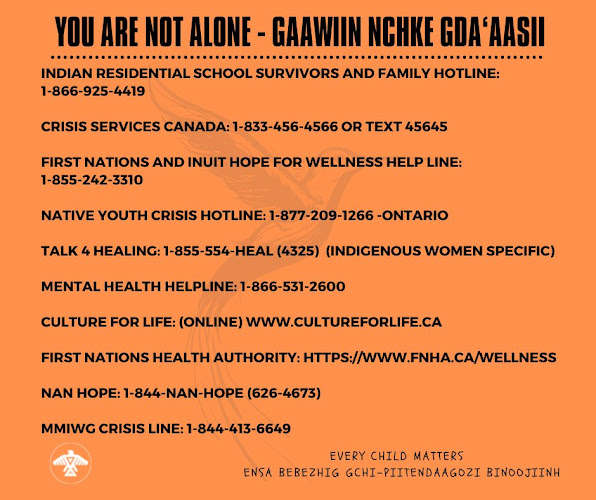
You are not alone

You are not alone

To Veronica Brown

Veronica, we adult adoptees are thinking of you today and every day. We will be here when you need us. Your journey in the adopted life has begun, nothing can revoke that now, the damage cannot be undone. Be courageous, you have what no adoptee before you has had; a strong group of adult adoptees who know your story, who are behind you and will always be so.

Diane Tells His Name


click photo

Lost Birds on Al Jazeera Fault Lines

Lost Birds on Al Jazeera Fault Lines
click to read and listen about Trace, Diane, Julie and Suzie

NO MORE STOLEN SISTERS

NO MORE STOLEN SISTERS
click image

ADOPTION TRUTH

As the single largest unregulated industry in the United States, adoption is viewed as a benevolent action that results in the formation of “forever families.”
The truth is that it is a very lucrative business with a known sales pitch. With profits last estimated at over $1.44 billion dollars a year, mothers who consider adoption for their babies need to be very aware that all of this promotion clouds the facts and only though independent research can they get an accurate account of what life might be like for both them and their child after signing the adoption paperwork.

Original Birth Certificate Map in the USA

Google Followers