They Took Us Away

They Took Us Away
click image to see more and read more

it's free

click

How to Use this Blog

BOOZHOO! We've amassed tons of information and important history on this blog since 2010. If you have a keyword, use the search box below. Also check out the reference section above. If you have a question or need help searching, use the contact form at the bottom of the blog.


We want you to use BOOKSHOP to buy books! (the editor will earn a small amount of money or commission. (we thank you) (that is our disclaimer statement)

This is a blog. It is not a peer-reviewed journal, not a sponsored publication... WE DO NOT HAVE ADS or earn MONEY from this website. The ideas, news and thoughts posted are sourced… or written by the editor or contributors.

EMAIL ME: tracelara@pm.me (outlook email is gone) THANK YOU CHI MEGWETCH!

SEARCH

Showing posts with label Yale. Show all posts

Tuesday, July 14, 2026

NAGPRA updates


Pinal Apache Child Returning Home to San Carlos After More Than 150 Years

July 13, 2026 - by News Director

SAN CARLOS — More than a century and a half after losing his life during military operations (uh, massacre) in the Pinal Mountains, a Pinal Apache child will finally return home to the San Carlos Apache Reservation.

The National Museum of Health and Medicine in Silver Spring, Maryland, has officially published a Notice of Inventory Completion in the Federal Register.  The notice, issued under the federal Native American Graves Protection and Repatriation Act (NAGPRA), clears the final legal pathway for the child’s remains to be returned to tribal leaders.

Historical Records Document Tragic Timeline

According to federal inventory records, the child — believed to have been under 12 years old — was killed in July 1870 in Arizona’s Pinal Mountains.  The death occurred during military operations involving scout units serving under U.S. Army Lieutenant H.B. Cushing of the 3rd Cavalry’s F Troop.

Historical documentation reveals that the child’s partial cranium was transferred to the Army Medical Museum in April 1872 by Acting Assistant Surgeon W.B. Dods via U.S. Army Surgeon C. McCormick. The remains were held in federal institutional collections for 154 years.

Path to Repatriation

Following formal consultations required under federal law, officials established a definitive cultural affiliation between the remains and the San Carlos Apache Tribe of the San Carlos Reservation.

The publication of the federal notice satisfies the statutory waiting period under NAGPRA, thereby legally permitting the physical transfer of the remains on or after Aug. 3, 2026.  The repatriation will allow the San Carlos Apache Tribe to reclaim the child and conduct traditional resting ceremonies according to tribal customs.

For Indigenous Nations across the country, the repatriation process represents a vital effort to restore dignity, heal multi-generational wounds, and honor ancestors whose graves and remains were historically disturbed.

https://gilaherald.com/pinal-apache-child-returning-home-to-san-carlos-after-more-than-150-years/

 **

Sen. Schatz Presses Harvard Over Delayed Return of Native Ancestors

The Peabody Museum of Archaeology and Ethnology was founded in 1866. U.S. Sen. Brian Schatz pressed Harvard this month to explain delays in returning Native ancestors and cultural items held by the University. | By Barbara A. Sheehan

By Shalini N. Ramchune, Crimson Staff Writer

June 24, 2026

United States Senator Brian Schatz (D-Hawaii) pressed Harvard earlier this month to explain why Native ancestors and cultural items remain in its possession, renewing calls for the University to speed up its repatriation efforts under a federal law requiring their return.

In a June 8 letter to Harvard President Alan M. Garber ’76, Schatz asked Harvard to provide updates on its compliance with the Native American Graves Protection and Repatriation Act, which requires federally funded museums and agencies to return Native American human remains, funerary objects, sacred objects, and objects of cultural patrimony to their descendants and affiliated tribes.

Harvard was one of 15 museums and universities that received letters from Schatz, the vice chair of the Senate Committee on Indian Affairs. The letters asked each institution to provide updates on its NAGPRA compliance and detail barriers to repatriation.

“It shouldn’t take this long to return Native remains to their communities,” Schatz said in a press release. “Indigenous people have waited long enough. It’s time for these museums and universities to stop the delays and finally do the right thing.”

In his letter to Harvard, Schatz asked Garber to account for the University’s progress on repatriation, including how many ancestors and cultural items have been returned and how many still remain in Harvard’s collections.

He also pressed Garber on whether Harvard had met its pledge to complete the “disposition of ancestors and their associated funerary belongings” by 2025, and asked the University to explain any new allegations of non-compliance since 2023.

Schatz’s letter also asked Harvard to provide an update on a Department of the Interior investigation into the Peabody Museum’s handling of the Woodbury Collection, which includes hair clippings from roughly 700 Native American children at U.S. Indian boarding schools in the 1930s.

He also asked when the University applies the “preponderance of the evidence’’ standard, a legal threshold used to decide whether a claim is more likely than not to be true. Under NAGPRA, the standard can affect disputes over which tribe or Native Hawaiian organization has the strongest claim to ancestors or cultural items.Bottom of Form

Schatz gave Garber 30 calendar days to respond. A Harvard spokesperson did not respond to a request for comment.

The letter marks Schatz’s latest effort to pressure Harvard and other institutions over what he has called slow compliance with NAGPRA.  In a 2024 speech on the Senate floor, Schatz said that more than 70 institutions still held nearly 58,000 Native ancestral remains. He also singled out Harvard as having the third-largest collection of Native ancestral remains and cultural items in the country.

“If you say you’re for equal justice, for doing right by the people of all backgrounds, then act like it,” Schatz said in the speech.

The other institutions that received letters from Schatz include the Ohio History Connection, Illinois State Museum, University of California, Berkeley, Indiana University, University of Tennessee, Knoxville, University of Kentucky, University of Alabama, University of Arizona, University of Florida, University of Missouri, University of Oklahoma, Center for American Archeology, University of Texas at Austin, and Milwaukee Public Museum.

In recent years, Harvard has taken steps to accelerate its repatriation work, including creating a department dedicated to NAGPRA at the Peabody and more than doubling its NAGPRA-dedicated staff.

But the Peabody failed to meet its 2022 pledge to complete the disposition of all ancestors and associated funerary belongings within three years.

As of Dec. 31, 2025, the Peabody had repatriated 5,464 ancestors and more than 20,000 funerary belongings, according to data on its website.  Still, 2,482 ancestors remained in active consultation with tribes, and another 2,161 were pending consultation — leaving 4,643 ancestors in the museum’s possession after the target deadline.

The Peabody has since extended its timeline by two years.  The museum’s NAGPRA dashboard has yet to be updated with June figures, though Harvard has previously said the dashboard would be updated twice a year, in June and December.

https://www.thecrimson.com/article/2026/6/24/schatz-presses-harvard-nagpra/ 


Every time I see stories about this, I am imaging diggers looting graves - for money, prestige, titles,  but they are still thieves.... Trace

Friday, April 8, 2022

Project engages federal Indian law to protect tribal self-determination

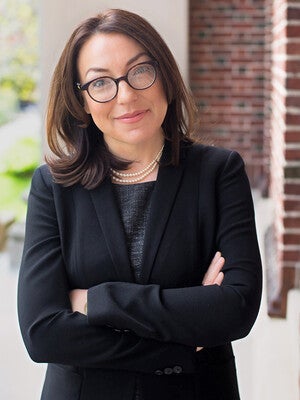
Maggie Blackhawk
Maggie Blackhawk

After the American Indian Sovereignty Project was established last summer, its leaders knew that they would be busy with scholarly engagements in contemporary issues in federal Indian law. But the group, a collaboration between Yale and New York University (NYU), had little idea how quickly they would become immersed in a series of immediate court challenges at the highest level.

In February, the project had one of its most visible moments to date when U.S. Supreme Court Associate Justice Stephen Breyer cited during oral arguments an amicus brief filed by the project’s team in the case Denezpi v. United States.

A joint initiative of Yale’s Faculty of Arts and Sciences (FAS) and the NYU School of Law, the Sovereignty Project brings together scholars, law students, graduate students, and a select number of undergraduates to study, research, and engage American Indian law and policy. The brief cited by Breyer is the second of three the project’s team has written for the high court, and the justice’s reference was an important recognition: It highlighted the impact their work can have in helping to elucidate federal Indian law and policy and in advocating more broadly for Native American tribal sovereignty, according to Ned Blackhawk (Te-Moak Tribe of Western Shoshone Indians of Nevada), the Howard R. Lamar Professor of History and of American Studies at Yale.

He and Maggie Blackhawk (Fond du Lac Band of Lake Superior Ojibwe), professor of law at New York University, co-founded the Sovereignty Project partly with the mission of providing support to Native tribes in legal cases involving Indian Country. The project, he said, also aims “to build an intellectual research community oriented around questions of American Indian legal concern as well as educational awareness about pressing contemporary tribal issues.”

In the six months since the Sovereignty Project was established, it has already been “flooded” with requests from the Tribal Supreme Court Project for assistance on federal court cases, according to Maggie Blackhawk.

KEEP READING


Monday, February 24, 2014

The Great Divider: How the Baby Veronica case is the sign


By Trace A. DeMeyer

OK, as promised, I have more thoughts after I went to the hallowed halls of Yale Law School last Friday to hear a review of the Baby Veronica Case - and to hear what NCAI, NARF and the Tribal Supreme Court Law Project at Yale were doing while this major case was going on... and I reported to you yesterday what they said essentially…

There weren't any surprises for me unless you count how these panelists didn't use the time to discuss the genocide that actually occurred prior the passing of the Indian Child Welfare Act of 1978 and the child abductions by social workers and missionaries - nor did they mention human trafficking and the Nightlight Adoption Agency dealings with Maldonado, the birthmother.  They did mention boarding schools.

So, I was truly upset. From what I heard, it appears American Indians are eons behind in civil rights and we can't seem to win a case in the Supreme Court.  I’d heard that warning years prior but this time at Yale was a bit more in my face. This case was about adoption by non-Indians, something I lived myself.

We had Justice Alito writing an opinion that Veronica is 1.2% Indian.  NARF attorney Joel West Williams asked the Yale audience, "Who in America is 1/16 or 3/256th anything?"  Yet we have a judge issuing his opinion by measuring an Indian for their Indian-ness which equates to measuring a child’s blood? This is still happening?

·        JUSTICE ALITO delivered the opinion of the Court:
This case is about a little girl (Baby Girl) who is classified as an Indian because she is 1.2% (3/256) Cherokee. Because Baby Girl is classified in this way, the South Carolina Supreme Court held that certain provisions of the federal Indian Child Welfare Act of 1978 required her to be taken, at the age of 27 months, from the only parents she had ever known and handed over to her biological father, who had attempted to relinquish his [**736] parental rights and who had no prior contact with the child. The provisions of the federal statute [*2557] at issue here do not demand this result.
·        Jun 25 2013: Judgment REVERSED and case REMANDED. Alito, J., delivered the opinion of the Court, in which Roberts, C. J., and Kennedy, Thomas, and Breyer, JJ., joined. Thomas, J., and Breyer, J., filed concurring opinions. Scalia, J., filed a dissenting opinion. Sotomayor, J., filed a dissenting opinion, in which Ginsburg and Kagan, JJ., joined, and in which Scalia, J., joined in part. Read more here
·         

I couldn’t sleep ... Dusten Brown never had a chance. He went to Iraq knowing the Capobiancos had his daughter but he had to serve a year and a JAG lawyer took his case.  The puzzle remains why Maldonado mysteriously breaks up with him and severs all communication. Was she punishing her high school sweetheart Dusten by selling his baby or was she manipulated by the adoption agency to take their money?

Then it hit me - keeping America ignorant of Indians, culture, actual history - this all works to take Indian children.  Judgment is easy.  Third World poverty (which we didn’t create) somehow equates to abuse of children.  Add their general ignorance of sovereignty and culture, what it means to be Cherokee or Lakota or Navajo or any tribe - and it means you can't win public opinion polls or cases before the Supreme Court? 

Ignorance about Indians? Exactly!

It's been going on since colonial contact. Please, let's not call them settlers anymore but invaders. America has always been the Great Divider, building its fences, writing its laws, counting on classism and racism to divide us. 

America wins every time when it perpetuates this ignorance of Indians.  Do Indians do a good job of educating others about culture, or what's important to us?  Not really. We're way behind in any civil rights movement.  We've had movies romanticizing us over 100 years and it's hard to kill those "savage" “redskin” stereotypes drilled into all our heads!  

What do Americans know about Indians? Nothing.  Practically zilch.

America's "taking care" of Indians only works to create HATE among Americans who view us as privileged in some way that they are not.  Like why do we even have a law that keeps nice white people from adopting Indian babies? Trust me, ICWA is under attack.

I do know that Indians are way ahead in surviving every broken treaty and then fighting each other over small scraps of power. Some tribes even subscribe to "blood quantum" as if they need to purge their citizen rolls of those who may be too white or too black.

We have Supreme Court Justices using the blood quantum argument and you see that is not entirely their fault (they all went to law school but didn’t even have a course on Indian Law at those Ivy League schools) but it tells me - do not go anywhere near them. They are not even aware of their ignorance.  Dusten Brown didn't have a chance, not in that court.

We Indians shouldn't go anywhere near that court or any court with that level of stupidity. No, you can't tell America they are stupid.

What the panel did say was each and every tribe needs to create and have their own child protection network. I agree since it's pretty evident that you can't trust any non-Indian social worker to go to the reservation and use their mother- father “family unit” example.  Only Indians can decide who the right people are to care for its children.  That person might be an auntie, grandmother or another relative, depending on who in the tribal family is willing and able.

And the panel said we need more American Indian lawyers who become judges - because the way it is now - Indians can’t win.

For many years Vine Deloria and others did try very hard to educate others (with their brilliant books) on the white man’s level, even earning degrees in white man’s colleges like Yale and Harvard, but it all comes down to this:  whites don’t really care.

And if we really think about it, this is a very dangerous situation to be in.


Footnote:  I attended white schools like most everyone else - Really nothing I learned was true or real about Indian culture or history. I learned more sitting at the kitchen table of my friend Ellowyn who is Oglala Lakota, who gave me an education about Indians not written about anywhere.  Then there was my one adoptive aunt (a first-born American) who calls me a liar when I told her there were Indian Boarding Schools, and this was right after I visited Haskell in Kansas. No, Americans are not learning about Indians or the truth of our history. 
The Baby Veronica case is the sign, whether we wish to see it that way or not - but we can no longer ignore the ignorance or the danger surrounding this case.

Sunday, February 23, 2014

#BabyVeronica case discussed at Yale, missing aspects of #HumanTrafficking


From left: Claire Chung, 3L, Supreme Court Advocacy Clinic, Yale Law School;  Joel West Williams, Staff Attorney, Native American Rights Fund; Jacqueline Pata, Executive Director, National Congress of American Indians. Introducing them is Sparky Abraham, 3L, Yale Law School (moderator). The lecture hall was filled to capacity with law students. (Photo by Trace A DeMeyer)

By Trace A. DeMeyer

I plan to write a longer piece on this discussion but essentially the panel said that the Capobiancos won this case in the media first which paved the way to their winning permanent custody of Veronica Brown in rulings handed down by the Supreme Court and the South Carolina Supreme Court.  Despite 17 total amicus briefs, written support by 393 tribes, 600 groups interested in this case including some adoption agencies, and 19 State's Attorney Generals in support of Dusten Brown keeping his own daughter, the Supreme Court did not and does not rule in favor of Indians.  American Indians don't win in public opinion polls either.  Tribes are actually discouraged from taking cases to the Supreme Court.  Out of nine Indian Law cases, only one won in the Roberts/Alito-controlled Supreme Court.

Asked if the Indian Child Welfare Act should be amended or made stronger - Jackie Pata said no.  Pata admitted that NCAI and NARF waited too long to respond in the media to the Baby Veronica media circus, though they tried to rally support for Dusten and met in weekly committees to discuss the case and did try their own media coverage. (Too little, too late.)  Pata said by the time the Dr. Phil show happened with the Capobiancos, Dusten Brown had a gag order placed on him and he was not able to respond or play the same media game as the Capobiancos did.  

In the Q&A, a man in the audience asked Cherokee citizen and attorney Joel West Williams of NARF, "If the Capobiancos could sue the Cherokee Nation for one million dollars, then why can't the Cherokee Nation sue the Nightlight Adoption Agency for their errors in notifying the Cherokee Nation (with Dusten's name misspelled and the wrong birthdate)? These details were not insignificant and actually started the nightmare for Dusten Brown and the Cherokee Nation along with the adoption agency's failure to abide by ICWA which is federal law.  Williams said he could not comment on any pending lawsuits. 

As I have written before on this blog, the Department of Justice needs to interview Christy Maldonado and investigate the Nightlight Adoption Agency for moving and selling children like Veronica across state lines which is in violation of the Interstate Compact. (Not once did this panel use the words HUMAN TRAFFICKING.)

The way the Capobianco's PR campaign was run by Jessica Munday and Trio Solutions who played this case in the media, capitalizing on Social Media with the Save Veronica Facebook page, filling mainstream newspaper opinion pieces with sympathy for the infertile Capobiancos in their late 30s, to demonizing Dusten Brown for text messages to his ex-fiance, then confusing the public and essentially attacking anyone who supported Dusten Brown retaining custody of his own daughter, this case was doomed from the beginning.


In June 2013, the Supreme Court decided Adoptive Couple v. Baby Girl, a widely publicized case involving the adoption of a Cherokee child by non-Natives over the objections of her Cherokee father. At the heart of the controversy was the Indian Child Welfare Act, a federal law designed to protect the best interests of Native children and promote the stability and security of Indian tribes and families. This panel will explore the history behind this landmark law, the current landscape of Indian child welfare, and the implications of the "Baby Veronica" decision for the future placement of Native children. Additionally, panelists will discuss how their organizations collaborated with both tribal and non-tribal stakeholders to develop legal, media, and other advocacy strategies for the case as part of the Tribal Supreme Court Project.


Radio Lab coverage was also mentioned by the panel: CLICK: Adoptive Couple v. Baby Girl May 30, 2013


Source materials on this case:

Adoptive Couple v. Baby Girl on the SCOTUS (Supreme Court of the United States) Blog

Official website for ICWA (the federal Indian Child Welfare Act)

FOOTNOTE: There is a clear and present danger that this will happen again - I say this because the American public (and Supreme Court) is clearly anti-Indian until a white couple wishes to purchase a newborn baby and the only ones available are from Indian reservations.  To be safe, NCAI, NICWA and NARF are obviously trying to educate on the Indian Child Welfare Act since the Baby Veronica case created such a nationwide stir.
Veronica will eventually know that her biological father loved her and fought for her even with the prevailing prejudice of our times. The bright spot for me is the fact that despite this adoption and litigation, Veronica is and will always be a citizen of the Cherokee Nation - no one can ever ever take that away from her. 
More on this discussion soon... Trace


Happy Visitors!

NEW WEB ADDRESS

Because we don't want to lose information on this blog, we now have a domain name: American Indian Adoptees.com - click and save this link:

2026: WE HAVE A BACK UP BLOG COMING SOON: www.americanindianadoptees.blog (on wordpress) We are no longer on Facebook. We deleted our accounts.

WRITTEN BY HUMANS!

WRITTEN BY HUMANS!

Blog Archive

Featured Post

Your History Class Was a F*cking Lie | #NOMOAR

  Your History Class Was a F*cking Lie by Sean Sherman (Or: How the American Educational System Has Always Been a Racist Propaganda Program...


Native Circles

Native Circles
click logo for podcasts!

Most READ Posts

Bookshop

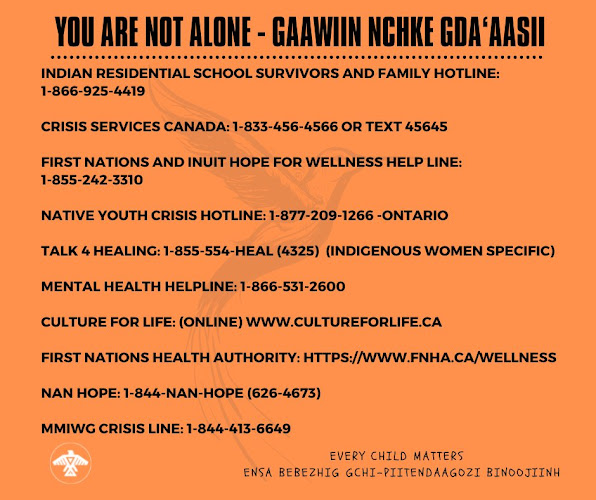
You are not alone

You are not alone

To Veronica Brown

Veronica, we adult adoptees are thinking of you today and every day. We will be here when you need us. Your journey in the adopted life has begun, nothing can revoke that now, the damage cannot be undone. Be courageous, you have what no adoptee before you has had; a strong group of adult adoptees who know your story, who are behind you and will always be so.

Diane Tells His Name


click photo

Lost Birds on Al Jazeera Fault Lines

Lost Birds on Al Jazeera Fault Lines
click to read and listen about Trace, Diane, Julie and Suzie

NO MORE STOLEN SISTERS

NO MORE STOLEN SISTERS
click image

ADOPTION TRUTH

As the single largest unregulated industry in the United States, adoption is viewed as a benevolent action that results in the formation of “forever families.”
The truth is that it is a very lucrative business with a known sales pitch. With profits last estimated at over $1.44 billion dollars a year, mothers who consider adoption for their babies need to be very aware that all of this promotion clouds the facts and only though independent research can they get an accurate account of what life might be like for both them and their child after signing the adoption paperwork.

Original Birth Certificate Map in the USA

Google Followers