They Took Us Away

They Took Us Away
click image to see more and read more

it's free

click

How to Use this Blog

BOOZHOO! We've amassed tons of information and important history on this blog since 2010. If you have a keyword, use the search box below. Also check out the reference section above. If you have a question or need help searching, use the contact form at the bottom of the blog.


We want you to use BOOKSHOP to buy books! (the editor will earn a small amount of money or commission. (we thank you) (that is our disclaimer statement)

This is a blog. It is not a peer-reviewed journal, not a sponsored publication... WE DO NOT HAVE ADS or earn MONEY from this website. The ideas, news and thoughts posted are sourced… or written by the editor or contributors.

EMAIL ME: tracelara@pm.me (outlook email is gone) THANK YOU CHI MEGWETCH!

SEARCH

Showing posts with label #BabyVeronica. Show all posts

Friday, April 17, 2026

This Day in History: April 16, 2013: Supreme Court hears ‘Baby Veronica’ custody case


This Day in History: April 16, 2013: Supreme Court hears ‘Baby Veronica’ custody case

Charleston-area custody fight centered on Indian Child Welfare Act and Cherokee father’s parental rights
APRIL 16, 2026 

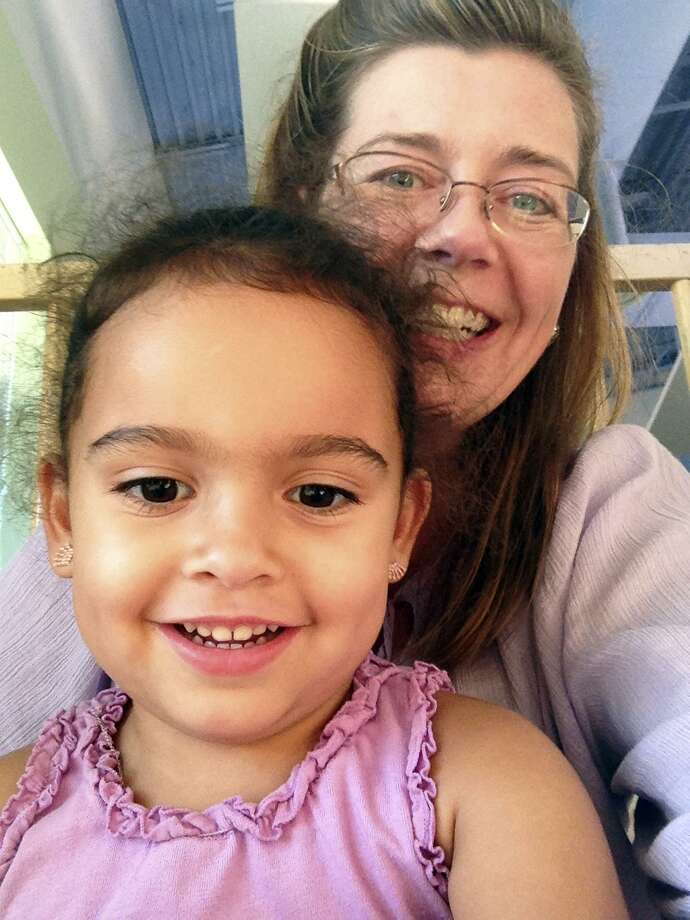
WASHINGTON (WCSC) — On this day in 2013, a Charleston-area custody fight landed before the United States Supreme Court in Washington, DC, as justices heard oral arguments in the “Baby Veronica” case.

After an hour and a half of emotional arguments, the justices took up the battle over a 3-year-old girl whose South Carolina adoptive parents were fighting her Cherokee biological father for custody under the Indian Child Welfare Act.

Supporters on both sides watched as lawyers argued three key questions: whether her biological father, Dusten Brown, counted as a “parent” under the ICWA, whether the law only applied when there was already an Indian family in place and whether parts of the law were constitutional at all.

Two months later, the Supreme Court ruled 5-4 that several core ICWA protections did not apply to a non-custodial Native American father when the child had never lived with him and sent the case back to South Carolina.  By that fall, after more legal wrangling in South Carolina and even Oklahoma, Baby Veronica was returned to her adoptive parents on James Island.

The case became one of the most closely watched custody and tribal rights cases in decades.

PLEASE USE THE SEARCH BAR ON THIS WEBSITE TO READ ABOUT THIS CASE... 

Monday, March 25, 2024

The Great Divider: How the Baby Veronica case was the sign

 REBLOG from February 24, 2014

By Trace Hentz

OK, as promised, I have more thoughts after I went to the hallowed halls of Yale Law School last Friday to hear a review of the Baby Veronica Case - and to hear what NCAI, NARF and the Tribal Supreme Court Law Project at Yale were doing while this major case was going on... and I reported to you yesterday what they said essentially…

There weren't any surprises for me unless you count how these panelists didn't use the time to discuss the genocide that actually occurred prior the passing of the Indian Child Welfare Act of 1978 and the child abductions by social workers and missionaries - nor did they mention human trafficking and the Nightlight Adoption Agency dealings with Maldonado, the birthmother.  They did mention boarding schools.

So, I was truly upset. From what I heard, it appears American Indians are eons behind in civil rights and we can't seem to win a case in the Supreme Court.  I’d heard that warning years prior but this time at Yale was a bit more in my face. This case was about adoption by non-Indians, something I lived myself.

We had Justice Alito writing an opinion that Veronica is 1.2% Indian.  NARF attorney Joel West Williams asked the Yale audience, "Who in America is 1/16 or 3/256th anything?"  Yet we have a judge issuing his opinion by measuring an Indian for their Indian-ness which equates to measuring a child’s blood? This is still happening?

·        JUSTICE ALITO delivered the opinion of the Court:
This case is about a little girl (Baby Girl) who is classified as an Indian because she is 1.2% (3/256) Cherokee. Because Baby Girl is classified in this way, the South Carolina Supreme Court held that certain provisions of the federal Indian Child Welfare Act of 1978 required her to be taken, at the age of 27 months, from the only parents she had ever known and handed over to her biological father, who had attempted to relinquish his [**736]parental rights and who had no prior contact with the child. The provisions of the federal statute [*2557] at issue here do not demand this result.


·        Jun 25 2013: Judgment REVERSED and case REMANDED. Alito, J., delivered the opinion of the Court, in which Roberts, C. J., and Kennedy, Thomas, and Breyer, JJ., joined. Thomas, J., and Breyer, J., filed concurring opinions. Scalia, J., filed a dissenting opinion. Sotomayor, J., filed a dissenting opinion, in which Ginsburg and Kagan, JJ., joined, and in which Scalia, J., joined in part. Read more here
·         

I couldn’t sleep ... Dusten Brown never had a chance. He went to Iraq knowing the Capobiancos had his daughter but he had to serve a year and a JAG lawyer took his case.  The puzzle remains why Maldonado mysteriously breaks up with him and severs all communication. Was she punishing her high school sweetheart Dusten by selling his baby or was she manipulated by the adoption agency to take their money?

Then it hit me - keeping America ignorant of Indians, culture, actual history - this all works to take Indian children.  Judgment is easy.  Third World poverty (which we didn’t create) somehow equates to abuse of children.  Add their general ignorance of sovereignty and culture, what it means to be Cherokee or Lakota or Navajo or any tribe - and it means you can't win public opinion polls or cases before the Supreme Court? 

Ignorance about Indians? Exactly!

It's been going on since colonial contact.  Please, let's not call them settlers anymore but invaders.  America has always been the Great Divider, building its fences, writing its laws, counting on classism and racism to divide us. 

America wins every time when it perpetuates this ignorance of Indians.  Do Indians do a good job of educating others about culture, or what's important to us?  Not really.  We're way behind in any civil rights movement.  We've had movies romanticizing us over 100 years and it's hard to kill those "savage" “redskin” stereotypes drilled into all our heads!  

What do Americans know about Indians? Nothing.  Practically zilch.

America's "taking care" of Indians only works to create HATE among Americans who view us as privileged in some way that they are not.  Like why do we even have a law that keeps nice white people from adopting Indian babies?  Trust me, ICWA is under attack.

I do know that Indians are way ahead in surviving every broken treaty and then fighting each other over small scraps of power.  Some tribes even subscribe to "blood quantum" as if they need to purge their citizen rolls of those who may be too white or too black.

We have Supreme Court Justices using the blood quantum argument and you see that is not entirely their fault (they all went to law school but didn’t even have a course on Indian Law at those Ivy League schools) but it tells me - do not go anywhere near them.  They are not even aware of their ignorance.  Dusten Brown didn't have a chance, not in that court.

We Indians shouldn't go anywhere near that court or any court with that level of stupidity.  No, you can't tell Americans they are stupid.

What the panel did say was each and every tribe needs to create and have their own child protection network. I agree since it's pretty evident that you can't trust any non-Indian social worker to go to the reservation and use their mother- father “family unit” example.  Only Indians can decide who the right people are to care for its children.  That person might be an auntie, grandmother or another relative, depending on who in the tribal family is willing and able.

And the panel said we need more American Indian lawyers who become judges - because the way it is now - Indians can’t win.

For many years Vine Deloria and others did try very hard to educate others (with their brilliant books) on the white man’s level, even earning degrees in white man’s colleges like Yale and Harvard, but it all comes down to this:  whites don’t really care.

And if we really think about it, this is a very dangerous situation to be in.


Footnote:  I attended white schools like most everyone else - Really nothing I learned was true or real about Indian culture or history. I learned more sitting at the kitchen table of my friend Ellowyn who is Oglala Lakota, who gave me an education about Indians not written about anywhere.  Then there was my one adoptive aunt (a first-born American) who calls me a liar when I told her there were Indian Boarding Schools, and this was right after I visited Haskell in Kansas.  No, Americans are not learning about Indians or the truth of our history. 
The Baby Veronica case is the sign, whether we wish to see it that way or not - but we can no longer ignore the ignorance or the danger surrounding this case. 
 
THIS BLOG HAS MANY POSTS ABOUT THE BABY V CASE... Yes, she was adopted out...
 
BLOODISM? READ THIS

Saturday, January 9, 2021

Adoptive Couple v. Baby Girl #BabyVeronica


Baby V (Cherokee)

Fletcher and Fort’s Rewritten Opinion in Adoptive Couple v. Baby Girl

Fletcher and Fort posted “Intimate Choice and Autonomy: Adoptive Couple v. Baby Girl,” forthcoming in CRITICAL RACE JUDGMENTS (Cambridge Univ. Press, eds. Bennett Capers, Devon Carbado, Robin A. Lenhart, and Angela Onwuachi-Willig) (forthcoming 2021).

As if there was any doubt, we have reached the opposite outcome as the Supreme Court did back in 2013. A few excerpts:

This case is about a little girl (Baby Girl) who is a citizen of the Cherokee Nation, like her father, grandparents, and a multitude of generations before her. American Indian tribal citizenship with a federally recognized tribe is a unique concept in American law. E.g., Santa Clara Pueblo v. Martinez, 436 U.S. 49, 55 (1978) (“[Indian tribes] have power to make their own substantive law in internal matters. . . .”). Tribal citizens are beneficiaries of the federal government’s trust relationship with Indian tribes, and the federal government has promised to tribal citizens for centuries to assist in the maintenance of tribal governments, cultures, and sovereignty. Worcester v. Georgia, 31 U.S. 515, 556 (1831) (“[The Cherokee treaty], thus explicitly recognizing the national character of the Cherokees, and their right of self government; thus guarantying their lands; assuming the duty of protection, and of course pledging the faith of the United States for that protection; has been frequently renewed, and is now in full force.”).

And:

The ethically dubious acts of the Petitioners in this case extends to this Court’s amici. Several amici invoked the racist dog whistle of referring to the Petitioners as the “only family” Baby Girl has ever known. E.g., Brief for Guardian Ad Litem, as Representative of Respondent Baby Girl, Supporting Reversal at 56 (“Indeed, it is hard to imagine what liberty interest is more important to a 27-month old child than maintaining the only family bonds she has ever known, absent a strong showing of necessity.”) (emphasis added); Brief of Amica Curiae Birth Mother in Support of Petitioners at 3 (“The decision below effectively negated Birth Mother’s decision to place Baby Girl with Adoptive Couple, and ripped Baby Girl from the only family she has ever known, in derogation of both Birth Mother’s and Baby Girl’s rights and expectations under state law.”) (emphasis added); Brief of Amici Curiae Bonnie and Shannon Hofer; Roger, Loreal, and Sierra Lauderbaugh; and Craig and Esther Adams in Support of Petitioners at 38 (“[T]he lower court took non-Indian Petitioners’ adopted Indian daughter from them – destroying the only family she has ever known.”) (emphasis added); Brief of Amici Curiae National Council for Adoption in Support of Petitioners at 13-14 (“ICWA is implemented in some cases to traumatize children by forcing them into completely unknown environments, traumatizing them by removal from the only family they’d ever felt a connection with and imposing the developmental delays that come with the traumatic removal from a secure attachment.”) (emphasis added).[1] It appears that for some of our amici, the “only family” that matters is the non-Indian Petitioners’ family. For these amici, the Indian family and other biological relatives are strangers and foreigners. The only pain and shame of removal and separation that matters is that of the non-Indian family. It is apparent the “only family” dog whistle is designed to distract our attention from the ever-present bias against Indian parents and relatives in the child welfare and adoption system. This we will not accept. As noted above, this Court long has been complicit in dehumanizing Indian people. In Professor Harris’ words, “[C]ourts established whiteness as a prerequisite to the exercise of enforceable property rights.” Harris, supra, at 1724. No longer. We additionally suspect that this form of advocacy implicates American Bar Association Rules of Professional Conduct 3.4 (Fairness to Opposing Party and Counsel), 3.5 (Impartiality & Decorum of the Tribunal), 4.4 (Respect for Rights of Third Persons), and 8.4 (Misconduct).


[1] One commentator even referred to the Cherokee family here, who descend from an Indigenous nation that has been present in this hemisphere since time immemorial, as “foreign.” Thomas Sowell, Indian Child Welfare Act does not protect kids, Denton Record-Chronicle, Feb. 1, 2018, at 6A (“This little girl is just the latest in a long line of Indian children who have been ripped out of the only family they have ever known and given to someone who is a stranger to them, often living on an Indian reservation that is foreign to them.”) (emphasis added).

**

Use the search word Baby Veronica to find our coverage and opinion on this blog...

Saturday, November 30, 2019

We are more than adoptees

Mary Youngblood
Brule, Paul Laroche
Star Nayea

Eric Schweig

Paul DeMain
Chris Eyre 
Baby Veronica
Famous Lost Birds/Adoptees

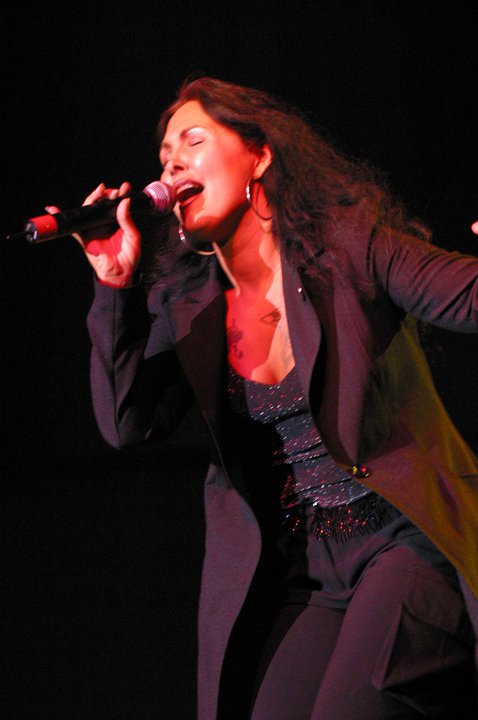
Star Nayea, raised in Detroit, Michigan, has often been described as the “little lady with a big voice,” who launched her career in Austin, Texas, then moved to New York City. In New York, several years ago, Star fully developed her unique contemporary edge of bluesy rock with hints of folk and traditional Native American vocals. Star, possibly Ojibwe-Potowatomi, adopted by a white family as an infant, is seeking her own birth family. Star currently lives with her son in Seattle.
Brulé, aka Paul LaRoche, has a unique story to tell. Along with the amazing music, theatrics, and traditional dance troupe, Paul tells the story of how he came to realize his Native American heritage after nearly 38 years of separation from his biological family, who resides on the Lower Brule Sioux Indian Reservation in central South Dakota. Paul, adopted at birth off the reservation, discovered his Lakota heritage in 1993 after the death of both adoptive parents. He was reunited on Thanksgiving Day 1993 with a brother, sister, aunts, uncles, nieces and nephews. The discovery of his true heritage has greatly affected Paul’s life and those around him.
Chris Eyre was born in 1969 on the Warm Spring reservation in Oregon. He grew up in Klamath Falls, Oregon, adopted by a non-Native family. “I’m Cheyenne and Arapahoe. I went to school in Portland, Oregon. I pursued an associate’s degree in television, in directing; I earned my bachelor’s degree in media arts at the University of Arizona, and my master’s at New York University in filmmaking.” Chris Eyre attempts to display portraits of contemporary Native Americans as individuals who are plagued by problems common to all people, but who react within the confines of their own particular circumstances. He founded Riverhead Entertainment, a production company that for several years produced commercials, films, and documentaries.
Paul DeMain is a member of the Oneida (Wisconsin) and Ojibwe tribes, and was raised by a non-Native family in Wausau, Wisconsin. “I grew up with some compassionate liberals who never tried to hide my identity and encouraged me to inquire about it,” DeMain says. In the early 1970s, he made contact with the Oneida tribe, where he is enrolled. He has met his biological family. In 1986 he launched News from Indian Country, an independent newspaper that covers tribal politics, legal issues in Native and US courts, reservation crime, education and Indian art, with a circulation of 7,000 readers worldwide.
Eric Schweig was born to an Inuit mother and a Chippewa-Dene father in Inuvik, the Northwest Territories. At six months, he was adopted by a German-Canadian family. During his childhood in Inuvik, Bermuda and Toronto, he was systematically and physically abused by his adoptive parents then he ran away from home when he was 16, and became a laborer on construction sites. In 1987 he was “discovered” while walking down a Toronto street and cast in the movie The Shaman's Source. At least 16 films followed, most notably as Uncas in The Last of the Mohicans. During this time period he endured a “roller coaster of alcohol, drugs, violence, failed relationships, despair and confusion” [Schweig said] due to the abuse and racism and ethnic identity deprivation of his childhood. In 1996 he began to regain his cultural identity and is now primarily a carver, especially Inuit spirit masks, living on Vancouver Island, and he continues to act in films. He is a passionate opponent of the adoption of Aboriginal Native People by Europeans. Eric’s Adoption Speech: http://www.mohicanpress.com/mo05005.html
Mary Youngblood, Chugach Aleut/Seminole, is a Grammy award winning flutist, who was adopted and raised by a non-Native couple. Mary opened her adoption at age 26.

We are survivors!
We are actors, musicians, directors, athletes, comedians and so much more


Thursday, June 20, 2019

Follow up NY Times Article on ICWA

Follow up NY Times Article on ICWA

Here.
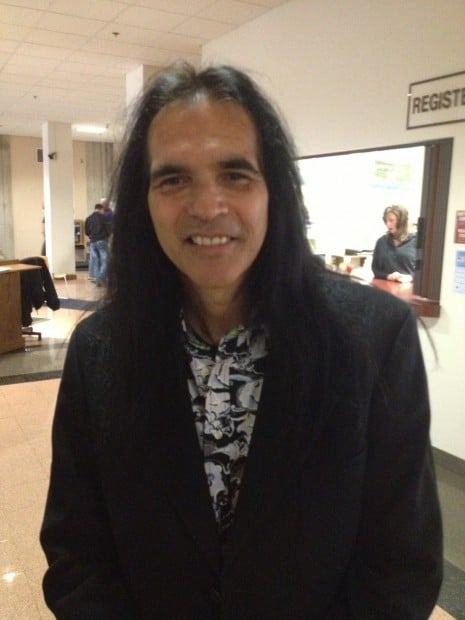
“I think it means a lot to our foster kids that we’re Cherokee,” said Carney Duncan, a gentle, soft-spoken man whose hair falls below his shoulders. “My mom and dad always helped people and took them in. I have an ‘Uncle Joe’ who is no kin but we took him in. And a ‘brother’ who lived with us who is no blood kin. We help our own. It’s a Cherokee value.”

Given the daily racism that Native people endure, Schon said, he thought it was important for Native children to grow up in Native families, to ground themselves.

Monday, June 17, 2019

Intercept Article on ICWA and the Brackeen Case #ProudtoProtectICWA

Veronica Brown protest
“Babies don’t get born and run down to the citizenship office and file a petition,” said Matthew Fletcher, director of the Indigenous Law and Policy Center at Michigan State University. When his own child was born, he and his partner took a year to register him as a tribal member, in part because he was eligible for more than one tribal nation. “To say that somehow this kid hasn’t been enrolled yet and therefore doesn’t have a political relationship is really quite disingenuous.”

***

Reflecting on the rhetoric used by ICWA opponents like Sandefur, Nicole Adams, a spokesperson for Partnership for Native Children, pointed to the institutions that pushed for the use of boarding schools and adoption for decades before ICWA’s passage. “They were led by very well-intentioned Christian coalitions purporting that Indian children needed to be saved, and they were just the ones to do it. If you look at the rhetoric being put out by some of ICWA’s most staunch opponents, it is eerily and frighteningly similar.”

Intercept Article on ICWA and the Brackeen Case

by Kate Fort

Monday, May 6, 2019

OP-ED: Preserve the Indian Child Welfare Act


Preserve the Indian Child Welfare Act

Published


Navigating the U.S. child welfare process can be a highly emotional venture. As a judge who works in child welfare I know this better than most. Our end goal will always be to protect children’s best interests and ensure they have the love and support of a family so they flourish as they grow to adulthood. But the process of trying to protect children can be as painful and difficult as it is rewarding.
Because child welfare cases are so complex, a number of laws and legal practices are specifically designed to ensure the best outcomes. Perhaps one of the most highly regarded among these laws has been the Indian Child Welfare Act, or ICWA, which at its core helps keep Native American children within their families, communities and heritage.

KEEP READING 

Take it from someone who sees the benefits of ICWA in her own court. Or take it from the Native American tribes, the people most invested in the well-being of their own children. Or take it from the history books. ICWA supports the best interests of children and our Native American communities, and losing this law would set our country back decades.

Darlene Byrne has served as presiding judge of the 126th Judicial District Court in Travis County since January 2001. She is a commissioner on the Texas Children’s Commission, a past president of the National Council for Juvenile and Family Court Judges, and a past Judge of the Year of National CASA, Texas CASA and CASA of Travis County.

Tuesday, October 9, 2018

Pivotal moment in Indian Country | Attack on #ICWA


Photo Courtesy National Indian Child Welfare Association

Published October 9, 2018
PORTLAND, Ore. —  On Monday, October 8,  2018 the National Indian Child Welfare Association, National Congress of American Indians, Association on American Indian Affairs and Native American Rights Fund released the following joint statement on last week Thursday's ruling by a federal district judge in northern Texas striking down the 40-year-old Indian Child Welfare Act.
Read the statement:
In a decision published by the United States District Court for the Northern District of Texas, the Indian Child Welfare Act (ICWA) was declared unconstitutional, jeopardizing the landmark legislation protecting tribal children.
This egregious decision ignores the direct federal government-to-government relationship and decades upon decades of precedent that have upheld tribal sovereignty and the rights of Indian children and families. Through 40 years of implementation, ICWA’s goal is to promote family stability and integrity. It continues to be the gold standard in child welfare policy.
While this disturbing ruling is a pivotal moment for Indian Country, we vehemently reject any opinion that separates Native children from their families and will continue to fight to uphold ICWA and tribal sovereignty.

National American Indian Organization Release Statement on Indian Child Welfare Act Case

by Native News Online Staff

Monday, October 8, 2018

Partnership for Native Children Decries Anti-ICWA Decision

Calls judge’s ruling ‘an outlier, out of step with the law and constitutional jurisprudence’
The Partnership for Native Children strongly disagrees with and is disturbed by Judge O’Connor’s decision in Brackeen v. Zinke which has stricken down the Indian Child Welfare Act (ICWA) four decades after it was enacted. This is the first decision of its kind, and is an outlier—out of step with the law and decades of constitutional jurisprudence.
With the support and guidance of a longstanding coalition of anti-ICWA activists, the plantiffs in Brackeen want to remove ICWA’s provisions that protect against removing Native children from their parents and culture, leaving unfettered access to Native children. Not content with that outcome, they wish to undermine the U.S. Constitution and centuries of established law by eradicating tribes’ Constitutionally-protected relationship with the United States government.
Although this decision is limited in application, it serves as a roadmap for other ICWA litigation intending to overturn ICWA and we should expect future litigation seeking to undermine tribal sovereignty and federal Indian law writ large.
Emboldened by the Adoptive Couple v. Baby Girl decision in 2013, these anti-ICWA forces—led by the adoption industry, religious coalitions, and a conservative think tank—have spent years bringing forth suit after suit in courts throughout the country, sometimes even using identical briefs in different forums, all in the attempt to have ICWA declared unconstitutional. After losing each case, due in part to their outrageous contention that ICWA is a race-based law (it is not), they have finally found a judge in the United States District Court for the Northern District of Texas sympathetic to their arguments.
While they choose to ignore thousands of testimonials from Native families who assert that those who will be most hurt by this decisions are our most sacred and vulnerable children, the Partnership for Native Children stands with Indian Country and affirms that we will continue to fight for them. We support legal efforts to appeal this unprecedented decision. We will work tirelessly to demand the media cover these issues thoroughly and responsibly. And we will work closely with those children, families, and tribes who want their perspectives finally included in the national dialogue about the best interests of our children. Their voices have been ignored for far too long.
The Partnership for Native Children refuses to go back to those the days where tribal children were removed simply because of cultural misunderstandings, for financial gain, and due to pure prejudice. We also refuse to let extremist groups use our children as a tool to undermine the foundations of Indian law and tribal sovereignty.
The Partnership for Native Children remains unwavering in our commitment to defend the constitutionality of ICWA by all available means and will continue to work in support of tribes and Native people throughout the country to ensure that Native children, families, and tribes are protected.
Here is our press release.
source:

Partnership for Native Children PR on Texas ICWA Case

by Matthew L.M. Fletcher

Wednesday, August 29, 2018

How much I changed (Part 1) #BABYVERONICA

REBLOG (worth a read)


By Trace DeMeyer (now Trace Lara Hentz) (I'm legally dropping my adoptee name in 2014)

I started this blog in 2009! How little I knew then. I tried to write a regular post about the subject of adoption, my own experience of search and reunion, my learning curve, what I hate about the billion dollar adoption industry, and the history I was finding about the Indian Adoption Projects and the Indian Child Welfare Act (ICWA), all of it. I looked at books, academic papers, everything I could find.

First I had to learn Google Blogger then I did as the marketers suggest: use social media and share your blog posts on Facebook and Twitter to get new readers. (Thank you all for reading and adding me to your networks!)

I met many adoptees after my memoir One Small Sacrifice came out. These Native American adoptees needed to tell their stories which lead to the first anthology TWO WORLDS.

Then along came a little girl named Veronica. I was utterly changed. To think a mother would (and did) adopt out her infant (when the baby had a young Cherokee dad who was not notified), I really thought this was an odd phenomena. This was not something that happens now. It's not the 50s, 60s or early 70s! We have the Indian Child Welfare Act, even it was passed in 1978. This was not supposed to happen!

What would make a mother do this? Money was all I could think or possibly revenge. (Even if this was a supposedly open adoption, Veronica's Cherokee dad wasn't in the picture and she was not adoptable since that is a violation of federal law!)

Veronica is a Cherokee child. We see how Veronica was ensnared in the racketeering industry called adoption.  Veronica was sold! We really don't know how the Nightlight Adoption Agency circumvented ICWA but they did. Veronica was moved across state lines and the tribe was not notified correctly. All this smelled rotten to me.

I know about the Supreme Court case and I know that Indians don't win cases but come on! This is a child who is not with her tribe or her own family because her non-Indian mother adopted her out? How does this happen in this century when there is a federal law that was enacted to prevent this?

Well, this case was my wake up call. And there are other cases where evidently ICWA is not being adhered to, even if it is federal law. WHY? Indians can live anywhere and do. You can find a Lakota or Inuit in Los Angeles or Miami or Dallas.  We have judges and social workers in cities everywhere asking how can this be? If the mother (or father) is Lakota or Inuit, shouldn't they be in South Dakota or Alaska? NO!

These authority figures learned as little as I did about Indians in school. If they know so little, they shouldn't even be allowed to handle a case with an Indian child. If they haven't been to an Indian reservation, they should recuse themselves from any case involving an Indian family.

What they don't know is dangerous. This is how children will slip through like Veronica did. And that is not supposed to happen with ICWA.

Indians are still living here in the USA! 

(continued) Eight part series is posted under HOW I CHANGED (part 4 was deleted)
How much I changed (Part 2) #IndianProblem


Wednesday, October 26, 2016

#BabyV Case analysis: A tension as old as the country


Legal scholars put focus on Native American rights

Teaching & Learning
Prof. Kristen Carpenter, the Oneida Indian Nation Visiting Professor of Law talks about the state of American Indian Law in light of the conference on indigenous rights in her Griswold Hall Office at the Harvard Law School.
Credit: Kris Snibbe/Harvard Staff PhotographerKristen Carpenter, the Oneida Indian Nation Visiting Professor of Law talks about the state of American Indian Law in light of the conference on indigenous rights.
Native Americans currently represent 1 percent of the U.S. population, but thousands of years ago they were the indigenous inhabitants of the territory known to some of them as Turtle Island and eventually to others as North America. Today, there are 567 federally recognized tribes. The largest are the Navajo Nation and Cherokee Nation.
Harvard Law School, the Harvard University Native American Program, and the Harvard Native American Law Students Association held a a two-day conference in October to examine relations between Native Americans and state and federal governments. Keynote speakers included University of Colorado Law School Dean S. James Anaya, Quinault Indian Nation President Fawn Sharp, and U.S. Ambassador to the United Nations Keith Harper.
The Harvard Gazette interviewed Kristen Carpenter ’98, Oneida Indian Nation Visiting Professor of Law at HLS, Council Tree Professor at University of Colorado Law School, and one of the event organizers, on the history of American Indian law, the friction between federal and tribal laws, and the rise of the indigenous rights movement in the United States.  

GAZETTE: Can you describe the state of Native American rights in the United States?

CARPENTER: It is mixed. On the one hand, American Indian tribes are powerful, resilient communities, deeply steeped in tribal culture and ways of life, and continuing to live in their homelands and territories to this very day. As a matter of law, tribes have well-grounded and longstanding rights commemorated in treaties made originally with European nations and then with the United States. They also have rights that are established in the U.S. Constitution and in federal statutory law, which have long been recognized by the courts. In recent years, however, there has been somewhat of a retrenchment in federal courts, and especially in the Supreme Court, with respect to the recognition of tribal jurisdiction and tribal statutory rights that were enacted to remedy some of the past dispossessions American Indians endured.

GAZETTE: What are the main grievances of Native Americans toward the U.S. courts?

CARPENTER: My sense is that tribal governments are quite often seeking dignity and respect in the courts. Indian tribes were here before Europeans and others who came to what is now called North America. Tribal governments engaged in treaty-making with Europeans going back to the 1600s. Tribal rights to exercise their own laws over their territories and their members are traceable to treaties. One question in federal Indian law is often how to understand and implement those historic arrangements today. This is a question not unlike that faced in U.S. constitutional law, where a venerable document also presents questions of contemporary interpretation. Secondly, while federal Indian law clearly recognizes tribal self-government, various parties challenge the jurisdiction of the tribal courts and regulatory system. This sounds technical but what it really means is which government and whose values are able to regulate people’s lives, lands, and resources on a day-to-day basis. The foundational rules of federal Indian law provide that tribes generally retain jurisdiction within reservation boundaries, and especially over tribal citizens, and that states have authority off the reservation. That’s oversimplifying the situation and there are a lot of situations where things are a little bit messier in reality.

GAZETTE: A few years ago, there was a messy case that highlighted the strain between federal and tribal laws. A Cherokee girl was given back to her adoptive parents after the Supreme Court ruled that the Indian Child Welfare Act didn’t apply. Could you explain what happened?

CARPENTER: Yes, this was the case of Adoptive Couple v. Baby Girl, decided by the Supreme Court in 2013. To explain it, I have to share some history. The Indian Child Welfare Act of 1978 was enacted to address the historic removal of Indian children from their parents for purposes of their religious and social “assimilation.” In various iterations, dating back to 1850, assimilation was a federal policy implemented in part by religious organizations, state child welfare workers, and private adoption agencies. One of the views animating these practices was that Indian children would be “better off” with white families. By the 1970s, one in four Indian children was being raised away from their families. Congress noted the “wholesale separation” of Indian children from their families had devastating consequences for the children, who suffered high rates of psychological and physical trauma, as well as the parents, siblings, and tribes who lost their children, and passed ICWA to address this situations. Under ICWA, Indian parents and tribes must receive notice of custody proceedings involving their children, tribal courts have jurisdiction in some cases, and there is a set of foster care and adoptive placement preferences prioritizing the extended family and tribe.
In the Adoptive Couple case, a Cherokee baby was put up for adoption by her non-Indian mother in a set of events that did not comply with ICWA, such that the father — who was an active-duty serviceman — was served with notice of the impending adoption four months after his daughter’s birth and days before his deployment. When he returned from Iraq almost two years later, the father was able to appeal the case and the South Carolina Supreme Court ruled that ICWA had been violated, granting him custody. The little girl then lived with her father, siblings, and grandparents and Indian community for two years. But the Supreme Court ruled ICWA didn’t apply because, according to Justice Samuel Alito, the statute required a parent show “continuing custody” to be eligible for ICWA’s protections. The little girl was then relocated back to South Carolina with the adoptive couple.

GAZETTE: What’s your opinion about the outcome of the case?

CARPENTER: In my view, the case was wrongly decided. ICWA is supposed to protect Indian families and remedy the legacy of federal policies that disrupted Indian family custody. The Supreme Court, completely missing Congress’ intent, created a new and narrow reading of the statute to deny a fully capable, fit, and loving Indian father the opportunity to bring up his daughter. Many in the Indian child welfare community are working in domestic and international venues for reform that will prevent this kind of outcome in the future.

GAZETTE: So the question is what’s the importance of Indian laws in U.S. jurisprudence?

CARPENTER: Indian tribes pose a lot of hard questions for the U.S. legal system. They’re governments and communities that predate the United States, but through conquest and colonization, they came to be dispossessed of many rights, whether it’s land, jurisdiction, culture, or family. Yet, those tribes still remain 500 years later through the resilience and determination of their people as well as the strength and beauty of their culture. Today Indian law tests the capacity of the U.S. legal system to acknowledge and respect the pre-existing rights of Indian tribes and to account for those interests and norms of legal pluralism in a democratic system that is more comfortable with individual rights. Those are real challenges. In my view, the answer lies in the framework established by treaties and the Constitution, specifically to respect the sovereignty and jurisdiction of tribes, for the United States to negotiate with Indian tribes on a government-to-government basis, and for cooperative approaches among all three sovereigns to address the problems contemporarily facing us.

GAZETTE: Can you tell us whether those principles are being used in the Dakota Access Pipeline situation, the most recent case of friction between the federal government and tribal communities?

CARPENTER: The Standing Rock Sioux tribe opposes the construction of the Dakota Access Pipeline less than half a mile from its reservation. The pipeline is slated to travel under the Missouri River, the tribe’s main source of drinking water, right through some of their sacred sites. So when the Standing Rock people claim that their very way of life is threatened now by the pipeline, I think they mean it quite literally. These lands and waters were originally protected by the tribe’s own laws, and later by the Treaty of Fort Laramie of 1851, which the U.S. later violated, such that the contested lands are now owned by the United States, managed by the Army Corps of Engineers. Various statutes require federal agencies to “consult” with tribal nations about federal undertakings that would affect their resources. The Standing Rock Sioux and other tribes affected by the pipeline are litigating those rights in the federal courts right now. In recognition of the spirit of those laws, the Obama administration, through the Departments of Justice, Interior, and the Army, has called for a halt to construction in order more fully to consult with the affected tribes.

GAZETTE: What can the United States learn from other countries with indigenous populations?

CARPENTER: Currently in the United States, tribes’ aboriginal title, meaning the land they have occupied since time immemorial, is not recognized as “property” pursuant to the Fifth Amendment. The Inter-American Commission of Human Rights has held, in a case involving the Western Shoshone people, the rule of law in the U.S. thus violates basic norms of property, equality, and non-discrimination. In cases involving Nicaragua, Ecuador, Belize, Suriname, and others, the Inter-American Court on Human Rights has recognized that property rights grow out of indigenous peoples’ land tenure. Some of these countries have, in turn, reformed their national laws to recognize tribes’ customary land tenure as a source of property rights and begin the process of demarcating and titling those rights. While those reform efforts are not without difficulty, I’d like to see the United States also recognize Indian tribes’ aboriginal lands as being eligible for the full set of property rights protections.


Happy Visitors!

WRITTEN BY HUMANS!

WRITTEN BY HUMANS!

Blog Archive

Featured Post

Your History Class Was a F*cking Lie | #NOMOAR

  Your History Class Was a F*cking Lie by Sean Sherman (Or: How the American Educational System Has Always Been a Racist Propaganda Program...


Native Circles

Native Circles
click logo for podcasts!

Most READ Posts

Bookshop

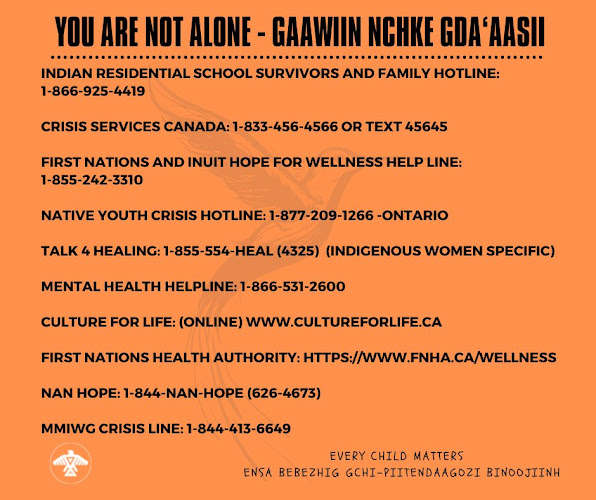
You are not alone

You are not alone

To Veronica Brown

Veronica, we adult adoptees are thinking of you today and every day. We will be here when you need us. Your journey in the adopted life has begun, nothing can revoke that now, the damage cannot be undone. Be courageous, you have what no adoptee before you has had; a strong group of adult adoptees who know your story, who are behind you and will always be so.

Diane Tells His Name


click photo

Lost Birds on Al Jazeera Fault Lines

Lost Birds on Al Jazeera Fault Lines
click to read and listen about Trace, Diane, Julie and Suzie

NO MORE STOLEN SISTERS

NO MORE STOLEN SISTERS
click image

ADOPTION TRUTH

As the single largest unregulated industry in the United States, adoption is viewed as a benevolent action that results in the formation of “forever families.”
The truth is that it is a very lucrative business with a known sales pitch. With profits last estimated at over $1.44 billion dollars a year, mothers who consider adoption for their babies need to be very aware that all of this promotion clouds the facts and only though independent research can they get an accurate account of what life might be like for both them and their child after signing the adoption paperwork.

Original Birth Certificate Map in the USA

Google Followers