BOOZHOO! We've amassed tons of information and important history on this blog since 2010. If you have a keyword, use the search box below. Also check out the reference section above. If you have a question or need help searching, use the contact form at the bottom of the blog.
We want you to use BOOKSHOP to buy books! (the editor will earn a small amount of money or commission. (we thank you) (that is our disclaimer statement)
This is a blog. It is not a peer-reviewed journal, not a sponsored publication... WE DO NOT HAVE ADS or earn MONEY from this website. The ideas, news and thoughts posted are sourced… or written by the editor or contributors.
EMAIL ME: tracelara@pm.me (outlook email is gone)
THANK YOU CHI MEGWETCH!
Manitoba Premier Wab Kinew (Ojibways of Onigaming First Nation) said Canada has leverage in the talks even
as his province weighs restoring U.S. alcohol sales at Prime Minister
Mark Carney’s urging to help secure a deal that would avert threatened 50% U.S. tariffs.
“Everybody
knows the American president by now, he’s erratic, he’s irresponsible,
and he’s not to be trusted. And this is the person that we were supposed
to make a deal with, and we’re going to make additional concessions for
it. That’s why I say you can’t make a good deal with a bad person,
because who’s to say it’s not going to be undone?” Kinew said.
Canadian siblings reunite with long-lost sister taken in the Sixties Scoop
Decades after being separated, three siblings from Northern Manitoba
travel to North Dakota as they work to bring their sister home
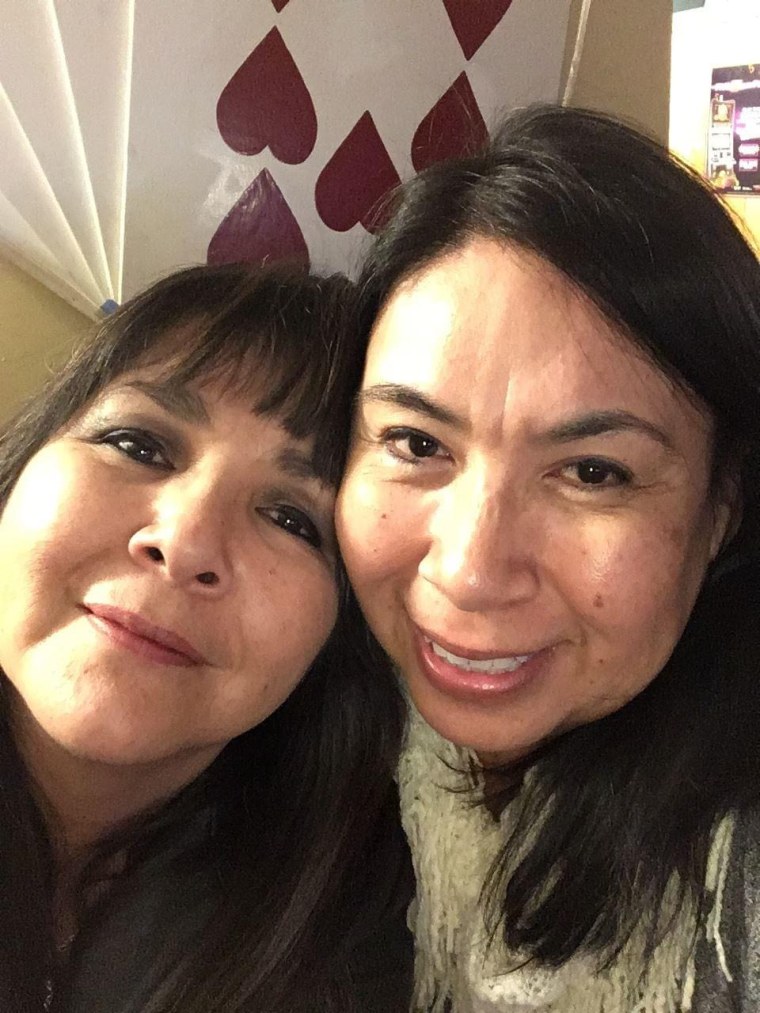
Cindy
Munro, right, embraces her sister Elizabeth Kostecky during their
emotional reunion in North Dakota. Kostecky was removed from the family
in Canada during the Sixties Scoop and adopted by a White family in
Minnesota. Credit: Coleen Rajotte for ICT
FARGO, North Dakota — Lorraine Sinclair had been waiting for this moment her entire life.
Sinclair and her siblings, Cindy and Gerald Munro, traveled from
Northern Manitoba in Canada to North Dakota to finally meet up with
their long-missing sister.
Now known as Elizabeth Kostecky, she was taken from their family in
1971 during an era known as the Sixties Scoop, a period when Canadian
authorities removed an estimated 30,000 First Nations, Métis and Inuit
children from their homes. The siblings, who are Cree from the
Sapotewayak Cree Nation in Manitoba, were among them.
Many of the Native children caught up in the Sixties Scoop were
adopted into non-Native families across Canada, the United States and
beyond. Elizabeth was just 1 year old when she was adopted by a White
family in Minnesota. Lorraine, Cindy and Gerald were also taken from
their mother and placed into foster care, where they were largely raised
in separate households.
The three reunited in the early 1990s, but they had not seen Elizabeth in decades, if ever.
The siblings’ journey in mid-August took them from Fargo to
Ellendale, a two-hour drive, where they knew their sister was waiting.
Elizabeth is currently a ward of the state of North Dakota and is in an
assisted-living facility, they said.
When they arrived, the emotional reunion began at the front door,
where Elizabeth was waiting. Tears and hugs filled the air as the four
siblings embraced. They are now trying to get her returned to Canada.
“Everybody has to find their family,” Lorraine said. “We can’t leave anybody behind.”
The family story
Cindy and Lorraine were taken away as toddlers from their home in
Birch River, Manitoba. Cindy was 3 and Lorraine was just 2. They were
placed in a foster home on a farm, but they were then moved around to
other placements.
Both sisters say they were abused during their time in foster homes.
Cindy recalls that “social workers never checked up to see if we were
safe.”
Reunited
at last: Siblings, from left, Lorraine Sinclair, Gerald Munro, Cindy
Munro and Elizabeth Kostecky gather in North Dakota after being
reconciled decades after Kostecky was taken from the family during
Canada’s Sixties Scoop. Credit: Coleen Rajotte for ICT
The two sisters found each other again when they attended the same
high school in Swan River, Manitoba. By then, Cindy had run away and was
living in a motel while attending high school. She cleaned rooms at
night, and Canada’s social assistance program paid her accommodations.
They had no idea their mother had given birth to their younger
brother, Gerald, and younger sister, Elizabeth. The younger siblings
were in Winnipeg, and they did not find out about them until they were
adults. In all, they were among 11 children in the family, four of whom
have died.
Their dad died in 1974. To this day, none of the children has ever found their mother.
Elizabeth’s story
Elizabeth was adopted by an American family in Minnesota, and by all
accounts, had loving adoptive parents. Her parents owned a fishing and
hunting lodge where Elizabeth worked.
She described experiencing racism as a child in school. “They would
be very mean to me,” she said. “They would powwow around me, make
sounds, wear feathers — always trying to make fun of me.”
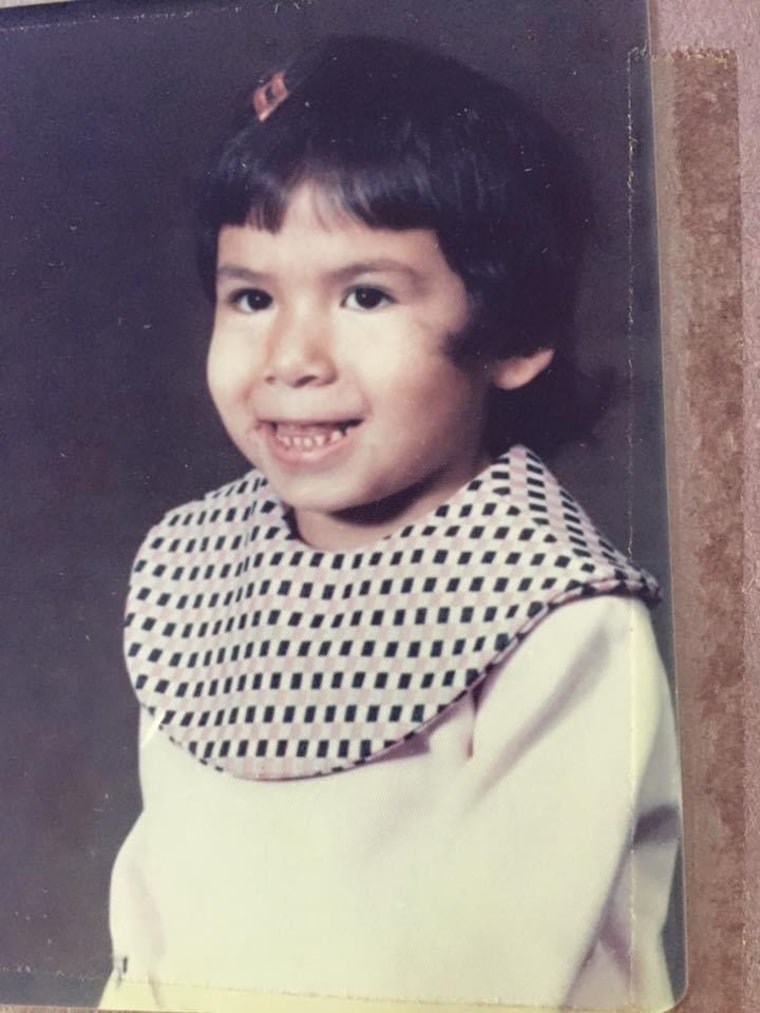
A
childhood photo of Elizabeth Kostecky, who was taken from her family in
Canada in 1971 during the Sixties Scoop. She was adopted by a White
family in Minnesota and finally reunited with her siblings in August
2025 in North Dakota. Credit: Courtesy photo
Elizabeth said she hadn’t realized just how many Indigenous children
were taken during the Sixties Scoop. “I only met one Native my whole
life growing up,” she said.
About four years ago, her adoptive parents died, just months apart, she told ICT. The lodge was sold and Elizabeth said she did not get any money from the sale.
Shortly afterward, she ended up in an assisted living facility and
became a ward of the state of North Dakota. Elizabeth told her siblings
she was told she had memory problems.
Reuniting
Cindy and Lorraine were able to find Gerald in the 1990s. Gerald told
them he had a little sister who was taken away while he was a toddler
in Winnipeg. That little sister was Elizabeth. Cindy and Lorraine, who
remain very close to this day, began the search.
They were able to track her to North Dakota after someone told them
she’d been adopted by the family that owned the hunting lodge. This led
to phone calls and the eventual trip to North Dakota in early August.
Elizabeth told ICT she didn’t expect to end up in North
Dakota without family nearby. She said she was placed in an
assisted-living facility following an arrest related to a drinking
incident years ago.
Looking ahead
The siblings say they are determined to bring Elizabeth back to
Canada. Upon their return to Canada, they were able to obtain
Elizabeth’s Canadian birth certificate and are consulting a lawyer about
removing the legal restraints that keep her in the U.S.
“I think our sister would be capable of looking after herself, maybe with a little help at first,” Lorraine said.
The siblings visited in the lobby of the facility where Elizabeth
lives, in a clean, institutional dining room that overlooks a string of
old brick buildings in Ellendale.
There were lots of tears as they sat close to one another. The
siblings brought gifts for Elizabeth – craft supplies, a smudge bowl and
traditional medicines. They ate lunch together at the local Subway.
They found a park where they could smudge together. But the one-day
visit came to a close too soon, and the three dreaded leaving their
sister alone.
The only contact they have had since they returned home is through Facebook. Elizabeth messages them to say she loves them.
The siblings say their story draws attention to the thousands of
families separated during the Sixties Scoop, and that work is still
needed to help survivors return home.
As they said their goodbyes, the siblings promised this was not the end of their time together.
“It’s not goodbye,” one said. “It’s ‘see you later.’”
As one landfill search ends and another is planned to
begin, an MMIWG advocate says countrywide implementation of the Red
Dress Alert and addressing "systemic racism" could prevent the agony of
such searches ever needing to happen again.
"We know
when someone is missing, time is of an essence to locate them and to
find them safely," said Hilda Anderson-Pyrz, a member of Nisichawayasihk
Cree Nation in Manitoba and chair of the National Family and Survivors
Circle.
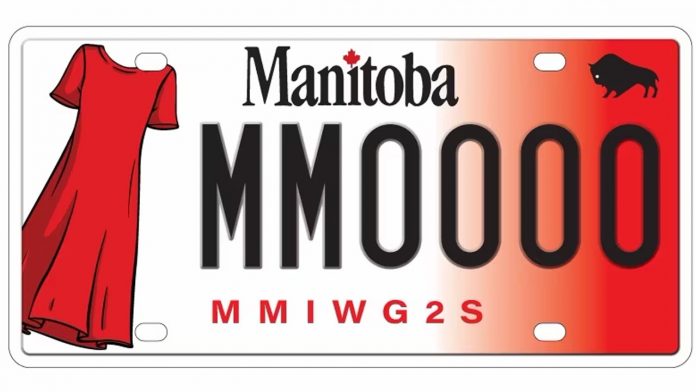
Manitoba is in the process of launching the Red Dress Alert pilot
project, which will provide a notification to people's mobile phones
when an Indigenous woman, girl, two-spirit or gender diverse person goes
missing — similar to how an Amber Alert works.
"They
should be looking at the next phase to, alongside the federal
government, fully implement the [alert] … and adequately resource it to
ensure that it's long-term and sustainable," Anderson-Pyrz said.
"We'll
be fighting for those resources, because what the Red Dress Alert means
in this country is very powerful for Indigenous women, girls and
children."
The Manitoba government said Friday over 12,000 people were out of their
homes, and it gave notice that it intended to use Winnipeg’s major
convention centre to house more evacuees. The military began removing people from Garden Hill First Nation on
CC-130 Hercules transport airplanes on Friday, and it says that as of
Sunday afternoon, over 1,550 have been flown to Winnipeg.
For
St. Boniface Archbishop Albert LeGatt, the Grandfather Rock is just a
“small symbol” of reconciliation — even if it stands over 1.5 metres
tall.
The
Grandfather Rock, so named by Indigenous people for how it contains
generational knowledge, ancient memories and a spirit, was unveiled June
20 in the Archdiocese of St. Boniface’s Heritage Park, across the
street from St. Boniface Cathedral in Winnipeg.
“I
hope it will indicate to Indigenous people this is a safe place and all
are welcome,” said LeGatt, adding it represents an “intertwining of
Christian faith and Indigenous spirituality, values and beliefs, a
weaving of the two together.”
Called
M’shoomis Asin in Ojibwe, the Grandfather Rock was donated to the
archdiocese by a parishioner five years ago. It is surrounded by a
symbolic see-through sweat lodge made out of rebar by local high school
students.
The
placement of the Grandfather Rock and sweat lodge in the Heritage Park
is a way for Roman Catholics to indicate they are taking seriously the
Calls to Action directed at the churches by the Truth and Reconciliation
Commission, LeGatt said.
“It
shows how we are playing a part on the long and rich journey of
reconciliation between First Nations people and non-Indigenous people,"
he said. “It is a way to understand and share our common values that are
truly essential for a unified humanity."
At
the same time, it’s a way to acknowledge “the inherent value and worth
of Indigenous spiritual values” and the Church’s acceptance of
Indigenous culture and spirituality, he said.
Elder
Clayton Sandy (adoptee) of the Sioux Valley Dakota First Nation worked with
LeGatt to create the installation. For him, the placement of the
Grandfather Rock and symbolic sweat lodge on property owned by the
archdiocese is significant since Indigenous spiritual practices like
sweat lodges were forbidden for many decades by the Roman Catholic
Church.
“Now
there is a representation of a sweat lodge on church grounds,” said
Sandy, whose parents and six siblings are residential school survivors
while he was a Sixties scoop child. It is, he said, a “symbol of healing
between Indigenous people and the Church . . . we have come a long
way.”
It
also shows that Roman Catholics and Indigenous people are making
progress in the journey of reconciliation, he said, adding “if we don’t
come together with open minds, nothing changes.”
Beside
the installation are two panels, one explaining the significance of the
Grandfather Rock is in English, French, Dakota and Ojibwe and the
other, in English and French, describing the role of sweat lodges in
Indigenous tradition and culture.
In
addition to the Grandfather Rock and symbolic sweat lodge, the Heritage
Park also contains information and statuary about the religious orders
who were instrumental in the development of Manitoba’s health,
educational and social service systems.
'Pray for rain,' Manitoba premier says as thousands more flee out-of-control wildfires across province
Wab Kinew urges Manitobans to be calm as crews battle unprecedented fires across all parts of the province
It's a situation Manitoba has never seen before, as large-scale
wildfires burn in every region of the province at the same time, Kinew
said at a Friday afternoon news conference, calling the current
situation a "serious inflection point," particularly for some of
Manitoba's larger northern communities.
A family gathering. Jonathan Hooker, Lori Brem, Lori's daughter Eva Dawn and Darryl Flett. (Submitted by Lori Brem)
Through
laughter, Lori Brem tells the story of the meeting that brought her
brother Jonathan Hooker, a New Zealand resident, and her Uncle Darryl
Flett from northern Manitoba together for the first time.
The
three relatives met in Texas in November 2024. Brem, a resident of
China Spring, Texas, and Hooker, of Mount Maunganui, New Zealand, share
the same birth father and Flett is their uncle.
"To hear them all talking," Brem chuckles.
"Jonathan
speaks so fast and Darryl speaks real slow. And then we have our drawl,
like we say 'Y'all.' Hearing all the different accents was just so
funny to me."
How do the roads between three communities on opposite sides of the world converge in Texas?
Brem
and Hooker are survivors of the Sixties Scoop, where First Nations,
Métis and Inuit children were removed from their homes and placed with
non-Indigenous foster or adoptive parents between 1951 and 1991, and
lost their cultural identities as a result.
Brem was taken from Swan River, Man., along with her siblings. Hooker was taken from Moose Lake, Man.
Brem and Hooker's adoptions, like so many others, tore them from their families and their roots.
Hooker
was adopted by a couple from the U.K. who spent time in Canada and
eventually settled on New Zealand's North Island. He said he always know
he was adopted because he didn't look like his fair-skinned parents.
"It was really obvious that there was some job going on there, having black hair and dark skin," he said.
"I was really too young to realize the enormity of what had happened to me."
During
the 2024 reunion, Flett sat down with Brem and Hooker to discuss the
family history and the Sixties Scoop. Hooker said it was "a shock to the
system" to hear how authorities would go to reserves and remove
children.
"I felt so much pain that I had been carrying melt away."
TODAY Illustration / Courtesy Yvette McKinley
By Yvette McKinley, as told to Rachel Paula Abrahamson
When
I was a toddler, I was stolen from my home in the middle of the night.
Child welfare authorities banged on the door and said, “We’re here for
Yvette,” and my parents had no choice but to hand me over.
I’m
one of more than 20,000 Indigenous children in Canada who were ripped
from their families during what is known as the Sixties Scoop. The
Canadian goverment believed that Indigenous people were not fit to raise
children. In the words of former prime minister Hector Langevin, “To
educate the children properly we must separate them from their families.
Some people may say that is hard but if we want to civilize them we
must do that."
My
siblings — I’m the youngest of 14 — were sent to federally operated,
Catholic boarding schools where they were given English names and
forbidden from speaking their aboriginal language. In these programs of
forced assimilation, many experienced horrific physical, sexual and
emotional abuse.
I was more fortunate.
In
1974, I was adopted by a white Christian couple in Oregon. They were
told by the adoption agency that my biological parents didn’t want to
raise me. For decades, I believed that story, too.
My adoptive parents were kind, but I always had a sense of being different.Courtesy Yvette McKinley
It
was quite easy for a white couple to adopt an Indigenous child at the
time. My adoptive parents started the paperwork in January, flew up in
March to meet me for the first time, and the very next day they took me
back to their home in Oregon.
Growing up, I was aware
that I was Indigenous, but it’s not something that I embraced. At
school, my classmates called me an Indian. Redskin was another one I
heard a lot. My mom says I always asked her to buy me white tights so my
legs would look white like the other girls. I didn’t want brown skin. I
didn’t want to be different.
It
wasn’t until my 20s that I started to get more curious about my
history. My brother, who is half Japanese, had started looking for his
biological family, so I decided I would, too. I knew my birth parents
had the same name, Acoby, so I started by writing to every Acoby I could
find in the Canadian providence of Manitoba.
The first
person I heard back from was my sister Lorraine, who shared that we are
members of Swan Lake First Nation. She said our parents had never
stopped looking for me. When I read those words, I felt so much pain
that I had been carrying melt away. I had spent my life believing that
they didn't want me.
From Lorraine I learned about how
our sister Charlotte was taken at a doctor's appointment when she was 5
months old. My mom handed Charlotte over to a nurse, not realizing she
would never hold her baby again. My mom went back to that doctor's
office every single day for months begging for them to let her see
Charlotte, but she was gone.
My sister Charlotte (left) and me: I've discovered a whole family I never knew I had.Courtesy Yvette McKinley
At
the age of 24, I reunited with my mother. My dad, a former chief of
Swan Lake, had died a few years earlier. My sisters were there to
translate for our mom who spoke only Ojibwe. She was relieved to learn I
was raised by kind parents. For all those years she had wondered if I
was OK, and I’m glad she was able to have some closure.
It’s
so hard to put into words what it was like to be surrounded by people
who look like me. There’s this feeling of acceptance. But at the same
time, I feel so Caucasian when I’m around my biological family. Sometimes I feel like I don’t belong anywhere, which is not uncommon for
survivors of the Sixties Scoop.
Since reconnecting with
my birth family, I travel to Swan Lake reserve every summer. I feel at
peace there. It’s just prairie land and it’s a part of me that I didn’t
know I had been missing.
Now I have sisters that I text
and call. We do big family dinners. When we’re together there is this
overwhelming sense of calm.
I love sitting around with
the council people and learning about where I came from. At my first
powwow, I met family members I never knew existed — aunts, uncles,
cousins. Unfortunately, the tribe can’t recognize me as a family member
because the Canadian government erased my birth certificate. But I do
have my Ojibwe name, which means Morning Sky in English. My kids now
want to get their spiritual names.
I'm working to get my real birth certificate. The one I have now lists my adoptive parents as my parents.
I
received a $25,000 apology check from the Canadian government. And
that’s what my life is worth in their eyes. It’s like, "We destroyed
your entire family. We took you from your home, from your family. Here’s
a check for $25,000.” That hurts a lot.
There are so
many people that don’t know anything about what happened to my people
during the Sixties Scoop. One summer, I stopped at a burger stand just a
few miles from Swan Lake and the woman working behind the counter had
never heard of the Scoop.
I want the government to
acknowledge what they did and honor those children who never made it out
alive from their schools. Let’s call it what it is: The Sixties Scoop,
like the Holocaust, was a genocide.
At least 4,120
children are known to have died in the residential schools in Canada. In
the U.S., a federal investigation found that at least 973 children died
in residential schools — and the actual number is probably much higher,
since many were buried in unmarked graves.
My siblings
were sent to those schools. They say their hair was cut off. They were
beaten for speaking our language and singing our songs. They were forced
to study the Bible. My sister Yvonne can only talk about it in little
tiny segments because it was so traumatic.
We are healing together.
I will never forget how Swan Lake First Nation chief Jason Daniels welcomed me back.
"You're home," he said. "This will always be your home."
Brandon
Friendship Centre’s Eagle Healing Lodge program co-ordinator Denise
Sinclair says the camp is helping people reclaim their Indigenous
languages through land-based activities. (Chelsea Kemp/CBC)
Nestled in
a ceremony site east of Southwestern Manitoba's biggest city, a group
of language keepers is working to strengthen and grow fluent Dakota,
Cree, Anishinaabemowin and Michif speakers.
They're part
of the Brandon Friendship Centre's Eagle Healing Lodge's first
land-based language camp. Four teepees have been set up between the
forest and prairies, each home to an Indigenous language in Westman.
"Language
has always been connected to the land," says Denise Sinclair, program
co-ordinator for the healing lodge. "Everything that we're doing here is
specifically land-based ... in the language so that you can hear it
[and] you can pass that on."
The three-day camp, held
Tuesday through Thursday, was an opportunity for participants to learn
and speak Dakota, Cree, Anishinaabemowin and Michif, she said. They
would speak their languages for different activities like setting up
tents, smoking meat or medicine picking.
Julia Brandon, left, and Martina Richard crush chokecherries as a way to learn Anishinaabemowin. (Chelsea Kemp/CBC)
It's
powerful seeing connections forged as people learn and speak their
languages, Sinclair said. It's important work that has to carry on to
help with language revitalization.
"Whatever you're
learning you're going to remember … you're building that core memory
with the language, that you needed growing up," Sinclair said.
Language as strength
The
healing lodge has been cultivating a community centred on strengthening
Indigenous languages since 2021, Sinclair said. It began as a program
for Sixties Scoop survivors and grew to include residential school
survivors and others.
Language serves to reconnect people with their culture and identity in a safe place centred on healing, Sinclair said.
"We
have to remember that there's still that sense of …. something being
taken," Sinclair said. "Now they feel safe to talk to us as learners
because they feel that importance of passing on that language."
Martina
Richard, from Waywayseecappo First Nation, camped out at the site for
two days to immerse herself and her family in language and culture.
Participants could choose to camp, or to go home for the night.
Eagle
Healing Lodge Cultural support worker Lacey Hotain says she wants to
strengthen her Dakota to pass it on to future generations. (Chelsea Kemp/CBC)
As Manitobans marked the third National Day for Truth and
Reconciliation, an event in Winnipeg's North End remembered Residential
School victims and those affected by the Sixties Scoop.
The Day of Reflection, Sacred Fire and Gathering took place at St.
John's Park Saturday afternoon, jointly organized by the Anish
Corporation, Manito Ahbee Festival, and 60s Scoop Legacy of Canada.
The day included drumming, singing, round dancing, and smudging, among other Indigenous ceremonies.
"We wanted to provide a space where people could come and learn a
little bit about Indigenous culture, but also be mindful that today is
kind of a mixed-emotion day for Indigenous people who have been affected
by Residential Schools and the Sixties Scoop and day schools," said
Katherine Strongwind director of the 60s Scoop Legacy of Canada.
Beginning in the late 1950s through the 1980s, the Canadian government
enacted a series of policies allowing Indigenous children to be
"scooped" from their families and then adopted into white homes.
Strongwind said Canada's Indigenous peoples have been through a lot of
tragedy. "It's important to remember that we're still here, our culture
is still alive," she said.
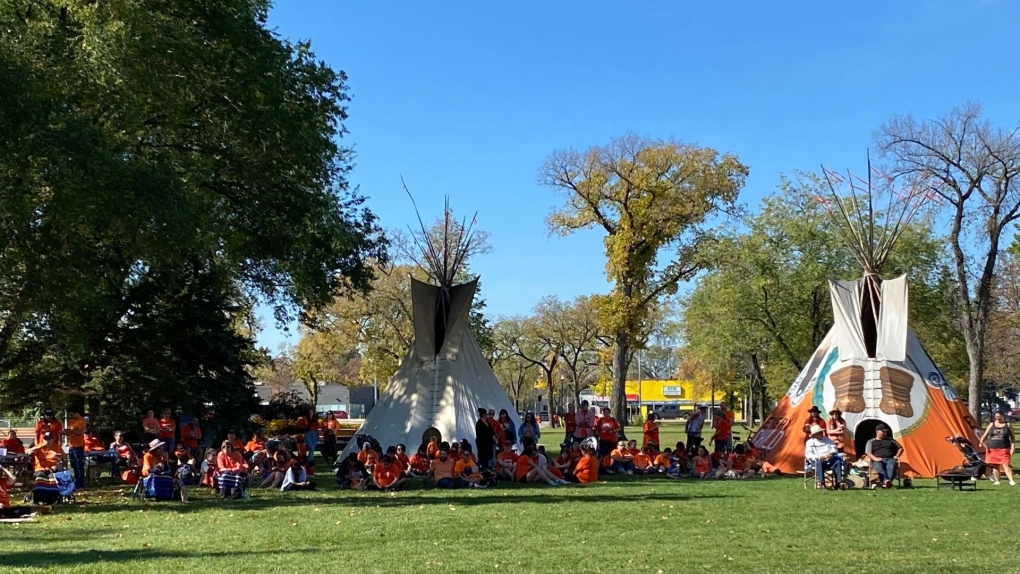
Orange-clad families gathered at the park to enjoy free entertainment
and food, and to learn about Indigenous culture through tipi teachings.
Members of the White Horse Ranch in South Dakota brought "Sunka Wakan," or sacred horses to the event.
"They're often the lead for our walks and our events, and so it was
really important to have them here so that we could honour the horses
today," Strongwind said.
Warning:
This video contains distressing details | The Pine Creek First Nation
in western Manitoba is one of the first in Canada to excavate a site
near a former residential school. CBC’s Wawmeesh Hamilton explores how
the community is paving the way for others as it faces the tough
revelations that come with searching for answers.
‘Hope & Strength’ – New billboards along Hwy. 16 to honour missing and murdered Indigenous women and girls (MMIWG)
August 15, 2023
Carrier Sekani Family Services (CSFS), in partnership with the
Highway of Tears Governing Body, is excited to unveil the creation of
four new billboards along Highway 16’s notorious ‘Highway of Tears’.
This partnership aims to address Recommendation 9 of the 2006 Highway of
Tears Recommendation Report, which includes creating a number of
billboards to bring further awareness on the issue of missing and
murdered Indigenous women and girls (2006:21).
Located between Prince George and Smithers, the billboards feature
images and messaging of hope and strength to highlight the value of
people in the north and that we are all, as communities, stronger
together. As you travel on this stretch of Highway 16 we hope that these
billboards will create a moment for pause to remember, honour and to
reflect on what we all can do to make this Highway and the communities
surrounding it a safer place.
“We hope these billboards act as a visual reminder to travelers to be
part of keeping Highway 16 safe for everyone,” said Mary Teegee, CSFS
Executive Director of Child and Family Services. “It is time to move
forward with Hope and Strength and to honour our loved ones by making
Highway 16 safe again.”
The billboards are part of a larger commemorative series project that
will eventually include commemorative pillars at each end of the
‘Highway of Tears’, rest-stop signage and more to honour and remember
Missing and Murdered Indigenous Women and Girls in addition to providing
more education and awareness of safety along Highway 16.
“While these billboards serve a reminder of our loved ones who went
missing – we must do more to stop these violent acts committed against
our people and people from all backgrounds,” said CSFS Board President
and Cheslatta Carrier Nation Chief Corrina Leween. “We must collectively
take part in ensuring a commitment to building a safer space for all of
humanity. Please ensure that your MLA and MP’s help us achieve safe
places and spaces for all.”
The billboards will be erected this week and are booked until 2025.
— a mote of dust, suspended on a sunbeam (@CarlaHolley) December 2, 2022
Sadly, as @r_bergen reports in this piece in June, Jeremy Skibicki was already on the police radar for domestic violence charges. https://t.co/pgS7NdAEht
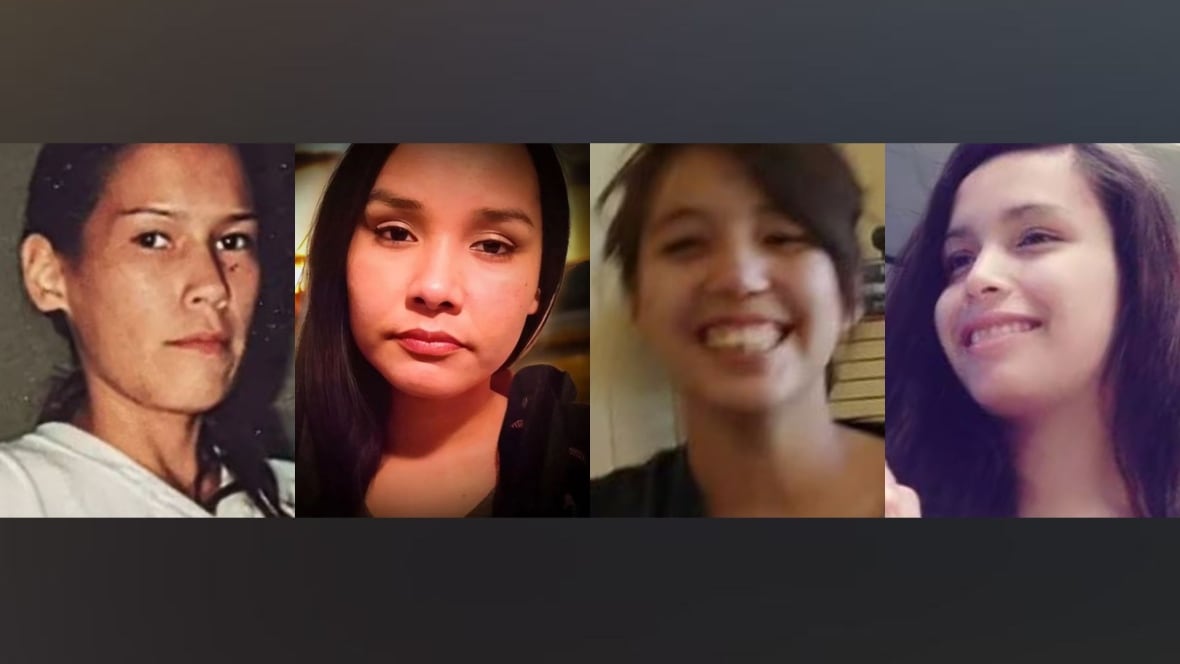
Alleged serial killer in custody and charged in killings of 4 Indigenous women in Canada, police say
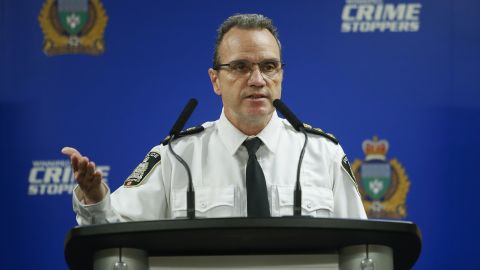
Winnipeg Police Chief Danny Smyth provides an update Thursday to the homicide investigation. John Woods/AP
CNN
—
Authorities in Winnipeg, Manitoba, believe the murders of four
Indigenous women came at the hands of an alleged serial killer now in
custody in Canada.
Jeremy Anthony Michael Skibicki, 35, of Winnipeg, has been charged
with four counts of first-degree murder for the deaths of the women, a
news release from the Winnipeg Police Service states. It is not clear if he has an attorney.
The investigation dates to May 16, when Winnipeg police shared
information on the murder of 24-year-old Rebecca Contois, of the Crane
River First Nation, after her partial remains were discovered.
Skibicki was arrested May 18 by the agency’sHomicide Unit and charged with first-degree murder, the release says.
During the investigation, detectives established three more
victims murdered between March and May – before Contois’ death.
Morgan Beatrice Harris, 39, is believed to have been killed on or
around May 1, and Marcedes Myran, 26, is believed to have been killed on
or around May 4. Both women were members of the Long Plain First
Nation, according to the release.
A fourth victim also is confirmed but not yet identified. She is
believed to be an Indigenous female killed on or around March 15, police
said.
And the investigation is not over, Winnipeg Police Inspector Shawn Pike said Thursday during a news conference.
Bodies of those three new victims haven’t been recovered, said
Winnipeg Police Chief Danny Smyth, noting police have enough evidence to
charge Skibicki in their killings.
“Our officers will continue to search for information with the
goal of identifying this fourth unknown victim,” Pike said, adding DNA
has helped in their probe without saying how.
Meantime, Winnipeg must better address the safety concerns of the
community, Mayor Scott Gillingham said at Thursday’s news conference.
“As a city, we must all grieve their loss and recognize that we
have much more work to do to protect the lives of Indigenous women and
girls,” Gillingham said.
Skibicki is being held at the Milner Ridge Correctional Centre in Manitoba.
In his Facebook bio, Skibicki described himself as an "official
member of 'Holy Europe,'" which is a small faction of a broader
far-right movement, an anti-facism expert told CBC last June.
Jeremy
Skibicki is now facing four first-degree murder charges in connection
with the deaths of four women, including Rebecca Contois, Morgan
Beatrice Harris and Marcedes Myran. (Jeremy Skibicki/Facebook)
Support is available for anyone affected by details of this case.
If you require support, you can contact Ka Ni Kanichihk's Medicine Bear
Counselling, Support and Elder Services at 204-594-6500, ext. 102 or
104, (within Winnipeg) or 1-888-953-5264 (outside Winnipeg).
Support is also available via Manitoba Keewatinowi Okimakanak's Missing and Murdered Indigenous Women and Girls Liaison unit at 1-800-442-0488 or 204-677-1648.
By Kelly Geraldine Malone | The Canadian Press | June 11, 2022
WINNIPEG
- Chiefs from two First Nations in Manitoba say their communities are
still looking for answers after finding possible graves using
ground-penetrating radar at the sites of former residential schools that
were run by the Roman Catholic Church.
Sagkeeng
First Nation found 190 anomalies in the soil and Minegoziibe Anishinabe
First Nation located six. Initial data shows the irregularities fit
some of the criteria for graves, but both communities say more
information is needed.
The news was recently shared with community members.
“We are going to take our time and make sure we do the right thing,” said Sagkeeng Chief Derrick Henderson.
Sagkeeng’s
efforts began last year. Residential school survivors shared their
memories of areas they thought could have graves linked to the Fort
Alexander Residential School.
The
school was opened in 1905 in the community of Fort Alexander, which
later became Sagkeeng First Nation. It ran until 1970 and had a
reputation for abuse. Survivors told the Truth and Reconciliation
Commission about starvation and harsh discipline.
The community worked with a drone company which conducted ground-penetrating radar on three levels.
Henderson
said it found two locations with anomalies. Neither is a known
graveyard, but both were spots residential school survivors had pointed
to on maps before the search began.
Henderson
said leadership will be consulting with elders, survivors and pipe
carriers to decide next steps to confirm whether there are graves.
“How
do we start excavating?” Henderson pondered. “I probably have to bring
in archeologists. There’s a lot of work to be done yet.”
When the information was shared with community members, they had a feast and ceremony, he said.
Many
community members are struggling with unanswered questions as more
anomalies are found, Henderson said. It will take time to find
certainty, he added, and only after that can closure and healing begin.
“Now we know locations. Now we know there’s something.”
At
the Minegoziibe Anishinabe First Nation, six anomalies are under a
church on the site of the former Pine Creek Residential School, said
Chief Derek Nepinak.
Survivors had
asked that the area be examined because of “horror stories” about what
happened in the basement of the church, he said.
The First Nation is treating the area like a potential crime scene, he said.
“We are searching for answers, but what we are doing is arriving at more questions,” he said.
Minegoziibe
Anishinabe also hired a drone technology company that specializes in
ground-penetrating radar. The company used a cart to perform a ground
search under the church due to the confined space, a community notice
said.
Survivors and community members have directed leadership to do another, more detailed radar search of the basement.
The community is still waiting for results from another area that is suspected to have unmarked burial sites, the chief said.
The
Pine Creek school ran from 1890 to 1969 in a few different buildings on
a large plot of land. The National Centre for Truth and Reconciliation
has a record of 21 child deaths at the school and survivors have long
spoken about abuse at the institution.
Nepinak
said the First Nation has gone through records and knows of dozens of
children who died while attending the school but there could be others
who are not part of that history.
Healing will take time, he said. The hope is that it will inform future generations.
“We want the truth to be told and the truth to be known.”
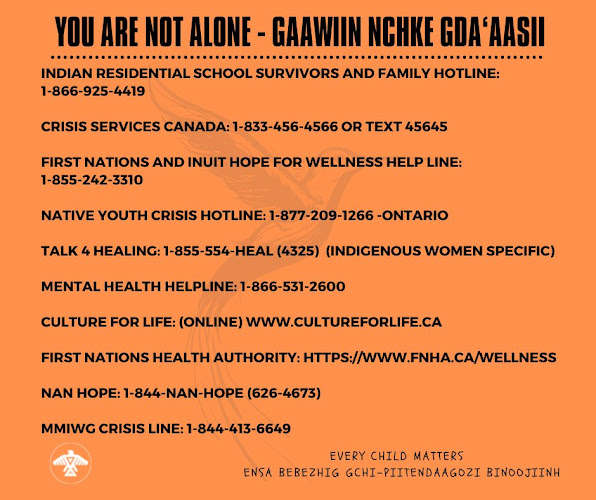
The
Indian Residential Schools Resolution Health Support Program has a
hotline to help residential school survivors and their relatives
suffering from trauma invoked by the recall of past abuse. The number is
1-866-925-4419.
This report by The Canadian Press was first published June 11, 2022.
Another First Nation in Canada is preparing to search for unmarked graves at a former residential school.
As Dan Karpenchuk reports, this time it will be in northern Manitoba.
The
Pimicikamak Cree Nations has announced plans to search the site of the
former St. Joseph’s Residential School. It was operated near Cross Lake
by the Roman Catholic Church in northern Manitoba, between 1912 and
1969. The chief of the Pimicikamak Nations is David Monia. He says the
reserve has identified the names of 85 children who died at the
school. However, he adds that surviving records are incomplete.
“Many of them are listed as boy, as girl, 40% of them have first names only. Where did these kids come from?”
Investigators say they will use ground penetrating radar to search the site, which is now a neighborhood with homes.
“You
know they don’t describe it as a school. More like assimilation camps,
torture camps, or death camps and really that’s an international crime.”
No
start date for the search has yet been determined. It was just over a
week ago that the Pope apologized at the Vatican to a Canadian
Indigenous delegation, for the role of the Catholic Church in the abuses
at Canada’s residential schools. Thousands of Native children were
abused at the schools, many died.
South Carolina court drops contempt charge against Dusten Brown Dusten Brown and the Cherokee Nation rea...
Bookshop
You are not alone
To Veronica Brown
Veronica, we adult adoptees are thinking of you today and every day. We will be here when you need us. Your journey in the adopted life has begun, nothing can revoke that now, the damage cannot be undone. Be courageous, you have what no adoptee before you has had; a strong group of adult adoptees who know your story, who are behind you and will always be so.
Diane Tells His Name
click photo
Lost Birds on Al Jazeera Fault Lines
click to read and listen about Trace, Diane, Julie and Suzie
NO MORE STOLEN SISTERS
click image
We conclude this series & continue the conversation by naming that adoption is genocide. This naming refers to the process of genocide that breaks kinship ties through adoption & other forms of family separation & policing 🧵#NAAM2022#AdoptionIsTraumaAND#AdopteeTwitter#FFY 1/6 pic.twitter.com/46v0mWISZ1
As the single largest unregulated industry in the United States, adoption is viewed as a benevolent action that results in the formation of “forever families.” The truth is that it is a very lucrative business with a known sales pitch. With profits last estimated at over $1.44 billion dollars a year, mothers who consider adoption for their babies need to be very aware that all of this promotion clouds the facts and only though independent research can they get an accurate account of what life might be like for both them and their child after signing the adoption paperwork.
















 Posts
Posts

