


click

Showing posts with label Crooked. Show all posts
Showing posts with label Crooked. Show all posts
Tuesday, October 5, 2021

Wednesday, September 1, 2021
Podcasts: Crooked, This Land

The Lawsuit About the Indian Child Welfare Act That Isn’t About the Children
In This Episode
Fellow Crookedian Rebecca Nagle joins to talk about Season Two of “This Land.” From the “boarding schools” of the 19th century to the good intentions of the Indian Child Welfare Act — and the big money campaign to repeal it.

excerpt:
Ana Marie Cox: What you’re telling me, Rebecca, is that there’s money to be made.
Rebecca Nagle: There’s a lot of money to be made. There’s a lot of money to be made.
Ana Marie Cox: [laughs] There’s surprisingly, there’s deep pockets because there’s deep, you know, dough on the other side. But I just wanna repeat back to you what I think you said just because it’s fascinating. And I think I want to make it really clear. There is some talk, there is some reason that is somewhat about this case is about kids. OK, fine. But if you dig deep, what you are seeing is an attempt to establish precedent, to undo almost everything that exists to protect tribal sovereignty.
Rebecca Nagle: If the Supreme Court took this case in the broadest way possible and decided it based on the broadest way possible, it would absolutely set that precedent. And it’s interesting because you already see some people making that argument in other areas. So people are already, people have tried and are already making this like kind of like equal protection, race-based argument in other areas of federal Indian law. And some people are even doing it based on this case. And so I don’t think we have to, like, take a wild stretch of the imagination to see the broader implications of it. And then what I want to add is that I actually, I actually do think, and this was something that I was surprised by, that some people are fighting ICWA for ideological reasons. And that ideology is that our country should not have laws that are race conscious, should not have laws that are remedies to structural racism. And the thinking behind that is that the way to solve racism is to stop talking about race and to pretend like it doesn’t exist. And so when you look at the people who are attacking ICWA, a lot of them have also fought things like affirmative action. You know, it’s some of the same players that were behind the Abigail Fisher case and now the Harvard case. You know, we talked about the Voting Rights Act, it’s some of those people. And I think there is this really deep ideological divide, which I think in some ways is kind of intellectually dishonest because we can see all the ways that systemic racism in the child welfare system exists, but any effort to remedy that is what is unfair. [laughs] I think one of the things that’s very telling about this lawsuit is that they’re trying to get rid of something and not trying to build something different. I think if you’re concerned about children in foster care, there is a lot of reason to be concerned about the well-being of children in foster care in the country right now. You know, and there’s also a lot of reasons to see, you know, there’s a lot of evidence that ICWA actually does a lot of good. And so, yeah, I think if their end-goal was really helping Native children, they would be trying to build something, not trying to destroy something.
Ana Marie Cox: So when I look at this case and your podcast and what I’ve learned, the case is itself about both children and the ability of non-Native people to adopt Native children in a echo of the boarding school, you know, system a little bit, that echoes—not the same! But it’s Echo. And it’s about who controls the resources in Native land, Native sovereignty. You know, you can’t oppress a people, just, you know, but, just in culture or just in economics, it’s both. It’s always both. You’re always, your oppressing in both these both these lanes. And it made me start to think about reparations. Which we talk a lot about in terms of slavery. But I really hear so much less discussion when it comes to Indigenous people. I mean, hardly any. I think I’ve talked to one person about it. But this case raises it for me, because it’s talking about the most precious resources you have in a community, which is the children, and who were taken.
Rebecca Nagle: Yeah. And I think, you know, when I interviewed Native leaders, one thing, one thing that more than one Native leader said to me was, you know, if we can’t protect our children, then what can we protect? You know, if we can’t, if we can’t keep our children, then then what else do we have? Yeah, and I think when it comes to what justice looks like for Indigenous nations, you know, the slogan or the hashtag or what will you, but the thing that people are talking about a lot right now is Land Back. And I think that looks like a lot of different things. And so, you know, Under Secretary Deb Haaland, she’s trying to make the tribes putting land back in trust easier. There’s been some proposals that national parks or national forests should be returned to the stewardship of Indigenous nations. And I think it’s also restoring sovereignty over the land that we have that is recognized and really creating a legal reality where tribes, the inherent rights of our tribes to govern our land, to govern our citizens, is recognized. And right now, what we have in the United States, thanks in large part to the Supreme Court, some things that Congress has done, but mostly the Supreme Court, is that that’s piecemeal. And so when you look at civil jurisdiction, criminal jurisdiction, the right of law, the right of tribes to do everything from taxation, to arrest somebody, from speeding, for speeding it, it’s very complicated. And I think what we need is a full restoration of tribal sovereignty and tribal jurisdiction on tribal land and also restoring land to tribes. And my last thought, not to be too meta, but I think, you know, as our country faces a growing ecological and climate crisis, you know, I think that restoration of tribal sovereignty is going to be critical for all of us, and is what is best for all of us. You know, there’s the statistic that Indigenous people globally control about like 5% of the land in the globe, but protect 80% of biodiversity. And so, you know, Indigenous peoples, we really have the knowledge of that stewardship that is so desperately needed right now.
new episode
THIS LAND:

Subscribe to:
Posts (Atom)

WRITTEN BY HUMANS!

Featured Post
Your History Class Was a F*cking Lie | #NOMOAR
Your History Class Was a F*cking Lie by Sean Sherman (Or: How the American Educational System Has Always Been a Racist Propaganda Program...

Native Circles

click logo for podcasts!

Most READ Posts
-
 Editor NOTE: This is one of our most popular posts so we are reblogging it. If you do know where Michael Schwartz is, please leave a com...
 -
By Trace Hentz 2024: I have read new comments on this case. If you have information, please email me: tracelara@pm.me It will be kept conf...
-
 South Dakota legalizes religious-based discrimination in adoptions, Oglala Sioux Tribe members form children's advocacy group South ...
 -
Eric Schweig Born: Ray Dean Thrasher on 19 June 1967 Inuvik , Northwest Territories , Canada Occupation Actor/Artisan/...
-
By Trace L Hentz, blog editor I have often wondered about how we adoptees were affected by our adoptions, as far as our mental health. (I ...
-
Published on Sep 28, 2013 This 40-minute documentary explains the reason for and the process of creating and implementing ...
-
By Trace L Hentz (blog editor) It appears that Baby Deseray was placed by the same adoption lawyer Ray Godwin and the birthmother dealt wi...
-
Your History Class Was a F*cking Lie by Sean Sherman (Or: How the American Educational System Has Always Been a Racist Propaganda Program...
-
Using DNA tests, Dean Lerat has created a massive family tree for the Treaty 4 territory in Saskatchewan... By day, Dean Lerat is an RCMP st...
-
South Carolina court drops contempt charge against Dusten Brown Dusten Brown and the Cherokee Nation rea...


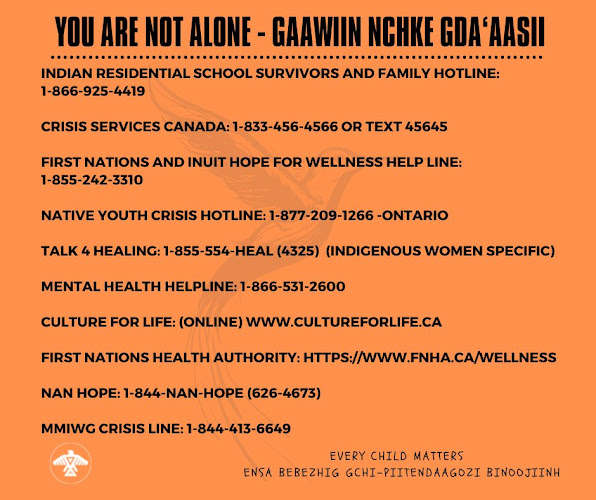
You are not alone


click photo
Lost Birds on Al Jazeera Fault Lines

click to read and listen about Trace, Diane, Julie and Suzie

NO MORE STOLEN SISTERS

click image

Subscribe To


 Posts
All Comments
Posts
All Comments