BOOZHOO! We've amassed tons of information and important history on this blog since 2010. If you have a keyword, use the search box below. Also check out the reference section above. If you have a question or need help searching, use the contact form at the bottom of the blog.
We want you to use BOOKSHOP to buy books! (the editor will earn a small amount of money or commission. (we thank you) (that is our disclaimer statement)
This is a blog. It is not a peer-reviewed journal, not a sponsored publication... WE DO NOT HAVE ADS or earn MONEY from this website. The ideas, news and thoughts posted are sourced… or written by the editor or contributors.
EMAIL ME: tracelara@pm.me (outlook email is gone)
THANK YOU CHI MEGWETCH!
World Nomad Games 2026: Issyk-Kul to host Nomad Tribe
Festival
09:14, 1 July 2026
The Nomad Tribe international
traditional music festival, set for September 1–6 at the Rukh-Ordo cultural
center on the Issyk-Kul coast, will be the cultural centerpiece of the VI World
Nomad Games, Qazinform News
Agency cites Kabar.
The festival will be held as part of
the global ethnocultural project Nomad World: Connection of Seasons.
It will feature competitions in
storytelling, instrumental art, and vocal-instrumental performance.
Eight thematic zones will be built
across the complex, including a pier shaped like a komuz and national yurts.
The daily programs from 10:00 a.m.
to 10 p.m. will include concerts, creative meetings, master classes,
exhibitions, and cultural exchanges.
Besides, the Chingiz Aitmatov Museum
will host meetings with international scholars.
The outdoor theater stage and a
podcast studio in a yurt will record visitors’ voices for the museum archive.
An exhibition of traditional musical
instruments of nomadic peoples, artisan showcases, an ethno-bazaar, and food
zones, all designed in a unified ethnic style, will be held as part of the
event.
The festival's main venue is a
covered amphitheater with a 24m × 10m stage for competitive performances.
In total, 185 cultural events will
be held at Rukh-Ordo, making it one of the largest cultural hubs of the Games.
Earlier, Kyrgyzstan unveiled the official video for the 2026 World Nomad Games,
its largest and most celebrated cultural project, now recognized as a global
brand.
Tocabe is an Osage-owned
Indigenous restaurant and online store founded by Ben Jacobs, and this
year they’ve released a line of ready-to-eat, elevated frozen meals. The
ready-made meals are made with Indigenous-sourced ingredients
Tocabe's
frozen Indigenous meals can be prepared with a microwave, in the oven
or by heating in a sauté pan after defrosting. Osage News
Tocabe launched its Indigenous marketplace this year, selling Native
foods to the mainstream. Microwaveable meals for adults and children are
among the shippable products sourced from Native producers. Tocabe also
expects a spike in orders beginning with Indigenous People’s Day on
Oct. 14 and continuing through Native American Heritage Month in
November.
Founder Ben Jacobs describes Tocabe’s Indigenous sourcing as
“Native-first, local second,” meaning if a Native farmer or producer has
a Native ingredient, Tocabe will source from them before relying on a
local organic option.
“We source from Native producers growing and raising traditional
foods, but also utilizing ingredients which have been introduced
post-contact, as long as they are Native-produced,” added Katrina Salon,
a representative for Tocabe. For example, she said, “Wheat berries from
Ramona Farms and olive oil from Seka Hills.”
Tocabe created their Indigenous marketplace because they want Native
food to be accessible. Native food is not well understood, encountered
or available, but Tocabe hopes to bring Native foods to everyone, Jacobs
said.
In addition to creating mainstream access to Indigenous foods, Jacobs
also aims to support Indigenous economic development. Tocabe does this
by supporting the development of Native farmers, ranchers, and food
producers who are building “an equitable, sustainable and innovative
food system … benefitting American Indian communities.”
Tocabe’s Indigenous marketplace has products for sale from such
ethical Native producers for customers to use in their own cooking – or,
they can order ready-made meals in bulk bundles or individually. In a
children’s line called Little Harvest, Tocabe has options like blue corn
pancakes, spaghetti and bison meatballs and French toast. In the adult
line of meals, there are “elevated” options like iko’s green chili stew.
One Harvest Meal option is the “bison Sonora bowl,” which has a
wheatberry and white tepary bean blended with roasted squash purée,
nopales, zucchini and Navajo-grown pinto beans, with braised bison and a
chili sauce. Meal bundles include the “Best of Bison” bundle, with the
bison Sonoran bowl alongside bison chili, bison posu, sausage posu, wild
rice jambalaya and a “sausage sunset” – similar to the Sonoran, but
with roasted yams, bison sausage and other variations in sauce and the
type of beans.
The meals do have some preservatives, Salon said, due to some of the
ingredients they include in their ready-made meals. But Tocabe does not
add any additional artificial or synthetic preservatives, according to
Salon.
The company has scaled-up their distribution and they’re ready to
fill all the orders they’re expecting through the fall, said Salon. From
home cooks who want to source Indigenous ingredients for their
Thanksgiving menus to busy professionals who want fast, nutritious
options for dinner, Tocabe is hoping to be one of the options that comes
to mind.
Their frozen Indigenous meals can be prepared with a microwave, in
the oven, or by heating in a sauté pan after defrosting. To give one of
the ready-made meals a try – or to order Indigenous-sourced ingredients –
visit https://shoptocabe.com/.
Indigenous population is on the rise, housing still an issue.
A Winnipeg mother says she was scarred for life when her first child
was taken away at birth by social workers, who told her she was unfit to
parent her newborn daughter because she was just 17 at the time.
“I don’t know how one could fully heal from that trauma,” said the
woman, now 41, whom The Canadian Press has agreed not to identify
because of her family’s involvement in the child welfare system. “Having
a baby taken away from birth the bond is broken.”
Statistics Canada says 2021 census data shows Indigenous children accounted for 53.8 per cent of all children in foster care.
This has gone up slightly from the 2016 census, which found 52.2 per
cent of children in care under the age of 14 were Indigenous.
At the time, only about eight per cent of kids that age in Canada were Indigenous.
More than three per cent of Indigenous children living in private
households in 2021 were in foster care compared to the 0.2 per cent of
non-Indigenous children. Nationally, Indigenous children accounted for
7.7 per cent of all children 14 years of age and younger.
Statistics Canada says because of difficulties in collecting census
data on First Nations and other Indigenous communities, some caution
should be exercised in comparing census years.
In recent years there has been a significant push from Indigenous
leaders and child welfare advocates across the country to address the
myriad systemic issues contributing to the overrepresentation of
Indigenous children in care.
But experts say factors like colonialism, chronic underfunding of
child welfare systems, discriminatory practices and poverty remain.
For more than five hundred years, Native communities across the Americas
have demonstrated resilience and resistance in the face of violent
efforts to separate them from their land, culture, and each other. They
remain at the forefront of movements to protect Mother Earth and the
life it sustains. Today, corporate greed and federal policy push agendas
to extract wealth from the earth, degrading sacred land in blatant
disregard of treaty rights. Acknowledgment is a critical public
intervention, a necessary step toward honoring Native communities and
enacting the much larger project of decolonization and reconciliation.
Join us in adopting, calling for, and spreading this practice. TAKE THE PLEDGE HERE
"I was given that porridge I got sick on and I had to eat
that … And if you don’t eat, then you’re going to get beat up some
more, and you’re going to get punished – and if you throw up again
you’re going to have to eat that too, so what choice do you
have?” Metatawabin, 66, says at times he and his classmates were forced
to sit in an electric chair – either as punishment or as entertainment
for the staff at St Anne’s Indian Residential School, which operated
from the early 1900s to 1976 in northern Ontario province. Now,
Metatawabin says, the government is hiding information about the
school... St Anne’s was part of a government-supported school system to "assimilate" aboriginal children. About 150,000 indigenous children
were forcibly removed from their families by the federal government for
decades starting in the 1800s and put into church-run residential
schools. Many suffered physical and sexual abuse and squalid living
conditions, and a Truth and Reconciliation Committee recently said at
least 4,000 children died – a number that could be much higher..."
South Carolina court drops contempt charge against Dusten Brown Dusten Brown and the Cherokee Nation rea...
Bookshop
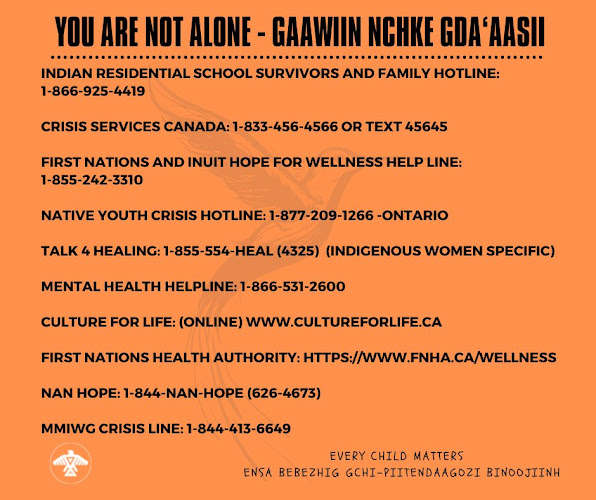
You are not alone
To Veronica Brown
Veronica, we adult adoptees are thinking of you today and every day. We will be here when you need us. Your journey in the adopted life has begun, nothing can revoke that now, the damage cannot be undone. Be courageous, you have what no adoptee before you has had; a strong group of adult adoptees who know your story, who are behind you and will always be so.
Diane Tells His Name
click photo
Lost Birds on Al Jazeera Fault Lines
click to read and listen about Trace, Diane, Julie and Suzie
NO MORE STOLEN SISTERS
click image
We conclude this series & continue the conversation by naming that adoption is genocide. This naming refers to the process of genocide that breaks kinship ties through adoption & other forms of family separation & policing 🧵#NAAM2022#AdoptionIsTraumaAND#AdopteeTwitter#FFY 1/6 pic.twitter.com/46v0mWISZ1
As the single largest unregulated industry in the United States, adoption is viewed as a benevolent action that results in the formation of “forever families.” The truth is that it is a very lucrative business with a known sales pitch. With profits last estimated at over $1.44 billion dollars a year, mothers who consider adoption for their babies need to be very aware that all of this promotion clouds the facts and only though independent research can they get an accurate account of what life might be like for both them and their child after signing the adoption paperwork.









 Posts
Posts

