They Took Us Away

They Took Us Away
click image to see more and read more

it's free

click

How to Use this Blog

BOOZHOO! We've amassed tons of information and important history on this blog since 2010. If you have a keyword, use the search box below. Also check out the reference section above. If you have a question or need help searching, use the contact form at the bottom of the blog.


We want you to use BOOKSHOP to buy books! (the editor will earn a small amount of money or commission. (we thank you) (that is our disclaimer statement)

This is a blog. It is not a peer-reviewed journal, not a sponsored publication... WE DO NOT HAVE ADS or earn MONEY from this website. The ideas, news and thoughts posted are sourced… or written by the editor or contributors.

EMAIL ME: tracelara@pm.me (outlook email is gone) THANK YOU CHI MEGWETCH!

SEARCH

Showing posts with label Pine Ridge. Show all posts

Wednesday, May 7, 2025

Starved into Submission

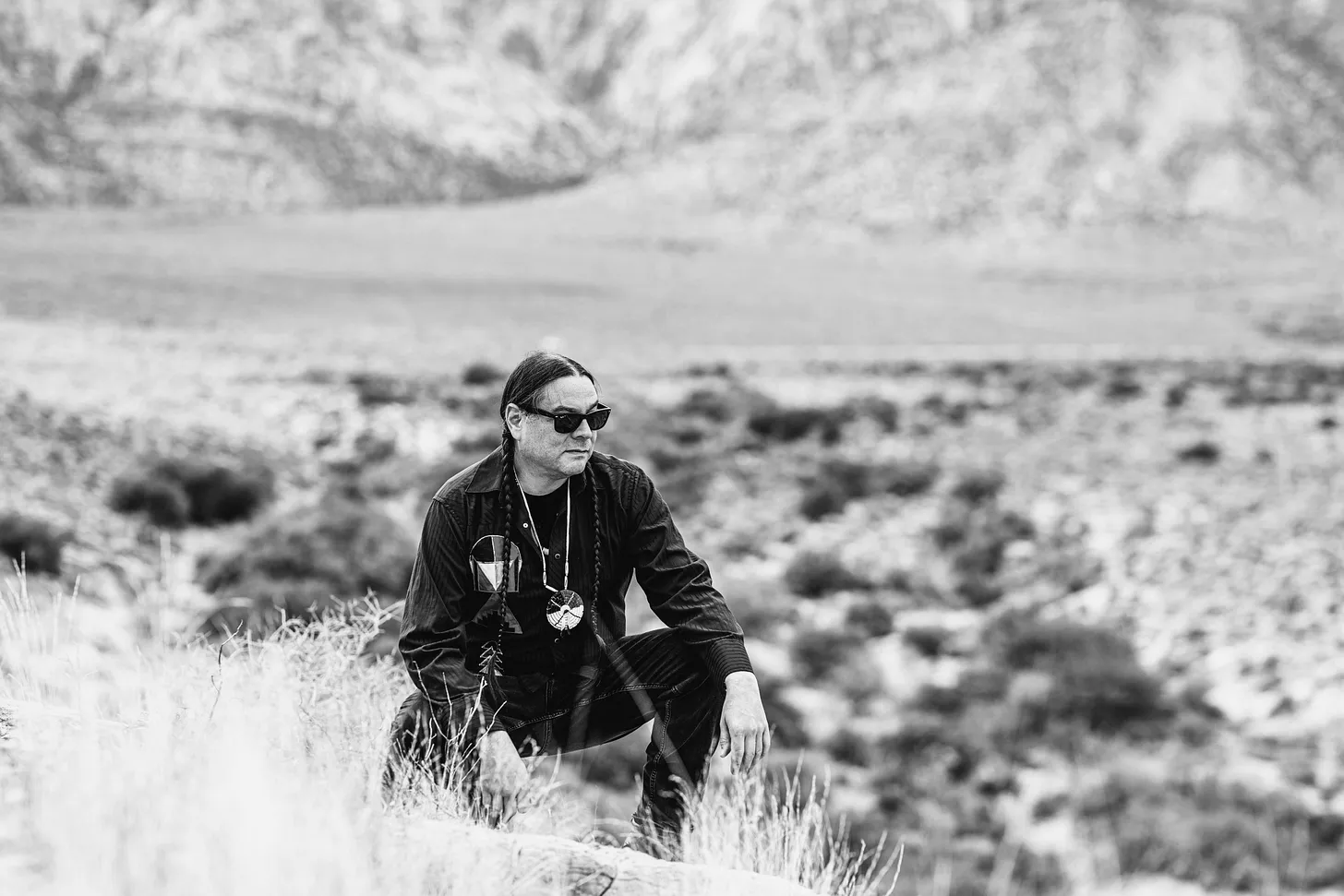
Herb shot this photo in the Badlands. He was so happy.

Now is the time, we are the ones we have been waiting for... —Hopi Prophecy

By Trace Hentz, blog editor

My entire childhood I had plenty of food.  This is not true for all humans, I know.  Look at the news across the world, like in Gaza.   When it comes to writing about adoption or world events, I know I’m doing something right if I am afraid.

I spent most of my life afraid of upsetting people, avoiding that.  Some might say that is low self-esteem but I think being afraid, fear itself, is a call to action.  If you are afraid, then you know you are doing something right.  You are challenging yourself and breaking down your thoughts into something you can fix or not.

I could not change what happened in my childhood but I could change how I looked at being adopted.  I could drop judgment.  I could stop blaming my adoptive parents and my natural parents.  I could turn “being adopted” into something good—or try to make my life and other lives better.

Years ago, I heard Noam Chomsky on Democracy Now describe how the occupiers of Palestine are using food insecurity to keep Palestine children alive but not enough to thrive!  Too little food and starvation can be used as a weapon of war—with long-term consequences.  Brains and bodies are affected long-term.

That is exactly what has happened here on American soil. YES!  The American government only feeds American Indians junk with commodities (boxed or canned food and very little vegetables).  The diabetes epidemic is living proof it’s working.  Plus there are not enough jobs to feed ourselves.  That way we Indians will be too weak to protest reservation living conditions. That way we’ll stay depressed or immobile.  That way we’ll self-medicate with alcohol or drugs. That way many of our men will be imprisoned.  That way we won’t be in the way when the government and industry wants to take more resources like copper, coal, uranium and shale gas.  Reservations were purposefully isolated so American (and Canadian) governments could totally control what we received—especially food, blankets, housing, medical care, etc.

Governments still keep Indians poor.  The occupiers claimed they wanted Indians to be farmers, settle in one place, but not exactly on “farm-able land.”  Think of the Badlands, a dry arid remote place, not exactly farmland.

Most of us Lost Birds who were adopted out didn’t have food insecurity or starvation growing up.  It was not something we had to worry about.  Lost Birds/Adoptees need to realize the WAR is still being waged on Indians in many subtle ways.  And if we use our minds in a good way, and come together, maybe WE can tackle food insecurity on reservations that still exists!

Maybe just maybe being adopted out was destined to give us the mind and ideas and courage necessary to feed our tribal families who have been occupied and starved into submission.


2004:

When I got married in 2004, my husband Herb flew out to Rapid City, South Dakota (where I was visiting my relatives) and I drove us through the Badlands to Porcupine (Oglala Lakota Reservation) to see my relative Ellowyn Locke.  (Herb had never been to South Dakota and I also drove him to see the town of Deadwood.)

One of the chores we needed to do was to go pick up commodities.

We drove my Chevy Tracker to the distribution center and Herb had many boxes of canned food on his lap.  My small SUV was stacked and packed and Ellowyn was holding a box of cans as I drove us to her house.

Mostly this food was canned, but there were some cans of peanuts, powdered milk, lard, flour, boxed cereal, etc.  None of this food is good for you... long-term. Ellowyn was on dialysis for her diabetes, and it's true the food sent from the federal government is not healthy and meant to harm their health.  (Porcupine and Wounded Knee is a food desert, with no grocery stories close by, but Sharp's Corner had a gas station filled with junk food, snack foods, and sugary drinks.)

Herb told Ellowyn that he grew up in Harlem (New York City) and his family had the same commodities - boxed cheese, powdered milk, and cans of fruit and vegetables. Nothing was fresh.

It was not the first time I noticed that Ellowyn had one head of cabbage to last one month, along with a few carrots and a few potatoes.  That was all the fresh food she had until the next distribution.  We usually drove south to Chadron, Nebraska to buy meat, when I was there every summer.

Ellowyn tried to grow fresh vegetables on her land, and had a small patch down by a creek that was totally hidden from the road and her brother's roaming horses could not get to it, or they'd eat it all.

Since the 1990s, if I drove to Pine Ridge, I'd stop at a grocery store first to buy fresh lemons, oranges, veggies and fresh meat, before I got to her house.  And I'd buy the biggest bag of dog food I could carry, since Ellowyn usually had at least one big dog guarding her house in Porcupine.

I also brought her supplies, like beads and fabric, since she sewed quilts, to sell to tourists.  I never went there without a carload of gifts and supplies.  And I never left without a carload of gifts she made me!  (She made my wedding dress!)

Please be generous with your relatives, and send money, or bring gifts and supplies if you go to visit.  Many of us do not live on the rez, and we don't learn generosity growing up.  

If you do go home, bring them seeds and fresh ideas on ways to grow fresh food.

Tuesday, January 30, 2024

Carlisle: Sending childen home to die


excerpt:

Mary Annette Pember
ICT

George Little Wound was gravely ill when he was sent home to Pine Ridge from the Carlisle Indian Industrial School in 1889, just three years after arriving at the notorious boarding school.

Little Wound, the son of Chief Little Wound, was among a group of three Pine Ridge students shipped home together with what the school physician described as “incipient consumption” and “scrofula,” a disfiguring infection of the skin and lymph nodes caused by the same bacteria as tuberculosis, according to Carlisle records.

All three appeared to survive their illness for some time after they returned to Pine Ridge, though Little Wound was never the same.  Forever weakened by the disease, he struggled to support himself and expressed disgust with his school experience.

“I went to [Carlisle] school to get a good education ... but I was greatly mistaken when I went to school,” he wrote in 1911, in a tersely worded survey he sent to Carlisle more than 20 years after returning home.

“I come home with sickness and do not know any thing.... and believe I may never get well from the sickness which I brought from the school,” he wrote. “I am in a miserable place and bad condition living in a one-room log home without floor where I am unable to help myself.”

Native populations across the country decreased by more than 100,000 during the early years of boarding schools, with about one third of the total Native population dying between 1860 and 1900, mostly from diseases such as tuberculosis.

KEEP READING

Tuesday, October 18, 2022

Buried Secrets: Red Cloud takes the lead in uncovering boarding school past

 UPDATED


Pine Ridge school’s Truth and Healing effort looks for long-sought answers

WARNING: This story contains disturbing details about residential and boarding schools. If you are feeling triggered, here is a resource list for trauma responses from the National Native American Boarding School Healing Coalition in the U.S. In Canada, the National Indian Residential School Crisis Hotline can be reached at 1-866-925-4419.

This story and a two-part podcast are the result of a collaboration between ICT and Reveal to examine Indigenous boarding schools in the United States. The podcast, “Buried Secrets: America’s Indian Boarding Schools,” starts with part 1 on Saturday, Oct. 15, and concludes with part 2 on Saturday, Oct. 22.


READ

Sunday, November 8, 2015

Justice Department Sues South Dakota State Agency for Discrimination Against Native American Job Applicants at Pine Ridge Reservation

DOJ Sues S. Dakota DSS for Discrimination Against Tribal Job Applicants


DOJ Press release here.

The Justice Department today filed a lawsuit against the South Dakota Department of Social Services (DSS) alleging that at its Pine Ridge Reservation Office, the state agency repeatedly discriminated against Native American job applicants because of their race, in violation of Title VII of the Civil Rights Act of 1964.
The lawsuit, filed in the U.S. District Court for the District of South Dakota, alleges that in failing to select well-qualified Native American applicants for several positions in DSS’s Pine Ridge Reservation Office, the state agency engaged in a pattern or practice of discrimination and violated Title VII of the Civil Rights Act of 1964, a federal statute that prohibits employment discrimination on the basis of sex, race, color, national origin and religion.

“Federal law provides all Americans with equal opportunity to compete for jobs on a level playing field free from racial discrimination,” said Principal Deputy Assistant Attorney General Vanita Gupta of the Civil Rights Division.  “When employers discriminate against qualified job applicants because of what they look like or where they come from, they violate both the values that shape our nation and the laws that govern it.”

U.S. v. S.D. DSS Complaint here.
According to the complaint, in October 2010, Cedric Goodman, a Native American with supervisory experience as a social worker, as well as several other well-qualified Native Americans, applied for an Employment Specialist position at DSS’s Pine Ridge Office.  The complaint alleges that after interviewing Goodman and the other Native American candidates who met the employer’s objective job qualifications, DSS removed the vacancy and hired no one.  The next day, however, DSS reopened the position and ultimately selected a white applicant with inferior qualifications and no similar work experience.  The complaint alleges that DSS discriminated against Goodman and other similarly-situated Native American applicants based on their race.
In addition, the complaint alleges that denying Goodman’s application was part of a pattern or practice of race discrimination by DSS, where the agency repeatedly removed job postings and used subjective, arbitrary hiring practices to reject qualified Native American applicants for Specialist positions.
Over a two year period beginning in 2010, DSS posted 18 Specialist vacancies for its Pine Ridge Reservation Office.  Even though the agency received nearly 40 percent of its applications from Native Americans, DSS hired 11 Whites and only one Native American, while removing six other openings entirely.

Thursday, October 1, 2015

Songs My Brothers Taught Me - Official Trailer


My friend Andrew IronShell shared this on Facebook - please go see this movie.


2015 Sundance critics' favorite and official selection of Cannes Film Festival's Directors Fortnight: Set on the Pine Ridge Indian Reservation, SONGS MY BROTHERS TAUGHT ME is a compelling and complex tale that explores the bond between a brother and his younger sister, who find themselves on separate paths to rediscovering the meaning of home. Written and directed by Chloe Zhao.

Monday, February 13, 2012

The Thick Dark Fog

"The Thick Dark Fog" Official Trailer from randy vasquez on Vimeo.

Read more here: http://www.thickdarkfog.com/?page_id=120

Thick Dark Fog" Official Trailer
http://vimeo.com/user9741689/trailer

Award winning documentary - The Thick Dark Fog.

Walter Littlemoon attended a federal Indian boarding school in South Dakota sixty years ago. The mission of many of these schools in 1950, was still to “kill the Indian and save the man.” The children were not allowed to be Indians – to speak their language or express their culture or native identity in any way at the risk of being severely beaten, humiliated or abused. What effects did these actions cause?

Many Indians, like Walter, lived with this unresolved trauma into adulthood, acting it out through alcoholism and domestic violence. At age 58, Walter decided to write and publish his memoirs as a way to explain his past abusive behaviors to his estranged children. But dealing with the memories of his boarding school days nearly put an end to it.

“The Thick Dark Fog” tells the story of how Walter confronted the “thick dark fog” of his past so that he could renew himself and his community.

For more information visit: thickdarkfog.com

Happy Visitors!

NEW WEB ADDRESS

Because we don't want to lose information on this blog, we now have a domain name: American Indian Adoptees.com - click and save this link:

2026: WE HAVE A BACK UP BLOG COMING SOON: www.americanindianadoptees.blog (on wordpress) We are no longer on Facebook. We deleted our accounts.

WRITTEN BY HUMANS!

WRITTEN BY HUMANS!

Blog Archive

Featured Post

Your History Class Was a F*cking Lie | #NOMOAR

  Your History Class Was a F*cking Lie by Sean Sherman (Or: How the American Educational System Has Always Been a Racist Propaganda Program...


Native Circles

Native Circles
click logo for podcasts!

Most READ Posts

Bookshop

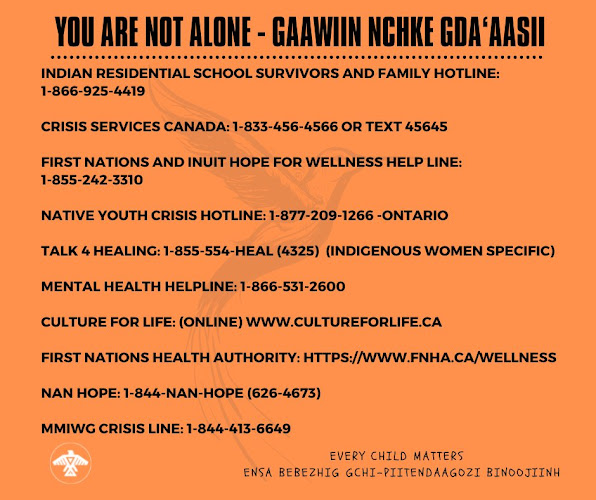
You are not alone

You are not alone

To Veronica Brown

Veronica, we adult adoptees are thinking of you today and every day. We will be here when you need us. Your journey in the adopted life has begun, nothing can revoke that now, the damage cannot be undone. Be courageous, you have what no adoptee before you has had; a strong group of adult adoptees who know your story, who are behind you and will always be so.

Diane Tells His Name


click photo

Lost Birds on Al Jazeera Fault Lines

Lost Birds on Al Jazeera Fault Lines
click to read and listen about Trace, Diane, Julie and Suzie

NO MORE STOLEN SISTERS

NO MORE STOLEN SISTERS
click image

ADOPTION TRUTH

As the single largest unregulated industry in the United States, adoption is viewed as a benevolent action that results in the formation of “forever families.”
The truth is that it is a very lucrative business with a known sales pitch. With profits last estimated at over $1.44 billion dollars a year, mothers who consider adoption for their babies need to be very aware that all of this promotion clouds the facts and only though independent research can they get an accurate account of what life might be like for both them and their child after signing the adoption paperwork.

Original Birth Certificate Map in the USA

Google Followers