BOOZHOO! We've amassed tons of information and important history on this blog since 2010. If you have a keyword, use the search box below. Also check out the reference section above. If you have a question or need help searching, use the contact form at the bottom of the blog.
We want you to use BOOKSHOP to buy books! (the editor will earn a small amount of money or commission. (we thank you) (that is our disclaimer statement)
This is a blog. It is not a peer-reviewed journal, not a sponsored publication... WE DO NOT HAVE ADS or earn MONEY from this website. The ideas, news and thoughts posted are sourced… or written by the editor or contributors.
EMAIL ME: tracelara@pm.me (outlook email is gone)
THANK YOU CHI MEGWETCH!
Under then-President Joe Biden, Congress passed the Inflation Reduction Act in 2022, providing nearly $2 billion to tribes to invest in renewable energy.
The Hopi were approved for a $25 million grant to install solar panels and battery storage for around 600 homes through a program called Solar for All.
Now,
the tribe will be lucky to power around 100 homes from a much smaller
pot of funding through a federal grant from the Tribal Electrification
Program. Hopi officials say they will now have to decide who gets power
and who doesn't.
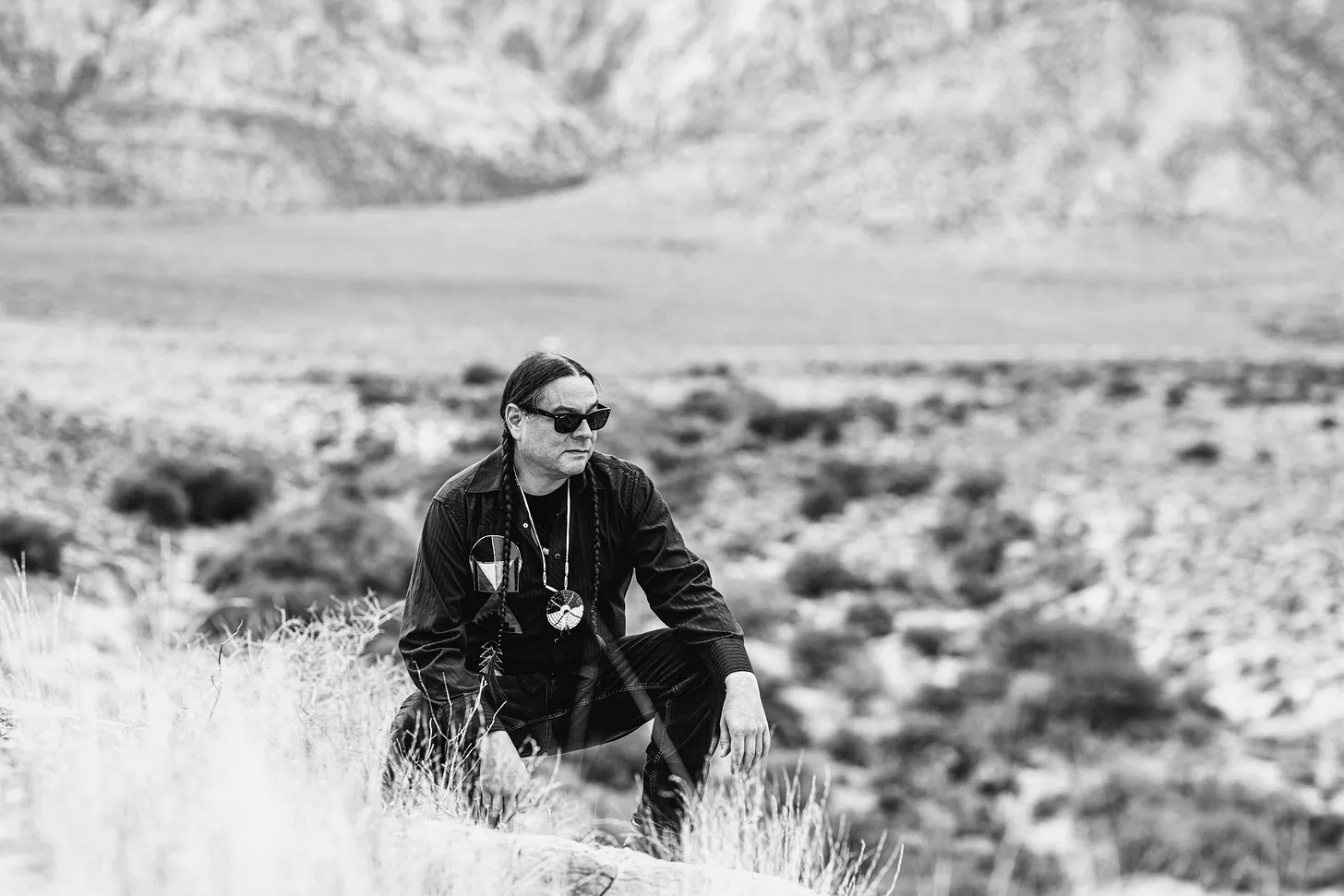
"That's hard news to deliver, man," says
Nuvangyaoma, "especially when you offer somebody hope and they're
thinking, 'All right, finally we're getting somewhere' — and then the
rug gets pulled out from them."
There once was a girl who lived in Corrales and loved collecting
butterflies. She would capture perhaps 20 or 30 of them at a time, take
them inside, then set them free to fly around her bedroom. Another thing
she noticed about herself: Whenever she happened to be on the verge of a
big life change, a coyote would appear. “Not like one running across
the road,” Veronica Krupnick, now 27 years old, recalled, “but like I’d
be out on a walk with my family, and a coyote would follow along close
behind us.”
For years, these uncanny animal connections struck her as mysterious
and sometimes unsettling. “I didn’t have anyone to teach me about them,”
Krupnick said, until she was reintroduced to her Hopi grandparents when
she was 19 or 20. It was then that she learned that the coyote and the
butterfly are among her clan affiliations. Suddenly, these aspects of
her life, along with others, began to make sense.
An enrolled member of the Hopi tribe, Krupnick’s lineage also
includes Jemez Pueblo and Navajo ancestry. She was adopted by a white
couple when she was 10 years old, after spending four years in seven
different foster placements. Though ultimately landing in a home where
she was physically safe and materially secure, she struggled throughout
her adolescence and was eventually admitted into a behavioral
residential treatment facility, where she completed her last two years
of high school. Coyote companions were the least of the things that
confused her.
For some 45 years, adoptions like Krupnick’s have been governed by a
landmark federal law, the Indian Child Welfare Act. Enacted in 1978,
ICWA regulates adoption and foster placement for Native American
children who don’t live on reservation lands — the vast majority, owing
to the fact that some 87 percent
of Native peoples have moved off those lands. The law was designed to
end the long and terrible history of involuntarily separating Native
children from their families and to do what’s in the best interest of
each child.
Veronica
Krupnick, outside the state capitol in Santa Fe, where she works today
as a Leadership Analyst. Michael Benanav/Searchlight New Mexico
ICWA strives to keep children within their families, clans, and
communities. Today, Native American tribes and child welfare
organizations hail its success with near unanimity. It is widely
regarded as the gold standard for child welfare regulations, and states
have modeled their own laws for non-Native kids after it to one degree
or another.
An upcoming U.S. Supreme Court decision is casting a shadow on all that. The high court will soon rule in Brackeen v. Haaland,
in which plaintiffs seek to strike down ICWA, alleging that it
discriminates on the basis of race and violates the Constitution in
other ways, as well. The case arose from the Texas court system, where
Jennifer and Chad Brackeen, a white couple seeking to adopt a Navajo
girl, sued to make it easier for non-Native families to adopt Native
American children. A decision is expected by the end of June.
Much is at stake. In the big picture, some of the legal challenges to ICWA strike at the very foundation of Indian law,
or Title 25 — a voluminous compilation of federal codes governing
nearly every aspect of life on tribal lands. Many of these laws are
rooted in centuries-old interpretations of the Constitution’s Commerce
Clause that, among other things, give Congress the power to regulate and
protect certain tribal activities. Lawyers for the Brackeens, along
with conservative groups such as the Goldwater Institute, argue that
Native American child custody issues are not among them.
Should the high court rule that it was indeed beyond the authority of
Congress to enact ICWA in the first place — by narrowing the
conventional understanding of the Commerce Clause — a swath of other
laws could fall, too.
A skeptical Justice Neil Gorsuch suggested during oral argument in
November that these could include Native American health care
provisions, religious liberties, rights to access sacred sites and
tribal environmental regulations. “There would be a lot that would be
bitten out of Title 25,” he said. “We’d be busy for the next many years
striking things down.”
The court could conclude that Congress didn’t violate the Commerce
Clause, but overreached in more limited ways, overturning ICWA without
the alarming ripple effects.
But if the justices rule that ICWA violates the Equal Protection
Clause of the Fourteenth Amendment — concluding that it is a “race-based
law” — the consequences could be catastrophic, many Native American
advocates fear.
“Indian law is based on the principle that tribes are sovereign
nations that have a government-to-government relationship with the
United States,” said Beth Wright, a staff attorney at the Native
American Rights Fund and an enrolled member of Laguna Pueblo. “If this
is reduced to a racial classification, all rights that tribes and tribal
people enjoy are also subject to attack. They’re attacking tribal
sovereignty at its core.”
Wright fears that this would spawn wholesale assaults on Indian
Country, such as environmental and economic exploitation by corporations
eager to tap into natural resources and casinos on Native land. She
points out that the law firm representing the Brackeens pro bono also
represents Chevron and some of the largest gaming companies in the world.
Opponents of ICWA dismiss such concerns as exaggerated. Their only targets, they say, are Native child welfare regulations.
In New Mexico, Native American adoptions and foster care are
regulated by an especially robust version of ICWA called the Indian
Family Protection Act. As a state law, the Act will remain intact unless
the Supreme Court strikes down ICWA as a violation of the Equal
Protection Clause – in which case it too would likely be thrown out as
race-based, according to attorneys on both sides of the debate.
“The
separation of Indigenous people has been used as a tool of genocide, a
form of violence against our community and our children,” said Angel
Charley, executive director of the Coalition to Stop Violence Against
Native Women. Charley is pictured here outside the San José de la Laguna
Mission Church, in Laguna Pueblo. Michael Benanav/Searchlight New
Mexico
A complex welter of issues
Beyond the tangle of legal matters, the Supreme Court case delves
into the evocative terrain of historical trauma, race, identity,
cultural biases — and the very meaning of family.
The moral heart of the Brackeens’ argument is that ICWA, despite its
good intentions, actually discriminates against Native children by
limiting their options for adoptive and foster families and making
“genetics and ancestry” the key criteria for placement. The Brackeens
themselves, who are evangelical Christians, fostered and ultimately
adopted a boy of Navajo and Cherokee parentage in 2018, following what
they described as a religious calling.
They have been fighting to adopt his younger half-sister, who they have
fostered for most of her four years, sharing custody with a great-aunt
who lives on the Navajo Nation.
ICWA mandates that child welfare agencies should first try to settle
Native children with other family members. If that’s not possible, they
should next try to place children with another family from their tribe,
then with a family from another tribe, and lastly in a non-Native
household. Exceptions are made on a case-by-case basis, when in the best
interest of the child. But the Brackeens contend that these preferences
harm Native children by steering them away from adoptive families that
might be optimal but are farther down the list.
Among the many who disagree are 497 tribes, dozens of children’s
rights organizations, 87 members of Congress, the ACLU, the American
Academy of Pediatrics, the American Psychological Association and other
groups that have filed or joined amicus briefs in support of ICWA.
There is ample evidence dating back decades that removing Native
children from Native society can cause “untold social and psychological
consequences,” according to the brief filed by 180 tribes. Another brief, filed by Casey Family Programs and 26 other child welfare and adoption organizations from around the country, highlights ICWA’s crucial benefits.
Citing outcomes data, the brief points out that, by favoring
placement with blood relatives, clan relations or close family friends,
Native foster children are less likely than non-Native children to be
shuffled around from one setting to another, resulting in “fewer mental
health disorders, and better well-being, while minimizing trauma.” They
also have a better chance than non-Native kids of landing a permanent
home.
A system “that does not prioritize family integrity and community
ties, invites a return to the days when courts unthinkingly presumed
that an Indian child’s best interests were served by placement with a
middle-class, non-Indian family,” the brief adds.
Wright, the lawyer with the Native American Rights Fund, put it
bluntly: “The other side doesn’t really care about Indian children.”
In
the late 1960s and early ’70s, studies found that up to 35 percent of
Native children were in Anglo foster homes, adoptive homes, or
institutions — typically removed from their families without due
process. Indigenous children were also forcibly placed in boarding
schools, including one on the Navajo Nation that opened in 1883. Its
stated goal: “To remove the Navajo child from the influence of his
savage parents.” Photo courtesy of the National Archives and Records
Administration
Who am I?
For Native child welfare advocates in New Mexico, the most important
feature of ICWA’s placement preferences is its attempt to address the
deep, existential questions faced by children who find themselves
separated from their parents.
“Where do I come from? Who are my people? Who am I? Anyone who has
interacted with the foster care system can identify with wondering about
these things,” said Angel Charley, of Laguna Pueblo. As executive
director of the Coalition to Stop Violence Against Native Women, Charley
provided input into the drafting of New Mexico’s Indian Family
Protection Act of 2022; she also works on improving communication
between Native foster families and the Children, Youth and Families
Department, the agency responsible for foster care in New Mexico.
“We need to insure ‘belonging’ for little ones who are removed from
families for circumstances that are beyond their control,” Charley said
in a phone interview. “Indigenous people have language, culture,
ceremony. We’re so grounded in belonging and to our ancestors and the
land. For a child not to have access to those ways of being is
detrimental.
“I know many adults who grew up with no connection to community and
are struggling to figure out how to connect. Kinship and culture can’t
be replicated outside of our communities. Belonging is more important
than material wealth.”
Veronica Krupnik’s complex story bears this out, though parts of it,
if taken in isolation, could bolster the argument against ICWA’s
placement preferences: At age nine, she was being fostered by a family
member, but the situation turned abusive. She was then placed with a
white couple, on an emergency basis, and they eventually adopted her.
Her adoptive parents were “wonderful providers,” sending her to top
private schools, she said. “They wanted me to be educated and have every
opportunity.” But she spiraled as she entered her teen years, rebelling
against a restrictive household where she never felt entirely at home.
“It wasn’t just their fault,” she reflected. “I was a traumatized kid.”
Exacerbating those traumas was her sense of being thrust into a world
in which she didn’t belong. “It’s not just one thing. It’s how you
speak, how you dress, how you wake up in the morning, how you eat
dinner,” Krupnick said. “In Native cultures, ways of life are more
abstract; in Western culture, everything needs to have an answer,
everything happens on a timeline, there’s a lot less grey.”
What’s more, leaving her community as a child, she didn’t know much about her own culture, leaving her ungrounded, unrooted.
Catherine Begaye, the ICWA court’s presiding judge, in New Mexico’s Second Judicial District.
State fails Indigenous children
Though New Mexico, with the passage of IFPA, has emerged as a leader
in Native American child welfare, it hasn’t yet lived up to its
aspirations. A 2021 survey by the Children, Youth and Families
Department found that the state has fallen far short
of meeting several of its obligations to Native kids in foster care.
Only about a quarter of them found preferred placements with family or
tribal members, the survey revealed.
The critical bottleneck is the shortage of licensed Native foster
families. While efforts are now being made to increase Native
participation — in part by employing more culturally sensitive ways of
communicating with and evaluating households — raising these numbers
will take time.
The major exception to these deficiencies is in Bernalillo County,
where a special ICWA court was established in 2020. Headed by Judge Catherine Begaye,
a member of the Navajo Nation, the court has seen more than 100
children come through its doors: 86 percent have gone into preferred
placements; 60 percent have been reunified with their parents; none of
the families that were reunified have come back before the court; and no
parental rights have been terminated, court data show.
Judge Begaye chokes up with emotion when speaking of her hopes and
dreams for the children she sees, and she uses the powers of the bench
to support each one. This can include helping extended family members
become licensed foster parents, working in tandem with tribes and
ordering the Children, Youth and Families Department to ensure that kids
have the opportunity to participate in dances and other ceremonies.
Begaye calls doing what’s best for Native children simply “following the
law.”
If ICWA is overturned on equal protection grounds, this special court
will likely cease to function, at least in its current form. Throughout
New Mexico and the nation, protocols for handling Native child welfare
cases will enter unknown territory. The state doesn’t have any backup
plans to address this possibility.
Krupnick hopes it won’t come to that. She knows the value of the very
things that ICWA was designed to protect and believes other Native
children do, too. “As a kid plopped from one community to another, that
took away a really essential part of my identity. I couldn’t figure out
where I was going until I found this core piece of myself.”
Reconnecting with her culture and her family of origin, and making
Native friends, has helped Krupnick heal. “When I go back to Hopi,
something in me knows I’m home. I have a physical response that I don’t
have anywhere else, except maybe at my great-grandma’s house in Jemez.
It’s like my body takes a great big sigh of relief,” she said. Being
around other Native people, she added, means “not having to explain.”
She now volunteers with and advocates for Native children who are in
the child welfare system and serves on the board of directors of CASA First
– which trains court-appointed advocates for foster children in the
First Judicial District. Recently, she also took a new job in the New
Mexico’s House Majority Office.
And she still has close encounters with coyotes from time to time,
she said. “But now I can lean on it, instead of it being weird and
confusing.”
Indigenous communities are among the most vulnerable to climate change, yet they still struggle to be heard by governments around the world. Their spiritual teachings might help civilization to change course and prevent disaster.
South Carolina court drops contempt charge against Dusten Brown Dusten Brown and the Cherokee Nation rea...
Bookshop
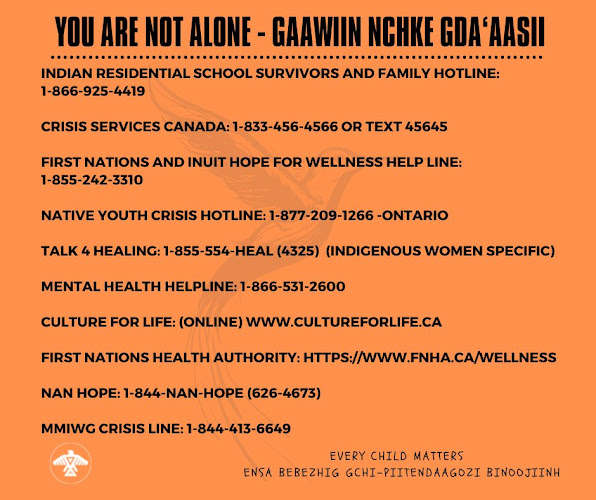
You are not alone
To Veronica Brown
Veronica, we adult adoptees are thinking of you today and every day. We will be here when you need us. Your journey in the adopted life has begun, nothing can revoke that now, the damage cannot be undone. Be courageous, you have what no adoptee before you has had; a strong group of adult adoptees who know your story, who are behind you and will always be so.
Diane Tells His Name
click photo
Lost Birds on Al Jazeera Fault Lines
click to read and listen about Trace, Diane, Julie and Suzie
NO MORE STOLEN SISTERS
click image
We conclude this series & continue the conversation by naming that adoption is genocide. This naming refers to the process of genocide that breaks kinship ties through adoption & other forms of family separation & policing 🧵#NAAM2022#AdoptionIsTraumaAND#AdopteeTwitter#FFY 1/6 pic.twitter.com/46v0mWISZ1
As the single largest unregulated industry in the United States, adoption is viewed as a benevolent action that results in the formation of “forever families.” The truth is that it is a very lucrative business with a known sales pitch. With profits last estimated at over $1.44 billion dollars a year, mothers who consider adoption for their babies need to be very aware that all of this promotion clouds the facts and only though independent research can they get an accurate account of what life might be like for both them and their child after signing the adoption paperwork.










 Posts
Posts

