A hunter, an activist and a tattoo artist:Three Greenlandic women talk about their pride in belonging to the Inuit people.


Jaelyn Jarrett remembers moving from Nain, N.L., to Ontario as an eight-year-old when she started being called a ‘Puatugi’.
“I didn't really understand what that term meant at the time, but I knew people would reference my hair, and so I figured that it meant black,” she said.
After conversations with her grandmother, Jarrett discovered that word meant Portuguese. She wondered why she — a Black-Inuk woman with Guyanese roots — was being referred to as Portuguese.
That memory led the Carleton University master’s student on a journey to trace the origin of the word, where she came across Canadian historian Kenn Harper’s Names We Call Each Other.
The book explains many of the whalers in the Arctic were Black men from Cape Verde — islands located off the west coast of Africa once colonized by Portugal.
Many Cape Verdeans emigrated to the United States starting in the 1800s, particularly to coastal towns with thriving whaling ports like New Bedford, Massachusetts. From there, some Cape Verdean men joined whaling ships travelling to the Hudson’s Bay and Cumberland Sound.

Those Black whalers were then referred to by Inuit as ‘Puatugi’, which was adapted from the word Portuguese to flow better in Inuktitut.
While Black whalers did head North for economic pursuits, Jarrett believes those men had very different experiences than their white counterparts.
"They were able to get opportunities to come to the North and make money, but they were still under the confines of racism and colonialism," she said.
She thinks many people don't realize that part of Nunavut’s history, which she believes could offer answers to the racial divide that exists to this day.
Newly uncovered Inuit animation from the '70s screening for the first time

Of all the animation reels made in Kinngait in the 1970s, Jamesie Fournier says he remembers the sand reels best.
“It has an ethereal, dreamlike quality to it," he said. "Just seeing animation in sand and seeing one image blur into another, but also seeing a culture reflected into that as well, something that's uniquely Inuit... I thought, well, that is quite something.”
Many of these stop motion animation sand reels were made by Timmun Alariaq in the 1972 Sikusilarmiut animation workshop in Kinngait, Nunavut. The workshop was put on by the National Film Board of Canada, with support from the Department of Indian and Northern Affairs and the government of the Northwest Territories.
Some of those sand reels aired in the 18-minute film “Animation from Cape Dorset” in 1973, which went on to win an award at Animafest Zagreb and gain international attention.
But many reels were put in storage and never screened to a wider audience.
That was until last summer, when the National Film Board of Canada uncovered and digitized these forgotten reels, labelled “Arctic Workshop Reel 1", "Arctic Workshop Reel 2" and "Arctic Workshop Reel 3."
These newly uncovered reels run for more than 50 minutes and are made by 12 different filmmakers — nearly triple the number of reels first screened to the public in “Animation from Cape Dorset.”
“Think of it as a director's cut,” Fournier said. “All of [the reels] had never seen the light of day or had never gotten into any sort of acclaim or accreditation for the artists. So, being able to have this body of work, and being able to make it widely available to folks is really an exciting, exciting time.”
Fournier is the coordinator for the Aulajut Nunavut International Film Festival, where the reels screened to a public audience for the first time in Iqaluit this week.
The reels will be screening in Kinngait next week and Igloolik the week after to share them with more communities. They are also available to watch on the National Film Board of Canada’s website.
Peter Raymont directed the 1975 film “Sikusilarmiut” about the workshop. He says he was “honoured” to be invited to go to Kinngait and make the film.
“Amazing footage, right?” he said, smiling. “Made by these kids just sort of experimenting with various animation techniques. And I was told to splice it all together and to send it to film festivals.”
Raymont says it’s “wonderful” that these uncovered animation reels are now available to watch.
“That's remarkable, because we didn't include all the films, obviously, that the animators of [Kinngait] were doing in 1973 when they won that award,” he said. “They kept making films ... and now they're all available to see.”

Like Raymont, Fournier says the reels are experimental, unconventional and may challenge any misconceptions people may have when they think of Inuit art.
“Here you see a body of work that is very modern and experimental, especially for the 1970s era," he said. "So we have this feeling of a new wave of artistic expression coming out that defies the traditional beliefs that we [have about] Inuit art.”
Fournier says these reels still hold up today. He said he’s equally amazed by the other vibrant work made by artists from these workshops, like the reel “Magic Man”, which depicts a person flying.
“That's the exact same thing that people are producing now, just with their cell phones as a reel clip,” he said, smiling. “But that’s what these guys were doing in 1972 on the land in Kinngait.”
AFN Chief Cindy Woodhouse reveals 5 of 47 First Nations items returned to Canada last December
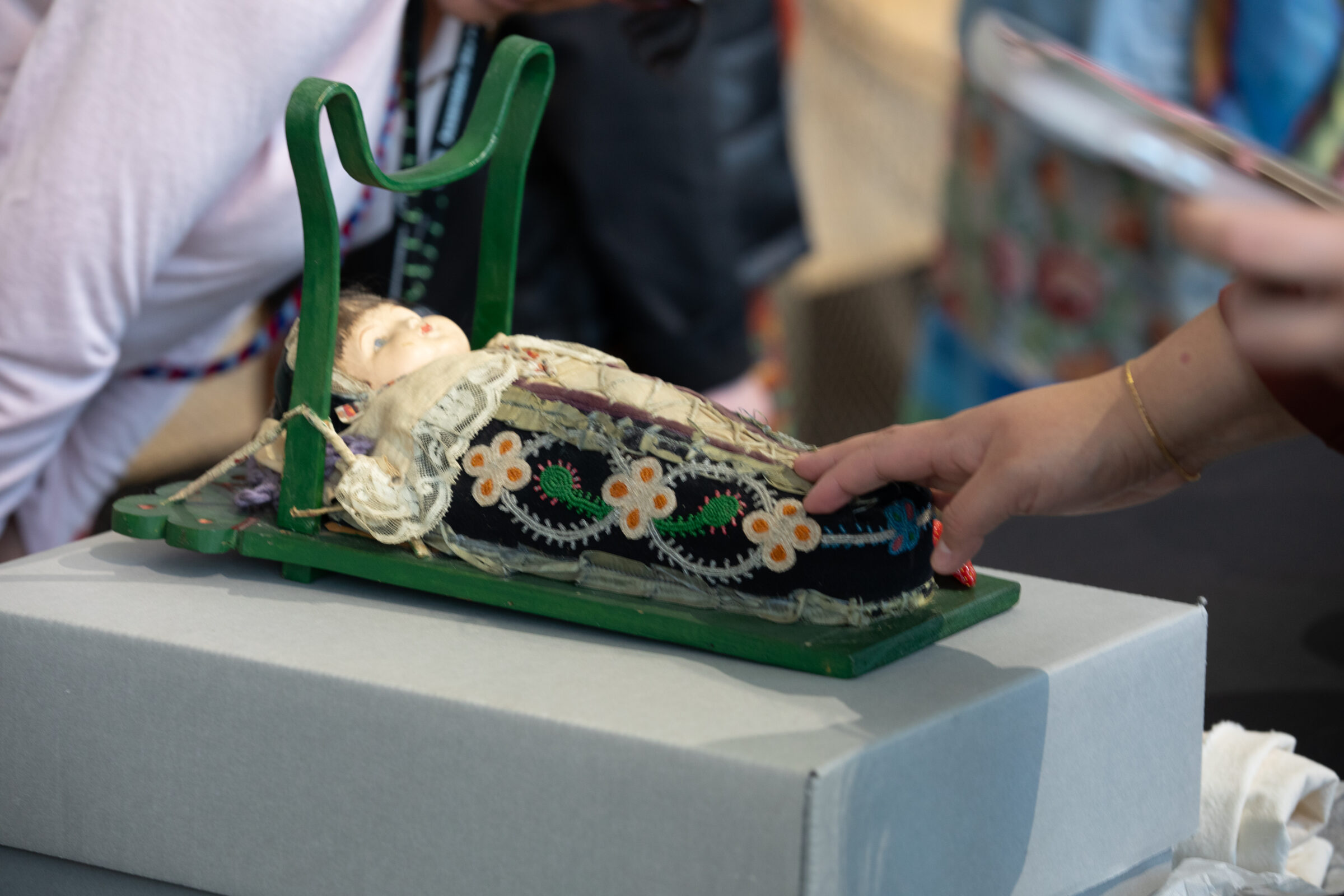
A First Nations woman touches a doll and crib, one of the five items revealed Tuesday, which were returned by the Vatican to the First Nations of Canada. (Photo by Jorge Antunes)
The return of Indigenous items from the Vatican is an “important and emotional moment for many First Nations across this country,” said Assembly of First Nations Chief Cindy Woodhouse prior to the unveiling of five items on Tuesday.
As part of the continuing process of repatriating Indigenous items that had been held by the Vatican, the Assembly of First Nations uncrated First Nations’ items whose region of origin has been determined, at the Canadian Museum of History in Gatineau, Que.
She called the items “sacred,” and not “artifacts” as some people have referred to the items that were once held by the Roman Catholic Church.
The items are a pair of embroidered leather gloves from Athabasca Chipewyan First Nation, a birchbark sap collector from Akwesasne Mohawk Nation, a baby carrier from Ontario, and a bowl and spoon from Manitoulin Island in Lake Huron.
The exact community where the bowl and spoon came from is known. But for the gloves, sap collector and baby carrier, only their general area of origin is known.
The bowl and spoon were made by the “great, great, great, great, great grand-uncle,” of Grand Chief Linda Debeassige of the Anishnabek Nation in what’s now northern Ontario.
“He signed the bottom of it. True story,” she said with a grin when a reporter asked how she knew her relative had made them.
The majority of the First Nations’ 47 items were not revealed publicly Tuesday, though several chiefs in attendance were invited for a private viewing later in the day.
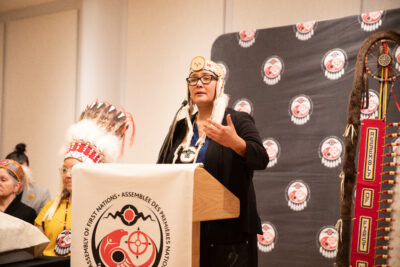
Grand Chief Linda Debeassige of the Anishnabek Nation was able to determine a bowl and spoon were made by an ancestor because he ‘signed the bottom.’ (Photo by Jorge Antunes)
Until their origins are determined, they will remain hidden, Woodhouse said.
Identification is a complicated process. Each community has its own knowledge that varies from community to community, she added.
“We have to respect First Nations as we identify where they [belong],” Woodhouse said.
When the 62 items first made their way to Montreal from Rome last December, 14 were deemed to be of Inuit origin, including a 100-year-old sealskin Inuvialuit kayak.
Some of those Inuit items were shown at a small gathering of media at a Canadian History Museum warehouse a few days after their arrival in Canada.
Except for the kayak, Inuit Tapiriit Kanatami — the national organization representing Inuit across Canada — said in an email last December it could not be sure where they came from until they have been examined further.
Inuit Tapiriit Kanatami did not return a request for comment Tuesday about the unveiling of the First Nations items.
The 62 items are just a few of, by some calculations, more than 100,000 sent to Rome a century ago by Roman Catholic missionaries for a symposium featuring Indigenous cultural items at the Vatican.
Woodhouse said she hoped the day will inspire other institutions across the world to consider repatriation plans for the thousands of items still out there.
“First Nations will not rest until all of our items that were wrongfully taken are returned to us,” she said.
I have written poetry about the FLAG PEOPLE, who plant their flag in your territory and on your land and declare they OWN it. NO KINGS, right? Trace

January 14, 2026 |
Denmark and Greenland oppose U.S. control, emphasizing their sovereignty and ties to NATO and the EU. |
https://apnews.com/article/greenland-united-states-denmark-trump-vance-rubio-meeting-cc278af4f3daf725029101966ba03568?user_email=9f3a4724473a3b89b16b75494b6120eb1bcf8be7bc063fd27d7700ea468f191a
https://apnews.com/video/nuuk-residents-rebuff-trumps-claims-of-chinese-and-russian-forces-lurking-off-greenlands-coast-e521e417e4944132b9cc159d328fb42c
The United States' interest in Greenland is not a recent phenomenon, but rather a recurring theme in its foreign policy, stretching back over 150 years. The idea of acquiring Greenland first surfaced in the 1860s under President Andrew Johnson's administration, following the U.S. purchase of Alaska from Russia. Secretary of State William Seward, a key figure in the Alaska acquisition, also eyed Greenland, recognizing its potential natural resources such as coal. While no formal offer was made at that time, a land swap involving Greenland was proposed under President William Howard Taft in 1910, which Denmark rejected.
The most significant historical attempt came in 1946, in the wake of World War II and the nascent Cold War, when President Harry S. Truman formally offered Denmark $100 million in gold for the island. Denmark, though recovering from wartime occupation, firmly rejected the offer, opting instead to expand U.S. military access to the island. This led to the establishment of key military installations like Pituffik Space Base (formerly Thule Air Base), which integrated Greenland into the U.S. early-warning radar and missile defense network, a presence that continues today under bilateral agreements. These historical precedents underscore a consistent American perception of Greenland as a strategic asset, even as Denmark and Greenland have consistently rebuffed outright acquisition.
MORE: https://chronicleai.org/article/greenland-rejects-renewed-u-s-overtures-firmly-declaring-not-for-sale

UPDATE: Disrespectful and Offensive: https://nunatsiaq.com/stories/article/disrespectful-and-offensive-inuit-canadian-politicians-react-to-u-s-greenland-threats/
The Cold War Over Greenland and the Inuit People at a Crossroads


Despite facing contemporary challenges and Danish influence, the Inuit possess ancestral knowledge of the Arctic environment and are fighting to preserve their cultural identity.
Their self-determined future, from remote settlements to the capital Nuuk, is central to their opposition to any annexation. As stated jointly by Danish Prime Minister Mette Frederiksen and Greenlandic Premier Jens-Frederik Nielsen on December 22, 2025, as cited by DW: "The island belongs to its inhabitants."
READ THIS:
MINING GEM?
https://www.straitstimes.com/opinion/greenland-is-not-the-mining-gem-some-think-it-is
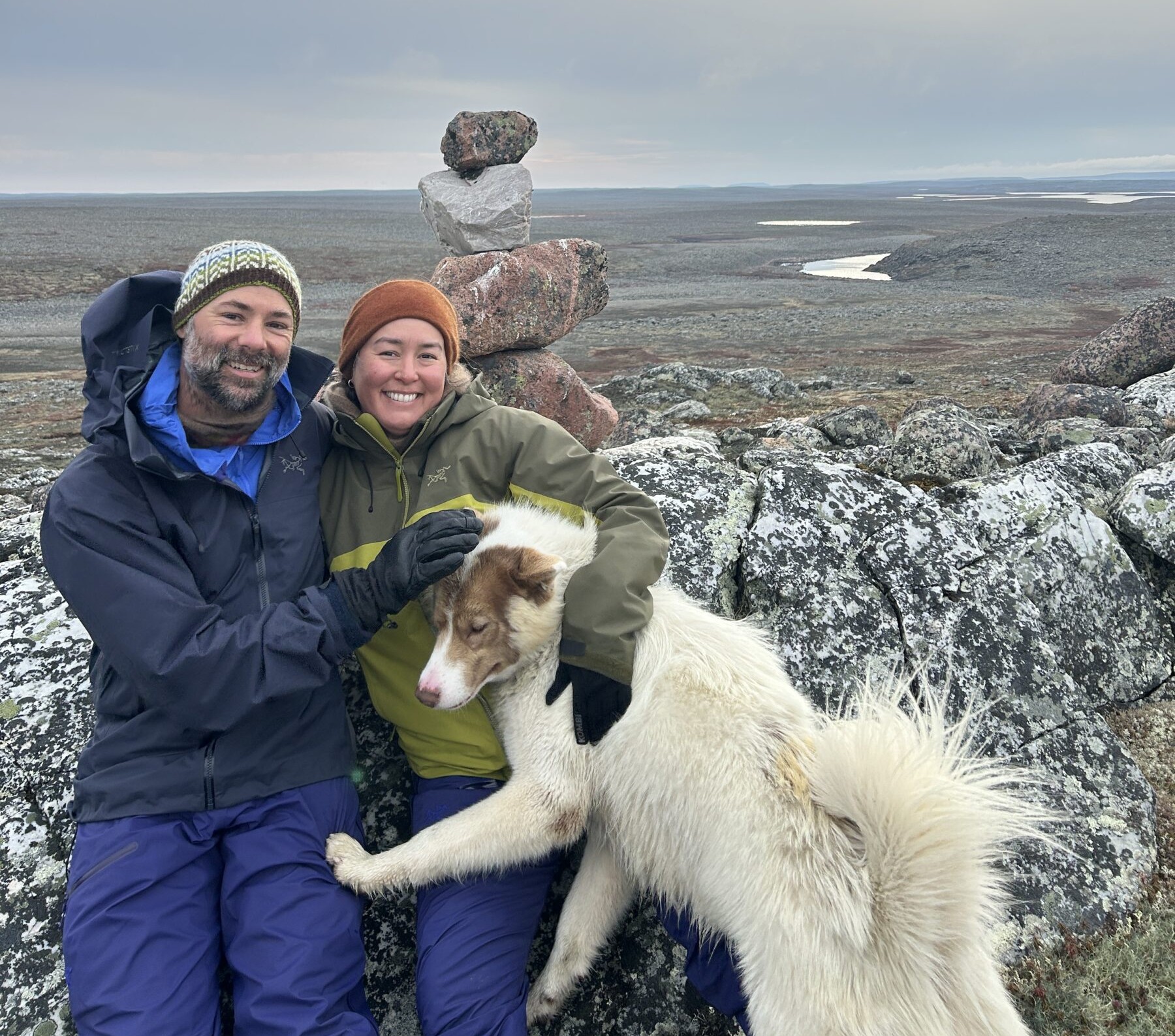
| Erik Reid and Gayle Uyagaqi Kabloona pose for a photo with their dog Tempe in front of one of many inuksuit the group used to guide their journey. (Photo courtesy of Gayle Uyagaqi Kabloona) |
In this year-end series, Nunatsiaq News reporters look back on their most memorable stories from 2025.
Working as a reporter, you often find yourself telling unhappy stories but every once in a while you get one that leaves you feeling inspired.
That’s where I found myself in October while writing about a woman who was trying to reconnect with her Inuit roots.
Starting in the 1930s, Inuit were displaced from their traditional lands by the federal government and moved to permanent settlements. They were forced to abandon their way of life of that involved migrating between winter and summer camps.
For Gayle Uyagaqi Kabloona, who now lives in Ottawa, this displacement is still within living memory. Her father, Thomas Kabloona, now in his 70s, shared stories with her about his family’s last migration to winter caribou hunting grounds in the 1950s before they moved to Baker Lake permanently.
“I’ve always loved my dad’s stories,” she told me in August when she was still planning the trip.
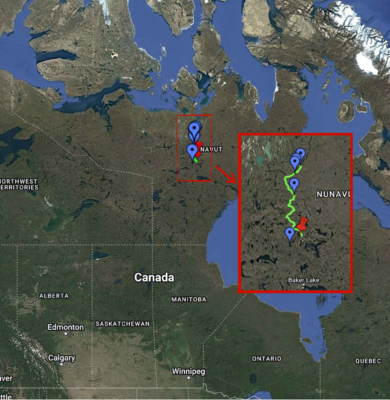 |
| A map showing the approximate route the group took from Back River south to a place called Amarulik, which means “the place where there are wolves.” |
Her father described the family’s traditional migration while poring over maps and describing what living on the land was like back then.
In August, Uyagaqi Kabloona, her partner, her sister and a couple of friends embarked on the 200-kilometre journey. They followed the same route her family had taken for generations before colonization. It had been nearly 75 years since her father had last completed the trek, when he was five years old.
The route started in Back River, approximately 200 kilometres north of Agnico Eagle Mines Ltd.’s Meadowbank Mine. They proceeded south for 23 days and reached the family’s traditional winter caribou hunting spot called Amarulik, which means “the place where there are wolves.”
It isn’t often that you get to cover a story that is so neatly and sweetly bookended. I was lucky enough to speak to her at the beginning of her journey and at the end.
She described finding numerous inuksuit along the route. At times, she said, it felt like she was being guided by her ancestors.
With help from relatives and the inuksuit, she located the graves of some of her ancestors.
“If you lined them up, you were pointed directly at where the graves were,” she said in October, referring to the inuksuit.
It’s a privilege to be a journalist. Sometimes, we are lucky enough to connect to a story that’s so deeply important to someone.
For Uyagaqi Kabloona, making the journey was a way to experience what life was like for her family in Inuit Nunangat before colonization.
SOURCE: https://nunatsiaq.com/stories/article/some-stories-start-in-the-present-and-pull-you-into-the-past/

NATIVE AMERICA CALLING
The prime minister of Denmark apologized for the forced contraception of thousands of Indigenous women in Greenland dating back to the 1960s. The Danish government is also ending problematic parent competency tests associated with disproportionately high numbers of babies being taken away from Indigenous mothers. Both milestones come as Greenland — an autonomous territory of Danish rule — is making strides toward independence. The Trump administration has also made public comments about exerting U.S. control over the mineral-rich territory occupied almost entirely by Indigenous Inuit residents. We’ll talk with Greenlanders about how these developments address Denmark’s complicated past and what remains to be done.
More about Greenland: https://visitgreenland.com/local-experiences/nuuk-local-museum/

If you’re a Canadian of a certain age, you’ve likely seen the Idlout family. In fact, you’ve probably carried them around in your back pocket.
The reason: they’re featured on the back of the 1974 two-dollar bill.
Part of the Scenes of Canada series, the discontinued bank note depicts a group of six Inuit men preparing their kayaks for a hunt.

“My grandfather was known to be an excellent hunter,” said Idlout.
“He was one of the first few Inuit to receive the Coronation medal from the Queen - I kind of view him as a superhero, even though I never met him.”
Based on a photograph taken by documentarian Douglas Wilkinson, the bill features Joseph Idlout and his relatives hunting nearby the Baffin Island community of Pond Inlet.
On its surface, the bill appears to reflect nothing more than an innocent scene of daily Inuit life. But dig a little deeper, and the story behind the photograph becomes much more complicated.
In the 1950s, the Canadian government relocated a number of struggling Inuit families from Inukjuak (Quebec) to the communities of Resolute Bay and Grise Fiord - hundreds of kilometres to the north.
Ostensibly done to improve their standard of living, the realities of life in the High Arctic proved difficult for families accustomed to the warmer temperatures and more fertile tundra of Quebec. To ease their transition, Joseph Idlout was hired to instruct the southern Inuit on life in the unforgiving northern climate.
“His role in Resolute Bay was to assist with teaching Inuit how to survive in a much harsher climate than what they were used to,” said Idlout.
As the transplanted Inuit struggled to adapt to their new surroundings, the motivation behind their relocation became increasingly clear.

In 2010, the Minister of Indian Affairs and Northern Development issued an apology to Canada’s Inuit people, expressing regret “for the hardship and suffering caused by the relocation.”
And while adjusting to a new and unfamiliar landscape was challenging, Lucie Idlout said that it was the actually the change in lifestyle that had the biggest consequences - both for the transplanted communities and for her grandfather.
“With the amenities and modernness of southern life coming to the north … it really changed the way Inuit lived," said Idlout.
“It was a lot of change that happened really quickly, and it had a lot of negative impacts on the people who lived there.”
And though he was considered to be an exceptionally skilled and well-respected man, the move proved to be particularly traumatizing for Joseph Idlout. Although reports of his death vary, Lucie Idlout says that her grandfather’s eventual suicide can be traced back to the relocation.
“The transition of life was just too fast and too much.”
The Scenes of Canada series, which was printed and put into circulation between 1969 and 1979, was meant to instill pride and reflect Canadian settlements from sea to sea.

“I don’t think there’s any coincidence the photograph was shot in the 50s, just before the relocation,” said Idlout. “It is another example of how Inuit were part of asserting sovereignty over different parts — so Canada could claim it as their own.”
But despite the darkness the bill represents, Idlout still feels a certain pride when she looks at the image of her family on the $2 note.
“It became less of a photo and more of a piece of our history - that involved important people from my family and people I love very much.”

Podcast: Play in new window | Download
Greenland hasn’t had this much attention from America since the William Taft Administration. Rhetoric, and even a few congressional proposals, are flying over the prospect of the United States purchasing — or perhaps invading — the autonomous territory of Denmark. Strategic positioning and untapped mineral resources are the main drivers of the argument. The likelihood of such an action appears remote. The Inuit people, who make up the vast majority of the population, are more seriously focused on independence from the colonial power of Denmark and cooperative efforts to reduce the effects of climate change. We’ll hear from elected leaders and other Greenland residents about the current political pressures.

It was disrespectful, his grandmother taught him. "She told me, if you whistle at the northern lights, they may actually harm you by cutting off your head," he told Unreserved host Rosanna Deerchild.
It's advice that Flowers, who teaches the Inuktitut language and Inuit culture in Nunatsiavut, N.L., still follows today. "Learning about these traditions in our culture plays a big role in our survival, and also in our well-being. As Inuit we need to remember that we simply couldn't exist without the land."
While modern science explains the mechanism of the aurora borealis, members of First Nation, Inuit and Métis communities say that their traditional knowledge, which goes back thousands of years, can help explain its meaning — in mythology, legend and even weather forecasting.
The two ways of knowing can be complementary, said Jennifer Howse, an education specialist at the Rothney Astrophysical Observatory, just north of Calgary. Howse is also a member of the Métis Nation of Alberta.
Auroras are caused when charged particles that are released from the sun get trapped in the polar areas of the Earth's magnetic field. These interact with the Earth's magnetic field, creating the northern lights.
The amount of charged particles the sun releases varies on an 11-year cycle, and we're currently at the busiest time of the cycle, Howse said.
The varying colours of the lights relate to what gases in the atmosphere are being affected: green is oxygen, red is upper-atmosphere nitrogen. "It's essentially showing us our atmosphere with these colours," she said.
Intermediate colours, like purple, magenta and even blue, result from different gases reacting. "These gases are coming together, almost like when you're mixing paint colours," Howse said.

Howse said that although newer technologies are teaching scientists about auroras, there are still many mysteries, which can be addressed by Indigenous stories.
"Northern Canadians have so much mythology around the aurora. If you listen to the stories, you'll hear all of the science, and all of the observations," she said.
The First Nation science involves understanding the timing of the lights, their colours, how they move, and how those movements might impact weather, for example. "[The stories] use a lot of wonderful metaphors of things that we understand in our relations with ourselves and with the natural world," Howse said.
She compared Indigenous stories to ancient Greek maps of the sky, "that tell you about the sky, of course, but it also tells you about that ancient Greek astronomer and their perception of the sky overhead."
Nancy Etok shares experience from meeting with Indigenous women from U.S., Mexico earlier this month in Mexico City
Pauktuutit president Nancy Etok, left, speaks at the Sixth Convening of the Trilateral Working Group on Violence Against Women and Girls in Mexico City, which ran Sept. 3 and 4. (Photo courtesy of Pauktuutit Inuit Women of Canada)
Inuit voices must be included in conversations about ending violence against Indigenous women, girls and gender-diverse people, says Pauktuutit president Nancy Etok.
Etok attended a trilateral working group that included representatives from Canada, the United States and Mexico on Sept. 3 and 4 in Mexico City on behalf of Pauktuutit Inuit Women of Canada, the national non-profit Inuit women’s organization.
The meeting aimed to address the alarming rates of violence against Indigenous women and girls.
“We were able to share what kind of work we do at Pauktuutit,” Etok said, adding she also had the chance to listen to what Indigenous women had to say about finding solutions.
“If I were to close my eyes and just listen, all women were facing all of the same struggles with violence,” she said.
The trilateral working group was established as a result of the North American Leaders Summit in June 2016, which brought national leaders from Canada, the U.S. and Mexico together to discuss the “alarming” rates of violence against this demographic, a joint statement from the group released Sept. 5 said.
This month’s meeting marked the sixth time the working group has convened.
Etok said the discussions in Mexico City highlighted the ongoing failure by governments to implement promises made to Indigenous communities.
For Canada specifically, she said the federal government must be held accountable on following through on recommendations stemming from the National Inquiry into Missing and Murdered Indigenous Women and Girls.
The MMIWG inquiry was hosted across Canada between 2016 and 2019. It gave Indigenous women and girls the chance to provide testimony about their experiences with violence, police, the justice system and other colonial systems.
In its final report, released in 2019, the inquiry said high rates of violence against Indigenous women and girls amounts to a genocide. It released 231 calls to action aimed at governments, institutions and the public.
“The Government of Canada has been given a clear path forward to end this genocide. What is lacking is political will,” said Etok.
In a joint statement from the meeting, the trilateral working group called on the three countries’ governments to respond to the group’s demands from previous years by Nov. 25, the International Day for the Elimination of Violence Against Women.
The group wants to see a “matrix” of each of the trilateral group’s demands by year. It should provide corresponding information as to how the governments have responded to these demands, and include resources developed and future plans for continuing efforts on the group’s requests.
“Pauktuutit is going to keep asking on what the government committed to. They need to start delivering,” said Etok.
“Inuit women’s voices must be heard and it’s absolutely essential that Pauktuutit is included in those conversations because we have the ideas, we have the solutions, and we are ready.”
Members of the working group are scheduled to have quarterly meetings to allow Indigenous leaders to independently shape the group’s agenda and focus on priorities outside the influence of the three national governments. Indigenous leaders in the U.S. are set to host the first meeting on Jan. 15.
“With unwavering resolve and collective commitment to justice, we stand united in our mission to create a future where Indigenous rights are honoured, respected, upheld, and protected,” reads a portion of the group’s statement.


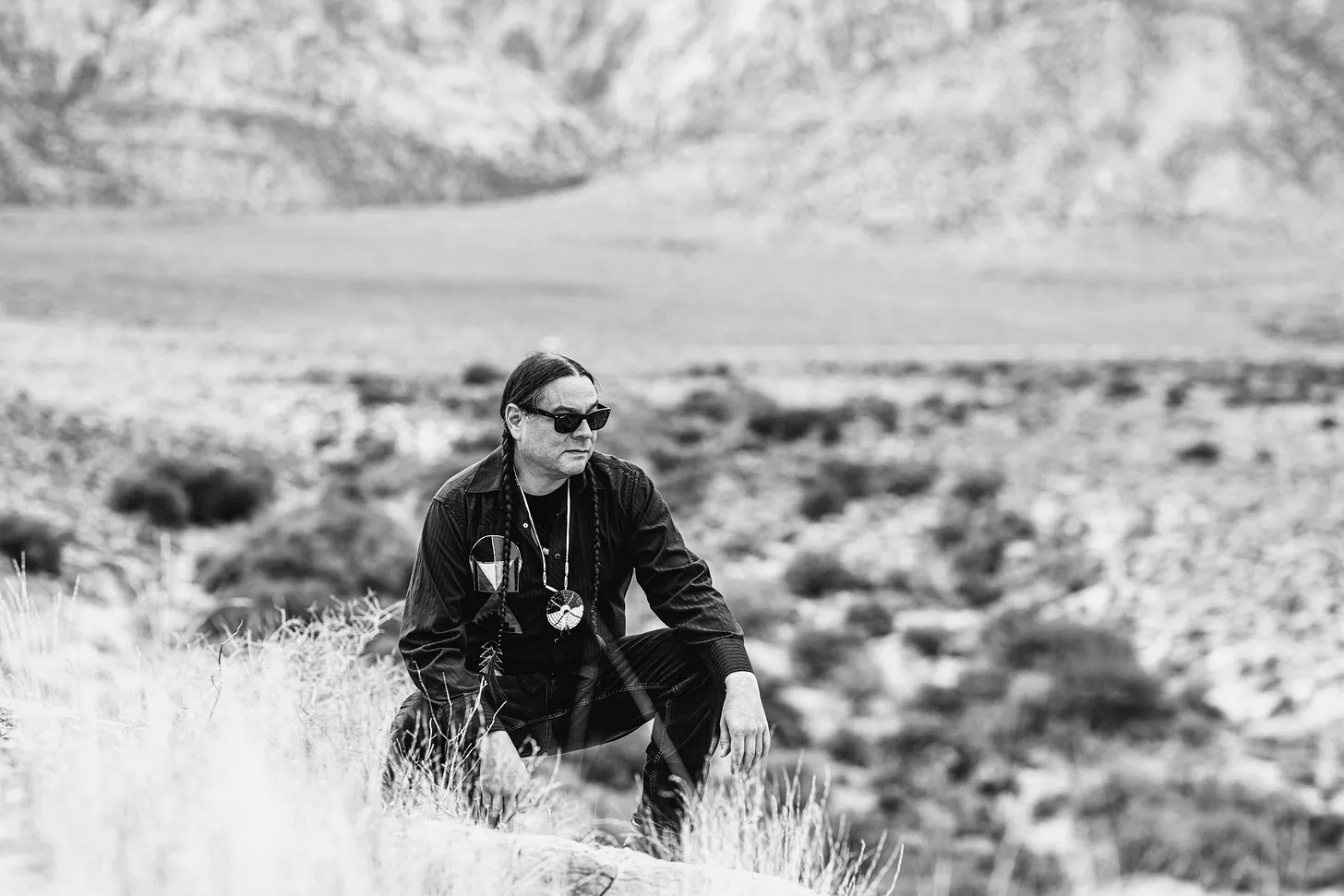
Your History Class Was a F*cking Lie by Sean Sherman (Or: How the American Educational System Has Always Been a Racist Propaganda Program...





 Posts
All Comments
Posts
All Comments