KEEP READING:
a blog for and by American Indian and First Nations adoptees who are called a STOLEN GENERATION #WhoTellsTheStoryMatters #WhyICWAMatters
it's free
Reference Material
- How to Search (adoptees) (2025)
- NEW! Help for First Nations Adoptees (Canada)
- How to Open Closed Adoption Records for Native American Children (updated 2021)
- LOST CHILDREN BOOK SERIES
- Split Feathers Study
- The reunification of First Nations adoptees (2016)
- You're Breaking Up: Adoptive Couple v. Baby Girl #ICWA
- Indian Child Welfare Act organizations
- About the Indian Adoption Projects
- THE PLACEMENT OF AMERICAN INDIAN CHILDREN - THE NEED FOR CHANGE (1974)
- NEW: Study by Jeannine Carriere (First Nations) (2007)
- NEW STUDY: Post Adoption (Australia)
- Dr. Raven Sinclair
- Laura Briggs: Feminists and the Baby Veronica Case...
- Bibliography (updated)
- Adopt an Elder: CHERYL Locke (Oglala Lakota)
- TWO NATIONS: Navajo (Boarding School)
- GOLDWATER
- Survivor Not Victim (my interview with Von)
- GS Search Angel Site 2024
- OBC ACCESS 2023
- FREE REGISTRY (sign up at ISRR)
- Genealogy\Indian Affairs 2021
- What is ICWA (2023)
- #MMIWG MAY 2019
- Adoption History
- Native American Banks
- MEDIA
- About Trace
How to Use this Blog
SEARCH
Wednesday, April 30, 2025
How one Wisconsin tribe is using ‘circle of life’ farming techniques to feed its people
Wednesday, December 28, 2022
Surprise? Late Discovery Adoptee "Cultural Infant"
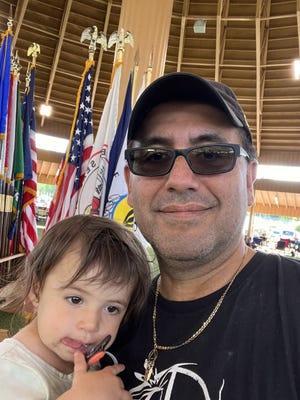
‘It’s great to embrace who I am.’ Rob Michno, 50, is only now discovering his Native American roots after being adopted and raised by a family of German and Polish descent.

OSHKOSH - Throughout much his life, Rob Michno went along with whatever people assumed he was, whether that was Mexican, Italian or Jewish.
“I went out of my way to deny I was Native American,” he said.
It wasn’t until a few years ago that Michno, 50, of Oshkosh, really started delving into his heritage and found it has been an enlightening, life-changing experience.
“It’s been so empowering,” he said. “The puzzle pieces are coming together. … Now, it’s great to embrace who I am.”
Michno was adopted by a family of German and Polish descent from Merrill in 1973.
“Somehow, I knew I was Native American, but it was not discussed when I was growing up,” he said.
Michno’s adopted parents wanted to appear they were a biological family.
“My mom dyed her hair black and would tan to try to look like me,” he said. “According to who I call my brother, he said our parents had about seven miscarriages, so protecting our family of four seemed to be of utmost importance. I understand that … and they did the best they could, so there’s no negativity.”
Michno still had emotional issues from not knowing his heritage and felt a degree of being different, abandoned and rejected while growing up.
“Growing up in a very German-rooted town, I felt so different and was afraid to explore myself, of course, my coping mechanism of avoidance was my best tool I could counter some of those taunts on the playgrounds,” he said.
Those feelings helped fuel his alcoholism for 22 years, Michno said, until he sought help.
Michno is now 10 years sober, and after remarrying in 2017, he found an interest in discovering his heritage, especially so his 3-year-old daughter, Audrey, can know more about where her people came from.
After becoming sober, he accepted he is Native American, but hadn’t known to which tribe he belonged.
During a fellowship sobriety meeting, Michno was asked which tribe he was from and struggled with an answer.
“I answered because I was born in Rhinelander and that Rhinelander is in Oneida County, I think I’m Oneida,” he said. “That’s how oblivious I was.”
Michno eventually reached out to the Wisconsin Department of Children and Families and connected with an adoption coordinator in Madison who told him his birth mother was half Ho-Chunk and half Forest County Potawatomi.
He later learned he had been enrolled in the Forest County Potawatomi Tribe in 1978 by another biological family member under his birth name of Mark Edward Johnson.
“What was odd with that first reading of the adoption paperwork is that I could read a few pages at a time and had to process this all,” Michno said. “It was the story of Mark Edward Johnson and it was odd reading Mark’s story and having it sink in that Mark was me.”
He also later learned his birth mother, Pauline Johnson, died in 1989 and is still uncertain who his birth father is.
Michno has been meeting his birth cousins from the Johnson family for the first time in the past few years, mostly virtually during the pandemic, and is eager to start meeting more family members in person.
He’s been attending pow-wows and other community events with his family, trying to learn more about his heritage.
“I’m a cultural infant,” Michno said.
One of his cousins is Manny Johnson, who serves as the tribal treasurer for the Forest County Potawatomi.
“Growing up, I knew my aunt had a child, but we didn’t know if it was male or female,” Johnson said. “It was a closed adoption. We didn’t talk about it back then.”
He said his father had tried to find his biological nephew, Mark Johnson, not knowing his adopted name was Rob Michno, in the hopes of connecting as a family. But he was unsuccessful.
“I’m saddened we missed a lot of years together,” Johnson said of Michno. “We couldn’t believe we found each other. It was almost something out of a movie.”
He said he speaks with Michno on a monthly basis, but still has yet to have a proper long meeting going through photo albums, because of the ongoing pandemic.
“He has some of the same mannerisms as his mom, such as in the way he laughs,” Johnson said of Michno.
Michno was adopted before the passage of the Indian Child Welfare Act of 1978, which gives preference to tribal families in adopting Native children.
Johnson wonders how Michno’s life would have been different had he been adopted by another Potawatomi family, or even his own family.
For his part, Michno said his adopted parents loved him as best they could and hasn’t formed an opinion on a new U.S. Supreme Court case that challenges the validity of the Indian Child Welfare Act.
A white couple from Texas is challenging the act after it nearly thwarted their adoption of a Navajo child, claiming the act is discriminatory based on race.
Tribal attorneys, including those representing the Oneida Nation of Wisconsin, said the law is not based on race, but on tribal sovereignty, and that tribes are sovereign nations that should look after their own citizens.
A decision on the case is not expected until early to mid 2023.
Happy Visitors!
NEW WEB ADDRESS
WRITTEN BY HUMANS!
Blog Archive
-
▼
2026
(234)
-
▼
October
(29)
- Worth a Sunday morning listen:
- Say Their Names
- First Nation community using its own data center t...
- Braids
- Krystle Silverfox's work, Apprehension, speaks to ...
- ICT News | October 23, 2026
- Compensatory Payments for Historical Wrongs (Canada)
- Red Lake failed its kids
- Book highlighting missing and murdered Indigenous ...
- I’m like the Indigenous Kool-Aid man
- Beyond Narratives of Loss
- 12th Buffalo Treaty Anniversary Gathering 🦬 🦬 ...
- BIA BACKLOG of Missing and Murdered
- The Declaration of Independence lists twenty-seven...
- Joey Clift's Not-so-Sacred Guide to Native America
- CHANGE IS COMING!? Or is it? (update)
- ICT News October 16, 2026
- PBS will celebrate Native American Heritage Month ...
- We are naming the foundation this country was buil...
- ‘Bringing Della Home’: Army Returns Children’s Rem...
- What do you know about Columbus who sailed the oce...
- ICT NEWS - October 9 2026
- Words from the Ancestors
- Mullin’s message was clear: We want to work with y...
- Many will celebrate Indigenous Peoples Day today: ...
- Voices: The story of Noojimo’waning, Detroit’s fir...
- You Were Never Supposed to Know We Were Still Here
- Chefs Against Fascism Everywhere (C.A.F.E.) Octobe...
- ICT NEWS: October 2, 2026
-
▼
October
(29)
Featured Post
Your History Class Was a F*cking Lie | #NOMOAR
Your History Class Was a F*cking Lie by Sean Sherman (Or: How the American Educational System Has Always Been a Racist Propaganda Program...
Most READ Posts
-
Editor NOTE: This is one of our most popular posts so we are reblogging it. If you do know where Michael Schwartz is, please leave a com...
-
By Trace Hentz 2024: I have read new comments on this case. If you have information, please email me: tracelara@pm.me It will be kept conf...
-
Eric Schweig Born: Ray Dean Thrasher on 19 June 1967 Inuvik , Northwest Territories , Canada Occupation Actor/Artisan/...
-
Using DNA tests, Dean Lerat has created a massive family tree for the Treaty 4 territory in Saskatchewan... By day, Dean Lerat is an RCMP st...
-
Greenland says findings on genocide allegation not final Patrick Jackson Inuit Ataqatigiit | Greenlandic Justice Minister Marianne Pavia...
-
My sibling Ronnie Chappelle By Trace L Hentz, Blog Editor I just had a birthday. I wasn't expecting a call from Alabama where my brothe...
-
Check your local listings in the US for NOVA - airs WEDNESDAY, Sept, 23, 2026 Nova: Knowledge Keepers Watch Wednesday, Sept. 23 at 9 p.m. ...
-
A Call to ACTION Sean Sherman A CALL TO ACTION for Chefs, Restaurants ...
-
You Were Never Supposed to Know We Were Still Here by Paax Erasure didn't require Native people to disappear. It only required everyon...
Bookshop
You are not alone
To Veronica Brown
Veronica, we adult adoptees are thinking of you today and every day. We will be here when you need us. Your journey in the adopted life has begun, nothing can revoke that now, the damage cannot be undone. Be courageous, you have what no adoptee before you has had; a strong group of adult adoptees who know your story, who are behind you and will always be so.
Diane Tells His Name
We conclude this series & continue the conversation by naming that adoption is genocide. This naming refers to the process of genocide that breaks kinship ties through adoption & other forms of family separation & policing 🧵#NAAM2022 #AdoptionIsTraumaAND #AdopteeTwitter #FFY 1/6 pic.twitter.com/46v0mWISZ1
— Adoptee Futures CIC (@AdopteeFutures) November 29, 2022
ADOPTION TRUTH
The truth is that it is a very lucrative business with a known sales pitch. With profits last estimated at over $1.44 billion dollars a year, mothers who consider adoption for their babies need to be very aware that all of this promotion clouds the facts and only though independent research can they get an accurate account of what life might be like for both them and their child after signing the adoption paperwork.