They Took Us Away

They Took Us Away
click image to see more and read more

it's free

click

How to Use this Blog

BOOZHOO! We've amassed tons of information and important history on this blog since 2010. If you have a keyword, use the search box below. Also check out the reference section above. If you have a question or need help searching, use the contact form at the bottom of the blog.


We want you to use BOOKSHOP to buy books! (the editor will earn a small amount of money or commission. (we thank you) (that is our disclaimer statement)

This is a blog. It is not a peer-reviewed journal, not a sponsored publication... WE DO NOT HAVE ADS or earn MONEY from this website. The ideas, news and thoughts posted are sourced… or written by the editor or contributors.

EMAIL ME: tracelara@pm.me (outlook email is gone) THANK YOU CHI MEGWETCH!

SEARCH

Showing posts with label Indian Identity. Show all posts

Friday, October 10, 2025

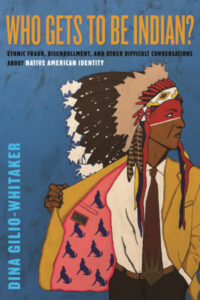
Who Gets to be Indian?


With the largest population of Native Americans in the US, California has more tribes, federally recognized and non-recognized, than any other state.


READ: https://lithub.com/how-californias-legacy-of-violence-against-indigenous-people-impacts-the-present-day/

Excerpted from Who Gets to Be Indian?: Ethnic Fraud, Disenrollment, and Other Difficult Conversations About Native American Identity by Dina Gilio-Whitaker. Copyright 2025. Excerpted with permission by Beacon Press.

 There is so much BAD HISTORY... bad paper, or no history... Trace

Friday, April 20, 2018

'She died coming to try to find me' #60sScoop

'She died coming to try to find me:' Sixties Scoop adoptee pieces together tragic story of separation

Robert Kalkman was adopted at age 2, and his life shattered at 9 after discovering his true heritage

Robert Kalkman, aged about 3, in Fort Frances, Ont., after his adoption. (Submitted by Robert Kalkman)


Robert Kalkman's memory of the woman standing outside the window is like the frame from a negative burned too hot by light.
Among the shapes of things in this memory is his adoptive father leaving the house in Fort Frances, Ont., to speak with this woman who kept coming back to stand outside the window.
"I remember as a child looking out the window and seeing this lady standing on the street and the commotion of my dad going out and begging her to leave," said Kalkman, 53.
"I was like three years old; it's the last thing I can remember."
Later in life, he would come to know the woman in the window was his biological mother, Kathleen McGinnis.
There is only one photograph of McGinnis that remains. It's from the 1952 edition of the magazine Northern Sportsman and published above an article headlined, I Write About Indians. The photograph is of an Anishinaabe family having a picnic. The caption does not identify anyone in the photograph, but Kalkman's biological family told him that it is her, as a baby, swaddled and fastened to a cradleboard.

This is the only surviving photograph of Kathleen McGinnis. She is the baby attached to the cradleboard in the upper right-hand side of the photograph. (Submitted by Robert Kalkman)


There are other documents about Kalkman's biological mother — coroner and police reports from April 1978. There are witness statements about the accident, how she seemed dazed waving cars down on a highway near Calgary when she was suddenly struck and killed on April 3. The impact severed one of her legs and the circumstances that led to her death remain shrouded in mystery.
Kalkman was out in northern British Columbia a few years ago in a work camp when he came across a website listing missing and murdered Indigenous women. He first noticed the name of a woman he once went to school with and then he noticed his mother's name, along with that of her two sisters, Edith Quagon and Sarah Mason, who were both separately murdered by men plunging a knife through their hearts.
"I was like, 'wow.' I was just overwhelmed," he said.
"I wish whoever the police was, or whatever, spent a little more time investigating and looking into it. If it was a white person, they would be all over it."
Kalkman would later learn that his biological mother was hitchhiking to British Columbia from Thunder Bay, Ont. McGinnis had heard one of her two children — seized in 1966 from her father's house on the Manitou reserve portion of Rainy River First Nation while she shopped in Fort Frances, Ont. — had been adopted by a family that had moved from Fort Frances to B.C.
"She died coming to try to find me," said Kalkman.
"It's an identity you lose, the moment she is gone."

Aftershocks 

McGinnis's family, along with Kalkman's sister Diane Geissler, testified in Thunder Bay in early December during three days of hearings held by the national inquiry into murdered and missing Indigenous women and girls. Kalkman didn't make the hearing.
Kalkman's story is also one among thousands of aftershocks still reverberating from the Sixties Scoop when child welfare agencies across the country would seize Indigenous children and quickly adopt them out into the care of non-Indigenous families.
His story also connects the Scoop with residential schools, which McGinnis attended, and reveals the systemic discrimination that led state agencies to repeatedly seize Indigenous children.
Robert Kalkman, aged 2, is held by the caretaker of the foster home where he was placed after he was taken by child welfare agents. (Submitted by Robert Kalkman)

Ontario's child welfare agents determined the teenage mother — who had Geissler at 14 and Kalkman at 15 — didn't have the financial means to raise her children despite the fact she lived with her parents.
"It was because she was Native and lived a traditional lifestyle. She couldn't prove that she had an apartment or a house. It wasn't in her name, it was in her parents' name," said Geissler, who lives in Thunder Bay a few blocks away from where McGinnis lived before she left hitchhiking, looking for one of her children.
"She couldn't prove income because they hunted, trapped — they had a trapline — and fished for food. They grew their own vegetables, they picked berries, they picked herbs. They didn't have a nine-to-five job. They lived on the reserve."

Seized by child welfare

Kalkman and Geissler don't know the exact date or the details about the circumstances leading to the moment when they were seized. There is a story about a snowstorm stranding their mother in Fort Frances on the day they were taken. There is another about an uncle who hid them in a closet until a child's cry gave them away. Kalkman said one of his aunts confessed to him in 1991 that she had called child welfare because she was worried about the care the children were receiving.
Geissler was immediately adopted by a family that remained in the Fort Frances area. Kalkman remained in foster care for about a year until he was adopted at age two by a Fort Frances doctor who had treated him for various ailments.
"I think as a family we thought we were ... helping out someone who has a need," said Peter Kalkman, Robert Kalkman's adoptive brother.
"I think we did it for the right reason."
From left to right: Robert Kalkman with his adoptive family Klari Kalkman, Johannes Wilhelmus Kalkman and Peter Kalkman. (Submitted by Peter Kalkman)

Peter Kalkman remembers as an eight-year-old going to the courthouse with his parents to finalize the adoption on Feb. 24, 1967.
"It was very serious circumstances where the judge is saying you are taking on this person to be part of your family," said Kalkman, a radiologist who now lives in Abbotsford, B.C.
"It's a very large responsibility and commitment and we all felt that way."
Robert Gary Shebageget became Robert William Kalkman that day.
The family then moved to Vancouver.

'You're an Indian'

Throughout his early years, Robert Kalkman said he didn't contemplate differences with his adoptive home's older brother and sister, who were the biological children of his adoptive parents. He never noticed his darker skin or wondered where he came from. He liked to dress up like a cowboy.
Then, at the age of nine, he noticed one of his friends in the Vancouver neighbourhood where he lived had stopped playing with him. When he asked him why, the answer shattered his world.
"He said, 'Because you're an Indian. My dad said you are an Indian,'" said Kalkman.
Robert, aged 12, and his adoptive father Johannes Kalkman, when they lived in Vancouver. (Submitted by Robert Kalkman)

When he got home, his adoptive mother Janet Kalkman was cooking.
"I asked her, 'Mom, am I an Indian?' She said, 'Don't talk to me right now, I'm cooking,'" said Robert Kalkman.
"I went to my room and looked in the mirror."
A little while later she came into his room and put down a book. Kalkman said the book had about 40 pages of black and white photographs depicting Ojibway people from Minnesota and Ontario.
"That is when I started rebelling," he said.
Robert Kalkman, around age 17, in Vancouver. (Submitted by Robert Kalkman)


"I had an identity crisis."
His life became a series of conflicts with his family, with his school and with the law. Eventually his adoptive parents turned him over into the custody of the courts at age 13. He became a ward of the state, again, and bounced between foster homes and juvenile detention centres.
"I was so angry at the world because I didn't know who I was, where I came from or what was going on," he said.
"I despised the fact I was Native. I would fight every Indian I could fight."

The girl at the bus stop

The anger may have totally consumed and eventually destroyed Kalkman except for a girl he saw from a city bus window standing at a downtown Vancouver bus stop in 1987. He wouldn't see her again for several months. In that time he would end up serving 80 days in jail for failing to pay a $548 fine for drinking and driving in a car stolen from his adoptive parents.
Robert and Kathleen Kalkman on their wedding day, Aug. 3, 1991. (Submitted by Robert Kalkman)

When he got out, he decided to try and make a go of it and enrolled in a college where the girl from the bus stop also attended. They fell in love and married on Aug. 3, 1991.
Robert and Kathleen Kalkman, who is from the Tahltan Nation, now live in Chetwynd, B.C., and they have four sons, aged 27, 25, 17 and 15, along with two grandchildren aged three and five.
Kalkman, a journeyman carpenter, made a career working in gold mines and oil fields throughout northern B.C..
Robert and Kathleen Kalkman, centre, with their children, from the left: Dakota Kalkman, Kross Kalkman, Trey Kalkman and Jeremy Kalkman. (Submitted by Robert Kalkman)

Still there was a piece that remained lost.
His adoptive father, Johannes Wilhelmus Kalkman, who died from cancer about two years ago, "harboured quite a bit of anger for many years" over the adoption, said Peter Kalkman, 59.
And Janet Kalkman, who is 85 and living in an assisted care home, remains "a little bit ambivalent about the whole thing," said Peter.
"My wife, she has brothers and sisters, a mother and a father. My kids look at me and say where is your mom? Where is your dad? You got to look at them and say, 'All you got is me,'" said Robert Kalkman.
"Every time I wake up in the morning I tell them, 'I love you.' I tell them in their face, 'I love you.' That is the connection I have to have because this is all I have. I won't let anybody try to take what I have now."

Friday, August 14, 2015

Indigenous man credits powwow for helping step away from addictions

Gabriel Whiteduck shares his story through song and dance

By Terrence Duff and Corinne Smith, CBC News 
Gabriel Whiteduck shares his experience with First Nations youth through workshops.
Gabriel Whiteduck shares his experience with First Nations youth through workshops. (Supplied)
"When I first came into powwow, I was suffering from addictions - drugs and alcohol," said the 33-year old, in a recent interview with the Cree Radio CBC.
"It was a way to put that down and take up something. I picked up the drum and dancing, I was able to really apply myself positively."
Whiteduck is a powwow teacher, dancer, drummer and singer. Algonquin and Plains Cree, he's originally from Prince Albert, Sask., and is now based in the Algonquin First Nation of Kitigan Zibi, Que.
Gabriel Whiteduck dancing at a powwow
Gabriel Whiteduck dances traditional men's style. (Supplied)

For Whiteduck, powwow culture has been a powerful force of change in his life. While becoming a father was a defining turning point in his adult life, he credits powwow dancing and drumming as a source of renewal. He wants to share that personal experience with other First Nations youth, through his workshops and teachings.
"The odds are against our young Native men and women, unfortunately," he said.
"My story is a celebration. I really celebrate that gift that was given to me, that was given to us, the gift of being able to move and speak freely."
He started travelling in the James Bay area of Northern Quebec a few years ago, visiting communities to lead powwow workshops and attend gatherings. Last summer he took part in the first ever powwow in Ouje-Bougoumou, a predominantly Christian Cree community that has in the past resisted that kind of gathering.

Cultural identity

Powwows don't have the same long history in Eeyou Istchee as they do for other First Nations, but the practise is spreading fast. Whiteduck believes it's important for people to remember that they have a distinct aboriginal cultural identity, whether or not they participate in powwows.
As "intertribal events" they simply add another dimension to First Nations cultural expression, he said. "It's a subculture underneath who we already are."
Whiteduck says when he visits communities, he's not there to tell people how to be Aboriginal. But he believes the powwow is a way to express your culture.
"I was once a person like that, I was very shy and nervous and I think about those people in the audience, so when I dance I try to give some of my confidence off towards them as much as I can," - Gabriel Whiteduck, powwow dancer
He dances and teaches traditional men's dancing, but says everyone's style is very personal. What he keeps in mind in the powwow circle is to connect and relate to his audience.
"I like to dance for the people that are watching, the people that feel they have barriers, they want to dance but they have the confidence or the courage to get up and dance," he said.              
"I was once a person like that, I was very shy and nervous and I think about those people in the audience, so when I dance I try to give some of my confidence off towards them as much as I can."
Whiteduck says it's very important to encourage youth to find a way to express themselves and tell their story, and he hopes powwow culture is one means to do that.
He wants to meet more youth and encourage them to bring their own songs and stories, of their lives and the land, to his workshops.

Listen to the interview: https://soundcloud.com/cree-radio-cbc/gabriel-whiteduck-turned-his-life-around-from-addiction-7-years-ago

Saturday, November 15, 2014

Adoption Myths, Adoption Records #flipthescript

By Trace (Lost Bird Adoptee)


NANCY VERRIER M.A., PSYCHOTHERAPIST
"The chosen child and the grateful child myths are two beliefs that die hard. Although made to feel as if it were the case, most adoptees do not feel chosen so much as they feel unchosen by their birth mothers. To be chosen by anyone else after that is anticlimactic. So far as being grateful, it is the adoptive parents who should be grateful. They are the ones pursuing the adoption. They are the ones who got what they wanted. No child would choose to be separated from his biological mother. That he may have to be separated from her is a different thing altogether. That is an intellectual, adult decision, not an emotional/sensual baby experience. Although grateful for many things his parents may have done for him, no child should be obligated to feel grateful for having a loving set of parents. That should be his right."
            That is an extract from Nancy Newton Verrier MA in her concluding chapter 2o called Adoption Myths, from her book called Coming Home To Self, published by Gateway in '03 and available on Amazon, much consulted and recommended by both adoptees and the ivf-made. 


So why is adoption records access important?

           
            It’s about identity! Adoptees grow up with questions about identity. Questions that affect their psycho-social development, sometimes in negative ways. Like all humans, adoptees seek to answer the questions “who am I?” and “why am I here?”
            Adoptees are legally prohibited from obtaining information that is critical to answering that question. But it is a necessary tool for most adoptees to answer those nagging questions about our origins. Knowing is better than not knowing. Knowing the truth is healing for most of us. But fear of discovery, not as you might imagine for parents who surrendered a child to adoption, but for adoption professionals who misrepresented the facts to vulnerable women or couples wishing to adopt, makes for a powerful motive to keep the truth hidden.
            When access to one’s original birth certificate (OBC) is forbidden, the only substitute is to search for one’s family of origin. 
If state officials are intent on protecting the identity of parents who were persuaded to relinquish a child to adoption the surest method is to provide answers to the questions asked.
            Many adoptees would be satisfied just to know the truth.  Contact is a different matter and no reasonable person on either point of the adoption triangle expects a relationship to automatically develop with strangers, even strangers who are biologically related. 
Adoptees, generally, are not seeking a family, but themselves.

Tuesday, May 15, 2012

Indian Identity - It's complicated in New England!

www.sjf.edu
By Trace L Hentz (Eastern Cherokee by blood)

Living in New England (yes, it's still called that after 400+ years), I have come to understand how Native Americans here evolved through some of the most troubling, extreme and dangerous circumstances --- yes, dangerous.
Many non-Indians here have deeply-embedded fears of Indians, because of stories passed down in families.
Many New Englanders are of the mindset Indians are of the past, not the present. We are no longer a threat like we were in colonial days.
Today Massachusetts has no great track record of dealing fairly or honestly with its tribes. One example, the Mashpee Wampanoag had their federal recognition delayed over 30 years.
There are many more Indian people here who are not in federally-recognized tribes and have no identity card to show other Indians or the demanding media. 
This issue is affecting Senate-hopeful Elizabeth Warren (Democrat) who is running against Scott Brown (Republican). Elizabeth's ancestry is Cherokee. Her Cherokee ancestors might have been educated in New England, maybe at Harvard or Dartmouth. I don't know.
Since Elizabeth is not enrolled with the Cherokee, her lack of an identity card is a huge problem for the media and other Indians.
Really?
HEY! Indians in New England get it. She's one of us. We have our own stories passed down in our families, too.
Granted it's not easy to trace your ancestors from the late 1800s to secure that government-issued Indian Identity card. (My friend Russ calls his tribal ID, "My Holocaust Card.")
Why is Indian identity so complicated? 
Long-standing racism by state officials on the East Coast who wanted us dead - and a backlog of over 250 recognition bids sitting in the Bureau of Indian Affairs offices in Washington DC.  Delays are notorious. Tribal Elders who started the petitions are often dying before they see their petition recognized. 

In the 1800s, there was absolutely no benefit whatsoever if you were Indian. Saying you were could get you killed: After the Pequot War, hunting down the Pequot was common - there was a bounty on every Pequot - man, woman or child.  Bring in dead Indians and you get paid. The media never covers this.

So back to identity... tell me, could you provide records to the exact day your immigrant ancestor arrived here on a boat? Yet Indians are supposed to prove they are Indian?
In this part of the world, Native people intermarried for survival. After the Indian Wars, Native woman married outside of their tribes since there were so few men left who had not been killed in war.
Their survival was not complicated, it was necessary. 

QUOTE:


"It seems to me one of the ways of getting rid of the Indian question is just this of intermarriage, and the gradual fading out of the Indian blood; the whole quality and character of the aborigine disappears, they lose all of the traditions of the race; there is no longer any occasion to maintain the tribal relations, and there is then every reason why they shall go and take their place as white people do everywhere," said Anthony Higgins, a U.S. Senator from Delaware, in 1895 congressional testimony.

Happy Visitors!

NEW WEB ADDRESS

Because we don't want to lose information on this blog, we now have a domain name: American Indian Adoptees.com - click and save this link:

2026: WE HAVE A BACK UP BLOG COMING SOON: www.americanindianadoptees.blog (on wordpress) We are no longer on Facebook. We deleted our accounts.

WRITTEN BY HUMANS!

WRITTEN BY HUMANS!

Blog Archive

Featured Post

Your History Class Was a F*cking Lie | #NOMOAR

  Your History Class Was a F*cking Lie by Sean Sherman (Or: How the American Educational System Has Always Been a Racist Propaganda Program...


Native Circles

Native Circles
click logo for podcasts!

Most READ Posts

Bookshop

You are not alone

You are not alone

To Veronica Brown

Veronica, we adult adoptees are thinking of you today and every day. We will be here when you need us. Your journey in the adopted life has begun, nothing can revoke that now, the damage cannot be undone. Be courageous, you have what no adoptee before you has had; a strong group of adult adoptees who know your story, who are behind you and will always be so.

Diane Tells His Name


click photo

Lost Birds on Al Jazeera Fault Lines

Lost Birds on Al Jazeera Fault Lines
click to read and listen about Trace, Diane, Julie and Suzie

NO MORE STOLEN SISTERS

NO MORE STOLEN SISTERS
click image

ADOPTION TRUTH

As the single largest unregulated industry in the United States, adoption is viewed as a benevolent action that results in the formation of “forever families.”
The truth is that it is a very lucrative business with a known sales pitch. With profits last estimated at over $1.44 billion dollars a year, mothers who consider adoption for their babies need to be very aware that all of this promotion clouds the facts and only though independent research can they get an accurate account of what life might be like for both them and their child after signing the adoption paperwork.

Original Birth Certificate Map in the USA

Google Followers