|
The Tanner Deposition, an audio drama in three parts, is based on the deposition of Helen Hornbeck Tanner (1916-2011) for United States v. State of Michigan. Tanner’s testimony included pivotal evidence which helped Michigan’s Indian tribes reclaim treaty-protected fishing rights. Created and directed by Gretchen Carr, it is made possible through the generous support of the Leelanau Press Research Fellowship and the Leelanau Historical Society.
|
|
In 1836, the United States Government and Michigan Indian tribes signed the Treaty of Washington. In this treaty, and in subsequent treaties, the tribes sought permanent land bases, along with securing their right to hunt, fish and gather, which they had done for centuries and continued to do so in the Great Lakes and inland waters.
|
|
That changed in 1872 when the Secretary of the Interior Columbus Delano illegally terminated treaty obligations without Congressional approval. In 1930 a Michigan Supreme Court decision erroneously interpreted treaty law in a decision that gave the State control over Indian hunting and fishing. This ruling led to decades of conflict, including violent clashes between Indian fishermen and state authorities.
|
|
Following a series of U.S. supreme court decisions in the 1960s, the United States filed a lawsuit against the State of Michigan in 1973 to reclaim these treaty-protected rights. This case entitled United States v. Michigan was filed in the U.S District Court for the Western District of Michigan. The Bay Mills Indian Community and Sault Saint Marie Tribe subsequently intervened as plaintiffs. In the years to follow, the Grand Traverse Band, Little River Band, and Little Traverse Bay Bands would also intervene as plaintiffs.
|
|
Their claims rested on two foundations: evidence of the tribes’ long-standing commercial fishing practices, and the legal principle that treaties be interpreted as their Indian signers would have understood them. To establish those facts, the tribes and the United States brought in a team of expert witnesses which included anthropologists, archaeologists and ethnohistorians.
|
|
Central to the case was the testimony of Dr. Helen Hornbeck Tanner. A senior research fellow at the Newberry Library. Tanner was known as one of the country’s foremost researchers of Great Lakes Indian history. Her research drew on federal land allotment records, genealogies, agent correspondence, missionary diaries, local histories, and oral tradition.
|
|
In depositions that took place in January and April of 1977, Tanner testified that the United States Senate altered the 1836 Treaty without prior consent, and that the 1855 treaty was fraudulent. She resisted the imposition of Anglo-American legal terminology on Indigenous history. The attorneys for the State of Michigan approached her with visible skepticism, and questioned her financial dependence on litigation to suggest bias. They dismissed oral tradition as unobjective, and they repeatedly pressed her to translate Indigenous concepts into rigid legal categories. Dr. Tanner’s unflinching testimony helped to prove that Great Lakes tribes had fished treaty waters for generations, and that the treaty language protected their traditional way of life.
|
|
In 1979, U.S. District Judge Noel Fox affirmed the tribes’ fishing rights. The ruling, known as the Fox Decision, sparked a resurgence of tribal organization in Michigan. Of all her service, Dr. Tanner considered her testimony in the United States versus Michigan to be the most significant of her career.
|
|
The Voice of Helen Hornbeck Tanner, Witness, Historian and Newberry Fellow is performed by Molly Tewson, who resides in Iowa and spends her summers at her family cottage on the north shore of Crystal Lake. She is the daughter of Dr. Tanner.
|
|
The Voice of Gregory T. Taylor, on behalf of the Defendant, State of Michigan is performed by John McKinley, who resides in Traverse City, Michigan.
|
|
The Voice of Stewart H. Freeman, on behalf of the Defendant, State of Michigan is performed by Barry Bricks, who resides in Benzie County, Michigan.
|
|
The Voice of Peter W. Steketee, on behalf of the Defendant, Michigan United Conservation Club, is performed by Bill Pilgrim who resides in Benzie County, Michigan.
|
|
The Introduction is performed by Mark L. Wilson.
|
|
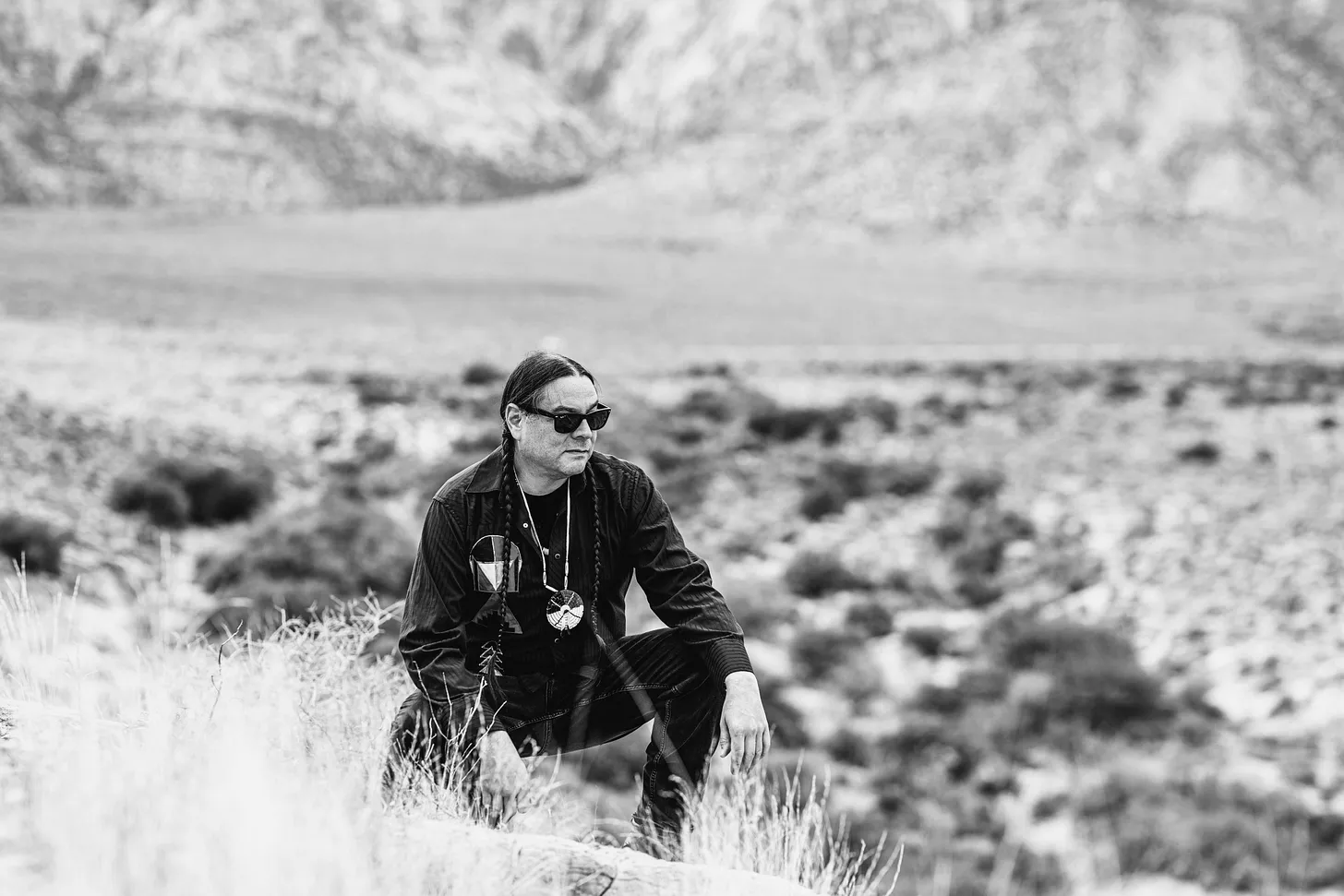
Mark L. Wilson, MPA, is an audio and video producer based in Traverse City, Michigan, and an enrolled citizen of the Grand Traverse Band of Ottawa and Chippewa Indians. Through his company, New Leonard Media, he works with Tribal organizations, nonprofits, and artists to share their stories. He served two terms on the Grand Traverse Band Tribal Council, including as Vice Chair, has served as Mayor Pro Tem on the Traverse City Commission, and currently serves on numerous board and committees throughout the region.
|
|
The Epilogue is performed by Jeremy Rice.
|
|
Jeremy Rice resides in Northport, Michigan and is a member of the Grand Traverse Band of Ottawa and Chippewa Indians. He manages cultural resources with Dirt Divers Cultural Resource Management, a Native-owned cultural resource management firm based in Cass Lake, Minnesota. | |











 Posts


No comments:
Post a Comment
Please: Share your reaction, your thoughts, and your opinions. Be passionate, be unapologetic. Offensive remarks will not be published. We are getting more and more spam. Comments will be monitored.
Use the comment form at the bottom of this website which is private and sent direct to Trace.