BOOZHOO! We've amassed tons of information and important history on this blog since 2010. If you have a keyword, use the search box below. Also check out the reference section above. If you have a question or need help searching, use the contact form at the bottom of the blog.
We want you to use BOOKSHOP to buy books! (the editor will earn a small amount of money or commission. (we thank you) (that is our disclaimer statement)
This is a blog. It is not a peer-reviewed journal, not a sponsored publication... WE DO NOT HAVE ADS or earn MONEY from this website. The ideas, news and thoughts posted are sourced… or written by the editor or contributors.
EMAIL ME: tracelara@pm.me (outlook email is gone)
THANK YOU CHI MEGWETCH!
Sixty-two Indigenous cultural items previously held in Vatican museums and vaults for a century are being repatriated to Canada. Cynthia Wesley-Esquimaux, Chair on Truth and Reconciliation at Lakehead University in Thunder Bay, Ont., explains why she’s ‘a bit conflicted’ about the return of these cultural belongings.
North Dakota House Bill 1603
is asking for $5 million to pay for efforts to return human remains to
Native American tribes around the state. This bill is intended for the
state to comply with the federal Native American Graves Protection and
Repatriation Act (NAGPRA).
UND president Andy Armacost says the university has already spent
over $2 million in the last several years to identify and respectfully
return items in UND’s collection to tribes in the state.
“What we now determine to be inappropriate and unethical work, dating
back to the very founding of UND, back in the late 1800s, and other
institutions in our state are facing the same,” Armacost said. “Some
might not even know that NAGPRA awaits them, and there’s work to be
done.”
State lawmakers say right now, some of the remains are in the hands of
the State Historical Society, while others are on university campuses in
North Dakota.
There is a push for universities and museums to return Indigenous remains and sacred belongings with new federal regulations.
There is a push for universities and museums to return Indigenous remains and sacred belongings with new federal regulations.
The
push for museums, universities, and federal agencies to return
Indigenous remains and sacred belongings is getting stronger as federal
regulations have further tightened the rules around how these items can
be displayed, giving more legal power to Indigenous tribes.
The
Native American Graves Protection and Repatriation Act (NAGPRA) is a
federal law created in 1990. It states that organizations that receive
federal funding and possess remains of ancestors and sacred belongings
must catalog, identify, and repatriate or return them to their rightful
and ancestral owners.
"Anyone
can imagine how they would feel if their relatives were being held in
an institution and their bones were being pulverized due to radio-carbon
testing," Ray Halbritter, the leader of the Oneida Indian Nation in New
York, said.
Since
its implementation more than thirty years ago, repatriation has been
slow-moving. But thanks to tightening restrictions implemented in
January, tribes have more legal power to stop the display of ancestors
or sacred belongings without their approval. This forced museums across the country to adjust their exhibits to stay in compliance.
It
also gave more power to Indigenous communities in identifying ancestors
and set a five-year deadline for museums, universities, and federal
agencies to definitively identify remains and update inventories.
"Out
of an abundance of caution, we decided to de-install or remove a rattle
that might have specific meaning in ceremonial context," said Dr. Dirk
Van Tuerenhout, the curator of anthropology at the Houston Museum of
Natural Science.
Dr.
Van Tuerenhout says a pair of woven sandals were also removed out of
caution, leaving an open space in the middle of the display.
HMNS'
John P. McGovern Hall of The Americas explores Indigenous peoples'
diverse and dense history from the Arctic to South America.
According to data from ABC News' owned
& operated station WLS in Chicago, there are currently 496 museums
or federal agencies across the country that have possession of 90,169
ancestral remains and 708, 279 associated funerary objects that are
still pending identification and are not available for repatriation.
"We
know that museums, agencies, and universities have identified
128-thousand ancestral remains in their collections," said Maggie Green,
data journalist at WLS.
According
to data gathered from the Federal Register by Green, these are the
Houston-area entities with an inventory: Houston Museum of Natural
Science with 26 ancestors, Rice University with five ancestors and 11
funerary objects, and the Army Corps of Engineers - Galveston District
with 13 ancestors and 24 funerary items.
The National Park Service defines funerary object as any object reasonably believed to have been placed intentionally with or near human remains.
Dr.
Van Tuerenhout estimates the museum currently possesses at least 70
ancestors and sacred belongings - explaining that in the years since
their initial NAGPRA review was completed, their staff has discovered
additional remains that they are working to return.
ABC13 reached out to Rice University regarding the status of the items listed in the Federal Register, which states the 11 funerary belongings in their possession are currently missing and the university is seeking to find them.
This
is the university's response: "Last year, in compliance with the Native
American Graves Protection and Repatriation Act, Rice returned the
human remains of five Native American individuals to the Tonkawa Tribe
of Indians of Oklahoma. Concerning the artifacts referenced in the
National Archives and Records Administration Federal Register, we have
no record of ever possessing these items."
When explicitly asked about the status of the missing items, the university said it could not provide further details.
As
for the Army Corps of Engineers - Galveston District, ABC13 made
multiple attempts to get a response and has yet to hear back.
Regarding
the process of identification, it cannot utilize DNA testing, which is a
controversial method among Indigenous communities who say it desecrates
the remains of their ancestors.
In
some cases, this leaves only a paper trail to find clues about where
the ancestors or remains were taken from and how to take steps to return
them.
"In the
last 20 years, we've returned about 90 of our ancestors back to us,"
Halbritter said. "Through sacred ceremonies and spiritual ceremonies not
open to the public, we've returned them to their resting place. Their
home."
Dr. Van Tuerenhout says their office regularly sends letters to various tribes trying to find a possible match.
These letters could lead to more conversations or a visit to the museum to examine the ancestors or belongings in question.
Its work, he says, is essential to HMNS for one reason.
"Well, it's the right thing to do. So, there is the answer," he said. "These belongings do not belong to us."
Native Americans hold a deep belief that everything
possesses a spirit. Imagine this: you’re strolling along the serene
banks of a USACE-managed river or lake when something catches your eye,
jutting up from the earth. Curiosity piqued, you momentarily forget your
walk and approach it. As you kneel down, your fingers gently disturb
the soil, and after a little digging, you uncover an arrowhead.
Excitement surges as you think of how amazing it will be to share this
treasure with your friends and family. You tuck it into your pocket,
convinced that since it’s just one arrowhead — and there are surely more
where it came from — taking it home is harmless. But in reality, you
may be disturbing something far more significant.
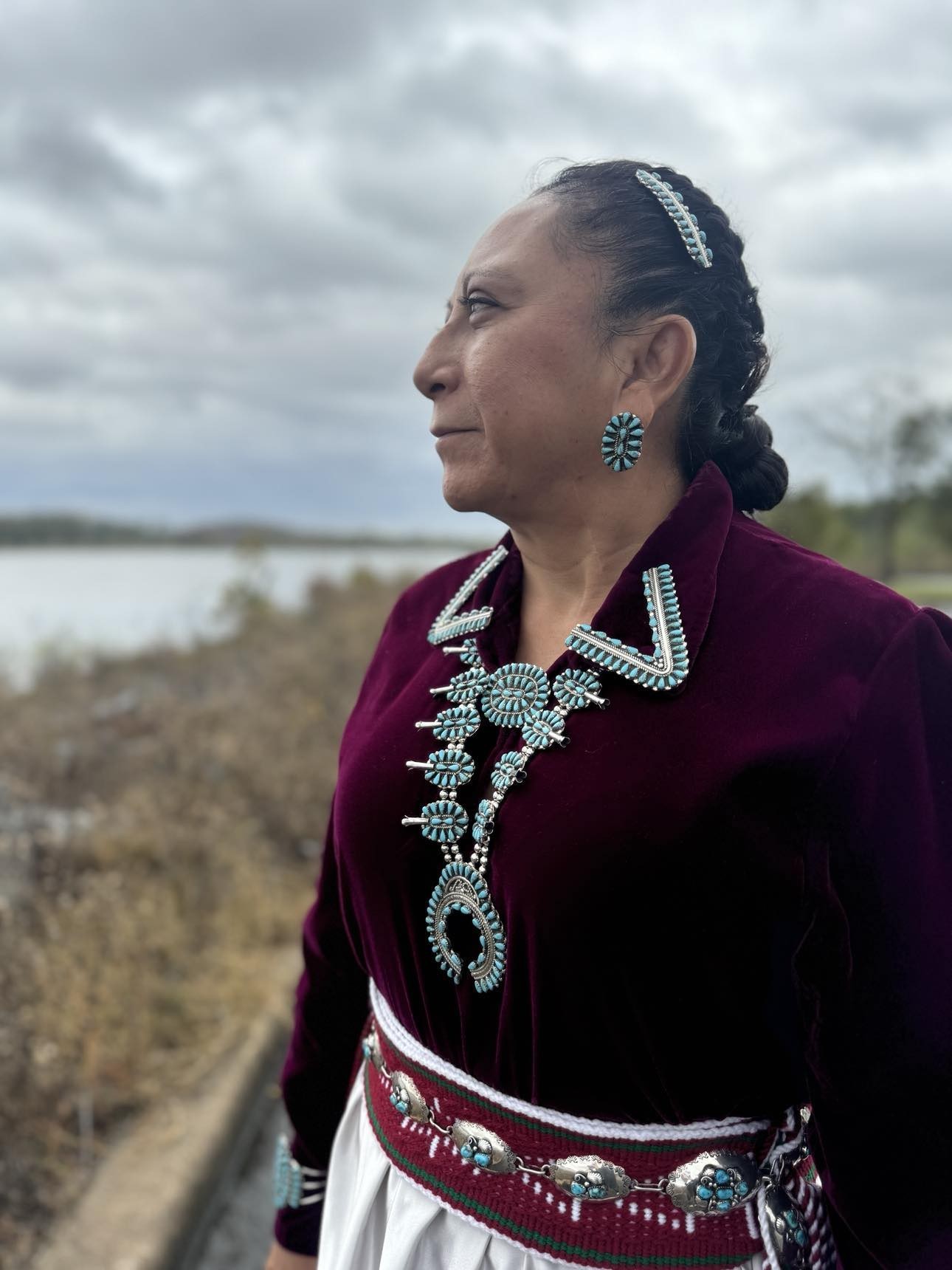
“When someone digs up and loots these artifacts,
they are taking away a part of our heritage. These objects are created
with a spirit and purpose; they hold significant meaning,” said Casandra
Beaver, a member of the Navajo Nation and Administrative Assistant with
the U.S. Army Corps of Engineers, Little Rock District. (ABOVE)
Digging for and stealing artifacts and remains from prehistoric
Native American and historic archaeological sites is a serious issue
that disrespects cultural heritage and threatens invaluable historical
knowledge.
The theft and vandalism of these sites, particularly on
government property, is a growing concern that demands urgent action. Each artifact carries a story, a connection to the past, and taking them
diminishes our understanding of history. It's essential to respect
these sites and preserve their integrity for future generations.
Many people may not realize that digging up artifacts is
not only illegal but also deeply disrespectful, as it can disturb human
burials and sacred sites.
“Just as it is unacceptable to search for
artifacts in a cemetery or to steal sacred objects from a church altar,
we must emphasize that the same unethical methods are employed to obtain
pottery, woven items, jewelry, arrowheads, knives, and even human
remains that some looters choose to display in their collections,” said
Billie Burtrum, Tribal Historic Preservation Officer for the Quapaw
Nation. “The Quapaw Nation fully supports the prosecution of looting and
grave robbery, as these actions violate cultural heritage and displace
the historical significance of the items taken.”
A
protester at the Whitney Museum during the "Nine Weeks of Art and
Action." Taken with permission on May 17, 2019. (photo Hakim
Bishara/Hyperallergic)
You’ve probably heard one. You may have helped craft one. A
land acknowledgment is quickly becoming de rigueur among mainstream
cultural and arts institutions. An official will stand at a podium and
announce: This building is situated on the unceded land of the XYZ people. As if those people are not still here. As if this all happened in the past. He will breathe deeply and continue: We pay homage to the original stewards of these lands. The audience will nod in agreement. As if homage were the same as returning stolen land.
A land acknowledgment is not enough.
Museums that once stole Indigenous bones now celebrate
Indigenous Peoples’ Day. Organizations that have never hired an
Indigenous person now admit the impact of Indigenous genocide through
social media. Land-grant universities scramble to draft statements about
their historical ties to fraudulent treaties and pilfered graves.
Indeed, these are challenging times for institutions trying to do right
by Indigenous peoples.
Some institutions will seek the input of an
Indigenous scholar or perhaps a community. They will feel contented and
“diverse” because of this input. They want a decolonial to-do list. But
what we have are questions: What changes when an institution publishes a
land acknowledgment? What material, tangible changes are enacted?
Without action, without structural change, acknowledging stolen land is what Eve Tuck and K. Wayne Yang call a “settler move to innocence.” Institutions are not innocent. Settlers are not innocent.
The
problem with land acknowledgments is that they are almost never
followed by meaningful action. Acknowledgment without action is an empty
gesture, exculpatory and self-serving. What is more, such gestures
shift the onus of action back onto Indigenous people, who neither asked
for an apology nor have the ability to forgive on behalf of the land
that has been stolen and desecrated. It is not my place to forgive on
behalf of the land.
A land acknowledgment is not enough.
This
is what settler institutions do not understand: Land does not require
that you confirm it exists, but that you reciprocate the care it has
given you. Land is not asking for acknowledgment. It is asking to be
returned to itself. It is asking to be heard and cared for and attended
to. It is asking to be free.
Land is not an object, not a thing. Land does not require recognition. It requires care. It requires presence.
Land is a gift, a relative, a body that sustains other
bodies. And if the land is our relative, then we cannot simply
acknowledge it as land. We must understand what our responsibilities are
to the land as our kin. We must engage in a reciprocal relationship
with the land. Land is — in its animate multiplicities — an ongoing
enactment of reciprocity.
A land acknowledgment is not enough.
To
engage with the land on the land’s terms is an act of reciprocity.
Reciprocity, rather than recognition, is what the land requires because
that is what it has already given. Are you not alive, breathing, because
of this land?
The land exists regardless of settler
acknowledgment, which can only ever be the first step toward meaningful
action. Next steps involve building relationships with that land as if
it were your kin. Because it is.
Imprisoned for what exactly, you might ask... Being Indian was enough of a reason... TLH
Contested Native Artworks Resurface at Art Fair, Drawing Scrutiny
The drawings, taken from ledger books made by Native people
imprisoned in the 19th century, were sold at auction in 2022 against
tribal members’ wishes.
“Cheyennes Chasing Antelope” at the Donald Ellis Gallery booth at Expo Chicago 2024, from A complete Fort Marion drawing book
(1876) illustrated by Bear’s Heart (Nockkoist, Tsis tsis’tas) and
Ohet-Toint (Ohettoint / High Forehead) (Bonhams lot 20) (all images used
with permission)
ProPublica is a nonprofit newsroom that investigates abuses of power. Sign up to receive our biggest stories as soon as they’re published.
Stepping into the Metropolitan Museum of Art, Shyanne Beatty was eager to view the Native American works that art collectors Charles and Valerie Diker had been accumulating for nearly half a century. But as she entered the museum’s American Wing that day in 2018, her excitement turned to shock as two wooden masks came into view.
Beatty, an Alaska Native, had worked on a radio documentary about the two Alutiiq objects and how they and others like them had been plundered from tribal land about 150 years ago. Now, the masks were on display in the biggest and most esteemed art museum in the Western Hemisphere. “It was super shocking to me,” she said.
The Met’s ownership history for the masks, also known as provenance, omits more than a century of their whereabouts. Historians say the masks were taken in 1871. But the museum’s timeline doesn’t start until 2003, when the Dikers bought them from a collector. Ownership was transferred to the Met in 2017.
The Dikers, who have amassed one of the most significant private collections of Native American works, have been donating or lending objects to the Met since 1993. In 2017, as other institutions grappled with returning colonial-era spoils, the Met announced the Dikers’ gift of another 91 Native American works.
A ProPublica review of records the museum has posted online found that only 15% of the 139 works donated or loaned by the Dikers over the years have solid or complete ownership histories, with some lacking any provenance at all. Most either have no histories listed, leave gaps in ownership ranging from 200 to 2,000 years or identify previous owners in such vague terms as an “English gentleman” and “a family in Scotland.”
Experts say a lack of documented histories is a red flag that objects could have been stolen or may be fake.
“That’s a lot of missing documentation, which is a problem,” said Kelley Hays-Gilpin, a curator at the Museum of Northern Arizona. The Arizona museum has documented about 80% of its collection, as has the Brooklyn Museum and other institutions that are considered less prestigious than the Met but that have substantial Native American collections. Some museums, such as one at the University of Denver, decline gifts that have poor provenance.
For centuries, Native Americans have decried the looting of the graves of their ancestors by pothunters and scientists and the display of their remains and belongings in museums. In 1990, Congress passed the Native American Graves Protection and Repatriation Act to facilitate the return of such items and human remains to the appropriate tribes, which the law declares are their rightful owners.
NAGPRA requires federally funded museums to notify a tribe within six months of receiving their holdings by contacting and consulting with that tribe’s chosen representative, often known as a Tribal Historic Preservation Officer, and giving them an opportunity to reclaim their objects. The law also mandates that museums file a copy of those notices with the National Park Service.
These interactions provide an opportunity for institutions to learn more about the history of objects, whether they are authentic or might have been stolen and if it’s appropriate to display them. But as ProPublica has reported this year, museums have often delayed such discussions while keeping human remains and objects that the law says should be returned.
Some pieces in the Diker Collection are sacred, such as a shaman’s rattle made of human or horse hair; some are funereal and were buried with the dead. (The Met recently returned the rattle to the Dikers, and there are “ongoing consultations” related to some other items, according to the museum.)
“Most of these items could only have ended up in private hands through trafficking and looting,” said Shannon O’Loughlin, director of the Association on American Indian Affairs, which advocates for tribal sovereignty and the protection of Native American cultures.
“The way that so many of these things wound up in museums is horrible,” said Rosita Worl, president of Sealaska Heritage and a Tlingit citizen. New York law goes by the principle of once stolen, always stolen, and she said the pieces are tainted. “The rightful thing is for these things to be returned home.”
Initially, many of the objects were loans; due to a loophole in NAGPRA, this meant the museum did not have to report them to tribes or to the NPS. To date, the museum has accepted the transfer of 77 of the promised gifts from the Diker Collection, according to the Met.
But ProPublica found that after assuming ownership the Met for years failed to consult the necessary tribal officials in a timely and consistent manner about objects in its collections. A year passed before the museum contacted someone at the Alutiiq tribe to inform them that it had their masks. (The Met declined to name the person it contacted.) Four years later, the NPS posted summaries that the Met had sent in September 2022 to 63 tribes connected to objects in the Diker Collection. The Met did so after ProPublica asked the museum about the masks and other sacred and culturally sensitive items.
All the while, the museum displayed some items with incorrect descriptions and omitted or minimized the wars, occupations, massacres and exploitation that dominated the tribes’ past.
The Met’s descriptions in its displays “are in the land of make-believe,” said Wendy Teeter, the former curator at the Fowler Museum at the University of California, Los Angeles. “The public won’t have a clue as to what a piece really is or how it got there.” This, Teeter said, “perpetuates stereotypes and bias against Native people.”
Looting - that is just one of the topics I research beyond adoption. It's a pattern really: Looting, Mass Murder, Theft, Mining, Profits, Taking Land, Taking Kids... all of it. It combines into colonization and all the other terms they use to describe the "making of America" and Canada.
It is very interesting that we are finding out through press
releases what was actually looted. I am still disturbed it took so long.
What did we lose? Pretty much everything: tribes were herded onto reservations, kids taken by gunpoint to residential schools, lands were seized, graves robbed, burial mounds looted and destroyed, and on and on.
WHAT IS NAGPRA? NAGPRA is the Native America Graves Protection and Repatriation Act.
Since 1990, Federal law has provided
for the repatriation and disposition of certain Native American human
remains, funerary objects, sacred objects, and objects of cultural
patrimony. By enacting NAGPRA, Congress recognized that human remains of
any ancestry "must at all times be treated with dignity and respect."
Congress also acknowledged that human remains and other cultural items
removed from Federal or tribal lands belong, in the first
instance, to lineal descendants, Indian Tribes, and Native Hawaiian
organizations. With this law, Congress sought to encourage a continuing
dialogue between museums and Indian Tribes and Native Hawaiian
organizations and to promote a greater understanding between the groups
while at the same time recognizing the important function museums serve
in society by preserving the past. (US Senate Report 101-473).
A museum can fail to comply with the requirements of NAGPRA and may be
assessed a civil penalty by the Department of the Interior.
But there are problems, of course, explained on Native American Calling, when a Lakota elder said their tribal members cannot touch the remains - and the TVA needs to rebury them. Listen
WHAT HAPPENED:
More than three decades ago, Congress passed a law calling for
museums and other groups to return the human remains of Native Americans
in their possession. For years, two major East Tennessee institutions
reflected the failure of that law, according to a joint investigation published in March by ProPublica and NBC News.
The investigation found that institutions were failing on a massive
scale to return remains to tribes — and that half of the
still-unreturned remains are held by a small minority of these
institutions. This list is populated in part by prestigious universities like Berkeley and Harvard. But Tennessee
was the only state for which multiple institutions — the University of
Tennessee in Knoxville and the Tennessee Valley Authority — ranked among
the top 10.
Both have, however, made recent progress, well after the law in question was passed.
After years in which it returned only a small fraction of the Native
American remains in its possession, University of Tennessee (UT) has, like many other
institutions, lately returned remains at a far faster pace.
In 2019, for example, it made nearly 2,000 Native American remains
taken from what is now South Dakota available to tribal descendants,
according to data maintained by the National Park Service.
Still, these and other remains the university has made available to
tribes account for just 34% of the 6,000-plus Native American human
remains the university reported to be in its possession, according to
the database.
The university is committed to fulfilling its obligations under the
law, spokeswoman Kerry Gardner said by email, adding that it
cannot file a notice with the government listing a set of remains as
available to be returned until a tribe files claims for them.
Gardner said the school is working on the claims of several tribes.
The Tennessee Valley Authority, for its part, once reported
having the remains of more than 12,800 Native Americans — generally
found in modern day Alabama and Tennessee — in its possession.
This remained the case until recently, when TVA, like UT, made a
significant portion of these available for return: 72% in its case.
The utility said it will soon relinquish these possessions entirely. Agency spokesman Scott Fiedler said by email that TVA recently
determined that all Native American remains still in its possession
should be made available — and that they will be, whenever the Federal
Register publishes TVA’s public notice of this.
RESEARCH AND INFRASTRUCTURE
UT’s and TVA’s holdings of unrepatriated Native American
remains are uncommonly large. But they are just two among about 600
institutions that have reported possessing what still amount to well
over 100,000 unreturned Native American human remains.
In some cases, the excavated remains and other artifacts arrived via a
kind of sanctioned looting by researchers probing old burial sites. For
example, around the 1900s, archaeologists excavated burial mounds on a
widespread basis in the Southeast. As the ProPublica/NBC News
investigation noted, several of the institutions with the most
unrepatriated Native American remains in their possession — the
Universities of Alabama and Kentucky also made the top 10 list — are
based in the region.
Similar research took place in other parts of the nation as well.
“We never ceded or relinquished our dead,” one Arizona State
University professor, a member of the Pawnee Nation, told ProPublica/NBC
News reporters. “They were stolen.”
Other Native American remains, such as those generally in the
possession of TVA, were dug up amid massive infrastructure projects.
“When we constructed reservoirs in the ’30s and ’40s, a tremendous
amount of human remains and funerary objects were removed,” TVA has
quoted its archaeologist and tribal liaison, Marianne Shuler, as saying
on its website.
More than 20 federally recognized Indian tribes attach religious and cultural significance to land TVA manages, Fiedler said.
As a result of the 19th century Indian Removal Act, many — though not
all — of these tribes are now based far away. Efforts to reach
repatriation specialists at the Cherokee Nation, the Chickasaw Nation, the Muscogee Nation and the Eastern Band of Cherokee Indians by press time were unsuccessful.
CULTURAL CONNECTION
Tribal activism paved the way for the Native American Graves
Protection and Repatriation Act passed by Congress in 1990. The law
sought to make universities, museums and other institutions inventory
their artifacts and human remains and consult with Native American
groups.
The basic premise was that institutions had to publicly report their
holdings and coordinate with tribes to determine to whom the remains
should be returned. If a connection was established between the remains
and the tribe, the institution would publish a notice on the Federal
Register, making the claims available to be repatriated.
Ultimately, few of the institutions with Native American remains in
their possession relinquished their holdings in the years following the
law’s passage.
Some people resisted the law, sometimes arguing that the remains
should stay in museums and universities or that specific modern tribes
lack proof that they are the rightful stewards. UT was among those that
avoided the law in the 1990s by categorizing everything in its
collection as “culturally unidentifiable,” according to the
ProPublica/NBC News investigation.
Asked about this, Gardner, the university spokeswoman, focused on the
more recent past, in which the school hired anthropologist Ellen Lofaro
in part to spearhead its efforts, and the university’s repatriations
increased from 4% to 34% of its holdings.
“Over the last six years, the university has continued to build a
program that underscores our commitment,” Gardner said. “We are actively
building relationships with and consulting with tribal communities.
This work is important, and we are dedicated to continuing to make
progress.”
The Tennessee Valley Authority, for its part, began actively consulting
with tribes in the 2000s, Fiedler said. He said tribes prioritized the
repatriation of ancestral remains — and that the TVA hired its first
Native American Graves Protection and Repatriation specialist in 2009 to
focus on the matter.
Since then, the federally-owned utility has made remains available to 11 tribes.
There are thousands of remains left to be passed along. But
everything the utility has made available thus far, tribes have taken,
Fiedler said.
***
March 31, 2023
I was searching for a great great grandmother Sarah A Sparks
(on the Cherokee Baker Roll) and up pops Tennessee Valley Authority –
which got me very confused – why would they have her name?? – then I
googled TVA. I am SO ANGRY. I cannot find where she is buried. Maybe TVA dug her up?
She was married to CHRISTOPHER H HARLOW, a great-great granddad. TLH
Mouhamad Rachini
(2022).
Why a small British museum went out of its way to repatriate Haida
Nation artifacts Social Sharing Facebook Twitter Pinterest Reddit
LinkedIn.
CBC.
30 September.
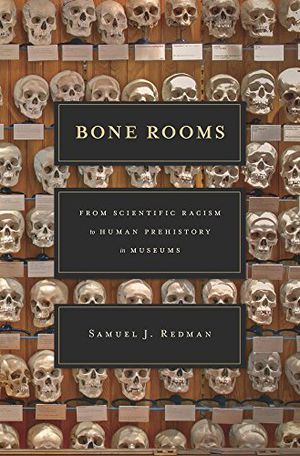
In the 2016 book ‘Bone Rooms: From Scientific Racism to Human Prehistory in Museums’, Samuel J Redman notes: “The campaign to preserve and collect was viewed as a race against time; bone empires benefited from this powerful sentiment by conceptualising indigenous and ancient bodies as a limited and scientifically valuable resource.”
The history of these collections is dramatic, occasionally punctuated
by unexpected twists. The story emerges from an ongoing competition to
establish the largest and most prestigious museums in cities across the
United States. At times driven by both ego and intellect, scientists
established a new field as they collected, their studies working to
shape ideas about race and what it means to be human. For scientists who
collected the dead, the desire to obtain remains for growing bone rooms
often suspended or displaced codes of ethical behavior. Museum
curators, as well as amateur collectors, competed and collaborated to
understand the body as a scientific object; at the same time, visitors
to museums that displayed bodies were continually enthralled, almost
surprised, by the humanity of ancient and recent bodies they found exhibited before them.
In the 2016 book ‘Bone Rooms: From Scientific Racism to Human Prehistory in Museums’, Samuel J Redman notes: “The campaign to preserve and collect was viewed as a race against time; bone empires benefited from this powerful sentiment by conceptualising indigenous and ancient bodies as a limited and scientifically valuable resource.”
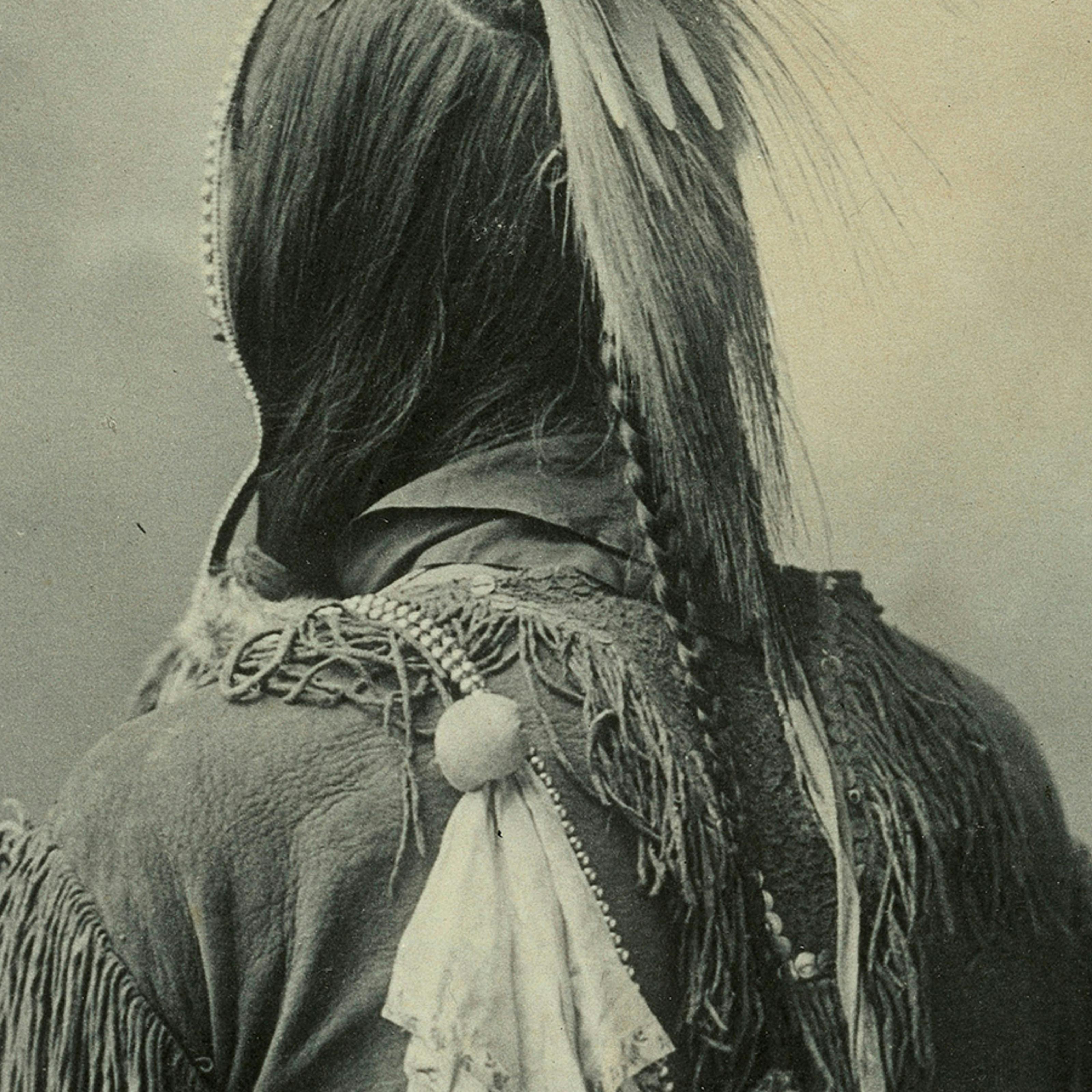
“Whether
he wanted to or not, the real and actual Indian vanished into the image
contrived by non-Indian interests, since he became, in some sense,
acceptable then ‘as an Indian’, albeit an Indian fashioned, styled and –
even literally – costumed (for example, photographic studio props were
used by photographers such as Rinehart and Edward Curtis) so that he could be identified as nothing but an Indian.”
As Americans tussle with the idea of financial and institutional reparations, insight can be gained from other movements that have sought to redress historic injustices. One such injustice was the removal of more than 200,000 skeletons, millions of grave goods, and thousands of sacred objects—stolen from Native Americans.
South Carolina court drops contempt charge against Dusten Brown Dusten Brown and the Cherokee Nation rea...
Bookshop
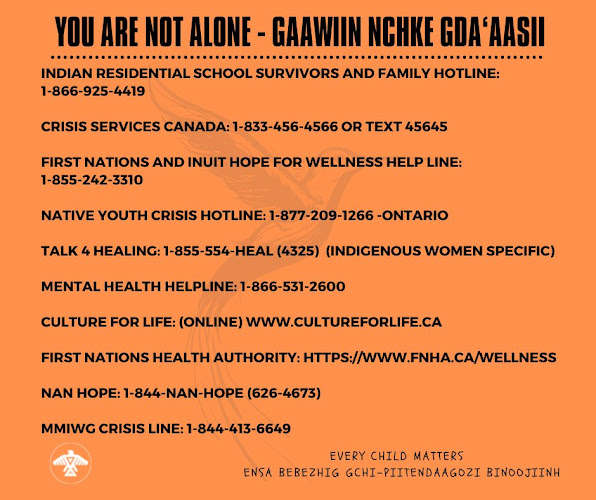
You are not alone
To Veronica Brown
Veronica, we adult adoptees are thinking of you today and every day. We will be here when you need us. Your journey in the adopted life has begun, nothing can revoke that now, the damage cannot be undone. Be courageous, you have what no adoptee before you has had; a strong group of adult adoptees who know your story, who are behind you and will always be so.
Diane Tells His Name
click photo
Lost Birds on Al Jazeera Fault Lines
click to read and listen about Trace, Diane, Julie and Suzie
NO MORE STOLEN SISTERS
click image
We conclude this series & continue the conversation by naming that adoption is genocide. This naming refers to the process of genocide that breaks kinship ties through adoption & other forms of family separation & policing 🧵#NAAM2022#AdoptionIsTraumaAND#AdopteeTwitter#FFY 1/6 pic.twitter.com/46v0mWISZ1
As the single largest unregulated industry in the United States, adoption is viewed as a benevolent action that results in the formation of “forever families.” The truth is that it is a very lucrative business with a known sales pitch. With profits last estimated at over $1.44 billion dollars a year, mothers who consider adoption for their babies need to be very aware that all of this promotion clouds the facts and only though independent research can they get an accurate account of what life might be like for both them and their child after signing the adoption paperwork.
















 Posts
Posts

