They Took Us Away

They Took Us Away
click image to see more and read more

it's free

click

How to Use this Blog

BOOZHOO! We've amassed tons of information and important history on this blog since 2010. If you have a keyword, use the search box below. Also check out the reference section above. If you have a question or need help searching, use the contact form at the bottom of the blog.


We want you to use BOOKSHOP to buy books! (the editor will earn a small amount of money or commission. (we thank you) (that is our disclaimer statement)

This is a blog. It is not a peer-reviewed journal, not a sponsored publication... WE DO NOT HAVE ADS or earn MONEY from this website. The ideas, news and thoughts posted are sourced… or written by the editor or contributors.

EMAIL ME: tracelara@pm.me (outlook email is gone) THANK YOU CHI MEGWETCH!

SEARCH

Showing posts with label Stephen Prevar. Show all posts

Thursday, November 28, 2019

For those non-Indians who wish to commemorate the origins of Thanksgiving


By Stephen L. Pevar

Every schoolchild is taught that the holiday of Thanksgiving commemorates the feast the Pilgrims arranged to thank the Indians for their friendship, for sharing their land, and for showing them how to grow, harvest, and store food. Accounts say that the generosity of the Indians saved the colonists from starvation during the harsh New England winter of 1620.

Very few schoolchildren are also taught, however, about the deprivations and atrocities that occurred to the Indians afterwards, first at the hands of the colonists and then by the United States government. Ironically, if the United States believes today that it has a poor immigration policy, imagine how self-destructive the Indians’ immigration policy was by welcoming the very people who would soon seek to destroy them.

Within 100 years after the United States gained its independence from Great Britain, tens of thousands of Indians were killed in wars defending their homelands. The United States entered into nearly 400 treaties with Indian tribes between 1783 and 1871 (when Congress ended treaty-making with the Indians), during a time when tribes were very powerful. In exchange for Indians relinquishing most of their territories and ending their defense of them, the US set aside smaller portions of land that were forever guaranteed to the treaty tribe.

When the federal government became stronger, however, it broke virtually all of these treaties and confiscated most of the land guaranteed in them. During the 1830s, for instance, Indians living in the Southeast were marched at bayonet point nearly 2000 miles to “Indian Country,” now the state of Oklahoma, during which thousands died.

These land grabs and treaty abrogations were even approved by US Supreme Court. The case of Lone Wolf v. Hitchcock, decided in 1903, involved an 1867 treaty in which Congress guaranteed the Kiowa and Comanche Tribes that no additional land would be taken from their reservation unless the tribes gave their express consent. Several years later, the federal government took additional land despite opposition from the tribes. The Supreme Court held that Congress has “plenary power” (full and complete authority) over the Indians and can break a treaty essentially whenever it wishes.
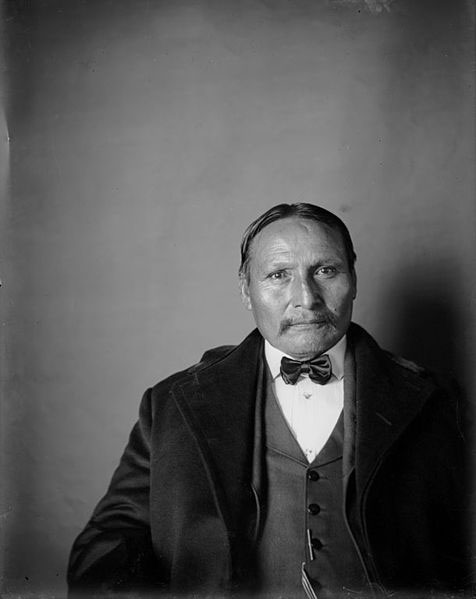
Lone Wolf the Younger, Kiowa. Photo taken by De Lancey W. Gill.  Public domain via Wikipedia Commons.
Lone Wolf the Younger, Kiowa. Photo by De Lancey W. Gill. Public domain via Wikipedia Commons.

In addition to taking Indian land, the federal government, during the latter part of the 1800s, encouraged social reformers and missionaries to remove Indian children from their reservation homes and place them in boarding schools (sometimes thousands of miles away), where their Indian culture was literally beaten out of them. The government also prevented the Indians from leaving their reservations to obtain food, and many Indians starved to death. When some Plains tribes continued to resist placement on reservations, the government began slaughtering the bison on which they depended. Millions of bison were killed and left to rot, until by 1900, there were less than a thousand bison left. With their food gone, Indians were forced to surrender. Hatred for the Indians was so profound that General Sheridan, when told by one Indian that he was a “good Indian,” reportedly smirked and said, “The only good Indians I ever saw were dead.” Sheridan was one of the generals who ordered the slaughtering of the bison.

During the past 50 years, conditions have improved for most tribes as a result of a shift in public attitude towards Indians and a change in congressional policies. A few tribes have even become wealthy as a result of casinos. But conditions on most reservations remain substandard and impoverished. As President Barack Obama noted in November 2009, the unemployment rate on some Indian reservations is 80%, nearly a quarter of all Indians live in poverty, 14% of all reservation homes don’t have electricity, and 12% don’t have access to a safe water supply.

Non-Indians often wonder why more Indians haven’t left the reservation to seek a “better” life. But this underestimates and misunderstands the importance to many Indians of their tradition, culture, and religion, much of which is tied to the land. Whereas millions of immigrants came to the United States to join the “melting pot,” many Indians have resisted assimilation and remain deeply rooted in their ancestral homelands.

For those non-Indians who wish to commemorate the origins of Thanksgiving, there are many ways to do so. One would be to urge public schools to tell the whole story about the Indian experience. Another would be to lobby Congress to enact more helpful Indian policies and programs. A third would be to donate to organizations that give assistance to Indians in their efforts to rejuvenate their governments and restore their economic, political, and social structures, such as the Native American Rights Fund, the Association of American Indian Affairs, the National Indian Child Welfare Association, and the National Congress of American Indians, among many.

Thanksgiving is a wonderful holiday. Hopefully, this year and in years to come we will spend part of the holiday reflecting on its origins and dedicating ourselves to fostering the values of the Indians who selflessly assisted their new neighbors.
Stephen L. Pevar is the author of The Rights of Indians and Tribes, Fourth Edition. He is a senior staff counsel of the American Civil Liberties Union. Mr. Pevar worked for Legal Services on the Rosebud Sioux Reservation from 1971-1974, and taught Federal Indian Law at the University of Denver School of Law from 1983-1999. He has litigated numerous Indian rights cases and has lectured extensively on the subject.
Subscribe to only American history articles on the OUPblog via email or RSS.

Friday, July 25, 2014

WHY are these Native children removed from their homes?

By Stephen Pevar, Senior Staff Attorney, ACLU at 10:19am

Imagine entering family court and knowing that what's at stake is the person you hold most dear – your child. Now imagine having a judge tell you that he's removing your child from your custody, from your home. When you ask him why, the judge's replies, "I honestly can't tell you." The judge then signs an order giving custody of your son to Social Services.
You might think that such a court proceeding could never happen in the United States – but you'd be wrong.
It happened not long ago to the father of an American Indian child in South Dakota. What's more, many similar hearings in which Indian children are removed from their homes for no reasons given to the parents occur at least 100 times a year in Rapid City, South Dakota, alone.
Congress passed the Indian Child Welfare Act (ICWA) in 1978 in an effort to stop American Indian families from having their children removed by state and local officials for invalid and sometimes even racist reasons. Yet 36 years later, Indian children in South Dakota are 11 times more likely to be removed from their families and placed in foster care than non-Indian children.
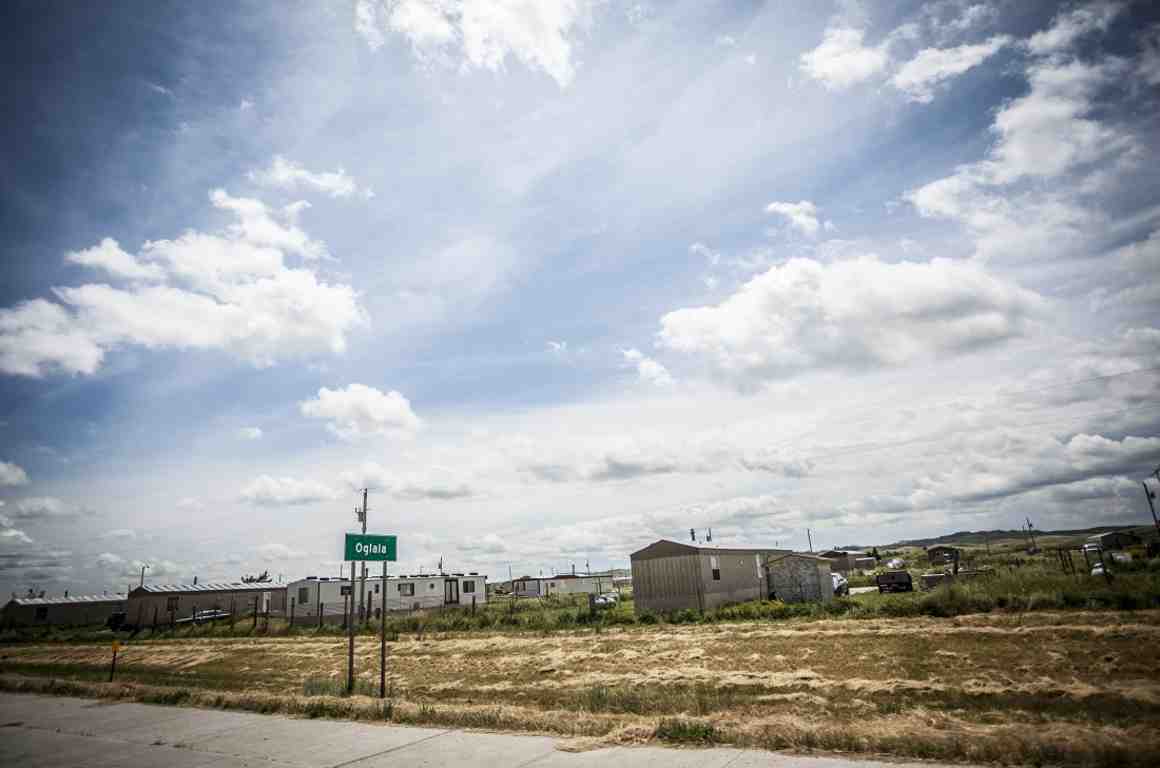
The ACLU filed a lawsuit in March 2013 in federal court on behalf of the Oglala Sioux and the Rosebud Sioux tribes in South Dakota and on behalf of a class of all Indian families living in Rapid City, South Dakota, the state's second largest city. We sued state and local officials who, we contend, repeatedly violate ICWA.
We recently examined 120 transcripts of initial custody hearings – known as "48-hour" hearings – held during the past four years involving Indian children. Nearly 100 percent of the time, Indian children were removed from their homes in those hearings. The average length of time those hearings took was less than 4 minutes. Within that time, of the six different judges that oversaw the hearings, not one judge ever told one Indian parent that they have a right to contest the state's petition for temporary custody of their children in the hearing on the petition.
During those hearings, the parents were not told the reasons for the removal, not provided with an attorney, not allowed to submit any evidence, and not allowed to cross-examine the Social Services worker who had submitted an affidavit against them. In most cases, the parents were not even allowed to see the affidavit.
And what were the parents in these hearings "guilty" of? Here is a snapshot of some of the cases discussed in the transcripts:
  • A mother abused by her boyfriend lost custody of her child even though the abuser was not being allowed to return to the home. Before the judge's decision, the mother pleaded with the judge not to punish her for what the abuser had done.
  • A father going through divorce was denied custody of his children solely because his estranged wife got into trouble with the police, even though no evidence was introduced suggesting that the children would be at risk staying with the father.
  • A mother lost custody of her daughter merely because the daughter's babysitter had become intoxicated, without any showing that the mother knew that such a thing might occur.
  • A father who tried to discuss the merits of his case was interrupted by the judge and told that the details of child custody removals were not to be discussed in 48-hour hearings, and then the judge signed an order removing the child from the father's custody.
Our lawsuit seeks to stop state judges and social workers from continuing to remove Indian children from their homes unless the parents are provided with basic guarantees of due process of law and rights afforded 36 years ago in ICWA These include the right to a fair and prompt hearing, the right to notice of the charges against them, the right to an attorney, the right to present evidence, and the right to cross-examine the state's witnesses.
Based on the 120 transcripts, we recently filed motions asking the federal court to rule that South Dakota officials engage in a pattern and practice of denying Indian families and Indian tribes their basic rights to fairness under ICWA and the Constitution.  

And next month, the UN Committee on the Elimination of Racial Discrimination will consider a report submitted by the ACLU on U.S. failure to meet its international treaty obligations to end pervasive and institutionalized discrimination, including the lack of due process in American Indian child custody proceedings in South Dakota.
Ultimately, we hope to restore justice to a group of people who our legal system has repeatedly failed.

Learn more about American Indian rights and other civil liberty issues: Sign up for breaking news alerts, follow us on Twitter, and like us on Facebook.

Happy Visitors!

NEW WEB ADDRESS

Because we don't want to lose information on this blog, we now have a domain name: American Indian Adoptees.com - click and save this link:

2026: WE HAVE A BACK UP BLOG COMING SOON: www.americanindianadoptees.blog (on wordpress) We are no longer on Facebook. We deleted our accounts.

WRITTEN BY HUMANS!

WRITTEN BY HUMANS!

Blog Archive

Featured Post

Your History Class Was a F*cking Lie | #NOMOAR

  Your History Class Was a F*cking Lie by Sean Sherman (Or: How the American Educational System Has Always Been a Racist Propaganda Program...


Native Circles

Native Circles
click logo for podcasts!

Most READ Posts

Bookshop

You are not alone

You are not alone

To Veronica Brown

Veronica, we adult adoptees are thinking of you today and every day. We will be here when you need us. Your journey in the adopted life has begun, nothing can revoke that now, the damage cannot be undone. Be courageous, you have what no adoptee before you has had; a strong group of adult adoptees who know your story, who are behind you and will always be so.

Diane Tells His Name


click photo

Lost Birds on Al Jazeera Fault Lines

Lost Birds on Al Jazeera Fault Lines
click to read and listen about Trace, Diane, Julie and Suzie

NO MORE STOLEN SISTERS

NO MORE STOLEN SISTERS
click image

ADOPTION TRUTH

As the single largest unregulated industry in the United States, adoption is viewed as a benevolent action that results in the formation of “forever families.”
The truth is that it is a very lucrative business with a known sales pitch. With profits last estimated at over $1.44 billion dollars a year, mothers who consider adoption for their babies need to be very aware that all of this promotion clouds the facts and only though independent research can they get an accurate account of what life might be like for both them and their child after signing the adoption paperwork.

Original Birth Certificate Map in the USA

Google Followers