They Took Us Away

They Took Us Away
click image to see more and read more

it's free

click

How to Use this Blog

BOOZHOO! We've amassed tons of information and important history on this blog since 2010. If you have a keyword, use the search box below. Also check out the reference section above. If you have a question or need help searching, use the contact form at the bottom of the blog.


We want you to use BOOKSHOP to buy books! (the editor will earn a small amount of money or commission. (we thank you) (that is our disclaimer statement)

This is a blog. It is not a peer-reviewed journal, not a sponsored publication... WE DO NOT HAVE ADS or earn MONEY from this website. The ideas, news and thoughts posted are sourced… or written by the editor or contributors.

EMAIL ME: tracelara@pm.me (outlook email is gone) THANK YOU CHI MEGWETCH!

SEARCH

Showing posts with label settler colonialism. Show all posts

Friday, May 8, 2026

Black-Inuk woman traces history of Black settlers in the North in pursuit of answers to racial divisions today

Jaelyn Jarrett believes Black and white settlers had very different experiences in the North

older woman uses her hands to hold younger woman's face
Jaelyn Jarrett and her aunt Leah Ford. Jarrett, a woman originally from Nain, N.L., has Inuit and Guyanese roots. She's embarking on a journey to trace the history of Black settlers in the North. (Submitted by Jaelyn Jarrett)

Jaelyn Jarrett remembers moving from Nain, N.L., to Ontario as an eight-year-old when she started being called a ‘Puatugi’.

“I didn't really understand what that term meant at the time, but I knew people would reference my hair, and so I figured that it meant black,” she said.

After conversations with her grandmother, Jarrett discovered that word meant Portuguese. She wondered why she — a Black-Inuk woman with Guyanese roots — was being referred to as Portuguese.

That memory led the Carleton University master’s student on a journey to trace the origin of the word, where she came across Canadian historian Kenn Harper’s Names We Call Each Other. 

The book explains many of the whalers in the Arctic were Black men from Cape Verde — islands located off the west coast of Africa once colonized by Portugal. 

Many Cape Verdeans emigrated to the United States starting in the 1800s, particularly to coastal towns with thriving whaling ports like New Bedford, Massachusetts. From there, some Cape Verdean men joined whaling ships travelling to the Hudson’s Bay and Cumberland Sound. 

black and white photo of men on a ship
A photo by Captain George Comer, estimated between 1897 and 1899, showing the crew on deck of a whaling schooner. Brass Lopes is believed to be in the far right of this photograph. (Mystic Seaport Museum)

Those Black whalers were then referred to by Inuit as ‘Puatugi’, which was adapted from the word Portuguese to flow better in Inuktitut. 

While Black whalers did head North for economic pursuits, Jarrett believes those men had very different experiences than their white counterparts. 

"They were able to get opportunities to come to the North and make money, but they were still under the confines of racism and colonialism," she said. 

She thinks many people don't realize that part of Nunavut’s history, which she believes could offer answers to the racial divide that exists to this day.

Monday, July 10, 2023

The Unravelling of a Colonized Mind


IMAGE

REBLOG from

By Jana-Rae Yerxa

Sure everybody struggles. But to be born an Indigenous person, you are born into struggle. My struggle. Your struggle. Our struggle. The colonial struggle. There are many layers to this struggle. For the longest time, I didn’t even know what the true struggle was about yet I couldn’t escape it. It consumed me. Colonialism, as I have been forced to discover, is like a cancer. But instead of the cells in your body betraying itself, the thoughts in your mind work against you and eat you up from the inside out. You’re like the walking dead and you don’t even know it because you are so blinded. You can’t see the truth.

Here are some of the perverted ways colonialism infects the mind:
• With a colonized mind, I hate being Indian.
• With a colonized mind, I accept that I am Indian because that’s who the colonizer told me I am.
• With a colonized mind, I don’t understand that I am Anishinaabe.
• With a colonized mind, I believe I am inferior to the white race.
• With a colonized mind, I wish I was white.
• With a colonized mind, I draw pictures of my family with peach coloured skin, blonde hair and blue eyes because I’ve internalized that this is the ideal, what looks good and what is beautiful.
• With a colonized mind, I keep my feelings of inferiority to white people a secret from others and even from myself.
• With a colonized mind, I try diligently to mirror white people as closely as I possibly can.
• With a colonized mind, I desperately want to be accepted by white people.
• With a colonized mind, to gain the acceptance of white people, I will detach myself from all that does not mirror acceptable “white” standards, whether it is how one dresses, one speaks, or one looks.
• With a colonized mind, I feel as though I am swearing when I say “white people” in front of white people.
• With a colonized mind, I believe there is no racism.
• With a colonized mind, I believe that racism does not impact me.
• With a colonized mind, I deny my heritage and proudly say, “We are all just people.”
• With a colonized mind, when discussing issues pertaining to race, I try desperately not to offend white people.
• With a colonized mind, I do not know who I am.
• With a colonized mind, I believe I know who I am and do not understand that this isn’t so because I’ve become the distorted image of who the colonizer wants me to be and remain unaware of this reality.
• With a colonized mind, I could care less about history and think that our history don’t matter.
• With a colonized mind, I do not understand how the history created the present.
• With a colonized mind, I do not see how I have been brainwashed to be an active participant in my own dehumanization and the dehumanization of my people.
• With a colonized mind, I do not recognize how others dehumanize me and my people.
• With a colonized mind, I devalue the ways of my people- their ways of seeing, their ways of knowing, their ways of living, their ways of being.
• With a colonized mind, I cannot speak the language of my ancestors and do not care that this is so.
• With a colonized mind, I am unaware of how colonization has impacted my ancestors, my community, my family, and myself.
• With a colonized mind, I think that my people are a bunch of lazy, drunk, stupid Indians.
• With a colonized mind, I discredit my own people.
• With a colonized mind, I think that I am better than ‘those Indians’.
• With a colonized mind, I will silently watch my people be victimized.
• With a colonized mind, I will victimize my own people.
• With a colonized mind, I will defend those that perpetrate against my people.
• With a colonized mind, I will hide behind false notions of tradition entrenched with Euro-western shame and shame my own people re-creating more barriers amongst us.
• With a colonized mind, I tolerate our women being raped and beaten.
• With a colonized mind, I tolerate our children being raised without their fathers.
• With a colonized mind, I feel threatened when someone else, who is Anishinaabe, achieves something great because I feel jealous and wish it was me.
• With a colonized mind, when I see an Anishinaabe person working towards bettering their life, because my of my own insecurities, I accuse them of thinking they are ‘so good now’.
• With a colonized mind, I am unaware that I was set up to hate myself.
• With a colonized mind, I do not think critically about the world.
• With a colonized mind, I believe in merit and do not recognize unearned colonial privilege.
• With a colonized mind, I ignorantly believe that my ways of seeing, living and believing were all decided by me when in reality everything was and is decided for me.
• With a colonized mind, I am lost.
• With a colonized mind, I do not care about the land.
• With a colonized mind, I believe that freedom is a gift that can be bestowed upon me by the colonizer.
• With a colonized mind, I believe that I am powerless and act accordingly.
• With a colonized mind, I do not have a true, authentic voice.
• With a colonized mind, I live defeat.
• With a colonized mind, I will remain a victim of history.
• With a colonized mind, I will pass self-hatred on to my children.
• With a colonized mind, I do not understand the term “self-responsibility.”
• With a colonized mind, I do not recognize that I have choice and do not have to fatalistically accept oppressive, colonial realities.
• With a colonized mind, I do not see that I am a person of worth.
• With a colonized mind, I do not know I am powerful.

The colonial struggle, as I said earlier, has many layers. I am no longer being eaten from the inside. Yet it is no less painful. What is different today is that I am connected to a true source of power that was always there. It’s like my friend once said, “I come from a distinguished people whose legacy shines on me like the sun.” I now understand this and it is because of this understanding that my mind and my soul are freer than they have ever been. It is because of that gift- that awakening which came through struggle- that I will proudly continue to struggle for freedom. 

My freedom. Your freedom. Our freedom.

Jana-Rae Yerxa, is Anishinaabe from Little Eagle and Couchiching First Nation and belongs to the Sturgeon clan. Activist. Social Worker. Former professor. Current student. She is committed to furthering her understanding of Anishinaabe identity and resurgence as well as deconstructing Indigenous/settler relations in the contexts of colonization and decolonization. Jana-Rae is currently enrolled in the Indigenous Governance Program at University of Victoria.

LAST REAL INDIANS


This post is from 2014 but is STILL TRUE for too many of us...But we have the POWER to change ourselves. We must!  Trace


Thursday, February 17, 2022

Words to Love By...


👉I am reading this book WORDS TO LOVE BY to heal (TL Hentz)

Source: Poetry (June 2018)

Love Lessons in a Time of Settler Colonialism

I am not murdered, and I am not missing, but parts of me have been disappeared.
— Leanne Simpson

They too know all too well that some cracks were built just for us to fall through.
 We live in a world that tries to steal spirits each day; they steal ours by taking us away.

From Industrial Schools to forced assimilation, genocide means removal 
of those who birth nations — our living threatens. Colonization has been choking

us for generations. I tell my girls they are vessels of spirit, air to lungs expanding; this world cannot breathe without us. There are days 
I wish

I didn’t have to teach these lessons, but as an Indigenous womxn 
silence is deadening. There is danger in being seen, our bodies are targets

marked for violence. We carry the Earth’s me too inside us, 
a howling wind, our mothers & their mothers swallowed these bullets long ago.

The voices ricochet I wish I were invisible I wish I were invisible 
I wish echoes
 in my eardrums — we know what it’s like to live in fear. Colonialism’s bullet sits cocked,

waiting behind a finger on trigger. We breathe and speak and sing
 for survival. We carve out in lines; we write — I know joy I know pain I know love

I know love I know — lessons we’ve carried throughout time. Should I go missing: don’t stop searching; drag every river until it turns red and the waters of our names

stretch a flood so wide it catches everything. And we find each other whole and sacred, alive and breathing and breathing and breathing.
 
**

Uncharted Territory of Grief

Summers meant sticking my arm out the back of a rez car.
No other windows rolled down.
Consequences of a mechanic, some stranger’s
calloused hands left us with sticky summers, sweat
dripping from our foreheads.

I waved to make-believe
friends and hungry ghosts. My arms danced
against the wind, taking comfort in
the resistance of warm desert air.

The ghosts sang along as Journey’s
keys and bass blared through
a battery-powered boombox.
The car hugged the highway curves like a child
holding its mom’s hand, afraid to walk alone in the dark.

Our grandmothers told us stories of the desert,
how giant serpents laid on mountains
to create canyons. Imagine earth crunching
under the weight of unbearable sadness.
Imagine what it feels like to collapse
into an uncharted territory of grief.

As young girls we learned the tale
of a mother who cried so many tears
she created a lake in the middle of the desert.
Today she sits in stone beneath a star-stitched sky,
holding up the otherwise untethered blue.

Last month, I read an orca gave birth
to a female calf who died thirty minutes
after entering our world. The orca carried her dead
calf for 17 days. Tethered by grief, hers the price
paid for love and loving.

                               At 34, my sister gives birth
to her first child, a winter-born boy.
In recovery, my sister asks if she can walk yet.
Her nurse says, “Wait until your legs are yours again.”

I wonder who and what I’ve carried
and carry for days, months, for years. Grandmother,
take me back to your childhood, where you sang
“Blue Moon” in boarding school, where you won
the talent show.
                                         Take me back to 17,
when my back first curved into an S—
the serpent inside me coiled under grief,
my scoliosis stopping any sports
outside of prayers and inside dreams.
I wish we’d had more time.

Take me back to the day my fingers learned the blues
until chords calloused their tips,
the electric progression of “Ain’t Got No Home”
etched into my body’s memory.

Take me back to when we were all children
given songs to sing. The ones you proclaimed
were anthems, predictions for how we would love.

Take me back to when
we were all children saying
let’s pretend. We’d yet to swim
through grief. Our spirits hadn’t been crushed
by fists breaking through bedroom walls
and I could still hold your hand in the dark.
Let’s pretend our ghosts have been fed.
Let’s make-believe our hearts are
ours so we can walk again.

Reverse the journey, playback
the boombox, rewind the cassette tape
to our favorite part where we all sing along
         to the na na na nas,
until my lungs can remember what it’s like to breathe
in a world where you are still here
and I am still waving at ghosts
through the back window, singing:
now it’s your turn girl to cry.
 
Source: Poetry (March 2021)
 

About Tanaya Winder

Poet, writer, and educator Tanaya Winder is an enrolled member of the Duckwater Shoshone Tribe and has ancestors from the Southern Ute, Pyramid Lake Paiute, Navajo, and Black tribes.

In an interview with Zingara Poetry Review, Winder notes, “I am a person who hopes my own writing and poetry reflects the times and the needs of society; without interacting with the community the poetry cannot attempt to reflect communities and so I believe poetry must intersect with community. Poetry has the potential to create community for people who are searching for it by providing a space to interact and share experiences on the page.”

Winder cofounded As/Us, an online journal devoted to writers of color; cofounded the traveling exhibit Sing Our Rivers Red to raise awareness of missing and murdered indigenous women; and founded Dream Warriors Management, a company that manages indigenous artists. The National Center for American Indian Enterprise Development named her one of “40 Under 40” emerging American Indian leaders, and she was a 2017 First Peoples Fund Artists in Business Leadership fellow.


Happy Visitors!

NEW WEB ADDRESS

Because we don't want to lose information on this blog, we now have a domain name: American Indian Adoptees.com - click and save this link:

2026: WE HAVE A BACK UP BLOG COMING SOON: www.americanindianadoptees.blog (on wordpress) We are no longer on Facebook. We deleted our accounts.

WRITTEN BY HUMANS!

WRITTEN BY HUMANS!

Blog Archive

Featured Post

Your History Class Was a F*cking Lie | #NOMOAR

  Your History Class Was a F*cking Lie by Sean Sherman (Or: How the American Educational System Has Always Been a Racist Propaganda Program...


Native Circles

Native Circles
click logo for podcasts!

Most READ Posts

Bookshop

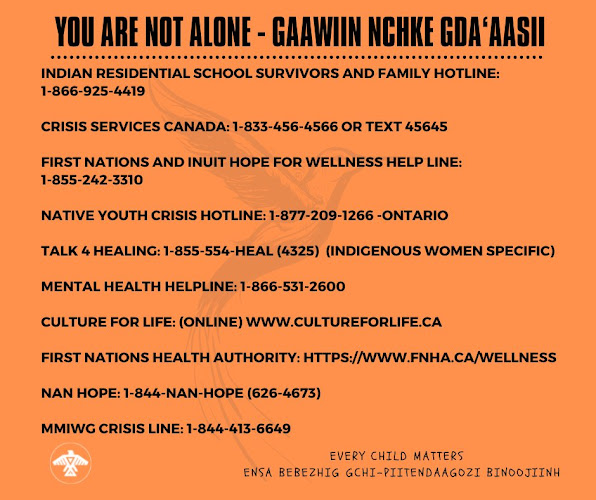
You are not alone

You are not alone

To Veronica Brown

Veronica, we adult adoptees are thinking of you today and every day. We will be here when you need us. Your journey in the adopted life has begun, nothing can revoke that now, the damage cannot be undone. Be courageous, you have what no adoptee before you has had; a strong group of adult adoptees who know your story, who are behind you and will always be so.

Diane Tells His Name


click photo

Lost Birds on Al Jazeera Fault Lines

Lost Birds on Al Jazeera Fault Lines
click to read and listen about Trace, Diane, Julie and Suzie

NO MORE STOLEN SISTERS

NO MORE STOLEN SISTERS
click image

ADOPTION TRUTH

As the single largest unregulated industry in the United States, adoption is viewed as a benevolent action that results in the formation of “forever families.”
The truth is that it is a very lucrative business with a known sales pitch. With profits last estimated at over $1.44 billion dollars a year, mothers who consider adoption for their babies need to be very aware that all of this promotion clouds the facts and only though independent research can they get an accurate account of what life might be like for both them and their child after signing the adoption paperwork.

Original Birth Certificate Map in the USA

Google Followers