BOOZHOO! We've amassed tons of information and important history on this blog since 2010. If you have a keyword, use the search box below. Also check out the reference section above. If you have a question or need help searching, use the contact form at the bottom of the blog.
We want you to use BOOKSHOP to buy books! (the editor will earn a small amount of money or commission. (we thank you) (that is our disclaimer statement)
This is a blog. It is not a peer-reviewed journal, not a sponsored publication... WE DO NOT HAVE ADS or earn MONEY from this website. The ideas, news and thoughts posted are sourced… or written by the editor or contributors.
EMAIL ME: tracelara@pm.me (outlook email is gone)
THANK YOU CHI MEGWETCH!
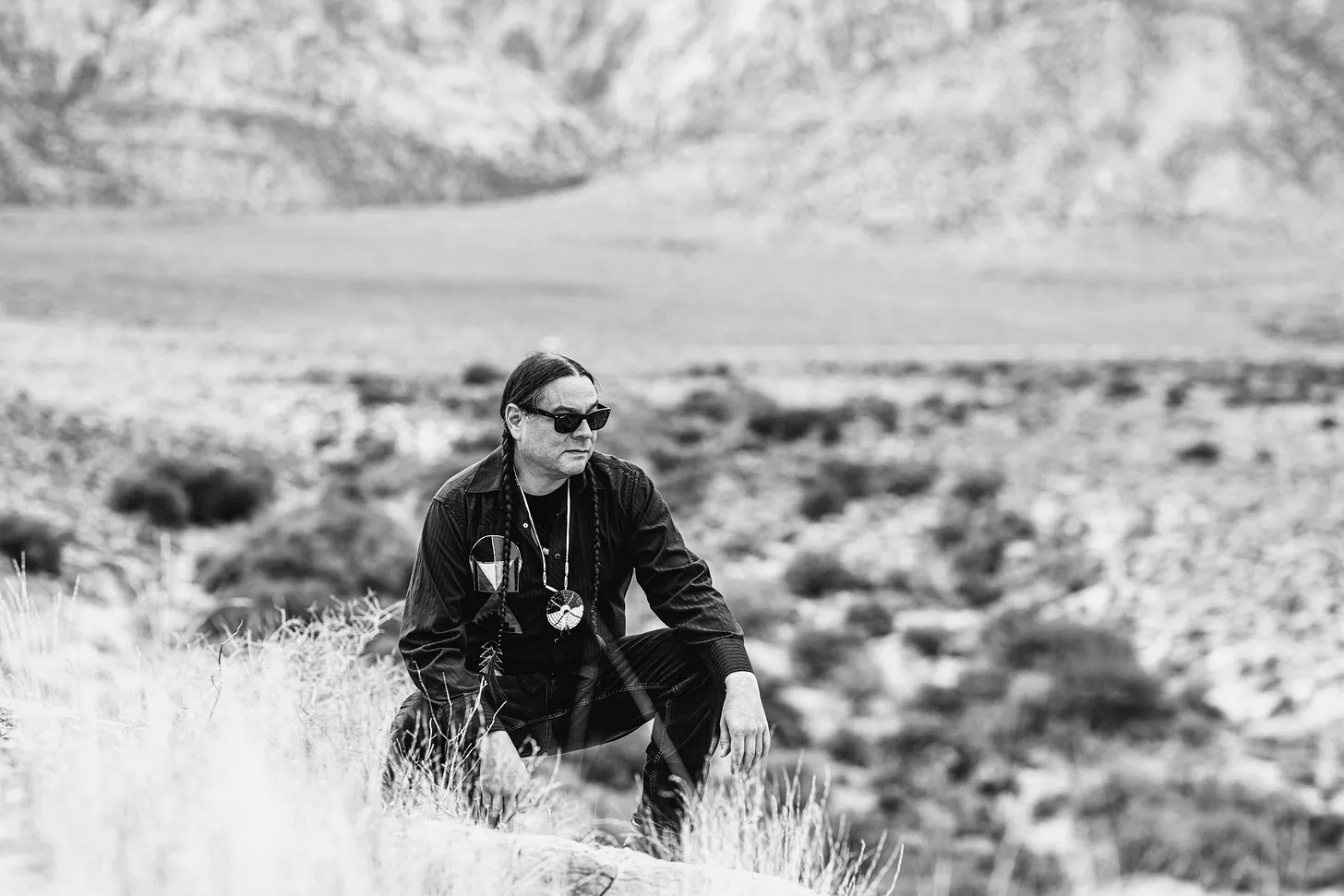
The film captures Fiddler's journey as he navigates between two worlds.
Native Identity, Lakota Family Ties Drive PBS Documentary 'Without Arrows'
Without Arrows will air on PBS stations nationwide at 10 p.m. on January 13 and will stream on the PBS app and website through April 2025. The film received support from Vision Maker Media and ITVS's Open Call initiative.
Without Arrows | Directors: Jonathan Olshefski; Elizabeth Day (Ojibwe) | Running Time: 1h 25m | Genre: Documentary
A
Native American teen who was recently crowned as the teenaged boy with
the world’s longest hair says he is proud that he can now represent his
tribe and family to a global audience.
“Culturally, Lakota people have long hair,” Reuben Looks Twice Jr said on Friday in an interview published by the website of Guinness World Records,
which sanctioned his mark on 7 June after his hair measured 161cm (5ft
3.3in). Invoking the Lakota word for “spirit”, the 17-year-old added:
“It’s part of our Nagi. It’s who I am.
“I feel proud to represent my family and the Lakota Nation.”
Reuben
told the organization, which is famous for curating a database of
40,000 world records, that he last had his hair cut when he was two
years old. His parents initially let him begin skipping trims while
growing up in Rapid City, South Dakota, because hair clippers frightened him.
But
then, as he got older, he stuck with growing his hair out to honor the
tradition of the Lakota. The Lakota, as is the case with many other
Indigenous American peoples, consider hair to be a sacred cultural
symbol representing the connection with one’s soul, family and
community.
Reuben
has since mainly worn his hair in a lengthy braid. He maintains the
style by washing it every morning for 20 minutes with shampoo and
conditioner, according to his interview with Guinness. Then, he dries it for an hour before spending another 10 minutes untangling, brushing and braiding it again.
The
teen told Guinness he went to a hair salon to unbraid, wash and brush
out his hair when he decided to go for the world record. The salon laid
his hair out to find the longest strand, measured three times and the
average of the measurements ended up being the official record achieved
by Reuben.
He seized the title from India’s Sidakdeep Singh Chahal, whose hair in 2023 was measured to be 146cm (4ft 9.5in).
Reuben
revealed his hair is so long that he sometimes gets it stuck in car
doors or ensnared on shower knobs. Yet he said he plans to never cut it.
It’s
not only because he hopes it leaves “my family and tribe proud” – upon
turning 18, he also would qualify for the Guinness record recognizing
the man with the longest hair in the world, which as of Friday was
vacant.
Nominated for Best Documentary at The Native American Film Festival in San Francisco in 2017.
Who Will Bury the Dead? explores the experiences of the last Lakota Christian Clergy with 150 years of historical perspective. A powerful contemporary story of spiritual decolonization. Available on Amazon Prime.
I asked my relative Ellowyn many years ago why there were churches in Pine Ridge, and she said they provided food and money. But not many people went to church. - TLH
My perspective on cultural appropriation will always be different than most of the outspoken folks in Indian country. I did not grow up on a reservation, nor experience the “classic” urban native experience. I am a Native woman who was adopted out when I was a baby. Some call people like me “lost birds” or “split feathers.” People that have gone through the assimilation process that has taken over what the boarding and residential schools have done to our grandparents and ancestors.
Today the problem persists, despite the passage of the Indian Child Welfare Act in 1978 designed to stop 25 percent of all native children in the United States from being adopted out to non-native families. In 1987, nine years after the passage of the Act, a study was conducted by CSR Incorporated, and it’s subcontractor, Three Feathers Associates; they found that 35 percent of all native children were being placed in substitute care and that 85 percent of that number were being placed in non-Native homes. In the summer of 2012, we were reminded of this epidemic with NPR’s report that 700 native children are being removed from their homes and adopted out each year in South Dakota alone.
Native children who live on reservations or grow up with their families around urban centers, like the American Indian Center in Chicago, have access to family, community members and resources to learn about and engage in their cultures. As a native child adopted out to non-native parents, I did not have this same access. Regardless of my disconnection to any sort of native community, it did not stop me from having a very strong pull to my roots and a drive to learn about my cultures as a Choctaw and Lakota woman.
Interestingly enough, I found as I grew older, this connection and pull that I felt, even as a young child, to learn about my cultures and engage in them, wasn’t a unique thing that only I experienced. That pull is felt by many native people who’ve been adopted out. Some call it the Split Feather Syndrome. Others say that it occurs due to the prayers for the children who’ve been removed, so that they may return to their communities. Whatever it is, it is real, and it happens.
From my experience, sometimes that pull can be a heavy weight to carry. I have reached out as a young child and throughout the course of my life to learn about my cultures. However, when you are removed, the media reduces your perception of the 500+ individual tribes and cultures to five tribes: Cherokee, Sioux, Navajo, Apache, and Mohawk. These five complex cultures get even further reduced down to the appearance of what I would now call the dominate-society’s-tacky-rendition-of-plains-culture.
Removed, I had little access to legitimate representations of Lakota culture and Choctaw culture. Being ignorant, while fiercely proud of being native, I took every representation of Native Americans in the media and let them become me. After all, in my mind, costumes, like the ones sold in Halloween stores and portrayed in the old western films, told me that this is how my ancestors dressed. If I wanted to be Native, then I need to dress that way, talk that way, act that way, and (dear god) I better also be sure my hair was straight, just like those Natives on TV and the rest of the media. When you are removed, and there is no one there to tell you what is legitimate and what is a stereotype. How are you to know? I can tell you that the American public schools definitely will not tell you. Popular media, as we know it right now, will not tell you. Dr. Phil cannot tell you.
I am now nearly 24 years old and have been able to reconnect with native communities. I have been told by a native social worker, that it is impressive that I have been able to do so at all—given that many children adopted out never are able to reconnect to Native communities. I know the toll that Native American costumes and the cultural appropriation of native cultures being sold in stores do. I know how the stereotypes that those costumes perpetuate can screw up someone that has been removed physiologically and stunt their growth. Too many times have I had to attempt to weed through what was real and what was a stereotype in my quest to reconnect as a Lakota and as a Choctaw Woman. These images make it harder.
As Kimberly Roppolo has said in her story “Breeds and Outlaws”, “You’d think, knowing the stories about the times we’re in, that folks would stop fighting about who’s more Indian. That for things to change, we all got to be resurrected, that this Ghost Dance is one of the living. Besides, if we’re going to “repatriate” artifacts, we ought to "rematriate" people.”
While it can never be reiterated enough that we need to make sure that ICWA is followed and interpreted by the U.S. Supreme Court and social welfare agencies the way it was intended, it should also be said that as native people, we should make sure that the way we are portrayed in the dominate media is correct. Degrading representations of Natives in the dominate culture have negative effects on Native youth. Thus, stereotypes in the media have negative effects on the future of Native people. It is imperative that we continue to fight the stereotypes and educate native and non-native people alike about these issues.
She the Bear (Britt Reed) is a Lakota and student. She can be contacted on ICTMN here and via Tumblr here.
I have been in touch with Lakota officials to offer information about other tribe's foster care systems - and what is working in Indian Country. This conference is great news. We need to help families stay together and if not, use kinship care for all our Native children... Trace
As fears mount over state misconduct, tribes focus on creating their own foster care systems
Following mounting anger over charges that the state has routinely and illegally placed Native American children with non-native foster parents, South Dakota tribes gathered Monday in Rapid City to discuss how they could form their own tribal-run foster care systems.
The discussion, hosted by the Standing Rock Sioux tribe at the Rushmore Plaza, marked the first day of the three-day Oceti Sakowin Conference. The meeting is the third in a series of quarterly summits between the state’s nine Lakota tribes to discuss common concerns.
While the afternoon discussion touched upon preservation of sacred sites and opposition to the Keystone XL pipeline, the morning was dominated by debate over alleged abuses by the state of South Dakota under the Indian Child Welfare Act.
Following a report by National Public Radio in 2011, concern has been building that the Department of Social Services has repeatedly violated ICWA, a law enacted in 1978 to ensure the preservation of Native American culture by ensuring that native children taken by social workers are placed in Native American foster homes. The NPR report found that 90 percent of native children in South Dakota are placed in non-native homes.
Since a conference held by the tribes in Rapid City in May, attended by Kevin Washburn, the U.S. Interior Department‘s assistant secretary for Indian Affairs, the Lakota have focused increasingly on steps to wrestle away federal funding from South Dakota and create native-run foster care systems.
The $56 million that’s going to the state of South Dakota should be coming to us so we can keep our families together,” Chase Iron Eyes, a private attorney and member of the Standing Rock Sioux, told attendees. “That’s the bottom line.
Speaking during a recess, Dan Sheehan, chief counsel for the Lakota People’s Law Project, a non-profit that has provided expertise to the Lakota since 2006 about ICWA violations, said that it is looking increasingly likely that the tribes could attain that federal funding.
Sheehan, an attorney who was involved in cases surrounding the Iran-Contra scandals in the 1980s and the publication of the Pentagon Papers in the 1970s, said that his group had recently met with officials in the U.S. Department of the Interior that favored creating an application process to give funds directly to Lakota tribes.
“The money will be taken away from the state and given directly to the tribes,” Sheehan said, adding that he was reasonably confident that could happen within the next two years.
Monday’s discussion also focused on potential models for native-run foster care systems. On the Pine Ridge Reservation, the Oglala Sioux have a tribal-run foster care system that is partially funded by the state of South Dakota.
The administering agency, called Lakota Oyate Wakanyeja Owicakiyapi (LOWO), only handles cases on the reservation and still must follow South Dakota rules that have been criticized by Native American advocates. Still, with a focus on traditional Lakota culture like purification ceremonies, reformers see it as a path to repair a system that has failed natives.
That doesn’t mean starting their own systems will be simple for tribes. Emily Iron Cloud, executive director of LOWO, said that the planning work alone was hugely time consuming.
“You need to have the community’s voice, their vision for what kind of agency they want to see, and there’s a lot of work that needs to happen,” she said.
South Carolina court drops contempt charge against Dusten Brown Dusten Brown and the Cherokee Nation rea...
Bookshop
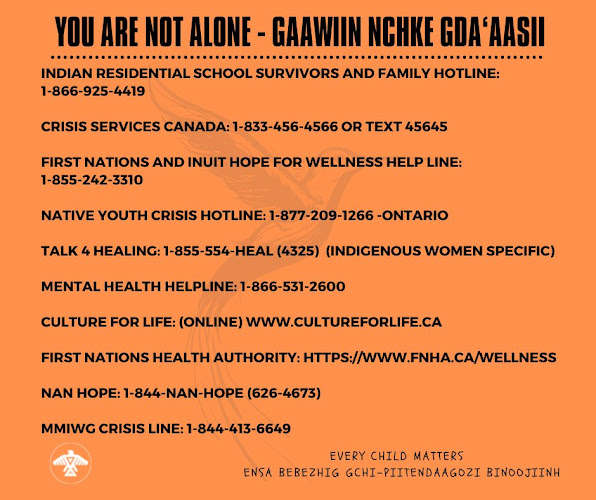
You are not alone
To Veronica Brown
Veronica, we adult adoptees are thinking of you today and every day. We will be here when you need us. Your journey in the adopted life has begun, nothing can revoke that now, the damage cannot be undone. Be courageous, you have what no adoptee before you has had; a strong group of adult adoptees who know your story, who are behind you and will always be so.
Diane Tells His Name
click photo
Lost Birds on Al Jazeera Fault Lines
click to read and listen about Trace, Diane, Julie and Suzie
NO MORE STOLEN SISTERS
click image
We conclude this series & continue the conversation by naming that adoption is genocide. This naming refers to the process of genocide that breaks kinship ties through adoption & other forms of family separation & policing 🧵#NAAM2022#AdoptionIsTraumaAND#AdopteeTwitter#FFY 1/6 pic.twitter.com/46v0mWISZ1
As the single largest unregulated industry in the United States, adoption is viewed as a benevolent action that results in the formation of “forever families.” The truth is that it is a very lucrative business with a known sales pitch. With profits last estimated at over $1.44 billion dollars a year, mothers who consider adoption for their babies need to be very aware that all of this promotion clouds the facts and only though independent research can they get an accurate account of what life might be like for both them and their child after signing the adoption paperwork.










 Posts
Posts

