They Took Us Away

They Took Us Away
click image to see more and read more

it's free

click

How to Use this Blog

BOOZHOO! We've amassed tons of information and important history on this blog since 2010. If you have a keyword, use the search box below. Also check out the reference section above. If you have a question or need help searching, use the contact form at the bottom of the blog.


We want you to use BOOKSHOP to buy books! (the editor will earn a small amount of money or commission. (we thank you) (that is our disclaimer statement)

This is a blog. It is not a peer-reviewed journal, not a sponsored publication... WE DO NOT HAVE ADS or earn MONEY from this website. The ideas, news and thoughts posted are sourced… or written by the editor or contributors.

EMAIL ME: tracelara@pm.me (outlook email is gone) THANK YOU CHI MEGWETCH!

SEARCH

Showing posts with label intergenerational trauma. Show all posts

Tuesday, November 4, 2025

Timmins nonprofit ‘Quilts for Survivors’ reaches new milestone with 8,000th quilt shipped

 ‘We’re more than reconciliation, we’re reconcili-action,’ says founder Vanessa Genier

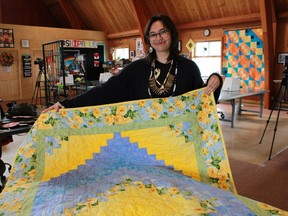
Quilts for Survivors, the nonprofit in Timmins whose mission is to ship a handmade quilt to every survivor of Indian residential and day schools, the sixties scoop, and intergenerational trauma, shipped its 8,000th quilt on Thursday, Oct. 23.

The occasion was marked by an invitation-only gathering featuring remarks and a boxing of the blue and yellow quilt which will be shipped to Angeline in Siksika, Alberta.

Founder Vanessa Genier does not share the recipients of her quilts last names, though was careful to point out the success of her nonprofit is all due to them.

“What started as a way to bring comfort to one survivor— in our case, we were going to make 18 quilts, that was our goal—has grown into a nationwide circle of love, care and healing,” she told a small invited crowd of dignitaries and supporters.

In her comments, Genier spoke of quilting as a metaphor for healing. Just like a survivor must pick up the pieces of their lives, Genier and her army of volunteer quilters sew the pieces back together. 

👇Keep reading

Thursday, February 13, 2025

‘Ambiguous Loss’ — A Team of Researchers is Learning From Indigenous Women Whose Children Were Adopted

Illustration by Christine Ongjoco.

Hoping to offer a rare in-depth look into how placing children for adoption impacts the lives of Indigenous birth mothers, a group of researchers is continuing efforts to document the experiences of American Indian and Alaska Native women. 

Their study, believed to be the first of its kind, focuses on mental health and grief. The research is being carried out in stages and has already surfaced several themes, including “ambiguous loss” — “a stressful and traumatizing’’ event that occurs when there is “no verification, closure, rituals for support, or resolution.’’

A small sample of Indigenous birth mothers informed the study’s initial findings, originally published in a 2022 peer-reviewed article in the Family Process journal. Now, researchers intend to expand their work by surveying a larger number of Indigenous mothers and further examining the roles of culture and history. Participants are being recruited online, and through word of mouth and flyers being distributed throughout rural and urban Indigenous communities. 

Understanding the systemic challenges that lead to Indigenous women’s children being placed for adoption might ultimately help inform future child welfare and adoption practices, said Sicangu Lakota elder Sandy White Hawk, lead investigator. Such insights might also lead to a better understanding of the specific support Native birth mothers need during and after an adoption, researchers said. 

 “It is my hope that it will motivate policy change on child removal — that child welfare will begin to focus on family healing rather than child removal,” White Hawk said.

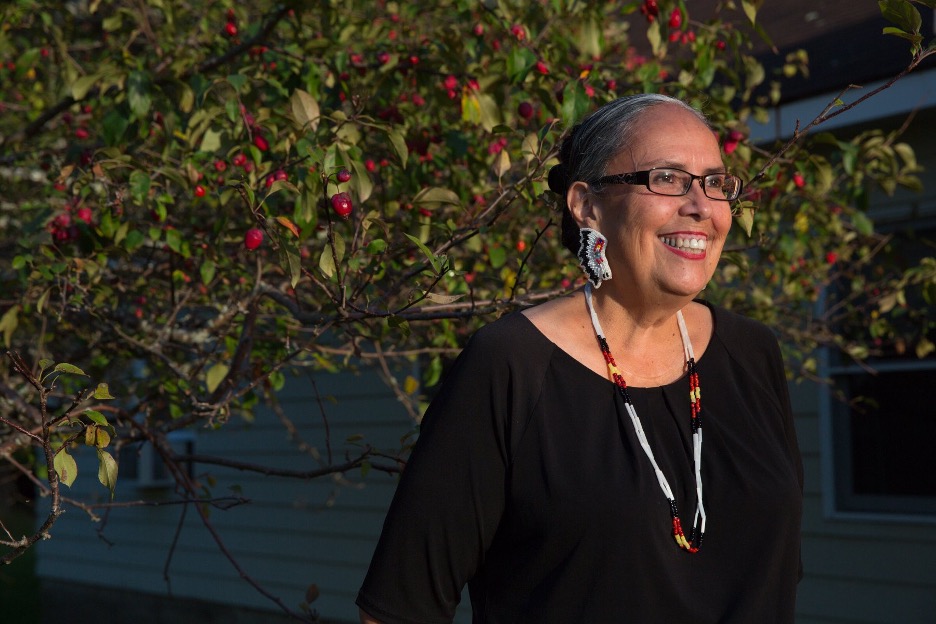
Sandy White Hawk. Provided photo.

White Hawk’s interest comes from a personal place — she was adopted at 18 months old.  She is the founder and director of the Minnetonka-based First Nations Repatriation Institute, which helps Indigenous people impacted by adoption or foster care reconnect with their families and identities. 

For the study’s initial phase, her team interviewed eight women from Minnesota, Washington, New Mexico, North Dakota, Alaska, Oregon and Wisconsin. Researchers acknowledged the small sample size but said the interviews yielded “rich data’’ nonetheless.

Researcher Ashley Landers said previous studies involving the impact of foster care and adoption on birth mothers have mainly centered on the lives of white mothers.

“I don’t think it’s by chance that no Native birth mothers were included in birth parent research prior to this,” said Landers, an associate professor in the Department of Human Sciences at Ohio State University. “Their part of the story has been largely omitted — Native birth fathers have also been omitted, and the larger Native family impact is oftentimes not part of adoption research.”

History weighs heavily on the experiences of Indigenous birth mothers, making them “distinct from other races as they have been disproportionately exposed to systemic practices of forced child removal,’’ White Hawk’s team posited in the 2022 published article.  Culprits include U.S. policies that coerced parents into relinquishing their children to boarding schools, and the Indian Adoption Project — a federally funded effort in the mid-20th century to force the assimilation of Native American children into white families. 

Also harmful, they wrote, is the ongoing disproportionate removal of Native children from their parents through the country’s child welfare systems.

Taking this broader cultural context into account is crucial to understanding how adoption impacts the well-being of Native women, whose grief may be complicated by intergenerational trauma, researchers wrote. Two of the original study participants grew up in foster care, and one is a descendant of boarding school survivors.

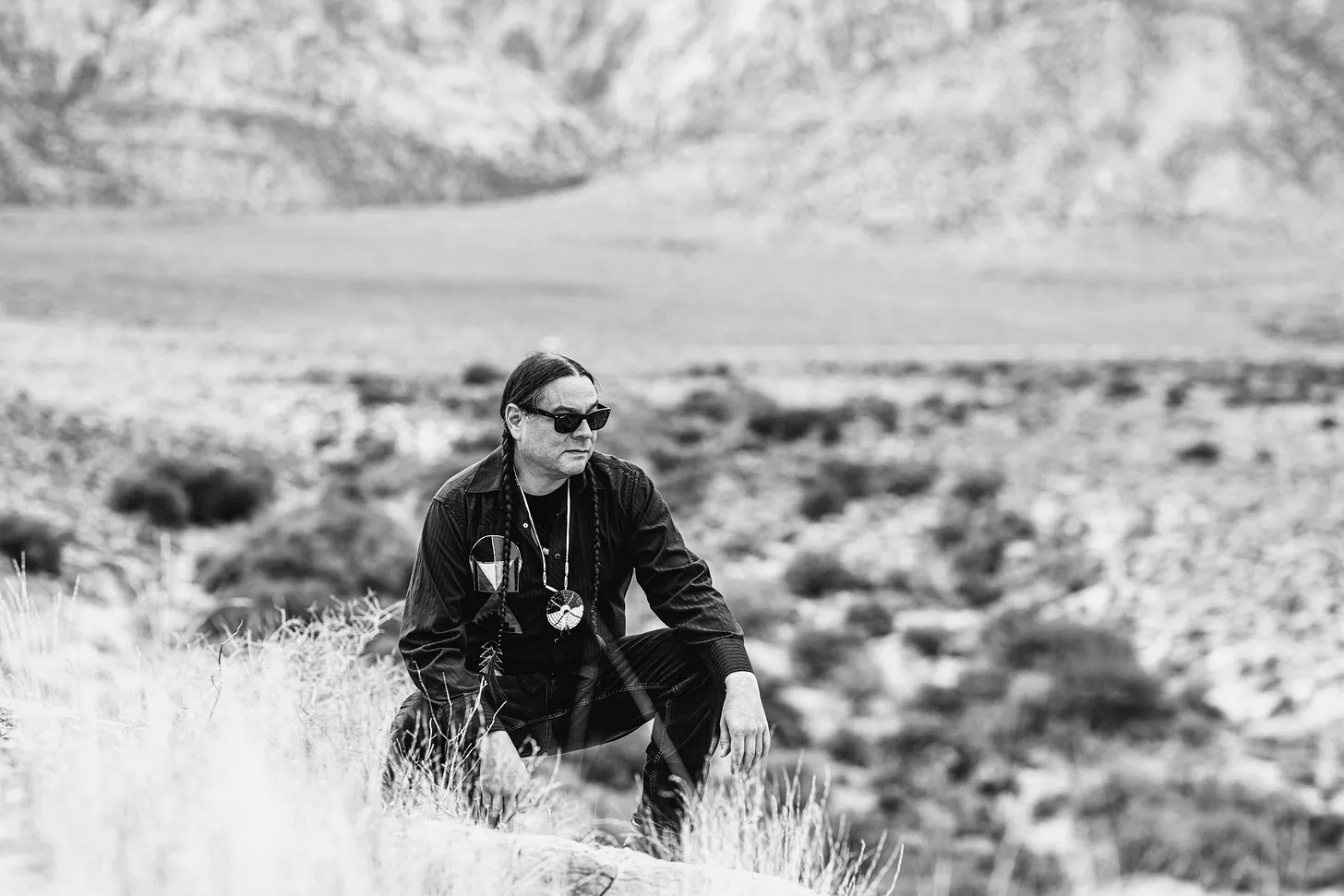
Ashley Landers. Provided photo.

In all, the eight study participants were between the ages of 33 and 77 at the time of the survey.  Each had experienced separation from a child through adoption or foster care between 1959 and 2010.

Friday, October 4, 2024

American Indian Boarding Schools: The Michigan Anishinaabe Experience (October 5)

Stamps Gallery’s panel discussion with Benedict Hinmon and Rochelle Ettawageshik supports its major exhibition of renowned black ash basket weavers.
Kelly Church, “Before and After” (2024) (photo by Michigan Photography)

On the occasion of the major exhibition showcasing renowned black ash basket weavers, Kelly Church & Cherish Parrish: In Our Words, An Intergenerational Dialogue, Stamps Gallery is proud to organize an important public discussion on the tragic legacy of American-Indian Boarding Schools in the United States and the intergenerational trauma and suffering they inflicted on Indigenous communities. Church and Parrish explore the consequences of this time through their boundary-breaking basketry as they pay homage to their community’s resilience, strength, and bravery. 

Taking place at Stamps Gallery in Ann Arbor, Michigan, on October 5 from 2 to 4pm (EDT), American Indian Boarding Schools: The Michigan Anishinaabe Experience will include the following speakers and moderators:

Rochelle Ettawageshik is a citizen of the Little Traverse Bay Bands of Odawa Indians and serves as vice chair of the tribe’s child welfare commission. She currently sits on the board of directors for the National Indian Child Welfare Association and is vice president of the Michigan Indian Education Council. Ettawageshik recently retired from the State of Michigan as the director of Native American Affairs in the Child and Family Services Administration, where she developed policies to improve services to American Indian families in Michigan. 

Benedict Hinmon is the Director at Saginaw Chippewa Indian Tribe of Michigan. Little Traverse Bay Bands of Odawa Indians. Mount Pleasant, Michigan. Hinmon is the grandson of Obwaandiak (Chief Pontiac) and comes from a proud family of Michigan Anishinaabe. 

Matthew L.M. Fletcher is the Harry Burns Hutchins Collegiate Professor of Law at Michigan Law. He teaches and writes in the areas of federal Indian law, American Indian tribal law, Anishinaabe legal and political philosophy, constitutional law, federal courts, and legal ethics. He also sits as the chief justice of the Pokagon Band of Potawatomi Indians, the Poarch Band of Creek Indians, and the Grand Traverse Band of Ottawa and Chippewa Indians. 

Wenona T. Singel is an Associate Professor of Law at Michigan State University College of Law and the Director of the Indigenous Law & Policy Center. Her research and writing address issues related to Tribal Sovereignty and Indigenous Rights. She is working on a book about the intergenerational impact of federal Indian law and policy on Native families. 

Learn more and register for the panel.

*-*


Kelly Church & Cherish Parrish: In Our Words, An Intergenerational Dialogue

On view through December 7, this exhibition centers the subjectivities of two contemporary Indigenous artists whose practices have sustained and bolstered the relevance of the age-old Anishinaabe practice of black ash basket-making in the 21st century. Kelly Church and Cherish Parrish explore the themes of Native women’s labor as carriers of culture, the legacy of boarding schools, treaties, and stories from ancestors who walked on through their work.

Curated by Srimoyee Mitra with Curatorial Assistant Zoi Crampton. 

This exhibition and its associated programs are generously funded by Michigan Humanities and U-M Arts Initiative. 

All programs are free and open to the public.

For more information, visit stamps.umich.edu.


Friday, August 15, 2014

Intergenerational Trauma and Healing – 3 Videos


What is talked about in these three videos has many implications for all sorts of trauma and for both individuals and oppressed populations in general all over the world. When we start understanding people’s pain and suffering from this perspective compassion and empathy for all sorts of things we might not have understood becomes possible. Compassion and empathy can heal us all.

Dr. Solanto discusses what trauma is, how the experiences of colonization “qualify” as trauma, how trauma might be transmitted across the generations, crime and other social problems as understandable responses to trauma and implications for healing
individuals, families and communities. Go here: Intergenerational Trauma and Healing – Beyond Meds

Tuesday, June 4, 2013

Healing trauma: my journey and FOUR SOULS

This book is available on Amazon.com and Kindle.
By Trace A. DeMeyer

The idea of healing trauma, starting with my own, has interested me since the early 1990s. In my memoir One Small Sacrifice I wrote about the co-counseling therapy I did in Seattle. I was born with PTSD and as a teen had obsessive-compulsive disorder.
The trauma I was dealing with was complicated with the sexual abuse I experienced at home. I was very sick a long long time.
In Seattle I heard Dr. Fred Alan Wolf describe his experiences with the shamans in South America who were using ayahuasca. Wolf lectured that if victims of PTSD - Post-traumatic Stress Disorder - used this, it would cure them. The mind-body connection is more important than western medicine will tell you.
In the new anthology UNRAVELING THE SPREADING CLOTH OF TIME, co-edited with my friend MariJo Moore, I wrote an essay FOUR SOULS, which describes my journey to heal myself and the elders who made it happen.
Here is an excerpt:

Four is an esoteric number found in tribal cultures, as in the four cardinal directions: east, north, west and south.  Many colors have significance: black, white, blue, and yellow.

To live in a sacred manner, we are taught to smudge with sage and cedar and pray with tobacco (asemaa in Ojibwe). I bring elders asemaa as a gift. Choctaw elder Mary Barnett shared how tobacco was used for many cures in the Five Civilized Tribes.  The Cherokee made a concoction of tobacco juice you drank.  Tobacco was one of the most important herbs used by Southeastern Tribes, she told me.  My own grandmother Lona and her mother used tobacco. They chewed it, spit it and smoked it.  Prayers were whispered in smoke. Tobacco infused with good thought, a ritual act of “remaking” the herb, was good medicine.

Elders who became my teachers cured me of illnesses. In Lakota territory, Sara, an Oglala elder cured me of a migraine headache in 1993. I inhaled a chunk of burning root deeply several times. Ellowyn (Oglala) taught me their medicine people could communicate with supreme beings our eyes cannot see. Invisible Gods, sixteen different beings, appear to their medicine people.

Healers, both men and women, of many Indigenous cultures, will know people are ill by their vibration. Sacred sound, a drum or rattle or words, can shift our vibration. Our human body is a container of four souls. Seeing in our container, those who can heal us see how we see ourselves. They can shift our perception, and uncover the roots of dis-ease. Not every disease is physical as people experience spiritual sicknesses, too.
 
 
Here is a link to my other blog LARA which has a very revealing speech by Dr. Gabor Mate who recommends using ayahuasca to heal trauma.

http://larahentz.wordpress.com/2013/06/01/healing-trauma-with-ayahuasca-dr-gabor-mate/

AMAZON review: Unraveling the Spreading Cloth of Time: Indigenous Thoughts Concerning the Universe: Dedicated to Vine Deloria Jr. (Paperback) Fantastic! After reading this book I want to find a place where I can sit and listen to all of these authors while they tell all their stories. This anthology opened the universe and all that I have missed growing up this far without these stories, poems, essays, etc. Past present and future do meld in the universe to teach us from one generation to another, and I must admit I had/have a world of knowledge to learn, share and create. I recently learned that my Great, Great, Great Grandmother was Native American and I missed out on sitting with her learning such wonderful wisdom and stories. Please read this book, you will never regret it and I am certain that anyone who reads this anthology will be blessed through generations and open some long-closed eyes. Marvelous!

Friday, May 17, 2013

PTSD and Post-Adoption Issues – What NOT to Say

I wrote about my own post-traumatic stress disorder in my memoir One Small Sacrifice. The key for me is (and was) processing emotions and knowing myself once I had the truth...

Here is a must-read column: http://www.laura-dennis.com/trauma-adoption-ptsd/

Excerpt:

“Here’s what you need to do...”

Here’s the truth: I have no idea what you specifically need to do to process yourself. To heal. I have no freakin’ clue. I can only offer suggestions, things that have worked for myself and others. And I can try to provide insight and resources for adoptees (and those who support them) as they emerge from the fog and attempt to deal with their pain, grief and loss.
So, you may be wondering why I’m constantly blogging about adoption, when I feel like I’ve processed my grief, my “what ifs,” and I’m even in a place where I can make jokes about my own secondary rejection.
That’s the thing … It’s because, like Juanima with PTSD, I’ve been at the bottom of the valley. I drove myself crazy, literally crazy trying to be the perfect person, the grateful adoptee. Because of my unaddressed post-adoption issues, I inadvertently let my latent bipolar tendencies emerge and get the better of me. I hit bottom. I nearly destroyed my mind.
But slowly, deliberately and drawing on that (in)famous “adoptee resilience,” I made the arduous trek up the hill. These days, I’m on stable footing; I can reach back and give a helping hand to my fellow adoptees.
That’s why I want to give voice to PTSD and the effects of trauma and abuse. That’s why I write about all this adoption crap all the time. ...


Laura Dennis is the author of "Adopted Reality" that I give 5 STARS! ...Trace

Thursday, April 25, 2013

Intergenerational Trauma


Published on Apr 10, 2013
The Union of Ontario Indians received funding through the Truth and Reconciliation Commission of Canada to develop tools and erect a monument to pay tribute to Anishinabek Nation members who attended Indian Residential School. The project is entitled "Honouring Our Children, Families, and Communities Affected by Indian Residential Schools".
As part of the project, a series of five educational videos were created. In this video M'Chigeeng First Nation citizens Krystine Abel and her mother Eve Abel talk about how Eve's experience as a student at St. Joseph's residential school in Spanish, Ontario in the 1950's had an impact on Eve's parenting and Krystine's sense of identity as an Anishinaabe Kwe. Eve has lived in Toronto for over 40 years and has two daughters and one granddaughter. Krystine is now studying Social-Cultural Anthropology at the University of Toronto.
For more information about the Anishinabek Nation Indian Residential Schools Commemoration Project, visit http://www.anishinabek.ca/irscp/

Tuesday, October 2, 2012

Victory for First Nations could cost Ottawa billions

Ottawa spends $3 million to battle First Nations child welfare case

 
OTTAWA - The federal government has been billed more than $3 million for its unsuccessful attempts to keep a high-stakes battle over First Nations child welfare out of the courts.
Invoices obtained through Access to Information show the Justice Department, acting on behalf of Aboriginal Affairs, paid out at least $3.1 million for legal services between 2007 and June 2012.
Government lawyers were trying to quash claims from First Nations child rights advocates that Ottawa is short-changing native communities by funding child welfare services at 22 per cent below provincial levels.
The First Nations Child and Family Caring Society and the Assembly of First Nations launched a human rights challenge that dates back to 2007.
They say the federal government is discriminating by not providing the same level of child welfare support to First Nations children as other children in Canada receive from provincial governments.
Ottawa has challenged the advocates with legal technicalities at every step along the way, arguing that the case does not belong in the court system.
After much back and forth, and more than $3 million later, the Federal Court rejected the government's arguments, ordering a full hearing at the Canadian Human Rights Tribunal.
"They've spent that trying to avoid this hearing on the truth," said Cindy Blackstock, the society's executive director.
"That really raises the question of what they're trying to hide. All we've wanted from the get-go is a factual hearing on whether they're discriminating or not."
Indeed, last week, the tribunal decided to set aside several weeks of hearings on the issue in February and March.
"I'm expecting Canada to really drag it out and use about any tactic they can to drag it out," said Blackstock.
Blackstock obtained the federal invoices through an Access to Information request and provided the documents to The Canadian Press.
At stake is far more than federal funding for child welfare.
If the First Nations advocates win the day, the case will put pressure on Ottawa to increase child welfare funding, as well as to match provincial funding in other areas of First Nations services, such as schooling, special education, policing and health.
Already, First Nations have started legal action on special education and policing in Ontario, using similar arguments to the child welfare case.
Victory for the First Nations could cost Ottawa billions.
"We think that after these cases go through, the federal government's programs for First Nations people will need a drastic overhaul in order to deliver services equal to what other Canadians receive," said Kent Elson, a Toronto lawyer who is involved in the policing and special education challenges.
But if the government wins, recently won powers for First Nations to launch human rights complaints would be severely restricted, the acting head of the Canadian Human Rights Commission has said.
"We think this is one of the most important human rights issues this decade," Elson added.
Aboriginal Affairs officials said Monday they don't intend to speculate on how much the case will cost at the end of the day, but spokeswoman Genevieve Guibert said in an email that the government hopes the tribunal will dismiss the complaint, putting an end to litigation.
The government has increased the funding from $449.5 million a year in 2006-07 to its current level of $580 million, Guibert said.
A spokesman for Aboriginal Affairs Minister John Duncan said last week that the federal government does not believe the courts are the proper forum for differences over child welfare.
"We believe that the best way to ensure First Nations children and families get the supports and services they need is by working together — with First Nations, provinces and territories — and not through the Canadian Human Rights Tribunal," Jan O'Driscoll wrote in an email.
"Our commitment to supporting First Nations children and families is clear."
O'Driscoll said funding for family services has "significantly increased" and the quality of such services has improved to focus on preventing the problems that jeopardize the welfare of native children.
"As this matter is before the courts, it would be inappropriate to comment further."
But Blackstock said she and the AFN worked for 10 years behind the scenes to negotiate a compromise with the government, before turning to legal action.
"The bigger question is, do we want to be a country where racial discrimination is a way that we save the government money? This case is fundamentally about the type of Canada we want," she said.
"It's not a legitimate fiscal restraint measure."
First Nations children are dramatically over-represented in the child welfare system, mainly because of poverty, overcrowded housing and poor parenting linked to substance abuse and neglect, research shows.
Recent census data shows there were nearly 30,000 children in foster care in Canada on a given day. Other research suggests about 70,000 children pass through foster homes at some point in a given year.
Up to 40 per cent of those children are First Nations kids, Blackstock said.
Last week, the United Nations committee on the Convention of the Rights of the Child took Canada to task over its treatment of aboriginal, immigrant and disabled children.
When asked about the criticism in the House of Commons, Conservative parliamentary secretary Bob Dechert lashed out at the UN committee rather than address the child welfare matter.
"The sad reality is that Syria is a member of this committee," Dechert said.
"Syria, a country whose rulers are stealing the innocence of an entire generation of its children, is criticizing Canada. Imagine that. This is no doubt to distract from the atrocities that Syrian children are currently facing every day."


Read it on Global News: Global News | Ottawa spends $3 million to battle First Nations child welfare case

Tuesday, November 29, 2011

Epigenetics: Scientific Evidence of Intergenerational Trauma

Shortly after his second birthday, my son stopped talking. The onset of symptoms was just that abrupt. After nearly two years of visits to doctors and specialists, he was finally diagnosed with atypical autism.
Autism encompasses a spectrum of psychological disorders in which the use of language, reaction to stimuli, interpretation of the outside world, and the establishment of social relationships are difficult and unusual. One in 110 children have autism spectrum disorders (ASD), and males are more likely to have it than females.
Autism is a complex disease with no single known cause. The range of disorders that autism comprises is such that no two children who’ve been diagnosed with autism are the same. Autism arises from a mixture of genetic and environmental factors, which as of yet, have not been clearly delineated.
Epigenetics, a relatively new field in science, could help define the causes of Autism and offer up new modes of treatment for the disorder, as well as other diseases like cancer, schizophrenia, Alzheimer’s and diabetes. Epigenetics is the study of gene expression governed by the epigenome, the cellular material that sits on top of our genetic code. The epigenome does not change the genetic code inscribed in our DNA; rather, it activates or silences genes through the mobilization of molecules called methyl groups. These chemical changes are triggered by our environment. Toxins, pollutants, changes in diet, deficiencies in prenatal nutrition, and exposure to stressors alters the way our genes are expressed through the epigenome. Furthermore, epigenetics has proven that these changes in gene expression are passed down to our offspring, for at least one generation. Epigenetics renders the argument of nature vs. nuture moot because it establishes that the two are are inextricably intertwined. In regards to human development, one is as important as the other.
We know that negative behaviors like smoking cigarettes, poor diet, or drinking access amounts of alcohol shortens our lifespan, but now epigenetics is confirming that these behaviors can predispose our children, and even our grandchildren, to similar diseases and decrease their longevity too.
Research in epigenetics reveals that both paternal and maternal toxic environmental exposures play a role in the development of disease in their offspring and future generations. Parental exposure to the popular herbicide Roundup has been linked to birth defects in their offspring. Vietnam veterans who were exposed to the herbicide agent orange, like my father was, pass on an increased risk for spina bifida and other diseases to their children. The prenatal nutrition of mothers has been shown to have an impact on an offspring’s risk of diabetes, stroke, and heart disease. A study on the eating habits of multiple generations of families in Sweden revealed that grandfathers who went from a normal diet to regularly overeating had grandsons who died an average of six years earlier than the grandsons of those who didn’t. The bottom line is this: your grandparents’ and parents’ behaviors, and any toxins or trauma they were exposed to, affects your health directly. Likewise, your behaviors and any toxins or trauma you’re exposed to could affect the health of your children and grandchildren.
Epigenetics may provide hard scientific evidence of intergenerational trauma among American Indians and link it directly to diseases that currently afflict us, like cancer and diabetes. The term “intergenerational trauma” has been used to describe the cumulative effects of trauma experienced by a group or individual that radiates across generations. For natives, intergenerational trauma has presented itself in the form of genocide, disease, poverty, forced assimilation via removal of children from their families to boarding schools, the seizure and environmental destruction of homelands, and other routes of European colonization. The effects of intergenerational trauma include substance abuse, depression, anxiety, and a variety of other emotional problems. Emotional stress has also shown to effect gene expression via the epigenome. Studies show that the withholding of affection by a mother elicits brain changes in her infant that impairs their response to stress as an adult.
Epigenetics offers remarkable potential for the prevention of disease among American Indians as well. We can use epigenetic inheritance to restore the action of our genetic code from one generation to the next. Once environmental stressors are removed and behavior is corrected, our DNA will revert to its original programming. We could cure diabetes through behavioral changes that allow our epigenome to operate correctly. The elimination of toxins and pollutants could greatly reduce the incidence of cancer and birth defects. Such modification of environmental exposures and behaviors will restore and even improve the overall health and capacity of our genetic line.
As for my son, further research in epigenetics may soon decipher the specific mixture of genetics and environmental exposures that lead to Autism Spectrum Disorders. Along with other scientific discoveries, we are hopeful that such studies will develop treatment that will lessen the severity of the symptoms that make his life difficult. Until that time, we’ll continue to love and nurture our son, and thank the Creator for entrusting us with such a miraculous, artistically talented child, whose brave struggle to learn how to express emotions like anger and love inspires everyone around him.
Ruth Hopkins (Sisseton-Wahpeton/Mdewakanton/Hunkpapa) is a writer, a pro-bono tribal attorney, a science professor, and a columnist for the Indian Country Today Media Network. She can be reached at cankudutawin@hotmail.com


Read more: http://indiancountrytodaymedianetwork.com/ict_sbc/epigenetics-scientific-evidence-of-intergenerational-trauma?utm_source=facebook&utm_medium=social&utm_content=epigenetics-scientific-evidence-of-intergenerational-trauma&utm_campaign=fb-posts http://indiancountrytodaymedianetwork.com/ict_sbc/epigenetics-scientific-evidence-of-intergenerational-trauma#ixzz1f0XmUrMD

Happy Visitors!

WRITTEN BY HUMANS!

WRITTEN BY HUMANS!

Blog Archive

Featured Post

Your History Class Was a F*cking Lie | #NOMOAR

  Your History Class Was a F*cking Lie by Sean Sherman (Or: How the American Educational System Has Always Been a Racist Propaganda Program...


Native Circles

Native Circles
click logo for podcasts!

Most READ Posts

Bookshop

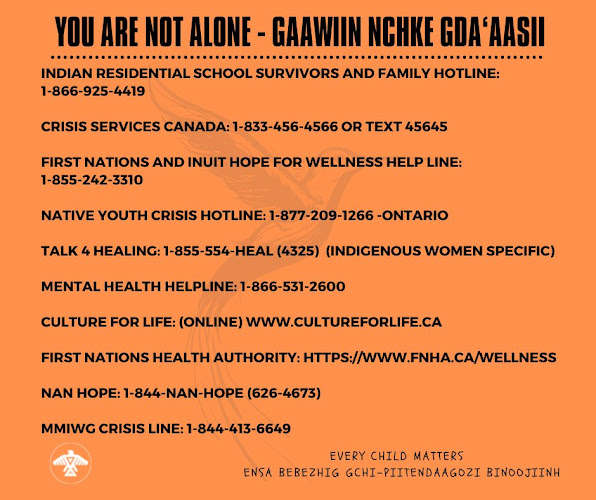
You are not alone

You are not alone

To Veronica Brown

Veronica, we adult adoptees are thinking of you today and every day. We will be here when you need us. Your journey in the adopted life has begun, nothing can revoke that now, the damage cannot be undone. Be courageous, you have what no adoptee before you has had; a strong group of adult adoptees who know your story, who are behind you and will always be so.

Diane Tells His Name


click photo

Lost Birds on Al Jazeera Fault Lines

Lost Birds on Al Jazeera Fault Lines
click to read and listen about Trace, Diane, Julie and Suzie

NO MORE STOLEN SISTERS

NO MORE STOLEN SISTERS
click image

ADOPTION TRUTH

As the single largest unregulated industry in the United States, adoption is viewed as a benevolent action that results in the formation of “forever families.”
The truth is that it is a very lucrative business with a known sales pitch. With profits last estimated at over $1.44 billion dollars a year, mothers who consider adoption for their babies need to be very aware that all of this promotion clouds the facts and only though independent research can they get an accurate account of what life might be like for both them and their child after signing the adoption paperwork.

Original Birth Certificate Map in the USA

Google Followers