BOOZHOO! We've amassed tons of information and important history on this blog since 2010. If you have a keyword, use the search box below. Also check out the reference section above. If you have a question or need help searching, use the contact form at the bottom of the blog.
We want you to use BOOKSHOP to buy books! (the editor will earn a small amount of money or commission. (we thank you) (that is our disclaimer statement)
This is a blog. It is not a peer-reviewed journal, not a sponsored publication... WE DO NOT HAVE ADS or earn MONEY from this website. The ideas, news and thoughts posted are sourced… or written by the editor or contributors.
EMAIL ME: tracelara@pm.me (outlook email is gone)
THANK YOU CHI MEGWETCH!
Indigenous
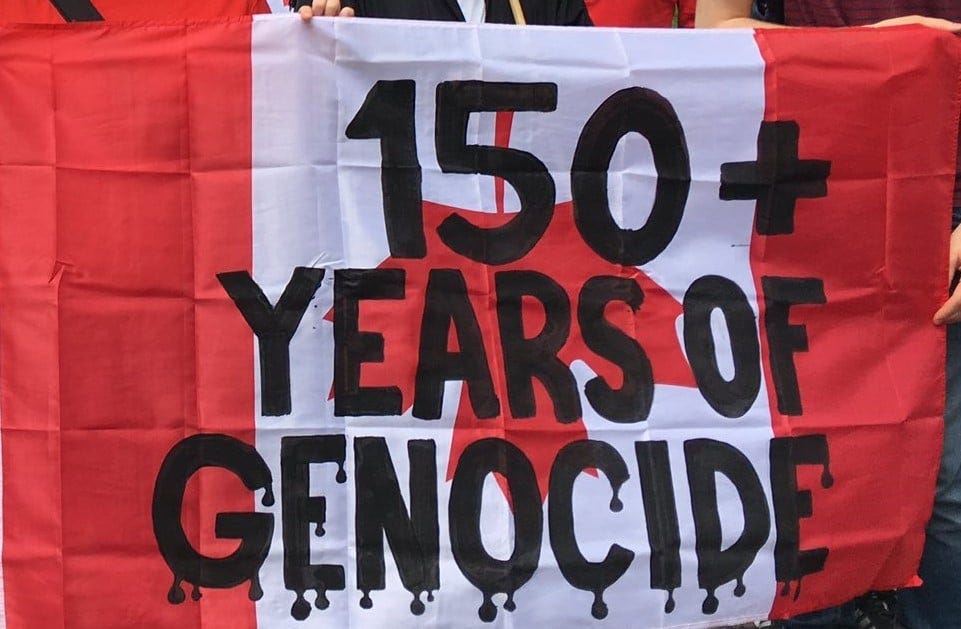
women in Canada were being forcibly sterilized by state sponsored
eugenics operations as recently as 2019. A report last year concluded
“this horrific practice is not confined to the past, but clearly is
continuing today.” In May of 2023, a doctor was caught forcibly
sterilizing an Indigenous woman.
The
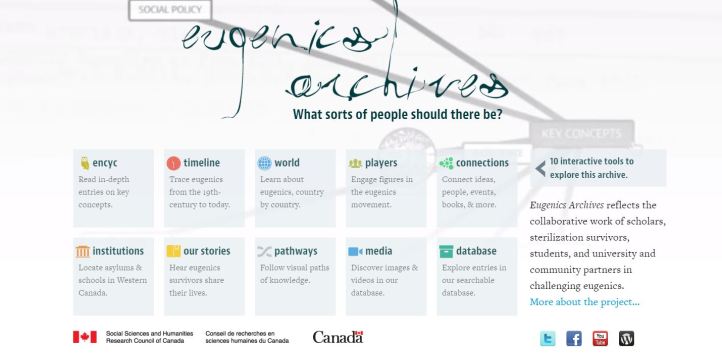
growing enthusiasm for eugenics thinking reached Canadian borders in
the first half of the 20th century. Even though forced sterilisation was
already common throughout the territory, the Province of Alberta
officially enacted the Sexual Sterilization Act (SSA) in 1928, followed
in 1933 by British Columbia. Considered the first Canadian eugenics law,
this act legalised and regulated the sterilisation of mentally-disabled
individuals.
Aggressive assimilation policies
quickly extended these measures to Indigenous communities such as the
Inuit, Indian, and Métis people. While it is difficult to provide an
accurate estimate, researchers agree that Indigenous women were
disproportionately targeted. Between 1966 and 1976, over 10,000 women
would have undergone forced sterilisation in public hospitals,
residential schools, and mental facilities. And It has continued since
then in more subtle and nefarious ways.
A former U-32 student is back in Vermont to make a movie about the state’s infamous eugenics era.
Luke Becker-Lowe, fellow film students from Emerson
College in Boston and a cast of 20 were at the Center for Arts and
Learning on Barre Street Saturday and Sunday, filming scenes that staged
the sterilization of subjects.
The film is based on the Vermont Eugenics Program that
followed a 1931 law legalizing the sterilization of “idiots, imbeciles,
feeble-minded or insane persons residing in state institutions.”
Vermont’s eugenics program, headed by University of Vermont Prof. Harry
F. Perkins, led to the sterilization of 253 people, mostly women,
between 1931 and 1957, according to UVM’s website.
Becker-Lowe said growing up on dirt roads in central
Vermont gave him an appreciation of backwoods life, unique characters
and the challenges they face. He is also a fan of 20th century period
films that reflect social and cultural shifts over time. Their project,
“Dormancy,” was a response to and a reflection of a new era of political
and social intolerance in America that serves as a sobering lesson, he
said.
Lucy
Cannon Neel, Chairperson of the Vermont Commission on Native American
Affairs presented at the Benson Village School on December 21, 2016.
Lucy shared about the history and continued presence (of Indians in
Vermont)…
Vermont Eugenics: When our branding wasn’t so sweet | Rutland Reader
Excerpt: …Founded in 1925 by University of Vermont zoology
professor Henry F. Perkins, the Eugenics Survey of Vermont was built on
the “belief in the existence of racial stereotypes,” and “accepted the
myth that certain people (particularly those of
northern Europe) possess a monopoly of desired characteristics, and
thought that human differences were invariably caused by heredity.”
Armed with these beliefs, Perkins and his supporters went out into
the hills and valleys of Vermont searching for, studying and analyzing
the so-called data on the “pirate families,”
those who lived on houseboats and had French-Canadian ancestry; “gypsy
families,” those with the dark-skin of African-American, Abenaki or
French-Canadian descent; “chorea families,” those with the illness
Huntington’s Chorea; and other “defectives.” [Hunting them down? OMG]
The categorization of these “inadequates” included:
illiterate, illegitimate, insane, thief, queer, pauper, immoral,
dishonest, rapist, sex offender, syphilitic, untruthful, epileptic,
twin, stillborn, dependent, alcoholic, speech defect, “just not right,”
harelip, “a little odd,” sloppy, light-fingered, “smoked and chewed at
age 12,” wild, wanderer, cruel, deserted husband or wife, one-eyed,
tuberculosis, poor memory, breach of peace, shiftless, degenerate.
[OK OK… I am several of these, including illegitimate/adopted. How about
you?]
Footnote: Well well well… A Zoology Professor was in charge of
eugenics in Vermont – this explains so much… His worldview of Indians
was obviously “wild savages.” Again, I bet you never heard this
news/history in your textbooks and I know how this kind of BAD His-Story
shocks people in a bad way.
PS: My ancestry includes Anishiaabe and French Canadian from Quebec/Ottawa which
makes me so very happy to be alive… I'm a Pirate who is still “here…”
***
EUGENICS: ‘Reprograming the Human Genome’, The Hidden History of Bar
Harbor, MAINE…William E. Castle was an organizing member of the Second
International Congress of Eugenics (New York, 1921) which in 1922
dissolved into the American Eugenics Society (AES) which was funded by
America’s powerful industrial elite.
Of the more than 3000 eugenic sterilizations in Canada, the vast
majority were performed in Alberta under the direction of a Eugenics
Board.
While eugenic sterilization waned across the world following the end
of the Second World War in 1945, Alberta’s sterilization program
continued until the repeal of the Sexual Sterilization Act of Alberta in
1972.
Leilani Muir won a landmark lawsuit against the province of Alberta
in 1996 for wrongful confinement and sterilization; two documentaries,
The Sterilization of Leilani Muir (1996) and Surviving Eugenics (2015) engage general audiences with issues that the case and its aftermath raise, and their significance for Canadians today.
The explicit or implicit grounds for eugenic sterilization were
typically that a person’s undesirable mental or physical disabilities
were thought to be heritable, and that such a person was thus unsuitable
to parent.
Although central amongst those targeted by eugenic practices were
people with a variety of disabilities, many children institutionalized,
sterilized, and otherwise subject to eugenic practices in Canada did not
in fact have disabilities.
Members of other marginalized groups–single mothers, First
Nations and Métis people, eastern Europeans, and poor people—were
disproportionately represented amongst those subjected to eugenic ideas
and practices, such as sterilization.
The legacy of eugenics, expressed in sterilization laws and in
social policies concerning immigration, schooling, and prenatal
screening, remains with us today.
“My
problem is secrecy. I believe that perpetually secret adoptions assure
un-accountability and lack of transparency. And secret adoptions are only the
tip of the iceberg. The secrecy permeates the process: secret identities,
secret parents, secret records, secret foster care providers, secret social
workers, secret judges and lawyers (all their identities are sealed,
typically), secret physicians, secret statistics and, in the case of some
adoption-oriented organizations, secret budgets and secret boards of directors.
In any social practice, when people in positions of power hide behind masks, one
can be pretty sure that they have something to hide.”
-Albert S. Wei,
-Special Advisor to
the Bastard Nation Executive Committee
“Everyone has a right to knowledge about
their lineage, genealogy and identity. And if they don’t, then it will lead to
cases of incest...”
-Lord David Alton quoted after married adoptee twins were
granted annulment in Great
Britain (January
2008)
“Storytelling is an
important aspect of Ojibwe culture. My ability to tell a good tale can be used
as a tool for teaching and connecting. Even though I grew up outside of my
Native community and culture, my stories helped me to become a part of the
community that I had lost. Adoption is part of the contemporary tales that
Native people need to tell…”
-
Tamara Buffalo, published author-poet-visual artist
…Adoption
professionals who believed in making adoption work believed that it was a “social
crime” to place inferior children with parents who expected — and deserved —
normal children. Agencies sometimes required parents to return children if and
when abnormal characteristics appeared and laws, such as the Minnesota
Adoption Law of 1917, treated feeble-mindedness as cause for
annulment.Medical writers in the
popular press warned parents to “be careful whom you adopt.” Adopters faced frightening risks because
children unlucky enough to need new parents were also unlucky enough to be
genetic lemons.
Danger was an enduring theme in
modern adoption history. The genetic lemon theory was heard around the world, I
guess. I read about eugenics.
Feeling
“adopted” made it seem like they did me a great big favor! How heroic for them
to adopt - when I could be dangerous or the “bad seed” of immoral unintelligent
people.
I never heard, “Tracy was illegitimate or she is someone’s
dirty little secret!” but I knew it’s what people were thinking. Obviously my
parents were wildly happy to get us as babies, praised for doing such a
selfless act. They hid any uneasiness. Since my adopted sibling and I were not biological offspring, if we didn’t turn out ok, then it can’t totally be their fault.
Funny,
I always seemed to know who was adopted. Our parents usually introduced us or
we introduced ourselves as adopted. I had two friends named Kim and another friend Lisa who knew they were
adopted. This became our bond, our shared identity.
No
"orphaned child" can escape this– it is fact, a heart broken too often turns to stone.
16 Nov 14: "Please return our son because my wife cannot go on without
him, she will suicide, please return our son," wrote a Noongar father
and husband to the Western Australian Government's Chief Protector in
1905.
"The fundamental issues which underpin suicide rates nationally vary
from cultural group to cultural group, geopolitically and
demographically. The fundamentals that underpin suicide rates of some
First Peoples communities are vastly different to those of
non-Aboriginal communities. The Western Australian Government’s recent
statements that 100 to 150 remote Aboriginal communities should be
closed makes it clear that lessons from the past have not been learned.
... " By The Stringer
"Declaration of conflict of interest - the author of this article, Gerry Georgatos
is a suicide prevention researcher and a senior national consultant to
the ATSISPEP (Aboriginal and Torres Strait Islander Suicide Prevention
Evaluation Project)"
Sept. 25, 2026 | Relatives walk to remember, church denounces Native beliefs & more
Bookshop
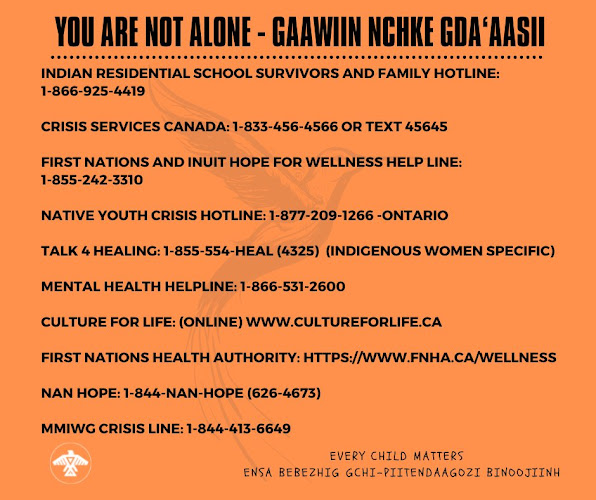
You are not alone
To Veronica Brown
Veronica, we adult adoptees are thinking of you today and every day. We will be here when you need us. Your journey in the adopted life has begun, nothing can revoke that now, the damage cannot be undone. Be courageous, you have what no adoptee before you has had; a strong group of adult adoptees who know your story, who are behind you and will always be so.
Diane Tells His Name
click photo
Lost Birds on Al Jazeera Fault Lines
click to read and listen about Trace, Diane, Julie and Suzie
NO MORE STOLEN SISTERS
click image
We conclude this series & continue the conversation by naming that adoption is genocide. This naming refers to the process of genocide that breaks kinship ties through adoption & other forms of family separation & policing 🧵#NAAM2022#AdoptionIsTraumaAND#AdopteeTwitter#FFY 1/6 pic.twitter.com/46v0mWISZ1
As the single largest unregulated industry in the United States, adoption is viewed as a benevolent action that results in the formation of “forever families.” The truth is that it is a very lucrative business with a known sales pitch. With profits last estimated at over $1.44 billion dollars a year, mothers who consider adoption for their babies need to be very aware that all of this promotion clouds the facts and only though independent research can they get an accurate account of what life might be like for both them and their child after signing the adoption paperwork.











 Posts

