BOOZHOO! We've amassed tons of information and important history on this blog since 2010. If you have a keyword, use the search box below. Also check out the reference section above. If you have a question or need help searching, use the contact form at the bottom of the blog.
We want you to use BOOKSHOP to buy books! (the editor will earn a small amount of money or commission. (we thank you) (that is our disclaimer statement)
This is a blog. It is not a peer-reviewed journal, not a sponsored publication... WE DO NOT HAVE ADS or earn MONEY from this website. The ideas, news and thoughts posted are sourced… or written by the editor or contributors.
EMAIL ME: tracelara@pm.me (outlook email is gone)
THANK YOU CHI MEGWETCH!
A
small group of community members met at the Minneapolis American Indian
Center in July to share information about how adopted adults can claim
items left for them by their birth parents.
The conversation about
the ability to retrieve personal effects came to the forefront with the
law that went into effect July 1 — where birth records held by the
state can be obtained by adopted adults.
Going Home: How the land back movement is reclaiming ancestral lands.
The Land Back movement reflects the global efforts of Indigenous people
to reclaim ancestral territories and sovereignty over public lands.
Through a combination of military force, broken treaties, and
discriminatory policies, Native communities have been stripped of 99% of
their historical land base in the U.S., reduced from nearly 2.3 billion
acres to just 56 million acres today. Here are some ways this has been
codified in state and federal policy:
The Indian Removal Act of 1830
led to the forced relocation of southeastern tribes like the Cherokee,
Muscogee (Creek), Seminole, Chickasaw, and Choctaw Nations along the
brutal Trail of Tears, where thousands died during the journey westward.
In the Great Plains, the U.S. government repeatedly violated treaties like the Fort Laramie Treaty of 1868, seizing the Black Hills from the Great Sioux Nation after gold was discovered.
The Dawes Act of 1887
dispossessed tribes by breaking up communally held reservation lands
into individual allotments, many of which were then sold to non-Native
settlers.
Military campaigns and massacres, like the Sand Creek Massacre of 1864
where U.S. troops killed hundreds of peaceful Cheyenne and Arapaho
people, were used to terrorize Indigenous communities and drive them
onto increasingly smaller reservations.
The California Gold Rush led to state-sponsored genocide
of Native peoples, with the state paying bounties for Indian scalps and
heads in the 1850s and forcing survivors onto small rancherias.
Unlike what some might assume, the movement doesn't seek to displace
current residents from their homes. Instead, it focuses on returning
decision-making power to Indigenous communities and addressing the
historical injustices of colonization that led to their dispossession.
Here are four examples of what land back work looks like in action:
In 2020, the Esselen Tribe regained 1,200 acres
of their ancestral homeland in Big Sur, California, after 250 years of
displacement. Through a $4.5 million grant and partnership with Western
Rivers Conservancy, the land, which includes sacred sites and endangered
species, is now being used for traditional ceremonies and ecological
conservation.
The Bois Forte Band of the Minnesota Chippewa Tribe, in partnership
with The Conservation Fund, the Indian Land Tenure Foundation and the
Indian Land Capital Company, purchased 28,089 acres of ancestral land
within the Nett Lake and Deer Creek sections of the Bois Forte
Reservation.
The Confederated Salish and Kootenai Tribes (CSKT) regained control
of the National Bison Range in Montana in 2020. This 18,800-acre
wildlife refuge, which was taken from them in 1908, is being used for
bison conservation efforts while expanding public education about their
cultural connections to the land.
In Maine, the Penobscot Nation has worked with conservation groups to reclaim over 100,000 acres
of their ancestral territory along the Penobscot River since 2000,
helping restore both tribal sovereignty and the river's ecological
health, including critical salmon habitats.
In South Dakota, the Rosebud Sioux Tribe reacquired 28,000 acres of land
in 2020. This prairie land is now being used for buffalo conservation,
food sovereignty initiatives, and teaching traditional land management
practices to tribal youth.
Indigenous communities’ approach to land stewardship goes beyond simple
ownership, emphasizing a deep, complex relationship with the
environment. As tribes reclaim more of their ancestral lands, they're
leading innovative climate adaptation efforts and restoration projects,
demonstrating how traditional Indigenous knowledge can help create a
more sustainable future.
Support the work of NDN Collective,
an Indigenous-led organization dedicated to building Indigenous power
through organizing, activism, philanthropy, grantmaking,
capacity-building and narrative change. You can make a donation or follow the action items for their specific initiatives.
Learn whose ancestral land you live onand
pay real estate taxes to those Indigenous nations. Many tribes and
Indigenous organizations have established voluntary land tax programs
where residents can contribute a portion of their income or property
value to support Indigenous land reclamation efforts, like the Shuumi Land Trust in the East Bay of Northern California.
Support Indigenous-led land conservation efforts
and organizations working to protect sacred sites and expand tribal
land holdings. This could mean donating to Indigenous land trusts,
advocating for the return of public lands to tribal management, or
backing specific land return campaigns.
Call on your local, state and federal representatives to honor treaties, expand tribal sovereignty, and return public lands to tribal nations.
The latest on the Land Back movement, in which Native American tribes reclaim land. Two reporters take a look at where it’s worked and where it hasn’t at reservations in Minnesota. NPR >
The Land Back movement is also about foodways.
When Native peoples' land was stolen, they lost important hunting and
fishing grounds and myriad places to gather and prepare food. Civil Eats >
Tribal lands were stolen. What happens when those ancestral territories are returned? The Land Back movement is long-overdue justice. It’s also a climate solution. Vox >
The Land Back Movement Unravels Manifest Destiny. Across Indian Country, tribal nations are buying back their land one parcel at a time. Sierra Club >
On Vancouver Island, Land Back Looks Like Going Home.
Indigenous-led land back efforts are underway on Canada’s Vancouver
Island while the land’s original stewards protect forests from logging. Atmos >
Land
Rematriation: A Conversation with Cyndi Suarez, Donald Soctomah, Darren
Ranco, Mali Obomsawin, Gabriela Alcalde, and Kate Dempsey. Kate
Dempsey, state director of The Nature Conservancy in Maine, discuss the
future of Tribal sovereignty, Land Back, and rematriation of the planet.
NPQ >
I had no clue that Minnesota kept mother's gifts to their child lost to adoption!
What kind of system is this? REALLY?
YOU KNEW Minnesota opened all sealed adoption records July 1. Yes, I sent in a check but sent the wrong form (and it costs $40) so I am
reapplying to get my original birth certificate (OBC). I have waited
over 65 years to hold this stinking piece of paper in my hands. It will
say my mother is HELEN THRALL. I know that. But it will be nice to
have physical paper proof. Many adoptees are not given access to their
own OBC.
Here is the shocker: This story hit Minnesota newspapers this week.
If you were adopted out of that state like me, the state has been
holding mementos from mothers to give to their child given up for
adoption.
ARE YOU KIDDING ME? Where did they store all this stuff?
Thousands, maybe a million babies were adopted out of Minnesota… What about other states? OMG!
‘Minnesota could actually be the leader in figuring this out’ - OH REALLY!?!
WHO KNEW? The change in state law — which went into
effect on July 1 — has brought renewed attention to personal effects
kept in adoption files. The agency which once placed children will now
support adopted people in claiming these gifts. WHAT THE HELL?
No one, including me, knew anything about this… I
knew an adoptee who said her mother sent letters to the adoption agency
in Mississippi to give to her but the adoptee never knew, and only got
the letters years later, after she met her biological mom. Her mom told
her she sent several.
Personal histories, items can be claimed by adult
adoptees from Minnesota’s DHS files
Permanency Supports Grant Manager
Crystal Graves explains the concept of personal effects during an informational
gathering about recent adoption law changes at the Minneapolis American Indian
Center on July 11.
MINNESOTA PUBLIC RADIO
On a warm July evening, a group of
fewer than a dozen people met at the Minneapolis American Indian Center to
share information about how adopted adults can claim personal items left for
them at the time of their adoption by their birth parents.
Ann Haines Holy Eagle searched and
found her birth family many years ago and now advocates for Native American
children and families, including fellow adoptees.
Ann Haines Holy Eagle (center),
Minneapolis urban representative for the Indian Child Welfare Advisory Council,
speaks with adoptee advocate Sandy White Hawk during a gathering at the
Minneapolis American Indian Center on July 11. Ben Hovland | MPR News
“If I would have had something from
my mom ... just to know that my mom loved me, you know, or thought enough to
send something with me to fight in this world. It would have made a huge
difference,” said Haines Holy Eagle.
For the past several decades
activists have pushed for access to birth and adoption records. Last year, the
state Legislature answered those calls, making state birth records available to
adoptees for the first time.
The change in state law — which went
into effect on July 1 — has brought renewed attention to personal effects kept
in adoption files. The agency which once placed children will now support
adopted people in claiming these gifts.
Haines Holy Eagle and members of the
Indian Child Welfare Act Advisory Council, which advises DHS, first learned
about personal effects kept by agency this past spring during a routine
meeting. She says they learned about items kept in storage for decades — items
of personal value, including photos, family heirlooms and small keepsakes.
Haines Holy Eagle said she and others
were taken by surprise.
“We were just kind of shook,” said
Haines Holy Eagle.
Haines Holy Eagle and members of the
advisory group invited DHS representatives to present that same information to
members of the community.
Piikuni adoptee Kirk Crow Shoe
smudges DHS employee Crystal Graves (left) with eagles feathers and sage during
a healing ceremony at the Minneapolis American Indian Center on July 11. Ben Hovland | MPR News
At the public event in July, adult
adoptees let DHS staff know they’d like to approach the process not as a
private matter, but as a community.
Haines Holy Eagle said she’s
prepared to use the wisdom gained through her personal experience to lead the
process of claiming personal effects.
She says the work should center on
the experiences of adopted people in connection with their birth and adoptive
communities.
“It’s time for us to be at the
forefront of our healing and truth and reconciliation,” said Haines Holy
Eagle.
DHS staff member Crystal Graves
began her presentation to the community by explaining that she’s
handled these personal effects going back 20 years. Throughout the
evening, Graves told everyone she welcomes input from the adoption
community in re-thinking how DHS can help adoptees request their belongings.
She explained to the small gathering
how adopted adults can make a request to claim their belongings — what
paperwork to fill out and where to send it.
Few
adoptees know personal effects exist
Adoptees have been able to recover
personal effects for years. DHS says they have followed statutory
requirements that mandate confidentiality of adoption records, and they say
it’s likely most adoptees don’t know they might have a personal effect in their
file. DHS says only a few adoptees recover personal effects from their
adoption files every year.
DHS provided MPR News with general
information about the personal effects associated with adoption files but
declined to make a staff member available for interview.
The agency estimates approximately
7,500 adoption files contain personal effects — less than 10 percent of all the
adoption files kept by the agency.
The handwritten words
“For-Get-Me-Not” appear in an Easter greeting card addressed to “Bobby”
displayed on a table in the Minnesota Department of Human Services building in
St. Paul. Photographed on July 5. Ben Hovland | MPR News
Haines Holy Eagle says she believes
it’s possible that DHS has held onto these personal effects because they
prioritized the wishes of adoptive parents over those of adoptees.
“You want it to be respectful of the
adoptive parents, you didn’t want to disrespect them because you want them to
feel like this is my new start. This is my new family,” said Haines Holy Eagle.
DHS estimates about ninety percent
of the personal effects associated with adoption files are photos and the
remaining ten percent are family documents.
DHS did allow MPR News to document a
small number of personal effects in files over 100 years old. A black and white photo shows a baby
in a pram. Another black and white photo shows a group of three siblings
standing in front of a farm building. One of the personal items is a
handcrafted Easter card. Inside is a hand pasted image of forget-me-not
flowers, the signature page signed by the child’s birth parent.
Another item is a family document,
an ornate baptismal certificate in the adoption file dating from just before
1920.
DHS points out the agency no longer
places children up for adoption, following changes to adoption law in the
1980s. Still, as a state agency, DHS receives adoption files from placing
agencies that have closed. DHS says its staff are still cataloging
thousands of files, some of which contain still more personal effects.
DHS says it’s likely that current
adoption placing agencies have adoption files, and those may contain more
gifts.
Seventy-three-year-old Lakota
adoptee Pearl Brave Heart fills out post adoption search forms during the
adoptee law informational gathering on July 11. Ben Hovland | MPR News PHOTO: Lakota adoptee Pearl Brave Heart,
73, shares the story of her adoption into a family of German descent as DHS
employee Crystal Graves listens during a gathering at the Minneapolis American
Indian Center on July 11. Ben Hovland | MPR News
‘Minnesota
could actually be the leader in figuring this out’
One adoptee advocate says Minnesota
could be the first in the country to help people recover their
belongings.
Attorney Gregory Luce is the
executive director of the Adoptee Rights Law Center and sometimes helps
adoptees obtain court orders to open their adoption files.
“It’s taken 80 years to talk about
personal effects,” said Luce. “[Adoptees] have become inured to this idea that
you’re entitled to nothing.”
Luce, who is also an adoptee,
applauds the state for its renewed effort at helping adoptees claim their
belongings.
“It’s huge, because it didn’t take a
court order to make them do this. And so, Minnesota could actually be the
leader in figuring this out.”
The beginning of the work to recover
these personal effects was marked with a ceremony held during the July meeting
at the Minneapolis American Indian Center. An elder performed a healing
ceremony first for DHS staff member Crystal Graves and then invited members of
the adoption community to join.
DHS says it will reconvene
workgroups with members of the adoption community this fall.
Individuals interested in initiating
a search can fill out the post adoption search form at the Foster
Adopt Minnesota website.
Sept. 25, 2026 | Relatives walk to remember, church denounces Native beliefs & more
Bookshop
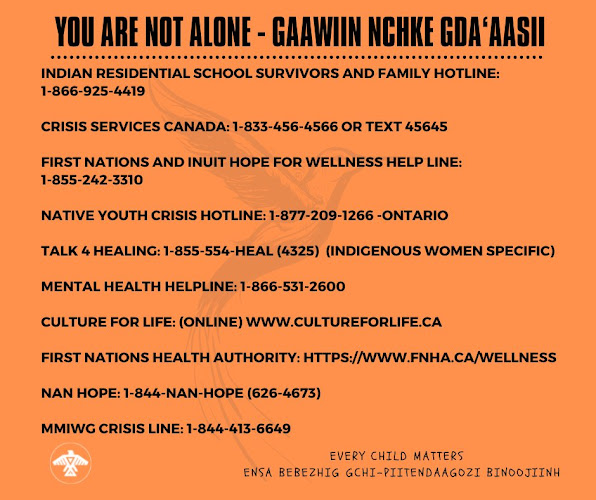
You are not alone
To Veronica Brown
Veronica, we adult adoptees are thinking of you today and every day. We will be here when you need us. Your journey in the adopted life has begun, nothing can revoke that now, the damage cannot be undone. Be courageous, you have what no adoptee before you has had; a strong group of adult adoptees who know your story, who are behind you and will always be so.
Diane Tells His Name
click photo
Lost Birds on Al Jazeera Fault Lines
click to read and listen about Trace, Diane, Julie and Suzie
NO MORE STOLEN SISTERS
click image
We conclude this series & continue the conversation by naming that adoption is genocide. This naming refers to the process of genocide that breaks kinship ties through adoption & other forms of family separation & policing 🧵#NAAM2022#AdoptionIsTraumaAND#AdopteeTwitter#FFY 1/6 pic.twitter.com/46v0mWISZ1
As the single largest unregulated industry in the United States, adoption is viewed as a benevolent action that results in the formation of “forever families.” The truth is that it is a very lucrative business with a known sales pitch. With profits last estimated at over $1.44 billion dollars a year, mothers who consider adoption for their babies need to be very aware that all of this promotion clouds the facts and only though independent research can they get an accurate account of what life might be like for both them and their child after signing the adoption paperwork.







 Posts

