They Took Us Away

They Took Us Away
click image to see more and read more

it's free

click

How to Use this Blog

BOOZHOO! We've amassed tons of information and important history on this blog since 2010. If you have a keyword, use the search box below. Also check out the reference section above. If you have a question or need help searching, use the contact form at the bottom of the blog.


We want you to use BOOKSHOP to buy books! (the editor will earn a small amount of money or commission. (we thank you) (that is our disclaimer statement)

This is a blog. It is not a peer-reviewed journal, not a sponsored publication... WE DO NOT HAVE ADS or earn MONEY from this website. The ideas, news and thoughts posted are sourced… or written by the editor or contributors.

EMAIL ME: tracelara@pm.me (outlook email is gone) THANK YOU CHI MEGWETCH!

SEARCH

Showing posts with label ACE Study. Show all posts

Tuesday, June 13, 2023

Part 6: WHAT IF WE LOST ICWA: SOUTH DAKOTA

By Trace L Hentz, blog editor and adoptee

If we lost ICWA, let's look at South Dakota.  How are they doing?  Terrible!  Also not good, I have posted on this website many times their failures to protect Native kids from predators called social workers and missionaries.

Why ICWA matters there seems pretty obvious: Kids are screwed without it.

LIKE:  Why SD lawmakers won't be studying Indigenous child welfare this year


The kids are not alright: Little progress on welfare of Native children in South Dakota 

Keeping families together

(excerpt) 

 One of the commission’s recommendations implemented by the legislature was to address kinship placements. Kinship placements refers to keeping children with relatives, which Mousseau said can minimize the trauma experienced by the child.

Following the implementation of preference for kinship placements, DSS found that there was an increase of 25% of such placements for all children between July of 2004 and June of 2005. 


According to data requested by Foster, there are still large gaps of the number of children, Native and non-Native, that are placed with relatives.

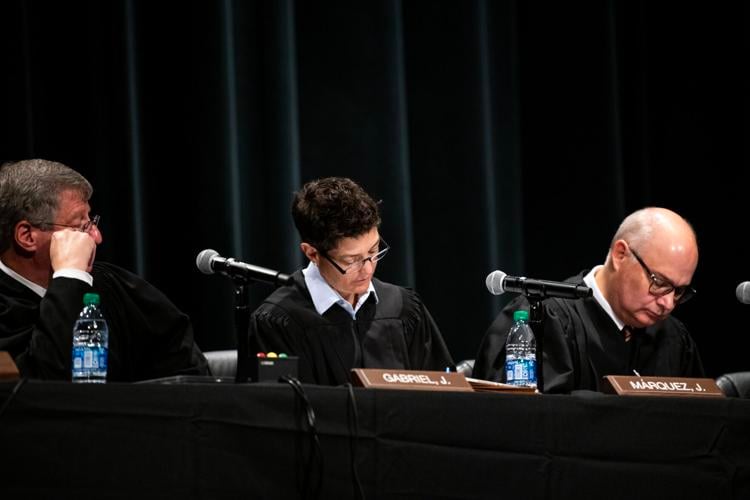
During the session, Democratic Representative Peri Pourier introduced House Bill 1229 to address such placements. The bill died in the House Judiciary committee.

Mousseau said that kinship placements are important to the long-term wellbeing of children, especially when it comes to delinquency and recidivism.

“It is a practice in social work that has been shown to have amazing effects,” Mousseau said. “And we wanted all the children of South Dakota to have the opportunity to be placed with their relatives. That didn’t even make it out of committee.”

From poverty to prison

Data from the National Data Archive on Child Abuse and Neglect shows that in 2020, 95% of Native children affected by maltreatment were experiencing neglect compared to 86% of their non-Native peers. The data also showed that Native children face higher rates of abandonment and parents with substance abuse issues.

“Being born and raised in one of the most poorest counties in the United States, I can tell you that neglect looks a lot like poverty,” Pourier told House lawmakers on Wednesday.

South Dakota is home to some of the poorest counties in the country, many of which are on tribal land.

Pourier and Mousseau say the impact of poverty and neglect in childhood connect directly to crime and the overflowing prisons in South Dakota.

“South Dakota is funding more prisons because there’s a need but we go further upstream, there’s that need because of policies to remove children that dates back, which is why ICWA came into effect in 1978 and it has been in effect since,” Mousseau said.

As of January 31, 2023, Native American women outnumbered women of other races in South Dakota’s prisons. Additionally, nearly 33% of the male inmates in state prisons are Native American.  

 Mousseau said addressing the disproportionate rates of Native children in foster care, specifically those not placed with kin, can better address issues of crime and substance abuse.

“As you can imagine being removed from your family and being placed outside of your family, which a lot of Indian children are, that’s traumatic. That has dramatic effects on somebody who has to experience it and their children, right, their brains are still developing there,” Mousseau explained. “And we know from the Adverse Childhood Experiences Study that, you know, those early traumatic experiences in children’s lives leads to negative health outcomes, run ins with the law, you know, substance use. Look up the ACEs study, that that has been foundational.”

KEEP READING 

  READ:

The Lost Bird of Wounded Knee - South Dakota Public Broadcasting


COLORADO

Congress originally enacted ICWA after learning of the large number of American Indian children being removed from their households into non-tribal families and institutions.


to be continued

Tuesday, February 11, 2020

The Body Remembers

New research reveals that trauma experienced in childhood has long-term damaging effects on quality of life and lifespan. But the same research shows that adults play a critical role in helping children overcome this damage.

READ: The Body Remembers | On Being

Here’s a quick experiment about your past that will tell you a vast amount about your future.
Check all that apply:
  • Did you experience recurrent emotional abuse as a kid?
  • Physical?
  • Sexual?
  • Did you experience physical neglect?
  • Emotional neglect?
  • Did anyone in your childhood home have substance abuse issues?
  • Did anyone struggle with mental illness?
  • Did anyone participate in criminal behavior and/or go to jail?
  • Was your mother ever treated violently?
  • Did you experience divorce or parental separation?
How many checks do you have? This is what clinicians call your ACE score. It stands for “adverse childhood experiences” and study after study has confirmed that it has a huge influence on your lifetime health. For starters: The life expectancy of individuals with ACE scores of six or more is twenty years shorter than it is for people with no ACEs. And a person with four or more ACEs is twice as likely to develop heart disease and cancer.


Editor Note: Being adopted is high stress, too. We have posted about ACE on this blog - use the search bar.

Thursday, July 14, 2016

Toxic Stress, ACE STUDY, violence trauma


Violence is just one part of childhood trauma. So why are we focusing so much on childhood violence?

Three Types of Stress

Five years before the first of many papers from the ACE Study was published in 1998, Dr. Bruce McEwen at Rockefeller University, with Dr. Eliot Stellar, used the term “allostatic load” to describe how repeated chronic stress – “toxic stress” – produces stress hormones that create wear and tear on the brain and the body.
Over the last five years, the concept of the effects of toxic stress on children was amplified by Dr. Jack Shonkoff at the Harvard University Center on the Developing Child. He and his team describe three types of stress: Positive stress, which children need to help them grow and thrive. Tolerable stress, which is temporary, and where a caring adult helps a child to recover. And toxic stress — extreme, frequent or extended activation of the body’s stress response without the buffering presence of a supportive adult.
This toxic stress – the kind that comes from living with a physically and verbally abusive alcoholic parent, for example – damages the function and structure of a kid’s brain. Toxic stress floods the brain with stress hormones. When a kid’s in fight, flight or freeze mode, their thinking brain is offline and doesn’t develop as it should.
Kids experiencing trauma act out. They can’t focus. They can’t sit still. Or they withdraw. Fight, flight or freeze – that’s a normal and expected response to trauma. So they can’t learn. Their schools respond by suspending or expelling them, which further traumatizes them.

READ THIS ARTICLE 

A shorter version of this story appears in the July-August 2016 issue of Health Progress.

We have published on the ACE Study here on this blog. Use the search bar for more... Trace

Monday, June 20, 2016

Toxic Trauma Stress: ACE STUDY

By Trace Hentz

I don't know if you have heard of the ACE Study. I found it when I was writing One Small Sacrifice.  I have tons of these issues, even now. And I cut most of my remarks about the study in my memoir (too long) and now I think that was a mistake.
Childhood Trauma is toxic and can kill us? (What is an adoptee's experience?)
Poverty kills, too.
Food scarcity kills, too.
Violence kills, too, right?
That is life on the rez, right?

We are in crisis!


Childhood experiences, both positive and negative, have a tremendous impact on future violence victimization and perpetration, and lifelong health and opportunity. As such, early experiences and trauma are an important public health issue. Much of the foundational research in this area has been referred to as Adverse Childhood Experiences (ACEs).
ACEs can be prevented. Learn more about preventing ACEs in your community. HERE

right click and save to your computer to enlarge this graph

Happy Visitors!

NEW WEB ADDRESS

Because we don't want to lose information on this blog, we now have a domain name: American Indian Adoptees.com - click and save this link:

2026: WE HAVE A BACK UP BLOG COMING SOON: www.americanindianadoptees.blog (on wordpress) We are no longer on Facebook. We deleted our accounts.

WRITTEN BY HUMANS!

WRITTEN BY HUMANS!

Blog Archive

Featured Post

Your History Class Was a F*cking Lie | #NOMOAR

  Your History Class Was a F*cking Lie by Sean Sherman (Or: How the American Educational System Has Always Been a Racist Propaganda Program...


Native Circles

Native Circles
click logo for podcasts!

Most READ Posts

Bookshop

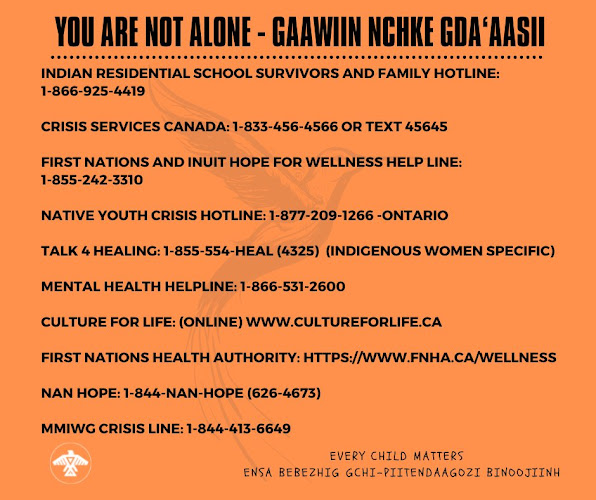
You are not alone

You are not alone

To Veronica Brown

Veronica, we adult adoptees are thinking of you today and every day. We will be here when you need us. Your journey in the adopted life has begun, nothing can revoke that now, the damage cannot be undone. Be courageous, you have what no adoptee before you has had; a strong group of adult adoptees who know your story, who are behind you and will always be so.

Diane Tells His Name


click photo

Lost Birds on Al Jazeera Fault Lines

Lost Birds on Al Jazeera Fault Lines
click to read and listen about Trace, Diane, Julie and Suzie

NO MORE STOLEN SISTERS

NO MORE STOLEN SISTERS
click image

ADOPTION TRUTH

As the single largest unregulated industry in the United States, adoption is viewed as a benevolent action that results in the formation of “forever families.”
The truth is that it is a very lucrative business with a known sales pitch. With profits last estimated at over $1.44 billion dollars a year, mothers who consider adoption for their babies need to be very aware that all of this promotion clouds the facts and only though independent research can they get an accurate account of what life might be like for both them and their child after signing the adoption paperwork.

Original Birth Certificate Map in the USA

Google Followers