BOOZHOO! We've amassed tons of information and important history on this blog since 2010. If you have a keyword, use the search box below. Also check out the reference section above. If you have a question or need help searching, use the contact form at the bottom of the blog.
We want you to use BOOKSHOP to buy books! (the editor will earn a small amount of money or commission. (we thank you) (that is our disclaimer statement)
This is a blog. It is not a peer-reviewed journal, not a sponsored publication... WE DO NOT HAVE ADS or earn MONEY from this website. The ideas, news and thoughts posted are sourced… or written by the editor or contributors.
EMAIL ME: tracelara@pm.me (outlook email is gone)
THANK YOU CHI MEGWETCH!
Karen Little Thunder and her cousin Phil Little Thunder greet attendees
of a memorial ceremony in Ash Hollow State Historical Park Sept. 6,
2025. (Jessica Wade, Nebraska Public Media)
On Sept. 3, 1855, the U.S. Army launched an attack on an encampment
of Sicangu and Ogallala Sioux at Bluewater Creek, just north of
Lewellen, Nebraska. The 600 soldiers massacred more than 86 Native
Americans, most of them women and children. Many others were taken
captive and force-marched to Fort Laramie in Wyoming.
The events of Sept. 3, 1855, were set in motion the year before, by what historians call the “Mormon cow incident.”
WALTHILL, Neb. (KTIV) -The Dr. Susan La Flesche Picotte Center held its open house Sunday afternoon.
Dr.
Picotte was the very first Native American physician and founded the
center back in 1913 as the first privately funded hospital on a Native
American reservation.
Over the years, it fell into disrepair, prompting community members to restore and preserve it.
One member, Gary Bowen, said it took many years and a lot of fundraising to restore the center to its former glory.
“It’s
a wonderful dream come true for all of us,” Bowen said. “We had
wonderful support from private foundations and government agencies and
individuals.”
The executive director
of the center, Elizabeth Lovejoy Brown, said Doctor Susan’s legacy
inspired her, and others, to make the center into a place of healing
once again.
“When I was a little girl,
I was told about Doctor Susan, and from that point on I said, I want to
do the same thing as her. I want to go to college and I want to come
back and give back to my tribe,” Brown said. “We want to fulfill and
carry on the legacy that she had made. For this hospital.”
The Picotte Center will feature health care services like a medical clinic and mental health support.
It
will also have an exhibit on Dr. Picotte’s life, and a makers space
where community members can access tools to create cultural pieces and
regalia.
I have been to White Clay many times. My relatives there are artists. This is the future! FINALLY! GOOD NEWS... Trace
🪶Art Replaces Alcohol 🪶
NEBRASKA - We are sure you are familiar with the work that is
happening at the Whiteclay Makerspace, but do you know the entire
origin story? Would you believe us if we told you that the Makerspace is
located in an old liquor store?
You may not know the beginnings, and we would love to share them in the
video. We are always humbled by the opportunity to be part in a
transformation that has impacted so many!
You continue to play a vital role in helping
us build a place for artists to thrive and support their families. From
this whole community we just want to send a huge THANK YOU! Summer brings increased tourist traffic, activity, and needs as we support Oglala Lakota artists and crafters. Please consider what gift you could make
through the PayPal giving link at the button below, or mail check to:
Whiteclay Makerspace, PO Box 667, Henderson, NE 68371.
Click play on the video and learn a little bit about how this space came to be!
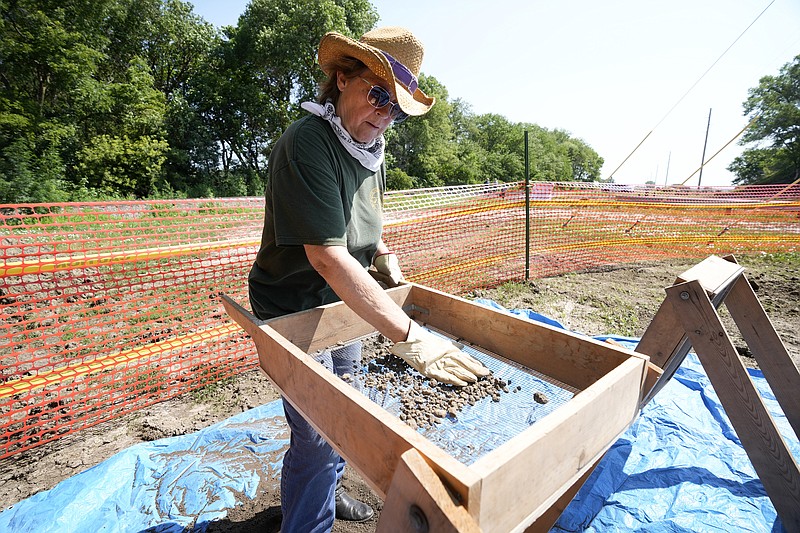
Volunteer Nancy Carlson sifts through dirt as
workers dig for the suspected remains of children who once attended the
Genoa Indian Industrial School, Monday, July 10, 2023, in Genoa, Neb.
The mystery of where the bodies of more than 80 children are buried
could be solved this week as archeologists dig in a Nebraska field that a
century ago was part of a sprawling Native American boarding school.
(AP Photo/Charlie Neibergall)
JULY 2023
GENOA, Neb. (AP) — Amid a renewed push for answers,
archeologists planned to resume digging Tuesday at the remote site of a
former Native American boarding school in central Nebraska, searching
for the remains of children who died there decades ago.
The search
for a hidden cemetery near the former Genoa Indian Industrial School in
Nebraska gained renewed interest after the discovery of hundreds of
children’s remains at Native American boarding school sites in the U.S.
and Canada since 2021, said Dave Williams, the state's archeologist
who's digging at the site with teammates this week.
The team hadn't found any remains by Monday afternoon, but the dig had only just begun.
“Where
is the cemetery and how many people are buried there? It's the big
question that's hanging in the air,” said Alyce Tejral, a board member
of the nearby Genoa U.S. Indian School Foundation Museum.
Genoa
was part of a national system of more than 400 Native American boarding
schools that attempted to assimilate Indigenous people into white
culture by separating children from their families, cutting them off
from their heritage and inflicting physical and emotional abuse.
Judi
gaiashkibos, the executive director of the Nebraska Commission on
Indian Affairs, whose mother attended the school in the late 1920s, has
been involved in the cemetery effort for years. She said it’s difficult
to spend time in the community where many Native Americans suffered, but
the vital search can help with healing and bringing the children’s
voices to the surface.
Williams, the archeologist, said finding
the location of the cemetery and the burials contained within it may
provide some peace and comfort to people who have suffered a long period
of not knowing exactly what happened to their relatives who were sent
to boarding schools and never came home.
The school, about 90
miles (145 kilometers) west of Omaha, opened in 1884 and at its height
was home to nearly 600 students from more than 40 tribes across the
country. It closed in 1931 and most buildings were long ago demolished.
Newspaper
clippings, records and a student’s letter indicate at least 86 students
died at the school, usually due to diseases such as tuberculosis and
typhoid, but at least one death was blamed on an accidental shooting.
Researchers
identified 49 of the children killed but have not been able to find
names for 37 students. The bodies of some of those children were
returned to their homes but others are believed to have been buried on
the school grounds at a location long forgotten.
As part of an
effort to find the cemetery, last summer dogs trained to detect the
faint odor of decaying remains searched the area and signaled they had
found a burial site in a narrow piece of land bordered by a farm field,
railroad tracks and a canal.
A team using ground-penetrating radar
last November also showed an area that was consistent with graves, but
there will be no guarantees until researchers finish digging into the
ground, Williams said.
The process is expected to take several days.
If
the dig reveals human remains, the State Archeology Office will
continue to work with the Nebraska Commission on Indian Affairs in
deciding what’s next. They could rebury the remains in the field and
create a memorial or exhume and return the bodies to tribes.
Last
year, the U.S. Interior Department — led by Secretary Deb Haaland, a
member of Laguna Pueblo in New Mexico and the first Native American
Cabinet secretary — released a first-of-its-kind report that named
hundreds of schools the federal government supported to strip Native
Americans of their cultures and identities.
At least 500 children
died at some of the schools, but that number is expected to reach into
the thousands or tens of thousands as research continues.
___
Ahmed reported from Minneapolis. Scott McFetridge contributed from Des Moines, Iowa.
**
No children's remains found in Nebraska dig near former Native American boarding school
July 22, 2023 by
TRISHA AHMED / Associated Press/Report for America
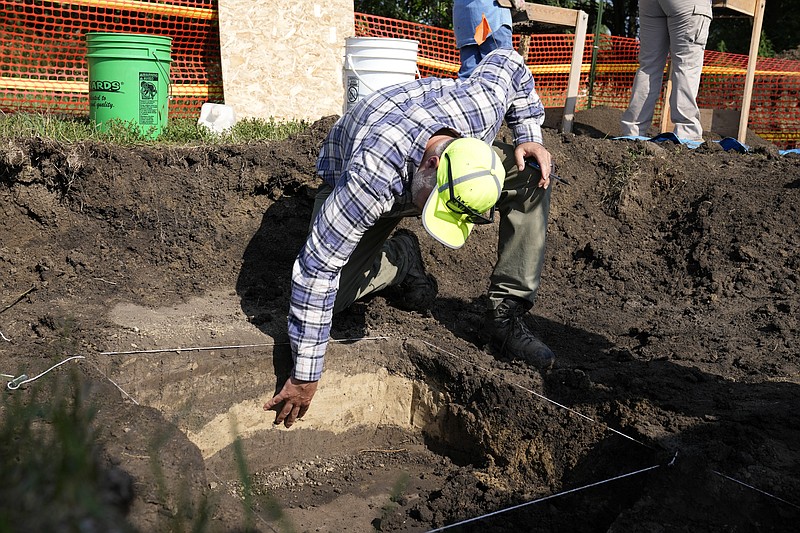
Nebraska State Archeologist Dave Williams
looks at layers of soil as workers dig for the suspected remains of
children who once attended the Genoa Indian Industrial School, Tuesday,
July 11, 2023, in Genoa, Neb. The mystery of where the bodies of more
than 80 children are buried could be solved this week as archeologists
dig in a Nebraska field that a century ago was part of a sprawling
Native American boarding school. (AP Photo/Charlie Neibergall)
An archeological dig for a lost children's cemetery near the
Nebraska site of a former Native American boarding school has ended
after two weeks — and no remains were found.
Dave Williams, the
state's archeologist, said the team searching near the former Genoa
Indian Industrial School plans to meet on Zoom with representatives of
40 tribes across the U.S. next week to determine next steps.
"I
would have preferred that we found the children," said Judi gaiashkibos,
a member of the Ponca Tribe of Nebraska and the executive director of
the Nebraska Commission on Indian Affairs. "But we have to remain
hopeful. They've been gone more than 90 years. I feel like I have to
remain steadfast and committed."
The search for gained renewed
interest after hundreds of children's remains were discovered at other
Native American boarding school sites across the U.S. and Canada in
recent years.
Dogs trained to detect the odor of decaying remains
searched the area last summer and indicated there could be a burial site
in a strip of land bordered by a farm field, railroad tracks and a
canal. In November, ground-penetrating radar identified four anomalies —
or areas of disturbed soil beneath the ground surface — in the shapes
of graves.
Williams and his team spent the last two weeks
excavating, but didn't find the first anomaly they were seeking, which
could've contained children's remains.
"That's one of the
challenges of archaeology," Williams said. "We can have a lot of
evidence that something should be where we think it's going to be. And
then once we actually get in and open up the ground and take a look,
it's not what we expected."
They'll spend the next few weeks
reevaluating the data and everything that led them to that location,
Williams said, and figure out a new plan in consultation with the dozens
of tribes that lost their children to the school.
There
are three other anomalies nearby. Crews could search for those, pursue
other leads or stop the search entirely if the tribes collectively
decide that's what they want, Williams said, but he hopes the team can
still help the tribes, find the children and "bring them to rest in a
satisfactory way."
Sunshine Thomas-Bear, a member of the Winnebago
Tribe of Nebraska and the cultural preservation director for the tribe,
said she wishes there had been more consultation with all 40 tribes —
and not just the tribes in Nebraska — before now. She's looking forward
to that happening more in this next phase.
"Nothing was found this
time. But perhaps that was because we weren't all ready yet,"
Thomas-Bear said. "There were tribes that weren't notified, there were
tribes that weren't there. We believe that everything happens for a
reason. I think that if we get on the right track together, perhaps
we'll be more successful."
The Genoa Indian Industrial School was
part of a national system of more than 400 Native American boarding
schools that attempted to assimilate Indigenous people into white
culture by separating children from their families, prohibiting them
from speaking their Native languages, cutting them off from their
heritage and inflicting abuse.
The school, about 90 miles (145
kilometers) west of Omaha, opened in 1884 and at its height was home to
nearly 600 students. It closed in the 1930s and most buildings were
demolished long ago.
The U.S. Interior Department — led by
Secretary Deb Haaland, a member of Laguna Pueblo in New Mexico and the
first Native American Cabinet secretary — released a first-of-its-kind
report last year that named hundreds of schools the federal government
supported to strip Native Americans of their cultures and identities.
At
least 500 children died at some of the schools, but that number is
expected to reach into the thousands or tens of thousands as efforts
like the Nebraska dig continue.
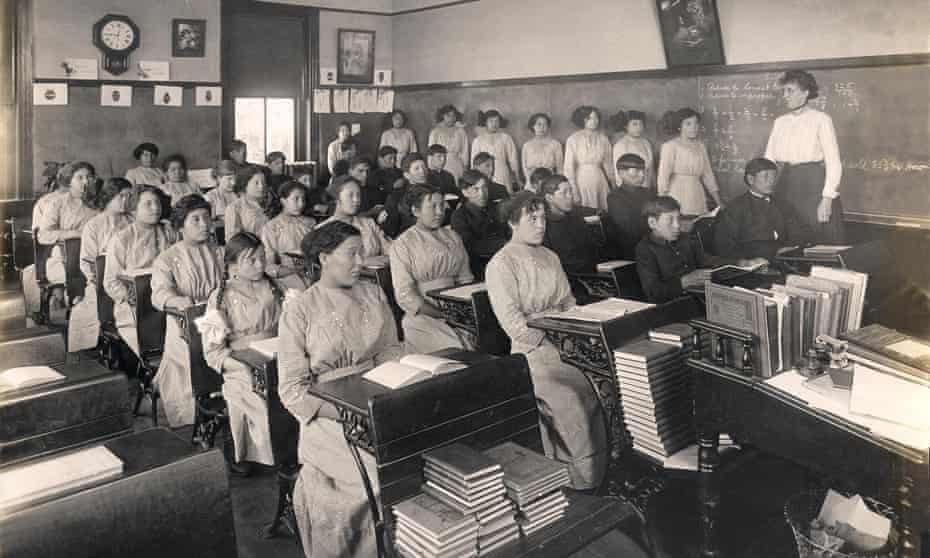
School was operated by the federal government between 1884 and 1934 and was known for brutal punishments and hard labour
A fifth-grade class is seen at the Genoa US Indian Industrial School in Nebraska in 1910. Photograph: National Archives and Records Administration
Researchers say they have identified more than 100 students who died at a harsh residential school for Native Americans in Genoa, Nebraska. The search for the cemetery where many are believed to be buried continues.
The
Genoa US Indian School was operated by the federal government between
1884 and 1934. Brutal punishments and hard labour were commonplace for
students, large numbers of whom were removed from their families and
homelands against their will, prohibited from speaking tribal languages
and forced to convert to Christianity in an effort to subdue or
eliminate Indian culture.
The
names of 102 deceased students were gathered from sources including
newspaper archives and school newsletters, according to the researchers
who say official records were destroyed or scattered when the school
closed.
While some names are likely to be
duplicates, the death toll from the school which enrolled thousands from
more than 40 tribal nations in its 50-year history is probably far
higher, said Margaret Jacobs, professor of history at UNL and project
co-director.
She said the names would be
released after consultation with tribal leaders and after efforts to
trace living relatives of the deceased were exhausted.
“These children died at the school,” Jacobs told the Omaha World-Herald. “They didn’t get a chance to go home. I think that the descendants deserve to know what happened to their ancestors.”
Some
of the students, aged four to 22, died in accidents, by drowning or by
shooting and in one case reportedly after being hit by a freight train.
But most died from disease. Tuberculosis and pneumonia were rife in the federal Indian school system set up in the 1860s with the intention of educating tribal youth in the English language.
The
system took a dark turn in 1879 when a US army brigadier general,
Richard Henry Pratt, founded Pennsylvania’s Carlisle Indian Industrial
School, the first off-reservation boarding school for Native Americans,
with the motto: “Kill the Indian, save the man.”
In
a harsh era, thousands of children were forced to leave their families
and travel to schools in other states, to “remove them from tribal
influences”. Many teachers forced students to speak only English, and
many schools imposed military style rules. Braids were cut off and
students given “white” names.
Some graduates
said they benefited from the experience and educational opportunities
they would not otherwise have received, but numerous other accounts
record harsh discipline, abuse and exploitation, the Genoa project says.
One
descendant claimed his great-grandmother was blinded while a student at
Genoa, likely by having lye soap rubbed into her eyes as a punishment.
The search for the school’s cemetery is continuing in partnership with the Nebraska
Commission on Indian Affairs and the state archaeology office. Maps
from the 1920s marked a plot of the 640-acre campus where it was
believed to exist but ground-penetrating radar has failed to find any
graves, project leaders said.
“If we’re not able to find them, I think we need to do something to recognize that they lost their lives there,” Judi gaiashkibos, a citizen of the Ponca Tribe and the commission’s executive director, told the World-Herald.
The
troubled legacy of Native American boarding schools became a focus of
Joe Biden’s administration in June when the interior secretary, Deb
Haaland, announced an investigation into “horrific assimilation policies”.
It followed the discovery of the graves of more than 200 children
at an Indigenous residential school in Canada in May. In the US,
Haaland, a Laguna Pueblo tribe member, said her maternal grandparents
were among those forcibly removed, her grandfather to the Carlisle school.
“Many
Americans may be alarmed to learn that the United States has a history
of taking Native children from their families in an effort to eradicate
our culture and erase us as a people,” Haaland wrote in an opinion piece in the Washington Post.
“It is a history that we must learn from if our country is to heal from this tragic era.”
The
Federal Indian Boarding School Truth Initiative will investigate
allegations of abuse and assist efforts to locate burial sites.
“I’m
looking to see something good come out of this,” gaiashkibos said.
“Perhaps we will find some way to restore language, to restore some of
the culture that was stripped from us.
“Everyone needs to learn the stories and say, ‘America did this and we can do better’.” SOURCE
OMAHA, Neb. (KMTV) — A
grassroots nonprofit advocating for Native youth in the child welfare
system was recently granted a highly competitive prize to further their
efforts.
In 1978 the Indian Child Welfare Act set federal
regulations to prioritize the specific needs of native children and
their communities, regulations that the Nebraska Indian Child Welfare Coalition aims to protect and upkeep here in Nebraska.
“The
reality is that historical trauma continues to impact our families
every single day," said Misty Frazier, executive director of the
coalition. "With the child welfare system, and other systems, and other
issues that Native families face, we are treating the symptoms of
historical trauma.”
According to the Nebraska Foster Care Review Office's latest quarterly report
Native children only make up 1.1% of the population, but make-up nearly
3.9% of foster children placed out of home or trial placement. They
also make up nearly 5.9% of probation-supervised youth.
Native
girls make up 10% of the children sent to a youth rehab and treatment
center, the most restrictive type of placement and often the last
option. Native boys make up 2.4% of that population.
The coalition
aims to keep native children in the foster care system connected to
their culture and community. They work with families to learn their
rights, train care workers, and advocate for the children in and leaving
the system.
“For
most of the tribes their age of majority is 18, and Bridge to
Independence doesn’t start until they are 19, and so there was a
one-year age gap," Frazier explained.
For their efforts, the coalition was recently awarded the Springboard Prize for Child Welfare. Only four applicants out of over 300 were granted the $200,000 prize.
The coalition plans to use the funds to continue their efforts for foster youth aging out of the system.
The Indian Child Welfare
Act, or ICWA, basically provides Tribes with an opportunity to intervene
when state child welfare and adoption agencies consider whether or not
to remove a Native child from a home. The children can be enrolled
citizens of the Tribe or be eligible for membership status.
The Genoa Indian School Digital Reconciliation Project is
a new effort to tell the story of the thousands of American
Indian children from forty Indian nations who attended the Genoa Indian
Boarding School in Genoa, Nebraska. The school was open from 1884-1934
and sprawled over 640 acres. The first phase of the project has
digitized and described government records. Later
phases will digitize oral histories, community narratives, and
artifacts. The project is a collaboration between the University of
Nebraska-Lincoln; the Genoa U.S. Indian School Foundation; Community
Advisors from the Omaha, Pawnee, Ponca, Santee Sioux, and
Winnebago tribes of Nebraska; and descendants of those who attended
Genoa. It aims to bring greater awareness of the schools and their
legacies at the same time as it hopes to return the histories of Indian
children from government repositories back to their
families and tribes. So far, project members have digitized, described,
and published about 4,000 pages of documents. Communities and
individuals will be able to contribute their own digital content to the
record.
“The prayers of the children are very powerful, and I believe the prayers of the children are what brought us here,” LaMere said during his opening remarks. “Our children feed the system, and all of us let it happen. We make it easy for them, but that time has to stop.”
Researchers in the 1960s had found that up to 35 percent of all Native children
were being taken from their families and tribes and placed in white
homes or institutions. ICWA, passed in 1978, aimed to curtail that
practice, and to preserve Native culture and tribes by placing children
with Native families when their biological parents could not care for
them. A few states – including Iowa and Nebraska, where American Indian
children are removed from their families at higher rates than their
white peers – have adopted their own versions of ICWA.
MACY, Neb. | The Omaha Tribe of
Nebraska is in the early stages of planning a local Native American
foster care system, a move its leader says will help preserve tribal
culture for future generations.
Earlier this month, the U.S.
Department of Health and Human Services awarded the tribe a $300,000
grant to create an independent tribal-run family services program for
enrolled Omaha members.
“We know what’s best for our children and
our youth,” Omaha Tribal Council Chairman Vernon Miller said Thursday.
“The federal government recognizes that.”
The system would allow the Omaha Tribe to make better use
of the Indian Child Welfare Act, which was passed in 1978 to focus
placement of Native foster children in Native homes rather than with
non-Native families. Currently, the Omaha Tribe places foster children
through the Nebraska Department of Health and Human Services.
“It’s
going to allow for our children to remain with our families and culture
as they transition into youth and adulthood,” Miller said of the
planned program.
Miller added a tribal system would strengthen
ICWA applications on the Omaha Reservation, meaning the tribe would have
more power to keep its children with Omaha Tribe families. He also said
the system would help leaders identify children who are eligible for
Omaha Tribe membership and enroll them.
Nebraska's Native
foster-child population of 5 percent remained disproportionately high in
2014 when compared with the state's total Native child population of 2
percent, said Linda Cox, a research analyst with the Nebraska Foster
Care Review Office.
According to the office, 155 -- or 5 percent
-- of 3,029 foster children were identified as Native in 2014. The
previous year, 261 of 3,892 -- or 7 percent – were Native.
ICWA
was created to allow tribes to intervene with the judicial system to
prevent family breakups and calls for child placement preference to be
with people of their town tribe.
Denny Smith, director of Native
American Studies at the University of Nebraska at Omaha, said some
Native children are removed from their families because of poor living
conditions. Smith is an enrolled member of the Assiniboine Tribe, with
headquarters on the Fort Peck Reservation in northeastern Montana.
“There
were heartbreaking cases all over the country, and I don’t think there
was any way to avoid that,” he said. “I think (ICWA) worked out well
that everybody has been responsible on both sides.”
Frank LaMere,
executive director of Four Directions Community Center in Sioux City,
applauded the Omaha Tribe’s stride toward establishing a local foster
care system.
“I am very pleased and encouraged by tribal initiatives to
keep Native children with Native families,” he said. “We are very
gratified by the Omaha efforts and those of the other tribes.”
LaMere
added some Natives in state foster care systems can grow up knowing
very little about their heritage. He said some have come to him for
information about their ancestry.
“Several times a year, in Sioux
City, we have adults who were adopted and will come to us trying to find
their way back to their culture,” he said. “If they can find their way
home, I am pleased.”
Smith said loss of Native culture is a large concern for many tribes.
“The
issue was that the children, with all good intentions, were taken out
of Native families and generally given to non-Native families,” Smith
said. “(ICWA) was a move to save the next generation of culture. If you
lost one generation of culture, your hopes of surviving the culture
would be very limited.”
LINCOLN, NE — While applying
for her driver's license at age 16, Karen Hardenbrook saw her birth
certificate and learned what her adoptive parents from Broken Bow never
told her: she was born in Winnebago and her mother was a member of the
Omaha Tribe of Nebraska. As a baby, the state removed her from her
biological grandmother's crowded home on the reservation.
Today Hardenbrook, 57, lives on the Omaha Reservation
in Walthill. She's an enrolled member but at times still feels like an
outsider.
"I had a wonderful, beautiful (adoptive) home. I
couldn't have asked for anything more," Hardenbrook said. "But I still
wish I would have never left the res. I would have learned to dance. I
would have learned to sing the songs. Now when I get out to the arena, I
have to watch everyone, at 57 years old, because I don't know the
steps."
A bill slated for a committee vote this week in the
Nebraska Legislature would further strengthen protections of cultural
identities for children like Hardenbrook by engaging tribal government
and extended family mediation before removing children from tribal
homes.
In 1978, Congress passed the Indian Child Welfare Act
in response to what it deemed "a crisis of massive proportions."
Between 25 percent and 35 percent of American Indian children were
living in out-of-home placement, endangering the preservation of already
dwindling American Indian tribes.
The federal law created standards that encouraged
states to recognize the interests of Indian families and tribal
governments when handling child custody issues. Nebraska adopted a
nearly identical version in 1985.
"As sovereign entities, when one-third of the
population gets taken out of your community, you won't have a tribe much
longer," said Robert McEwen, attorney for legal nonprofit Nebraska
Appleseed.
American Indian children represent just 2 percent of
Nebraska's children but account for more than 5 percent of all children
in out-of-home placement, one of the highest disparities in the nation,
according to 2014 data from Nebraska's Foster Care Review Office.
The bill by Sen. Colby Coash of Lincoln would
explicitly define when social workers can remove Native American
children from their homes, making it harder to separate families and
break the cultural ties
Coash said Nebraska's 30-year-old child welfare laws
are too hazy for courts and caseworkers to effectively implement the
federal law. When children or one of their biological parents are tribe
members, state and federal laws require social workers to make "active
efforts" to keep Native American families together — but state law
doesn't define "active efforts."
"The state has a responsibility to not only provide for safety, but to keep the cultural connections," Coash said.
Under the bill, caseworkers would first have to
contact tribal leaders, consult with mediators and exhaust all family
counseling and mediation options before forfeiting parental rights. The
Department of Health and Human Services would have to document each
step.
The bill also broadens the definition of "expert witnesses," who are required to testify in American Indian child custody cases.
Judi gaiashkibos, executive director of the Nebraska
commission on Indian Affairs, said tribal culture and state standards
often clash in the welfare system, contributing to high numbers of
Native American foster children.
"A caseworker might say, 'That's too crowded, that's
not a good thing for the family. The child might be better in this white
family. They get their own bedroom and bathroom,'" gaiashkibos said.
"But they're not with the people they look like, their family and their
tribal family."
Only 135 of Nebraska's 2,663 licensed foster homes
are recognized as Native American, according to a DHHS spokesman. Many
children are placed with non-native families, effectively severing
tribal ties, gaiashkibos said.
She acknowledged that in emergency situations, temporary out-of-home placement might be needed.
The bill specifies that if a child can't remain
safely at home, custody preference should be given to a foster home or
adoptive parents that can best preserve and grow a child's political,
cultural and social relationship with his or her tribe.
The Department of Health and Human Services has not taken a position on the bill, a spokesman said.
The Judiciary Committee is expected to discuss advancing the bill on April 14, according to the Associated Press. The bill is LB566.
OMAHA- The Nebraska Supreme Court is expected to hear arguments (in late May 2009) on whether the state's legal procedures can trump a federal law that allows American Indian tribes to intervene in child-welfare cases.
In an appeal filed with the high court, the Ponca Tribe says a Dakota County juvenile court judge denied its rights under the Indian Child Welfare Act because the tribe was not represented by a state-recognized attorney.
"The federal law provides that tribes can intervene in any state child-custody proceeding that involves their children," said the tribe's Denver, Colo.-based attorney, Brad Jolly. "If a tribe has to have a lawyer in each of those cases, they won't be able to intervene."
For most tribes, the cost of having an attorney appear in each and every child-welfare case is prohibitive, he said.
The Indian Child Welfare Act provides tough standards for removing American Indian children from their homes.
Congress passed the law in 1978 to curb a rise in adoptions of Indian children by non-Indians. In some states, 35 percent of Indian children had been removed from their homes to live with non-Indians.
"Tribal intervention in state child-custody proceedings involving Indian children is one of the primary tools Congress provided to ensure an Indian child's continued relationship with his or her tribe and
community," Jolly wrote in the appeal. "The right of Indian tribes to intervene in state child custody proceedings involving their children is absolute and unequivocal."
In October, the Ponca Tribe filed a motion in Dakota County juvenile court to intervene in a child-welfare case involving two Ponca children.
But the filing was thrown out by Judge Kurt Rager because, according to court documents, it was not submitted by an attorney.
Rather, the motion had been submitted by a trained specialist who counsels tribes on juvenile cases.
In the appeal, Jolly wrote that courts typically grant such specialists the same power as an attorney because of the tribe's sovereign status.
"In refusing to allow the tribe's ICWA specialist to file a motion to intervene on behalf of the tribe, the county court has effectively removed the tribe's right to intervene in the proceedings," he wrote.
The Ponca Tribe is asking the high court to overturn Rager's dismissal of the filing. Arguments in the case are scheduled for Tuesday. A message left for Rager was not immediately returned. Judges generally do not comment on pending cases.
Jolly said the Ponca Tribe has faced similar dismissals in other Dakota County juvenile court cases since October.
The Nebraska Appleseed Center for Law in the Public Interest, which submitted a so-called friend of the court brief in support of the tribe, said: "The state's interest in requiring organizations to be represented by an attorney, however, cannot compare to the interest of tribes in their children and in their survival, an interest which Congress unambiguously intended to safeguard through the ICWA."
Legal Aid of Nebraska, the National Child Welfare Association, Indian Center Inc. and several tribes, including the Winnebago and Omaha, also participated in the brief.
UPDATE: In re Elias L., 227 Neb. 1023 (2009) - Partner Achieves Victory for Tribal Rights Under the ICWA
by Brad Jolly, Partner, June 26, 2009 http://www.bsjlawfirm.com/info/arts/artsFull.php?id=58&p=2 In a case brought and argued by Partner, Brad Jolly, the Nebraska Supreme Court unanimously held that Indian nations can intervene and fully participate in state court proceedings subject to the Indian Child Welfare Act ("ICWA") without legal counsel regardless of state laws requiring organizations to appear in court only through an attorney.
The case, In re Elias L., 227 Neb. 1023 (2009), originated in the Dakota County Court. The Ponca Tribe of Nebraska filed a motion to intervene pursuant to Nebraska and Federal law through its ICWA Specialist, Jill Holt. The ICWA provides an absolute and unqualified right of Indian tribes to intervene in child welfare cases involving their children. However, the Douglas County Judge refused to hear the motion to intervene on the grounds that Nebraska state law requires that organizations appear in court only through an attorney and the Tribe's ICWA Specialist was not a lawyer. The Judge held that he "is charged with the duty to enforce the prohibition against the practice of law without a license" and that required him to prevent the Tribe's ICWA Specialist from appearing on behalf of the Tribe even though the Tribe had authorized and designated her to do so. The Judge simply returned the motion to intervene, refusing to allow it to be filed.
The Tribe appealed the Judge's refusal to allow the Tribe's intervention and Brad Jolly represented the Tribe as its general counsel. In its opinion, aligning itself with prior decisions from Oregon and Iowa, the Nebraska Supreme Court recognized that the ICWA preempts state law and requiring tribes to appear only through attorneys would interfere with the federal right of intervention guaranteed in the ICWA. Further, the Court recognized that economic barriers which may prevent tribes from being able to afford legal counsel would prevent many tribes from intervening in ICWA proceedings. leaving both the rights of the tribe and key rights of the children unrepresented and unheard. The Court concluded that enforcement of Nebraska's unauthorized practice of law ("UPS") statutes "is incompatible with the federally granted tribal right of intervening in child custody proceedings governed by ICWA."
On the other hand, the Court held, while the state has a legitimate interest in requiring organizations to be represented by an attorney, its interests did not outweigh those of the tribes and the federal government in ICWA proceedings. The Court noted that state law permits individuals to represent themselves in court proceedings and also permits employees of organizations to perform certain acts that otherwise constitute the practice of law when done for the benefit of the organization. The Court also noted that the state's interests were not necessarily compromised because tribes generally appear through child welfare professionals, such as the Tribe's ICWA Specialist, who are familiar with juvenile proceedings and the ICWA.
Ultimately, the Court held that "tribal participation in state custody proceedings innvolving Indian children is essential to achieving the goals of ICWA." Importantly, the Court held that state courts "shall allow the Tribe's designated representative to fully participate in [ICWA] proceedings."
The case is an important victory for the Ponca Tribe of Nebraska and all other tribes with ICWA cases in the state. Over the years, many county court and juvenile court judges have refused to allow tribes to appear in ICWA cases without an attorney. At times, even when a judge allows a tribe to intervene without an attorney, they do not allow the tribe to participate in the proceedings by refusing to allow the tribe's representative to speak in court, present evidence, or do anything other than observe. The Nebraska Supreme Court's bold opinion finally settles the issue in Nebraska, ensuring that Indian nations will be permitted to not only intervene, but to fully participate in ICWA proceedings in accordance with federal law.
Thanks to John Dall for his research on this!...Trace
South Carolina court drops contempt charge against Dusten Brown Dusten Brown and the Cherokee Nation rea...
Bookshop
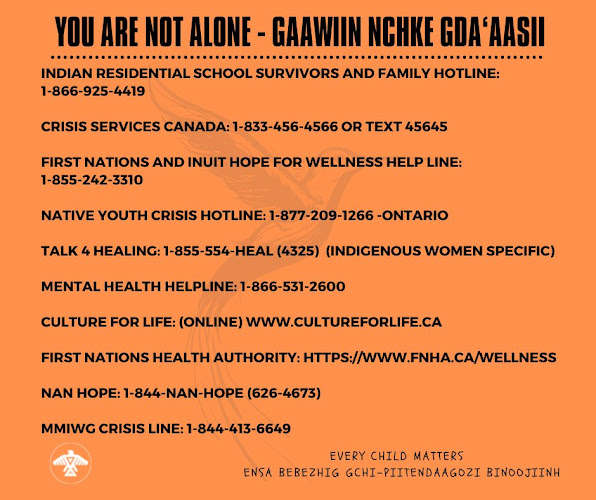
You are not alone
To Veronica Brown
Veronica, we adult adoptees are thinking of you today and every day. We will be here when you need us. Your journey in the adopted life has begun, nothing can revoke that now, the damage cannot be undone. Be courageous, you have what no adoptee before you has had; a strong group of adult adoptees who know your story, who are behind you and will always be so.
Diane Tells His Name
click photo
Lost Birds on Al Jazeera Fault Lines
click to read and listen about Trace, Diane, Julie and Suzie
NO MORE STOLEN SISTERS
click image
We conclude this series & continue the conversation by naming that adoption is genocide. This naming refers to the process of genocide that breaks kinship ties through adoption & other forms of family separation & policing 🧵#NAAM2022#AdoptionIsTraumaAND#AdopteeTwitter#FFY 1/6 pic.twitter.com/46v0mWISZ1
As the single largest unregulated industry in the United States, adoption is viewed as a benevolent action that results in the formation of “forever families.” The truth is that it is a very lucrative business with a known sales pitch. With profits last estimated at over $1.44 billion dollars a year, mothers who consider adoption for their babies need to be very aware that all of this promotion clouds the facts and only though independent research can they get an accurate account of what life might be like for both them and their child after signing the adoption paperwork.













 Posts
Posts

