They Took Us Away

They Took Us Away
click image to see more and read more

it's free

click

How to Use this Blog

BOOZHOO! We've amassed tons of information and important history on this blog since 2010. If you have a keyword, use the search box below. Also check out the reference section above. If you have a question or need help searching, use the contact form at the bottom of the blog.


We want you to use BOOKSHOP to buy books! (the editor will earn a small amount of money or commission. (we thank you) (that is our disclaimer statement)

This is a blog. It is not a peer-reviewed journal, not a sponsored publication... WE DO NOT HAVE ADS or earn MONEY from this website. The ideas, news and thoughts posted are sourced… or written by the editor or contributors.

EMAIL ME: tracelara@pm.me (outlook email is gone) THANK YOU CHI MEGWETCH!

SEARCH

Monday, November 24, 2025

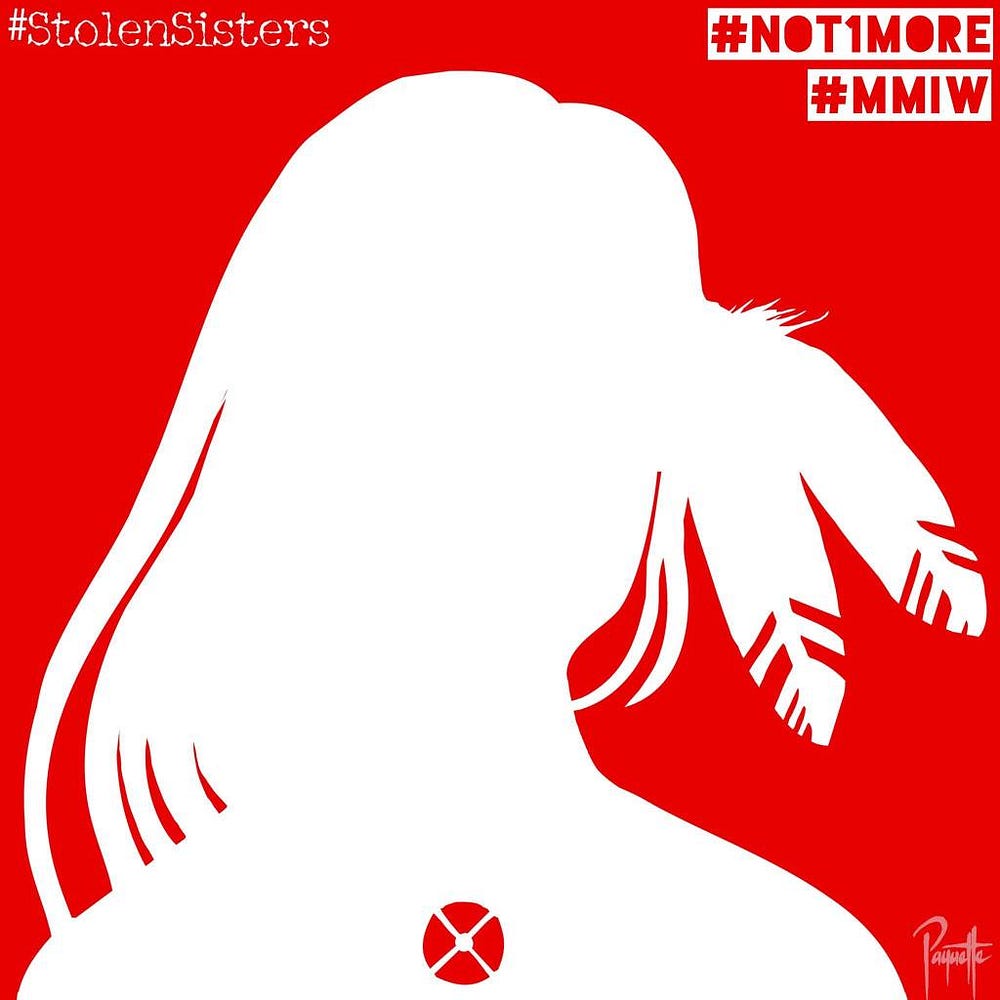
#MMIW in the United States #StolenSisters (reblog 2022)


(reblog from 2022)

Violence is the third leading cause of death for native women between 10 and 24 years of age and the fifth leading cause of death for women 25 to 34 years (Simpson 5). Today American Indian women face murder 10 times the national average according to the Department of Justice.  The government has failed to address the violence against Native women despite staggering statistics that provide evidence for the high rates of violence perpetrated against this marginalized group (Simpson 5).  In 2015, the federal government approved an act that would provide additional resources to improve tribes’ access to databases that had data of MMIW but have not followed through.  In response to the lack of a database that includes all the MMIW, I have created a web map that will visualize the Indigenous women that have been reported missing and murdered.  The ultimate goal is to try to understand what is unique about the situation that causes Native American women to experience higher rates of violence. In the future I hope to be able to provide statistical analysis for my theory about the relation between map camps and missing women.

Keep Reading 

The MMIWG2 Database logs cases of missing and murdered indigenous women, girls, and two spirit people, from 1900 to the present.

There are many lists and sources of information online, but no central database that is routinely updated, spans beyond colonial borders, and thoroughly logs important aspects of the data, and overall, there is a chronic lack of data on this violence. The Database works to address that need, by maintaining a comprehensive resource to support community members, advocates, activists, and researchers in their work towards justice for our stolen sisters.

 The Database originally included cases from the US and Canada, but starting in 2019, we have expanded its reach to include all Indigenous women, girls, and two spirit people. We will continue to pursue archival research in the US and Canada, and will rely on partnerships with Indigenous women’s collectives and organizations in other regions to include our sisters indigenous to lands occupied by other colonial entities.

The kind of information the Database cares for is determined by ongoing consultation with Indigenous communities. The Database currently logs the following:

​About Victims:

Name, Indigenous name and translation, tribal affiliation(s), birth date, age, if they were a mother, if they have other MMIWG2 cases in their family

​About Perpetrators:

Race, gender, relationship to the victim

​About the Violence:

Missing or murdered, incident date, violence perpetrated against murder victims after they are deceased, relevant issues (domestic violence, sexual assault, sex work/sex trafficking, foster care, police brutality, trans victim, death in custody, unsheltered, residential/boarding school)

​About Police & Court Response:

Reward amount (if any), case classification, conviction status, which entities located deceased individuals

​About Geography:

City, state/province, country, location type (tribal land, rural, urban)


NOT ONE MORE: Report on MMIW wiped off Federal website


STORY: 

The commission titled its report Not One More and detailed calls to action for multiple federal agencies — including the Departments of Justice and the Interior, Health and Human Services and the Administration for Children and Families. This year, legislators and policymakers were supposed to establish ways to better track the missing, and step up efforts to find them. 

https://ictnews.org/news/mmiw-report-a-casualty-of-federal-purge-of-government-data/ 


 BACKGROUND:

 But on Feb. 18, the 212-page, comprehensive set of findings and recommendations that 41 commissioners worked on for three years suddenly vanished from the U.S. Department of Justice website.

WASHINGTON (NEXSTAR) – As the president aims to root out diversity, equity and inclusion in the federal government, some lawmakers say important policy documents have been swept up with it.  That includes a report aimed at addressing missing and murdered indigenous people.

“It’s really kind of a slap in the face of the community that we’re trying to work with and protect,” said Sen. Catherine Cortez Masto (D-Nev.).

Nevada Senator Catherine Cortez Masto’s bipartisan “Not Invisible Act” created the commission that reported those recommendations.

President Trump signed it into law his first term, with the White House at the time touting him as, “the first president to formally recognize the tragedy…”, but now the report isn’t on the DOJ site anymore.

An Interior Department page that links to the DOJ has a note that says links may not work and quote, “…any previously issued diversity, equity, inclusion or gender-related guidance on this webpage should be considered rescinded.”

The DOJ does still have a page dedicated to missing or murdered indigenous people that summarizes the report’s recommendations.

The Justice Department did not respond to requests for comment when asked about why the report was removed.

Cortez Masto says on this National Day of Awareness for Missing and Murdered Indigenous Women, lawmakers and the administration should be working together to address the tragedy.

“This is not a partisan issue. This is bipartisan. We’ve got great legislation coming from it,” said Cortez Masto.

Cortez Masto is currently working to pass two bills aimed at supporting tribal law enforcement. 


REPORTS:

https://mmiwhoismissing.org/mmip-reports 

Bill restoring citizenship for 'Lost Canadians' becomes law

Court ruled government must pass law covering some children born abroad


People swear an oath together.
Applicants recite the oath of Citizenship in March. Some children of Canadians who were born abroad will become Canadian citizens after Parliament passed a bill to change citizenship rules that were deemed unconstitutional. (Justin Tang/The Canadian Press)

The "Lost Canadians" legislation, which aims to fix Canada's unconstitutional citizenship by descent rules, passed in the Senate Nov. 19 and received royal assent Thursday afternoon.

The term refers to people who were born outside of the country to Canadian parents who were also born in another country.

In 2009, the federal government changed the law so that Canadians born abroad could only pass down their citizenship if their child was born in Canada, but that was deemed unconstitutional by the Ontario Superior Court in December 2023.

The legislation proposed Canadian citizenship could be passed down to people born abroad, beyond the first generation, if the parents spent a cumulative three years in Canada before the child's birth or adoption.

A man in a suit, wearing glasses, speaks to someone off screen. Canadian flags are seen in the background.
Sen. David Arnot argued the bill does not apply to 'intercountry adoptees,' international children adopted by Canadian parents and raised in Canada. If those adoptees have children of their own born outside Canada, they would not be Canadian citizens.  (Spencer Colby/The Canadian Press)

Saskatchewan Sen. David Arnot argued the bill unfairly applies a "substantial connection" test to "intercountry adoptees" when it comes to passing down citizenship.  This is a legal term that applies to adopted children who were born abroad and raised in Canada by Canadian parents.

Arnot said the bill uses the general term "international adoption," which can include intercountry adoptees. He said these children go through a rigorous immigration process before their adoption in Canada is finalized.

Arnot said that includes provincial and territorial approval, anti-trafficking screens, foreign state approval, federal citizenship reviews and other measures.

"Intercountry adoptees must be treated the same as domestic adoptees. It is a requirement of the Hague Convention that intercountry adoptees have the same rights and treatment as in-country adoptees," Arnot said.

"Another way to say this is that, because domestic adoptees do not have a substantial connection test, neither should intercountry adoptees."

Arnot did not try to amend the law because the court has set a deadline for the law to be enacted by Jan. 20, but he urged the immigration minister to make the change in the future.

LINK: https://www.cbc.ca/news/politics/lost-canadians-bill-senate-9.6986432 

"I may never see him again"


I'm A U.S. Citizen. I'm Terrified My Adopted Son Will Be Snatched By ICE Due To A Heartbreaking Loophole.  

My son isn’t the only one facing a potentially unimaginably bleak future. Michael is one of an estimated 45,000 adults adopted as children by American families who have yet to obtain U.S. citizenship, according to Adoptee Rights Campaign. Some advocates believe there are as many as 70,000 transnational adoptees in limbo. They’re often merely missing or unable to secure minor information to complete the incredibly complicated process, or their American parents assumed a legal adoption made their child a U.S. citizen and took no further action to make certain.

READ:  https://www.huffpost.com/entry/us-citizen-international-adoptee-ice-deportation_n_691b4af0e4b085766d7e35a1

Friday, November 21, 2025

US Senate Unanimously Recognizes November as National Native American Heritage Month

archive photo

11-19-2025

The U.S. Senate on Wednesday passed a bipartisan resolution recognizing November 2025 as National Native American Heritage Month, honoring the cultures, histories, and contributions of Native Americans to the United States.

The resolution, led by U.S. Sen. Lisa Murkowski (R-Alaska), chairman of the Senate Committee on Indian Affairs, and U.S. Sen. Brian Schatz (D-Hawai‘i), vice chairman, highlights the importance of preserving Indigenous traditions, strengthening government-to-government relationships with Tribal Nations, and reaffirming federal trust and treaty responsibilities.

MORE:  https://nativenewsonline.net/currents/us-senate-unanimously-recognizes-november-as-national-native-american-heritage-month

The full resolution can be read here. 

National Congress of American Indians chooses leadership at big convention

indianz.com /News/2025/11/20/national-congress-of-american-indians-chooses-leadership-at-big-convention/


Shannon Wheeler, Jackie Pata and Mark Macarro
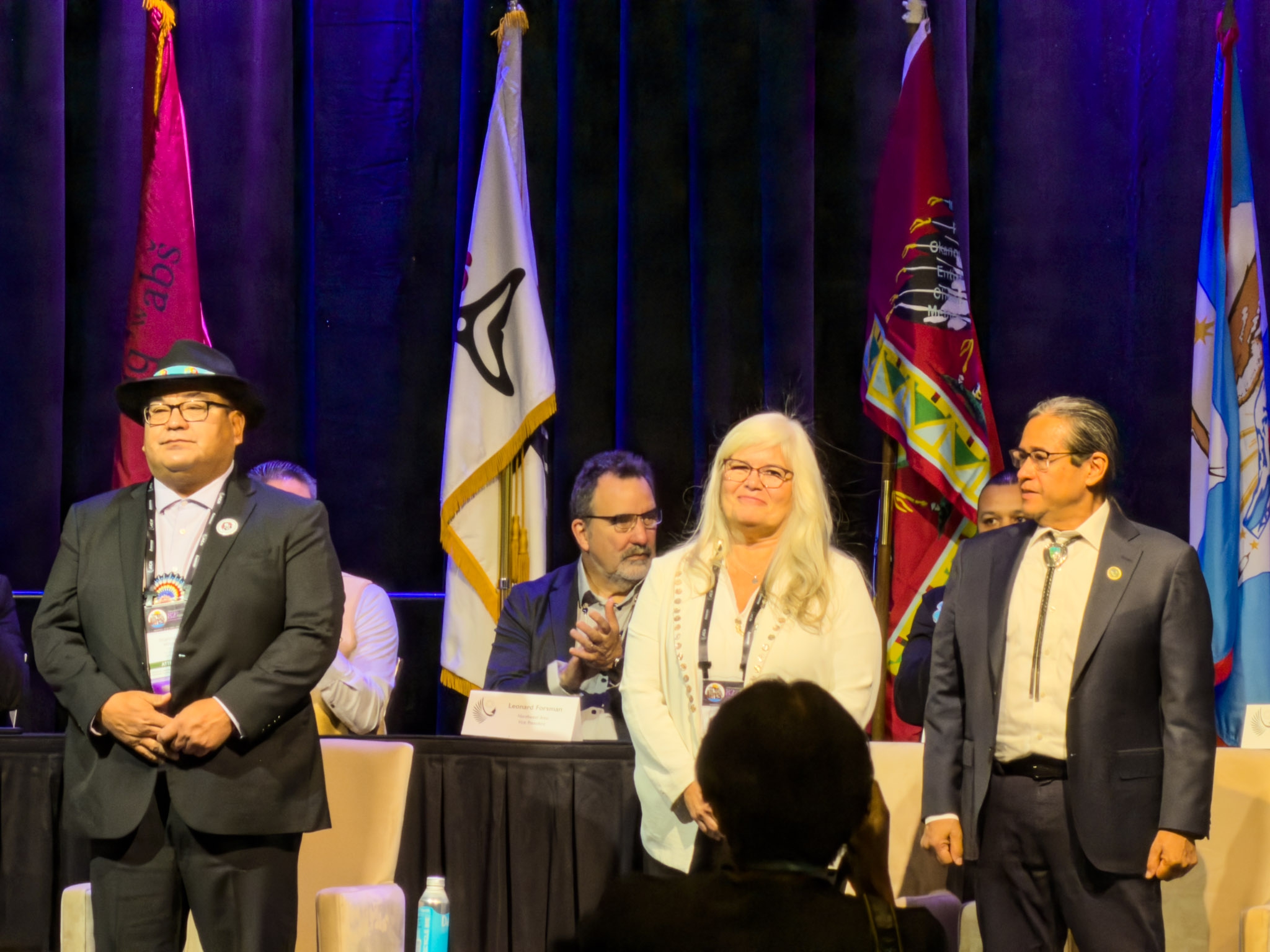
From left: Shannon Wheeler, Jackie Pata and Mark Macarro, stand on stage after delivering campaign speeches to serve as President of the National Congress of Americans at the organization’s 82nd annual convention in Seattle, Washington, on November 19, 2025. Photo by Indianz.Com (CC BY-NC-SA 4.0)

November 20, 2025

SEATTLE, Washington — Election season kicked into high gear at the largest inter-tribal conference here, with last-minute additions shaking up the race to lead the National Congress of American Indians (NCAI). Three candidates each are running for President, 1st Vice President and Recording Secretary of NCAI, along with two for Treasurer. The crowded field highlights the big turnout for the organization’s 82nd annual convention in Washington’s most populous city. And three of the four races have drawn candidates from Alaska, reflecting the potential for some major changes in NCAI’s direction. The organization has not elected a president from the 49th state since its founding in 1944. President Mark Macarro, the chair of the Pechanga Band of Indians from California, is one of two incumbents seeking re-election at NCAI. He was nominated to the post by Ben Barnes, the chief of the Shawnee Tribe in Oklahoma, as the convention resumed on Wednesday morning. 
“As I stand here looking out at all of you, I am reminded of our strength when we stand together as a unified voice on the issues and battlefronts that we face today in the Congress, in the courts, and at the ballot box,” said Macarro, who first won election at NCAI’s annual convention in 2023. “We are strongest when we speak with that unified voice.”  

Monday, November 17, 2025

Cricket: A Native American Adoptee Discovers Her Roots


A Native American Adoptee Discovers Her Roots

When Susan Fedorko was growing up she was content with her life and felt secure and cared for.  In the back of her mind, however, this adoptee always wondered about the family that had allowed her to be adopted and who they might be.  When Susan reached adulthood she put out her information in the hopes that she would discover her first family.  It wasn’t until she was 40 that she received a phone call that connected her to her first family.  Among the surprises she learned one of them was the truth about her Native American ethnicity and tribal membership.  She was one of many Native American adoptees in America who didn’t discover their connection until later in life.  Thankfully for Susan, she can now celebrate her roots and is working to pass the membership down to her children.

Read all about Susan Fedorko’s discovery of her first family in her memoir, “Cricket”

You can also find Susan’s story in this article from Visible Magazine.

FROM: https://adoptionuncovered.com/2024/07/12/a-native-american-adoptee-discovers-her-roots/ 

Sunday, November 16, 2025

Forced Sterlization of Native Women?


If passed, the resolution would make New Mexico the first state in the nation to formally acknowledge the reproductive abuse wrought on Native women by the federal government.

Jean Whitehorse's (Diné) Native name means "Many Children," but she only has one child. This spring, she spoke at the United Nations Permanent Forum on Indigenous Issues in New York to explain why.

In the 1970s, during an emergency visit to a Gallup, New Mexico, Indian Health Service facility, Whitehorse was coerced into signing consent papers for a procedure she later learned rendered her unable to have any more children.

READ:  https://nativenewsonline.net/health/stolen-generations-new-mexico-takes-historic-step-to-address-forced-sterilization-of-native-american-women 

Saturday, November 15, 2025

An Act of Resilience (in two stories)


During Native American Heritage Month, our stories are a good time to reflect on who we are and how far we've come... 

For Native people, our very existence is an act of resilience. We descend from ancestors who endured policies designed to erase us — removal, forced assimilation, boarding schools and termination. Yet we’re still here. Our languages are being spoken again, our ceremonies practiced openly, and our children are growing up learning that being Native is a strength, not a burden. - Levi Rickert

READ:

 https://nativenewsonline.net/opinion/remembering-my-grandma-during-native-american-heritage-month 

The number of people in the United States who claim Native identity has exploded — increasing 85% in 10 years — though the number of people formally enrolled in Native American tribes has not.  Carrie Lowry-Schuettpelz weaves together the history of Native identity along with sharing her own perspective and those of other Indigenous people in her book, The Indian Card: Who Gets to Be Native in America.

Lowry-Schuettpelz was born and raised in Cedar Rapids, but is an enrolled member of the Lumbee Tribe of North Carolina. She discusses growing up in Iowa and identifying as a Native American. Also, how her work and her book led her to form the Native Policy Lab at the University of Iowa School of Planning and Public Affairs.

LISTEN:  

https://www.iowapublicradio.org/podcast/talk-of-iowa/2025-11-05/the-history-of-native-american-identity-unpacked-in-iowans-debut-book 


Brah… We Aren’t Going Anywhere | LANDBACK FOR THE PEOPLE S3 E3


“We need to think big and plan big and be big and bold and visionary and to imagine the world that we want.” 

Founded in 2018, NDN Collective has become a leading Indigenous rights group offering grants and loans, and supporting grassroots organizing, narrative change, and political education, including the international LandBack movement.

STORY: https://nonprofitquarterly.org/an-indigenous-nonprofit-responds-to-budget-cuts-with-a-new-strategic-vision/

Ancestral Belongings returned by Vatican


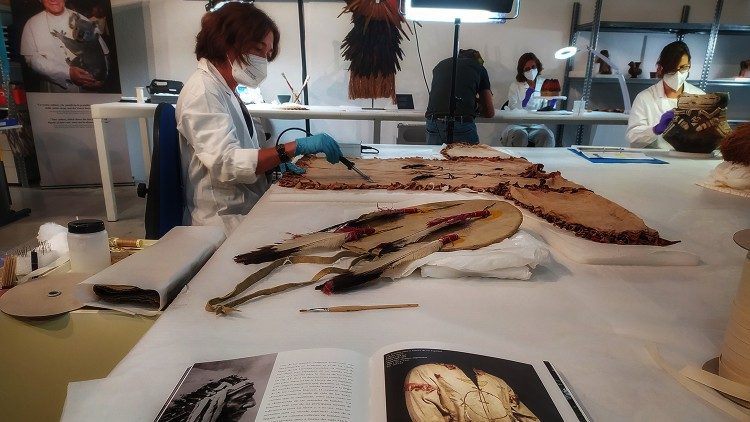
VIA: Over 80 thousand artifacts – a testament of the peoples and cultures from every part of the world – are on exhibit in the new Anima Mundi Museum, previously known as the Ethnological Museum of the Vatican Museums. 


Pope returns 62 artifacts to Indigenous peoples from Canada

By NICOLE WINFIELD | Associated Press | November 15, 2025, 

VATICAN CITY -- The Vatican on Saturday returned 62 artifacts to Indigenous peoples from Canada as part of the Catholic Church’s reckoning with its role in helping suppress Indigenous culture in the Americas.

Pope Leo XIV gave the artifacts, including an iconic Inuit kayak, and supporting documentation to a delegation of the Canadian Conference of Catholic Bishops during an audience. According to a joint statement from the Vatican and Canadian church, the pieces were a gift and a “concrete sign of dialogue, respect and fraternity.”

The items were part of the Vatican Museum’s ethnographic collection, known as the Anima Mundi museum. The collection has been a source of controversy for the Vatican amid the broader museum debate over the restitution of cultural goods taken from Indigenous peoples during colonial periods.

Most of the items in the Vatican collection were sent to Rome by Catholic missionaries for a 1925 exhibition in the Vatican gardens that was a highlight of that year’s Holy Year.

The Vatican insists the items were “gifts” to Pope Pius XI, who wanted to celebrate the church’s global reach, its missionaries and the lives of the Indigenous peoples they evangelized.

But historians, Indigenous groups and experts have long questioned whether the items could really have been offered freely, given the power imbalances at play in Catholic missions at the time. In those years, Catholic religious orders were helping to enforce the Canadian government’s forced assimilation policy of eliminating Indigenous traditions, which Canada’s Truth and Reconciliation Commission has called “cultural genocide.”

Part of that policy included confiscating items used in Indigenous spiritual and traditional rituals, such as the 1885 potlatch ban that prohibited the integral First Nations ceremony. Those confiscated items ended up in museums in Canada, the U.S. and Europe, as well as private collections.

Negotiations on returning the Vatican items accelerated after Pope Francis in 2022 met with Indigenous leaders who had traveled to the Vatican to receive his apology for the church’s role in running Canada’s disastrous residential schools. During their visit, they were shown some objects in the collection, including an Inuit kayak, wampum belts, war clubs and masks, and asked for them to be returned.


Francis later said he was in favor of returning the items and others in the Vatican collection on a case-by-case basis, saying: “In the case where you can return things, where it’s necessary to make a gesture, better to do it.”

The Vatican said Saturday the items were given back during the Holy Year, exactly 100 years after the 1925 exhibition where they were first exhibited in Rome.

“This is an act of ecclesial sharing, with which the Successor of Peter entrusts to the Church in Canada these artifacts, which bear witness to the history of the encounter between faith and the cultures of the Indigenous peoples,” said the joint statement from the Vatican and Canadian church.

It added that the Canadian Catholic hierarchy committed to ensuring that the artifacts are “properly safeguarded, respected and preserved." Officials had previously said the Canadian bishops would receive the artifacts with the explicit understanding that the ultimate keepers will be the Indigenous communities themselves.

The items are expected to be taken first to the Canadian Museum of History in Gatineau, Quebec. There, experts and Indigenous groups will try to identify where the items originated, down to the specific community, and what should be done with them, officials said previously.

As part of its broader reckoning with the Catholic Church’s colonial past, the Vatican in 2023 formally repudiated the “Doctrine of Discovery,” the theories backed by 15th-century “papal bulls” that legitimized the colonial-era seizure of Native lands that form the basis of some property laws today.

The statement marked a historic recognition of the Vatican’s own complicity in colonial-era abuses committed by European powers, even though it didn't address Indigenous demands that the Vatican formally rescind the papal bulls themselves.

The Vatican on Saturday cited the 2023 repudiation of the Doctrine of Discovery in its statement, saying Leo's return of the artifacts concludes the “journey” initiated by Francis.


EDITOR NOTE:  "ARTIFACT" is the wrong word... it should be an ancestral belongings and not an object to be looted, owned or on display in Rome...These belongings have a spirit...   Trace

 Pope voices willingness to return Indigenous loot, artifacts

READ: https://apnews.com/article/vatican-restitution-indigenous-parthenon-0e486d653bcac89f94854430ce29faf0 

  • Thursday, November 13, 2025

    Indigenous heritage is an ongoing story

    November 12, 2025  By Vanessa Lillie

    The author at the Great Swamp Massacre memorial in South Kingston, RI, 2025. (Courtesy Vanessa Lillie)

    Five years ago, from the dark of my living room in Providence, I was surprised to see the action of HBO’s “Watchmen” open in a familiar but unexpected place: Tulsa, Oklahoma, about an hour from where I grew up.  It wasn’t superheroes and aliens, not yet, but instead a violent and harrowing recreation of real history: the 1921 Tulsa Race Massacre.  In the span of just 18 hours, 35 blocks of the affluent “Black Wall Street” community were leveled, killing as many as 300.  Even today, the search for mass graves continues.

    My heart sank at my own ignorance.  I was shocked that these horrors happened just down the road from where I went to school, that the education I received did not include any mention of one the worst incidents of racial violence in the history of America.  Instead I was relying on an HBO adaptation of a dystopian graphic novel.

    Being a citizen of the Cherokee Nation has long shaped how I see history.  My earliest memory of being Native is associated with my family cemetery, in Oklahoma.  Our ancestor, George Washington Walker, was on the Trail of Tears as a boy and built a new life in the northeast corner of the state.  I remember thinking, as I stood staring at his grave and the historical marker, how the reason we were in Oklahoma was because the government went back on their word. President Andrew Jackson ignored the Supreme Court and stole our land, while trying to erase our existence.  Even if some version of that was taught to me in school, I don’t remember any meaningful discussions about what was stolen or how the impact continues in communities today.
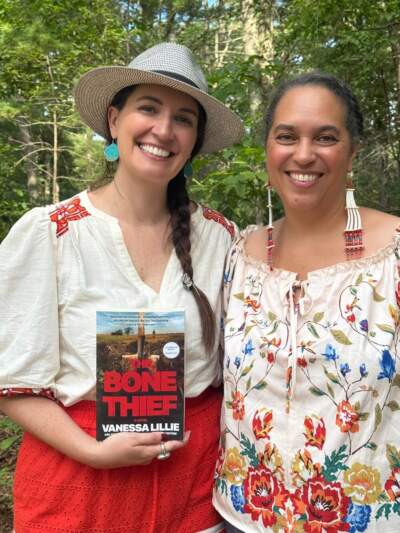
    The author with Lorén Spears, executive director of the Tomaquag Museum, at the 350th August meeting and pow wow, in Charlestown, RI, 2025. (Courtesy Vanessa Lillie)


    As I grew up, I sought to understand my family’s heritage and found it to be a reflection of the resiliency of the Cherokee Nation.  And as a writer, I realized how I could use story to share history and explore questions of colonization, both past and present. I’ve written seven novels, but it was only in the most recent that I learned how little I knew about the land and tribes in the smallest state I now call home.

    Toward the end of King Phillip’s War (or, if you’d like to decolonialize the term, The War for New England), in December, 1675, English colonists attacked the winter homes of the Narragansett tribe. In what’s now known as the Great Swamp Massacre, at least 650 men, women and children were killed, and at least 300 were taken captive. It’s an echo of what President Jackson would later do to my own tribe: genocide perpetrated at the hands of men in power.

    It wasn’t until recently, 2021, that the land was officially returned to the Narragansett tribe, having belonged to the Rhode Island Historical Society since 1906.  The grounds are open to the public, with small rocks, shells and feathers placed around the obelisk that stands sentry at the memorial where tribal members gather every year to remember.

    While as Cherokee, we were forced out of our homelands, the Narragansett remained. One of my first summers in Rhode Island, I attended the Narragansett August Meeting and Pow Wow in Charlestown.  During the Grand Entry, I watched as many citizens of the tribe, dressed in regalia passed down generation to generation, entered to the sounds of drums and voices, often with the refrain, “we are still here.”  The Narragansett have been gathering there for over 350 years; it’s the oldest recorded pow wow in North America.

    And yet, I’ve also spoken to young citizens of the tribe who were told in school that the Narragansett no longer exist, as if they’re extinct like the dinosaurs.  It’s a sentiment supported by hundreds of years of treating Indigenous remains and cultural items as trophies or objects to exploit.  When it comes to preserving and amplifying Indigenous culture, it’s not enough to understand history.  We must also ask: who’s doing the telling?

    These are questions I often ask myself when I’m researching a plot or just enjoying a museum with my family.  Who’s creating the narrative on those small plaques near the objects in the museums we shuffle through? Or fund?  I know there are thousands of Indigenous remains on shelves across the country, from museums to academic institutions, despite federal laws meant to mandate their return.  They’re questions I explored in my research for my new book, “The Bone Thief,” using real examples from history: from Yale’s Skull & Bones club allegedly stealing, and hiding, the skull of Geronimo to the history of grave robbers in colonial America.

    Even the language I used changed.  Thanks to guidance from the Tomaquag Museum, an Indigenous led museum telling first person histories, and leaders like Executive Director Lorén M. Spears, I’ve decolonized my language from “artifacts” to “belongings.”  Because these objects belong somewhere — to a place, a people — and they should be returned and shared by the people from which they originated.

    While on book tour this month, I’ve been speaking at stores and events across New England, and I like to ask people to raise their hands if they’ve heard of the Great Swamp Massacre. Some crowds have more hands up than others, but it’s rarely more than half, and often a lot fewer.

    Native American Heritage Month puts a well-deserved spotlight on books by Native American authors (including some of my own “must-reads”), and that’s a good thing. But it’s hardly something that can be highlighted, even honored, one month out of the year.

    As for me, I hope by taking the real history of a place, and wrapping it in the page-turning plot of a thriller, I’m able to give people that same experience I had with “Watchmen”: not only shock, or even embarrassment, but a charge to go out and find the hidden truths of our homelands. Our heritage is an ongoing story. Our people are still telling it.

    On Wednesday, Nov. 12, Vanessa Lillie spoke & signed copies of "The Bone Thief" at Authors on Stage at Wellesley College . and Brookline Booksmith 

    SOURCE:  


    Revisit the country’s beginnings through a more inclusive Indigenous lens


    (Photo/Cherokee Nation)

    (Photo/Cherokee Nation)

    As the nation observes Native American History Month, Cherokee Film is inviting audiences to revisit the country’s beginnings through a more inclusive lens — one that recognizes the deep role of Indigenous nations in shaping early America.

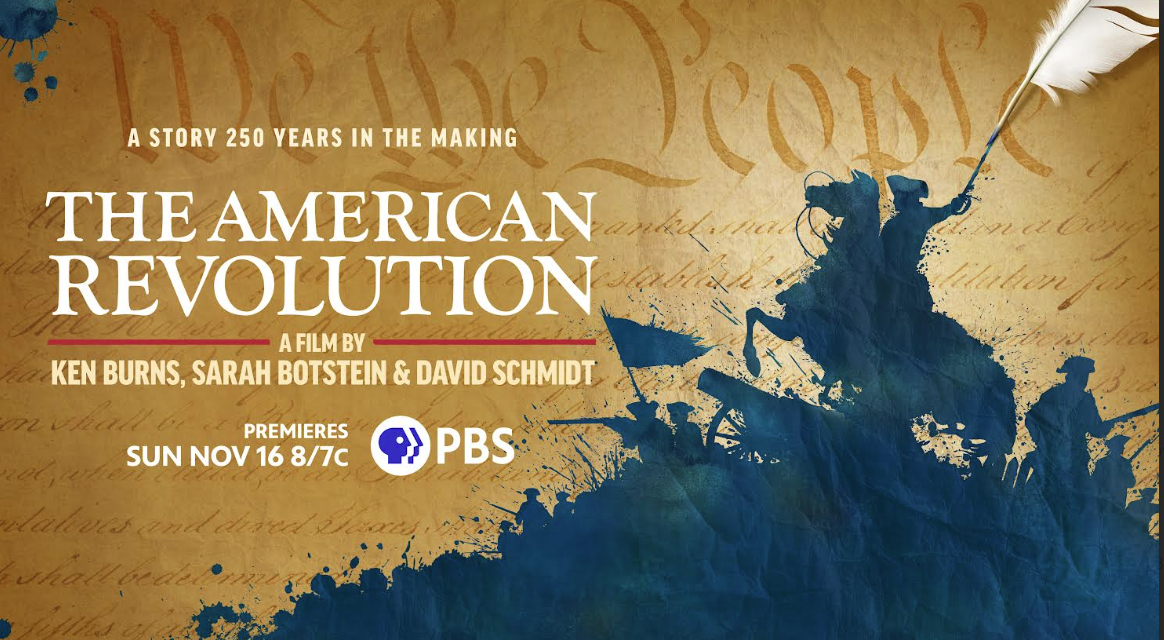
    That story unfolds in The American Revolution, a sweeping new documentary series from Ken Burns, Sarah Botstein and David Schmidt, premiering Sunday, Nov. 16, on PBS stations nationwide.  The six-part, 12-hour series airs over six consecutive nights, offering a panoramic look at the nation’s eight-year War for Independence and the birth of the United States.

    The project has been nearly a decade in the making, timed to coincide with the 250th anniversary of the war’s first battles in 1775 — a year before the signing of the Declaration of Independence.

    “American Indian history is central to the story of the American Revolution,” Burns said. “We have been working with Native people and nations, including the Cherokee Film Office, since the start of editing to make sure we get that story right.”

    Throughout the series, the filmmakers delve into the far-reaching consequences of the Revolution — not only for the 13 colonies but for the Indigenous nations whose homelands became the contested ground of a new republic.

    “The American Revolution was a war for the future of North America,” Schmidt said. “The choices Native people and nations made during the war reflect careful consideration of how they could best protect their own sovereignty and independence.”

    Cherokee Film Senior Director Jen Loren served as an advisor for the production, helping ensure that Indigenous voices and perspectives were woven authentically into the storytelling.

    “This film sheds light on pivotal moments in our nation’s history and thoughtfully includes the stories of many Indigenous people and nations,” Loren said. “At Cherokee Film, we commend this production’s commitment to inclusive and accurate storytelling and look forward to audiences experiencing it.”

    Cherokee warrior used in "The American Revolution." (Photo/Cherokee Film Office)
    Cherokee warrior used in "The American Revolution." (Photo/Cherokee Film Office)


    Among the Indigenous nations featured are the Anishinaabe, Chickasaw, Cherokee, Creek Confederacy (Muscogee), Delaware (Lenape), Mohawk, Seneca and Shawnee. Their leaders and warriors — including Tsiyu Gansini (Dragging Canoe), Thayendanegea (Joseph Brant), Solomon Uhhaunauwaunmut, Canassatego and Tecumseh — stand at the heart of the series’ exploration of diplomacy, conflict and resilience.

    For the filmmakers, capturing those stories was essential to understanding the Revolution as a truly continental event.

    “The story of the American Revolution belongs to everyone,” Botstein said. “And we owe it to the people who lived through it to tell that story faithfully.”

    The full series will be available to stream beginning Sunday, Nov. 16, at PBS.org and on the PBS App, available on iOS, Android, Roku streaming devices, Apple TV, Android TV, Amazon Fire TV, Samsung Smart TV, Chromecast and VIZIO. Additional production details are available here.

    Wednesday, November 12, 2025

    Washington state is jailing Native children for non-violent crimes


    Early court involvement is closely linked to broader social and health inequities, research shows.  Children drawn into the justice system often face poverty, unstable housing and limited access to mental health support, creating a cycle of disadvantage that persists into adulthood.

    Investigation: https://www.seattlepi.com/news/article/native-american-children-more-likely-to-be-21154567.php

    Confusion at the border for Canadian snowbirds (60s Scoop Adoptees) and I-94 form


    Not a good time to travel to the USA?  Canadian snowbirds (people who travel and spend winter in warmer climates like Florida) could face additional measures when entering the United States. Lola Kalder tells us about the confusion Canadians are facing with the I-94 form.  Some Canadians are now selling their US homes.

    I Am My Name

                        I have come from somewhere else, where
    I am Cree and I have a big sister
    and another name.


     LISTEN: https://www.cbc.ca/listen/live-radio/1-167-the-bridge/clip/16180636-one-emotional-episodes-yet-the-bridge

    The Bridge podcast with Nantali Indongo

    One of our most emotional episodes yet on The Bridge
    54 mins \ Nov. 8, 2025

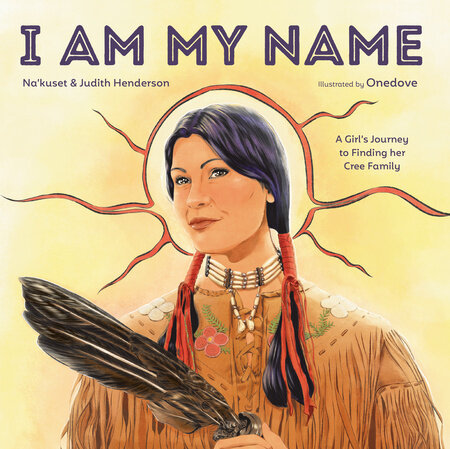
    Montreal advocate for Indigenous women and children, Na’kuset, and children’s book author Judith Henderson, have co-written I Am My Name — the powerful true story of Na’kuset’s life as a Sixties Scoop survivor.

    The autobiographical picture book is illustrated by Vancouver-based artist, Shenoa Gao aka Onedove. It traces Na’kuset’s journey — taken from her Cree family as a young girl, along with thousands of other Indigenous children during the 1960s, growing up far from her roots, and finding her way back to her name, her culture, and her strength. Love, however, is at the center of the story and it spills over into this one hour, tearful conversation.

    BUY/PUBLISHER: https://www.penguinrandomhouse.com/books/721401/i-am-my-name-by-nakuset-and-judith-henderson-illustrated-by-onedove/ 


    Nakuset shared her story in the anthology STOLEN GENERATIONS. 


    Sixties Scoop survivor shares her healing story through new Manitoba-made web series


    PREMIERS TODAY

    A Manitoba-made web series has been created to shine a light on the Sixties Scoop, where thousands of Indigenous children were taken from their families and placed into non-Indigenous homes.

    Now the stories that are about to be told by a Winnipeg survivor turned director, looks to give people a way to reconnect with their culture and identity. 

    Colleen Rajotte, a Sixties Scoop survivor and longtime Manitoba journalist, has spent much of her life telling stories about loss and resilience. Now she’s sharing in a new way, through Amanda’s Choice, a six-part web series inspired by her experiences after finding her birth family.

    “I had this idea of why not make a web series about the Sixties Scoop, incorporating things I’ve gone through, friends have gone through, so I sketched it out on a napkin and here we are,” explained Rajotte.

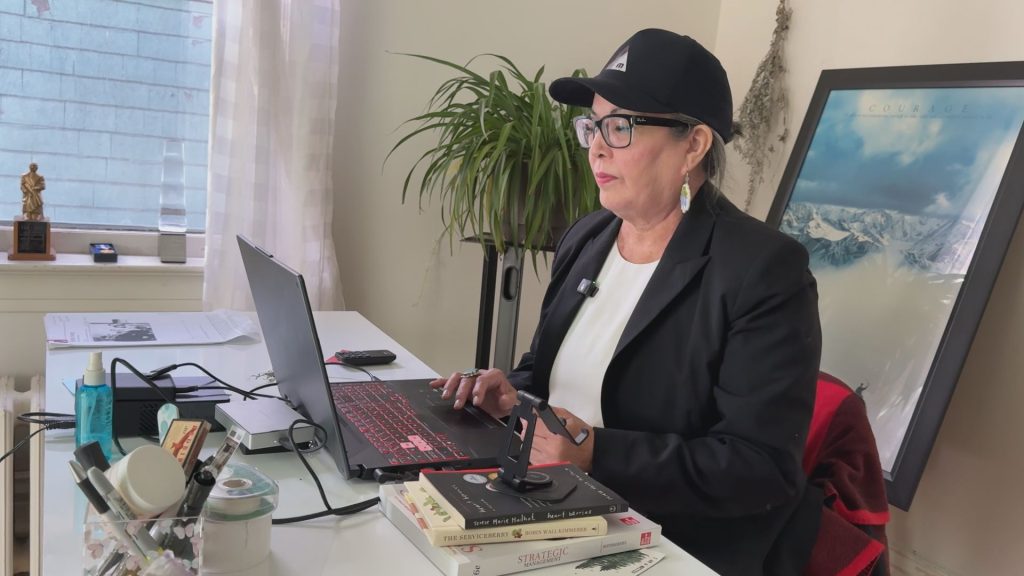
    Colleen Rajotte, a Sixties Scoop survivor and longtime Manitoba journalist. (Photo Credit: Mitchell Ringos, CityNews)

    The series follows three urban Indigenous women navigating identity, family, and everyday life after reconnection, blending humour and heartbreak through stories drawn from real moments.

    “It was difficult at times because it brought up memories and past experiences, but knowing I could share these stories in a different was very healing.”

    One episode, titled “The Interview,” was sparked by Rajotte’s own experience in her twenties, fielding painful questions during a documentary taping and feeling those emotions surge back.

    “Some of the questions were very deep, involved, and emotional, and I ended up having an anxiety reaction,” said Rajotte.

    Rajotte says Amanda’s Choice is about more than entertainment; it’s a reminder that the legacy of the Sixties Scoop continues to shape lives today.

    “This is just a different way to entertain people, but remind them that the Sixties Scoop is something very real and needs attention,” she explained.

    “The Sixties Scoop in general, has not received the same amount of public attention as residential school survivors had got, and we need to remind people that 30,000 of our children were removed.”

    Amanda’s Choice premieres November 12, with one new episode daily on YouTube and Facebook


    Happy Visitors!

    WRITTEN BY HUMANS!

    WRITTEN BY HUMANS!

    Blog Archive

    Featured Post

    Your History Class Was a F*cking Lie | #NOMOAR

      Your History Class Was a F*cking Lie by Sean Sherman (Or: How the American Educational System Has Always Been a Racist Propaganda Program...


    Native Circles

    Native Circles
    click logo for podcasts!

    Most READ Posts

    Bookshop

    You are not alone

    You are not alone

    To Veronica Brown

    Veronica, we adult adoptees are thinking of you today and every day. We will be here when you need us. Your journey in the adopted life has begun, nothing can revoke that now, the damage cannot be undone. Be courageous, you have what no adoptee before you has had; a strong group of adult adoptees who know your story, who are behind you and will always be so.

    Diane Tells His Name


    click photo

    Lost Birds on Al Jazeera Fault Lines

    Lost Birds on Al Jazeera Fault Lines
    click to read and listen about Trace, Diane, Julie and Suzie

    NO MORE STOLEN SISTERS

    NO MORE STOLEN SISTERS
    click image

    ADOPTION TRUTH

    As the single largest unregulated industry in the United States, adoption is viewed as a benevolent action that results in the formation of “forever families.”
    The truth is that it is a very lucrative business with a known sales pitch. With profits last estimated at over $1.44 billion dollars a year, mothers who consider adoption for their babies need to be very aware that all of this promotion clouds the facts and only though independent research can they get an accurate account of what life might be like for both them and their child after signing the adoption paperwork.

    Original Birth Certificate Map in the USA

    Google Followers