BOOZHOO! We've amassed tons of information and important history on this blog since 2010. If you have a keyword, use the search box below. Also check out the reference section above. If you have a question or need help searching, use the contact form at the bottom of the blog.
We want you to use BOOKSHOP to buy books! (the editor will earn a small amount of money or commission. (we thank you) (that is our disclaimer statement)
This is a blog. It is not a peer-reviewed journal, not a sponsored publication... WE DO NOT HAVE ADS or earn MONEY from this website. The ideas, news and thoughts posted are sourced… or written by the editor or contributors.
EMAIL ME: tracelara@pm.me (outlook email is gone)
THANK YOU CHI MEGWETCH!
Santa Ynez Chumash Museum and Cultural Center in the Santa Ynez Valley. (Courtesy photo)
The Santa Ynez Band of Chumash Indians has
announced the successful repatriation of cultural items and ancestors
from the Peabody Museum of Archaeology and Ethnology at Harvard
University and the Yale Peabody Museum.
Tribal
members await the arrival of artifacts from Peabody Museum of
Archaeology and Ethnology at Harvard University, and the Yale Peabody
Museum. (Courtesy photo)KEEP READING:https://www.noozhawk.com/santa-ynez-chumash-indians-roll-out-welcome-mat-for-repatriated-cultural-items/SANTA BARBARA, CALIFORNIA—The Santa Barbara Independent
reports that ancestral remains and artifacts have been returned to the
Santa Ynez Band of Chumash Mission Indians by the Yale Peabody Museum
and Harvard University's Peabody Museum of Archaeology and Ethnology. The repatriation took four years to organize under the Native American
Graves Protection and Repatriation Act (NAGPRA), which became law in
1990. “Our ancestors and their belongings were stolen from their resting
place, a place where their families and communities prayed and grieved,
leaving them to rest,” said Kathleen Marshall of the Santa Ynez Chumash
Museum and Cultural Center. The earliest collection of these objects
occurred in 1877, she added. The remains will be reburied, while the
objects will be archived for use in teaching. Ceremonial items will be
used in ceremonies once again. “We are tremendously grateful for [the
tribe’s] generosity and trust as we worked through the process to return
these important items home,” commented Jane Pickering of the Peabody
Museum of Archaeology and Ethnology. To read more about the Chumash, go
to "Off the Grid: Chumash Painted Cave State Historic Park, California."
The Canadian flag on the Peace Tower on
Parliament Hill in Ottawa on Wednesday, June 2, 2021. THE CANADIAN
PRESS/Sean Kilpatrick
By The Canadian Press| Jul 10, 2026
An Innu community in the Côte-Nord region of Quebec has signed a
deal with the federal and provincial governments to officially
recognize its jurisdiction over child and family services.
The agreement signed today allows for the implementation of a new law
establishing a governance framework designed by and for the Uashat mak
Mani utenam community.
The law will go into effect in September, replacing the provincial Youth Protection Act in the community’s jurisdiction.
The federal government said in a news release that the law will
ensure that decisions about children’s welfare are made by the community
in accordance with their customs, language and values.
Today’s signing marks the first Indigenous community in Quebec to
enter into a three-party agreement under the federal framework of the
Act respecting First Nations, Inuit and Métis children, youth and
families.
Ottawa has also committed to investing funds through 2030 to support
the Innu community’s assumption of responsibility for child and family
services.
This report by The Canadian Press was first published July 10, 2026.
I call this an opportunity. We see what his-story did and didn't do... This outpouring of Native Voices is remarkable - and I think long overdue. What grade do you give America?
A lifelong resident of Minneapolis, Minnesota, Susan "Cricket" Fedorko (Grand Portage Band of Chippewa - Oijbwe) has contributed her writing to four anthologies on the subject of being adopted and has done numerous media interviews. Her Chippewa Oijbwe birthmother, a famous supermodel, died in 1997, a short distance from Susan's home. Suzie always knew she was adopted at the early age of 11 months. She discovers at the age of 40 who her biological family is. Suzie discovers her birth mother is the first Native American supermodel "Cathee Dahmen". Suzie is currently 64 and has been reunited with her biological birth family 24 years.
p.s. It amazes me that Suzie and I were both handled by Catholic Charities in Minnesota, and raised Catholic. We each called the agency when we became adults and they refused to help us. We had to fight to get information, which was very hard and traumatic for us but we found our families....I didn't know Suzie until years later but we have so much in common.- Trace (born in St. Paul, MN)
Suzie contributed her story to the book series Lost Children of the Indian Adoption Projects. Read Two Worlds, Book 1. She has an amazing story!
American 250: A Republic Built on Native Land Live Stream
What we’ll explore:
As the U.S. approaches its 250th anniversary, is this moment a celebration, a reminder of historical injustice, or both?
Has the United States lived up to the Declaration of Independence’s promise that “all men are created equal” for Native Americans?
How do you reconcile being both Native and American, given that Indigenous ancestors were referred to as “merciless Indian savages” in the Declaration of Independence?
What would make America250 more meaningful and inclusive for Native peoples and Tribal Nations?
Looking ahead to the next 250 years, what is your greatest hope for Native Nations and the United States?
RAPID CITY, S.D. (KOTA) - Black and
Indigenous community organizers gathered June 29 at Camp Mni Luzahan to
announce the launch of the Day One Movement, a coalition focused on land back
and reparations with a stated goal of building a nation that works for all over
the next 250 years.
“In order for us to build a path
forward, we have to acknowledge the past,” said Nick Tilsen, a community organizer
in the He Sapa.
Organizers described the movement as
a response to what they called a false narrative dividing poor, working class,
Indigenous, Black and immigrant communities. They said they will not be
celebrating July 3 or July 4, instead focusing on the changes they say need to
happen starting July 5 and over the
next 250 years.
“We know that there has been a
division, a perpetuated false narrative between poor folks, between working
class folks, between Indigenous folks, Black folks, and immigrants,” said
Brenda Pérez, an immigrant labor rights organizer. “And we know that our
struggles are one, but we know that those in power continuously work towards
pushing us apart.”
Organizers also framed the movement
as an act of resistance and vision-building.
“So we’re here to build something
new. So, as we resist the rise of authoritarianism and fascism in the United
States and around the world, we’re also here out of love, to radically envision
a nation that would work for everybody,” Tilsen said.
Alongside the movement’s launch,
organizers unveiled a bill of essential rights, citing what they described as
serious flaws and intentional gaps in the existing U.S. Bill of Rights.
“For generations we have lived by
the U.S. Bill of Rights, a document that provides some foundation of essential
rights and freedoms for all people, but contains serious flaws and intentional
gaps,” said Jacy Bowles, a community organizer and climate justice activist.
The bill includes the following
rights:
Right to land back
Right to reparations
Right to self-determination and sovereignty
Right to consent
Right to basic needs
Right to religion and culture
Right to dignity and bodily autonomy
Right to safety
Right to move freely and belong
Right to regenerative food systems and a protected
planet
Although the movement is launching
in South Dakota, organizers nationwide will showcase artwork confronting
America’s legacy of Indigenous dispossession and Black enslavement over the
coming days.
“So we are here to say that we are
going to organize, we are going to heal, we’re gonna coordinate, and we are
going to build a better future together,” Pérez said.
Fifteen days after the adoption of the Declaration of Independence, the
new nation signed its first international treaty with the Wolastoqey and
Mi’kmaq Nations of present-day Maine. It’s a history that historian and
Houlton Band of Maliseet Indians ambassador Osihkiyol Crofton-Macdonald
wishes more Americans knew. Brown University assistant professor and
Narragansett Nation citizen Dr. Mack Scott III is working to get Black
and Indigenous histories better integrated into the K-12 curriculum in
northeastern schools. This includes histories like how Narragansett
citizens fought in the 1st Rhode Island Regiment, a unit long celebrated
as an all-Black unit. We’ll hear from Native historians about
reclaiming these narratives along with their tribes’ stories from 1776.
As America celebrates her 250th birthday this weekend, Stockbridge-Munsee Mohican Nation President Shannon Holsey is hoping people educate themselves on the role of her tribe in the founding of the U.S.
“America 250 presents an opportunity to move beyond incomplete narratives and toward a fuller understanding of this country’s history,” she writes. “It is a chance to recognize that Tribal Nations stood at its beginning and remain essential to its future.”
The Mohicans were one of the few tribes to side with the Americans during the Revolutionary War and served alongside George Washington’s forces as soldiers, scouts and intelligence gatherers.
“We carried knowledge that could not be mapped,” Holsey wrote. “We moved between worlds, providing intelligence, protection, and leadership at a time when the outcome of the war remained uncertain.”
Many Mohicans also paid the ultimate sacrifice, such as in August, 1778, at Kingsbridge in present-day New York when about 40 warriors were killed in one of the most devastating losses suffered by Native forces supporting the U.S. during the war.
After the war, General Washington visited the Mohicans in their hometown of Stockbridge, Massachusetts, and celebrated with an ox feast.
A generation or two later the Mohicans would be forced from their homes in favor of new European immigrants.
The tribe eventually settled in Wisconsin, where it still has a reservation today.
“We were not observers to the founding of the United States. We were participants in it,” Holsey wrote. “But when the war ended, the promises we believed in did not materialize.”
The tribe endured and governs itself as a sovereign nation maintaining and revitalizing its traditions and culture.
“The ideals of liberty that defined the Revolution were not applied equally. The gap between principle and practice became a defining feature of federal Indian policy—and remains so today,” Holsey writes. “This is a truth that must be told alongside any commemoration of America’s founding: We helped secure freedom for a new nation while fighting to preserve our own existence.”
She wrote the U.S. must remember the contributions of Mohicans in creating this country, and honor its treaty obligations.
“A commemoration without accountability is incomplete,” Holsey writes. “Recognition without action is insufficient.”
Tribal and Japanese American descendants reclaim their history on their terms each spring during an annual pilgrimage
to the Amache incarceration site on the arid shortgrass prairie 225
miles southeast of Denver. They meet at the Amache National Historic
Site and the Sand Creek Massacre National Historic Site. Descendants say
the partnership helped to liberate them from the weight of the federal
government’s denial of fundamental rights.
“Finding
more cultural connections between our groups and our heritage has been
really healing,” said Aya Sugiura, during the blustery May cedaring
ceremony at Sand Creek. Her grandmother was among 10,000 Japanese Americans imprisoned at Amache between 1942 and 1945.
Hosted and reported by Rebecca Nagle and featuring leading Native historians, First America unveils how the founders’ treatment of Indigenous nations—and their resistance—shaped US democracy. The show does not simply add another blemish to the image of the founding fathers, it reveals the real story of why the colonists rebelled, what kind of government they created, and, crucially, how our current political moment was 250 years in the making.
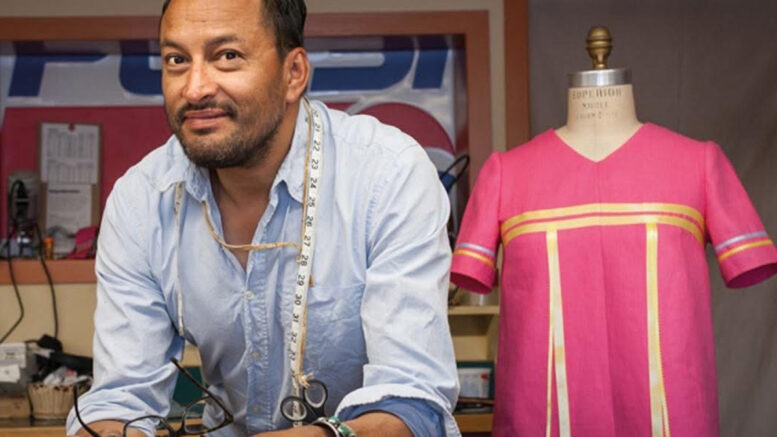
(60s Scoop Adoptee) D’Arcy J. Moses on Survival, Fashion, and Rebuilding in a Changing Industry
Fashion designer D'Arcy Moses reflects on his journey and his vision for the future.
June 22, 2026
By Chevi Rabbit, Local Journalism Initiative Reporter
(ANNews) – For D’Arcy J. Moses, fashion has never simply been about clothing.
It became a path back to identity, a form of ceremony, and ultimately
a way to rebuild a life shaped by separation, loss, and resilience.
Born Dene and impacted by the Sixties Scoop, Moses was taken from his
family as an infant and raised by a non-Indigenous family on a farm
outside Camrose, Alberta.
“I’m a ’60s Scooper,” he says. “I was adopted out as an infant. The
church took me away from my mother, and I was raised by non-Native
people on a farm in Alberta.”
Growing up disconnected from his culture, he found himself drawn to
another world – one found in the glossy pages of fashion magazines. “My
mother used to have Harper’s Bazaar and Vogue
magazines, and I was enamoured by them,” he recalls. “High fashion –
haute couture – that’s what first really sparked my interest.”
Those magazines offered a glimpse of possibility. By his
mid-teens, Moses understood that creativity would define his future. “I
knew from a young age that I was creative, but I didn’t realize until my
mid-teens that I wanted to get into clothing design.”
Current fashion designs by D’Arcy Moses.
Years later, after moving to Vancouver and Toronto, that childhood
fascination began to take shape professionally. Along the way,
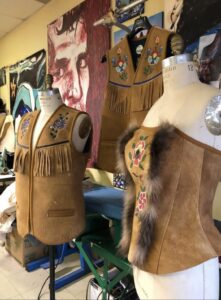
Indigenous Elders recognized his talent and introduced him to the art of
regalia making. “In my early twenties I was in Vancouver. I had some
Elders take me under their wings and introduce me to regalia making.”
While refining his craft, Moses worked relentlessly to support
himself. “I worked two or three jobs at a time – waiting tables, working
in a sawmill, a lumber mill of all things. And in the evenings and
weekends, I would just create.”
That persistence eventually paid off. “I had a few lucky breaks,” he
says. “One of them was the Toronto Festival of Fashion, and the next day
one of my garments ended up on the cover of The Globe and Mail, which was really big news at the time.”
Darlene and Mervin Petit share a passion for teaching traditional ways of life to others. (Campbell Stevenson/SRC)
CBC's road trip series Land of Living Stories explores
inspiring stories of community spirit from across Saskatchewan. In our
latest visit, CBC-Radio Canada hit the road to Buffalo Narrows. This is
one story in a multi-part series from that community.
WARNING: This story contains details of abuse.
When
Darlene Petit first moved back to Buffalo Narrows, Sask., she wouldn't
eat or even touch a wild rabbit, though her husband Mervin often went
out to set snares. When he would bring her onto his boat, she'd take a
book and read while he fished.
But their relationship over the
years has reconnected her to a life and culture she almost lost, when
she was taken from her family in Buffalo Narrows as part of the Sixties Scoop.
"Mervin
was a big, big influence in my life, teaching me my cultural
background," the 62-year-old said, explaining how her husband showed her
the joys of catching their own food, from rabbit to wild chickens to
moose. Thanks to him, she reconnected with the traditions of her Métis
and First Nations ancestors.
"I started fishing and learning how to catch fish, and now I can outfish anybody," she said, laughing.
Mervin
Petit grew up fishing and hunting; within half an hour, he pulls up 30
fish in a net. It's a passion he's passed on to his wife, Darlene. (Campbell Stevenson/SRC)
Now
the pair can often be seen sitting quietly in their boat, watching the
bears and deer in the distance, or setting a net and hauling up fish
they share with others in the village.
It's a fight to keep these
cultural traditions alive, as people are losing touch with ways of life
that go back hundreds of years, said 61-year-old Mervin. That's why he's
so keen to help anyone who's interested learn how to hunt, fish and
prepare food.
"I want everybody to feel that, all the young
people, all the older people that don't know this stuff, I want them all
to understand this stuff and keep doing it," he says.
The pair
say they don't need to rely on groceries, but instead eat the wild game
and fish they catch themselves. It's a self-reliance they want to pass
on to future generations.
"You're gonna need this more than ever
in the coming years because of all the stuff that's going on now in the
world; it's so expensive living," Mervin says.
WATCH | This couple are dedicated to sharing traditions and love for the land:
Sharing traditional knowledge strengthens Buffalo Narrows power couple's bond
Darlene
and Mervin Petit have been together for 43 years, and have grown closer
through sharing their love of living off the land. Now they hope to
pass that knowledge on to others in the community.
Scooped from childhood
While
Mervin's memories are deeply rooted in fishing and trapping, Darlene
was taken from her family when she was three. She was relocated to
Lebret, Sask, 780 kilometres south of Buffalo Narrows, and bounced from
foster home to foster home.
It was a traumatizing time.
"I
was bathed in hot Javex water and things like that," she said. "And then
when you're in foster homes, you're abused by other children that are
in the home."
Darlene
Petit, pictured front row, second from left, is seen here with her
siblings. They were separated as children by the Sixties Scoop. (Submitted by Darlene Petit)
Fortunately,
her mother successfully fought to regain custody of her children, and
Darlene was finally reunited with her family when she was 12.
New research from the University of Kansas has found that the landback
movement, in which land is returned to its original occupants, has grown
rapidly across the country as well.
Charlotte Ross, left, and her son Steven Ross. (Submitted by Charlotte Ross)
Steven Ross and his mother Charlotte Ross have followed different educational paths, but both are celebrating graduations.
"My mom was a major inspiration in my life to go to university," Steven said.
"She
started with a rough childhood and she climbed all the way to the point
where she is now and for me that's a great inspiration."
He
recently graduated from the University of Saskatchewan's Indigenous
Teachers Education Program (ITEP) in Saskatoon with an education degree
in kinesiology and is already doing interviews for teaching positions in
the province.
Both Steven and his mother are members of the Montreal Lake Cree Nation, about 220 kilometres north of Saskatoon.
His
mother Charlotte graduated from the University of Victoria with a PhD
in Indigenous language revitalization through the Department of
Indigenous education where she focused her studies on adult Cree silent
speakers.
Silent speakers are those who understand a language but
they can't speak it themselves — they usually respond with one-worded
answers or give an English response, according to Charlotte.
"What were the impacts, why was this the case?" she said.
"It came down to trauma and having safety in language learning."
She
has helped develop a language app with Montreal Lake Cree Nation and is
assisting Cree speaker Senapan Thunder and her company Wicihsok, that
is also working on Cree language revitalization.
Charlotte
was the first person in her family to go to university and she
graduated in 1988 from the University of Saskatchewan with a bachelor of
arts in Native Studies.
"I never thought I would go to university because I didn't know what it was," she said.
"There were very few role models as with most [First Nations] communities."
She
later learned how to read and write in Cree under the late teacher
Freda Ahenakew, who assisted with Cree language revitalization and
retention in Saskatchewan.
'No excuses' growing up
Charlotte
credits her parents for instilling education as an integral part of her
life while growing up in the small northern Saskatchewan town of
Molanosa, on the northeast corner of Montreal Lake.
She had no reason to miss school as it was right across the highway from her home.
"We lived literally a stone's throw away," she said.
"There
were no excuses that it was too far, if it was snowing or raining, even
in -30 degree weather, all you had to do was open your door and roll
out."
Charlotte calls her father a "self-taught independent
entrepreneur" who knew how to organize and mobilize. Over the years, he
helped to build the roads and highways as a construction worker and also
hunted, trapped, was a competitive dog sledder and commercial
fisherman. Her mother, she says, was the rock of their home who lovingly
raised the children, cooked, cleaned and sewed up her children's
clothes when they were damaged.
"My
parents were both not able to go to school but highly valued education
as they knew it would help us in the future to open doors of opportunity
that were never offered to them," she said.
When Charlotte was
14, she and her younger brother were part of the Sixties Scoop, taken
from their home and put into the province's foster care system for four
years.
She says it was during this time she found her voice to speak up for her family.
"I
was able to advocate for myself and my younger brother to not be
separated and to also remain in La Ronge where some of my siblings were
living," said Charlotte.
Sports and study
While
Charlotte's upbringing was disrupted by the foster care system, her son
Steven's upbringing flourished. He played hockey, soccer and junior
football at Rosetown Central High School in Rosetown, about 120
kilometres southwest of Saskatoon.
That continued into university,
where he helped lead a number of senior male sports groups in
basketball and track and field, and now into his teaching career. He
shifted his studies to kinesiology with a strong focus in Indigenous
land-based learning.
"I always talked about being a teacher in Grade 3, 4 or 5," he said.
"I
never really took it seriously but it did eventually come to fruition. I
wanted to be in education because I wanted to make a better future for
our world."
Charlotte's message to other Indigenous families who
want to go to university is just go for it, but make sure to do the work
and ask for help when you need it.
"You have to reach out for help. Don't be shy, don't be ashamed to ask for help," said Charlotte.
EAST
LANSING, Mich. (News 10) - The clock is ticking for universities and
museums to return thousands of Native American remains and artifacts
from their collections.
NAGPRA was updated in 2024 and now requires institutions to finish returning Native American artifacts by 2029.
“There
were many years when there was a provision in the law about being
culturally unidentifiable. And so, this was a substantial barrier for
tribes to achieve repatriation,” said Matthew Bussler. “The January 2024
new NAGPRA rule that came out removed that provision, and so that has
made this a lot more achievable for tribes to have that work
accomplished.”
While Michigan has made progress, thousands of ancestral remains and artifacts in the state still haven’t been returned.
In Michigan, of the more than 3,200 reported ancestral remains taken from Michigan:
2,638 Native American remains were made available for return
At least 609 Native Americans were not made available for return
The
University of Michigan Museum of Anthropology, with the 25th largest
collection of unrepatriated Native American remains in the U.S., says it has made 54% of the more than 1,600 remains taken from the state available for return:
904 remains available for return
773 remains not made available for return
The University of Michigan has made 2,478 associated funerary objects available for return out of more than 11,200.
Michigan State University has made 100% of the 544 Native American remains and 84,900 funerary objects available for return to tribes.
“We
have a really good unit on campus... that our doing the best with the
resources they have to make sure that they get those ceremonial items,
those cultural items, and those ancestral remains back to our tribes,”
said Dr. Kevin Leonard,
the Interim Director of the Native American Institute at Michigan State
University. “I would like to say we are ahead of the curve, but there’s
still work that we have to do.”
Dr.
Leonard describes seeing Native American ancestral artifacts in museums
like going to a cemetery, digging up a grave, and taking whatever you
want from inside.
“They’ve basically
grave robbed,” Leonard said. “You’ve disturbed their resting sites and
taken things that aren’t yours. Those are our ceremonial and our funeral
objects, and they need to be in our communities, and those remains of
our ancestors need to be returned so they can be laid to rest and aren’t
in a box or a display case in a museum.”
Dr.
Leonard encourages people to speak with the native community more
often. He said, “you don’t have to dig our grave sites” to know the
history.
If institutions fail to comply or meet the NAGPRA 2029 deadline, they could face financial penalties.
Haaland’sFederal Indian Boarding School Initiative also included in-depth reports
on the schools’ multigenerational impacts. Nearly 1,000 Native children
were buried at 65 different school sites, the federal government
reported. Atrocities occurring within school walls ranged from physical
and sexual abuse to failed attempts at cultural genocide, the report
found.
Native people have been written out of the American story."
Without us, you don’t know what happened.
We’ve all been told the American
Revolution was fought over taxation and representation. But that’s not
what the Declaration of Independence says. According to our founders, in
their own words, what they were most upset about was Native Americans.
How did we all miss that? Rebecca sits down with historian Ned Blackhawk
(Western Shoshone) to talk about how hunger for Indigenous land drove
the Revolution. Welcome to First America, the true story of how the
United States came to be, and how our current political moment was 250
years in the making.
Marie Miller always thought she was an orphan, but she reunited with a sister she never knew she had earlier this year.
Marie Miller always believed she was an orphan.
It
was only later the Calgary woman learned she was taken as a baby from
her grandmother’s arms as part of the ’60s Scoop in Winnipeg.
On Tuesday, she finally met the sister she never knew she had—Sally Tripp.
“I can’t believe she’s here,” said Miller, now 71.
“She’s not going home, (but) if she is going home, I’m going home with her.”
“It’s really happening. (It’s) unbelievable,” said Tripp, 72.
The
’60s Scoop was a time from the 1950s through the 1980s where Canadian
government policy allowed for the removal of an estimated 20,000 to
30,000 Indigenous children from their families.
They were then placed in non-Indigenous homes.
At just two years old, Miller was put in a foster home in Selkirk, Man.
The home she ended up in was less than 40 minutes from where her birth family lived.
“I went to school with some of my relatives and didn’t even know it,” said Miller.
“I was just very alone; I was pretty much on my own.’
Marie Miller
One of her earliest recollections is playing with a doll in a big house with a sunken living room at age nine.
Miller described her childhood with her adoptive parents as unpleasant.
“They were not kind to me growing up at all,” said Miller.
“They were very standoffish toward me.
“There was no kindness or warmth at all; I never felt it.”
Around 12 years old, she knew she “didn’t belong” in her adoptive home.
“It was just a feeling I needed to be with my own people,” she said.
“They would constantly tell me that I was nothing but an Indian and that I was never going to be anything.
“I knew early on I was not comfortable in this home.”
She
struggled for years to connect with her birth family via adoption
records or any information she could glean from her adoptive parents.
“When
all this came out—that it was wrong to take these children in the first
place—that’s when records started to disappear and any of the illegal
adoptions or shady adoptions were covered up,” said Miller.
After some reluctance, her husband convinced her to use Ancestry.ca for DNA testing.
After sending in her information, a cousin popped up, and they connected.
She
then took her birth certificate’s long version, where she matched an
address in Winnipeg where her birth mother lived after she was born.
“My cousin almost stopped breathing,” said Miller.
“She said, ‘That’s where I used to live. That was our grandparents’ house.’”
The home remained in the family.
Miller was given a list of potential family members who all turned out to be related.
While connecting with her cousin, she verified blood relations to Miller’s father.
It was one of her cousin’s sisters who told Miller she had a sister.
“I said, ‘Give me her number,’” said Miller.
Miller connected with Tripp on Jan. 17, and the two learned they previously crossed paths.
“We both were at the Winnipeg roller rink at the same time; we both went to Midtown Buffet at the same time,” said Miller.
Sally Tripp
For Tripp, it has also been a welcome moment meeting her younger sister.
Tripp
has extensive knowledge of the family history and says both she and
Miller were put in adoptive care in 1955 by their mother, who has since
passed.
Their father came to rescue both from adoptive care before they were put up for adoption.
Then,
as Tripp tells the story, the authorities came to their home and
decided the family could look after her, but the family was not fit to
handle Miller and took her from her grandmother’s arms.
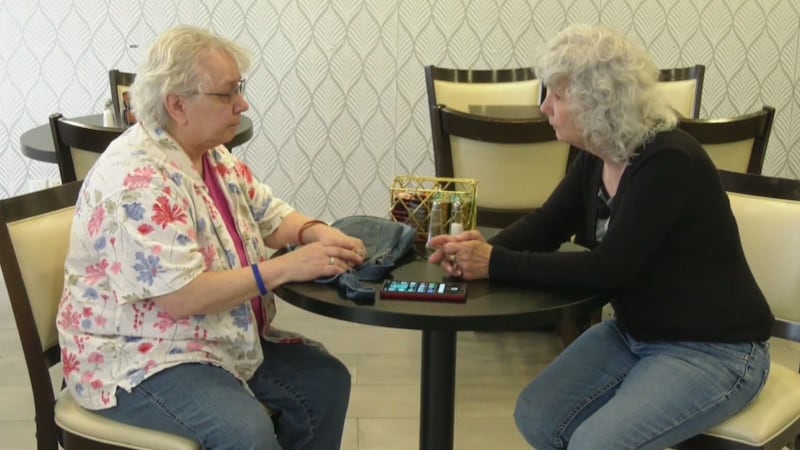
Sisters Marie Miller (right) and Sally Tripp were separated when they were babies in the ’60s Scoop.
Tripp has been looking for Miller for a long time, and Tuesday’s gathering in Strathmore, Alta., brought her closure.
“That first phone call was over 3.5 hours,” said Tripp.
“To find her after all this time. And, you know, the sad part is she didn’t know she had a family.”
The two sisters are set to head to a family reunion in Selkirk on June 28, where they’ll meet with dozens of family members.
“I can’t wait; I got the camper packed,” said Miller.
The two share other half-siblings, but they are each other’s only full siblings.
Miller does have an appointment to get her status card while attending the family reunion, for which Tripp will vouch for her.
Kim Wheeler was adopted during the Sixties Scoop and fought to find her way back to her culture My name is Kim Wheeler but some know me as...
Bookshop
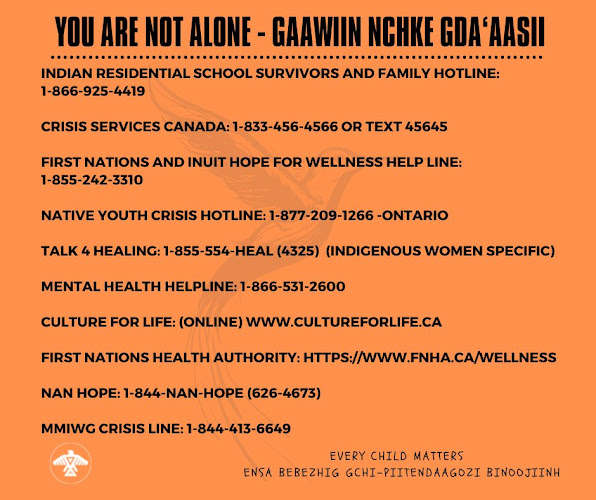
You are not alone
To Veronica Brown
Veronica, we adult adoptees are thinking of you today and every day. We will be here when you need us. Your journey in the adopted life has begun, nothing can revoke that now, the damage cannot be undone. Be courageous, you have what no adoptee before you has had; a strong group of adult adoptees who know your story, who are behind you and will always be so.
Diane Tells His Name
click photo
Lost Birds on Al Jazeera Fault Lines
click to read and listen about Trace, Diane, Julie and Suzie
NO MORE STOLEN SISTERS
click image
We conclude this series & continue the conversation by naming that adoption is genocide. This naming refers to the process of genocide that breaks kinship ties through adoption & other forms of family separation & policing 🧵#NAAM2022#AdoptionIsTraumaAND#AdopteeTwitter#FFY 1/6 pic.twitter.com/46v0mWISZ1
As the single largest unregulated industry in the United States, adoption is viewed as a benevolent action that results in the formation of “forever families.” The truth is that it is a very lucrative business with a known sales pitch. With profits last estimated at over $1.44 billion dollars a year, mothers who consider adoption for their babies need to be very aware that all of this promotion clouds the facts and only though independent research can they get an accurate account of what life might be like for both them and their child after signing the adoption paperwork.




 Day One Movement launches in South Dakota, calling for
land back and reparations
Day One Movement launches in South Dakota, calling for
land back and reparations




 Tyler Barrow







 Posts
Posts

