


AFN Chief Cindy Woodhouse reveals 5 of 47 First Nations items returned to Canada last December
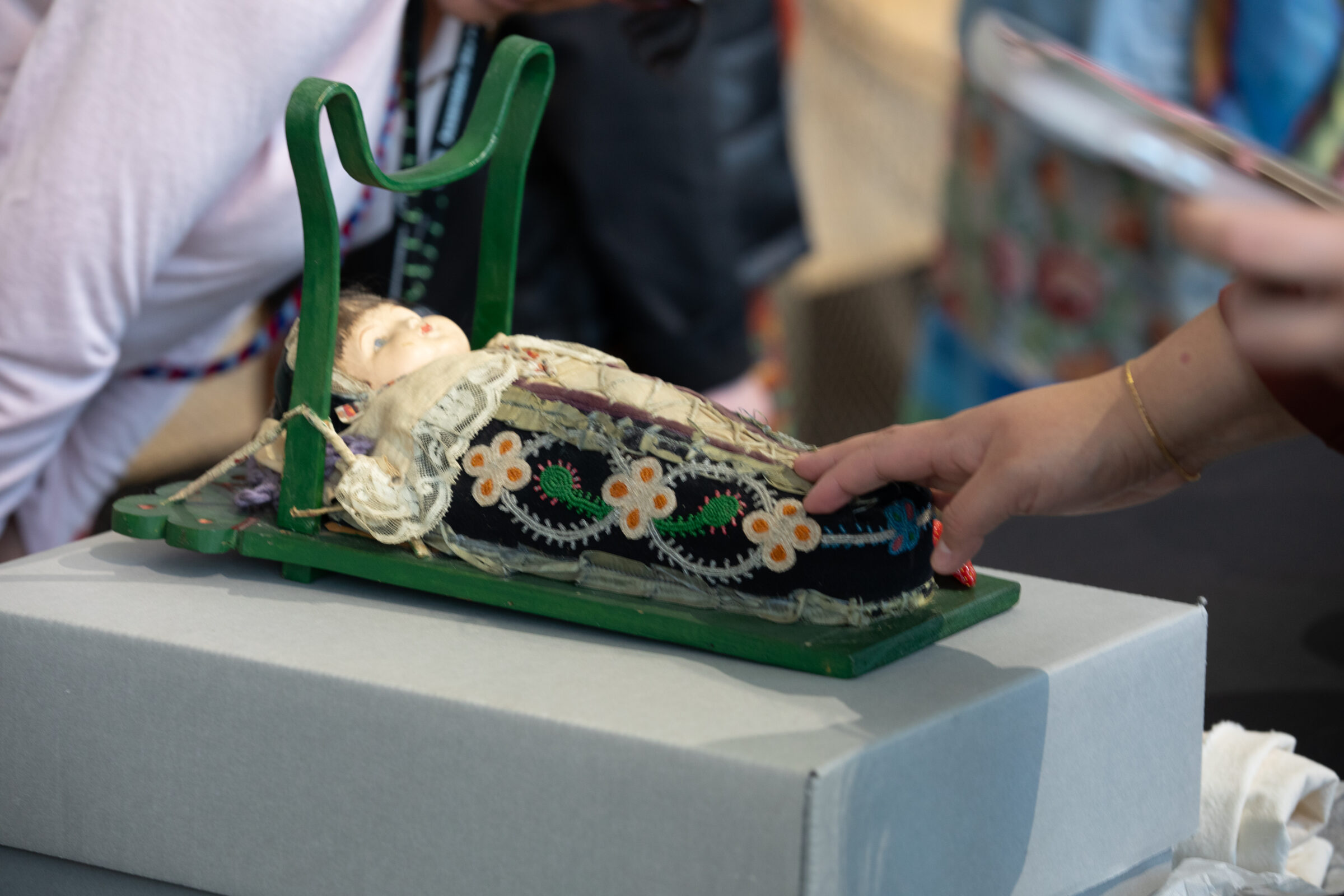
A First Nations woman touches a doll and crib, one of the five items revealed Tuesday, which were returned by the Vatican to the First Nations of Canada. (Photo by Jorge Antunes)
The return of Indigenous items from the Vatican is an “important and emotional moment for many First Nations across this country,” said Assembly of First Nations Chief Cindy Woodhouse prior to the unveiling of five items on Tuesday.
As part of the continuing process of repatriating Indigenous items that had been held by the Vatican, the Assembly of First Nations uncrated First Nations’ items whose region of origin has been determined, at the Canadian Museum of History in Gatineau, Que.
She called the items “sacred,” and not “artifacts” as some people have referred to the items that were once held by the Roman Catholic Church.
The items are a pair of embroidered leather gloves from Athabasca Chipewyan First Nation, a birchbark sap collector from Akwesasne Mohawk Nation, a baby carrier from Ontario, and a bowl and spoon from Manitoulin Island in Lake Huron.
The exact community where the bowl and spoon came from is known. But for the gloves, sap collector and baby carrier, only their general area of origin is known.
The bowl and spoon were made by the “great, great, great, great, great grand-uncle,” of Grand Chief Linda Debeassige of the Anishnabek Nation in what’s now northern Ontario.
“He signed the bottom of it. True story,” she said with a grin when a reporter asked how she knew her relative had made them.
The majority of the First Nations’ 47 items were not revealed publicly Tuesday, though several chiefs in attendance were invited for a private viewing later in the day.
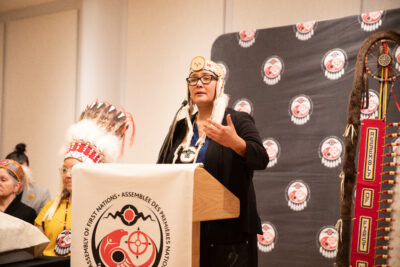
Grand Chief Linda Debeassige of the Anishnabek Nation was able to determine a bowl and spoon were made by an ancestor because he ‘signed the bottom.’ (Photo by Jorge Antunes)
Until their origins are determined, they will remain hidden, Woodhouse said.
Identification is a complicated process. Each community has its own knowledge that varies from community to community, she added.
“We have to respect First Nations as we identify where they [belong],” Woodhouse said.
When the 62 items first made their way to Montreal from Rome last December, 14 were deemed to be of Inuit origin, including a 100-year-old sealskin Inuvialuit kayak.
Some of those Inuit items were shown at a small gathering of media at a Canadian History Museum warehouse a few days after their arrival in Canada.
Except for the kayak, Inuit Tapiriit Kanatami — the national organization representing Inuit across Canada — said in an email last December it could not be sure where they came from until they have been examined further.
Inuit Tapiriit Kanatami did not return a request for comment Tuesday about the unveiling of the First Nations items.
The 62 items are just a few of, by some calculations, more than 100,000 sent to Rome a century ago by Roman Catholic missionaries for a symposium featuring Indigenous cultural items at the Vatican.
Woodhouse said she hoped the day will inspire other institutions across the world to consider repatriation plans for the thousands of items still out there.
“First Nations will not rest until all of our items that were wrongfully taken are returned to us,” she said.







 Posts
Posts


No comments:
Post a Comment
Please: Share your reaction, your thoughts, and your opinions. Be passionate, be unapologetic. Offensive remarks will not be published. We are getting more and more spam. Comments will be monitored.
Use the comment form at the bottom of this website which is private and sent direct to Trace.