They Took Us Away

They Took Us Away
click image to see more and read more

it's free

click

How to Use this Blog

BOOZHOO! We've amassed tons of information and important history on this blog since 2010. If you have a keyword, use the search box below. Also check out the reference section above. If you have a question or need help searching, use the contact form at the bottom of the blog.


We want you to use BOOKSHOP to buy books! (the editor will earn a small amount of money or commission. (we thank you) (that is our disclaimer statement)

This is a blog. It is not a peer-reviewed journal, not a sponsored publication... WE DO NOT HAVE ADS or earn MONEY from this website. The ideas, news and thoughts posted are sourced… or written by the editor or contributors.

EMAIL ME: tracelara@pm.me (outlook email is gone) THANK YOU CHI MEGWETCH!

SEARCH

Wednesday, June 28, 2023

July 30, 2023 | World Day Against Trafficking in Persons | Pequot Slaves


The Origins of Human Trafficking


 Provided by StrongHearts Native Helpline


(EAGAN, MN. July 1, 2023) – If not for the journals of America’s first explorers, Indigenous people might not have an understanding of the overwhelming feeling of discomfort when in the presence of some non-Native people. As though, we do not matter, as though we are less than they, that they could do to us what they wanted as a person, a family, as a nation of people.


But, we do have those journals to reflect on as evidence of the day when Indigenous people became a commodity to be trafficked and enslaved for the purpose of sex and labor in both America and Europe.


October 11, 1492:

“They should be good servants and intelligent, for I observed that they quickly took in what was said to them, and I believe that they would easily be made Christians.”


October 14, 1492:

“These people are very simple [in] the use of arms …with fifty men they can all be subjugated and made to do what is required of them.”


American History vs Native History

More than five centuries later, school children learn about “Thanksgiving” and how Native and non-Natives feasted and thrived in friendship when nothing could be farther from the truth. Across the nation, elected state leaders are banning teaching the truth about our history, calling it “critical race theory.”


“Our nation was built upon the graves of Indigenous people and upon the backs of minorities,” said CEO Lori Jump, StrongHearts Native Helpline. “When state legislatures are denying and suppressing the truth about our history, we can not sufficiently address nor prevent human trafficking. In order to heal from the tragedies of our past, in order to understand the dynamics of domestic and sexual violence - we must face the truth about our nation’s history.”


Human Trafficking Worldwide

Human traffickers profit at the expense of their victims by forcing them to perform labor or to engage in commercial sex in every region of the United States and around the world. With an estimated 27.6 million victims worldwide at any given time, human traffickers prey on people of all ages, backgrounds, and nationalities, exploiting them for their own profit.


Studies on human trafficking are few and far between, especially those related to Native people. In a Minnesota based study on sex trafficking,“Garden of Truth: The Prostitution and Trafficking of Native Women in Minnesota,” 105 Native women who were trafficked participated in a survey about the tragedy of their own experiences. Native women, children and Two-spirit people were found to be victimized with more frequency - noting that most traffickers were non-Native who targeted those most vulnerable to being poverty stricken and homeless.


Normalization of Selling Sex

Jessica Smith, a victim-survivor turned advocate, knows what it means to be trafficked both as a child and as an adult. And, she knows that the only way to help these victims is to get them off the streets and into stable housing.


“As children, we see our Mothers being trafficked and we look up to them [as role models],” Smith said and explained that there is a connection between intergenerational trauma and human trafficking. “I saw generations of it and thought it was normal.”


Smith added, “It’s important for people to understand that sex trafficking is perpetrated by people outside of our [Native] communities. Whether it’s domestic violence, rape, murder, prostitution or sex trafficking, the vast majority of perpetrators against Native women and children are not Native men,” said Smith. “We found that to be true in the Garden of Truth.”


Perpetrators and Their Victims

Native victim survivors readily identified perpetrators as primarily white men followed by African American men and to a much lesser degree by Native men. Sex traffickers use common tactics that include: trickery and coercion as well as emotional, physical and sexual abuse.


Vulnerabilities to human trafficking include:

  • An unstable living situation

  • Previous experience with other forms of violence (sexual/domestic)

  • Identified as a runaway and/or involved in the juvenile justice or child welfare systems

  • Poverty and/or economic need

  • Addiction to drugs and/or alcohol (often introduced by traffickers)

  • Substance abuse by a caregiver or family member


Vulnerability among Native women surveyed:

  • 99 percent were currently or previously homeless.

  • 92 percent had been raped and wanted to escape prostitution

  • 84 percent had been physically assaulted in prostitution.

  • 79 percent had been sexually abused as children by an average of 4 perpetrators.

  • 72 percent suffered traumatic brain injuries in prostitution.

  • 71 percent had symptoms of dissociation.

  • 52 percent had post traumatic stress disorder (PTSD), a rate equal to combat veterans.


As a survivor and advocate,” Smith concluded that survivor led advocacy is key to prevention. “We need [advocates] to understand that we were raped, beaten, and made to sell our bodies. [That] we did not choose this life. It was chosen for us.”


StrongHearts Understands

At StrongHearts Native Helpline, we understand. We recognize the importance of education and we strive to identify and expose the roots of human trafficking. We acknowledge that it began with colonization and continues primarily at the hands of non-Natives. Ours is the story of all Indigenous peoples - a story about survival and resilience and a story that must conclude with truth, reparation and reconciliation.


StrongHearts advocates are available 24/7 and offer:

  • Information and education about domestic violence and sexual violence

  • Personalized safety planning

  • Crisis intervention

  • Referrals to Native-centered domestic violence and sexual violence service providers

  • Basic information about health options

  • Support locating health facilities or crisis centers trained in the care of sexual assault and forensic exams

  • General information about jurisdiction and legal advocacy referrals


Call or text 1-844-762-8483 or chat online at strongheartshelpline.org

Human Trafficking Hotline

Serving all individuals who reach out for their services regardless of race, ethnicity, gender, gender identity, age, religion, national origin, sexual orientation, disability, or any other factor protected by local, state, or federal law, The National Human Trafficking Hotline can be reached at 1-888-373-7888, hearing impaired dial 711, text 233733 SMS text lines and live online chat available 24 hours a day, 7 days a week, 365 days a year.


https://www.americanyawp.com/reader/the-new-world/journal-of-christopher-columbus/


** https://historyincharts.com/what-is-pequot-war-1637/


The Pequot War officially lasted from 1636-1638
 

**

Depiction of Pequot War
Depiction of the Pequot War via NYPL Digital Collections

READ:  Karr, Ronald Dale. “‘Why Should You Be So Furious?’: The Violence of the Pequot War.” The Journal of American History, vol. 85, no. 3, [Oxford University Press, Organization of American Historians], 1998, pp. 876–909, https://doi.org/10.2307/2567215.


StrongHearts Announces Blue Campaign Collaboration #MMIR #HumanTrafficking

Missing and Murdered Indigenous Relatives (MMIR)

MMIR Intersects with Human Trafficking


(EAGAN, Minn., June 24, 2023) – 

“We recognize that the crisis of our Missing and Murdered Indigenous Relatives (MMIR) intersects with human trafficking and that eradicating violence against Native people hinges upon our ability to educate the public,” said CEO Lori Jump, StrongHearts Native Helpline. “That is why we are embracing a partnership with the Department of Homeland Security (DHS) Blue Campaign.”

The Blue Campaign is a public awareness campaign created to educate the general public, law enforcement and industry partners to recognize the indicators of human trafficking and how to appropriately respond to possible cases. DHS Blue Campaign works closely with other DHS components and various partners to develop general awareness training, as well as specific educational resources to help reduce victimization of human trafficking.

DHS Blue Campaign and StrongHearts Advertising Campaign

Blue Campaign and StrongHearts’ are collaborating on advertising efforts between the months of July and September 2023 to be distributed throughout the state of Washington. More importantly, StrongHearts and DHS staff will develop training for StrongHearts advocates on best practices when responding to Human Trafficking.

“We are diversifying training for StrongHearts advocates to enable them to better serve the needs of our people,” Jump added. “Washington is a progressive state that has implemented a Missing Indigenous Person Alert (MIPA) as well as launched a cold case unit for missing and murdered Indigenous people. Engaging in this partnership with the DHS will help to eradicate violence against our relatives.”

Expanded Reach

The DHS partnership expands the reach of StrongHearts by creating another avenue for spreading awareness that culturally appropriate support and advocacy is available for Native Americans experiencing human trafficking, domestic and sexual violence. It’s a collaboration that will open lines of communications between Native centered service providers and our relatives who need help.

The Blue Campaign leverages partnerships with the private sector, Non-Governmental Organizations (NGO), law enforcement, and state/local authorities to maximize national public engagement. Blue Campaign’s educational awareness objectives consist of two foundational elements: prevention of human trafficking and protection of exploited persons.

Recognizing Human Trafficking

Human trafficking is an exploitation-based crime against a person that involves force, fraud and/or coercion to obtain some type of labor or commercial sex act - victims can be any age, race, gender, or nationality. Key indicators can include:

● The person appears disconnected from family, friends, and community.

● The child stopped attending school.

● The person had a sudden or dramatic change in behavior.

● A juvenile engages in commercial sex acts.

● The person is disoriented or confused/showing signs of mental or physical abuse.

● The person may have bruises in various stages of healing.

● The person is fearful, timid, or submissive and shows signs of neglect.

● Someone else seems to be in control of where they go or who they talk to.


StrongHearts Can Help

If you are experiencing domestic violence and/or sexual violence, StrongHearts advocates can help by providing: peer support and advocacy, personalized safety planning, crisis intervention, referrals to Native-centered service providers; and support finding health facilities and crisis centers trained in the care of survivors of sexual assault, general information about jurisdiction, and legal advocacy referrals.

Serving all individuals who reach out for their services regardless of race, ethnicity, gender, gender identity, age, religion, national origin, sexual orientation, disability, or any other factor protected by local, state, or federal law, StrongHearts Native Helpline can be reached by calling or texting 1-844-7NATIVE (762-8483) or by online chat at strongheartshelpline.org, 24 hours a day, 7 days a week, 365 days a year.

To report suspected human trafficking, please call DHS tip line at 1-866-347-2423. To get help from the National Human Trafficking Hotline call 1-888-373-7888 or text HELP or INFO to BeFree (233733).

Wednesday, June 21, 2023

Stunning Outcome: ICWA STANDS (podcast)

 LISTEN

06/19/2023

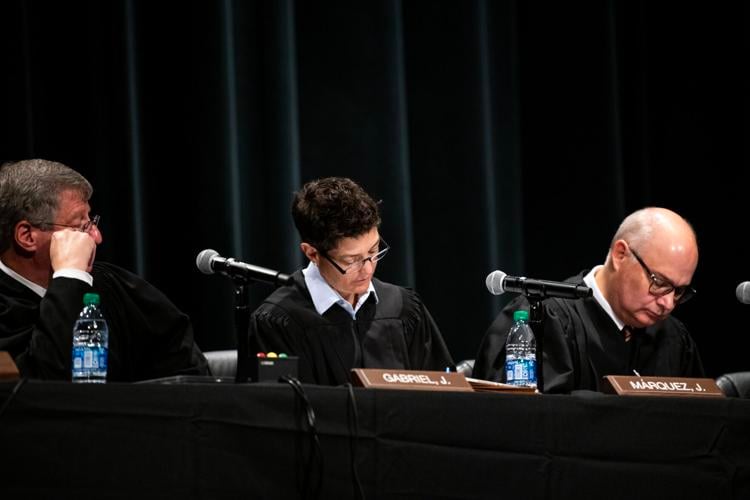
Supreme Court Stunner: The Indian Child Welfare Act Stands

Last week, in a surprising 7-2 decision, the U.S. Supreme Court fully upheld the Indian Child Welfare Act in Brackeen v. Haaland. We break down the full opinion of the court and their various reasons for siding in support of the 1978 law that was passed at a time when nearly a third of indigenous children were separated from their family. 

We are joined for reaction to the Brackeen ruling by three women close to the case:

-Kate Fort of Michigan State University, one of the foremost experts on ICWA in this country, who assisted with the tribes’ preparation for the Supreme Court oral arguments

-Chrissi Ross Nimmo, deputy attorney general for Cherokee Nation, one of the the tribes that officially was party to the case

-Rebecca Nagle, journalist and architect of the podcast This Land, whose second season focused on the Brackeen case.

Guest Interview

Kate Fort is director of clinics at Michigan State University College of Law, including the Indian Law Clinic

Chrissi Ross Nimmo is the deputy attorney general for Cherokee Nation.

Rebecca Nagle is an award-winning journalist and host of the podcast This Land.

Reading Room

Indian Child Welfare Act Stands, Native Families Empowered
https://bit.ly/3PjEV3L

The Imprint’s continuing coverage of Brackeen v. Haaland, 2018-2023
https://bit.ly/3ttyzTy

Opinion in Brackeen v. Haaland
https://bit.ly/3PhDGCa

Imprint Reporting by Nancy Marie Spears
https://imprintnews.org/author/nancy-marie-spears

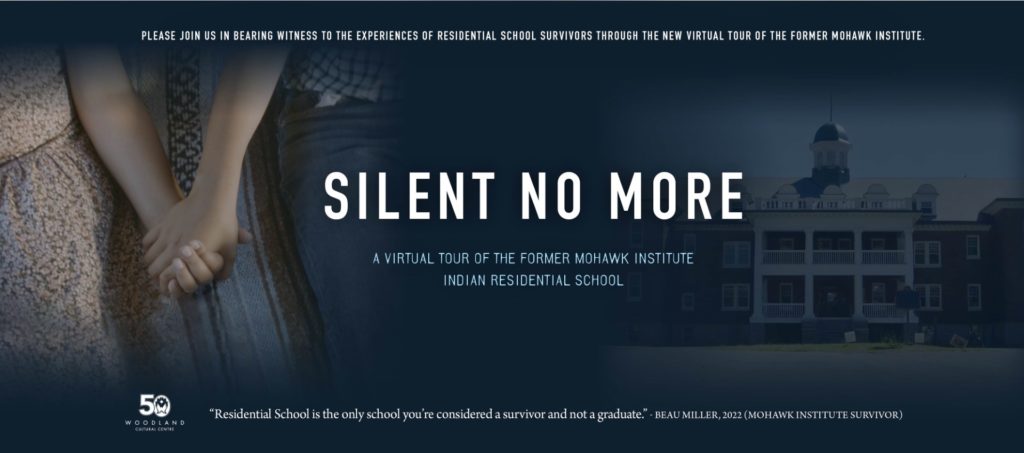
Silent No More


 https://woodlandculturalcentre.ca/silent-no-more/

MORE HISTORY👇

Tuesday, June 20, 2023

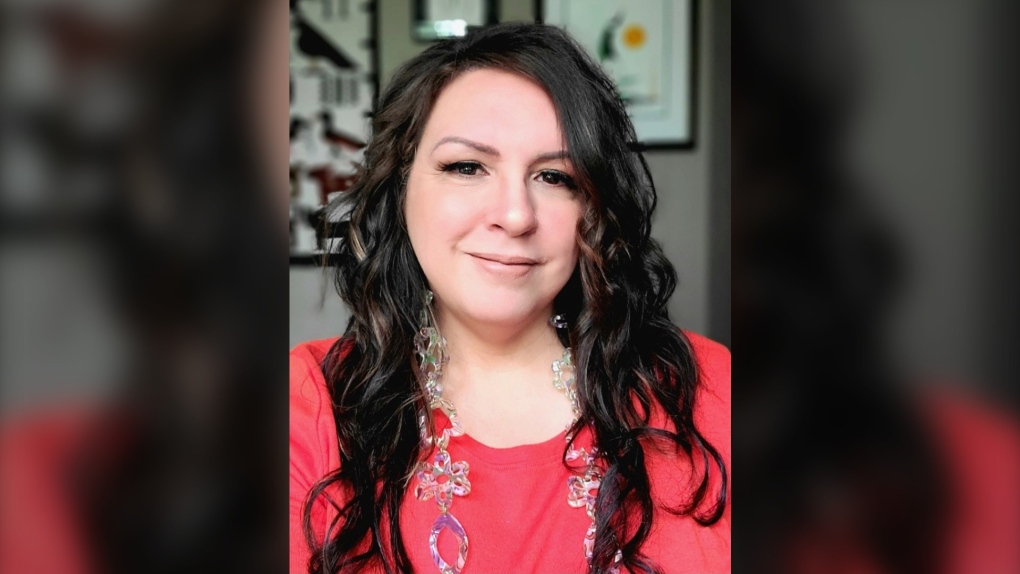
#60sScoop reclaims her name

 Manitoba woman shares her story of reclaiming her traditional Indigenous name

Katherine Strongwind Photo: Katherine Strongwind

One Manitoba woman is sharing her years-long journey to reclaiming her traditional Indigenous name.

When Sixties Scoop survivor Katherine Strongwind was born in Winnipeg, she was taken from the hospital and placed in a non-Indigenous home. From there, she was given the name of her adoptive family.

“My name was completely changed from my birth name in the adoption. For years, I had that name,” she said in an interview.

In 2019, Strongwind, who is the director of the 60s Scoop Legacy of Canada, decided to reach out to the provincial government to see if it would pay for her to legally change her name to her traditional Indigenous name.

READ MORE

Little Bird (TV links)

 for CANADA TV VIEWERS 


Links👇: Little Bird

From Cassandra Szklarski of the Toronto Star:

Link: ‘60s Scoop grief and Holocaust trauma entwine in limited series ‘Little Bird’
“These are extremely triggering stories to tell – not just for Indigenous people and not just for people who experienced the current reality of colonial violence in whatever form that is, which is an everyday reality for us as Indigenous people, but for non-Indigenous people who were realizing the gravity of the situation and feeling guilty.” Continue reading.

From Elisabetta Bianchini of Yahoo News:

Link: ‘Little Bird’ Crave, APTN drama follows Sixties Scoop survivor’s search for home
Famed Canadian producer and actor Jennifer Podemski has taken on the role of showrunner for the new Crave and APTN lumi drama series Little Bird, authentically and honestly telling the story of a Sixties Scoop survivor uncovering her family history, starring Darla Contois. Continue reading.

From Debra Yeo of the Toronto Star:

Link: They woke up with four kids. By the end of the day, they had one. Inside the devastating new ‘Sixties Scoop’ drama ‘Little Bird’
One morning, Patti and Morris Little Bird wake up with their four children. By the end of the day they have one child left, the other three having been shoved into a car and taken away, screaming for their mother. Continue reading.

From Ilana Zachon of The Canadian Jewish News:

Link: ‘Little Bird’ called on Jewish and Indigenous writers and actors to tell the story of a child caught in the Sixties Scoop
“I thought: how is it possible that I’ve lived all my life in Canada… and I didn’t know the story. When I read the script, I just thought this will illuminate a lot of things for a lot of people and it’s very important.” Continue reading.

From Matthew Simpson of That Shelf:

Link: Little Bird Review: A Must-Watch Canadian Story
It is Contois who is the star of this show. Her portrayal of Esther is nuanced and empathetic. The character’s journey in the first episode – from thinking she might have it all to realizing she will never belong – is masterfully performed, almost entirely with body language and tone as she navigates a party to celebrate her happiness. Continue reading.

From Julia Mastroianni for Streets of Toronto:

Link: Toronto showrunner is behind this powerful new Indigenous-led series
“Everything I’ve done as a producer has intersected with historical trauma and colonial violence. There is also a lot of joy, love, rich culture and teaching, but there are so many urgent stories that need to be told as a way to move forward and heal.” Continue reading.

From Crystal St. Pierre of Windspeaker:

Link: New series hits close to home for creator Jennifer Podemski
“It is really the closest thing to me that I have ever done. Even though I’m not adopted, those are my two worlds. Those are the exact worlds I grew up in. And it was the perfect way for me to dive into something in a very personal way because I’ve never really explored both of those sides of my family.” Continue reading.

From David Briggs of Toronto.com:

Link: Young Nipissing First Nation actor spreads his wings in Little Bird TV show
Tayton Mianskum recently starred in a soon-to-be-released series on CRAVE television. And, if that’s not remarkable enough, this was Tayton’s first time auditioning or acting, so his first role is in a major television production. Continue reading.

From Louise BigEagle of CBC News:

Link: New series tells story of Sixties Scoop survivor learning about her past
“I just hope people feel the love that was put into this, and I hope that non-Indigenous people feel connected to it because the stories are relatable, but also I guess unique, in the sense that nobody really knows very much about the Sixties Scoop.” Continue reading.


Thursday, June 15, 2023

Supreme Court affirms ICWA

UPDATED: ‘The bottom line is that we reject all of petitioners’ challenges to the statute, some on the merits and others for lack of standing’


Justice Neal Gorsuch, the justice with extensive federal Indian law knowledge and experience of all the justices, wrote in support:

"Often, Native American Tribes have come to this Court seeking justice only to leave with bowed heads and empty hands. But that is not because this Court has no justice to offer them. Our Constitution reserves for the Tribes a place—an enduring place—in the structure of American life. It promises them sovereignty for as long as they wish to keep it. And it secures that promise by divesting States of authority over Indian affairs and by giving the federal government certain significant (but limited and enumerated) powers aimed at building a lasting peace"


READ THIS

OMG - VICTORY! ICWA stands


 I CANNOT STOP CRYING!  -- HAPPY EDITOR Trace


ICWA UPHELD BY U.S. SUPREME COURT


WASHINGTON — The Indian Child Welfare Act lives on courtesy of a 7 -2 high court decision — a much better outcome than anxious tribal advocates had hoped.  Justice Amy Coney Barrett writes for the majority.  Justice Neil Gorsuch provides strong concurring opinion.  Justices Clarence Thomas and Samuel Alito dissent.  Read all 133 pages here.

Tribal sovereignty, American Indian children and families widely viewed as biggest winners. 

https://www.supremecourt.gov/opinions/22pdf/21-376_7l48.pdf Here is the full court decision. Note - this was 7-2 and the dissenters were Alito and Thomas citing state’s rights. 

Tuesday, June 13, 2023

Part 6: WHAT IF WE LOST ICWA: SOUTH DAKOTA

By Trace L Hentz, blog editor and adoptee

If we lost ICWA, let's look at South Dakota.  How are they doing?  Terrible!  Also not good, I have posted on this website many times their failures to protect Native kids from predators called social workers and missionaries.

Why ICWA matters there seems pretty obvious: Kids are screwed without it.

LIKE:  Why SD lawmakers won't be studying Indigenous child welfare this year


The kids are not alright: Little progress on welfare of Native children in South Dakota 

Keeping families together

(excerpt) 

 One of the commission’s recommendations implemented by the legislature was to address kinship placements. Kinship placements refers to keeping children with relatives, which Mousseau said can minimize the trauma experienced by the child.

Following the implementation of preference for kinship placements, DSS found that there was an increase of 25% of such placements for all children between July of 2004 and June of 2005. 


According to data requested by Foster, there are still large gaps of the number of children, Native and non-Native, that are placed with relatives.

During the session, Democratic Representative Peri Pourier introduced House Bill 1229 to address such placements. The bill died in the House Judiciary committee.

Mousseau said that kinship placements are important to the long-term wellbeing of children, especially when it comes to delinquency and recidivism.

“It is a practice in social work that has been shown to have amazing effects,” Mousseau said. “And we wanted all the children of South Dakota to have the opportunity to be placed with their relatives. That didn’t even make it out of committee.”

From poverty to prison

Data from the National Data Archive on Child Abuse and Neglect shows that in 2020, 95% of Native children affected by maltreatment were experiencing neglect compared to 86% of their non-Native peers. The data also showed that Native children face higher rates of abandonment and parents with substance abuse issues.

“Being born and raised in one of the most poorest counties in the United States, I can tell you that neglect looks a lot like poverty,” Pourier told House lawmakers on Wednesday.

South Dakota is home to some of the poorest counties in the country, many of which are on tribal land.

Pourier and Mousseau say the impact of poverty and neglect in childhood connect directly to crime and the overflowing prisons in South Dakota.

“South Dakota is funding more prisons because there’s a need but we go further upstream, there’s that need because of policies to remove children that dates back, which is why ICWA came into effect in 1978 and it has been in effect since,” Mousseau said.

As of January 31, 2023, Native American women outnumbered women of other races in South Dakota’s prisons. Additionally, nearly 33% of the male inmates in state prisons are Native American.  

 Mousseau said addressing the disproportionate rates of Native children in foster care, specifically those not placed with kin, can better address issues of crime and substance abuse.

“As you can imagine being removed from your family and being placed outside of your family, which a lot of Indian children are, that’s traumatic. That has dramatic effects on somebody who has to experience it and their children, right, their brains are still developing there,” Mousseau explained. “And we know from the Adverse Childhood Experiences Study that, you know, those early traumatic experiences in children’s lives leads to negative health outcomes, run ins with the law, you know, substance use. Look up the ACEs study, that that has been foundational.”

KEEP READING 

  READ:

The Lost Bird of Wounded Knee - South Dakota Public Broadcasting


COLORADO

Congress originally enacted ICWA after learning of the large number of American Indian children being removed from their households into non-tribal families and institutions.


to be continued

Pandora's Box: Opening an adoption & the stages of search


REBLOG from 2011

By Trace Hentz, blog editor
 

Opening an adoption is just like opening Pandora’s Box. You just never know who - or what – will fly out at you.

I think back to my inner battles years ago. There were many stages I went through:

  • I almost stop when I hear I was "saved" from being an orphan - so that should be the reason I never search. I don't know it will take years to find my parents.
  • I almost stop when I hear adoptions were done legally yet it's illegal for me to search. Wisconsin was a closed record state. Now the state will contact your parents to get their consent to let you know who you are.
  • I almost stop when I think my mother had problems so she had to give me up. I get scared of why she did it. I get scared she might not want to meet me (and in fact, she didn't).
  • I almost stop when I do not hear back from the ALMA registry in New York. Apparently no one is looking for me.
  • I almost stop out of guilt. I feel guilty because my parents were so generous to raise me, since I was an orphan. They didn't have to adopt me but they did! (But can they imagine what it feels like being adopted? No. Can I talk to them about searching? No.) I love them for adopting me.
  • I almost stop when friends tell me to get over it and move on with my life. "Forget about her." Adoptees know this game. "Don’t talk about it. Shut up. Stop whining. You were lucky to be chosen."  Really? I didn’t feel lucky. I felt hurt, betrayed and rejected.
  • I almost stop when I read the letter from my natural mother, saying she doesn't want anyone to know about me. She's worried what people will think.

Back then it was like I was wedged between helpless and hopeless. I was doing this search for me and my own sanity. Plus it was impossible to search without names. And what was I being saved from? I should be grateful that I lost my natural parents?

I moved past all that and found my natural mother, and then my father.

Having a reunion with my dad was the hardest thing I ever did and the best thing I ever did. It was not what I expected, that's for sure.

Never in my wildest dreams did I imagine how meeting him (and his kids) would change me as a person. I was almost 40 when we met. There was no one to advise me on what to do, or what to say, or what to expect having a reunion.

First things first.  My birthdad Earl Bland wanted a DNA test to be sure I was his.  I wanted to know that, too.  This all happened back in 1996 and I traveled from Oregon to meet him in Illinois. (I paid for my plane ticket and $500 for the DNA lab with help from my ex-husband).

My dad and I got the results (by mail) a little over a month later. Earl was indeed my dad but I never saw him again.

I write about my reunion with Earl and our time together in my memoir "One Small Sacrifice." I looked for him for years and only met him once. How does the adoption industry justify keeping us apart for years with secrecy and laws, then my dad dies shortly after we meet.

All I can say is I wish everyone who is adopted gets the chance to meet their natural parents. Even if it is only once. Even if it is only one parent. It is a spiritual awakening.

Since I read so much about the adoption industry, I was wondering when an adoptee's emotional well being and health would be mentioned and considered? 

 Apparently, this is not an issue, and not a concern of the adoption industry. It's about protecting the adoptive parents. Secrecy and sealed records is part of their sales pitch. It's not about the adoptee but the adopter. The mood, anxiety, thrill and angst of our adopters is what we hear growing up adopted - and we learn to be appreciative, silent and grateful. We mourn in silence.

Every adoptee I know wraps their mind around this. It's simply ridiculous to be denied the chance to know and meet our natural parents. There should be people and laws helping us, the natural parents and the adult adoptee. We all need to understand the family dynamics to have meaningful reunions, and know what to expect.

Sadly, this is not happening. Not yet.

((1-22-2011))


Happy Visitors!

NEW WEB ADDRESS

Because we don't want to lose information on this blog, we now have a domain name: American Indian Adoptees.com - click and save this link:

2026: WE HAVE A BACK UP BLOG COMING SOON: www.americanindianadoptees.blog (on wordpress) We are no longer on Facebook. We deleted our accounts.

WRITTEN BY HUMANS!

WRITTEN BY HUMANS!

Blog Archive

Featured Post

Your History Class Was a F*cking Lie | #NOMOAR

  Your History Class Was a F*cking Lie by Sean Sherman (Or: How the American Educational System Has Always Been a Racist Propaganda Program...


Native Circles

Native Circles
click logo for podcasts!

Most READ Posts

Bookshop

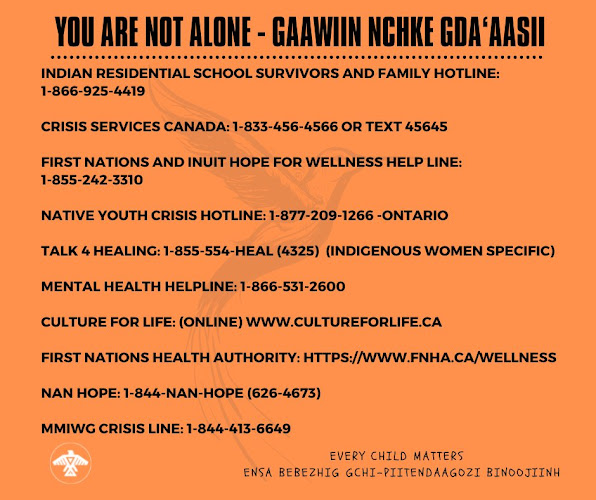
You are not alone

You are not alone

To Veronica Brown

Veronica, we adult adoptees are thinking of you today and every day. We will be here when you need us. Your journey in the adopted life has begun, nothing can revoke that now, the damage cannot be undone. Be courageous, you have what no adoptee before you has had; a strong group of adult adoptees who know your story, who are behind you and will always be so.

Diane Tells His Name


click photo

Lost Birds on Al Jazeera Fault Lines

Lost Birds on Al Jazeera Fault Lines
click to read and listen about Trace, Diane, Julie and Suzie

NO MORE STOLEN SISTERS

NO MORE STOLEN SISTERS
click image

ADOPTION TRUTH

As the single largest unregulated industry in the United States, adoption is viewed as a benevolent action that results in the formation of “forever families.”
The truth is that it is a very lucrative business with a known sales pitch. With profits last estimated at over $1.44 billion dollars a year, mothers who consider adoption for their babies need to be very aware that all of this promotion clouds the facts and only though independent research can they get an accurate account of what life might be like for both them and their child after signing the adoption paperwork.

Original Birth Certificate Map in the USA

Google Followers