


Child Welfare League of America CEO on the Future of Indian Child Welfare

One day, long before she became head of the Child Welfare League of America, Linda Spears sat in her office in tears, surrounded by archival records pulled from an old cardboard box.
The dry documents told a disturbing story.
Between 1958 and 1967, the League partnered with the Bureau of Indian Affairs to enact the Indian Adoption Project, a federal initiative across 16 western states promoting the systematic separation of Indigenous families. Some children didn’t have families. Others were removed by social workers who went into tribal homes and arbitrarily deem families unfit — if they talked to the adults at all. Then tribal children were sent to live with white families, in an attempt to assimilate them through adoption.
Newspapers at the time colloquially called the effort the “Papoose Project.’’ A 1964 Miami Herald article stated, “Frequently the illegitimate children run wild and uncared for on reservations and help must be found among the white population.’’
It was an effort Spears’ organization once called “one of the League’s most satisfying activities.”
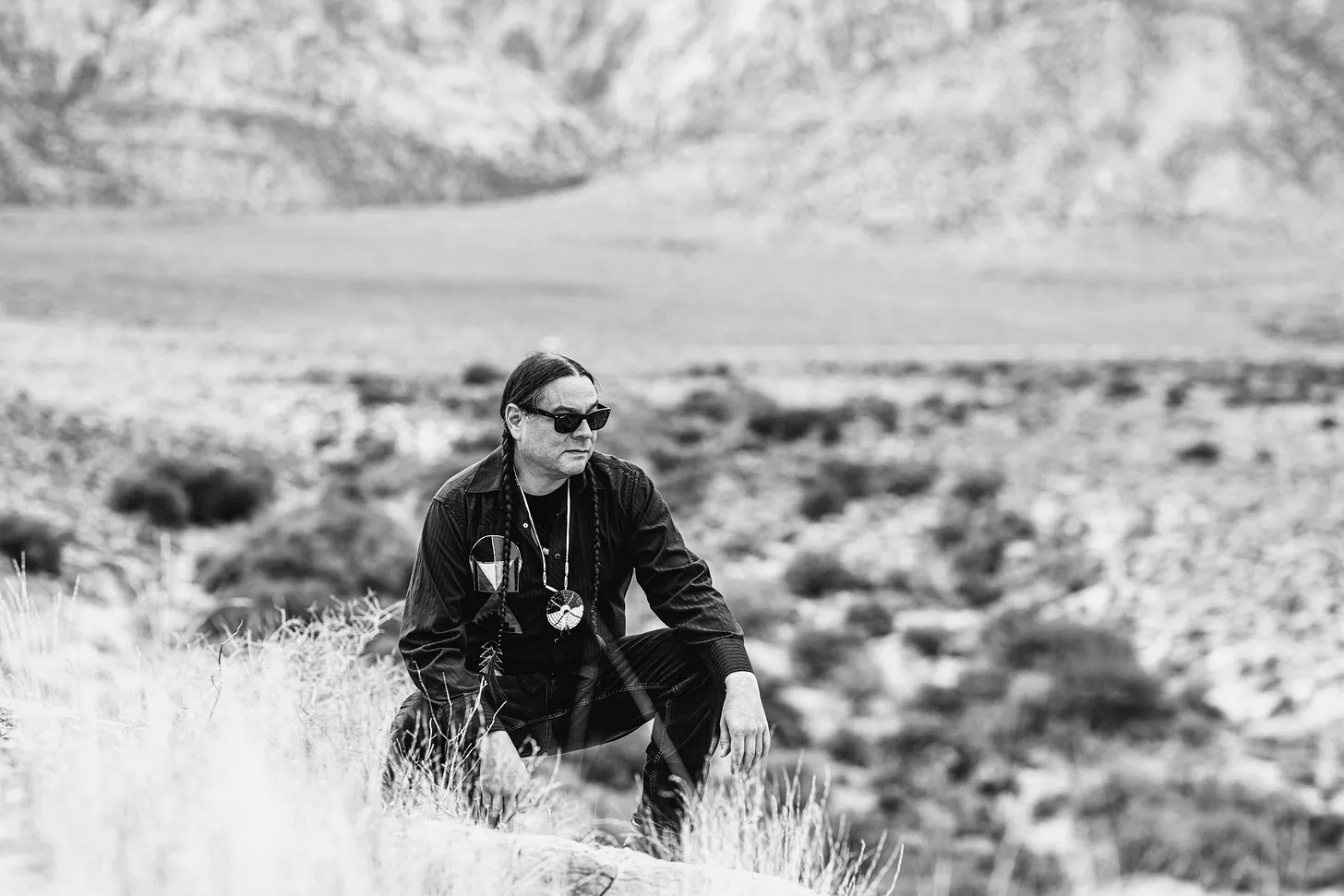
For Spears, that pivotal moment in her office offered a glimpse of her purpose within the League. As the first Indigenous woman to lead the Washington D.C.-based advocacy nonprofit, she said that along with looking out for all the nation’s children, she feels it’s also her responsibility to help right the course of an organization that has historically caused harm to tribal children and families.
KEEP READING👇
In 2023, Spears, a member of the Narragansett Indian Tribe, became president and CEO of the Child Welfare League, following a lengthy stint as commissioner of the Massachusetts Department of Children and Families.
She is well aware of the troubled past of her organization and the white social workers who broke up Native families. “They separated children,” Spears said in a recent interview. “The harm from that experience visits tribes and children and families every single day, to this day, and will continue for generations forward.”
It’s a history the Child Welfare League has worked to distance itself from over time. In 2001, then-executive director Shay Bilchik formally apologized for the group’s role in the Indian Adoption Project.
Founded in 1920, the Child Welfare League of America (CWLA) today has members in all 50 states. It is one of the country’s oldest and most renowned advocacy groups, developing policy recommendations and industry standards for those working in the child welfare field.
“We cannot approach it by saying ‘I’ve got 20 ideas about how to fix Indian child welfare.’ It really comes from saying, ‘What do you want to do with your children? What do you as a tribal community want us to do to help you do that with your children?’”
— Linda Spears
Spears initially worked for the organization between 1992 and 2011 as a senior consultant and director of child protection. Starting in 2012, she served as vice president of policy, programs and public affairs. In 2015, she took up her Massachusetts position before returning to the Child Welfare League eight years later. She is currently working on her PhD dissertation for the Simmons University School of Social Work.
Much of Spears’ family still resides in her home state of Rhode Island, and she said she tries to return there as often as possible. Her father, Donald, was an electrical engineer who worked for a defense contractor that built submarines. Her mother, Gloria, was a civil rights activist and a social worker who created teen-parent support groups “years before they were commonplace,” Spears said. Gloria also started an adoption project to “partner with community-based organizations, churches and others to find families for Black and brown children.”
Spears said the ways she was raised, and those who raised her, influence “every way, and everything, about how I think of the world and see the world.”
Both of her parents have passed on, but Spears still spends time with family, including her brother and sister. She enjoys hanging out with her niece, who works in the high-end retail fashion world, and listening to jazz — especially when performed by her nephew, who plays alto saxophone for the Julia Keefe Indigenous Big Band.
In January, Spears joined a group of child welfare experts to discuss how the organization she leads will assist with a strategic plan to buttress the Indian Child Welfare Act (ICWA), the 1978 federal law protecting tribes’ rights and the integrity of Indigenous families. The ICWA 2050 plan aims to strengthen tribal child welfare systems and improve Indigenous childrens’ outcomes in state-run foster care. Other goals include enhancing partnerships between tribes and the federal government, and increasing communication about ICWA as the “gold standard” of child welfare policy and practice.
The interview below is an excerpt of that conversation, aired earlier on The Imprint Weekly podcast.
The following interview has been lightly edited for length, and a question that didn’t appear in the podcast was added for clarity.
Can you describe specific examples around how the Child Welfare League of America intends to engage with the ICWA 2050 plan?
There are lots of ways that we will be engaged in the 2050 plan. We had partnered with the National Indian Child Welfare Association for many years and we committed that we would continue to work on issues of Indian children in America and the tribes that provide for their future and their sustenance each and every day.
I look at the ICWA 2050 plan and approach and I’m extraordinarily excited by that work. I think it’s extraordinary, visionary and yet at the same time — grounded in the roots and the history of the people who were around that table on the first days — it says we must do this, we must plan differently for our kids and we must have some federal policy that ensures that happens.
How do your previous child welfare roles inform the current and future work you’re doing at the Child Welfare League — particularly when it comes to bolstering the relationship between sovereign tribal nations and state governments?
We are very willing to come to the table and be part of conversations about how we advance model state practices, policies and laws that help support federal guidance and support the next generation.
I also think there’s a lot to learn from tribal communities as it affects child welfare overall. While children of color across the board are not tribal members, many of the values, principles and work of tribes and the approaches that tribes take to family support are lessons for the rest of the practice.
For public child welfare folks out there, it is learning a new set of policy requirements and understanding the nation-to-nation relationship of tribes and states and the federal government. It is really about also saying, “What are the best practices, values and principles that enhance our work across the board?” And then again, “How do state agencies work more effectively with tribes and recognize the sovereignty of tribes?”
How is CWLA collaborating with other non-Native stakeholders to promote the visibility of Native children and families?
First, we work with the state ICWA managers. It’s one of the things that we’ve had a shared collaboration with NICWA on for many, many years and continue to do that. We also work with them collaboratively on Indian child welfare issues around policy. We do a legislative agenda each and every year.
We run a well-respected academic journal, one of the older child welfare journals called Child Welfare. As I came on board, we were at a point of change for our senior editor for the journal, and we selected a Native senior editor quite purposefully — someone who works in the space of children, families and tribes. Priscilla Day is our editor as of last summer. She has been in this space for many years. She is a senior, respected individual who knows this work in and out.
And we did that on purpose, to make sure that the work of academics who are in this area, of scholarly experts, is also reflected in our work, that we are featuring the best practice work of those tribes. Our journal is very well-read around the country in child welfare and it was important to make sure that we had high-quality Indian child welfare content as part of that.
For non-Native groups who seek to increase ICWA compliance and strengthen tribal sovereignty more broadly, how do you advise they begin that journey and how important do you think it is to have that buy-in from non-tribal or state-based groups?
It’s really important, I think it comes from a willingness and openness to have dialogue, which means building relationships of trust with tribes. And I think that takes more than a minute. Tribes have a long history of not being sure whether they can trust.
It is understanding the culture, the community and the position that tribes come from and hearing the tribe tell you who they are, what they stand for, and how they wish to work — and then honoring that. That doesn’t mean everybody agrees every day on everything, but it does mean that there is a tremendous, deeply held value in mutual respect and that needs to be part of the conversation.
We cannot approach it by saying “I’ve got 20 ideas about how to fix Indian child welfare.” It really comes from saying, “What do you want to do with your children? What do you as a tribal community want us to do to help you do that with your children?”







 Posts
Posts


No comments:
Post a Comment
Please: Share your reaction, your thoughts, and your opinions. Be passionate, be unapologetic. Offensive remarks will not be published. We are getting more and more spam. Comments will be monitored.
Use the comment form at the bottom of this website which is private and sent direct to Trace.