BOOZHOO! We've amassed tons of information and important history on this blog since 2010. If you have a keyword, use the search box below. Also check out the reference section above. If you have a question or need help searching, use the contact form at the bottom of the blog.
We want you to use BOOKSHOP to buy books! (the editor will earn a small amount of money or commission. (we thank you) (that is our disclaimer statement)
This is a blog. It is not a peer-reviewed journal, not a sponsored publication... WE DO NOT HAVE ADS or earn MONEY from this website. The ideas, news and thoughts posted are sourced… or written by the editor or contributors.
EMAIL ME: tracelara@pm.me (outlook email is gone)
THANK YOU CHI MEGWETCH!
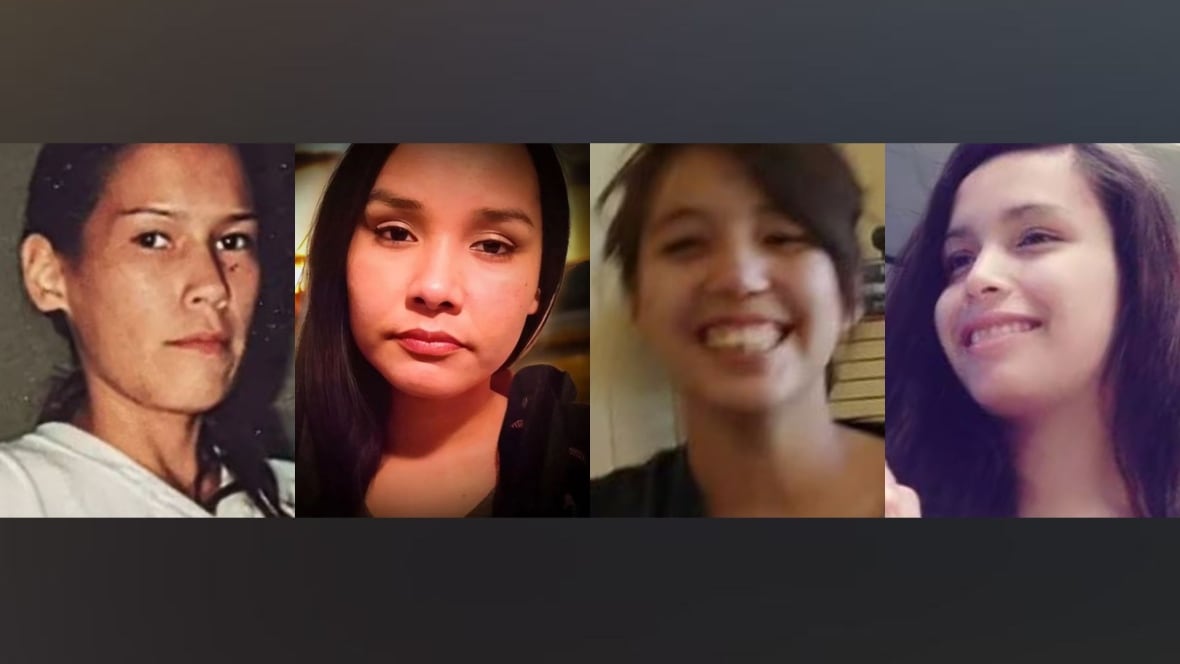
In 2016, over 5,700 Indigenous women and girls were reported missing.
The U.S. Department of Justice recorded just 116 of those cases. That’s
not a data error. That’s a decision repeated year after year by
institutions that were never built to protect Native lives.
The epidemic of Missing and Murdered Indigenous Women is not a mystery. It is a test of whether this country can confront the systems it built to disappear people.
The federal government has delayed. Law enforcement has failed. The media has ignored. And most of America has looked away.
But Native communities never have.
They’ve searched when no one else would. They’ve named their daughters when others erased them. They’ve demanded justice when the system delivered only silence.
Indigenous
women in Canada were being forcibly sterilized by state sponsored
eugenics operations as recently as 2019. A report last year concluded
“this horrific practice is not confined to the past, but clearly is
continuing today.” In May of 2023, a doctor was caught forcibly
sterilizing an Indigenous woman.
The
growing enthusiasm for eugenics thinking reached Canadian borders in
the first half of the 20th century. Even though forced sterilisation was
already common throughout the territory, the Province of Alberta
officially enacted the Sexual Sterilization Act (SSA) in 1928, followed
in 1933 by British Columbia. Considered the first Canadian eugenics law,
this act legalised and regulated the sterilisation of mentally-disabled
individuals.
Aggressive assimilation policies
quickly extended these measures to Indigenous communities such as the
Inuit, Indian, and Métis people. While it is difficult to provide an
accurate estimate, researchers agree that Indigenous women were
disproportionately targeted. Between 1966 and 1976, over 10,000 women
would have undergone forced sterilisation in public hospitals,
residential schools, and mental facilities. And It has continued since
then in more subtle and nefarious ways.
What about tribes? Can this coming dystopia be stopped?
I need your help and ideas! How can most poverty-stricken Native Tribes get out of the 15-Minute-City and digital currency planned by the US? Many tribes do not have electricity or running water. The majority don’t have banks. Some have modernized but not that many. There are 574 tribes. Is it even possible to do this change on the remote reservations? Or will there be a genocide (again)?? Thoughts?
Please leave a comment👇 and share with your relatives, please...
If you’re one of the 1.9 million people who still get a paper tax refund
check from the federal government, you will need to make a change in
the coming months. It’s the same for those who still count on Social
Security checks in the mail rather than electronic direct deposit. A presidential executive order requires
those and other transactions by the federal government to go completely
electronic by September 30. The White House claims paperless
transactions will save taxpayers as much as $657 million. At the same
time, it poses a significant challenge for the high percentage of Native
Americans who choose not to utilize conventional banks.
It’s going to be horrible for the victims but they need to be interviewed LIVE on TV and explain (in graphic detail) what Epstein did to them, and also by his girlfriend Maxwell. Time to end this bullsh*t.
The Epstein case has many people triggered. Many of us adoptees were abused, sexually and physically when we were children. Telling someone the truth helps greatly.... Epstein was a pedophile and so was his girlfriend. The victims (one thousand children at least) need to be allowed to tell their story... Trace
Summer memories of running with cousins in Zuni mud —
all the weekends I spent at my Auntie Paula’s home on the Zuni Pueblo —
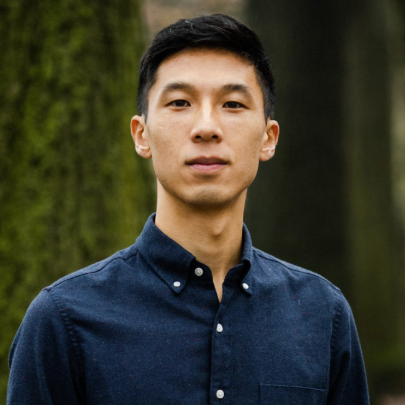
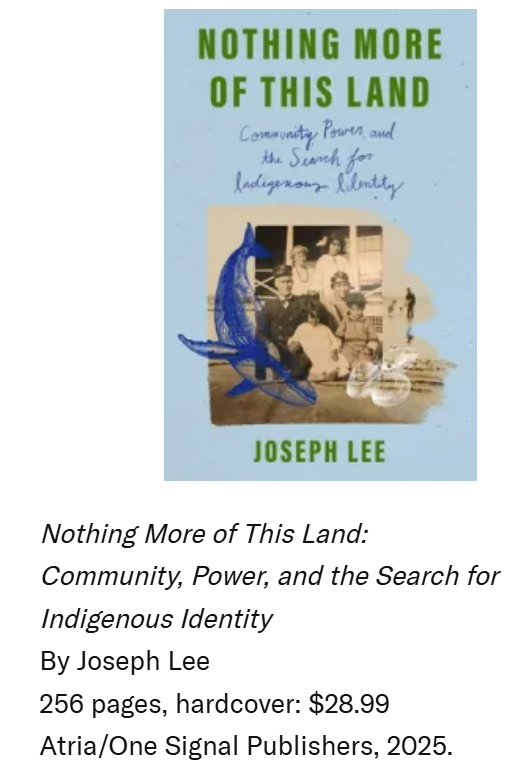
return as I read Joseph Lee’s book Nothing More of This Land: Community, Power, and the Search for Indigenous Identity.
A mixture of memoir, reportage and commentary, it documents Lee’s
family history, describing how land and ancestry forged strong links to
his Aquinnah Wampanoag home on Martha’s Vineyard. Lee’s stories echoed
my own rez dirt memories, layers of loving Indigenous relationships with
foundations deeper than any historical record.
[Editor's Note: This column originally appeared in "High Country News. Used with permission. All rights reserved.]
Lee spoke with High Country News before his book’s July 15 release.
This conversation has been edited for length and clarity.
High Country News: Your book
demonstrates how you and your family live as Indigenous people on
colonized land. Can you introduce those experiences?
Joseph Lee: I’m a Wampanoag, and my family and my
tribe is from Martha’s Vineyard. It’s a small island in the Northeast,
known for being this fancy vacation place where presidents and movie
stars go. I grew up spending summers at my grandparents’ house, and that
was the original framing for the book: How I thought about being
Indigenous and being Wampanoag was filtered through the experience of
how people see Martha’s Vineyard, along with how people see Wampanoag
people and Native folks in the Northeast: We were there when the
pilgrims came, Mayflower, the first Thanksgiving, all of that.
That confused me, because what I was being told about being
Indigenous didn’t really match up with the way I was experiencing it
personally. I went to tribal summer camp, I went to our cranberry
festival harvest. I did all these things, and none of it aligned with
this version of stereotypical Nativeness, the disappeared Native gone in
the past.
I was trying to make sense of the way that we’ve lived and the
choices that we’ve made, and what is this going to look like in the
future?
As one landfill search ends and another is planned to
begin, an MMIWG advocate says countrywide implementation of the Red
Dress Alert and addressing "systemic racism" could prevent the agony of
such searches ever needing to happen again.
"We know
when someone is missing, time is of an essence to locate them and to
find them safely," said Hilda Anderson-Pyrz, a member of Nisichawayasihk
Cree Nation in Manitoba and chair of the National Family and Survivors
Circle.
Manitoba is in the process of launching the Red Dress Alert pilot
project, which will provide a notification to people's mobile phones
when an Indigenous woman, girl, two-spirit or gender diverse person goes
missing — similar to how an Amber Alert works.
"They
should be looking at the next phase to, alongside the federal
government, fully implement the [alert] … and adequately resource it to
ensure that it's long-term and sustainable," Anderson-Pyrz said.
"We'll
be fighting for those resources, because what the Red Dress Alert means
in this country is very powerful for Indigenous women, girls and
children."
Despite his family being
from Thunderchild First Nation in Turtleford, Saskatchewan, Michael Linklater
was born in Trenton, New Jersey in 1982.
“Thunderchild is where
our family is from. My mother was a part of the 60s Scoop, and that’s
how she ended up in New Jersey,” Linklater said.
However,
Linklater returned to Canada shortly after his birth, where he grew up
and eventually moved to Saskatoon at 10 years old. It was during this
time that basketball became his calling.
“Hockey wasn’t something
that was feasible for me, but there was an outdoor basketball court at
my elementary school. That’s what inspired me. It was accessible and all
you needed was a $5 rubber ball. I just fell in love with the game,” he
said.
That love turned into excellence. At Mount Royal
Collegiate, he was a multi-sport athlete and team captain, winning
Athlete of the Year from Grades 9 to 11. By the end of high school, he
had already started dreaming of the big stage.
“After I started
playing basketball, I made the decision that I wanted to play at the
highest level and I visualized playing at the highest level,” he said.
EDITOR NOTE: I was collecting information on banking and how it does not exist on many reservations - no banks, no ATM's? Exactly: It's obvious that Third World reservations are not on anyone's radar, except Native People living on the rez. It's obvious we are neglected in many modern systems... that is "their" playbook: NEGLECT. What year is this?
Then there is this: No Water?
(JULY 14, 2025)
U.S. Senators Michael Bennet (D-Colo.),
John Hickenlooper (D-Colo.), and Martin Heinrich (D-N.M.), along with
U.S. Representatives Joe Neguse (D-Colo.) and Gwen Moore (D-Wis.), have
introduced the Tribal Access to Clean Water Act, a bill aimed at
significantly improving access to clean water in Tribal communities
through major investments in water infrastructure.
The legislation would increase
funding for water projects through the Indian Health Service, the U.S.
Department of Agriculture, and the Bureau of Reclamation. These
investments would support critical infrastructure development and help
ensure that Native American households without reliable access to clean
water are finally connected to safe, sustainable water sources.
“Too many Tribal communities in Colorado and across the country
cannot access clean, safe water,” said Bennet. “This legislation builds
on our efforts to improve access for Tribes in the Bipartisan
Infrastructure Law. It fulfills the federal government’s promise to
provide these communities with the clean water they deserve.”
“Nearly half of Native American households lack access to clean and
reliable water supplies. That is completely unacceptable,” said
Heinrich. “By addressing a significant backlog of infrastructure
projects and removing barriers to federal programs that provide
technical and financial assistance to Tribes, this legislation is an
important step toward delivering clean drinking water to all families in
Indian Country.”
“Clean drinking water is a basic necessity. Yet, so many of our
Tribal communities have been left without the infrastructure. It’s
unacceptable,” said Hickenlooper. “Let’s cut red tape and invest in
modern resources to finally deliver safe, accessible water to every
Tribe.”
“Access to clean water is a basic human right—and yet for far too
long, Native American tribes have lacked access to safe and affordable
water and reliable wastewater infrastructure. Our tribal communities
deserve better,” said Neguse. “That’s why I’m honored to join Senator
Bennet in introducing the Tribal Access to Clean Water Act, a bill that
takes meaningful steps to close the gap between Native American
households and access to clean and reliable water supplies.”
“An estimated 48 percent of homes on tribal lands lack access to
clean drinking water or sanitation services. This is a serious public
health issue that demands a federal response. I join my colleagues in
supporting this important legislation, which will help tribes improve
longstanding water infrastructure challenges and uphold trust and treaty
obligations under the Constitution,” said Moore.
Lack of access to clean drinking water is a significant barrier for many Native American communities. According to data from
the U.S. Department of Health and Human Services, Native American
households are 19 times more likely than white households to lack indoor
plumbing. A 2021 report commissioned by the Colorado River Water and Tribes Initiative documents
the different barriers to accessing safe and reliable drinking water
among tribes in the Colorado River Basin, along with some of the
deficiencies in the federal programs designed to address this problem,
and offers recommendations for improvement. Lack of access to drinking
water negatively impacts health, education, economic development, and
other aspects of daily life.
South Dakota Republican Sen. Mike Rounds announced Tuesday he's
secured an agreement with White House budget director Russ Vought to
move $9.4 million from an account within the Interior Department to at
least two dozen Native American radio stations in multiple states.
Those
include Alaska, Arizona, California, Colorado, Idaho, Minnesota, New
Mexico, North Dakota, Oregon, South Dakota and Wisconsin, according to
Rounds' office.
Editor's NOTE: As you know, many tribe's living conditions in the US are not great, not prosperous, unless some casino monies trickle down and reach the rez, and they've made structural improvements. Poverty is all too common and rampant for too many tribal nations.
TRIBAL RADIO AM and FM has been a lifeline, like KILI radio in Porcupine, South Dakota - my relative Ellowyn Locke (Oglala Lakota) listened to them every single day. https://www.kiliradio.live/
In South Dakota, KILI of Porcupine, KDKO of Lake Andes and KLND of McLaughlin all stand to lose around $200,000 in Corporation for Public Broadcasting (CPB) grants. This would spell disaster.
MORE:
Tribal public broadcasting under threat by CPB rescission
The United States Congress is
considering a rescission request from the Trump administration to pull
funding for the Corporation for Public Broadcasting.
The maneuver would negatively affect SDPB—as well as the four public tribal radio stations in South Dakota.
The station KOYA stands to lose about $200,000 if Congress ultimately approves the rescission.
John
Miller is manager for the station in Rosebud. He said the funding
reduction would be very detrimental to the people of his community.
“Because,
we serve a purpose of keeping them up to date and passing along
emergency information—passing along pertinent information that helps
them in every way and every day," Miller said. The Corporation for
Public Broadcasting funding that we do receive is very beneficial in
keeping the station on the air. It wouldn’t be a good outcome for us.”
KILI of Porcupine, KDKO of Lake Andes and KLND of McLaughlin all stand to lose around $200,000 in CPB grants.
South Dakota’s lone representative in the U.S. House, Republican Dusty Johnson, voted in favor of rescinding the money.
The question now heads to the U.S. Senate.
U.S.
Sen. Mike Rounds said he does not want to see funding cut for radio
stations in rural areas that rely on public broadcasting—particularly on
reservations.
“Let’s not cut the stuff where we really do need to
be able to help some folks that are in some rural areas, and on the
reservations, where they simply don’t have other resources available to
keep those radios in operation,” Rounds said.
Rounds said his
rescission decision will be based on whether the package can be amended
to allow for funding to continue to reach rural radio stations.
The
CPB rescission would also affect SDPB to the tune of $2.2 million.
Earlier this year, SDPB received full funding from the supermajority
Republican controlled state legislature, after former Gov. Kristi Noem
suggested slashing the statewide network’s state funding by 65 percent.
MORE:
Minnesota’s Tribal Radio Stations at Risk of Losing CPB Funding
Northeastern Minnesota’s White Earth
Reservation is home to “Niijii Radio” KKWE (88.9), one of the state’s
four tribal radio stations which serve their local communities with news
and information, along with traditional music.
These stations are
now in danger of losing much-needed federal funding, as President
Trump’s executive order to “ensure that Federal funding does not support
biased and partisan news coverage” threatens to take away Corporation
for Public Broadcasting grants that keep stations like KKWE on the air.
“[CPB] probably covers about 45% of our costs,” KKWE Station Manager Maggie Rousu, part of the station’s small staff, tells MPR. “CPB funding pays one full-time staff. It also covers our emergency broadcast system [and] some of our programming.”
Although
the executive order focuses on pulling money from NPR and PBS, Rousu
points out that it trickles down to smaller stations such as KKWE.
While
most larger public radio stations can survive on corporate and listener
donations, that’s not the case for “Niijii Radio,” where listeners
aren’t able to provide enough funds to keep the station running. “We do
have some contributors that are contributing $1 a month,” Rousu says,
meaning if CPB funds are cut, “we could lose some local production.”
KILI is Under Attack!
KILI Needs Your Help
Trump
is attempting to remove the board of directors and cancel funding of
the Corporation for Public Broadcasting, which provides significant
funding to our station. Please donate now to help us recover the
necessary funding to keep our station on-air and operating!
Linda Spears (Narragansett) is the president and CEO of the Child Welfare League of America. Provided photo.
One day, long before she became head of the
Child Welfare League of America, Linda Spears sat in her office in
tears, surrounded by archival records pulled from an old cardboard box.
The dry documents told a disturbing story.
Between 1958 and 1967, the League partnered with the Bureau of Indian
Affairs to enact the Indian Adoption Project, a federal initiative
across 16 western states promoting the systematic separation of
Indigenous families. Some children didn’t have families. Others were
removed by social workers who went into tribal homes and arbitrarily
deem families unfit — if they talked to the adults at all. Then tribal
children were sent to live with white families, in an attempt to
assimilate them through adoption.
Newspapers at the time colloquially called the effort the “Papoose Project.’’ A 1964 Miami Herald
article stated, “Frequently the illegitimate children run wild and
uncared for on reservations and help must be found among the white
population.’’
It was an effort Spears’ organization once called “one of the League’s most satisfying activities.”
For Spears, that pivotal moment in her office offered a glimpse of
her purpose within the League. As the first Indigenous woman to lead the
Washington D.C.-based advocacy nonprofit, she said that along with
looking out for all the nation’s children, she feels it’s also her
responsibility to help right the course of an organization that has
historically caused harm to tribal children and families.
President Donald Trump surrounded by tribal leaders as he signed the Not
Invisible Act during his first term in office. Still image from White
House video.
The Not Invisible Act requires the Departments of Justice and
Interior to create a joint commission on violent crime involving
Indigenous communities. It also details how federal agencies should
address what it calls an “epidemic”: the high rates of Native American
youth and adults who are missing, murdered or victims of violence.
“We
ask that the DOJ take immediate steps to restore the Not Invisible Act
Commission Report. Removing the data from public government websites
obstructs long-overdue justice and harms any efforts to combat the
crisis.”
The Manitoba government said Friday over 12,000 people were out of their
homes, and it gave notice that it intended to use Winnipeg’s major
convention centre to house more evacuees. The military began removing people from Garden Hill First Nation on
CC-130 Hercules transport airplanes on Friday, and it says that as of
Sunday afternoon, over 1,550 have been flown to Winnipeg.
👉This is all why I’m working on building NOMOAR — the National Online Museum of American Racism. (in my spare time that is). Not to just “educate” but to interrupt
the dangerous narratives we have all been duped as truths and to create
not only an archive, but also a much need mirror of American identity.
NOMOAR
is what happens when we stop waiting for school boards and start
telling the truth ourselves. Education doesn’t need a monetary
component we can start by teaching truths at home and giving our
children the tools to critically think for themselves when presented
with alternative perspectives and untruths.
My Vision:
Crowdsourced local history maps.
Zoom into your hometown and see the redlining maps, the sundown town
signs, the massacre sites, the stolen land deeds and any narrative worth
sharing so we may never forget.
User-submitted exhibits — family stories, archival documents, oral histories, newspaper clippings — all validated by community, not just institutions.
Interactive timelines that connect racist laws, uprisings, acts of resistance, and how they relate to today’s policies.
Virtual and traveling exhibits
that can reeducate Americans everywhere and challenge the status quo of
the whitewashed histories we have been force fed for so long.
Tools for teachers and organizers — truth packs to bring real history into classrooms, workshops, or kitchen tables.
This
isn’t about replacing a physical museum in D.C. It’s about building
one that actually tells the truth — and lives in your pocket.
Because if we’re not documenting these truths now, they’ll get erased again.
We
can’t afford another generation raised on lies and we definitely can’t
remain silent as we watch entire histories get silenced for the comfort
of white people.
Want to help build the NOMOAR platform? I
created a GoFundMe to raise funds to create the base website, but it
will need immense help to become reality. So what can you do outside of
donating?
Just reach out and let’s start a conversation. The
only way to Make America Great Again is to be truthful with our past and
move forward with understanding and empathy.
Lakota Law and Sacred Defense Fund director Chase Iron
Eyes visits so-called "Founders Park" — an obvious misnomer, since
Native People have occupied the territory now known as South Dakota for
millennia — and dissects some of the real history of Rapid City.
As I think you’d agree, the state of our nation — and the world — is also troubled, to say the least. That’s why we’ve dedicated so much time and energy over the past months to creating content and action opportunities aimed at tackling pressing, society-wide issues. We can’t stand idly by and watch, for instance, while our (mostly southern) relatives are harassed, deported, and abused without due process or respect to their human rights and dignity.
That said, I believe it is always worth taking time to explore the conditions — and the colonial history and systemic barriers put in place to keep our people subjugated and subject to those conditions — within our own homelands. Taking a good, hard look at the real history of Rapid City as a microcosm for communities across our territory is an excellent lens through which to explore these difficult but important topics. And, of course, the struggles of Indigenous People locally, nationally, and globally are interrelated. They share so many of the same causes and effects.
Our plan is to release several more of these over the coming weeks, using the setting of Rapid City — often called “Racist City” around here — as a jumping-off point to look at other Native perspectives on history. You’ll hear more about my family’s struggle, the boarding school era, and much more.
So I hope you’ll watch this video and the ones to follow, think on the context and lessons they provide, share with your friends on social media, and even write to tell us your thoughts. Whatever community you call home, we think of you as a relative, and we value your input. We are all in this together, and by staying connected and aware, we will persevere through the challenges we face. By acknowledging and learning from our past, we can create the future we need for ourselves, our children, and the generations to come.
Wopila tanka — thank you for your attention, your voice, and your solidarity
Chase Iron Eyes
Executive Director
Lakota People’s Law Project
Sacred Defense Fund
Fund was named for survivor and lead plaintiff Garry McLean
Students at the grounds of the Cote Indian Day School, near Kamsack,
Sask., in September 1958. (Library and Archives Canada)
A
fund for projects for healing, language and cultural revitalization and
commemoration for day school survivors and their families is now
accepting applications.
is named after Garry McLean, a Manitoba-based advocate for Federal
Indian Day School survivors, who was the lead plaintiff in a class
action lawsuit against the Government of Canada. McLean died from cancer
in 2019 at the age of 67, just before a final settlement agreement was
reached.
Like
residential schools, Federal Indian Day Schools were designed to
assimilate Indigenous children while eradicating Indigenous languages
and cultures. There were 699 Federal Indian Day Schools across Canada
including one in Lake Manitoba First Nation, the Dog Creek Day School,
which Garry McLean attended.About 200,000 Indigenous children attended
day schools.
The
$1.47 billion settlement included a $200 million legacy fund. The McLean
Day Schools Settlement Corporation says the legacy fund was created to
support healing and wellness, language and culture preservation,
commemoration and truth-telling for survivors and their families.
"We
know the journey began with tremendous pain and with that pain comes a
powerful opportunity for healing, truth telling, revitalization of our
languages, strengthening our cultures, and enhancing the pride of our
identity," said Claudette Commanda, the settlement corporation's CEO, at
a news conference in Ottawa Monday.
Image | Garry McLean was the lead plaintiff in the Federal Indian Day School Survivors class action lawsuit. (CBC)
Elder
Gloria Wells, a board member with the legacy fund, said, "I strongly
believe that ceremony and our language and our culture will be the ones
to help us."
The
first call for submissions for funding opened Monday. There are two
categories: survivor committee establishment that is one-time funding of
up to $25,000, and money for community programs, up to $100,000 or
$250,000 a year for four years, depending on the type of program.
Southern
Chiefs Organization Grand Chief Jerry Daniels, who was a friend of
McLean, said he was "a powerful voice for justice and a relentless
advocate for survivors of Indian Day Schools.... His efforts led to real
change for thousands of our people."
With
the launch of the legacy fund, "his legacy will continue to uplift
survivors and their families for generations to come," Daniels said.
The application deadline for the first round of funding is the end of September.
Both adoptees, the Little House on the Prairie alums bonded over their similar experiences...
You know her as Laura Ingalls from “Little House on the Prairie,” but Melissa Gilbert is so much more! Patrick and Melissa talk about growing up on the prairie, Michael Landon, acting, adoption, SAG and Melissa tells the most amazing Hollywood story you will ever hear!
More than 50 years after adoption, Jung Kyung-sook plans to sue the Norwegian government for human rights violations
For
most of her life, Jung Kyung-sook, 57, lived with an unrelenting ache —
a longing for people who looked like her and for the mother tongue she
never had the chance to learn.
Sent from
Korea to Norway in 1970 at the age of two, she was among the tens of
thousands of Korean children sent to Western countries through a flawed
adoption system operating from the 1970s to '90s.
Jung was adopted by a Norwegian couple who, she says, subjected her to years of abuse and neglect.
Now living in the rural town of Ramnes, Norway, Jung is among the 56 Korean adoptees who have received the results of a sweeping investigation
by Korea's Truth and Reconciliation Commission (TRC). The findings,
announced in March and sent to applicants in June, revealed significant
irregularities in past overseas adoption processes.
"I
waited almost three years for this result. I was so happy and relieved.
It felt like a dream," Jung said in a recent video interview with The
Korea Times.
Jung Kyung-sook / Courtesy of Jung Kyung-sook
According
to the TRC report, Jung was born on March 27, 1968, and was registered
for adoption through Holt International that December. Although the
identities of her biological parents had been properly documented, she
was falsely registered as an orphan and sent abroad.
"Despite
existing records identifying the biological parents, the
English-language orphan registry submitted to the receiving country
stated that no such information was available, thereby infringing upon
the applicant's right to know their identity," the report read.
The
TRC's findings mark the first official acknowledgment by the Korean
government of its wrongdoings in international adoptions.
However, Jung says it is only the beginning.
Based
on the TRC's findings, she plans to file a lawsuit against the
Norwegian government, arguing that her adoption violated basic
protections that should have safeguarded her as a child. She is also
considering taking similar legal action in Korea, depending on how the
case unfolds in Norway.
"I was bought and
sold like cargo," Jung said. "Receiving countries always knew children
came with falsified papers; so did Norway. Western countries demanded
children from Korea, and many Korean families paid the ultimate price.
My family was one of them."
The Florida Everglades have been home to the Seminole Tribe of
Florida and the Miccosukee Tribe of Indians of Florida for centuries. Both federally recognized tribes oppose the facility’s location, but
their governments were never consulted.
Betty Osceola, an elder of the Miccosukee Tribe and co-owner of
Buffalo Tiger Airboats that operates in the Everglades, is opposed to
the detention center. With a bullhorn in her hand, she led a group of
protesters from her tribe and environmental organizations who protested
in late June along U.S. Highway 41. One protester carried a sign that
read: “Alligator Alcatraz is Florida’s Auschwitz.”
“I have serious concerns about the environmental damage,” Osceola
told local reporters. “It’s disrupting the circle of life that these
animals need.”
She fears the government’s claim that the facility is temporary; she believes it will operate for years.
On July 2, 2025, the Seminole Nation of Oklahoma joined the Florida
tribes in protesting the new detention center. The tribe says the center
insults their ancestral homeland and threatens the ecosystem.
Chief Lewis Johnson of the Oklahoma Seminole Nation said that Indigenous lands are not vacant but vital to their people.
"When we see these people that come in and want to oppress people of
brown skin essentially and tell them they’re illegals, that doesn’t line
up with us, because we don’t have this ideology of citizenship. No one
should be illegal, because all this land has been stolen from us,”
Johnson said.
Tribal governments were not consulted. Environmental warnings were
ignored. This detention center isn't just bad policy — it's an affront
to Native American treaty rights and trust obligations. South Florida's
tribes deserve partnership, not more broken promises.
And migrants deserve compassion, not cages. - Levi Rickert
I remember reading about diggers in Wisconsin in the early 1900s who desecrated, destroyed and robbed mounds - they called themselves anthropologists. And sold what they stole... Trace
A
report by the Adoption Authority of Ireland found that adoptees
experience the most challenges around identity during adolescence.
By Ellen O'Donoghue
Adults
who were adopted from outside of Ireland as children can often feel
isolated and may face discrimination, a study has found.
A
report by the Adoption Authority of Ireland (AAI) found that adoptees
experience the most challenges about their identity during adolescence.
The
report, titled The Lived Experience of Intercountry Adopted Adults in
Ireland, found there was a need for more prolonged post-adoption support
for adoptive parents, and targeted supports for teenagers to help them
navigate the challenge of adoptive identity development.
While
some of these supports are already provided by Barnardos, many
participants in the study were not aware of their existence,
highlighting an opportunity for increased communication and promotion of
such services to the people who need them.
Since 1991,
5,000 children have been adopted into the country, but this number
started to decline in 2010 when the Adoption Act was introduced.
Minister
for Children Norma Foley told Newstalk that home adoption has not
replaced intercountry adoption, and foster systems remain the norm.
"More
than 87 per cent of children in State care in this country are actually
in foster care, which is a very high percentage, but I think it’s
important that we look at all opportunities for children," Ms Foley
said.
"For some the best place for them and what meets
their needs is adoption, for others it’s foster care so we would have a
suite of measures and supports."
Orlaith Traynor, the Chair of the AAI, highlighted the study's significance.
"Adoption
is an intervention in a child’s life which has lifelong consequences.
Today’s launch highlights the experiences of a small sample of
intercountry-adopted people. Ireland has a responsibility to support its
5000-strong intercountry adopted population as they move through the
lifespan, and I look forward to working with the Department of Children,
Equality and Disability to progress the development of policies and
services in this area."
Dr Judy Lovett, research officer
with the AAI and author of the report, said: "Thanks to the time and
effort of these participants, their generosity and enthusiasm in
engaging with the research process, we now know more about the lived
experience of intercountry adoption in Ireland. This will help us to
contribute to the global knowledge base about this under-researched
area".
As a little girl, I was always afraid to cross bridges over turbulent waters. This
irrational fear complicated things for my parents since I grew up in
Valladolid, a small city in northeastern Spain with a river passing
through it. Every time we crossed the Pisuerga River with its abundant current, I asked them to grip my hand and not let go. I had recurring nightmares in which the river overflowed and I was swept away; my parents were unable to rescue me.
The years went by and I learned to manage
this terror until last October 30, 2024, when I saw the images of the
unexpected flash flood that swept through several municipalities of
Valencia. My memory could not stop the images of my childhood terror and
the reason for which I grew up in Europe and not in my country of
origin, Colombia.
I saw photos of Valencia’s destroyed
streets, immersed in water and mud, cars carried away by the current,
227 dead, families looking on helplessly as they gathered up the little
that remained of their possessions. “Why didn’t they warn us sooner?”
was a constant refrain. I thought my wounds were a thing
of the past, but with the relentless floods in Spain, my emotional
memory brought me back to the disaster—the mud and water— that marked my
life before I could truly remember it: the tragedy of Armero, Colombia.
It has been 40 years since my town was
completely destroyed by the eruption of a volcano, taking the lives of
more than 23,000 people. I am one of the survivors, but I also belong to
the silenced past of thousands of forced migrations and the open wounds
of a diaspora of people adopted throughout the world.
I was given in adoption and taken to
Spain, where I grew up with a family that always told me the little they
knew about my history of adoption, but always with many unanswered
questions about my roots.
For many years, these questions lay dormant
inside of me, like the lava accumulating under a volcano that appears
to be sleeping. But the fire inside sooner or later seeks a way to get
out.
My reply has been the creation of Hija del Volcán
(the Volcano’s Daughter), a documentatry that tells the story of my
search for my origins as an adopted child in the context of one of the
worst natural disasters in Latin America. The film began not only as an
exercise of personal memory, but as a way of putting into context that
which had never been named.
Have you heard about the latest open calls for genocide from right-wing influencers? This weekend, quickly following Trump confidant Laura Loomer’s unconscionable tweet suggesting feeding 65 million Latino people to alligators, conservative pundit Ann Coulter weighed in to target Natives. In response to an anticolonial statement made by an Indigenous professor, she tweeted, “We didn’t kill enough Indians.”
Watch our video: Watch my video about Coulter’s genocidal remark.
There’s just no excuse for this kind of rhetoric. Especially at a time when political tensions are already so high, stoking the fires of violence will only harm us further. When the worst elements of our society are on full display and those who display no regard for human lives, rights, and dignity control the levers of power, it’s important that we come together in common cause to raise our collective consciousness and make our homelands a better place.
Coulter — and the world — should really listen to what Indigenous People and our allies have to say, which is why I recorded this latest installment of our Original Homegrowns video series: This is Our Country. Yes, we are often critical of federal policies, but there’s nothing more American than dissent. It’s part of our shared American identity to work toward the creation of a “more perfect union.” As an important piece of that puzzle, we have to tear down systems of racist oppression and replace them with ones that work for everyone. At Lakota Law, we aim not to harm this land and those who live here, but to protect them.
If you don’t yet follow us on Instagram, now is a great time to start! In addition to the content we produce, you’ll see that the comments sections yield some good discussion. For instance, we’re grateful to actor and activist Mark Ruffalo, who responded to one of our posts about Coulter to say, “Well. It shows you where they are and who they are. Truly sociopathic, hateful and wildly cruel. Let’s keep building a better world together.” Thank you, Mark! We couldn’t have said it any better ourselves.
Wopila tanka — thank you for your attention and solidarity!
Chase Iron Eyes
Executive Director
Lakota People’s Law Project
Sacred Defense Fund
By Melanie Payne ( mpayne@news-press.com ) August 15, 2010 Alexis Stevens liked to describe herself as a model citizen. She was adopted fr...
Bookshop
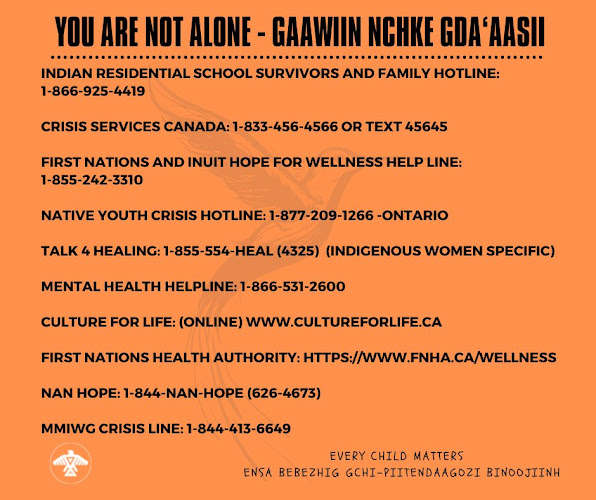
You are not alone
To Veronica Brown
Veronica, we adult adoptees are thinking of you today and every day. We will be here when you need us. Your journey in the adopted life has begun, nothing can revoke that now, the damage cannot be undone. Be courageous, you have what no adoptee before you has had; a strong group of adult adoptees who know your story, who are behind you and will always be so.
Diane Tells His Name
click photo
Lost Birds on Al Jazeera Fault Lines
click to read and listen about Trace, Diane, Julie and Suzie
NO MORE STOLEN SISTERS
click image
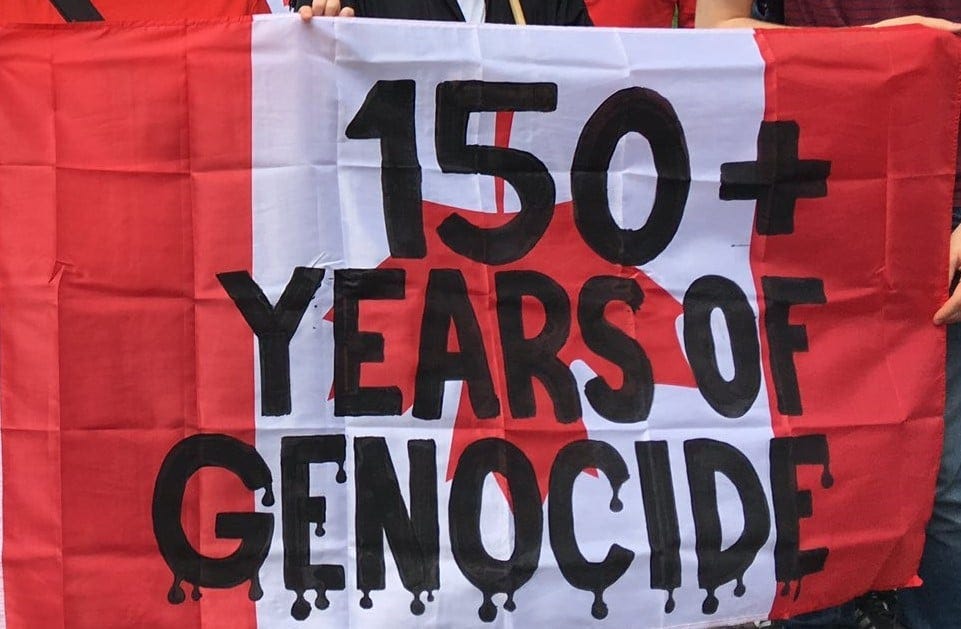
We conclude this series & continue the conversation by naming that adoption is genocide. This naming refers to the process of genocide that breaks kinship ties through adoption & other forms of family separation & policing 🧵#NAAM2022#AdoptionIsTraumaAND#AdopteeTwitter#FFY 1/6 pic.twitter.com/46v0mWISZ1
As the single largest unregulated industry in the United States, adoption is viewed as a benevolent action that results in the formation of “forever families.” The truth is that it is a very lucrative business with a known sales pitch. With profits last estimated at over $1.44 billion dollars a year, mothers who consider adoption for their babies need to be very aware that all of this promotion clouds the facts and only though independent research can they get an accurate account of what life might be like for both them and their child after signing the adoption paperwork.




.jpg)


.jpg)










 Posts
Posts

