They Took Us Away

They Took Us Away
click image to see more and read more

it's free

click

How to Use this Blog

BOOZHOO! We've amassed tons of information and important history on this blog since 2010. If you have a keyword, use the search box below. Also check out the reference section above. If you have a question or need help searching, use the contact form at the bottom of the blog.


We want you to use BOOKSHOP to buy books! (the editor will earn a small amount of money or commission. (we thank you) (that is our disclaimer statement)

This is a blog. It is not a peer-reviewed journal, not a sponsored publication... WE DO NOT HAVE ADS or earn MONEY from this website. The ideas, news and thoughts posted are sourced… or written by the editor or contributors.

EMAIL ME: tracelara@pm.me (outlook email is gone) THANK YOU CHI MEGWETCH!

SEARCH

Wednesday, November 19, 2014

TWO WORLDS: Helping Scholars Understand Indian Adoptions

Book Review by Author Margaret D. Jacobs:

(Excerpt)

Though not scholarly, this book is of great significance to scholars of Native American Studies who have only begun to unearth the policies and practices that resulted in up to 35 percent of all Indigenous children being separated from their families by the 1970s. Some of these children grew up in institutions, but many others were fostered or adopted by non-Indian families.

Two Worlds includes adoptees’ firsthand accounts interspersed with reprinted newspaper articles, congressional testimony, and some historical background. We learn that social workers and missionaries often put intense pressure on young unwed Indian mothers to relinquish their infants for adoption. Editor Trace DeMeyer explains something, too, about the Indian Adoption Project that the Bureau of Indian Affairs and the Child Welfare League of America jointly administered from 1958 to 1968, which promoted the adoption of Indian children by non-Indians.

These personal narratives show that many Indian children struggled within their adoptive families. Some report physical and/or sexual abuse. Others recall emotional cruelty with racial overtones. Gail Huggard (Ojibwe), for example, recounts, “One of my memories as a child is driving by Indian reservations. My mother would point at people, ‘Look at those dirty, rotten Indians’” (101). Adoptees describe a troubled adolescence in which their adoptive parents had few resources to help them navigate the intense racism and sense of dislocation that they experienced. Even in the best-case scenarios, many adoptees longed to know about their tribal communities and establish connections with their birth families. As Susan Smith (Grand Portage-White Earth Ojibwe) put it, “[My] childhood was happy and stable. It’s not that I wanted to replace my parents. I just wanted to know where I came from and who I looked like” (162–63).

The book primarily serves as a resource for adoptees themselves, but it may also help scholars understand this historical phenomenon. Most child welfare and adoption files are closed to researchers, and few long-term studies of the transracial adoption of Indian children have been carried out, so there is a desperate need for collections of adoptees’ (and birth families’) stories. While focused primarily on the experiences of American Indian adoptees in the United States, this book also includes a smaller section on Canadian Indigenous adoptees. A number of the selections come from adoptees of Great Plains Indian origin.
Copyright © 2014 Center for Great Plains Studies, University of Nebraska–Lincoln
Margaret Jacobs. "Two Worlds: Lost Children of the Indian Adoption Projects by Edited by Patricia Cotter-Busbee and Trace A. DeMeyer (review)." Great Plains Quarterly 34.4 (2014): 402-402. Project MUSE. Web. 14 Nov. 2014. .
Jacobs is the author of White Mother to a Dark Race and A Generation Removed.


I am thrilled to see this! ...Trace 


Tuesday, November 18, 2014

Native American kids need more protection, advisory panel tells Holder in new report

WaPo Story on DOJ Taskforce on Violence against Indian Children


Here is “Native American kids need more protection, advisory panel tells Holder in new report.”
“I felt profound sadness for what so many of these children have gone through,” said former U.S. senator Byron L. Dorgan (D-N.D.), who co-chaired the 13-member committee with Iroquois singer and child advocate Joanne Shenandoah. More than 600 people participated in the hearings, including more than 70 experts and representatives from over 60 tribes and 15 states.
End Poverty and we'll change everything... Trace

Adoption Secrecy and Truths #flipthescript #NAAM2014


“My problem is secrecy. I believe that perpetually secret adoptions assure un-accountability and lack of transparency. And secret adoptions are only the tip of the iceberg. The secrecy permeates the process: secret identities, secret parents, secret records, secret foster care providers, secret social workers, secret judges and lawyers (all their identities are sealed, typically), secret physicians, secret statistics and, in the case of some adoption-oriented organizations, secret budgets and secret boards of directors. In any social practice, when people in positions of power hide behind masks, one can be pretty sure that they have something to hide.”
-        Albert S. Wei,
-        Special Advisor to the Bastard Nation Executive Committee


“Everyone has a right to knowledge about their lineage, genealogy and identity. And if they don’t, then it will lead to cases of incest...”
-Lord David Alton quoted after married adoptee twins were granted annulment in Great Britain (January 2008)


“Storytelling is an important aspect of Ojibwe culture. My ability to tell a good tale can be used as a tool for teaching and connecting. Even though I grew up outside of my Native community and culture, my stories helped me to become a part of the community that I had lost. Adoption is part of the contemporary tales that Native people need to tell…”
- Tamara Buffalo, published author-poet-visual artist


…Adoption professionals who believed in making adoption work believed that it was a “social crime” to place inferior children with parents who expected — and deserved — normal children. Agencies sometimes required parents to return children if and when abnormal characteristics appeared and laws, such as the Minnesota Adoption Law of 1917, treated feeble-mindedness as cause for annulment.  Medical writers in the popular press warned parents to “be careful whom you adopt.” Adopters faced frightening risks because children unlucky enough to need new parents were also unlucky enough to be genetic lemons.

             [Read about Eugenics: www.darkwing.uoregon.edu]


Excerpt from One Small Sacrifice
Danger was an enduring theme in modern adoption history. The genetic lemon theory was heard around the world, I guess.  I read about eugenics.      
Feeling “adopted” made it seem like they did me a great big favor! How heroic for them to adopt - when I could be dangerous or the “bad seed” of immoral unintelligent people.
I never heard, “Tracy was illegitimate or she is someone’s dirty little secret!” but I knew it’s what people were thinking. Obviously my parents were wildly happy to get us as babies, praised for doing such a selfless act. They hid any uneasiness. Since my adopted sibling and I were not biological offspring, if we didn’t turn out ok, then it can’t totally be their fault. 
Funny, I always seemed to know who was adopted. Our parents usually introduced us or we introduced ourselves as adopted. I had two friends named Kim and another friend Lisa who knew they were adopted. This became our bond, our shared identity.
No "orphaned child" can escape this– it is fact, a heart broken too often turns to stone.
- Trace L Hentz (formerly DeMeyer)

"Get out of the way" & Aboriginal suicide rates will drophttp://thestringer.com.au/get-out-of-the-way-aboriginal-suicide-rates-wi...
16 Nov 14: "Please return our son because my wife cannot go on without him, she will suicide, please return our son," wrote a Noongar father and husband to the Western Australian Government's Chief Protector in 1905.
"The fundamental issues which underpin suicide rates nationally vary from cultural group to cultural group, geopolitically and demographically. The fundamentals that underpin suicide rates of some First Peoples communities are vastly different to those of non-Aboriginal communities. The Western Australian Government’s recent statements that 100 to 150 remote Aboriginal communities should be closed makes it clear that lessons from the past have not been learned. ... " By The Stringer
"Declaration of conflict of interest - the author of this article, Gerry Georgatos is a suicide prevention researcher and a senior national consultant to the ATSISPEP (Aboriginal and Torres Strait Islander Suicide Prevention Evaluation Project)"


Monday, November 17, 2014

Addiction to a thought pattern? #flipthescript #adoption


By Trace (Adoptee-Author-Blogger)

There is a language of adoption, not just medical jargon and terminology. I am not a medical doctor but I know what I did and what happened to me over a long period of time. 

The majority of adoptees have difficulty with foggy thoughts well into adulthood. (Some adoptees call this ADOPTION FOG.)
            
Taking control of your thoughts is difficult. Once I did see clearly what happened to me, without blocking it, without drugs and medication, change did occur. It took counseling in my case. In Seattle I did co-counseling for over two years. You tell your life story, as much as you can remember. The truth, all of it. For me it was like a powder keg exploded!  Emotions trapped in the body were released. (Google EFT too.)

There was a workshop in Vermont in 2009 that explained about a person’s destructive emotions. 

These emotions are thought of as an “auto-immune” disease of the mind. Tibetan Buddhists, much like the Navajo, call them “obscuring emotions” because they cloud the healthy, luminous quality of the natural mind.
             
The intensity of the dark emotions will arise as if in response to a survival threat, but it is actually an addiction to a thought pattern.

Using mental antidotes, what I call rewiring my brain, it is possible to train the mind out of suffering and ending these habits or thought patterns.

For centuries, medicine people have studied the true nature of the mind over body. If you read Buddhist teachings, neuroscience, and Native American spirituality, each is more alike than different.

One who faces their trauma faces the enemy. This cure is available to all adoptees. Train the mind out of suffering. 

(This is adapted from my memoir ONE SMALL SACRIFICE...Trace)

Sunday, November 16, 2014

Living with Guilt, Ceremony for Adoptees #flipthscript #adoption

   
By Trace (Lost Bird Adoptee)

I am not a medical professional, or a doctor, or lawyer…and I am not offering a magic pill or legal advice or any medicine…  I just know what I did.

Adoptees do heal - even without all the answers they desperately want. It is possible. Tell your guilt you are not looking for parents - just looking for answers, for truth.

I’ve heard this from other adoptees: Help as many adoptees as you can with their guilt. (Yes, guilt)

Adoptees can release damaging emotions in a safe way, in a ceremony, in a church, or in a prayer. It could possibly take years, not a few sessions of talk-therapy. For Split Feathers, get to a ceremony.

I tell my adoptee friends, “You may never find all the answers but you can wake up. You can tell your side of the story. You need ceremony. Get support. Laws need to be changed. History will never change the facts you were let go or taken away from your parents. The government did what it did....”

In my situation, I had a reunion with my dad almost 20 years ago. I never met my mother. I have been to ceremonies.
           
My advice to those going into reunion is: “A reunion doesn’t guarantee you’ll hear what you expect or feel all better. Many adoptive parents and natural parents can’t handle it. They have no idea the pain adoption caused you and they do not want to take responsibility for it.  Once you meet your birth family, mother, father, siblings, you decide what to keep and what to leave behind.  You have the opportunity to make your own decisions for the first time in your life. You create a safe zone and safe home for yourself. You become your own parent. You decide who to let in and who to let go. In other words, you heal.”
             
I'll also share this advice given to me: “Living in a state of consciousness of love keeps you balanced, no matter what life throws at you. The ego’s consciousness is cloudy (foggy) and keeps you out of your heart. The ego also keeps you in a state of procrastination. Being in the center of your chest brings energy to your being in the now, thus stopping procrastination.”

Love yourself.  Drop the Guilt. Find the Truth.

(Adoptees who are interested in attending ceremony in 2017, email me: laratrace@outlook.com)

Happy Visitors!

NEW WEB ADDRESS

Because we don't want to lose information on this blog, we now have a domain name: American Indian Adoptees.com - click and save this link:

2026: WE HAVE A BACK UP BLOG COMING SOON: www.americanindianadoptees.blog (on wordpress) We are no longer on Facebook. We deleted our accounts.

WRITTEN BY HUMANS!

WRITTEN BY HUMANS!

Blog Archive

Featured Post

Your History Class Was a F*cking Lie | #NOMOAR

  Your History Class Was a F*cking Lie by Sean Sherman (Or: How the American Educational System Has Always Been a Racist Propaganda Program...


Native Circles

Native Circles
click logo for podcasts!

Most READ Posts

Bookshop

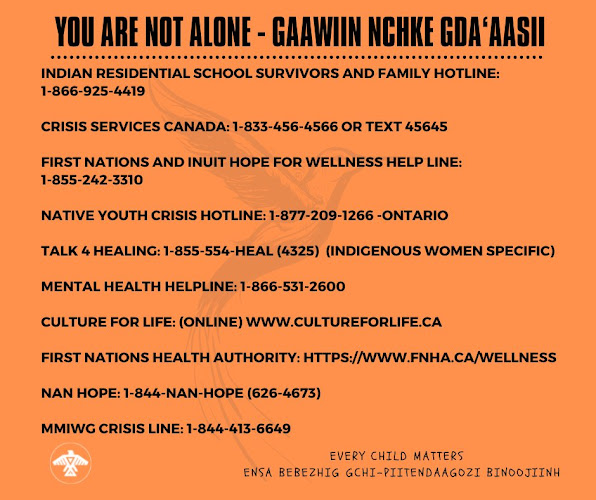
You are not alone

You are not alone

To Veronica Brown

Veronica, we adult adoptees are thinking of you today and every day. We will be here when you need us. Your journey in the adopted life has begun, nothing can revoke that now, the damage cannot be undone. Be courageous, you have what no adoptee before you has had; a strong group of adult adoptees who know your story, who are behind you and will always be so.

Diane Tells His Name


click photo

Lost Birds on Al Jazeera Fault Lines

Lost Birds on Al Jazeera Fault Lines
click to read and listen about Trace, Diane, Julie and Suzie

NO MORE STOLEN SISTERS

NO MORE STOLEN SISTERS
click image

ADOPTION TRUTH

As the single largest unregulated industry in the United States, adoption is viewed as a benevolent action that results in the formation of “forever families.”
The truth is that it is a very lucrative business with a known sales pitch. With profits last estimated at over $1.44 billion dollars a year, mothers who consider adoption for their babies need to be very aware that all of this promotion clouds the facts and only though independent research can they get an accurate account of what life might be like for both them and their child after signing the adoption paperwork.

Original Birth Certificate Map in the USA

Google Followers