BOOZHOO! We've amassed tons of information and important history on this blog since 2010. If you have a keyword, use the search box below. Also check out the reference section above. If you have a question or need help searching, use the contact form at the bottom of the blog.
We want you to use BOOKSHOP to buy books! (the editor will earn a small amount of money or commission. (we thank you) (that is our disclaimer statement)
This is a blog. It is not a peer-reviewed journal, not a sponsored publication... WE DO NOT HAVE ADS or earn MONEY from this website. The ideas, news and thoughts posted are sourced… or written by the editor or contributors.
EMAIL ME: tracelara@pm.me (outlook email is gone)
THANK YOU CHI MEGWETCH!
A podcast hosted by Matika Wilbur (Swinomish and Tulalip) , and Temryss Lane (Lummi Nation), to explore our relationships—relationships to land, to our creatural relatives, and to one another.
Happy Holidays, Relatives!
As the year comes to a close, we want to pause and say thank you. Thank you for listening, reading, sharing, showing up, and believing in the work of All My Relations. This community is what carries the work forward.
We’re stepping into winter with a lot of new beginnings. This fall, we quietly launched a new season of All My Relationsand unveiled our new website, and since November we’ve been releasing new episodes again. If you haven’t had a chance to listen yet, now is a beautiful time to dive in—and if an episode resonates, please share it with a friend. These conversations grow through relationship.
This season’s episodes have taken us deep into Indigenous food sovereignty, SNAP benefits, loud Indigenous joy in the kitchen, and eco-erotics—exploring how we relate to land, body, pleasure, and responsibility. These are conversations meant to be sat with, argued with, and carried forward.
Former U.S. Sen. Ben Nighthorse Campbell, who represented Colorado in
Congress for nearly two decades, died of natural causes Tuesday, Dec.
30, surrounded by family. Campbell was a tribal citizen of the Northern
Cheyenne Tribe. He was 92.
Former US Sen. Ben Nighthorse Campbell, of Colorado, dies at 92
Campbell served in the U.S. House of
Representatives from 1987 to 1993 and in the U.S. Senate from 1993 to
2005. After retiring from politics, he lived with his wife, Linda, in
Ignacio, Colorado.
When he entered the Senate in 1993,
Campbell became the first Native American to serve in the upper chamber
in more than 60 years.
Stories we loved to tell | Baker Lake woman’s journey through her family’s history a stirring moment to write about
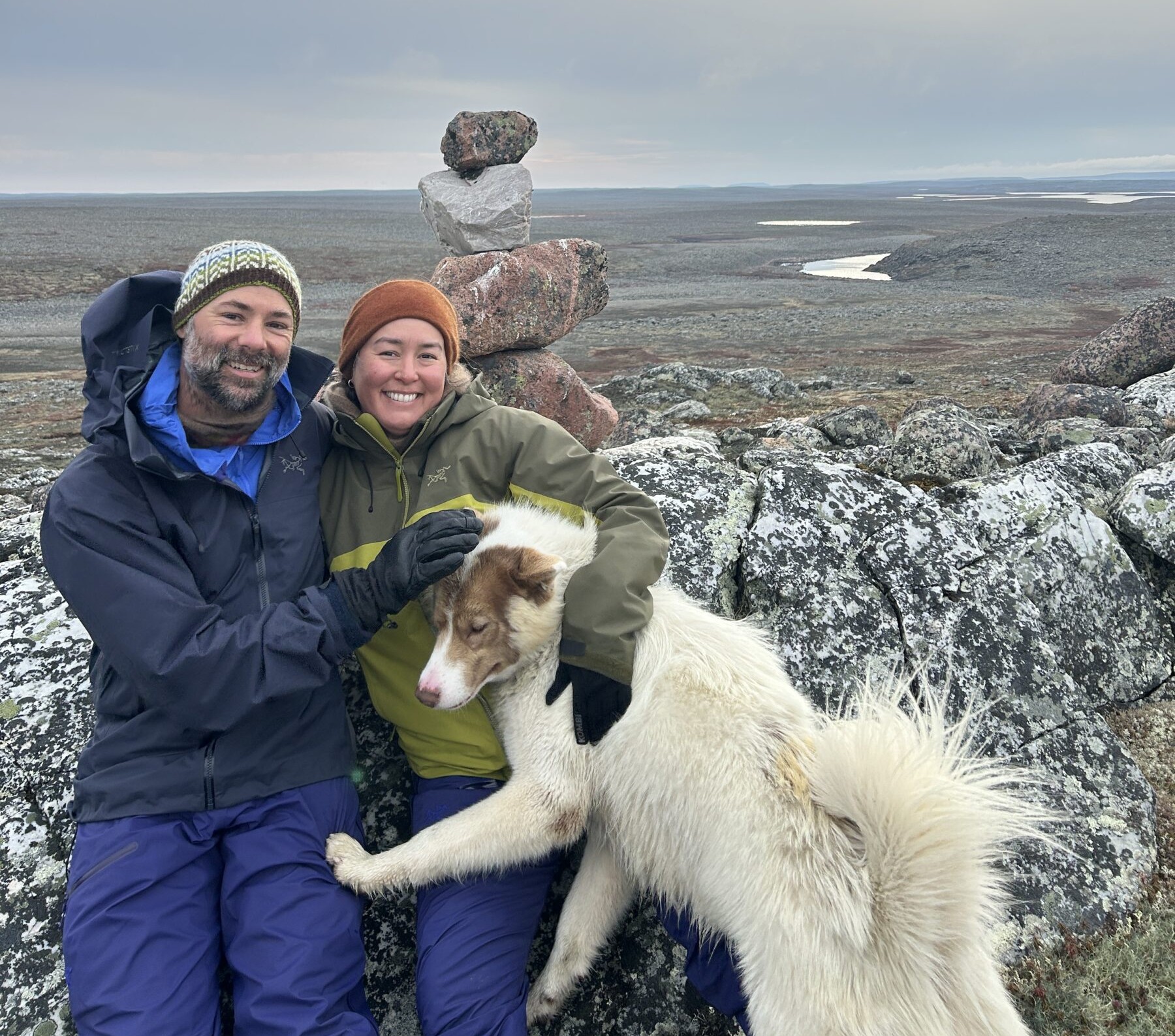
Erik Reid and
Gayle Uyagaqi Kabloona pose for a photo with their dog Tempe in front of
one of many inuksuit the group used to guide their journey. (Photo
courtesy of Gayle Uyagaqi Kabloona)
In this year-end series, Nunatsiaq News reporters look back on their most memorable stories from 2025.
Working as a reporter, you often find yourself telling unhappy
stories but every once in a while you get one that leaves you feeling
inspired.
That’s where I found myself in October while writing about a woman who was trying to reconnect with her Inuit roots.
Starting in the 1930s, Inuit were displaced from their traditional
lands by the federal government and moved to permanent settlements. They
were forced to abandon their way of life of that involved migrating
between winter and summer camps.
For Gayle Uyagaqi Kabloona,
who now lives in Ottawa, this displacement is still within living
memory. Her father, Thomas Kabloona, now in his 70s, shared stories with
her about his family’s last migration to winter caribou hunting grounds
in the 1950s before they moved to Baker Lake permanently.
“I’ve always loved my dad’s stories,” she told me in August when she was still planning the trip.
A
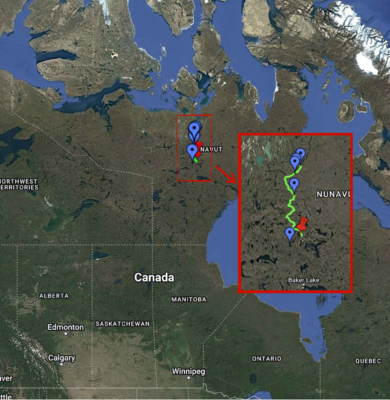
map showing the approximate route the group took from Back River south
to a place called Amarulik, which means “the place where there are
wolves.”
Her father described the family’s traditional migration while poring
over maps and describing what living on the land was like back then.
In August, Uyagaqi Kabloona, her partner, her sister and a couple of
friends embarked on the 200-kilometre journey. They followed the same
route her family had taken for generations before colonization. It had
been nearly 75 years since her father had last completed the trek, when
he was five years old.
The route started in Back River, approximately 200 kilometres north
of Agnico Eagle Mines Ltd.’s Meadowbank Mine. They proceeded south for
23 days and reached the family’s traditional winter caribou hunting spot
called Amarulik, which means “the place where there are wolves.”
It isn’t often that you get to cover a story that is so neatly and
sweetly bookended. I was lucky enough to speak to her at the beginning
of her journey and at the end.
She described finding numerous inuksuit along the route. At times, she said, it felt like she was being guided by her ancestors.
With help from relatives and the inuksuit, she located the graves of some of her ancestors.
“If you lined them up, you were pointed directly at where the graves were,” she said in October, referring to the inuksuit.
It’s a privilege to be a journalist. Sometimes, we are lucky enough to connect to a story that’s so deeply important to someone.
For Uyagaqi Kabloona, making the journey was a way to experience what
life was like for her family in Inuit Nunangat before colonization.
Metis filmmaker bringing lived experience to the silver screen
Daniel Halmarson |
A frame from filmmaker Tim Riedel’s short version of "Ancestral Beasts." (Source: Michif Koonteur)
On
the surface, “Ancestral Beasts” is a horror flick steeped in Indigenous
lore, but at its core, the upcoming film is a deeply personal look at
Metis writer/director/producer Tim Riedel’s childhood.
“It’s
actually based on my lived experience as the son of a Sixties Scoop
survivor who, later in life, was diagnosed with borderline personality
disorder,” Riedel told CTV News. “My mom was a wonderful person I loved
really big, but she was suffering from something that I didn’t
understand as a kid.”
Riedel was born and
raised in Winnipeg and cut his teeth in the film industry working on
cartoons and documentaries that took him all over the globe.
He credits a Métis Elder for pushing him to share his own experience.
“You
always go so far away across the world to tell other people’s stories,”
Riedel recalled. “How come you don’t even tell our stories?”
Riedel
said he wanted to create a documentary but admits it “didn’t feel
right.” Instead, the concept evolved into his first narrative feature
film. He said the horror genre is a way to show the chaos and
instability of his upbringing by turning his mother’s disorder into a
real monster lurking in the shadows.
“The
curses we inherit aren’t our fault, but what we let them become is our
responsibility,” Riedel said. “And that’s a really important message to
take forward.”
Riedel’s short ‘proof of
concept’ version of “Ancestral Beasts” screened at the Cannes Film
Festival this year and helped Riedel secure financial backing for the
project.
The filmmaker returned to Winnipeg
earlier this month to shoot the feature with production companies
Buffalo Gal Pictures and Kistikan Pictures. Actress Morgan Holmstrom
plays the lead in “Ancestral Beasts,” while Darla Contois, best known
for her award-winning role in the Crave television series “Little Bird,”
plays her sister.
Contois, who hails from Misipawistik Cree Nation, said the project brings conversations about trauma to the forefront.
“I
think understanding more of the human experience, especially in a
mental health sense, is a really great place to be,” Contois told CTV
News.
She adds it’s important for Indigenous people to tell these types of stories from both sides of the camera.
“Representation is really important,” she said. “I think being able to see yourself in any way for anybody is very important.”
Riedel echoed that sentiment and pointed out that the “Ancestral Beasts” crew is predominately Indigenous as well.
“We
have such a long history of being great storytellers. In fact, that’s
how our history for tens of thousands of years has been shared,” Riedel
said. “So give us a camera, and we’ll tell you some great stories. Good
storytelling is good medicine.”
“Ancestral Beasts” doesn’t have a release date yet, though it will likely premiere at film festivals next year.
The prime minister of Denmark apologized
for the forced contraception of thousands of Indigenous women in
Greenland dating back to the 1960s. The Danish government is also ending
problematic parent competency tests associated with disproportionately
high numbers of babies being taken away from Indigenous mothers. Both
milestones come as Greenland — an autonomous territory of Danish rule —
is making strides toward independence. The Trump administration has also
made public comments about exerting U.S. control over the mineral-rich
territory occupied almost entirely by Indigenous Inuit residents. We’ll
talk with Greenlanders about how these developments address Denmark’s
complicated past and what remains to be done.
E/TES is a guiding principle introduced by Elder Dr. Albert Marshall
of Eskasoni First Nation in 2004. He teaches that E/TES is learning to
see from one eye with the strengths of Indigenous knowledge and ways of
knowing, and from the other eye with the strengths of Western knowledge
and ways of knowing, and then learning to use both eyes together for the
benefit of all. There is a wealth of information on E/TES here.
Etuaptmumk/Two-Eyed Seeing, Storytelling, and Teaching Youth
In a sense, all teaching is the telling of stories, although that
characteristic may not always be obvious. Traditionally, Indigenous
knowledge-keepers pass their knowledge through telling stories in social
settings: around the fire, talking circles, and so on (also through
mentoring, song, and dance). The stories involve legendary characters
and spirits in human, animal, or inanimate form. Embedded in those
stories are life lessons and facts of nature, and this is how knowledge
is passed to the next generation. We still tell those stories today,
but, most importantly, we tell our own stories, too.
The Mi’kmaw Moons
Project includes the stories of our journey, including discoveries and
experiences along the way. We also include the scientific story of the
astronomical underpinnings of the natural cycles.
Our conversation moves beyond McGirt into other claims of a right of domination—including claims of “bureaucratic expertism” that seek domination over all people. We say that free existence requires free inquiry into all claims of a right of domination.
Have you ever heard that icebreaker–if you had to pick one
superpower, would you fly or be invisible? I always pick the power of
flight. I already know what it’s like to be invisible. In this country,
it is not a form of power.
Once, I was at a grassroots
social justice convening in Florida. On a break while people made small
talk, a white woman came up to me and said, “I thought we killed all of
you.” As in, she thought Native Americans were extinct like the woolly
mammoth. It is a bewildering stereotype to encounter. The stereotype
that you no longer exist. 82% of adults in the U.S. cannot think of a single, living, famous Native person. 98% cannot name two.
When
you scroll through your phone, read the news, or watch TV,
statistically, it is very unlikely you will see a Native person. Of the
2,336 regular characters on TV from 1987 to 2009, only two were Native. A recurring character on Northern Exposure. And a contestant on the reality show Survivor.
On
the rare occasion Native people are portrayed in the media, we live in
the past. In one study, researchers typed “Native American” and
“American Indian” into the Google image search bar. 95% of the results
were “antiquated portraits.” Once, someone told me that, even though
she didn’t believe that I was Native, she knew that my ancestors were.
Conveniently for a country built on our land, all of the real Indians
are dead and gone.
In
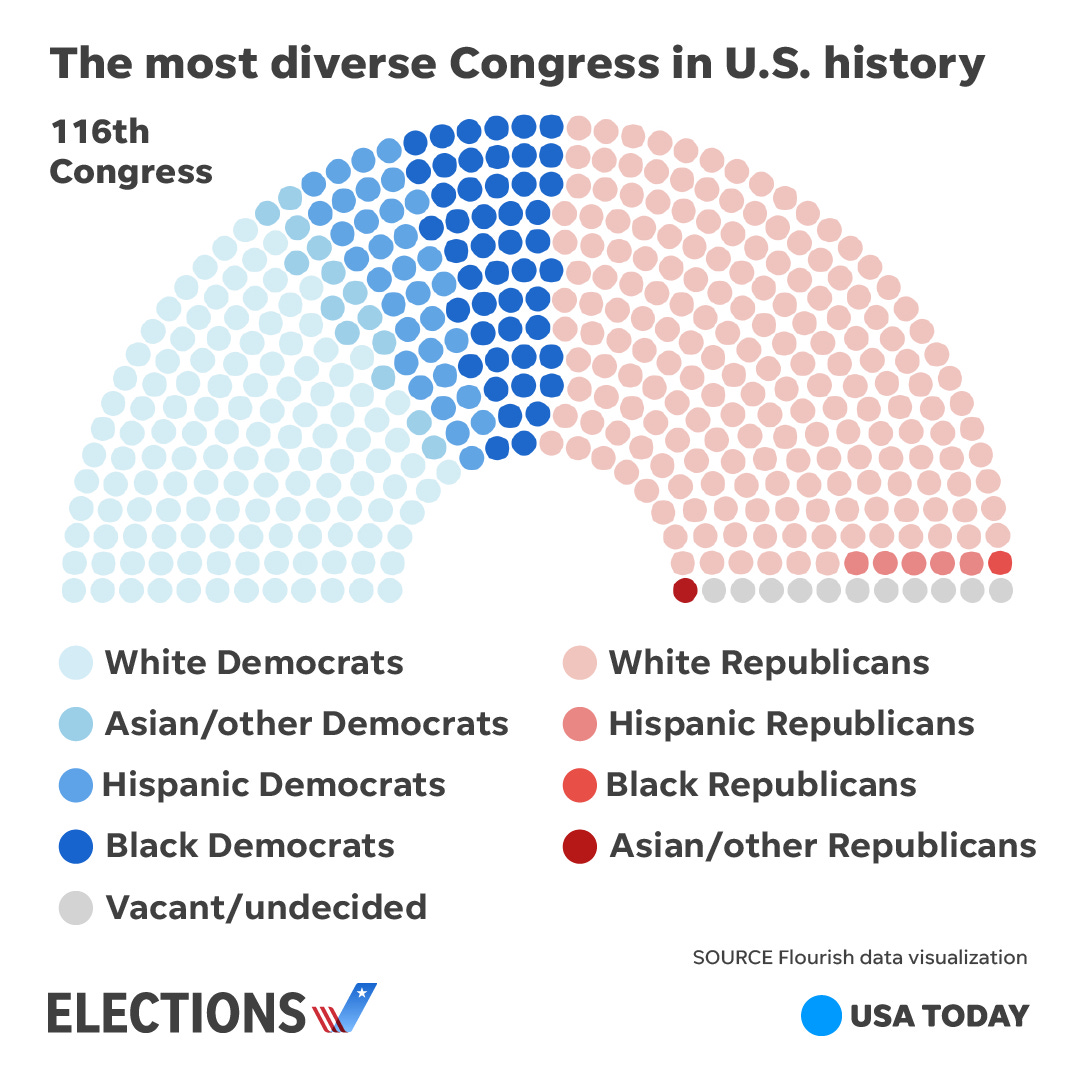
2018, U.S. voters elected the most diverse Congress in our country’s
history. For the occasion, USA Today made an infographic. The 116th
Congress included two Native women–the first ever elected to the body.
In their infographic, USA Today put the Native representatives in the
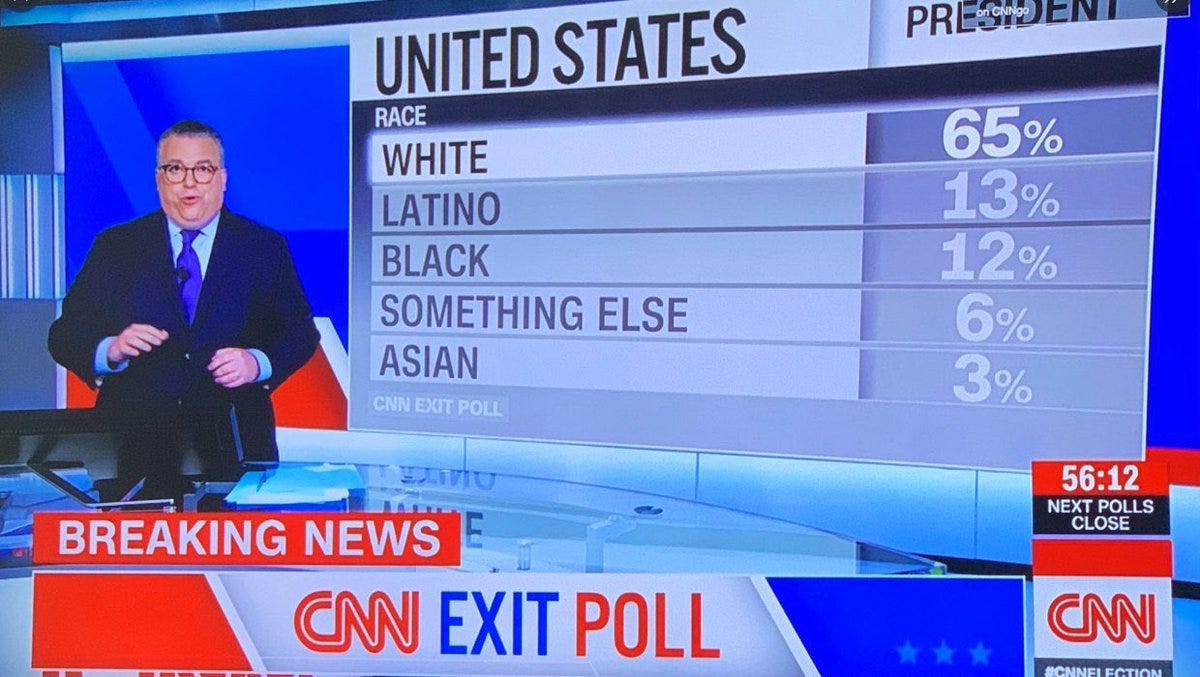
“other” category. In the 2020 election, Native voters helped Biden win
the swing state of Arizona. On election night, CNN published an exit
poll capturing how people voted in the state. On it, Native voters were
called “something else.”
Native people are not simply left out of the story. We are written out.
We
don’t learn about most people through direct social interactions, but
from things like movies and the internet. I have never been to France,
but I have an idea in my head that French people like wine and cheese.
When a group is negatively represented, that can lead to stereotypes and
prejudice, like the idea that women are bad at math. What Native people
face is different. The media, pop culture, and school curriculum do not
just represent us poorly. It represents almost never. Our existence is erased from the public eye. Americans don’t think about our absence. They don’t think about us at all.
This
erasure harms Native folks. Our near-total absence from the media
Americans consume creates a stubborn prejudice in the minds of
non-Natives. Over time, they see us as less real and even less human.
Research has found that less exposure to contemporary Native people
correlates with more prejudice against us and less support for tribal
sovereignty. One study
found that the more contemporary Native people were omitted, the more
participants agreed that the U.S. should nullify all treaties, eliminate
all reservations, and abolish tribes’ right to self-govern. It is
active erasure.
Chyana Marie Sage is the author of Soft As Bones, a memoir about intergenerational trauma. (Anneka Bunnag)
Reflecting on the 10th anniversary of the Truth and Reconciliation Commission (TRC), Chyana Marie Sage said its legacy is the buried history it has unearthed.
The Cree, Salish and Métis writer's recently released memoir, Soft As Bones, is her own quest to better understand the childhood trauma and abuse that scarred her family, and its roots to colonialism, she says.
It's
also a tapestry of poetry, history, Cree language, traditional ceremony
and folklore that delves into her experiences, and those of her family,
with compassion and strength.
Overall, it serves as something
of a journey of hope for the Edmonton author — a tale of overcoming
generations of trauma to reach new heights.
'Sharing their truths'
Sage's
journalism has appeared in the Toronto Star, Huff Post and the New
Quarterly. She holds an MFA in creative nonfiction from Columbia
University in New York, where she taught as an adjunct professor.
"I
think Indigenous creatives have really responded to [the TRC] by
sharing their truths. Step one is the acknowledgement of what happened
here in Canada. You see that with a ton of memoirs having come out in
the last decade," said Sage, noting works by authors such as Jesse Thistle, Terese Marie Mailhot and Julian Brave Noisecat.
She
said these writers are unearthing and critiquing the colonial systems,
which not only caused intergenerational trauma but also severed the
passing of knowledge.
"There was a period of reflection from
residential school and Sixties Scoop survivors," she added, "[but] we're
now moving into this space where writers are talking about how those
systems are impacting the generation of today."
Over the past 10 years, Indigenous writers have endeavoured to honour the TRC calls to action by uncovering the lasting impacts of colonial systems.
Sage
said the impact of this can still be seen in the disproportionate
number of Indigenous people who are homeless or incarcerated.
While writing Soft as Bones, the most important thing was "to show how everything is interconnected," says Sage.
Even
though she was not in residential school herself, her grandfather was a
Sixties Scoop survivor, and this impacted how he parented his own son,
Sage's father, who — as the book details — was sexually abused and later
abused Sage's older sister.
The original wound
The
things that happened in her family while Sage was growing up caused her
immense grief and confusion, she says. Her book was an attempt to
understand and process her own experiences and search for the "original
wound."
"Soft as Bones became this living archive and my
family story became this microcosm, really, one small piece of this
mosaic that makes up the Indigenous experience in Canada."
While writing about the harm that the colonial structures caused to her family, Sage said she also had another realization.
Sage
says writing the book also made her realize that while colonialism
tried to take away Indigenous identity, culture and ceremony, those
things are all rooted in healing. "So the very thing that they tried to
take away is the thing that is giving us our spirit back."
My family story became this microcosm, really, one small piece of this mosaic that makes up the Indigenous experience in Canada.
Massachusetts Hall, the oldest surviving building at Harvard, is home to the offices of its president and provost.By Pavan V. Thakkar
Scholars
have spent years studying Harvard’s colonial-era land holdings in New
England. Now, undergraduate research on the University’s ownership of
Indigenous land in Maine is helping push the research forward.
Laura
C. Cleves ’28 and Christian D. Topinio ’27 traced Harvard’s financial
entanglements to a piece of land in southern Maine using archival
documents and interviews with members of the Penobscot Nation.
The
two found that an alumnus gifted the land to Harvard in 1678, though
the University did not touch the land until a century later. Harvard
sold the land in 1780, though members of the Penobscot and Abenaki
peoples lived there at the time.
English
settlers at the time, including the original donor of the land, assumed
that tribal leaders had agreed to hand over exclusive rights to the
land. The land was sold for $1,877 — the equivalent of $54,000 today —
though tribal leaders disputed any such agreement.
Alan
Niles, a lecturer in English who advised the research, said that sale
of the land allowed Harvard to use Indigenous land as an instrument of
financial gain.
History
professor Philip J. Deloria, another adviser of the research, said many
of Harvard’s land sales were tied to the Massachusetts government,
which used land to fund the University.
“Harvard was set up to be a college, not a colonial institution,” Deloria said. “It was not meant to colonize and town-found.”
History professor Philip J. Deloria in a 2019 portrait.By Ryan N. Gajarawala
“There’s
an important ethical question there,” Topinio said. “If we or other
researchers have found serious legacies of land expropriation and land
theft from Indigenous nations that have been unaddressed, there is an
ethical call to address that.”
Cleves
and Topinio’s work was conducted as part of the inaugural Caleb
Cheeshahteaumuck and Joel Iacoombs Fellowship, a summer fellowship open
to Harvard undergraduates interested in archival research on Indigenous
history.
The
summer work — conducted in partnership with the Harvard University
Native American Program, the FAS Inequality in America Initiative, and
the Build Learning through Inquiry in the Social Sciences program — is
an extension of the Harvard and Native Lands course, where students
produce original research on Harvard’s involvement with Indigenous land.
Deloria,
one of the advisers, started the Harvard and Native Lands course in
2022 and will return to its teaching staff for the first time next
spring. He said that the fellowship was an opportunity for students to
dive deeper into their research than the academic semester normally
allows.
The
summer gave Cleves and Topinio the opportunity not only to examine
Harvard’s archives, but also to travel to Maine and interview members of
the Penobscot Nation, Deloria said.
“It
was very, very valuable in terms of knowing what exactly community
research looks like,” said Topinio. “What values do they hold of the
land? How do they think through these issues of sovereignty? What does
it mean to take that land as part of your home?”
The
Legacy of Slavery report also began as an undergraduate research
seminar and later became a task force culminating in the report’s
release in 2022.
Deloria
pointed to regular meetings between University Provost John F. Manning
’82 and tribal leaders as a starting point for the collaborative work he
envisions for the field’s future.
“It's really, going forward, an opportunity for tribes and Harvard to produce knowledge together, in collaboration,” he said.
Joel Pedersen has spent more than half his life serving in the Canadian Armed Forces reserves. First joining when he was 17, he credits the idea to his adoptive mother saying both her and his father both served as well.
Pedersen himself is a child of the Sixties Scoop and the Adopt an Indian & Metis (AIM) Program. However, he said, it was never seen as an obstacle or disadvantage.
Crow leadership are working toward revamping their tribal citizenship
requirements. If their proposal goes through, any currently enrolled
tribal citizens would be designated as having 100% Crow blood. The St.
Croix Ojibwe Tribe in Wisconsin is seeing their first tribal enrollment
gains in years after they got rid of their blood quantum requirement.
They are among the tribes looking down the road and mapping a future
away from the Indian blood requirement.
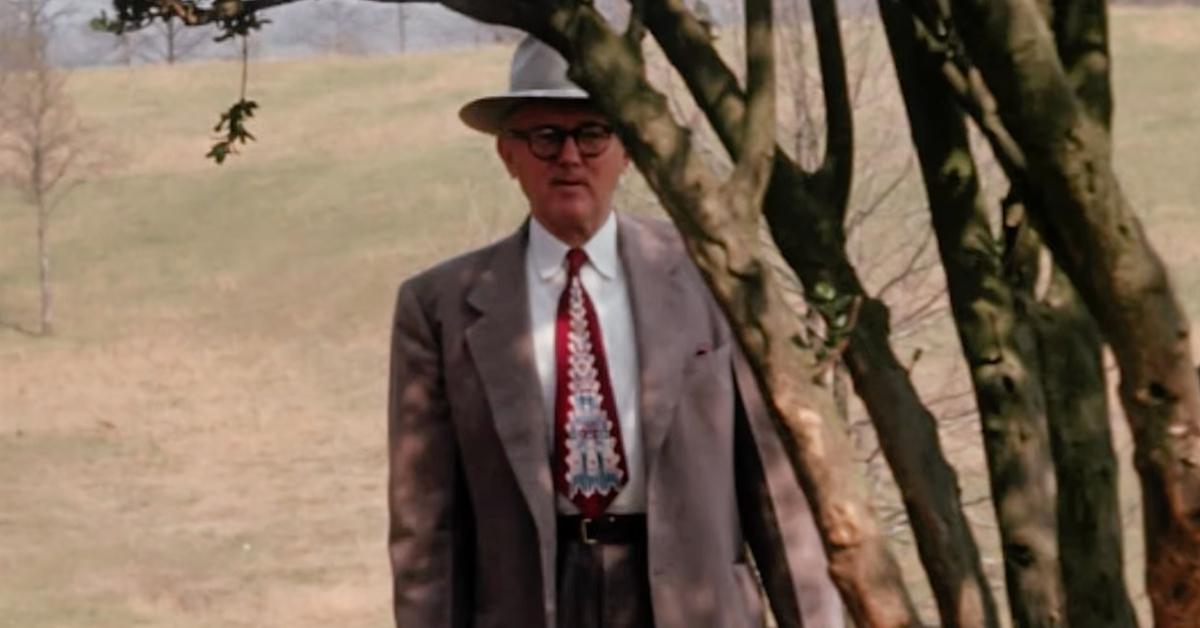
Dr. Thomas J. Hicks was the small-town Georgia doctor who secretly ran a black-market adoption
ring out of his clinic in McCaysville. None of this came out while
Hicks was alive. The truth didn’t start to unravel until 1997, when
adoptees and local journalists noticed a pattern linking unusual
McCaysville birth certificates to families in places like Akron, Ohio.
Hicks
never faced criminal charges for the illegal adoptions, and the
families he affected never got the chance to see him questioned in
court. Now, decades after his death, people still wonder what caused his
death. Here is what we know about the circumstances surrounding his
passing.
By
the time Hicks died, his medical career had already collapsed. In 1964,
authorities indicted him for performing an illegal abortion, according
to the Los Angeles Times.
He surrendered his medical license soon after. That charge stood
separate from the black-market adoption operation he quietly ran out of
the same building. His clinic in McCaysville, Ga., shut down, and Hicks
slipped into local obscurity.
Hicks died of leukemia, a type of blood cancer, in 1972. A Johnson City Press
death notice at the time said Dr. Hicks, a Kingsport, Tenn., native who
had practiced medicine in Copperhill/McCaysville for nearly 50 years,
“died at his home Sunday of leukemia” at age 83.
Born
in 1888 in Pickett County, Tenn., he studied at Tusculum College,
Carson-Newman College, and later Emory University’s medical school
before going into practice. In McCaysville, Hicks reinvented himself as
the town doctor. The Hicks Community Clinic handled everyday checkups
and minor emergencies for local families in the front rooms.
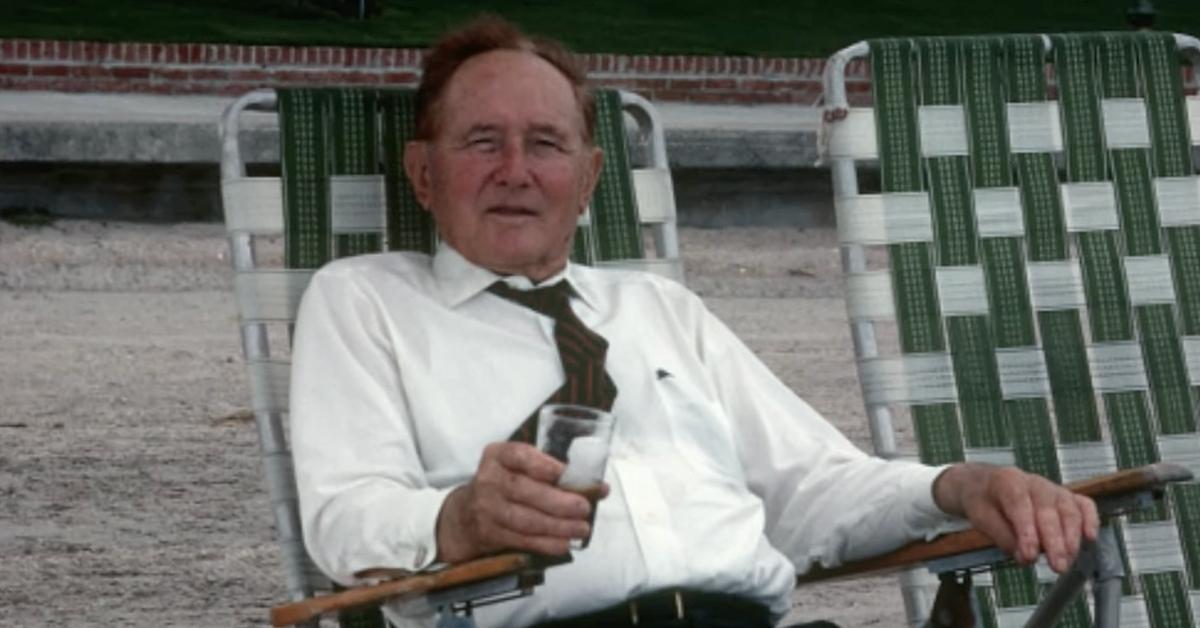
Thomas J. Hicks’s “babies” have spoken out since his death.
Behind
that wholesome image, Hicks was running something much darker. In the
1950s and early 1960s, he began advertising abortion and adoption
services on phone booths, bus stations, and bridges — at a time when
abortion was illegal in Georgia. Women traveled from across the region
to his clinic.
Some
came seeking abortions, paying around $100 for the procedure. Others
were persuaded to carry their pregnancies to term, only to have Hicks
quietly place their newborns with out-of-state couples in off-the-books
adoptions. Hicks was later linked to more than 200 babies who were sold
or “given away” from the back of his clinic between roughly 1950 and
1965, according to The Atlanta Journal-Constitution.
In
one documented case, Thelma Tipton said Hicks told her that her baby
girl was stillborn and even had her sign a death certificate. In
reality, the doctor had sold the child to adoptive parents a week later.
“He stole my daughter,” Tipton told ABC News.
“He robbed me of my life. … I missed out seeing [Kristie] growing up,
missed out on her first tooth … her first day in school. … I missed out
on her wedding, I missed out on everything.”
One
adoptee, Melinda Dawson, told investigators that her parents were
instructed to walk in the front, take the baby, and leave through the
back alley. "They were instructed to come down ... come through the
front door, pick the baby up and leave through the back door, and go
home immediately," Dawson said, per Country Living.
Shannon Wheeler, chair of the Nez Perce Tribe, attends a meeting with tribal fishermen near Lapwai, Idaho February 18, 2025.
(Erika Schultz / The Seattle Times)
More than 500 Native American artifacts ancestral belongings believed to have been
illegally taken from the Umatilla National Forest by an Eastern
Washington resident will be turned over to the Nez Perce Tribe.
The
items were found when a search warrant was served at the home of Shane
Dee Caldwell, 39, of Asotin, Asotin County, about 20 miles from the
national forest boundary.
An investigation began when a Washington
state employee received a tip in June 2023 that Caldwell was digging up
artifacts LOOTING in the northern part of the Umatilla National Forest at an
archaeological site that may have been used as a camp along the Great
Nez Perce Trail in the Blue Mountains.
The trail was a trade and
travel network created as hundreds of Nez Perce men, women and children
fled U.S. Army generals in 1877.
Will Marquardt, a Pomeroy Ranger
District archaeologist, found seven “test pits” dug in a one-acre area
in the national forest. Test pits are used to determine whether
artifacts are in the area and whether more digging there would yield
them.
He suspected that dirt from the pits had been taken away to
be put through a screen elsewhere to look for artifacts, according to a
court document.
The largest pit included the impression of a bucket in the loose dirt and a boot footprint.
Within
days, a national forest law enforcement officer, Austin Hess, placed
two trail cameras in the area, and Caldwell was photographed near the
holes within hours.
More cameras were set up and captured images
of Caldwell near the deepest hole and using a hoe or rake to retrieve a
rock from a stream bed, and then doing more digging.
A search
warrant was served at Caldwell’s house in February, with almost all of
the Native American artifactsancestral belongings seized consistent with the type at the
archaeological site where test pits were dug in the Umatilla National
Forest.
Also seized were maps of the Nez Perce and Umatilla
national forests with areas known to have been used by Native Americans
circled.
Caldwell pleaded guilty to disturbing an archaeological resource in a national forest, a Class B misdemeanor. He was sentenced by U.S. Magistrate Judge Alexander Ekstrom to 15
months unsupervised probation and must relinquish the seized artifacts. He
is barred from entering U.S. Forest Service land for a year, unless
authorized by a federal official as part of his job duties.
Archaeologists estimate the restoration and repair of the area where Caldwell dug test pits will cost almost $6,000.
At
Caldwell’s sentencing hearing Ekstrom said that “there has been,
historically in the United States, a lack of respect for items that
belong to First Nation folks, and it has been a blind spot in the United
States for a long period of time” and acknowledged the frustration of
tribes at continuing theft of items.
Caldwell apologized at the hearing, according to the Eastern Washington U.S. attorney’s office.
The
522 artifacts that will be restored to the Nez Perce Tribe will be
taken care of according to traditional protocols, said Nakia Williamson,
director of the Nez Perce Tribe Cultural Resource Program.
“As
the original people of this Land, the Nez Perce community view this act
as not only ‘disturbing archaeological resources’ within a National
Forest, but also ignoring and undermining our basic humanity as a living
culture, which is connected to the land and resources managed by the
U.S. Forest Service,” she said. “These are not simply ‘resources’ to our
community, but are a testament to our enduring connection to federally
managed lands and a reminder of our collective responsibilities to take
care of the land which provides for all of us.”
Sixty-two Indigenous cultural items previously held in Vatican museums and vaults for a century are being repatriated to Canada. Cynthia Wesley-Esquimaux, Chair on Truth and Reconciliation at Lakehead University in Thunder Bay, Ont., explains why she’s ‘a bit conflicted’ about the return of these cultural belongings.
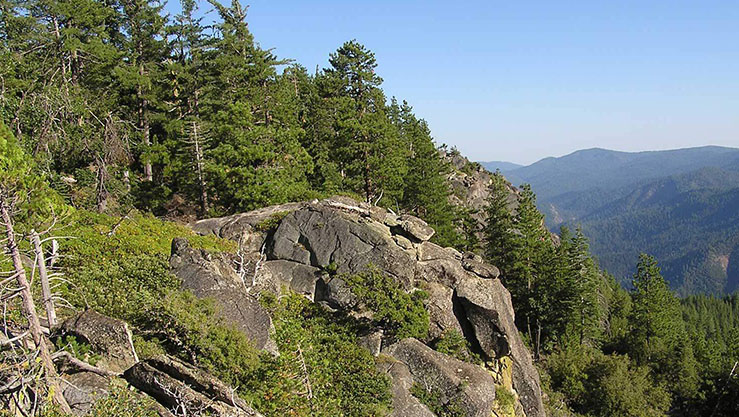
YOSEMITE, CA – A Native American tribe that was displaced by the establishment of Yosemite National Park is getting part of its lands back.
The land transfer, from Pacific Forest Trust, is considered a
major milestone for Indigenous cultural and land restoration in
California.
In addition, the move could lead to better management and control of wildfires in and around the areas.
The South Sierra Miwuk Nation has reattained nearly 900 acres
bordering Yosemite National Park — 175 years after the tribe was
originally expelled from the lands.
The returned lands represent approximately 1.4 square miles of Yosemite National Park’s 1,169 square miles.
“Having this significant piece of our ancestral Yosemite land
back will bring our community together to celebrate tradition and
provide a healing place for our children and grandchildren,” said
Southern Sierra Miwuk Nation’s Tribal Council Chair and elder Sandra
Chapman. “It will be a sanctuary for our people.”
Southern Sierra Miwuk Nation are people indigenous to Yosemite and greater Mariposa County.
With nearby Yosemite National Park attracting 4 million visitors
annually, the lands provide a large platform for public education of
Indigenous climate-smart land stewardship.
Among them is the Southern Sierra Miwuk Nation’s traditional ecological practices of using fire to promote healthy forests.
Henness
Ridge slope, a portion of the 900 acres of Yosemite returned to the
Souther Sierra Miwuk (Photo from PACIFIC FOREST TRUST)
Tami Graham, executive director of KSUT Public Radio, says the last year has been "the most unreal roller coaster ride," as the station lost crucial federal funding followed by record-breaking donations. Frank Langfitt/NPR
A Native American actor known for her role in Northern Exposure has said she was detained by Immigration and Customs Enforcement (ICE) officers in Seattle, Washington, who told her that her tribal identification “looked fake”.
Elaine
Miles, an Indigenous actor, alleges that she was stopped by four masked
men while she was walking to a bus stop in Redmond. She offered them
her ID card from the Confederated Tribes of the Umatilla Indian
Reservation in Oregon but was told by an ICE agent that “anyone can make
that.”
Miles, who also appeared in The Last
of Us, Smoke Signals, The Business of Fancydancing and Skins, told the
ICE agents to call the tribal enrollment office number on the card.
According to a report of the encounter by the Seattle Times,
the officers refused. Miles called the office herself, whereupon one
officer tried to take her phone but failed. Then the men released her
and departed in their vehicles.
Miles alleges
that a similar thing has happened to her son and uncle – they have
previously been detained and later released by ICE officers who would
not initially accept their tribal identification.
According to a post on Facebook
by the Lakota People’s Law Project, Miles told the group: “Tribal
IDs—the government issued those damn cards to us like a pedigree dog!
It’s not fake!”
Miles’ account chimes with others of Native Americans being swept up in the Trump administration’s immigration crackdown. Native News Online reports
that an Indigenous woman born in Phoenix was mistakenly detained by
immigration authorities after being released from jail in Des Moines,
Iowa.
“What we’re talking about here is racial profiling,” Seattle-based Indigenous rights attorney Gabriel Galanda told the Seattle newspaper. “People are getting pulled over or detained on the street because of the dark color of their skin.”
Galanda
said that the agents’ refusal to accept Miles’ ID points to “a fair
amount of ignorance about tribal citizenship generally in society and in
government”.
According to the outlet, the
actor’s encounter with ICE agents came on the same day that ICE agents
made several arrests at Redmond’s Bear Creek Village shopping center,
prompting city council to switch off its license-plate-reading cameras.
Earlier this year, the Navajo nation announced it was taking steps
to protect its community from federal immigration actions, amid reports
that some Indigenous Americans have been swept up in US deportation
raids.
After Miles was detained, she said she
was now afraid to leave the house alone or at night. Galanda said that
the prospect of Native Americans being detained is reminiscent of the
country’s troubled history with Indigenous peoples.
“It’s
also deeply troubling that in 2025, the first people of this country
have to essentially look over their shoulders,” she added.
By Melanie Payne ( mpayne@news-press.com ) August 15, 2010 Alexis Stevens liked to describe herself as a model citizen. She was adopted fr...
Bookshop
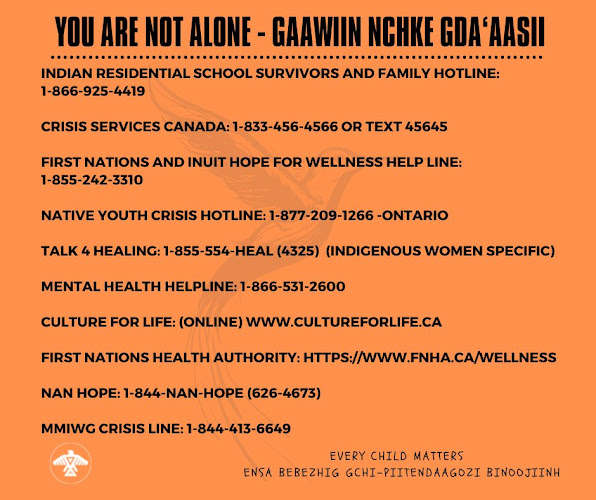
You are not alone
To Veronica Brown
Veronica, we adult adoptees are thinking of you today and every day. We will be here when you need us. Your journey in the adopted life has begun, nothing can revoke that now, the damage cannot be undone. Be courageous, you have what no adoptee before you has had; a strong group of adult adoptees who know your story, who are behind you and will always be so.
Diane Tells His Name
click photo
Lost Birds on Al Jazeera Fault Lines
click to read and listen about Trace, Diane, Julie and Suzie
NO MORE STOLEN SISTERS
click image
We conclude this series & continue the conversation by naming that adoption is genocide. This naming refers to the process of genocide that breaks kinship ties through adoption & other forms of family separation & policing 🧵#NAAM2022#AdoptionIsTraumaAND#AdopteeTwitter#FFY 1/6 pic.twitter.com/46v0mWISZ1
As the single largest unregulated industry in the United States, adoption is viewed as a benevolent action that results in the formation of “forever families.” The truth is that it is a very lucrative business with a known sales pitch. With profits last estimated at over $1.44 billion dollars a year, mothers who consider adoption for their babies need to be very aware that all of this promotion clouds the facts and only though independent research can they get an accurate account of what life might be like for both them and their child after signing the adoption paperwork.









%20The%20Guardian.png)







 Posts
Posts

