Yup, every one needs to go outside and relax.
We'll be back posting next month!

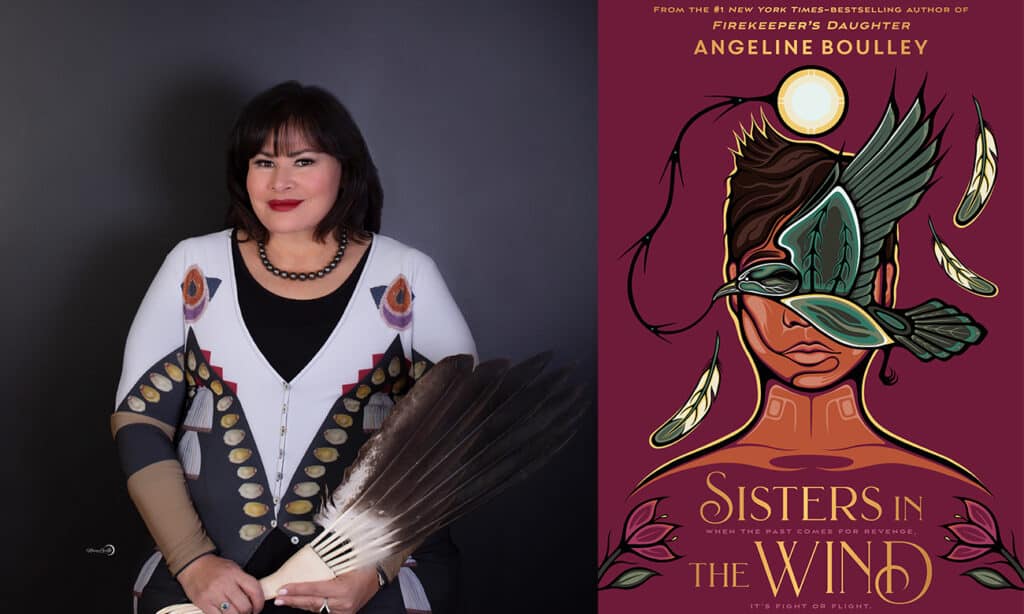
“Native families are like onions,” fiction author Angeline Boulley writes in her latest novel about Indigenous families caught up in the child welfare system.
They are “rough-looking on the outside,” she goes on. “People want to peel the outer layers and toss them away, as if they have no value. But each layer is protecting the next, down to its innermost core. That green center, where the onion is sweetest, that’s the Native child. Surrounded by layers of family and community.”
Boulley’s third book, “Sisters in the Wind,” offers a rare Indigenous-centric glimpse into the failings of the country’s child welfare system. The young adult novel, set to publish next month, is meant to show what can happen when a federal law meant to ensure that Indigenous families remain intact is not followed, and how a child’s life can be improved when it is, the Michigan author said in a recent interview.
The thriller follows Lucy Smith, an Ojibwe teen who is running for her life, away from traumatic figures she encountered while growing up in foster care. As an adult she navigates a difficult childhood spent in various placements before finding family and healing.
Publisher’s Weekly called the book a devastating, gripping tale “that serves as a searing critique of the ways that systems can fail vulnerable youth.”
At points in the novel, Boulley’s protagonist experiences dehumanizing moments common to foster youth everywhere, including when she is forced to carry her belongings in a trash bag during a move to a new home.
Recently, states including New York and Texas have prohibited child welfare agencies from doling out trash bags, and now require them to provide proper suitcases to children. Such laws, “need to be everywhere,’’ Boulley said, adding that she believes making foster youth use garbage bags sends the clear message, “that they themselves are trash.’’

As an adult, Smith eventually goes to work as a research intern for a company that trains child welfare professionals on the workings of the Indian Child Welfare Act. The 1978 federal law, known as ICWA, requires state foster care agencies to take extra steps to ensure Indigenous families stay together. The fictional company in the novel is based on real work Indigenous people are doing to preserve families and tribal communities in Boulley’s home state of Michigan, she said.
In the case of the novel’s protagonist, ICWA was not followed as she moved through the foster care system. In one bleak scene, a social worker tells Smith that identifying as Indigenous will only muddle her situation.
“It complicates everything,’’ Smith is told. “Just say you’re Mexican.”
Later, Smith comes to believe that the abusive situations she endured in non-Native foster homes never would have happened had she been placed with tribal relatives.
Boulley, a member of the Sault Ste. Marie Tribe of Chippewa, hopes a particular message in her novel will reach child welfare professionals who might read it:
“When ICWA is followed correctly, it works,” Boulley said. “The issues that arise primarily come when social services and court personnel don’t understand the law. They continue with assumptions and misconceptions, and that ends up complicating children’s lives.’’
Boulley was never in foster care herself. But she and her siblings grew up spending summers visiting the Sault Ste. Marie reservation in Michigan where she knew several young relatives being raised by kin outside of the foster care system.
“Growing up, I didn’t think it was anything unusual to have cousins that were raised by my grandma,” Boulley said. “That was just normal.”
Her work on “Sisters in the Wind’’ began years ago, but she felt an urgency to complete it following recent legal challenges to ICWA. In a United States Supreme Court case two years ago, multiple states and three foster families argued that the federal statute was unconstitutional and interfered with a non-Indigenous couple’s right to adopt an Native child.
A Supreme Court ruling upheld the law in June 2023. But, Boulley said, “We know it’s not the final assault on tribal sovereignty.’’
delay delay delay....

Top officials from the University of California were called to account Tuesday morning for their ongoing failure to return thousands of Native American human remains and hundreds of thousands of sacred cultural artifacts, as required by both federal and state law.
The hearing - scheduled for 9 a.m. in Room 1100 of the Capitol Annex Building at 1021 "O" Street - is a joint session of the Joint Legislative Audit Committee and the Assembly Select Committee on Native American Affairs.
Despite three critical audits over the past five years - in 2019, 2021, and most recently in April 2025 - UC has made limited progress in complying with the Native American Graves Protection and Repatriation Act (NAGPRA), enacted more than 30 years ago, and a similar California law passed 24 years ago.

What brought you to Santa Fe? Were you born on nearby Diné land?
I was born in ‘64. The Indian Child Welfare Act was [enacted] after I was born, so I was adopted out. During Indian relocation in the 60s, my mom was relocated to Ohio, which was a very common way that the government spread out the Native youth to break up the uprisings.
She got pregnant with me out in the middle of nowhere in the Midwest, and I got snatched up by Catholic Charities and adopted out with no connection to my birth family and was raised by non-natives in the Midwest.
I had a great childhood, but no connection to culture — not for lack of love, just for lack of education and lack of protocol by the government. It’s a little bit different now: I'm very supportive of the Indian Child Welfare Act because it protects our children from what I've been through.
In hindsight, I learned amazing things in the outside world that I'm able to bring back. My reintegration— coming home — was in 2019. My daughter graduated high school, so in my empty nest phase, I was like, I'm going to learn what it means to become a Dinemic matriarch. I came home.
KEEP READING:
https://www.bizjournals.com/bizwomen/news/profiles-strategies/2025/08/amy-denet-deal.html
 |
| MAUI and Lahaina's wealthy residents |
??? “Lahaina’s not going to get rebuilt for another five years.” ? WTH? I'd say this was expected... Native Hawaiians are stuck, out of luck and cannot afford to live on their own lands! ... That was THE PLAN! Trace
READ: https://www.hawaiifreepress.com/Articles-Main/ID/45975/Lahaina-rebuild-could-move-along-faster-if-
 |
| The film tells the story of the accidental discovery of the Cheguigo Monolith, an ancient stone figure, by a 14-year-old boy exploring the countryside in 1960. |
Binnigula’sa’ (Ancient Zapotec People) (2024) is directed by Jorge Ángel Pérez and was screened at the Blackstar Film Festival. It is available for viewing online.
In the fall of 2024, @cbcmusic and @SOCANmusic launched Reverie: The Indigenous Music Residency, an initiative created to foster the talents of Indigenous musicians. The program brought together six artists, including singer-songwriter @ravenreid9080 , an incredible artist with ancestral ties to the Mikisew First Nation. Originally from Yellowknife, NWT, and raised in Prince Albert, she now lives and creates in Saskatoon. Reid’s voice is powerful both in and out of her music. She is also a respected public speaker, using her platform to share her personal story and advocate for survivors of the Sixties Scoop.
Meet Raven Reid | Reverie 2024, Raven Reid, Sixties Scoop survivor, Indigenous folk music, singer-songwriter, Indigenous artist, Mikisew Cree First Nation, Yellowknife, Saskatoon, healing music, storytelling, folk singer, Canadian music, protest songs, social justice, Indigenous rights, mental health awareness, resilience, overcoming adversity, inspirational music, new music, independent artist, live performance, guitar songs, powerful vocals, songwriter, Indigenous culture, First Nations, singer, acoustic, folk
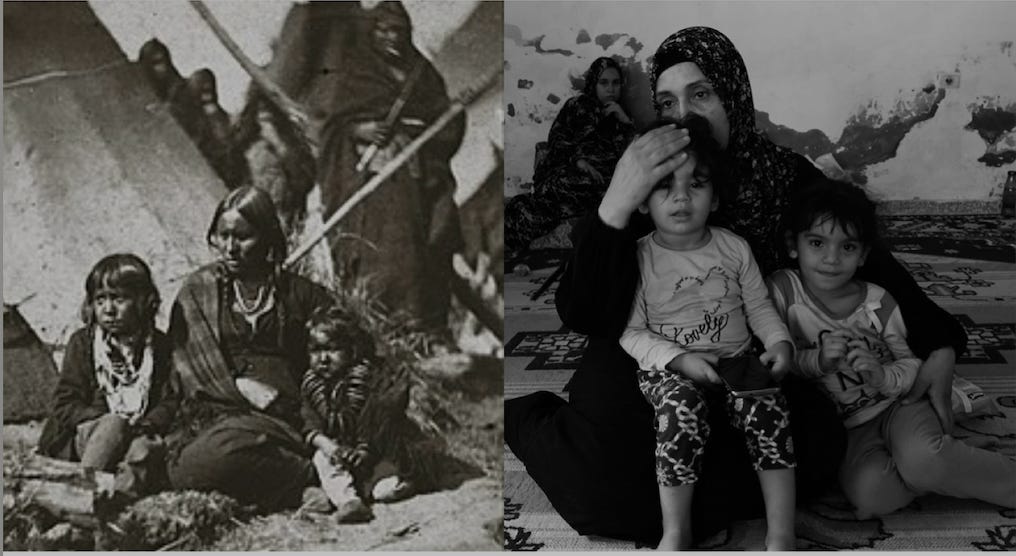
PLEASE CLICK THE LINK AND READ ON SUBSTACK... very important story! ... Trace
.jpg)
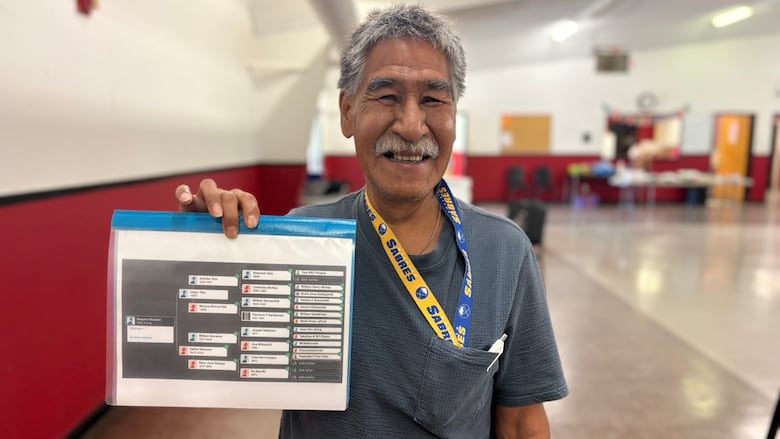 |
| Dwayne Noname is happy he found out more about his great-grandparents and wants to share with family what he has learned. (Louise BigEagle/CBC) |
Dwayne Noname always wanted to know where exactly he came from and a workshop in Piapot First Nation in Saskatchewan is helping him find out.
Noname's community, roughly 90 kilometres north of Regina, hosted a genealogy and kinship workshop on Tuesday and Wednesday this week. Piapot members were taught how to trace their family trees and how to gather and organize family photos, documents and oral stories, something Noname said he was happy to see people participating in.
"It's quite interesting to see where everybody comes from, my parents, grandparents," said Noname.
Noname said now that he has a paper trail of his ancestors, he hopes to pass the knowledge down to his relatives' children who want to know more about their family and where their last name came from.
Through learning more about his great-grandparents, Noname also learned that he is Saulteaux.
"I thought I was Cree," he said.
"I feel confident and feel really great about myself who I really am as a person."
Chief Mark Fox said In a written statement that the workshop was held to help reconnect members to their roots, family names and stories. Fox said the workshop will also help Sixties Scoop and residential school survivors recover their loss of identity.
"Knowing your history is knowing your story," Fox's statement said.
READ MORE: https://www.cbc.ca/news/indigenous/piapot-family-genealogy-workshop-1.7603484
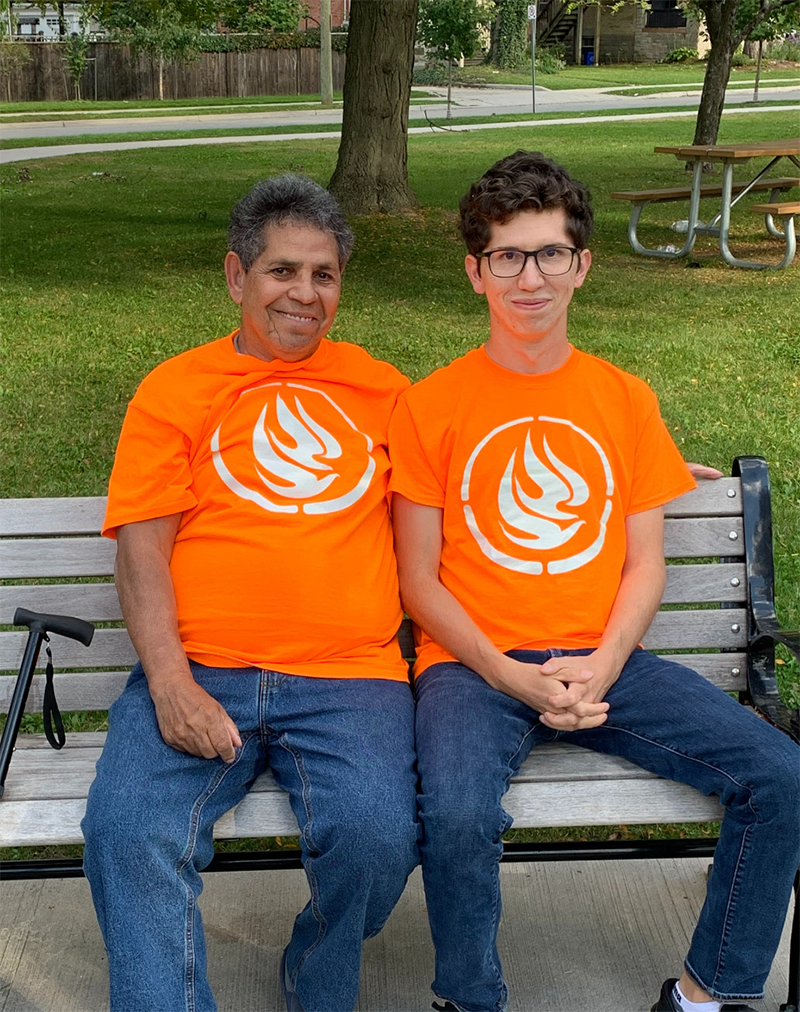
Groat’s time as a PhD student also led to his first university
teaching role, stepping in as a sessional instructor at St. Paul’s
University College (now United College) at the University of Waterloo.
The course on Indigenous Studies provided Groat with an opportunity for a
deeply personal teaching moment.
“My dad, Bill, was a Sixties
Scoop survivor and a transport truck driver — just an average guy,” says
Groat. “I asked him to come speak to my class about his experience as
an Indigenous person in the child welfare system. About three minutes
into the lecture, he just started bawling his eyes out. He’d never
talked about his life before, and it was just a release.”
The experience resonated deeply, and Groat’s father went on to guest
lecture several more times, including for Brookfield’s History of
Adoption classes at Laurier Brantford.
“He never finished high
school and had some literacy issues, but he loved being a ‘university
instructor,’ as he called himself,” says Groat. “He wanted to tell his
story so others could learn from it.”
Groat is Mohawk and a band member of Six Nations of the Grand River.
It's NEVER too late! ... Trace
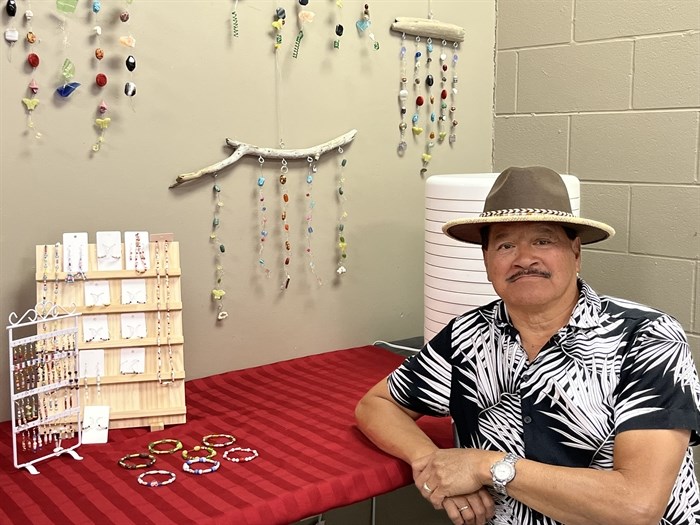 |
Herb
Charlie is a Sixties Scoop survivor and member of the Sq’ewlets First
Nation who lives in Kamloops, pictured here at the Kamloops Aboriginal
Friendship Society.
(SHANNON AINSLIE / iNFOnews.ca) |
CONTENT ADVISORY
Kamloops Indigenous elder Herb Charlie was forcibly removed from his biological mother two days after he was born in Vancouver in 1955.
He was placed in an orphanage with hundreds of other babies for two-and-a-half years before being placed in the foster home of a white woman.
Charlie was one of more than 20,000 First Nation, Metis and Inuit children in Canada removed from their homes from the early 1950s to the early 1980s in a government program known as the Sixties Scoop, according to the Canadian Encyclopedia. Indigenous babies were placed with non-Indigenous families without the parent or band’s consent as part of an effort to assimilate them into white society.
According to a report Charlie recently obtained from the federal government, during his first two years of life he was over institutionalized resulting in delayed walking and speech.
In that same report, Charlie is described by professional social and care workers as an unattractive baby, a dirty little Indian, a retard and a moron.
“Back in the time when I was born it was an era where prejudice was very high against Indigenous people, the racism was worse back then,” he said.
keep reading👇
What a remarkable decision! Trace
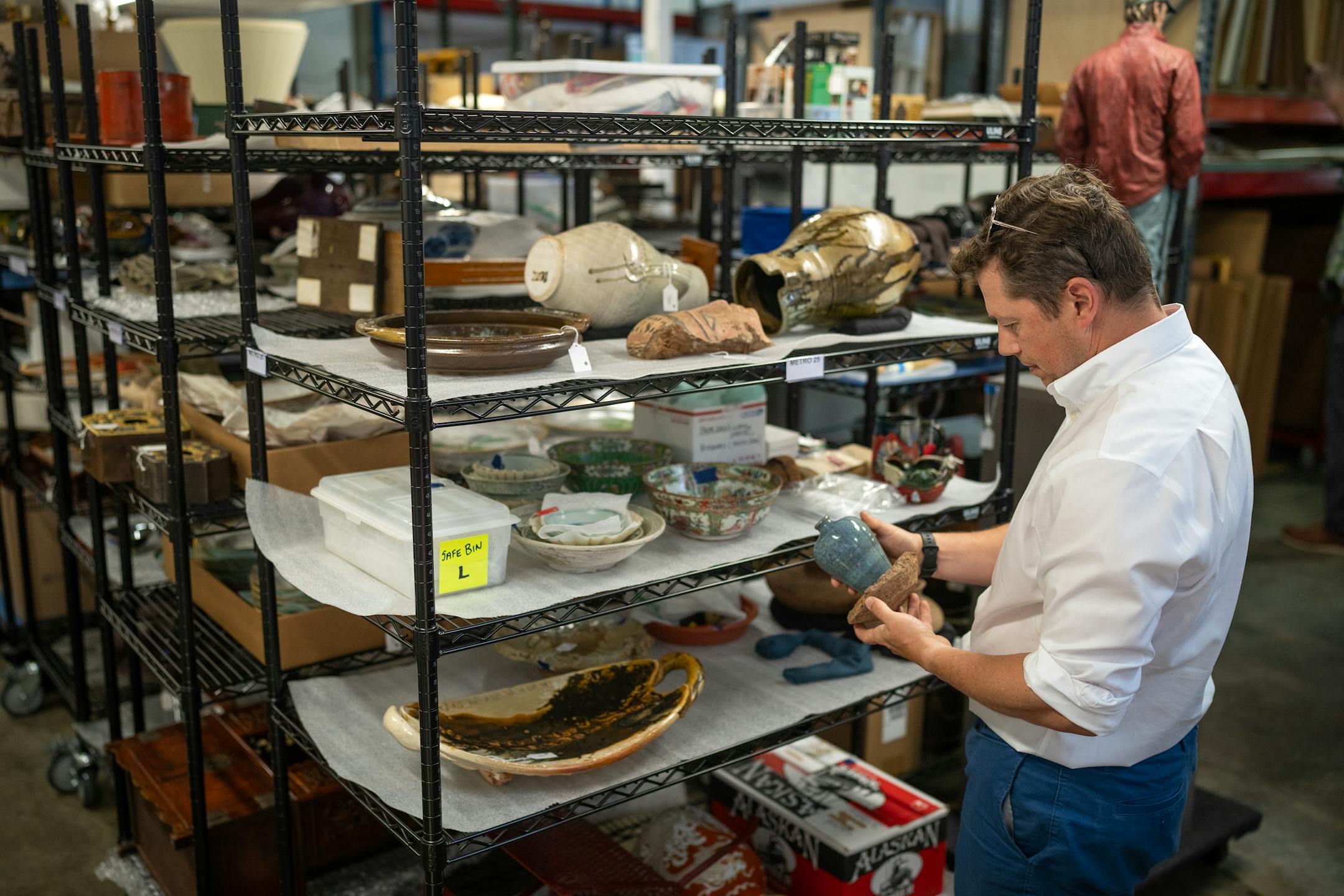
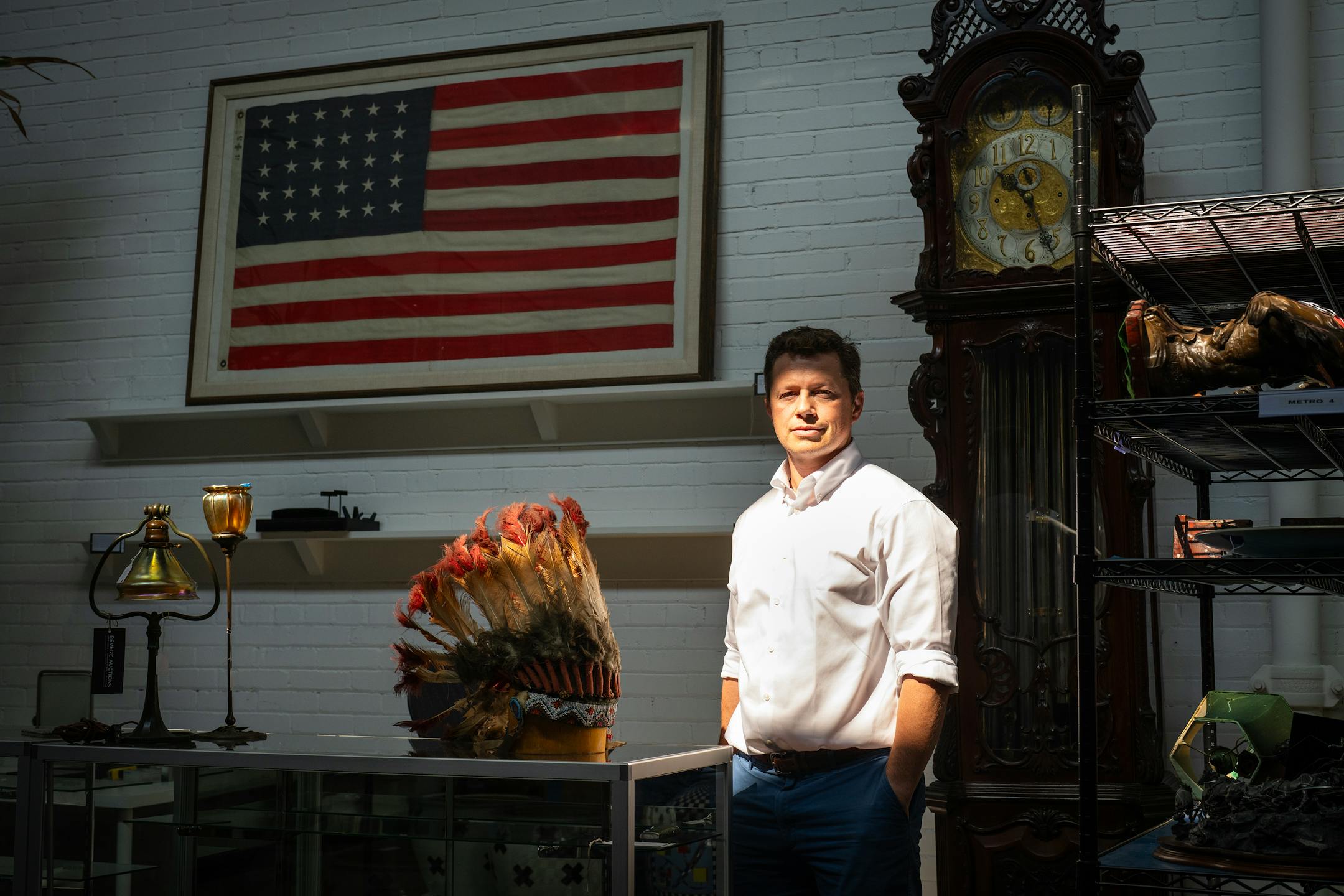
Before every auction, Sean Blanchet sends a spreadsheet to Washington, D.C., where it lands in the inbox of the Association on American Indian Affairs.
There, researchers comb through the list of Native American items up for sale at his St. Paul auction house — tribal masks, feathered war bonnets, ceremonial objects — and flag anything with spiritual or tribal significance.
And when they do, Blanchet doesn’t haggle. He pulls it from the Revere Auctions catalog and sends it home.
“My number one goal is to move the object from where it is, to where it should be,” he said.
Blanchet’s approach is practically unheard of in an industry where tribes are often forced to buy back their own stolen history — or watch it disappear into private collections.
According to AAIA CEO Shannon O’Loughlin, Revere is the only auction house in the United States — and the world — with a formal process for reviewing and returning Native items.
“It is extremely surprising,” she said, “because he’s taking his good faith responsibility, as well as his ethical and moral responsibility, seriously.”
O’Loughlin’s organization has tracked more than 15,000 potentially sensitive Native items sold at auction in 2025 alone. That number exceeded 20,000 last year. Despite the federal Native American Graves Protection and Repatriation Act, she said, there is no real enforcement mechanism for items held in private hands — where most auctioned collections originate.
An ethics statement on Revere’s website acknowledges that many Native American items currently on the secondary market were stolen or unethically purchased. Blanchet sees the moral gap clearly.
“Some of these super sacred objects,” he said, “definitely should not be sold.”

The Pennsylvania Historical and Museum Commission has some 908 individual remains and 79,628 funerary objects in its collection, which are subject to the Native American Graves Protection and Repatriation Act (NAGPRA).
“We never ceded or relinquished our dead. They were stolen,” James Riding In, a retired Arizona State University professor who is Pawnee, has said of the unreturned remains.
There are 574 federally recognized tribes and approximately 400 additional tribes that are not federally recognized.
READ MORE:


MADISON, WI — If a bill making its way through the sponsorship process becomes law, adult Wisconsin adoptees for the first time will have access to their original birth certificates.
Advocates say the measure is a long-overdue correction to a system that keeps vital identity and medical information hidden from the very people it concerns.
“We’re not asking for anything extraordinary,” said Diana Higgenbottom Anagnostopoulos. “We’re just asking for the right to know who we are.”
The proposed legislation—currently known as LRB-3879/1—was introduced by State Rep. Paul Tittl and State Sen. André Jacque. According to Steve Hall, spokesperson for Tittl, this is not the first time Tittl has championed this cause.
“This was the first bill that he introduced back in 2014,” Hall said in an interview. “And he’s introduced it every session since.”
Hall noted that Tittl is not adopted himself but believes strongly in adoptees’ rights. “He just thinks that people ought to have that right,” he said.
The bill would give adult adoptees access to their original, unredacted birth certificates—something currently restricted under Wisconsin law. While most modern adoptions are open, Hall said that a small but significant number—about five percent—remain closed, which can leave adoptees in the dark about crucial health and identity information.
“We spoke with someone who was close to 50 years old,” he added. “She had been worried about health conditions she thought ran in the family, only to learn after her adoptive parents passed away that she’d been adopted. When she finally got her real family history, it turned out she was concerned about the wrong things all along.”
Behind the renewed momentum is former Racine resident and adoptee Diana Higgenbottom Anagnostopoulos, who has worked with legislators and advocates across the country.
She traveled to Madison in late July to speak with lawmakers and staff, sharing clips from Love Differently, a documentary she produced that highlights the emotional and legal struggles adult adoptees face.


The smoke has reached us here in western MA. Air Quality Alerts are posted HIGH until midnite tonite... Trace

In 2023, 4.2% of all U.S. households, or about 5.6 million households, were unbanked or lacked bank accounts, according to the Federal Deposit Insurance Corp. The reasons cited for not having a bank account included a lack of trust in banks, not having enough money to meet account minimums, account fees and concerns about privacy, according to the FDIC.
Those who lack bank accounts were more likely to be lower-income households; less educated households; Black, Hispanic, and American Indian or Alaska Native households; working-age households with a disability; and single-parent households, the FDIC said.
The Social Security Administration has requested that beneficiaries create or update their online accounts to provide direct-deposit information; call the agency at 800-772-1213; or make an appointment at a local field office.
Even those with bank accounts may struggle with electronic payments. Only 19.3% of households age 65 or older used mobile banking as their primary source of banking, according to the FDIC.
"This will be difficult for those who don't have internet access," Johnson said. "It may lead to delays. I suspect a few Social Security recipients could potentially lose access to their benefits altogether, at least temporarily, unless they take the right steps quickly.
"Even simple banking can become a challenge when there may be memory and cognitive issues," Johnson added. "I don't believe the perfect option really exists on this - especially for seniors with intellectual challenges who are home alone. Online banking can be an obstacle for the cognitively disabled and blind, [and] those who can't afford a smartphone or the internet fees."
Beneficiaries without a bank account can get a prepaid debit card for their Social Security benefit payments. With the Direct Express card program, the federal benefit payment directly deposits onto a debit card that can be used to make purchases, pay bills or get cash.
In extremely rare circumstances, the Treasury Department may grant exceptions to the electronic-payment mandate, according to the Social Security Administration. To request a waiver, call the Treasury Department at 855-290-1545.
GREAT JOB Siena!!!
During the school year, Braun teaches Native cultural arts and Ojibwe language at Anishinabe Academy. For her, teaching the summer program is deeply personal.

Prior to 1978, when Congress passed the Indian Child Welfare Act, three in 10 Native American children were taken from their families. One of those children was Siena Braun. She was placed in foster care and adopted. Her birth mother tracked her down when she was 27.
“They called me one of the stolen kids,” she said. “I got taken at birth.”
KEEP READING:
A new report by Thomson Reuters highlights the intersection between missing Indigenous women and human trafficking in Canada. The report says Winnipeg, Edmonton and the Prince Albert-Regina-Saskatoon triangle had the most MMIWG cases, and that they swiftly go from missing to appearing on sex ads.
The report, which was released Tuesday, analyzed 185 cases from 2010 to April 2024 and found Winnipeg was the city with the most disappearances, with 14 per cent. It was followed by the Edmonton metropolitan area with 10.5 per cent and the triangle between Prince Albert, Regina and Saskatoon with 10 per cent. The report noted that Winnipeg’s large Indigenous population and robust reporting of missing women and girls may have an impact on the numbers.
READ:


Your History Class Was a F*cking Lie by Sean Sherman (Or: How the American Educational System Has Always Been a Racist Propaganda Program...





 Posts
All Comments
Posts
All Comments